




Rosacea Isn't One Thing — and That's Why Your 'Anti-Redness' Routine Isn't Working
Flushing, bumps, and visible vessels are three different problems hiding under one word, and treating them the same way is how most people make their skin angrier.
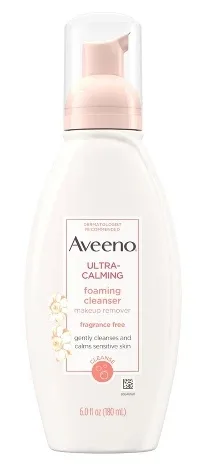
One of the only drugstore cleansers built around parthenolide-depleted feverfew extract — a botanical that Johnson & Johnson research found to be 35 times more effective than green tea at reducing inflammatory markers. The pre-foamed delivery system means the product never needs to be worked into a lather on the skin, reducing friction-related irritation that can trigger rosacea flares.
A genuinely gentle foaming cleanser that earned its cult following among rosacea sufferers with a clinically backed feverfew formula and sulfate-free surfactant system. Its discontinuation is a real loss for sensitive skin — though the newer Calm + Restore line carries the torch, this original still feels like the one that understood reactive skin best.
The case for it
What would change this: A researched evidence row for the lead active would replace this with a verdict.
Same rule for everyone. “Supporting role” is the verdict on 8,197 of 45,024 concern verdicts across the catalog; rule R8 decided 4,250 of them. Unchanged since September 5, 2026, engine 5.1.1.
Brand or formulator? Disclose a concentration or correct a fact →
The case for it
What would change this: A researched evidence row for the lead active would replace this with a verdict.
Same rule for everyone. “Good choice” is the verdict on 1,938 of 45,024 concern verdicts across the catalog; rule F2 decided 1,938 of them. Unchanged since September 5, 2026, engine 5.1.1.
Brand or formulator? Disclose a concentration or correct a fact →
The case for it
What would change this: The same active in a leave-on form would be judged on its evidence rather than its contact time.
Same rule for everyone. “Supporting role” is the verdict on 8,197 of 45,024 concern verdicts across the catalog; rule R6 decided 2,017 of them. Unchanged since September 5, 2026, engine 5.1.1.
Brand or formulator? Disclose a concentration or correct a fact →
The studies behind the evidence row
Also listed for Compromised Skin Barrier — the actives here (Glycerin, Cocamidopropyl Betaine, Cleansing Surfactants) are in our research queue for that concern; there is no verdict until their evidence rows are written. That is a gap in our table, not a mark against the product.
Excellent at the jobDoes what a cleanser is for, on every measure we can take from the label: pH match to skin, surfactant mildness.
A verdict is DermApproved’s assessment of how well a product’s ingredients fit a concern — never a claim about what the product treats. Evidence dots and collected reviews sit beside it and are never blended in. Rules 0.5.1 · evidence table ev-2026.09-r228 · how we decide
There is a particular kind of grief reserved for discontinued skincare products. It sits somewhere between losing a favourite restaurant and discovering they've stopped making your running shoe. The Aveeno Ultra-Calming Foaming Cleanser inspires exactly this grief, and if you spend any time at all in rosacea forums, you will find people who stockpiled bottles the moment the writing appeared on the wall.
The reason for that devotion isn't complicated. This cleanser did one thing extraordinarily well: it cleaned sensitive, reactive skin without punishing it for being sensitive and reactive. That sounds like a low bar. Anyone who has watched their face turn scarlet from a supposedly gentle cleanser knows that it isn't.
At the heart of the formula is Aveeno's parthenolide-depleted feverfew extract. Feverfew is a relative of chamomile, but the two are not interchangeable, and the difference matters. Raw feverfew contains parthenolide, a compound that causes contact dermatitis in a meaningful number of people — which is a spectacular own goal in a product meant for reactive skin. Aveeno's innovation was stripping the parthenolide out while keeping the calming actives, and the research is genuinely striking: the purified extract inhibits multiple inflammatory pathways, reduces TNF-alpha, nitric oxide, PGE2 and several interleukins, and in published work it outperformed the whole plant extract rather than being weakened by the purification. It works through different machinery than chamomile's bisabolol, and it works harder.
The surfactant system tells you everything about the product's priorities. Instead of sodium lauryl sulfate or its gentler cousin, the formula runs on cocamidopropyl betaine and decyl glucoside — an amphoteric and a non-ionic surfactant that generate foam through a fundamentally less aggressive mechanism, cleaning through micelle formation with minimal protein denaturation. Which quietly demolishes the received wisdom that foaming cleansers are inevitably too harsh for rosacea. Foam is a function of the surfactant, and the surfactant can be chosen kindly.
The pre-foamed pump takes the same philosophy further. You are never rubbing a concentrated paste across your face and working up a lather. The product arrives on your fingertips already aerated, already soft, ready to do its work with almost no friction. For anyone whose redness flares from the mechanical act of washing — a trigger that gets overlooked constantly — that single design decision matters more than any hero ingredient in the bottle.
Glycerin sits second on the ingredient list, which is unusually generous for a cleanser. Most foaming formulas treat humectants as an afterthought, a token gesture toward a gentle marketing claim. Here the concentration is high enough to genuinely offset the drying pull of the surfactants. Skin doesn't feel tight after rinsing. It doesn't feel stripped. It feels as though it was cleaned by something that regards the acid mantle as worth preserving rather than as an obstacle.
Buried near the end of the INCI is an amino acid conditioning complex — sodium cocoyl amino acids, sarcosine, potassium and magnesium aspartate — that you almost never find in a drugstore cleanser. These deposit skin-compatible amino acids during the wash, replacing a fraction of what the surfactants take away. It's the kind of formulation move more common in Japanese and Korean sensitive-skin products than in a Western pharmacy aisle, and it speaks to the level of thought behind the whole thing.
The texture is, quite literally, a cloud. It dispenses as a pre-formed mousse that sits on the palm somewhere between whipped cream and cotton candy. You press it onto damp skin, move your fingers in gentle circles for thirty seconds, and rinse. A minute, no drama, no aftermath.
Honesty demands acknowledging the limitations. The formula contains three parabens — methyl, propyl, ethyl — which every major regulatory body considers safe at cosmetic concentrations, and which remain a firm dealbreaker for a portion of the very audience this cleanser courts. The pump is genuinely unreliable; enough reviewers report it seizing mid-bottle that it can't be waved away as bad luck. It won't touch waterproof makeup — this is a daily cleanser for daily grime, and a full face needs an oil or balm in front of it. And the emollient content means it isn't fungal-acne safe.
The discontinuation deserves its own note. Aveeno folded the Ultra-Calming line into the newer Calm + Restore collection, which pairs oat with feverfew in updated formulations. Those successors are perfectly good products. They are also not this one — the specific combination of pre-foamed delivery, this surfactant blend and this preservative profile doesn't exist in quite the same shape any more. For the people who relied on it, the replacement is close but not home.
At roughly ten dollars for six ounces, when you can still find it, this was always an exceptional value. The pre-foamed format means one pump covers the whole face, so a bottle stretches two to three months of twice-daily use — well under fifteen cents a wash for clinical-grade gentleness at a pharmacy price. The caveat is availability: discontinued stock invites third-party markups, and at inflated prices the value argument collapses entirely.
If you can find a bottle and your skin runs reactive, this remains one of the most thoughtfully formulated foaming cleansers ever sold in a drugstore, and the 4.4-star average across four thousand reviews is a quiet testament to it. If you can't, the Calm + Restore oat cleanser is the closest spiritual successor. But the original set the standard for what a sensitive-skin cleanser could be — and a community's refusal to let a ten-dollar cleanser go quietly says more than most clinical trials ever will.
The hero actives that drive this product's performance.
| Ingredient | Function | Evidence |
|---|---|---|
| Chrysanthemum Parthenium (Feverfew) Extract | Aveeno's proprietary parthenolide-depleted feverfew extract serves as the formula's primary calming agent. With the sensitizing parthenolide removed, this botanical delivers anti-inflammatory and antioxidant benefits that work to visibly reduce redness during cleansing — rather than contributing to it, as many surfactant-based cleansers can. | Not yet assessed |
| Glycerin | Positioned as the second ingredient, glycerin acts as the formula's moisture anchor, counterbalancing the drying potential of the surfactant system. It ensures the skin retains hydration during the foaming and rinsing process, preventing the tight feeling that drives sensitive-skin users away from foam cleansers. | Established mechanism for Dryness · established mechanism |
| Cocamidopropyl Betaine | The primary surfactant in this formula, chosen specifically for its amphoteric (mild) cleansing profile. It generates the light foam without the harshness of sulfates, working alongside decyl glucoside to create a cleansing system gentle enough for rosacea-prone skin. | Not yet assessed |
| Decyl Glucoside | A sugar-derived secondary surfactant that reinforces the gentle cleansing approach. Among the mildest surfactants available, it boosts the foam quality without increasing irritation potential — a critical pairing with cocamidopropyl betaine for reactive skin types. | Not yet assessed |
| Sodium Cocoyl Amino Acids, Sarcosine, Potassium Aspartate, Magnesium Aspartate | An amino acid-based conditioning complex that helps maintain the skin's natural moisture barrier during cleansing. This blend deposits skin-compatible amino acids that buffer against the stripping effect of surfactants — an uncommon addition in drugstore cleansers that sets this formula apart. | Not yet assessed |
Ingredient standings describe the active at treatment-level doses and vehicles; this product's own condition grades weigh its actual formula.
Water, Glycerin, Cocamidopropyl Betaine, Decyl Glucoside, Citric Acid, PPG-2 Hydroxyethyl Cocamide, PEG-16 Soy Sterol, Polysorbate 20, Disodium Lauroamphodiacetate, Phenoxyethanol, Butylene Glycol, Sodium Coco PG-Dimonium Chloride Phosphate, Sodium Citrate, Tetrasodium EDTA, Methylparaben, Xanthan Gum, Propylparaben, Ethylparaben, Propylene Glycol, Chrysanthemum Parthenium (Feverfew) Extract, Sodium Cocoyl Amino Acids, Sarcosine, Potassium Aspartate, Magnesium Aspartate, Sodium Hydroxide
cleanser
AM & PM
Use as a morning cleanser or evening first cleanse for light makeup days. For heavy makeup or sunscreen, double cleanse with an oil-based cleanser first, then follow with this foam.
Immediate gentle cleansing without irritation from first use. Visible reduction in cleansing-related redness within 1-2 weeks of consistent use. Long-term calming benefits for reactive skin become noticeable at 4-6 weeks as the skin barrier stabilizes with a non-stripping routine.
The scientific case for this cleanser rests primarily on Aveeno's parthenolide-depleted feverfew extract (Chrysanthemum Parthenium PFE), which has been the subject of several published studies. A 2005 study in the Journal of the American Academy of Dermatology demonstrated that 1% feverfew PFE significantly reduced erythema induced by both chemical irritation and tape stripping in a dose-dependent manner, confirming both anti-irritant and antioxidant activity in human skin.
The anti-inflammatory mechanism was further characterized in a 2009 study published in Inflammopharmacology, which showed that parthenolide-depleted feverfew directly inhibited 5-lipoxygenase, phosphodiesterase-3 and -4, and reduced release of multiple inflammatory mediators including TNF-alpha, nitric oxide, PGE2, IL-2, IFN-gamma, and IL-4. Notably, the parthenolide-depleted extract outperformed whole feverfew extract in reducing TPA-induced inflammation — meaning the purification process enhanced rather than diminished the anti-inflammatory effect.
A 2013 study in the Journal of Dermatological Science revealed an additional benefit: feverfew extract activated Nrf2-mediated antioxidant defense and DNA repair mechanisms in skin cells, reducing UV-induced DNA damage via PI3K and Nrf2 pathways. While this protective effect is unlikely to persist through a rinse-off cleanser at full strength, it points to the extract's potency even at brief contact times.
The surfactant system also merits attention. Cocamidopropyl betaine and decyl glucoside represent two of the mildest commercially available surfactant classes. Unlike anionic surfactants (SLS, SLES) that interact strongly with skin proteins and disrupt the lipid barrier, these amphoteric and non-ionic surfactants clean primarily through micelle formation with minimal protein denaturation. The inclusion of an amino acid complex (sodium cocoyl amino acids, sarcosine, potassium and magnesium aspartate) provides additional barrier support during the cleansing process — a formulation strategy more commonly seen in Japanese and Korean sensitive-skin cleansers than in Western drugstore products.
Dermatologists have long recognized foaming cleansers as a potential trigger for rosacea and reactive skin conditions, making this product's sulfate-free, fragrance-free approach clinically sound. Practitioners frequently recommend gentle, pH-balanced cleansers for rosacea management, and this formula checks every box on that list. The parthenolide-depleted feverfew extract has been validated in peer-reviewed research, giving dermatologists confidence in recommending it beyond standard marketing claims. The pre-foamed delivery system is particularly valued in clinical settings because it minimizes the mechanical irritation of lathering — a factor that dermatologists identify as an often-overlooked trigger for facial redness. For patients with compromised skin barriers, the amino acid conditioning complex offers additional protection during what is typically the most stripping step in any skincare routine.
Wet your face with lukewarm water. Pump one to two doses of foam into your palm — the product dispenses pre-foamed, so no lathering is needed. Gently press the foam onto your face and spread with light circular motions for about thirty seconds. Avoid scrubbing or applying pressure, especially around areas prone to redness. Rinse thoroughly with lukewarm water and pat dry with a soft towel. Use morning and evening as your primary cleanser, or as a second cleanse after an oil-based makeup remover in the evening.
At approximately ten dollars for six ounces, this cleanser delivered premium sensitive-skin formulation at a drugstore price — a combination that was genuinely hard to match. The pre-foamed format means you use significantly less product per wash than a traditional liquid or gel cleanser, stretching each bottle to two or three months of twice-daily use. That puts the cost per use well under fifteen cents. Aveeno's legacy status and decades of dermatological research backing added credibility that newer brands at this price point simply cannot replicate. The only caveat to this value assessment is availability: as a discontinued product, remaining stock may carry inflated prices from third-party sellers, which fundamentally changes the equation.
Anyone with rosacea, facial redness, or reactive skin who has been burned by cleansers that claim to be gentle but are not. Also ideal for people recovering from in-office procedures or anyone who wants the cleanest possible cleanse with the least possible irritation.
If you wear heavy or waterproof makeup daily and need a single-step cleanser to handle it all, this is not your product. It is similarly a skip if you have a known sensitivity to cocamidopropyl betaine or if parabens are a firm dealbreaker for you.
Ready to try Aveeno Ultra-Calming Foaming Cleanser?
Buy at Amazon ♥Dispenses as a pre-foamed, airy mousse from the pump. Lightweight and cloud-like, it spreads across the face without requiring any lathering or rubbing.
Fragrance-free. Virtually scentless — users report no detectable scent or a barely perceptible clean, neutral smell.
6 fl oz translucent white plastic pump bottle with teal-green accents from the Ultra-Calming line. The pump dispenses pre-foamed product directly, though the mechanism has a reputation for failing mid-bottle.
From the first use, you'll notice the foam feels lighter and less aggressive than most foaming cleansers. There should be zero stinging, tightness, or redness — even on highly reactive skin. The calming effects of feverfew build over the first few weeks of consistent use.
2-3 months applied morning and night, as the pre-foamed format means you use less product per wash than traditional cleansers
All Year
Born from Aveeno's partnership with Johnson & Johnson's skin research labs, this cleanser was part of the Ultra-Calming line launched in 2006 to address the gap between clinical-grade sensitive skin products and accessible drugstore options. It developed a devoted following among rosacea sufferers before being discontinued and folded into the newer Calm + Restore line.
Aveeno was developed in conjunction with the Mayo Clinic in 1945 and has been recommended by dermatologists for over 65 years. The brand's oat-based and botanical formulations are backed by extensive research, and multiple products hold the National Eczema Association Seal of Acceptance.
Foaming cleansers are always too harsh for sensitive or rosacea-prone skin.
This formula uses sulfate-free, amphoteric surfactants (cocamidopropyl betaine and decyl glucoside) that generate foam without the aggressive stripping associated with SLS/SLES. The pre-foamed delivery further reduces the need to rub the skin.
Feverfew is the same as chamomile and works the same way.
While feverfew and chamomile are botanical relatives, Aveeno's feverfew extract has the sensitizing compound parthenolide deliberately removed, making it safer for reactive skin. The anti-inflammatory mechanism differs from chamomile's bisabolol pathway.
Yes, Aveeno has officially discontinued the Ultra-Calming Foaming Cleanser. It has been replaced by products in the Calm + Restore line. Remaining stock may still be available through some retailers and third-party sellers, but availability is increasingly limited.
This cleanser was specifically designed with rosacea-prone skin in mind. The sulfate-free surfactant system, fragrance-free formula, and parthenolide-depleted feverfew extract all work to minimize irritation triggers. The pre-foamed pump delivery also reduces the friction that can aggravate rosacea during cleansing.
It handles light daily makeup and sunscreen effectively, but it is not formulated to dissolve heavy, waterproof, or long-wear makeup. For those situations, use an oil-based cleanser or micellar water first, then follow with this foam as a second cleanse.
Yes, this formula includes methylparaben, propylparaben, and ethylparaben as preservatives. While these are used at concentrations considered safe by the FDA and EU regulatory bodies, some users with paraben sensitivities may prefer alternatives.
The formula's pH falls in the mildly acidic range around 5.5, which is close to the skin's natural pH of approximately 5.0. This helps maintain the acid mantle during cleansing and reduces post-wash irritation for sensitive skin types.
Aveeno replaced the Ultra-Calming line with the Calm + Restore collection, which features similar gentle formulations with oat and feverfew-based calming ingredients. The Calm + Restore Nourishing Oat Cleanser is the closest successor to this foaming cleanser.
Recurring themes our editors read across retailer reviews of this product — summaries in our words, not quotations, and not a substitute for your own patch test.
Extremely gentle — no burning or stinging even on rosacea-prone skin
Leaves skin feeling soft and calm rather than tight or stripped
Fragrance-free with genuinely no detectable scent
Pre-foamed pump format is convenient and reduces waste
Effective for daily cleansing and light makeup removal
Affordable drugstore price point for a specialty sensitive-skin cleanser
Pump mechanism frequently fails or gets stuck mid-bottle
Contains parabens which some users prefer to avoid
Not powerful enough to remove heavy or waterproof makeup
Has been discontinued by Aveeno, making it hard to find
Verified answers from our questions library — the nuance a product page cannot carry.