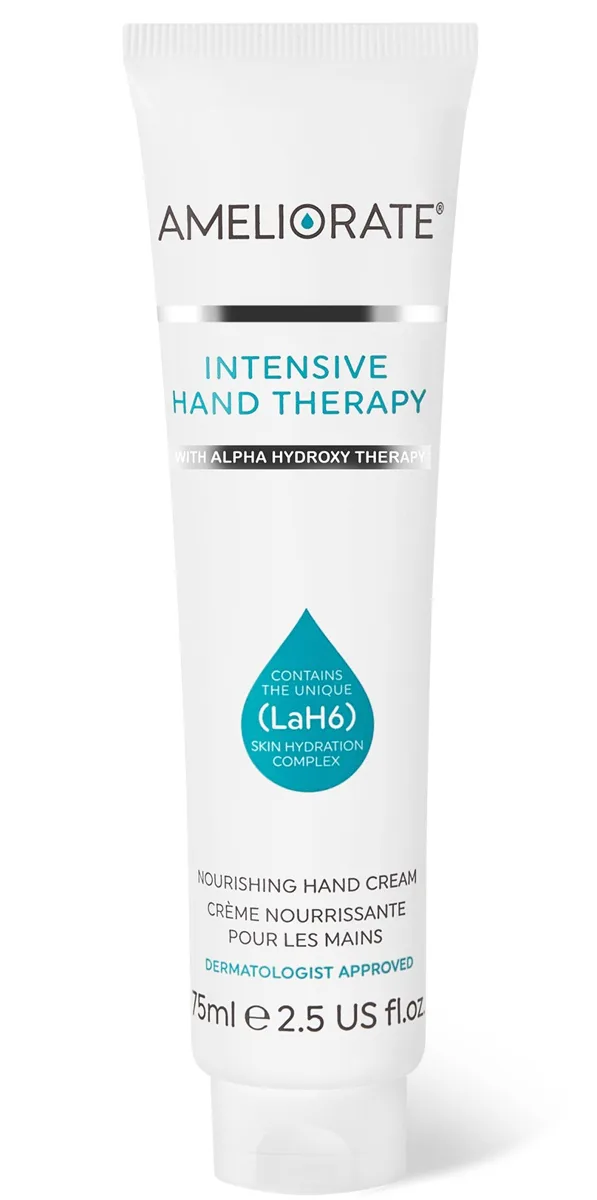
Most hand creams only moisturize; this one exfoliates too, using the brand's lactic acid complex to smooth the rough, thickened skin of hard-working hands while nourishing with almond and oat oils. That treatment-plus-hydration approach makes it a genuine rescue for very dry, rough hands rather than a quick surface fix.
A hand cream that actually treats rough hands rather than just greasing them, pairing the brand's lactic acid complex with nourishing almond, oat, and shea. It genuinely smooths thickened knuckles and dry patches while conditioning — held back by the line's heavy fragrance, an almond-oil nut allergen, and a sting on cracked skin that a plain cream wouldn't cause.
Good choicefor DrynessIn your profileYou chose · Shea Butter is a reference standard by mechanism for dryness; this cream carries it.Moderate evidenceStandard tolerabilityNo reviews collected yet
The case for it
Sweet Almond Oil + Oat Kernel Oil + Shea Butter has trial-supported standing for this concern.
It is plausibly present at a working level, though the concentration is not declared.
The formula carries no trigger this concern is sensitive to, with the cautions noted.
Cautions: fragrance.
What would change this: A declared concentration would move this to a firmer reading of the dose.
Same rule for everyone. “Good choice” is the verdict on 9,564 of 45,024 concern verdicts across the catalog; rule R5 decided 9,072 of them.
Unchanged since September 5, 2026, engine 5.1.1.
Good choicefor Rough TextureIn your profileYou chose · Lactic Acid is a reference standard by mechanism for rough texture; this cream carries it.Moderate evidenceStandard tolerabilityNo reviews collected yet
The case for it
LAH Lactic Acid Complex has trial-supported standing for this concern.
It is plausibly present at a working level, though the concentration is not declared.
The formula carries no trigger this concern is sensitive to, with the cautions noted.
What would change this: A declared concentration would move this to a firmer reading of the dose.
Same rule for everyone. “Good choice” is the verdict on 9,564 of 45,024 concern verdicts across the catalog; rule R5 decided 9,072 of them.
Unchanged since September 5, 2026, engine 5.1.1.
Supporting rolefor Keratosis PilarisIn your profileYou chose · Lactic Acid has early evidence for keratosis pilaris, and emollient hydration is the recognised companion to treating it — a reasonable supporting choice, short of a recommendation.Moderate evidenceStandard tolerabilityNo reviews collected yet
The case for it
LAH Lactic Acid Complex has early or mechanistic evidence for this concern, not trial-backed standing.
It is plausibly present at a working level, though the concentration is not declared.
The formula carries no trigger this concern is sensitive to, with the cautions noted.
What would change this: A declared concentration would move this to a firmer reading of the dose.
Same rule for everyone. “Supporting role” is the verdict on 8,197 of 45,024 concern verdicts across the catalog; rule R8a decided 1,489 of them.
Unchanged since September 5, 2026, engine 5.1.1.
R8a — A plausible-tier active in a category with a supportive job: the sentence names the active instead of saying nothing targets the concern (the AmLactin / CeraVe SA case for keratosis pilaris, where no guideline and single trials leave the keratolytics at early evidence). · the full register
Carrying active
LAH Lactic Acid Complex
Standing
plausible — trials support it
Form
plausible — studied range 10%, from the OTC monograph or label; judge it after ~4 weeks
Tolerability
standard
Row checked
against its sources on July 17, 2026 (evidence table ev-2026.09-r228)
Also listed for Winter Skin and Dullness — the actives here (Urea, Allantoin, Lactic Acid, Shea Butter) are in our research queue for those concerns; there is no verdict until their evidence rows are written. That is a gap in our table, not a mark against the product.
As a body productNot judged: what a body product is for — real substance, not just slip, realistic to use daily — cannot yet be measured from the ingredient list (only fragrance load can).
A verdict is DermApproved’s assessment of how well a product’s ingredients fit a concern — never a claim about what the product treats. Evidence dots and collected reviews sit beside it and are never blended in.
Rules 0.5.1 · evidence table ev-2026.09-r228 · how we decide
Assessment
Pros & Cons
Pros
✓ Exfoliates as well as moisturizes, unlike standard hand creams
✓ Lactic acid complex smooths rough, thickened hand skin
✓ Nourishing almond, oat, and shea condition deeply
✓ Urea humectant system hydrates and softens keratin
✓ Soothing oat, barley, and allantoin
✓ Affordable and effective on genuinely rough hands
✓ Cruelty-free
Cons
✗ Acids sting cracked, chapped, or broken hand skin
✗ Heavy fragrance and essential oils may irritate sensitive skin
✗ Contains sweet almond oil, a tree-nut allergen
✗ Not the right choice for already-damaged, raw hands
Review
Full Review
Most hand creams are, functionally, a slick of oils and humectants you rub in, enjoy for twenty minutes, and then rinse off at the next sink. They feel nice. What they do not do is anything about the underlying problem on genuinely rough hands: the thickened, built-up, sometimes bumpy skin that forms on knuckles, dry patches, and overworked palms from constant washing, weather, and hard use. You can moisturize that rough skin indefinitely and it stays rough, because moisture isn't what it's short of. It needs smoothing. Ameliorate's Intensive Hand Treatment is one of the few hand products that addresses this directly, by carrying the brand's signature exfoliating approach over to the one part of the body most of us abuse most and treat least.
The mechanism is the same LAH Lactic Acid Complex that powers the brand's body range, which has been built around this exact idea since the line launched. Ammonium lactate sits second on the ingredient list, with lactic acid further down, and together they gently exfoliate, dissolving the rough, thickened keratin on hard-working hands while binding water. Ammonium lactate is a long-established dermatological ingredient for precisely this kind of rough, dry, keratotic skin, acting as both a keratolytic that smooths and a humectant that hydrates, which is why its evidence base is solid rather than aspirational. It's backed by a natural-moisturizing-factor system of urea, sodium lactate, serine, and sorbitol, with urea pulling double duty as both a humectant and a softener of built-up keratin. This is what separates the product from an ordinary hand cream: it treats the texture, not just the surface dryness, which is why people with genuinely rough hands tend to notice a difference within one to three weeks that no amount of plain moisturizer ever delivered.
Crucially, it doesn't sacrifice nourishment to pull this off. The base is genuinely conditioning, built on sweet almond oil, oat kernel oil, and shea butter, which deeply moisturize and seal in moisture while offsetting any drying tendency from the acids, plus oat and barley extracts and allantoin to soothe. Those emollients are barrier-supportive lipids with strong evidence behind them, and they keep the formula from tipping into the tight, stripped feeling a bare acid cream would leave. The allantoin and oat-barley cluster also blunt the potential sting of the acids on already-chapped skin, which is part of what makes a daily exfoliating hand cream tolerable in the first place. Hands come away soft and conditioned rather than taut, which is the balance the brand consistently aims for: exfoliate and hydrate in a single step. The texture is medium-rich and absorbs to a soft finish without lasting greasiness, and for very dry, rough hands, especially through winter when knuckles and the backs of hands take the worst of the cold and the constant washing, it reads as a real rescue at a modest price, making it the most accessible entry point into the brand's whole approach.
The caveats are specific and worth heeding, because an exfoliating hand cream interacts with damaged skin differently than a plain one does. First, the acids: if your hands are cracked, chapped, or split, which very dry winter hands often are, the lactic acid will sting, sometimes sharply, in places where an ordinary cream would soothe. Keep it off broken skin and use it to prevent and smooth roughness rather than to treat already-cracked hands. Second, the fragrance, which is the recurring theme of this entire line. There's added parfum plus orange, geranium, and cedarwood essential oils, and a long roll-call of declared allergens including linalool, limonene, citronellol, coumarin, and geraniol. The scent itself is a pleasant fresh citrus-herbal note that many users genuinely like, but on freshly exfoliated hand skin that bouquet is an irritation risk for the sensitive. Third, and important for a product people share and use casually, it contains sweet almond oil, a tree-nut-derived ingredient that anyone with a nut allergy must avoid outright. And because it includes hydrolyzed milk protein, it's cruelty-free but not vegan.
None of those are dealbreakers for most people, but together they shift who the cream is genuinely for. There's also a small expectation to set on how it works: the smoothing is gradual rather than instant, building over one to three weeks of regular use as the keratolytic actives work through the accumulated rough texture, even though the hydration registers from the first application. People expecting an overnight transformation will undersell it, while those who use it consistently for a couple of weeks tend to be the ones who keep repurchasing. If you have rough, dry, hard-working hands and reasonably robust skin, this is a legitimately effective treatment that does what standard hand creams can't, and it's pleasant and affordable while doing it. If your hands are cracked and raw, your skin runs sensitive, or you have a nut allergy, the very features that make it effective become liabilities, and a plain fragrance-free hand balm is the safer, smarter choice for repair. The way to think about it is matching: aim it at rough-but-intact hands and it earns its treatment name, smoothing knuckles and dry patches in a way ordinary creams simply don't. Reach for it on raw, split skin and it will let you know, loudly, that it's an exfoliant first and a comfort cream second. Used in the right place, it's a genuinely clever product that closes the gap most hand creams quietly leave open.
Formula
Key Ingredients
The hero actives that drive this product's performance.
The brand's exfoliating-and-hydrating complex at the second position — ammonium lactate and lactic acid gently smooth the rough, thickened, sometimes bumpy skin of hard-working hands while binding water, setting this apart from hand creams that only moisturize.
Established mechanismfor Rough Texture · established mechanism
A natural-moisturizing-factor system that both hydrates and helps soften the rough keratin that builds up on overworked hands, reinforcing the lactic acid's smoothing.
Established mechanismfor Rough Texture · established mechanism
A nourishing emollient blend that deeply conditions dry, cracked hands — almond and oat oils plus shea seal moisture and offset any drying from the acids, leaving hands soft rather than tight.
Established mechanismfor Dryness · established mechanism
A soothing-and-calming cluster — oat and barley with allantoin reduce the potential sting of the acids on chapped or sensitized hands, keeping the treatment comfortable for daily use.
Not yet assessed
Ingredient standings describe the active at treatment-level doses and
vehicles; this product's own condition grades weigh its actual formula.
Massage into clean hands as needed through the day and especially before bed, focusing on rough knuckles and dry patches. Avoid applying to cracked, broken skin, where the acids will sting.
Results Timeline
Hands feel softer and more hydrated immediately; rough, thickened areas smooth out over 1–3 weeks of regular use.
The hand treatment uses the same evidence-based chemistry as the brand's body range. Ammonium lactate, the ammonium salt of lactic acid, is a long-established dermatological ingredient for rough, dry, and keratotic skin, acting as both a keratolytic that smooths thickened skin and a humectant; lactic acid adds further alpha-hydroxy-acid exfoliation and water-binding. Urea is a dual humectant-and-keratolytic with strong evidence for softening rough, thickened skin, here supported by sodium lactate, serine, and sorbitol as natural-moisturizing-factor components. The emollients — sweet almond oil, oat kernel oil, shea butter — provide barrier-supportive lipids that offset the acids' drying potential, and oat and barley extracts plus allantoin contribute soothing. The caveats: the formula contains added fragrance and essential oils (orange, geranium, cedarwood) with their allergens, which on exfoliated or chapped hand skin raises irritation risk; sweet almond oil is a tree-nut-derived ingredient relevant to nut-allergic users; and the acids can sting compromised, cracked skin. The honest synthesis: a mechanistically sound exfoliating-and-hydrating hand treatment that genuinely smooths rough skin, best used on intact rather than broken hands, with fragrance and the nut allergen as the limiting factors.
Dermatologist Perspective
Dermatologists recognize lactic acid, ammonium lactate, and urea as effective treatments for rough, thickened, dry skin, and applying that approach to the hands is sensible, since hands develop hyperkeratotic roughness from frequent washing and environmental exposure. Clinicians would note such keratolytic creams work best on intact skin and can sting or irritate cracked, fissured, or eczematous hands, where a bland emollient or barrier repair is preferable. The consistent caution about fragrance applies, particularly for hand dermatitis-prone or sensitive patients, and dermatologists would flag the sweet almond oil for anyone with nut allergies. As a smoothing treatment for rough but unbroken hands, used regularly, it aligns with standard management of hyperkeratotic dry skin, complementing rather than replacing barrier protection for genuinely damaged hands.
Guidance
Usage & Recommendations
How to Use
Massage into clean hands as needed through the day and especially before bed, concentrating on rough knuckles, dry patches, and thickened areas. A brief tingle on rough skin is normal from the acids. Keep it off cracked, split, or broken skin, where it will sting — treat those with a plain barrier balm first and use this once they've healed. Regular daily use gives the best smoothing results; patch test first if your hands are sensitive or eczema-prone.
Value Assessment
At around $18 for 75ml, this is good value for a hand cream that genuinely treats rough skin rather than just moisturizing it — a meaningful step up from a basic hand cream for those who need it, at an accessible price and the lowest entry point into the brand's lactic acid approach. A tube lasts a couple of months with regular use. The value caveat is fit: on cracked, sensitive, or nut-allergic hands it's the wrong product and the money is misspent, so it's best value for those with rough but intact hands who'll actually benefit from the exfoliation.
Who Should Buy
Anyone with rough, dry, hard-working but intact hands — thickened knuckles, dry patches, winter roughness, or KP-type texture on the hands — who wants a treatment that smooths rather than just moisturizes will find this genuinely effective and affordable, especially in colder months.
Who Should Skip
Those with cracked, fissured, raw, or eczematous hands should choose a fragrance-free barrier balm instead, since the acids will sting damaged skin. Anyone with a nut allergy must avoid the sweet almond oil, sensitive skin should weigh the fragrance, and vegans should note the milk protein.
A medium-rich hand cream that absorbs to a soft, conditioned finish without lasting greasiness
Scent
Distinctly fragranced — a fresh citrus-herbal scent from orange, geranium, and cedarwood oils
Packaging
Squeeze tube, practical for a handbag or bedside
Finish
non-greasysatinsoft
What to Expect on First Use
Sinks in to leave hands noticeably softer and more conditioned, with a fresh scent. A brief tingle from the acids is possible on rough or chapped areas; smoothing of rough patches builds over a week or two.
Ameliorate extended its signature lactic acid approach from the body to the hands, recognizing that overworked, frequently washed hands develop the same rough, thickened skin its body products target. The result is a hand cream that treats texture, not just dryness.
About Ameliorate Established Brand (5–20 years)
Ameliorate is a UK body-care brand founded in 2014, built around its LAH Lactic Acid Complex for rough, dry skin and keratosis pilaris. This hand treatment applies that exfoliating-and-hydrating approach to hard-working, very dry hands.
Brand founded: 2014 · Product launched: 2015
Myth vs. Reality
Common Myths
Myth
All hand creams do basically the same thing.
Reality
Most simply add moisture and oils to the surface. This one also chemically exfoliates with lactic acid and ammonium lactate, actively smoothing the rough, built-up skin on knuckles and dry patches — a meaningful difference for genuinely rough hands, though it means it can sting cracked skin where a plain cream wouldn't.
FAQ
Frequently Asked Questions
What makes the Ameliorate Intensive Hand Treatment different from a regular hand cream?
It exfoliates as well as moisturizes. Alongside nourishing almond and oat oils and shea, it contains the brand's lactic acid complex to smooth the rough, thickened skin of hard-working hands, so it treats texture rather than just adding surface moisture.
Is the Ameliorate Hand Treatment good for very dry, rough hands?
Yes — it's designed for exactly that, combining lactic acid exfoliation with urea, almond and oat oils, and shea to smooth and deeply condition rough knuckles and dry patches over a week or two of regular use.
Why does the Ameliorate Hand Treatment sting sometimes?
It contains exfoliating lactic acid and ammonium lactate plus added fragrance and essential oils, which can tingle or sting on cracked, chapped, or broken skin. Avoid applying it to open cracks, and patch test if your hands are very sensitive.
Does the Ameliorate Hand Treatment contain nut allergens?
Yes — it contains sweet almond oil, a tree-nut-derived ingredient, so those with nut allergies should avoid it. It also contains fragrance allergens like linalool and limonene.
Is the Ameliorate Intensive Hand Treatment vegan?
No. It contains hydrolyzed milk protein, so it isn't vegan, though the brand markets it as cruelty-free.
How often should I use the Ameliorate Hand Treatment?
Use it as needed through the day and especially before bed, focusing on rough, dry areas. Regular daily use gives the best smoothing results; just keep it off cracked or broken skin where the acids will sting.
Reviews
What Reviewers Tend to Say
Recurring themes our editors read across retailer reviews of this product — summaries in our words, not quotations, and not a substitute for your own patch test.
Common Praise
Smooths and softens rough hands
More effective than ordinary hand cream
Good for dry knuckles and patches
Pleasant scent
Sinks in reasonably well
Common Complaints
Fragrance and acids sting chapped hands
Contains almond oil, a nut allergen
Not for cracked or broken skin
Not vegan
Notable Endorsements
Exfoliating lactic acid hand treatmentSmooths rough, hard-working handsBuilt on the brand's LAH complex
Formaldehyde cross-links nail keratin into something genuinely harder — and then brittler, and then shattering — which is why the product that fixed the problem sells best to the people it created.
Every post that dismantles a home remedy owes the reader a replacement. The honest replacement list is embarrassingly cheap, and one item on it is cheaper still — it is a bath.
Products, answers, therapy guides, tools and articles in one search. Brand names,
slang and abbreviations all work — accutane finds isotretinoin, bacne finds truncal acne.