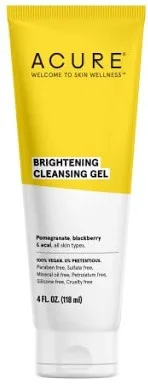
Most clean-beauty cleansers at this price point either feel like watery hand soap or are heavy on essential oils that irritate. Acure's gel hits a middle ground: real surfactants for actual cleansing performance, glucoside chemistry for gentleness, a PHA for mild brightening, and a berry antioxidant blend that justifies the brightening name even if its contribution is modest.
A capable budget gel cleanser from one of the OG natural beauty brands. The plant-based surfactants clean without stripping, the price is hard to argue with, and the brightening story is more vibe than science. If you're not sensitive to fragrance, it's a fine everyday wash.
Supporting rolefor Excess OilinessIn your profileYou chose · Nothing here targets excess oiliness directly; sebum removal without stripping is the recognised companion to treating it, and this gel does that without known triggers.Not yet assessedStandard tolerabilityNo reviews collected yet
The case for it
Lauryl Glucoside + Decyl Glucoside has no evidence row yet for this concern — it is in the research queue.
The formula carries no trigger this concern is sensitive to, with the cautions noted.
Cautions: fungal-acne triggers.
What would change this: A researched evidence row for the lead active would replace this with a verdict.
Same rule for everyone. “Supporting role” is the verdict on 8,197 of 45,024 concern verdicts across the catalog; rule R8 decided 4,250 of them.
Unchanged since September 5, 2026, engine 5.1.1.
R8 — The category's job (barrier care, humectant hydration, gentle cleansing, photoprotection) is the documented supportive role for this concern. This is the honest verdict for a moisturizer on an acne page. · the full register
Also listed for Dullness — the actives here (Cleansing Surfactants, Gluconolactone, Rosehip Oil) are in our research queue for that concern; there is no verdict until their evidence rows are written. That is a gap in our table, not a mark against the product.
Does the jobDoes what a cleanser is for: surfactant mildness, rinses clean without stripping. Not measured from the label: pH match to skin.
A verdict is DermApproved’s assessment of how well a product’s ingredients fit a concern — never a claim about what the product treats. Evidence dots and collected reviews sit beside it and are never blended in.
Rules 0.5.1 · evidence table ev-2026.09-r228 · how we decide
Assessment
Pros & Cons
Pros
✓ Plant-based surfactants clean effectively without stripping
✓ Affordable price point at around $10 for 4 oz
✓ EWG Verified, vegan, and cruelty-free
✓ Pleasant berry scent for those who enjoy fragranced cleansers
✓ Works well as morning cleanse or second step in a double cleanse
✓ From an established natural-beauty brand with 15 years on shelves
Cons
✗ Added fragrance not suitable for sensitive or rosacea-prone skin
✗ Brightening claim is overstated — the actives mostly rinse off
✗ Contains a small amount of alcohol that some users prefer to avoid
✗ Packaging inconsistency (pump vs flip-top) across batches
Review
Full Review
Acure launched in 2010, which in the timeline of clean beauty makes it almost ancient. The brand predates the term 'clean beauty' as a marketing category, predates the EWG verification stamp, predates the influencer-driven natural-beauty boom of the 2010s. It started as a small operation selling at Whole Foods, gradually built distribution through Target and Ulta, and has somehow stayed on shelves for fifteen years while dozens of trendier natural brands came and went. That kind of staying power deserves at least a curious look.
The Brightening Cleansing Gel is the brand's longest-running bestseller, and you can see why. At $10 for a 4-ounce bottle, it's priced like a basic drugstore wash, but it actually has the surfactant chemistry of a much pricier product. The base is a blend of lauryl glucoside, decyl glucoside, and sodium lauroyl methyl isethionate — modern plant-derived cleansers that produce a soft, low-foaming lather without the squeaky, stripped feeling that sulfates leave behind. There's a small amount of cocamidopropyl hydroxysultaine and cocamidopropyl betaine in there to help with foam structure, and the formula is rounded out with glycerin to keep things from feeling tight.
That surfactant base is also the quiet refutation of a lingering assumption — that plant-based cleansers can't really get your face clean. They can, and this one does. The idea traces back to the earliest natural cleansers, which used true soap and sat at an alkaline pH that stripped and irritated skin. Modern plant-derived surfactants like these glucosides and isethionates are pH-balanced and clean just as effectively as conventional detergents; 'plant-based' here describes the sourcing, not a compromise in performance.
The 'brightening' in the name comes from two places: gluconolactone, a polyhydroxy acid that provides extremely mild surface exfoliation, and the brand's signature berry blend — blackberry, rosehip, pomegranate, and acai extracts. In a wash-off product, both contributions are limited, and it's worth being blunt about it because the name implies more than the chemistry delivers. The PHA has too little contact time to do meaningful exfoliation in 30 seconds of cleansing, and the polyphenols in the berry extracts mostly rinse down the drain before they can do much. So the brightening claim is more philosophical than chemical. Your morning glow comes from removing overnight buildup, not from the antioxidants in the cleanser itself — the real brightening in any routine comes from leave-on actives like vitamin C, niacinamide, or a retinoid.
What the cleanser does well is what a cleanser should do well: it gets your face clean, it doesn't leave you tight, and it rinses without residue. The texture is a soft translucent gel that becomes a light foam when you work it with water. After rinsing, your skin feels clean but supple — that's the right end state, and a lot of cleansers at this price miss it. As a morning wash or as the second step in a double-cleanse routine after an oil cleanser, it does its job without complaint: massage onto damp skin for thirty to sixty seconds, rinse thoroughly, then follow with toner, treatments, and moisturizer. Any visible brightness is modest and accumulates over weeks, as a supporting player in a complete routine rather than the star.
Where the formula trips is in the supporting cast. Fragrance is on the ingredient list, and it's a noticeable berry-fruit scent that some people find pleasant and others find overwhelming. There's also a small amount of alcohol, used as a preservative aid. Neither is a problem for normal or oily skin, but if you have rosacea, perioral dermatitis, or a barrier compromise from over-exfoliating, the fragrance is enough to provoke a reaction. For sensitive skin types, this isn't the cleanser. There are unfragranced gel options at similar price points that would be safer choices.
The other small annoyance is the packaging inconsistency. Some batches ship with a proper pump, others arrive with a basic flip-top cap that you have to squeeze. It's a minor thing, but for the price it's worth flagging — some bottles feel like a deal, others feel like the brand was cutting corners that month.
There's a broader question about Acure that's worth addressing honestly. Clean beauty as a category has earned criticism over the years for fear-based marketing — 'free from toxins,' 'no chemicals,' implying that conventional ingredients are dangerous. Acure's marketing leans into clean beauty language but is generally less alarmist than some peers. The brand markets itself on plant-based actives and ingredient transparency rather than on attacking conventional skincare. That's a healthier posture, and it's reflected in the formulations — the products are mostly competent rather than gimmicky.
As a $10 cleanser for normal-to-combination skin that doesn't react to fragrance, this gel is a reasonable everyday choice, and its huge, steady review base bears that out — thousands of ratings averaging solidly, with users praising the affordable plant-based formula, the non-stripped after-feel, and the pleasant berry scent, while the recurring gripes are exactly the fragrance for sensitive users, the overstated brightening claim, and the hit-or-miss pump. As a brightening treatment, it's not really one — and the smarter way to think about it is as a competent gentle wash that happens to share a line with leave-on brightening products. Pair it with a real vitamin C serum, niacinamide, and SPF, and your routine will deliver the brightening the cleanser alone can't. As a budget gateway into the clean-beauty aisle, it's a fair starting point. Just don't expect it to compete with the cult cleansers that cost three or four times as much — that's not what you're paying for, and that's okay.
Formula
Key Ingredients
The hero actives that drive this product's performance.
The two glucoside surfactants form the backbone of this cleanser, providing gentle non-stripping cleansing through plant-derived sugar chemistry. Together they handle most of the dirt-and-makeup removal without the squeaky tightness that sulfate cleansers leave behind.
Adds a creamier lather and additional gentle cleansing power to the glucoside base, giving this gel cleanser the foaming experience users expect from a cleanser without the harsh sulfate alternatives.
A polyhydroxy acid (PHA) that provides extremely mild surface exfoliation as part of the cleansing action. In a rinse-off product the contact time is short, so this isn't a true exfoliating cleanser — but it adds the brightness story the product name promises.
The brand's signature antioxidant blend delivers a rinse-off dose of polyphenols. In a wash-off cleanser the contact is brief, so the antioxidant impact is more philosophical than functional, but the extracts contribute mildly to the brightening claim.
Use as your morning cleanser or as the second cleanser in a double-cleanse routine after an oil cleanser. Massage onto damp skin for 30-60 seconds, then rinse thoroughly. Follow with toner, treatments, and moisturizer.
Results Timeline
Immediate squeaky-clean feel without tightness. Visible brightness benefit is modest and accumulates over weeks of consistent use as part of a complete brightening routine — the leave-on actives in your routine do the real work.
The case for glucoside surfactants in facial cleansers is well-established in modern formulation chemistry. Lauryl glucoside and decyl glucoside are mild, biodegradable, plant-derived nonionic surfactants that clean effectively at the pH range typical of the skin's acid mantle. Compared to traditional sulfate surfactants like sodium lauryl sulfate, glucosides cause significantly less protein denaturation in the stratum corneum, which is why they don't leave the same stripped, tight feeling. They've largely replaced sulfates in higher-end gentle cleansers for this reason.
Sodium lauroyl methyl isethionate is another modern mild surfactant, derived from coconut oil and known for producing a creamy lather while remaining gentle on the skin barrier. It's the same surfactant used in many premium syndet (synthetic detergent) bar cleansers. Its inclusion here gives this gel a more substantial cleansing experience than glucosides alone could provide.
The brightening claim relies more heavily on emerging evidence. Gluconolactone is a polyhydroxy acid with documented mild exfoliating properties in leave-on formulations, but in a rinse-off product the contact time is too brief for meaningful exfoliation. The berry extract blend — blackberry, rosehip, pomegranate, acai — contains polyphenols and anthocyanins with antioxidant activity in vitro, but again, contact time and concentration in a wash-off product limit any real-world brightening benefit. The cleansing performance is well-supported; the brightening claim is best understood as marketing-adjacent rather than clinically proven.
Dermatologist Perspective
Dermatologists generally recommend gentle, non-stripping cleansers as the foundation of any routine, and glucoside-based gels like this one fit comfortably within that recommendation. Many dermatologists frequently advise patients to avoid harsh sulfate cleansers in favor of milder surfactant systems, particularly for those with dry, mature, or barrier-compromised skin. However, dermatologists also caution that fragranced cleansers — even those marketed as natural or clean — can provoke reactions in sensitive or rosacea-prone skin, and patients with these concerns are often advised to choose unfragranced alternatives. For brightening goals, dermatologists consistently emphasize that leave-on actives like vitamin C, retinoids, and niacinamide do the real work, and that no cleanser should be relied on as a primary brightening tool.
Guidance
Usage & Recommendations
How to Use
Wet face with lukewarm water. Dispense a small amount (about a dime-sized portion) into wet hands, work into a light lather, and massage onto skin for 30-60 seconds. Avoid the immediate eye area. Rinse thoroughly with lukewarm water and pat dry. Use morning and night, or as the second step in a double-cleanse routine after an oil cleanser. Follow with toner, treatments, and moisturizer.
Value Assessment
At around $10 for 4 ounces, this cleanser is priced competitively with basic drugstore washes while offering plant-based surfactant chemistry usually found at higher price points. The bottle lasts roughly 2-3 months with twice-daily use, putting cost-per-day at pennies. From an established natural-beauty brand with over a decade of distribution, the price feels honest — you're getting a competent gentle gel cleanser, not a transformative product. Comparable plant-based cleansers from boutique clean brands often cost two to three times more without delivering meaningfully better results.
Who Should Buy
Normal, combination, or oily skin types looking for an affordable plant-based gel cleanser. People who enjoy a light berry scent in their cleanser. Beginners building their first routine on a budget. Shoppers prioritizing vegan and cruelty-free certifications without paying boutique prices.
Who Should Skip
Anyone with sensitive skin, rosacea, perioral dermatitis, or a compromised barrier — the fragrance and alcohol are likely to provoke reactions. People who want a true brightening treatment rather than a cleanser with brightening claims. Anyone who needs a fragrance-free option.
Translucent gel that lathers into a light, soft foam when massaged with water
Scent
Sweet berry-fruit fragrance from the added scent and berry extracts
Packaging
Plastic squeeze bottle with flip-top cap; some batches ship with a pump
Finish
non-greasyfast-absorbing
What to Expect on First Use
Gentle on first use with no tingling or burning. Skin should feel clean but not tight after rinsing — if it feels stripped, you may have used too much or massaged too long. The brightening effect is subtle, not dramatic.
How Long It Lasts
About 2-3 months applied morning and night face cleansing
Acure launched in 2010 as a budget-friendly entry into the natural beauty space, building distribution through Whole Foods and later mass retailers like Target and Ulta. The Brightening line — featuring blackberry, rosehip, and acai extracts — became the brand's most recognizable range and the cleansing gel its longest-running bestseller. The line has been reformulated several times over the years.
About Acure Established Brand (5–20 years)
Acure launched in 2010 as a budget-friendly clean beauty brand sold widely at Whole Foods, Target, and Ulta. Its products use plant-based actives and are EWG Verified, though the brand prioritizes natural sourcing over peer-reviewed clinical validation.
Brand founded: 2009 · Product launched: 2010
Myth vs. Reality
Common Myths
Myth
Plant-based cleansers can't actually clean your face properly.
Reality
Glucoside surfactants and isethionates clean perfectly well. The myth comes from very early natural cleansers that used soap, which is too alkaline. Modern plant-derived surfactants like the ones in this gel are pH-balanced and as effective as conventional cleansers.
Myth
Berry extracts in a wash-off cleanser actually brighten your skin.
Reality
The berry extracts in this cleanser contribute very little brightening because the contact time is too short — most of the polyphenols rinse down the drain. The real brightening in any routine comes from leave-on actives like vitamin C, niacinamide, or retinoids.
FAQ
Frequently Asked Questions
Does Acure Brightening Cleansing Gel actually brighten skin?
The brightening claim mostly refers to the gluconolactone (PHA) and berry antioxidant blend, both of which provide a mild brightness boost over time. But because this is a rinse-off product, the contact time is short — the meaningful brightening in any routine comes from leave-on actives. Think of this cleanser as the supportive opening act, not the main show.
Is this cleanser safe for sensitive skin?
It's gentle in terms of surfactant choice, but it does contain added fragrance and alcohol — both of which can irritate truly sensitive skin or rosacea. If your skin reacts to fragrance, look for an unfragranced gel cleanser instead.
Can I use this as a morning cleanser?
Yes — it's well suited as a morning cleanser because it's gentle and removes overnight buildup without stripping the skin. For nighttime makeup or sunscreen removal, double-cleanse with an oil cleanser first.
Is Acure cruelty-free and vegan?
Yes. Acure is certified cruelty-free and the Brightening Cleansing Gel is vegan. The brand is also EWG Verified, meaning it meets EWG's criteria for ingredient transparency and avoidance of certain materials.
Will this cleanser remove makeup?
It will remove light makeup and sunscreen, but heavy or waterproof makeup is better tackled with an oil cleanser or balm first, followed by this gel as the second cleanse. Trying to remove waterproof mascara with a gel alone usually leaves residue.
Reviews
What Reviewers Tend to Say
Recurring themes our editors read across retailer reviews of this product — summaries in our words, not quotations, and not a substitute for your own patch test.
Common Praise
Affordable plant-based cleanser
Doesn't leave skin feeling stripped
Pleasant berry scent
Works well as a morning cleanser or second cleanse
Common Complaints
Fragrance bothers sensitive users
Brightening claim is overstated
Pump sometimes packaged with screw cap instead, hit or miss
Notable Endorsements
Whole Foods Premium Body Care standardEWG Verified
Polyhydroxy acids get filed under 'beginner exfoliant,' as if gentle meant weak. The truth is stranger: their bulk is exactly why they work for the skin everything else sets on fire.
Flushing, bumps, and visible vessels are three different problems hiding under one word, and treating them the same way is how most people make their skin angrier.
IPL is a filtered flashlamp, a true vascular laser is one wavelength aimed at haemoglobin, and the choice between them turns on a distinction almost no consult makes: whether your redness is vessels or a state.
The supplier specification for standard witch hazel water caps the tannin content — the fraction all the research is about — at a level indistinguishable from none. The tightness you feel is the solvent.
Products, answers, therapy guides, tools and articles in one search. Brand names,
slang and abbreviations all work — accutane finds isotretinoin, bacne finds truncal acne.