Waxes
Products with Waxes
 Overnight Hydration Hero
 Ultra Facial Overnight Hydrating Mask
A beautifully minimalist sleeping mask that delivers on its singular promise — seal in hydration overnight with a substantial 10.5% squalane dose. The reformulated balm-to-oil texture and stripped-back ingredient list make it both focused and gentle, though the simplicity may underwhelm those expecting a multi-active treatment.
 Australian Sun-Smart Essential
 Lip Balm SPF 30
QV's Lip Balm SPF 30 is the rare drugstore lip balm that treats SPF as the point, not a garnish. With a four-filter broad-spectrum system in a petrolatum-and-wax base, it offers genuine daily lip protection from a brand whose parent company has been formulating Australian sun care since the 1970s.
 Generational Dry Skin Staple
 Dry Skin Cream
Pond's Dry Skin Cream is the kind of product that makes you question whether the skincare industry needed to get complicated at all. An 80-year-old formula of petrolatum, mineral oil, and glycerin does exactly one thing — seal moisture in like a vault — and it does it better than most products at ten times the price.
 Drugstore Blackhead Slayer
 Pore Unclogging Scrub
One of the few drugstore scrubs that's actually worth its shelf space — a real 2% salicylic acid product in a soft-bead wax base that respects your skin barrier more than its age suggests. For oily, blackhead-prone users it's a legitimate cheap staple. Sensitive skin should pass, and no one should confuse it with a complete acne routine.
 Century-Old Skincare Standard
 Original Healing Cream
The 125-year-old foundational Eucerin product — a deliberately simple seven-ingredient occlusive cream descended directly from the original 1900 Eucerit emulsion. Petrolatum and mineral oil at high positions, lanolin alcohol for substantive feel, fragrance-free and gentle for sensitive compromised skin. The kind of product that newer 'clean-beauty' alternatives can't replicate without sacrificing the substantive occlusive effect that's the entire point.
 Barrier Repair Essential
 Moisturizing Ointment
A seven-ingredient ointment that achieves heavy-duty barrier protection without petrolatum — a genuinely rare proposition. The texture is utilitarian and the use case is narrow, but for eczema flares, cracked skin, and post-procedure healing on the most reactive skin types, this is as close to zero-risk as an occlusive product gets.
 Word-of-Mouth Nail Balm
 Hard As Hoof Nail Strengthening Cream
A stiff wax-and-lanolin balm that stays on the nail fold for hours, which is exactly why it beats thin oils on badly cracked skin and brittle nails. The mechanism is moisture retention, it is well executed, and the silk and vitamins near the bottom of the list are decoration. The lanolin is genuinely effective and genuinely a common allergen.
 Budget Blackhead Fighter
 Blackhead Eraser Facial Scrub
An honest, no-frills drugstore scrub that delivers decent surface exfoliation and acne-fighting salicylic acid for under $8. Don't expect miracles on deep blackheads, but as a maintenance tool for oily, congestion-prone skin, it gets the basics right at a price that doesn't sting.
 Lip Repair Specialist
 Overnight Intensive Lip Treatment
The lip care brand that started it all brings genuine ceramide science to an overnight treatment that actually repairs rather than just coats. At ten dollars, it delivers barrier-rebuilding technology in a 100% natural-origin format that outperforms many treatments twice its price — the peppermint oil is the only ingredient that gives pause.
 Heritage Drugstore Classic
 Cold Cream Cleanser
The original makeup-dissolving cleanser — 120 years of mineral oil and beeswax doing exactly what they have always done, which is melt off every trace of makeup with minimal effort and leave skin feeling soft. The price is absurdly good, but the dated formulation with fragrance, potential allergens, and older preservatives means this heritage classic is better suited for dry, non-sensitive skin than for the modern skincare consumer who has come to expect cleaner ingredient profiles.
 Gentle Dual Exfoliating Scrub
 Scrub So Clean
A dual-action exfoliating wash that combines gentle rice-bran beads with low-dose salicylic acid and a genuinely soothing botanical base. It leaves oily, congestion-prone skin smooth and clean for very little money, but the added fragrance, physical particles, and acne-prone focus make it a poor fit for dry, sensitive, or reactive skin.
 Bioderma Rich Hydration Workhorse
 Hydrabio Rich
A well-formulated French pharmacy rich hydrating cream combining the Hydrabio platform's aquaporin-supporting actives (saccharide isomerate + rhamnose) with niacinamide, squalane, and substantive plant-derived lipid phase appropriate for dry-to-normal dehydrated skin. The Rich variant offers the substantive barrier replenishment that the Light variant lacks, suited to users who find lighter alternatives insufficient. The fragrance and comedogenic content limit the demographic, but for dry-to-normal dehydrated skin this is among the strongest French pharmacy rich cream options.
 High-Zinc Mineral Stick
 Sun Rise Mineral Sunscreen Stick SPF 40
Bubble Skincare's Sun Rise Mineral Sunscreen Stick commits to 25% zinc oxide — at the upper range of commercial mineral sunscreens — in a portable stick format at $15. Combined with shea butter, argan oil, meadowfoam seed oil emollient chassis and aloe/bisabolol soothing chemistry. Fragrance-free and vegan. The high zinc concentration delivers serious UV protection with the typical mineral SPF visible cast trade-off.
 Heritage Spot Rescue
 Skin Care Cream
Sudocrem's official answer to the celebrity 'dab it on a spot' hack — the heritage zinc-oxide formula repackaged in a tube for blemish-prone skin. As an overnight rescue for one angry, inflamed spot it genuinely soothes, but it carries no real acne active and its comedogenic base makes it a poor choice for all-over use.
 No-Frills Daily Lip Pick
 Original Lip Balm
A quietly good everyday lip balm that does the unglamorous job well. Plant waxes plus shea and cocoa butter make it genuinely conditioning rather than just a waxy seal, and the subtle cornmint keeps it fresh without sugary flavors or dyes. It's vegan and broadly suitable; the mint's menthol is the only reason very sensitive or cracked lips should approach with mild caution.
 Winter Dry Skin Cream
 Filaderme Nourishing Cream
Filaderme Nourishing Cream is the heavier, more occlusive sibling to Embryolisse's well-built Filaderme Emulsion — same dual GLA-rich oils, niacinamide, and shea butter base, but layered into a denser cream with microcrystalline wax for stronger overnight sealing. It's a winter and nighttime specialist for very dry skin, and at around $32 it's reasonably priced for what it does. Too heavy for broad daytime use, but exactly right for the niche it serves.
 Budget Polish Pick
 Grapefruit Face Scrub
A surprisingly thoughtful budget scrub that pairs gentle wax beads with papaya enzyme in a cushioning cream base, so it polishes without the scraped-raw feeling of gritty drugstore scrubs. The energizing grapefruit scent is a highlight for most and a dealbreaker for the fragrance-sensitive; keep it to a few times a week and skip it if your skin is reactive or acne-prone.
 Vegan Lip Essential
 Vegan Melting Lip Balm
mixsoon's Vegan Melting Lip Balm brings the brand's minimalist, plant-based philosophy to lip care with a genuinely unique melting texture and clean ingredient list. It's a comfortable, fragrance-free lip treatment that softens dry lips effectively, though the $16 price and need for frequent reapplication are honest limitations in a crowded lip balm market.
 J-Beauty Overnight Cream
 Sekkisei Clear Wellness Overnight Cream
Kose Sekkisei's Overnight Cream extends Clear Wellness platform with skin-mimetic lipid system (phytosterol-based + rice bran wax + lecithin) and multi-Asian-botanical chemistry at $42 for 40ml. Fragrance-free distinguishes from typical Sekkisei. Vegan and fungal-acne safe.
 Melting Cleansing Balm
 Cleansing Balm
A polished J-beauty melting cleansing balm that does its one job well — a lightweight oil-and-wax base with avocado, jojoba and grapeseed oils and a built-in emulsifier that dissolves makeup and sunscreen, then rinses clean without a greasy film. The honest limits are a soft rose fragrance (with citronellol and geraniol), that it isn't fungal-acne safe, and a premium price for a very well-made oil cleanser. Lovely for resilient skin that enjoys a scented ritual.
 Natural Lip Staple
 Lip Care Stick
A rich, multi-oil natural lip balm that genuinely softens dry, chapped lips and feels more like a treatment than a basic stick. The castor-jojoba-shea base is excellent, but a long roster of fragrance allergens plus lanolin makes it a non-starter for sensitive or allergy-prone lips. For everyone else, it is a lovely, well-priced botanical balm.
 Reapplication Sunscreen Stick
 Daily UV Defense Sunscreen Stick SPF 50+
A convenient, water-resistant SPF 50+ stick that solves sunscreen's hardest problem, reapplying, with a hands-free, no-white-cast swipe and the same photostabilized avobenzone system as the brand's lotion. The catch is the catch with every stick: it's dangerously easy to under-apply, so it works best as a reapplication tool over a properly applied lotion base, not as your only sunscreen. Fragrance limits it for sensitive skin.
 Beard Flyaway Tamer
 Smoothing Beard Serum
A beard oil reimagined as a smoothing serum, blending nourishing oils with plant waxes and lightweight film-formers so it tames flyaways and holds frizz down all day, not just adds shine. It's lightweight, effective, and a deserved Scotch Porter original, with an assertive fragrance and a premium small-bottle price as the caveats.
 Luxury Event Prep Cream
 Black Rose Cream Mask
A richly textured, rose-scented hydrating cream mask that delivers a real and noticeable plumping effect in the short term. The formulation is competent but not extraordinary, and the $175 price is paying for the Sisley experience and fragrance rather than any uniquely effective active. A beautiful ritual for those who can afford it; nothing essential.
 Derm Office Lip Splurge
 HA5 Smooth & Plump Lip System
A surprisingly considered two-part lip ritual that treats the vermilion border like real skin: exfoliate first, then bury peptides and five forms of hyaluronic acid under shea butter. The $60 price is hard to swallow if you just want a balm, but it earns its spot as a targeted anti-aging lip treatment.
 Morning Wake-Up Call
 GinZing Refreshing Scrub Cleanser
A bright, sensory-driven morning scrub cleanser that delivers gentle physical exfoliation through biodegradable jojoba beads and a citrus-ginseng energy boost. The actual skincare benefits are modest for a rinse-off product, but the wake-up ritual it creates is genuinely delightful for non-sensitive skin types.
 Ingredient-Nerd Experiment
 Volufiline 92% + Pal-Isoleucine 1% Plumping Anhydrous Serum
The Ordinary took an ingredient most brands hide in the middle of an INCI list and made it the entire formula. Whether the adipocyte-volumizing story behind Volufiline holds up in real-world use is still open, but the execution — short, clean, anhydrous, cheap — is exactly what Deciem does best.
 Peptide-Tinted Lip Balm
 Peptide Lip Perfector
Alpha-H's Peptide Lip Perfector combines the cooling-plumping perfector chemistry (peppermint oil) with tripeptide-1 (GHK precursor) and a sheer rosy tint at $30 for 15g. The cooling sensation is immediate; the peptide claim is more supportive marketing in the lip-balm format. Peppermint oil and fragrance allergens make it unsuitable for sensitive lip skin.
 Clean Botanical Oil Balm
 Deep Moisture Face Balm
A genuinely premium, minimalist botanical oil balm — marula, rosehip, and rare Amazonian cacay in a clean, vegan, fragrance-free base that deeply nourishes dry skin and offers a gentle natural-retinol-alternative angle. The standout caveat is real: it uses whole bakuchi seed rather than purified bakuchiol, so treat it as a nighttime product with diligent sunscreen, and know it's too rich for oily skin.
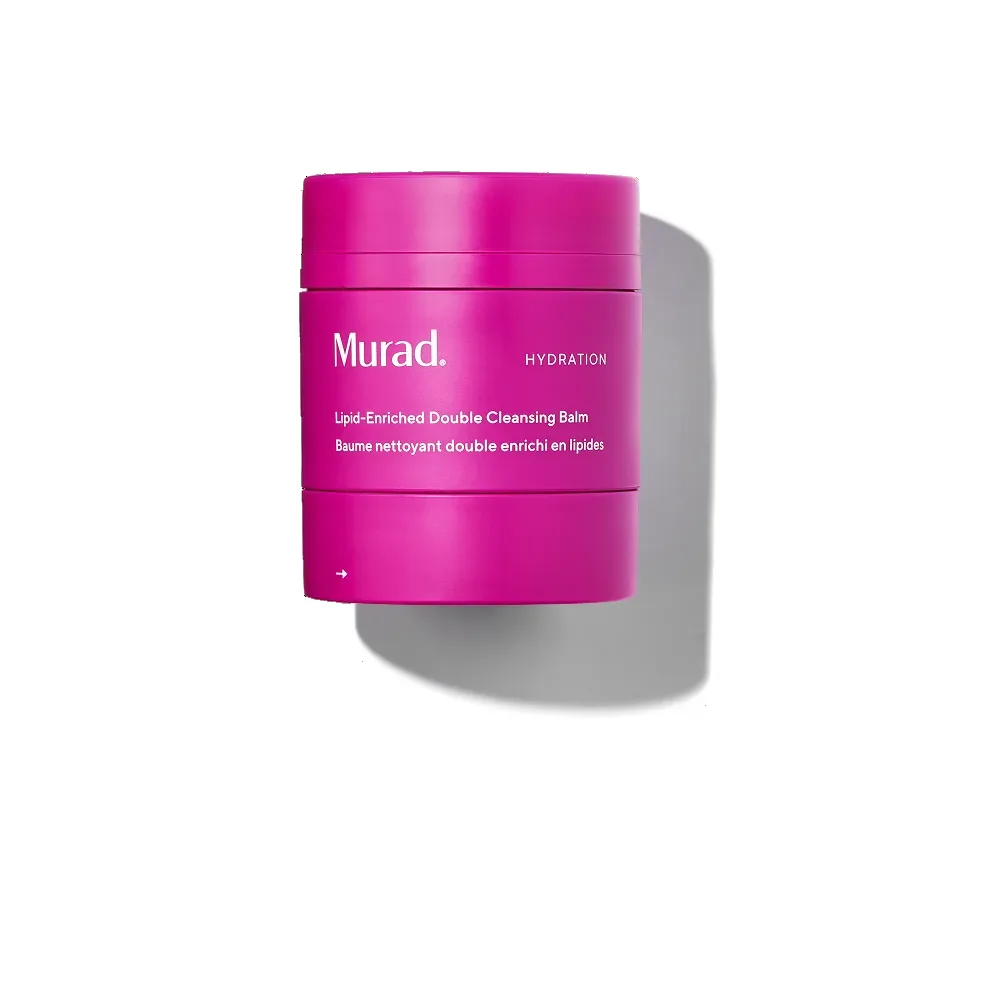 Lipid-Enriched Cleansing Balm
 Lipid-Enriched Double Cleansing Balm
Murad's first cleansing balm is meaningfully more than a basic plant-oil formula — the 'lipid-enriched' chemistry adds glycolipids and sphingolipids that support barrier integrity during the cleansing process, while the Camellia japonica oil and dual-ester cleansing base handle the makeup-removal work. At $35 for 50ml, the price is competitive within the prestige cleansing balm category. The fragrance and lemon peel oil inclusion is the one decision that limits sensitive-skin compatibility.
 Clean Beauty Cult Classic
 Green Clean Makeup Removing Cleansing Balm
Farmacy Green Clean is the cleansing balm that converted an entire generation of micellar water loyalists to the double-cleanse method. It dissolves everything from stubborn SPF to waterproof mascara with genuine elegance, though the essential oil blend means sensitive skin types should reach for the fragrance-free version instead.
The full waxes guide
Before humectants became the darling of the skincare internet, waxes were quietly doing the hard work of keeping skin intact — and they still are.
Found in everything from drugstore lip balms to clinical barrier creams, waxes form a physical seal on the skin surface that slows water loss without the heaviness of a petroleum-based occlusive. Their long safety record and formulation flexibility make them one of the most underappreciated workhorses on the INCI list.
How it's regulated in the US
FDA does not classify ingredients — it classifies products, by what they are sold to do. The same molecule can be a drug active in one product and a cosmetic ingredient in the next, and only the claim on the label decides which. What follows is a statement about that legal standing, not about whether it works — the evidence question is answered separately above.
Cosmetic Waxes is a cosmetic ingredient in the US: no OTC monograph covers it and it is not an active in any FDA-approved drug, so a product built around it is a cosmetic rather than a drug.
The safety and barrier-supporting function of cosmetic waxes — beeswax, carnauba, and candelilla in particular — rest on decades of use and formal CIR (Cosmetic Ingredient Review) safety assessments; the Panel deemed them safe as used in 1984 and, on re-evaluation in 2003, concluded the original assessment remained valid. A 2023 narrative review in the Journal of Cosmetic Dermatology (Nong et al.) summarizes beeswax's role in reducing transepidermal water loss and supporting the barrier in conditions such as dermatitis, psoriasis, and burns; notably, that same review found beeswax was the *least* effective of the materials tested (versus honey and olive oil) at suppressing S. aureus and C. albicans growth, so its intrinsic antimicrobial activity is real but modest. Strong evidence supports waxes as structure-building occlusives and emollients; there is no claim of anti-aging or brightening activity, nor would these barrier materials be expected to deliver it. The main clinical caveat is beeswax-contact allergy, which can co-occur with propolis sensitivity — a 2019 study in Contact Dermatitis (Nyman et al.) found that many cheilitis and facial-dermatitis patients reacting to beeswax also reacted to propolis.
How it works
Picture a material that pours like an oil under your fingertip but holds its shape in the jar — that dual personality is the whole point. Waxes are largely long-chain esters (fatty alcohols bound to fatty acids) that stay solid at room temperature yet soften and spread on contact with skin warmth. Once applied, they resolidify into a continuous, hydrophobic film resting on top of the stratum corneum. That film doesn't suffocate skin in any meaningful sense, but it sharply slows the passive escape of water vapor — a reduction dermatologists quantify as lower transepidermal water loss (TEWL). The practical upshot is that the moisture already in the tissue lingers longer, giving a compromised barrier room to recover. Occlusion is only half the job. Waxes also behave as emollients, settling into the microscopic gaps between flattened corneocytes to smooth roughness and improve slip — that soft, non-draggy glide you feel from a good balm. Carnauba (from the Brazilian palm Copernicia cerifera) is among the hardest natural waxes and is used at low levels for structure and gloss. Candelilla (from the Mexican shrub Euphorbia cerifera) binds oils efficiently and hardens sticks without tackiness, which is why vegan formulators lean on it. Beeswax (Cera Alba) sits between the two and contributes cohesion plus a modest antimicrobial effect from its naturally occurring esters and trace propolis-derived compounds. Synthetic and rice-bran waxes behave similarly but with tighter, more predictable melting points.
Key benefits
- Forms a hydrophobic surface film that measurably lowers transepidermal water loss on compromised skin
- Softens and smooths rough lip and body skin through emollient gap-filling between corneocytes
- Gives balms, sticks, and rich creams firm structure and staying power without a greasy feel
- Beeswax contributes modest intrinsic antimicrobial activity from its esters and trace propolis compounds
- Commonly cited as low on comedogenicity scales (carnauba and candelilla around 1/5, beeswax around 2/5)
- Plant-derived carnauba and candelilla deliver comparable barrier and structural performance to beeswax for vegan formulas
Concentration & usage
Use levels swing widely by format. Stick products like lip balms and solid balms typically run 10–30% beeswax or candelilla to hold a firm, portable shape. Creams and jars use far less — roughly 5–20% for medium-hardness waxes like beeswax and candelilla, and under 5% for hard waxes like carnauba, where too much turns the texture gritty. On an INCI list, scan for Cera Alba (beeswax), Copernicia Cerifera (Carnauba) Wax, Euphorbia Cerifera (Candelilla) Cera, Cera Carnauba, or Synthetic Wax — the last is common in products avoiding animal- and plant-derived waxes. Placement is a clue to dose: a wax in the first half of the list is doing structural, occlusive work, while one near the tail of a long list sits at low percentages and is mostly tuning feel and texture. There is no meaningful pH dependence here — these are oil-phase materials, so they're unaffected by a formula's pH.
Who it's for & who should be cautious
Who it's for
Anyone dealing with dry, chapped, or barrier-compromised skin will find waxes baked into many of the most effective repairing products in their routine. They shine in lip care, hand creams, and overnight barrier balms, where a persistent occlusive film is exactly what the skin is asking for. People who find petrolatum too heavy or slick often get along better with wax-based formulas, since the texture tends to be drier and less viscous at room temperature.
Who should be cautious
Anyone with a confirmed beeswax allergy should read INCI lists carefully and reach for carnauba- or candelilla-based products instead. Because beeswax sensitivity can travel with propolis sensitivity, a prior reaction to a propolis-containing product is reason to treat beeswax with caution and consider patch testing. People with very oily, congestion-prone skin may want to keep heavy wax-rich balms off the face — though at the thin or rinse-off amounts most products use, real-world pore-clogging is uncommon.
Pairs with & conflicts
Myths & facts
Myth: Waxes clog pores and cause breakouts
Reality: Carnauba and candelilla are commonly rated around 1 out of 5 on comedogenicity scales, with beeswax near 2/5 — and those scales are informal industry references, not rigorous clinical measures. At the concentrations used in most skincare and lip products, pore-clogging isn't a documented problem for the majority of users. The reputation likely traces to heavier wax-adjacent ingredients or to occasional reactions to propolis traces in lower-grade beeswax.
Myth: All waxes come from bees, so they're off-limits in vegan products
Reality: Only beeswax is animal-derived. Carnauba comes from the leaves of a Brazilian palm, candelilla from a Mexican desert shrub, and rice-bran and synthetic waxes have no animal origin at all. Vegan formulators have relied on these alternatives for decades, and for most product formats the barrier and structural performance is hard to tell apart.
Myth: Waxes just sit there and do nothing but trap moisture
Reality: Slowing TEWL is itself a worthwhile intervention — a leaky barrier loses water faster, which stalls healing and amplifies sensitivity. On top of that, waxes act as emollients that smooth the surface texture of the stratum corneum, and beeswax adds a modest antimicrobial contribution. A 2023 review also points to wax-based formulas supporting the barrier in mild inflammatory skin conditions, though they remain supportive ingredients rather than active treatments.
Frequently asked questions
How do beeswax, carnauba, and candelilla actually differ inside a product?
All three work as occlusives and structure-builders, but they part ways on hardness and origin. Carnauba, from a Brazilian palm, is the hardest and adds high gloss at low percentages. Candelilla, from a Mexican shrub, is a mid-hardness vegan wax that's a staple in lip balms and sticks. Beeswax is the most familiar, lends a slightly tacky, cohesive feel, and carries minor antimicrobial compounds — but it's the only one of the three that isn't vegan.
I react to honey — does that mean I should steer clear of beeswax?
Honey allergy and beeswax allergy are separate sensitivities and don't reliably predict one another. Beeswax allergy tracks much more closely with propolis sensitivity, so a past contact reaction to propolis or to bee-related products on the skin is the more meaningful warning sign. Only a patch test with beeswax can confirm it, and an allergist can advise whether full avoidance is warranted in your case.
Is a wax-based balm a good overnight occlusive for dry or eczema-prone skin?
Yes — this is one of the strongest reasons to reach for a wax-containing product. Sealing in a wax-rich balm or ointment as the last step of a nighttime routine curbs overnight TEWL and creates a humid micro-climate that supports repair. Wax- and petrolatum-based formulas are frequently recommended for eczema care, especially on the hands and lips.
Do waxes go rancid the way plant oils eventually do?
Waxes are far more stable than plant oils because they're light on the unsaturated fatty-acid chains that oxidize and spoil. A well-stored lip balm or wax-based cream generally holds quality for 12–24 months, and many wax-dominant formulas keep well past that. The bigger spoilage risk in emulsified products is microbial contamination, not the wax itself breaking down.
Why does my lip balm feel waxy and draggy instead of gliding on?
It usually comes down to the wax type and ratio. Balms leaning hard on carnauba — without enough softening oils to balance it — can feel dry or slightly gritty going on. Formulas that blend wax with emollient oils and butters apply far more smoothly. A draggy feel points to an off oil-to-wax ratio in that particular product, not a flaw inherent to waxes as a category.
Are synthetic waxes any safer or better than the natural ones?
Neither is inherently superior — the choice shapes texture, sourcing, and formulation control more than safety. Synthetic waxes offer tightly controlled melting points and very consistent behavior, handy where stability across temperatures matters. Natural waxes bring trace extras — esters and flavonoids in beeswax, small amounts of other plant compounds in carnauba. Both carry strong safety profiles under CIR assessment.