Lavender (Lavandula angustifolia)
Products with Lavender (Lavandula angustifolia)
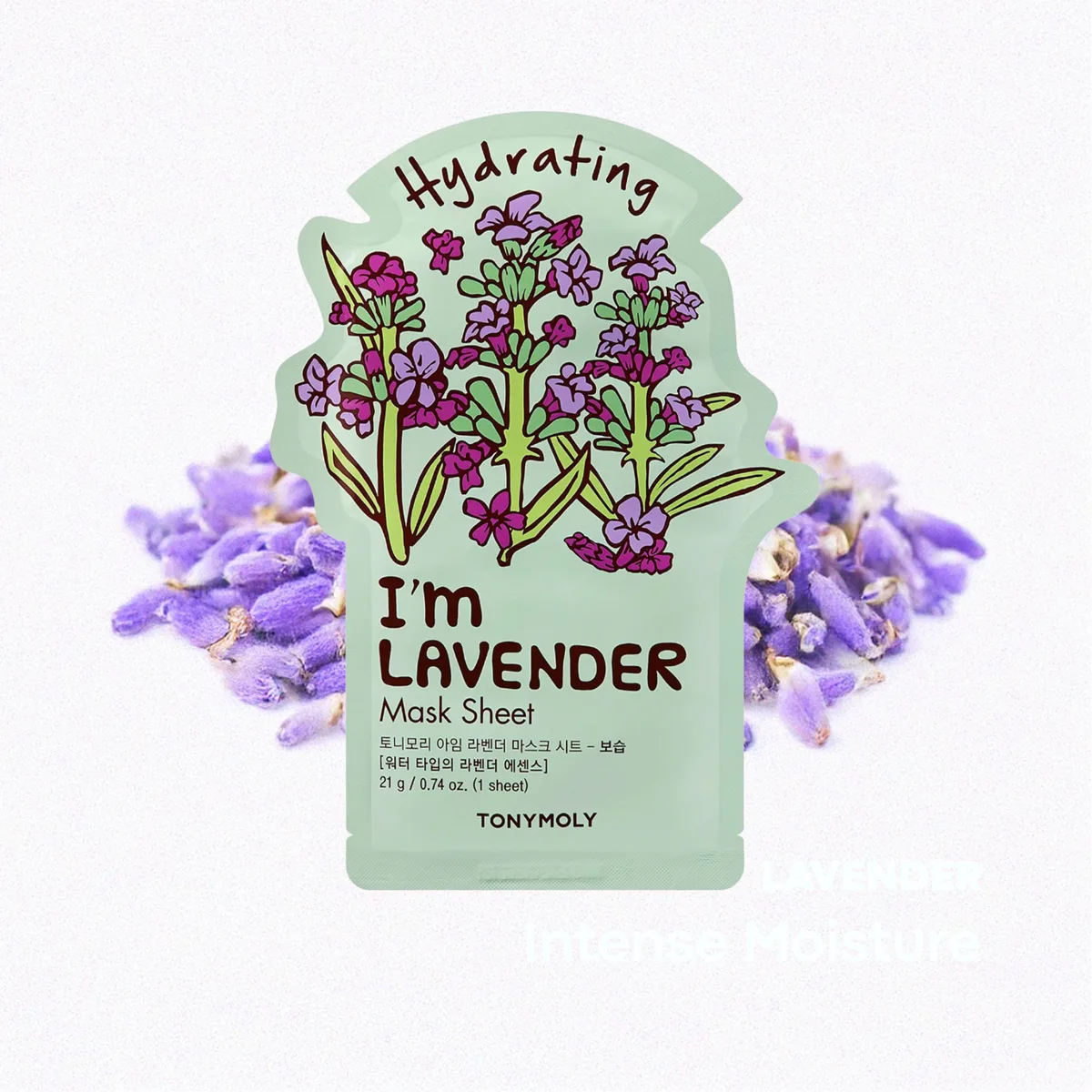 Soothing by Scent, Not by Formula
 I AM Soothing Sheet Masks
The calming in these six perfumed humectant sheets comes from the allantoin, panthenol and water that every TONYMOLY sheet contains, sold as soothing on the strength of lavender, hemp and honey cartoons. The flagship Lavender sheet stacks three aromatic irritants, the Hemp sheet lists a fragrance molecule the EU has banned, and only the Aloe and Cactus sheets belong anywhere near sensitive skin; pleasant on a calm face, a gamble on a reactive one.
 Budget Tone-Up Sunscreen
 Tone Up UV Essence Lavender SPF 50+
A genuinely clever budget sunscreen: a modern, photostable hybrid filter system plus a lavender color-correcting tint that instantly cancels sallow dullness — all at a true drugstore price. The optical brightening is real and flattering. The high alcohol content and added fragrance keep it from suiting dry or sensitive skin, and the lavender cast favors lighter complexions.
 Bedtime Hydration Treat
 Moisture Bomb Night Sheet Mask
A pleasant, lavender-scented hydration treat that frames an ordinary humectant sheet mask as a bedtime ritual, and at a few dollars it mostly earns the framing. Skin looks plumper and refreshed by morning, but the 'night' name oversells a 15-minute soak, and the lavender oil plus fragrance make it a poor choice for reactive skin.
 Farm-Story Everyday Lotion
 Body Lotion
A well-made light body lotion with more barrier substance than fifteen dollars usually buys, glycerin second and niacinamide seventh, in a handsome aluminium bottle with a farm story attached. The avocado oil's origin is a reason to like the purchase, not a reason to expect a different result. It suits normal to dry skin that likes lavender, falls short on winter shins, and is the wrong pick for eczema-prone skin because of that lavender.
 Bedtime Toner
 Lavender Facial Toner
The Original Thayers toner wearing lavender: the same alcohol-free witch hazel, aloe and glycerin comfort, the same bottomless bottle, and a scent that turns a cotton-pad step into a small evening ritual. Buy it for the smell and the softness. Don't buy it for redness-prone skin on the strength of the word 'calming', because lavender plus added fragrance is exactly what reactive skin should avoid.
 Golden Glow, Mixed Message
 Turmeric Face Oil
A cheap, deep-amber oil with turmeric second on the list and genuinely good oat and jojoba lipids that leave dry skin soft and glowing by morning. It is sold as clearing and brightening, and its coconut oil and lavender essential oil make it neither for the oily or reactive faces those words attract. Dry, non-acne-prone skin wanting a golden winter glow gets a bargain; everyone else gets a lesson in reading the fifth ingredient.
 Budget Cushion Cream
 Advanced Peptide Recovery Cushion Cream with Adaptogens
A bouncy, genuinely hydrating glycerin-urea-niacinamide cream with an olive-ester and mango-butter base, at eighteen dollars for two ounces, which is the real news. The peptides sit at the very end of the list and the six adaptogens are a word without a topical meaning, so buy it as a good cheap cushion moisturizer with a niacinamide bonus and ignore the name. Fragrance and lavender keep it off reactive skin.
 Salon Post-Shave Lotion
 After Shave Moisturizer
A light mineral oil and glycerin lotion with allantoin at a working position that takes the sting out of a fresh shave within a minute or two and moisturises the jaw without grease, which the small review record confirms. It then applies a lavender-citrus fragrance with five declared allergens, two dyes and a formaldehyde-releasing preservative to skin a blade has just opened, adds comedogenic esters for a product used on the beard line, and charges eighteen dollars for two ounces; a competent post-shave moisturiser for resilient, non-oily skin, and an easy one to beat.
 Budget-Friendly Daily Cleanser
 Barber Grade Face Wash
A solid, no-nonsense drugstore face wash that does exactly what it promises — cleans your face without drama, residue, or a complicated ingredient list. It won't transform your skin, but at under $10, it's a reliable daily driver for men with normal-to-oily skin who want something better than bar soap.
 Sensitive-Skin Cleansing-Oil Pick
 Essence In Cleansing Oil
The cleansing oil that finally pairs with d program's sensitive-skin cleansing-foam philosophy — Japan quasi-drug certified stearyl glycyrrhetinate active in a gentle ester-and-jojoba base, with the minimal lavender note that reads as calming rather than perfumed. The default sensitive-skin first-cleanse pick for anyone who's been waiting for d program to make one.
 Best of the Men's Line
 Pre-Shave Conditioner
The best product in the brand's men's line and one of the few in its whole range a modern formulator would sign off on: a fourteen-ingredient, oil-free, paraben-free propylene glycol and carbomer gel that holds water against the stubble for a minute before the lather, so tough beards cut with less drag, fewer passes and less razor burn, for eight dollars a jar that lasts three months. Lavender essential oil and two dyes on skin about to be shaved are the only real reservations, and a warm flannel does much of the same job for free.
 Niacinamide for Dry Skin
 Niacinamide Serum
The rare niacinamide serum built for dry skin: a properly dosed niacinamide, third on the list, in a creamy olive-and-avocado lotion that doubles as a light moisturizer, in a 60ml bottle priced like most 30ml serums. Oily skin will find it too rich, and the lavender oil is an odd choice for a calming product, but for dry and combination skin it is a quiet, dependable workhorse.
 Lighter Soothing Moisturizer
 Cellus Mild Moisture Cream
A pleasant, lighter soothing moisturizer with genuine calming botanicals — centella, green tea, beta-glucan — and comfortable NMF hydration for normal-to-combination skin, less occlusive than the brand's Deep cream. The honest contradiction is in its name: 'Mild' is undercut by a heavy aromatherapy essential-oil blend (lavender, bergamot, rose, sandalwood, myrrh) that raises irritation risk and makes it a poor fit for the sensitive skin the name implies.
 Dermatologist Multi-Acid Treatment
 Lytic Tx
Epionce dermatologist-developed exfoliating treatment combining salicylic acid + azelaic acid + willow bark + barrier-supportive lipid pool + multi-essential-oil aromatic profile. Older Epionce formulation with extensive essential oil pool substantially limits sensitive-skin compatibility. Multi-acid + multi-essential-oil combination requires aromatherapy-tolerant non-restricted routines.
 Heritage Ceramide Mist
 Good Cera Super Ceramide Mist
A refreshing facial mist with genuine barrier substance from Holika Holika's cult Good Cera line — built on the proper ceramide-cholesterol-phytosphingosine lipid trio, not just ceramides, with soothing amaranth-and-elm botanicals. As a refresh it's a cut above scented water. But two honest limits apply: a mist's brief contact and lack of occlusion cap the barrier benefit, and the essential-oil fragrance sprayed over the whole face raises irritation risk; the cholesterol also makes it non-vegan.
 Six-Dollar Green Tea Staple
 Green Tea Lotion
A six-dollar, 150-millilitre plant-oil lotion with purified EGCG, tea-seed oil and a proper humectant trio, which is a sentence that should not be possible and somehow is. It is a light, comfortable daily moisturizer for combination and normal skin, scented with lavender oil that sensitive users will wish it had left out, and too thin for dry skin alone. Judged on value it is close to unbeatable; judged on formula it is honest and a little old-fashioned.
 Dry-Skin Shower Gel
 Body Wash Oil
Not an oil, and better for it: a body wash built on two amphoteric surfactants and nothing harsher, with a real avocado oil dose and a conditioning polymer that leaves dry skin soft instead of squeaky. It is one of the gentlest washes at sixteen dollars. The lavender sits fifth with four declared allergens behind it, which rules out the eczema-prone skin that would gain most, and the lather is thin by design.
 Ceramide Barrier Toner
 Cera Barrier Moisture Active Toner
A barrier-repair toner with an unusually complete ceramide-and-phytosterol core — five ceramides, beta-sitosterol, glycosphingolipids and a gentle PHA — in a rich, milky, nourishing format that's a genuine value at 200ml. The serious catch: a heavy essential-oil fragrance blend that contradicts its barrier-care purpose and raises irritation risk for the sensitive, compromised skin it's aimed at. Lovely for resilient dry skin; the wrong call for reactive skin.
 Loaded Barrier Cream-Serum
 Cera Barrier Moisture Active Cream in Serum
The maximalist of the Cera Barrier line: the complete five-ceramide barrier complex plus an extensive amino-acid/NMF blend, copper peptide and hyaluronic acid, in a lighter, faster-absorbing cream-serum. Genuinely substantive hydration and barrier repair. The tradeoff is real, though — it brings back the heavy essential-oil fragrance the plain cream omits, isn't vegan (shellac-derived aleuritic acid), and its rich base doesn't suit oily or sensitive skin.
 Ceramide Hydrating Mist
 Cera Barrier Moisture Active Mist
A facial mist with genuine barrier substance — a four-ceramide-and-phytosterol complex plus soothing purslane, not just scented water — that gives a pleasant, lightly conditioning refresh. But two honest limits apply: a mist's brief contact and lack of occlusion cap how much those ceramides can do, and the heavy essential-oil fragrance blend, sprayed over the whole face and near the eyes, raises irritation risk and undercuts the barrier framing. Nice for resilient skin; not for sensitive.
 The Restaurant-Bathroom Icon
 Resurrection Aromatique Hand Wash
The most famous hand soap in the world is a genuinely mild, sulfate-free gel with a glucoside-taurate-sultaine base and the mandarin-rosemary-cedar scent that turned a bathroom staple into a design object. The formula is competent and unremarkable, the essential oils rule it out for eczema-prone hands, and $49 for 500 mL buys the bottle and the smell, which is precisely what its buyers want and know they are paying for.
 Farmhouse Sink Soap
 Hand Wash
An honest liquid soap, sunflower and coconut oils saponified with lye, softened with glycerin and a shea-and-avocado superfat, in a handsome aluminium pump for ten dollars. It smells of lavender, not the eucalyptus the page claims, and it cleans the way real soap does: thoroughly, alkaline, and a little tight with frequent use. Right for a bathroom that wants to smell like a farm; wrong for eczema-prone hands.
 Sensitive-Skin Cleansing-Oil Pick
 Mild Touch Cleansing Oil
DHC's quietly impressive answer for sensitive, post-procedure, and barrier-compromised skin — a cleansing oil built around a Japan quasi-drug certified anti-inflammatory active rather than around makeup-removal aggression. Not the cleanser for stage-makeup wearers; the cleanser for anyone whose skin reacts to most other cleansing oils.
 Multi-Function J-Beauty Cleansing Gel
 Esthetic Cleansing Gel
A well-conceived multi-function J-beauty cleansing gel that consolidates makeup removal, lipase enzyme pore care, gentle cleansing, and pre-skincare priming into a single step. The hydration architecture keeps the formula from being stripping despite the active load, and the lipase enzyme is a genuinely useful addition for oily-skin and blackhead-prone users. The essential oil and fragrance combination limits sensitive-skin suitability, but for the broader oily-to-combination demographic the formula delivers consolidated cleansing convenience at drugstore pricing.
 Gentle Spa Clay Cleanser
 Clay Cleanser with Lavender
Sodashi's Clay Cleanser with Lavender quietly rewrites what a clay cleanser can be — gentle white kaolin suspended in cold-pressed macadamia, apricot and jojoba oils, so it clarifies without stripping and leaves dry skin soft instead of squeaky. The calming lavender and double duty as a quick mask are real perks; the premium price and no-lather format are the trade-offs.
 Cult Aromatherapy Toner
 Lotion Yon-Ka PS
Yon-Ka's Lotion PS is the cult aromatherapy toner that launched a brand — a fine, watery mist of the Quintessence essential-oil blend that's a genuine sensorial pleasure and lightly hydrating via glycerin. But strip away the heritage and the gorgeous scent and it's water, glycerin, and five essential oils at a luxury price, with a heavy allergen load that flatly contradicts its sensitive-skin marketing. Buy it for the ritual, eyes open.
 Niacinamide Brightening Cream
 Cellus White Moisture Cream
A niacinamide-based brightening moisturizer with genuine NMF hydration — niacinamide evens tone while an amino-acid/urea complex hydrates, on a comfortable shea-and-silicone base, with 'White' meaning brightening, not bleaching. The clear caveat is the same heavy aromatherapy essential-oil blend (lavender, bergamot, rose, sandalwood, myrrh) plus peppermint as the brand's other creams, which raises irritation and photosensitivity risk and rules it out for sensitive skin.
 Daily Grit in a Gentle Gel
 Clearly Corrective Brightening & Exfoliating Daily Cleanser
A genuinely gentle amino-acid gel with a hard mineral grit stirred through it, sold for twice-daily use under a brightening name its rinse-off extracts cannot honour. The base is excellent and the after-feel is polished, but the perlite makes daily use a question for anything but oily skin, the lavender rules out reactive faces, and thirty-nine dollars is a lot for a face wash that would be better without its own headline feature.
 Salon-Classic Mist
 Multi-Active Toner
The mist that smells like every Dermalogica facial you have ever had, and a perfectly competent hydrating toner underneath it: aloe, a full amino-acid complex and NMF salts genuinely prime skin for moisturizer. It is held back by exactly the thing that makes it beloved, a five-oil aromatic blend placed above the actives and four declared allergens, and by salon pricing for what is mostly water. Lovely if your skin is resilient; a bad idea if it is not.
 Nighttime Ritual Icon
 Midnight Recovery Concentrate
An iconic nighttime face oil that delivers genuine overnight radiance through a well-chosen blend of rosehip, evening primrose, and squalane. The heavy essential oil load is both its defining charm and its limiting factor — a bedtime ritual for those who can tolerate lavender, not for fragrance-reactive skin.
 Multi-Acid Leave-On Body Lotion
 Resurfacing Targeted Body Lotion
Grown Alchemist multi-acid leave-on body lotion with mandelic + lactic + salicylic acids + squalane + sodium lactate + panthenol hydration pool + distinctive aromatic essential oil blend. Substantive resurfacing body lotion pairing with the Resurfacing Body Cleanser companion. Multiple essential oils + fragrance allergens limit sensitive-skin appropriateness. $50 for 300 mL is premium luxury body lotion pricing.
 High-Matcha Hydrating Toner
 Matcha Biome Redness Relief Hydrating Toner
A lightweight, genuinely high-matcha (~5.9%) hydrating toner with real soothing substance — ferments, panthenol and calming botanicals — that makes a pleasant, comforting first layer. But it carries a contradiction worth knowing: despite the 'redness relief' name, it includes a fragrant essential-oil blend (artemisia, bitter orange, lavender, litsea) that's exactly what reactive skin should avoid. Lovely for fragrance-tolerant skin; the wrong call for genuinely sensitive skin.
 Hydrating Essence-Toner
 Cellus Revive Essence Toner
A genuinely more substantive essence-toner than the brand's mist — adenosine, a collagen-supporting peptide and multi-weight hyaluronic acid give real hydrating-and-smoothing substance, leaving skin plumped and soft. But it's significantly undercut by a heavy aromatherapy essential-oil blend (lavender, geranium, bergamot, rose, sandalwood, myrrh) that overshadows the actives and adds sensitization and photosensitivity risk, ruling it out for sensitive or sun-exposed skin.
 Hydrating-Firming Serum
 Cellus Aqualane Solution
A lightweight hydrating-and-firming serum with genuine, if gentle, actives — adenosine, an antioxidant peptide and a touch of squalane — that leaves skin soft and hydrated and offers mild smoothing over time. It's a pleasant, easy-layering serum. The honest caveats: the 'Aqualane' name oversells the squalane (it sits low in the list), and a citrus-and-lavender fragrance raises irritation and photosensitivity concerns, keeping it from sensitive skin.
 Oil-Control Serum
 A.C Control Serum
A green-tea-forward oil-control serum on Miguhara's signature botanical base, with menthol for an immediate cooling, mattifying hit. It genuinely helps oily skin feel less greasy and can calm breakouts over time, but a formula leaning on alcohol, menthol, lavender, and fragrance makes it an old-school pick best kept to oily, tolerant skin.
 Read the Percentages Twice
 Vitamin Derma Ampoule Brightening
A scented brightening lotion carried by a real 5% niacinamide dose, dressed up as a vitamin C ampoule it is not. It will soften post-acne marks over a couple of months at a fair $25, but the bergamot-lavender-geranium blend is a poor fit for pigment-prone skin, and the '130% melanin reduction' on the box is arithmetic, not evidence.
 Lightweight Multi-Seed Cleansing Oil
 Super Seed Cleansing Oil
A meaningfully lighter-feeling oil cleanser than the category default, built on a grape-and-apricot base with a 21-seed lipid library and a parsley-and-lavender flavor profile. Great for dry-to-normal skin that wants a luxurious PM cleanse without the heavy residue of castor-based classics; skip if lavender bothers you or you only ever wear light SPF.
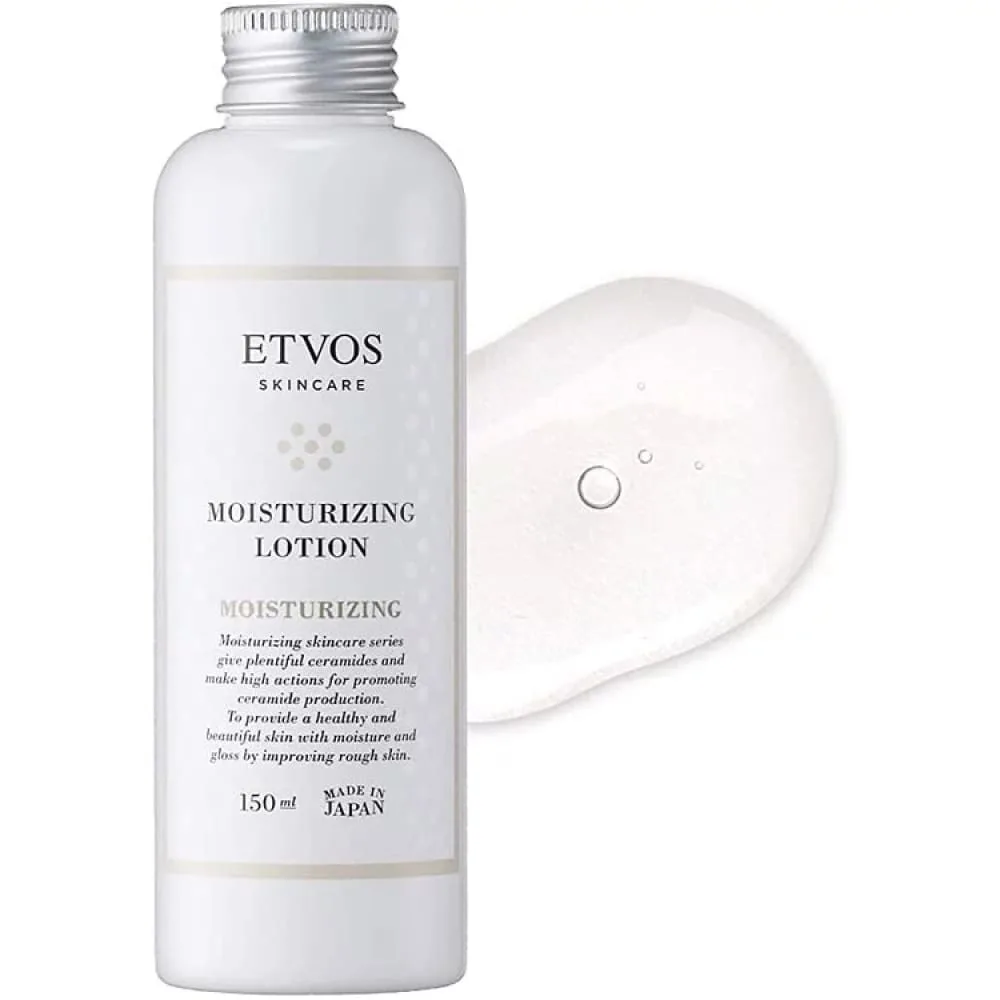 Sensitive-Skin Ceramide Toner
 Moisturizing Lotion
One of the most rigorously formulated sensitive-skin hydrating toners in the Japanese prestige market — five human-type ceramides plus five-amino-acid NMF complex plus multi-HA chemistry plus POs-Ca proprietary humectant. Genuinely barrier-strengthening chemistry that justifies the prestige pricing for reactive and atopic-dermatitis-prone skin.
 Natural-Origin Physical Exfoliating Cleanser
 Isdinceutics Essential Scrub Exfoliating Cleanser
Well-formulated physical exfoliating cleanser combining Mediterranean olive seed particles with gentle surfactant system, clary sage and lavender botanicals, glycerin, and allantoin in 95% natural origin formula at the ISDIN dermatologist-recommended brand tier. The natural-origin physical exfoliant approach addresses microbead concerns; the gentle particle size and supporting cast support appropriate twice-weekly use.
 Triple-Acid Resurfacing Body Wash
 Resurfacing Targeted Body Cleanser
Grown Alchemist triple-acid body cleanser with glycolic + lactic + salicylic acids + hydration buffer + sulfate-free mild surfactant system + distinctive aromatic essential oil blend. Substantive resurfacing body wash for keratosis pilaris + bacne + body texture contexts. Multiple essential oils + fragrance allergens limit sensitive-skin appropriateness. $42 for 300 mL is premium luxury body cleanser pricing.
 Evening Wind-Down Butter
 Egyptian Lavender + Moroccan Mint Beauty Butter
The same superb dual-shea body butter as 54 Thrones' Oprah-approved flagship, here dressed in an aromatherapy scent — calming Egyptian lavender meeting cool Moroccan mint. It's a gorgeous evening wind-down ritual for dry skin, but the real essential oils make it more polarizing and a touch riskier for sensitive skin than the gentle vanilla-honey original. Buy it for the relaxing scent; respect the lavender and mint if your skin reacts.
 Scented Glow Mask
 Airy Fit Sheet Mask Pomegranate
The prettiest-smelling member of Missha's budget mask line and, for that exact reason, the one to approach with care: five essential oils on a wet sheet held against the face for twenty minutes. Skin that tolerates fragrance gets a genuine, cheap, glowy hydration hit; the firming promise is water, and reactive skin should reach for the aloe instead.
 Adult-Acne Moisturizer
 Acne Biotic Moisturizer
A smart, well-built moisturizer for adult breakouts that gets the actives right, low-dose salicylic acid with a proper niacinamide level, and wraps them in emollients grown-up skin will appreciate. The prebiotic story is plausible but early, the essential-oil load is a genuine misstep for skin that is already inflamed, and seventy-seven dollars for 50 ml is a steep ask. Good for tolerant combination skin with hormonal chin breakouts; not for the reactive.
 Bedtime Body Ritual
 Dream Bio-Retinol Body Serum
Osea's Dream Bio-Retinol Body Serum extends the brand's signature algae-bio-retinol marketing into body care — a rich emollient serum with lavender aromatherapy in a bedtime ritual format. At $52 for 4oz, the value is reasonable for the clean-beauty category. The bio-retinol claim rests on limited-evidence plant extracts rather than true retinoid chemistry — treat it as a luxurious hydrating body serum rather than a clinical anti-aging treatment.
 Organic Aromatherapy Oil Cleanser
 Moisturizing Oil Cleanser + Makeup Remover
A genuinely lovely organic oil cleanser that melts makeup and sunscreen while conditioning dry skin, built on quality plant oils and wrapped in a calming aromatherapy blend. It cleanses gently without stripping. The honest catch is that the essential oils creating the spa experience — lavender, frankincense, bergamot — are also a real irritation risk for sensitive skin, and it carries a clean-luxury price.
 At-Home Multi-Acid Peel
 RX AHA BHA Peeling Serum
A genuine at-home multi-acid wash-off peel — glycolic, lactic and salicylic acids that really exfoliate — cushioned by an unusually thoughtful hydrating, soothing support cast (multi-weight HA, ectoin, niacinamide, panthenol). Effective for resilient skin that wants visible smoothing. The serious caveat: a heavy essential-oil blend applied to freshly-exfoliated skin is a high-irritation pairing that rules it out for sensitive or dry skin.
 Cleansing Oil for Oily Skin
 Pure Cleansing Oil Deep Clean
The cleansing oil for people who think they cannot use cleansing oils: grape seed and light esters that spread like a serum, a sophorolipid biosurfactant beside the emulsifier, and a milk-rinse that leaves an oily face clean and matte rather than coated. Blackheads loosen over weeks of nightly massage and sunscreen comes off completely. It is a smart, well-priced oily-skin cleanser — with bergamot and lavender essential oils that reactive skin will not thank it for, and a second cleanse still required.
 Spa-Scent Splurge
 Conditioning Hand + Body Wash
A thoroughly pleasant, thoroughly scented body wash whose entire case rests on fourteen essential oils and the way a bathroom smells after using it. The cleansing underneath is a strong sulfonate system with two humectants for softness, which suits normal and oily skin and does nothing for dry or reactive skin that a fragrance-free wash would not do better for a third of the price.
 Big Dose, Big Scent
 Vitamin C Toner
A rare thing: a toner with a serious dose of vitamin C derivative — sodium ascorbyl phosphate right behind water — at a low price with six thousand reviewers behind it. It is also a witch-hazel astringent carrying lavender, geranium, tea tree and carrot seed oils and four declared allergens, which makes it a fresh, brightening pick for resilient oily skin and a stinging mistake for anyone reactive.
 30-Minute Acid Foot Peel
 Lavender Therapy Foot Peel Mask
A cheap, effective acid foot peel that combines lactic, glycolic and salicylic acids to shed thick, rough skin over the week after a 30-minute soak. It works, but its alcohol-first base and heavy essential-oil blend make it harsh for sensitive skin, and like all acid foot peels it is unsuitable for broken skin, diabetes or poor circulation.
 Wellness Ritual Luxury
 Vagus Nerve Oil
A beautifully blended aromatherapy oil that turns evening wind-down into a genuine ritual — but the wellness branding stretches the science, and at $96 per ounce, you're paying a steep premium for what is essentially a high-quality essential oil blend in carrier oils.
 Clean-Beauty Daily Cleanser
 Fantastic Face Wash
Ursa Major's breakout bestseller is a genuinely gentle, sulfate-free gel cleanser that adds a PHA and botanical antioxidants for mild daily exfoliation, all wrapped in a signature forest-citrus aromatherapy. It cleans without stripping and earns its clean-beauty stripes — but the heavy essential-oil load makes it a real consideration for sensitive or reactive skin.
 Bedtime Ritual Pick
 Sound Sleep Cocoon
A genuinely pleasant, lightweight hydrating night gel-cream wrapped in a clever aromatherapy gimmick. The tamarind-and-glycerin base softens and plumps skin by morning, and antioxidants add real value, but the sleep and anti-fatigue claims are soft, the lavender essential oils can irritate, and $89 for 50ml asks you to pay for the ritual as much as the formula.
 Bedtime Ritual Facial Oil
 Superskin Concentrate for Night
A lovingly simple 100% plant-oil treatment that earns its cult following with a smart light-to-rich oil structure and a genuinely sleep-inducing aromatherapy scent. It won't replace your retinol or peptide serum, but as a nightly barrier-comforting ritual for dry and mature skin it's hard to fault — assuming you can live with the essential oil blend.
 Aromatherapeutic Antioxidant Oil
 The Super Couple
A genuinely high-quality antioxidant face oil — supercritical chia and potent astaxanthin are real assets that nourish and protect dry skin beautifully — wrapped in one of clean beauty's most elaborate essential-oil blends. That perfume-like aroma is the draw for some and the dealbreaker for others: it's a heavy load of recognized sensitizers that makes the oil a poor fit for sensitive skin, in real tension with its gentle positioning, and it's luxury-priced.
 Heritage Herbal Toner
 Facial Toner
A traditional astringent toner from the early 1970s that earns its heritage status without trying to match modern hydrating-essence trends — anthyllis vulneraria in the second INCI slot, witch hazel bark-leaf extract, and a five-essential-oil aromatic blend in an alcohol base. The natural-fragrance allergen panel is extensive and the alcohol content is real; whether this works for you depends entirely on skin state and aromatic preferences.
 Organic Mushroom Cleansing Oil
 Adaptogenic Cleansing Oil
INIKA's Adaptogenic Cleansing Oil is a genuinely effective, certified-organic emulsifying cleansing oil: a light ester-and-castor base dissolves makeup and SPF, then rinses clean with no greasy film, and an adaptogenic mushroom complex adds a clean-wellness accent. It works well as a first cleanse — but the mushrooms do little in a rinse-off, the citrus-and-essential-oil load limits gentleness, and the 80ml size makes the price feel steep.
 Luxury Sensorial Pick
 8-Flower Golden Nectar
A genuinely sensorial luxury face oil that does more actual skincare work than most $175 botanical oils — tetrahexyldecyl ascorbate at functional placement, a sub-1% salicylic acid layer, plus the eight-flower aromatic blend that's been the brand's calling card for years. The price is for the experience, packaging, and prestige; the active layer is the part most reviews underrate, and the fragrance load is the reason it isn't a sensitive-skin recommendation.
 Cult Aromatherapy Inhalation Oil
 Altitude Oil
A cult aromatherapy inhalation oil — jojoba carrying eucalyptus, peppermint, lavender, and pine — meant to be dabbed on pulse points and breathed in to clear the head and steady the nerves. It's a lovely, well-composed sensory object that travelers and stress-cases adore. Judged as skincare it isn't one, and at $58 for 10ml of concentrated essential oils, it's a wellness indulgence, not a treatment.
 Dermatologist Occlusive Eye Cream
 Renewal Eye Cream
Epionce dermatologist-developed eye cream with substantial occlusive + barrier-supportive pool (petrolatum + cholesterol esters + shea butter) + phytosphingosine + quercetin antioxidant + mild AHA pair + multi-botanical pool + extensive essential oil aromatic profile. Older Epionce formulation with extensive essential oils on delicate eye area substantially limits sensitive routines.
The full lavender (lavandula angustifolia) guide
Most skincare encyclopedias lead with lavender's calming scent — that's the marketing story.
The actual ingredient story is more nuanced: lavender's primary actives, linalool and linalyl acetate, show real antimicrobial and anti-inflammatory mechanisms in lab and animal work, but the human clinical evidence remains thin, and those same compounds can become potent contact allergens once they oxidize in an open jar. Understanding which version of lavender you're getting — and whether the formula protects those actives from air exposure — often matters more than the ingredient name on the front of the bottle.
How it's regulated in the US
FDA does not classify ingredients — it classifies products, by what they are sold to do. The same molecule can be a drug active in one product and a cosmetic ingredient in the next, and only the claim on the label decides which. What follows is a statement about that legal standing, not about whether it works — the evidence question is answered separately above.
Cosmetic Lavender (Lavandula angustifolia) is a cosmetic ingredient in the US: no OTC monograph covers it and it is not an active in any FDA-approved drug, so a product built around it is a cosmetic rather than a drug.
Most of the supporting science for lavender in skincare comes from in vitro and animal studies rather than human trials. A 2022 mouse study (PMC9388787) found that a topical 2% combination of linalool and linalyl acetate eased imiquimod-induced, psoriasis-like inflammation, reducing NF-κB and IL-17 expression and largely restoring Th-17 and Th-1 cytokine profiles. A 2016 rat wound-healing study (PMC4880962) showed lavender oil accelerated wound contraction and induced type I and III collagen alongside elevated TGF-β. Antimicrobial activity against Cutibacterium acnes (formerly Propionibacterium acnes) has been reported in several in vitro assays, though often at concentrations higher than a typical cosmetic dose. What's largely absent is robust randomized, controlled human data isolating lavender at defined concentrations in finished formulations — a 2023 scoping review of Lavandula angustifolia as a complementary therapy (PMC10160692) underscores how often the available work relies on small samples or inconsistent dosing. Meanwhile, decades of patch-test surveillance document oxidized lavender oil as a meaningful fragrance allergen. The honest read: plausible mechanisms, limited human evidence, and a real sensitization risk once the oil meets air.
How it works
Lavender's active fraction is dominated by two monoterpenoid compounds: linalool (roughly 30–40% of true lavender oil) and linalyl acetate (a further 30–35%). They appear to work through complementary pathways rather than a single mechanism. In experimental models, linalool modulates the Th-17 immune axis — lowering pro-inflammatory cytokines such as IL-17 and IL-22 that drive conditions like psoriasis and reactive skin — while linalyl acetate leans on the Th-1 axis, dampening TNF-alpha and IL-1 beta. Both have been shown to inhibit NF-kB, the master inflammatory signaling switch, which helps explain why lavender has long been applied to irritated, inflamed skin. On the antimicrobial side, linalool disrupts bacterial cell membranes and has demonstrated activity against Cutibacterium acnes in lab assays, though the concentrations tested frequently exceed what a finished skincare product delivers. Wound-healing research in rodents points to a third route: lavender oil appears to upregulate TGF-beta, stimulate fibroblast activity, and induce type I and III collagen, supporting faster granulation and contraction. There's also a modest free-radical scavenging component, with linalool behaving as a mild antioxidant under oxidative stress. The catch is stability. Linalool autoxidizes on air exposure, generating hydroperoxides that are far more allergenic than the parent molecule — so a formula lacking antioxidant protection or airless packaging can drift from soothing toward sensitizing over its shelf life.
Key benefits
- Antimicrobial action against acne-associated bacteria via membrane disruption (mostly in vitro)
- Anti-inflammatory signaling: NF-kB inhibition and Th-17/Th-1 cytokine modulation in animal models
- Supports early wound contraction and collagen induction through TGF-beta upregulation
- Mild antioxidant behavior from linalool under oxidative stress
- Soothing feel on reactive skin at low concentrations for those who tolerate fragrance
- Long history of traditional use for minor irritation, burns, and insect reactions
Concentration & usage
In skincare, lavender essential oil (INCI: Lavandula Angustifolia Oil) typically appears at 0.1–2% in leave-on products and up to 3–5% in rinse-off formulations. Safety reviews point to around 0.1% as a conservatively well-tolerated level in leave-on emulsions. Linalool — lavender's dominant compound — must be declared separately on EU labels in leave-on products above 0.001% (and above 0.01% in rinse-off), so seeing it spelled out on an INCI list is a reliable signal you're getting a functional amount rather than a trace. On a label, look for: Lavandula Angustifolia Oil (the full essential oil), Lavandula Angustifolia Flower Extract (a gentler, lower-linalool extract), or Lavandula Angustifolia (Lavender) Flower Water (hydrosol, the lowest allergen load). For sensitive or reactive skin, the hydrosol carries substantially less allergen risk than the neat essential oil.
Who it's for & who should be cautious
Who it's for
People with occasionally reactive, acne-prone, or inflamed skin who tolerate fragrance compounds well and gravitate toward botanically-formulated cleansers, body oils, and treatment products. Lavender tends to suit a routine where it isn't carrying the whole load — it plays best as a supportive, soothing note alongside better-evidenced anti-inflammatory ingredients. Anyone who has happily used lavender-containing products for years without a reaction can generally keep doing so.
Who should be cautious
Anyone with a confirmed fragrance allergy or known linalool sensitivity should steer clear — patch testing isn't optional here, and the EU specifically regulates lavender oils as declarable allergens. People with eczema or rosacea should tread carefully: despite frequent "for sensitive skin" marketing, oxidized lavender oil is a well-documented contact allergen in patch-test databases. Opaque, airless, or tightly sealed packaging slows oxidation, but if a lavender-containing product has been sitting open for months, the risk-benefit math has shifted in the wrong direction.
Pairs with & conflicts
Pairs well with: Chamomile Extract, Calendula Extract (Pot Marigold), Aloe Vera, Bisabolol (Alpha-Bisabolol), Tea Tree Oil (Melaleuca alternifolia), Colloidal Oatmeal, Blue Tansy (Tanacetum annuum), Rosehip Oil, Jojoba Oil, Plant & Seed Oils
Use with care alongside: Benzoyl Peroxide, Salicylic Acid (BHA), Glycolic Acid (AHA), Retinol
Myths & facts
Myth: Lavender is automatically safe for sensitive skin because it's natural and calming.
Reality: Lavender oil's main compounds — linalool and linalyl acetate — are regulated fragrance allergens in the EU, and both grow significantly more allergenic once oxidized by air. Patch-test surveillance repeatedly ranks lavender among the more common triggers of fragrance contact dermatitis. 'Natural' and 'safe for reactive skin' simply aren't the same thing here.
Myth: If lavender works in aromatherapy, the scent itself must be delivering the skin benefits.
Reality: The topical effects studied — antimicrobial, anti-inflammatory, wound-supporting — depend on direct skin contact with linalool and linalyl acetate, not inhalation. Lavender added purely for fragrance sits at concentrations far below those used in research and shouldn't be mistaken for a therapeutic dose.
Myth: Lavender repairs the skin barrier the way ceramides or panthenol do.
Reality: Animal studies show lavender oil can speed early granulation and collagen deposition via TGF-beta, but that's a wound-support mechanism, not lipid replenishment. It doesn't restore the barrier's ceramide-cholesterol-fatty-acid matrix; treating it as a barrier-repair active overstates a narrow, mostly preclinical finding.
Frequently asked questions
Is the lavender in my moisturizer actually doing something, or is it just there for scent?
It depends on where it falls in the ingredient list and which form is used. Lavandula angustifolia oil sitting in the upper portion of a list likely contributes linalool and linalyl acetate at levels where antimicrobial and anti-inflammatory effects are at least plausible. Tucked near the bottom alongside other fragrance components, it's mostly there to smell nice. The EU's mandatory linalool declaration (above 0.001% in leave-on products) is a handy way to gauge whether you're getting a meaningful amount.
Could lavender actually aggravate acne by irritating my skin?
For most people it won't, but sensitized individuals can develop contact dermatitis that mimics or worsens inflammatory breakouts. Lavender's antimicrobial activity against Cutibacterium acnes is real in lab settings, yet if your skin is already compromised or reactive, the fragrance-allergen load from the full essential oil can tip things toward irritation rather than relief. A lavender hydrosol is the gentler route in those cases.
Why does lavender appear on EU allergen labels separately when it's already listed as Lavandula angustifolia oil?
Because linalool — lavender's dominant compound — is individually regulated under EU cosmetics rules and must be named once it exceeds 0.001% in leave-on products, regardless of whether the parent oil is already on the label. A 2023 update extended this declaration approach to the oils themselves. The double listing is a transparency measure for people with confirmed linalool sensitization.
Does lavender oil get more irritating the longer a product is open?
It can, and that's a genuine concern. Linalool autoxidizes on contact with air, and the hydroperoxides that form are markedly more allergenic than fresh linalool — work in Contact Dermatitis (Sköld et al., 2008; Hagvall et al., 2008) established this clearly. Lavender in airless pumps or sealed packaging holds up better than lavender in open jars, and a heavily used, months-old lavender product carries a higher sensitization risk than a fresh one.
Is lavender okay to use while pregnant?
Lavender hydrosol (flower water) is generally regarded as low risk, while concentrated lavender essential oil over large areas is usually approached with more caution in pregnancy, given limited safety data and the potential for systemic linalool absorption. Sticking to low-concentration leave-on formulations rather than neat essential oil is the common-sense default, and confirming with your own healthcare provider is the right move for personalized guidance.
How do lavender essential oil, lavender extract, and lavender flower water differ in a formula?
Lavender essential oil (Lavandula angustifolia oil) is a steam-distilled concentrate rich in linalool and linalyl acetate — the most potent form, but also the highest allergen load. Lavender extract is typically an ethanol- or glycerin-based flower extraction that retains some polyphenols and flavonoids with softer fragrance and lower linalool. Lavender flower water (hydrosol) is the gentlest, with minimal essential-oil compounds. For reactive skin, the extract or hydrosol is the pragmatic pick.
- Clean Beauty & MarketingThe Most Common Contact Allergens in Skincare Are Overwhelmingly Plant-DerivedThe fourth most frequent positive patch test in North America is an oxidation product of a molecule that occurs naturally in lavender. Nobody synthesised it into your face cream.
- Natural & BotanicalA Product Can Be Scented Head to Toe and Still Say Fragrance-FreeEssential oils are declared by botanical name rather than as fragrance, which is why the most heavily perfumed products in the natural aisle can carry the reassuring word — and why the bottle gets more sensitising the longer you own it.