Melasma, Freckles, Sun Spots, and PIH: Telling Brown Spots Apart
Every brown mark gets lumped together as a 'dark spot,' but the four common types have different causes and answer to different treatments. Misidentifying yours is the most likely reason your serum 'isn't working.'
Read the preview
From the DermApproved blog, in Hyperpigmentation and Dark Spots: freckles, sun spots, melasma, and PIH, four brown marks that look almost identical and could not be more different underneath. Here's the trap the entire skincare aisle sets for you. It sells one thing, a dark spot corrector, for what are actually four separate problems with four separate causes and four separate fixes. So when you say nothing has ever worked, the odds are you've been treating the wrong one this whole time. And there's a genuinely alarming twist in the middle of this: one of these four spots gets worse from the exact treatment that erases another, and people find out the hard way. We teach you to tell them apart, and reveal the single prerequisite every one of them shares, at dermapproved.com/blog.
Why 'dark spot' is a useless diagnosis
The skincare aisle sells 'dark spot correctors' as if brown marks were a single problem with a single answer. They aren't. Four completely different things routinely get called dark spots, and they have almost nothing in common except color. One is genetic, one is accumulated sun damage, one is hormonal, and one is the aftermath of inflammation. They live at different depths, run on different biology, and respond to different treatments, and one of them actually gets worse from the exact procedure that erases another.
This is why the single most common complaint in pigmentation, 'I've tried everything and nothing works,' is usually not a product-failure story but an identification-failure story. If you're treating melasma like a sun spot, or a sun spot like post-acne marks, you will spend months and real money watching nothing happen. It also explains the opposite frustration, the spot that faded fast for a friend but not for you, because you were never dealing with the same thing in the first place. So before any serum, the useful question isn't which brightener to buy. It's which of the four you actually have, because the answer changes not just the product but whether a product is even the right tool at all.
Freckles and sun spots: the two that look similar and behave oppositely
Freckles, or ephelides, are the friendliest of the four. They're small, flat, tan-to-light-brown spots that show up on sun-exposed areas in genetically predisposed, usually fair-skinned people. The tell is seasonality: freckles darken in summer and fade in winter, because they're driven by melanocytes responding to UV rather than by any accumulated damage. They aren't harmful and don't require treatment beyond sun protection, which keeps them from deepening.
Solar lentigines, the marks people call 'sun spots,' 'age spots,' or 'liver spots,' look deceptively similar but behave oppositely. These are the permanent record of cumulative UV exposure, typically larger, more defined, and appearing on the face, hands, and chest with age. Crucially, they do not fade in winter, because they represent a stable increase in epidermal melanin and melanocyte activity, not a seasonal response. That permanence is also what makes them the most treatable with technology: because they're well-defined and superficial, solar lentigines respond well to lasers and consistent topical brighteners. A tyrosinase-inhibiting active like the The Ordinary Alpha Arbutin 2% + HA can gradually lighten them, though a professional laser is often the faster route. The distinction that matters: if it fades every winter, it's freckles and you leave it alone; if it's there year-round, it's a lentigo and you can actually treat it.
Melasma: the one you must not attack
Melasma is the problem child, and treating it like the others is how people make it worse. It appears as larger, symmetric patches of brown or grey-brown pigment, classically across the cheeks, forehead, and upper lip, and it's driven by a combination of hormones (pregnancy, oral contraceptives) and light exposure. It runs deeper and more diffusely than a sun spot, it's chronic and relapsing rather than a discrete mark, and it disproportionately affects women and people with medium-to-deep skin tones.
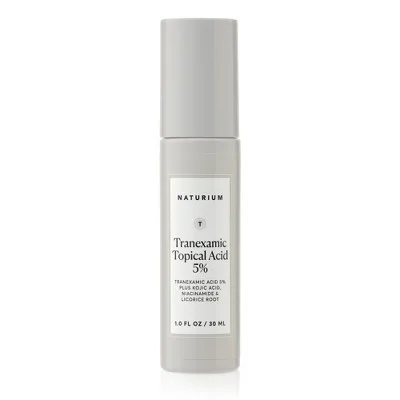
Here is the counterintuitive, essential fact: aggressive lasers can backfire on melasma. Because melasma involves overactive, easily-provoked melanocytes, the heat and inflammation of an aggressive laser can trigger rebound hyperpigmentation that leaves the melasma darker than before. Even low-fluence procedures carry meaningful recurrence rates, which is why an evidence-based review frames laser and light devices for melasma as high-risk with mixed results. The mainstay is instead gentle and patient: topical tyrosinase inhibitors, azelaic acid, and, increasingly, tranexamic acid, which works by inhibiting UV-induced plasmin activity in keratinocytes and has shown effectiveness comparable or superior to conventional therapies with fewer side effects. A gentle azelaic option like the The Ordinary Azelaic Acid Suspension 10% or a topical tranexamic formula such as Naturium Tranexamic Topical Acid 5% fits this cautious approach. Melasma is managed, not cured, and the goal is control without provocation.
PIH: the mark your last breakout left behind
Post-inflammatory hyperpigmentation is the flat brown or tan mark left after inflammation resolves, most commonly after acne, but also after eczema, a burn, a bug bite, or a picked spot. Unlike melasma, PIH maps directly onto wherever the inflammation happened, so its distribution is random rather than symmetric, and it has a clear cause-and-effect history: there was a pimple there, and now there's a spot.
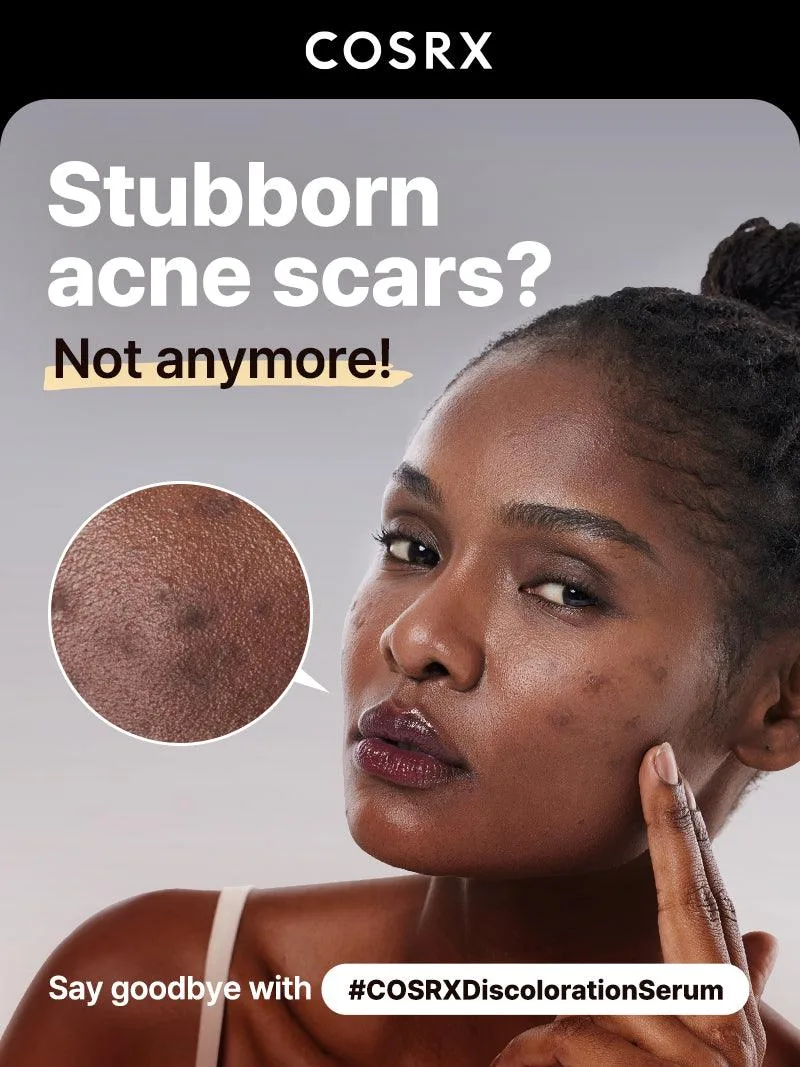
PIH is far more common and more stubborn in deeper skin tones, where melanocytes respond to inflammation with more pigment, and it can take months to fade on its own. The two-part strategy is to stop the inflammation that keeps generating new PIH (treating the acne, resisting the urge to pick) and to accelerate fading with tyrosinase-inhibiting topicals like azelaic acid, niacinamide, alpha arbutin, and vitamin C. A discoloration-focused serum such as the COSRX The Alpha-Arbutin 2 Discoloration Care Serum targets exactly this. The critical mindset is patience: epidermal PIH fades reliably with time and topicals, but rushing it with harsh treatments risks creating fresh inflammation and, ironically, more PIH. Tracking progress with photos over weeks, using our photo-tracker, is far more reassuring than the mirror, which is too close and too frequent to register slow change.
The one prerequisite every brown spot shares
Whatever you're treating, none of it holds without photoprotection, and here the science has moved beyond 'wear sunscreen.' Ultraviolet light drives all four to some degree, but for melasma and PIH in particular, visible light, the ordinary light from the sun and even screens, is now recognized as a significant driver of relapse. A standard clear sunscreen, even a high-SPF mineral one, does little against visible light.
The fix is tinted sunscreen containing iron oxides. A review of tinted sunscreens documents that iron oxides provide protection against visible light in addition to UV, and that tinted formulas are more effective than untinted ones at preventing melasma relapse, even enhancing the results of depigmenting treatments. For anyone with melasma or PIH, this isn't optional polish; it's the foundation the topicals are built on. Our sunscreen-finder can point you to iron-oxide tinted options. Treat photoprotection as the non-negotiable base layer, identify which of the four spots you actually have, and match the treatment to the biology, and the pigment problem that 'never responds to anything' usually turns out to have been the wrong target all along.
Products mentioned
Independently reviewed and scored — the real products behind this piece.


References
- Melasma Treatment: An Evidence-Based Review — American Journal of Clinical Dermatology, 2020
- Photoprotection beyond ultraviolet radiation: A review of tinted sunscreens — Journal of the American Academy of Dermatology, 2021
- Tranexamic Acid in the Treatment of Melasma: A Review of the Literature — American Journal of Clinical Dermatology, 2017
Every cited link is verified to resolve to the paper named. Where a source could not be independently confirmed, it is listed without a link rather than pointing you somewhere wrong.
Frequently asked
How can I tell if my brown spots are melasma or sun spots?
Melasma appears as larger, symmetric patches (often on both cheeks, the forehead, or upper lip), is chronic and relapsing, and is tied to hormones and light. Sun spots (solar lentigines) are discrete, well-defined individual marks from cumulative UV that stay put year-round. Symmetry and pattern are the biggest clues.
Why can't I just laser my melasma away?
Because melasma's melanocytes are overactive and easily provoked, the heat and inflammation of an aggressive laser can trigger rebound hyperpigmentation that leaves it darker than before, and recurrence rates are high. Melasma is managed with gentle topicals, tranexamic acid, and strict light protection rather than attacked with devices.
Do freckles need treatment?
No. Freckles are genetic and sun-triggered, darkening in summer and fading in winter, and they're harmless. The only thing worth doing is daily sun protection to keep them from deepening. If a spot doesn't fade in winter, it may be a solar lentigo rather than a freckle, and that can be treated.
How long does post-inflammatory hyperpigmentation take to fade?
Often months, and longer in deeper skin tones where PIH is more stubborn. It fades faster if you stop the underlying inflammation (treat the acne, don't pick) and use tyrosinase-inhibiting topicals like azelaic acid, alpha arbutin, niacinamide, or vitamin C. Rushing it with harsh treatments can create new inflammation and more PIH.
Does regular sunscreen protect against melasma?
Only partly. Standard clear sunscreens block UV but do little against visible light, which is now recognized as a major driver of melasma relapse. Iron-oxide tinted sunscreens add visible-light protection and are more effective at preventing relapse, making them the foundation of any melasma or PIH routine.