Guochao: How Chinese Consumers Stopped Assuming Imported Was Better
In three years, China's share of Korea's cosmetics exports fell from roughly two-thirds to under a quarter. The products did not get worse. The assumption behind them collapsed.
Read the preview
From the DermApproved blog, in C-Beauty: in 2022, China took about seventy percent of Korea's cosmetics exports. By last year it took twenty-three. Nothing went wrong with the products — Chinese consumers simply stopped assuming imported meant better, and domestic brands now hold their own market. What that unlocked next is the part worth watching. For the full breakdown, visit dermapproved.com/blog.
The number that marks the turn
Guochao — 国潮, the national tide — is usually described as a wave of patriotic consumption that began in the late 2010s, when Chinese consumers started gravitating toward products rooted in domestic heritage and design. In beauty it has become something more concrete than a mood.
In 2023, domestic beauty brands took more of the Chinese market than foreign ones for the first time. By 2025 they held 57.4% of a market worth 1.1 trillion yuan, the fourth straight year in front, and their dominance online was starker still: domestic product sales of 721.8 billion yuan, or 65.4% of the total. Growth rates tell the same story from the other direction, with leading domestic brands compounding at roughly double the pace of the international houses.
The symbolic moment arrived in June 2024, when Proya's Tmall store overtook L'Oréal to top the beauty rankings — the first time a domestic brand had displaced the French group there. Proya went on to become the first Chinese beauty company to pass 10 billion yuan in annual revenue, and in 2025 topped Tmall skincare sales outright.
On the other side of the ledger, 27 foreign brands withdrew from the Chinese market or scaled back operations across 2024 and 2025.
K-beauty as the case study in how fast a market goes
The sharpest illustration is not what happened to European luxury. It is what happened to Korea, which had spent a decade as the reference point for skincare innovation in China.
In 2021, China accounted for more than half of South Korea's cosmetics exports. By 2025 exports to China had fallen 19.0% year on year and China's share of Korea's cosmetics exports had dropped to 17.7% — the first time it had gone below a fifth. Measured across the same period, China's share of Korean cosmetics exports fell from around 69% in 2022 to 23% in 2025.
That is import substitution happening in roughly three years, in a category where brand loyalty was supposed to be durable and where the incumbent had genuine technical credibility. Nothing went wrong with Korean formulation. What changed was the premise underneath the purchase.
It is worth noting that Korea did not lose overall. Redirecting toward Western markets, it overtook the United States to become the world's second-largest cosmetics exporter in 2025. The category survived by moving. But anyone assuming a market position is defensible on product quality alone should look closely at those numbers.
The reinvestment loop is the part that matters
Market share on its own would be a business story. What makes it a skincare story is where the money went.
When a domestic brand captures share, it acquires something it previously could not afford: a research budget large enough to do original formulation work rather than reformulating around existing patents. Chinese beauty companies raised research and development spending to 3.2% of revenue in the first half of 2025 — a modest figure against pharmaceutical benchmarks, but a substantial one against where the sector was, and it is being spent visibly on ingredient innovation and on the human trials the regulator now requires for several claim categories.
That loop is self-reinforcing in the ordinary way. Better formulation supports higher pricing, which is exactly what happened at Proya, whose average prices roughly doubled from their 2017 level. Higher pricing funds more research. And a consumer base that reads ingredient lists rewards the output rather than the packaging.
The loop is not guaranteed to continue. Bloomage Biotechnology — the world's largest hyaluronic acid producer — saw skincare revenue fall by over 30% as hyaluronic acid went out of consumer fashion, which is a reminder that a market driven by ingredient trends can turn on a single ingredient falling out of favour.
What is actually reaching Western shelves
The exportable question is separate from the domestic one, and the honest answer is that it is early.
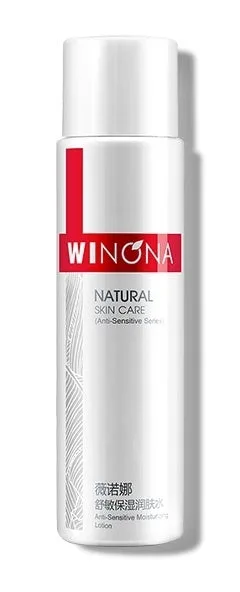
What is available to a Western buyer now is a narrow slice, and it clusters around two propositions. The first is sensitive-skin and barrier repair, positioned around botanical anti-irritants rather than the actives-forward pitch that dominates the domestic conversation — Winona Anti-Sensitive Moist Tolerance-Extreme Face Cream and Winona Soothing & Moisturizing Lotion are built around purslane and beta-glucan, which is a genuinely different starting point from the Korean centella convention or the snail mucin category that defined the last export wave.
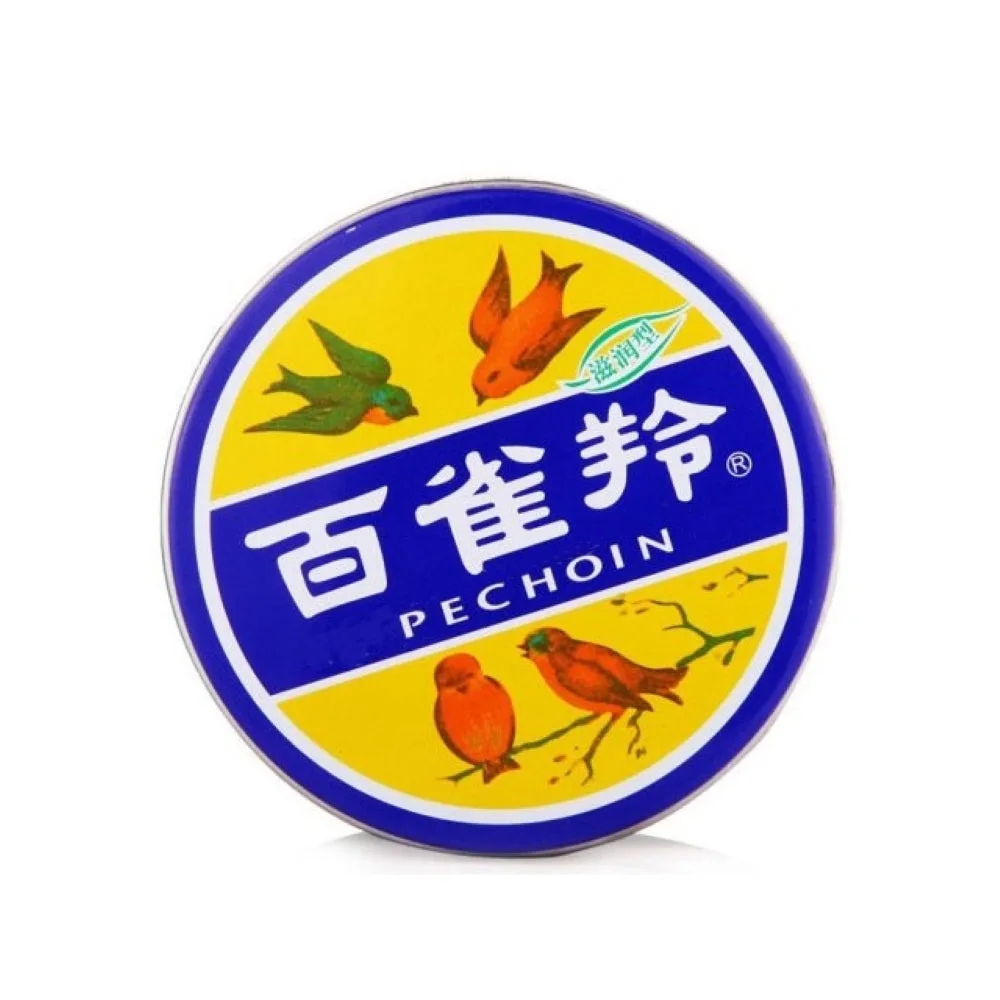
The second is heritage. Pechoin Moisturizing Balm comes from a brand founded in the 1930s, and Herborist T'ai Chi Double Detox Mask leans on traditional Chinese medicine framing — a positioning that reads very differently inside and outside China, and which is arguably the least exportable thing about the category.
Between those sits the actives-led tier that most resembles what the domestic market actually buys: Proya Ruby Wrinkless and Firming Essence and Marubi Multiple Peptide Eye Cream are recognisable to anyone who has shopped a Western anti-ageing shelf. If you want to see how one of these stacks up against an incumbent you already own, Compare Products puts them side by side row by row rather than leaving it to the marketing.
The caveat, stated plainly
None of the above is evidence that Chinese skincare is better. It is evidence that Chinese consumers stopped assuming it was worse, which is a different claim and a much easier one to support.
Market share measures distribution, marketing spend, channel fit and price positioning. It measures how well a brand understands Douyin. It does not measure whether a formula works, and a category that grew this fast on livestream commerce has every incentive to keep growing that way rather than through the slower business of proving things. The same ingredient-percentage arms race that makes this market well-informed also makes it easy to sell a number.
State industrial support is a real factor too, and it cuts both ways: it funds research infrastructure that would otherwise not exist, and it means share figures are not a pure market verdict.
The useful takeaway for a Western reader is the mechanism rather than the flag. A beauty market in which consumers assume imported means better is a market where domestic formulation cannot attract capital, because it cannot win on evidence against an assumption. Remove the assumption and the money follows results. That is worth wanting regardless of which country it happens in — and it is a reasonable question to ask about whatever your own default assumption currently is.
Products mentioned
Independently reviewed and scored — the real products behind this piece.



- Ranked list Best Korean Skincare The category whose position in China collapsed — and which is now aimed at the West.
- Ingredient Centella Asiatica (Cica) The Korean convention that the Chinese sensitive-skin tier deliberately does not copy.
- Ingredient Snail Mucin (Snail Secretion Filtrate) The category that defined the previous export wave.
References
- In Depth: China's Beauty Brands Shine Online as Foreign Rivals Falter — Caixin Global, 2026
- Insights from South Korea's 2025 Cosmetics Export and Industry Data — REACH24H, 2026
- Will beauty be next industry where China competes with Korea? — The Korea Times, 2026
Every cited link is verified to resolve to the paper named. Where a source could not be independently confirmed, it is listed without a link rather than pointing you somewhere wrong.
Frequently asked
What does guochao actually mean?
国潮 translates as 'national tide' and describes a wave of consumer preference for domestic Chinese brands and design that gathered pace from the late 2010s. In beauty it began as an aesthetic and cultural preference and has become a straightforward commercial fact: domestic brands have held the majority of China's cosmetics market for four consecutive years, and a larger majority of online sales.
Why did K-beauty lose ground in China so quickly?
Not because the products deteriorated. China accounted for more than half of Korea's cosmetics exports in 2021 and under a fifth by 2025, a collapse driven by domestic brands matching the proposition on ingredients while beating it on channel fit, pricing and cultural proximity. Korea responded by pivoting to Western markets and became the world's second-largest cosmetics exporter overall.
Does higher market share mean Chinese formulas are better?
No, and conflating the two is the main error available here. Share reflects distribution, marketing, pricing and channel mastery — particularly on livestream commerce, where domestic brands are far ahead. Formulation quality has to be assessed from ingredient lists and evidence, product by product. What share does indicate is that domestic brands can now fund research they previously could not.
Can I buy Chinese skincare brands in the US or Europe?
Some, though the available range is much narrower than what sells domestically and skews toward two propositions: sensitive-skin barrier repair, and heritage brands trading on decades-old histories. The actives-led products that dominate the Chinese conversation are the least represented abroad, partly because ingredient-forward marketing translates poorly into markets with different claim rules.
Is this just nationalism, or is something real happening?
Both, and separating them is the point. National sentiment removed a default assumption that imported meant better, and that removal let capital flow to domestic formulation for the first time — research spending is up and the regulator now demands substantiation for several claim categories. The sentiment is the cause; the research investment is the consequence worth watching.