The C-Beauty Brand Decoder: Who Proya, Winona, Marubi and Pechoin Actually Are
You can probably name a dozen Korean brands and not one Chinese one. That is a gap in Western editorial coverage, not a gap in the market — and China's largest beauty company is arriving in 400 Ulta stores.
Read the preview
From the DermApproved blog, in C-Beauty: you can name a dozen Korean brands and probably not one Chinese one. China's largest beauty company reaches four hundred Ulta stores this year — and it got there selling a routine, not an ingredient. There is also one rule where Chinese regulation asks more than American regulation does. For the full breakdown, visit dermapproved.com/blog.
The gap is in the coverage, not the market
Ask a reasonably engaged skincare shopper in London or Chicago to name Korean brands and you will get a list without much hesitation. Ask for Chinese ones and most people stop at zero. That asymmetry does not reflect the size or sophistication of the two industries. It reflects the fact that K-beauty arrived in the West alongside a decade of English-language editorial infrastructure — importers, subtitled explainers, a whole review economy — and C-beauty has arrived with almost none of it.
That is changing on a specific timetable. Proya, China's largest beauty company, reported operating revenue of roughly 10.6 billion yuan in its 2025 financial year and is bringing its Ruby and Original Repair skincare lines into around 400 Ulta stores and the retailer's website. For a great many American shoppers, that will be the first Chinese skincare brand they encounter on a shelf rather than a marketplace listing, and first impressions of an entire national industry will be formed from it.
So this is the orientation piece: who each of the major brands is, what each is genuinely competent at, and — the part that matters most — where scepticism is warranted and where it is just an inherited prior wearing scepticism's clothes.
Proya: it won on a routine, not an ingredient
Founded in 2003 in Hangzhou and publicly listed in Shanghai, Proya spent two decades becoming the largest domestic player in a market that international brands had dominated. What is interesting is how, because it is not the story the industry usually tells about itself.
Proya's consumer identity was built on a routine concept: 早C晚A — 'Early C, Late A'. Vitamin C in the morning, a vitamin A derivative at night. Proya did not invent this, and it should not be credited with doing so; the pairing has been standard advice among dermatologists for years. What Proya did was recognise the concept's potential early and become one of its principal promoters at national scale, on knowledge-sharing platforms, at a moment when Chinese consumers were rapidly becoming ingredient-literate.
It is worth saying that the concept is sound rather than merely marketable. An antioxidant belongs in daylight hours, when oxidative stress is actually occurring and where it complements sunscreen. A photosensitising retinoid belongs at night, when it can work on turnover without adding UV vulnerability. Proya packaged a defensible routine accessibly and priced it beneath the Western equivalents — which is a distribution and education achievement rather than a chemistry one, and none the less real for that.
The formulas follow from the positioning. Proya Early C Late A Dual Anti-Aging Serum is the concept literalised into a single dual-phase product. Proya Ruby Wrinkless and Firming Essence 2.0 pairs retinol with niacinamide, peptides and ceramides — a combination whose logic is buffering: the supporting cast exists to make the retinoid tolerable, which is the correct way to build a retinoid product for a mass audience. Proya Source Force Repairing Essence takes the barrier-repair angle with a lipid-and-ferment approach.
What you should expect reading these INCI lists is competence rather than revelation: dense, current active combinations, sensibly constructed, at prices well under the Western products they are modelled against.
Winona: the one with a hospital channel
Winona is the brand in this group with a genuinely distinctive structural advantage, and Western readers usually miss it because the equivalent does not exist in their market.
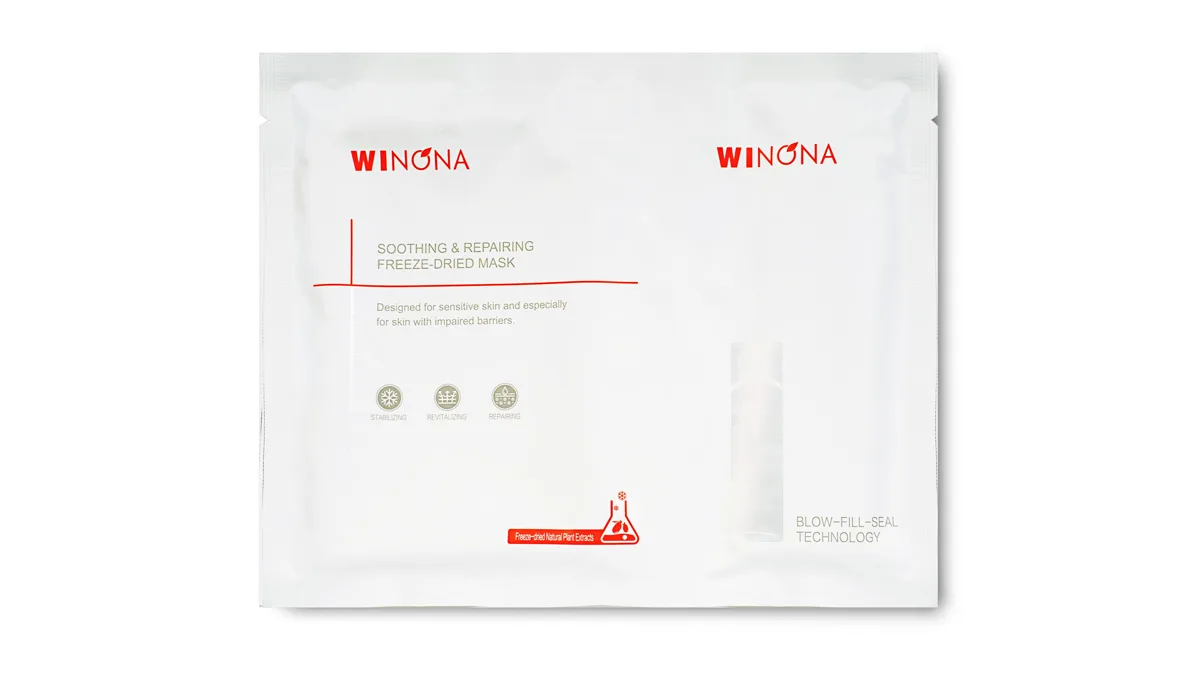
Launched in 2008 by Botanee in Yunnan, Winona is built entirely around sensitive and reactive skin — not as a marketing tilt but as the whole thesis. Its products were developed jointly with dermatologists, and critically, they reach consumers substantially through hospital and dermatology clinic channels in China. A Chinese patient may be recommended Winona in a consultation the way a French patient might be handed a pharmacy brand, and that channel builds a kind of credibility that no amount of direct-to-consumer advertising replicates.
The signature active is purslane — Portulaca oleracea — whose polysaccharides have demonstrated anti-inflammatory activity through inhibition of inflammatory cytokines. It appears across the range, and it is a reasonable choice rather than a botanical flourish.
The formulas themselves are more conventional than the branding suggests, which is a compliment. Winona Face Moisturizing Cream is built on ceramides, petrolatum, purslane and squalane — that is a barrier cream any dermatologist would recognise, with petrolatum doing the occlusive work that petrolatum does everywhere. Winona Anti-Sensitive Moist Tolerance-Extreme Face Cream is the heavier version of the same idea, and the freeze-dried mask is a format choice — reconstituted at use — that solves a preservation problem rather than being decorative.
In 2023 Botanee established a research centre with the skin research centre at Hôpital Saint-Louis in Paris, which is a genuine step toward the kind of Western clinical engagement that would make the brand legible to European and American clinicians.
The honest caveat: the clinical work supporting Winona sits largely in Chinese dermatology journals. That is not the same as no evidence, and treating it as such would be straightforwardly parochial. But it is much harder for a Western reader — or a Western dermatologist — to locate and appraise, and that difficulty is real.
The heritage brands: Pechoin, Herborist, Marubi
Three companies with much longer domestic histories than any of the current wave, each known for something specific.
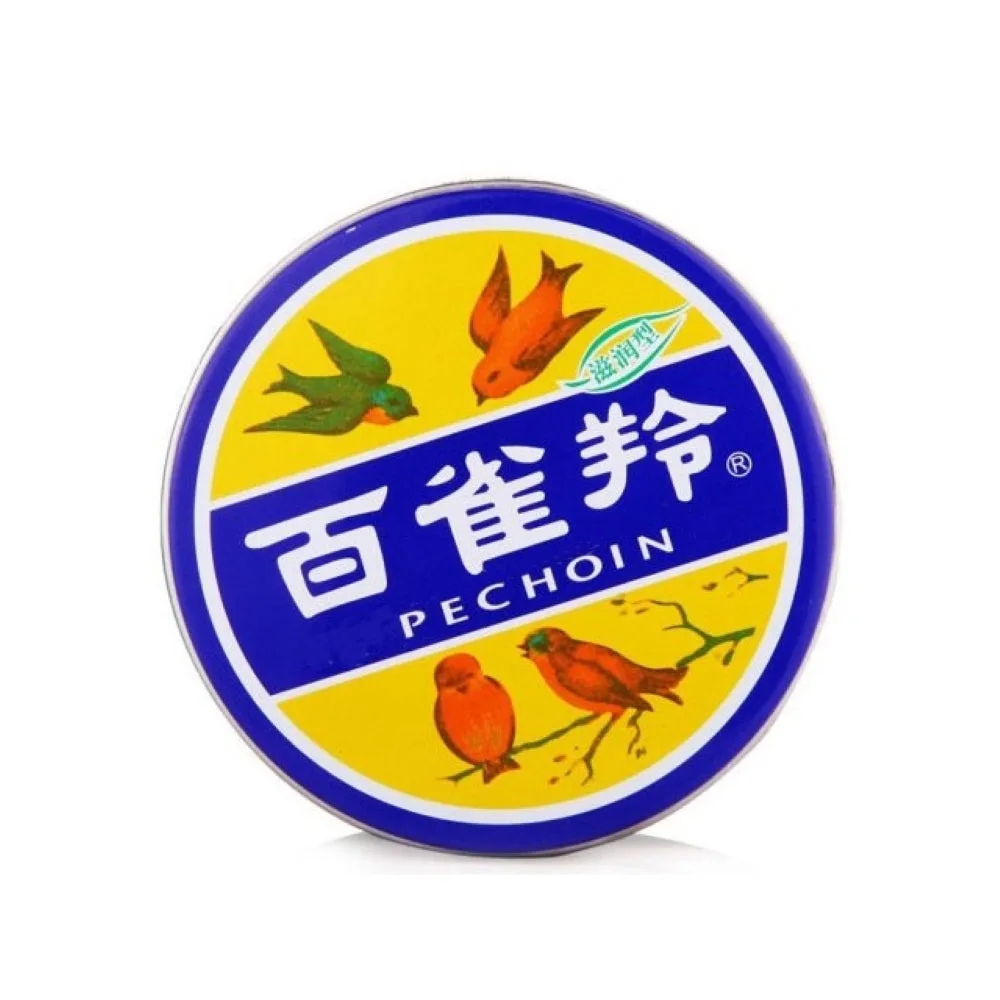
Pechoin, founded in Shanghai in 1931, is generally described as China's first domestic skincare brand — meaning it predates most of the Western brands Americans think of as heritage. Its position is mass-market and its formulations reflect that: simple, inexpensive, botanically framed in a way that draws on traditional Chinese medicine ingredients such as chrysanthemum, ginseng and green tea. Pechoin Moisturizing Balm is a nearly century-old product still in the range, and Pechoin Hydrating Extra-Moist Cream is the modern hydrator. Read the ingredient lists expecting a competent drugstore product from a company with an extraordinary length of continuous operation, not a treatment product.
Herborist, founded in 1998 under Jahwa, is the most explicitly traditional-medicine-framed of the group and was, for a period, sold in Sephora in Europe — which makes it the first Chinese skincare brand a lot of Westerners ever handled without realising what they were holding. The T'ai Chi Double Detox Mask is its best-known format, a charcoal-and-botanical mask that is exactly what it appears to be.
Marubi, founded in 2002 in Guangdong, did something unusual: it attacked a single category — eye cream — that international brands then dominated, and became the domestic leader in it. The range still reflects that specialisation more than any other Chinese brand's does. Marubi Multiple Peptide Eye Cream and Marubi Retinol Eye Cream are the anti-ageing end; Marubi Relieving Eye Essential Cream leans on centella asiatica and caffeine for the soothing-and-depuffing brief. Whether eye creams deserve to be a separate category at all is a fair argument to have — but if you are going to buy one, buying it from the company that specialised in them for two decades is not the worst logic available.
What this industry is genuinely good at
Four things, and the fourth is the one nobody mentions.
Price against ingredient list. The consistent finding when you read these INCI lists next to Western equivalents is that the active combinations are current and dense at prices substantially below what the same construction costs from a European or American brand. Domestic manufacturing sits close to domestic ingredient supply, and the saving is real rather than a compromise on the formula.
Speed. Reformulation cycles here run in months where Western cycles run in years, driven by a live-commerce retail environment that punishes a stale product listing immediately. The visible symptom is the version numbering — 2.0, 3.0 — which Western brands mostly avoid because it draws attention to change. It is more honest, and it has a consequence discussed in the next section.
Delivery systems. Encapsulation and stabilisation work, particularly around retinoids and vitamin C, is a genuine area of competence, because a market that wanted potent actives at tolerable irritancy levels wanted them quickly.
And the regulatory point. Since China's Cosmetics Supervision and Administration Regulation came into force — with the efficacy claim rules phasing in from 2021 and applying to registrants and notifiers from the start of 2022 — a brand selling in China must evaluate its efficacy claims against national standards and upload a summary of the basis for those claims to a website designated by the National Medical Products Administration.
Read that again, because it inverts the usual assumption. There is no equivalent in the United States: no requirement that a cosmetic efficacy claim be substantiated against a national standard, and no public repository where you can go and look at the basis for one. On this specific and non-trivial axis, the Chinese regulatory regime demands more of a brand than the American one does. Anyone whose model of Chinese consumer goods is 'unregulated' is working from a picture that is at least five years out of date.
Where the caution actually belongs
There are real reasons for care here. They are simply not the ones people reach for first.
Version churn is the practical hazard. If the formula genuinely changes every eighteen months, then a review, a recommendation or a friend's endorsement may be describing a product two versions removed from the one you can buy. This is a much bigger problem than it sounds, because the product name is stable while the contents are not. Check the version number, and check the INCI list against whatever you are relying on. The compare tool is useful for putting two formulations side by side rather than trusting that a shared name means a shared formula.
Thin independent English-language testing. There is comparatively little third-party Western evaluation of these products, and long-tail adverse-event reporting in English is sparse. This is worth stating precisely: it is absence of evidence, not evidence of a problem, and the two get conflated constantly. It means you are relying more on the ingredient list and less on accumulated outside scrutiny than you would with a brand that has been in Western pharmacies for thirty years.
Export SKUs and domestic SKUs are not always identical. Ingredient naming conventions, and occasionally the formulation itself, can differ between the version sold in China and the version exported. If it matters to you, read the list on the box in front of you rather than the one on a website; the ingredient decoder will resolve unfamiliar INCI names into what they are doing.
And the category has fuzzy borders. Skintific is the clearest illustration: it markets from a Canadian-registered parent, is manufactured in China, and built its business in Indonesia from 2021 — and reporting has noted a broader pattern of Chinese-made brands presenting themselves as local to Southeast Asian markets. We classify it as C-beauty on manufacturing and operational reality, and its formulas — the 2.5% retinol serum pairs the active with niacinamide, ceramides and ectoin on the same buffering logic Proya uses — are perfectly legible on their own terms. But readers should know the boundary is negotiated rather than crisp.
What is not a reason for caution is the country of origin as such. The correct posture toward a national beauty industry you have not encountered before is precisely the posture we would apply to a French pharmacy brand or an American clinical one: read the formula, weigh the evidence that exists, discount the story on the box, and notice when a price is doing more persuading than an ingredient list. A reflex that treats 'made in China' as a quality signal in itself is not scepticism — it is a prior, and it is worth examining, particularly given that whether an expensive brand is a safer brand has a well-established answer that most people find uncomfortable.
If you want somewhere to start: Winona if your skin is reactive and you want a barrier cream built by people who think about nothing else, Proya if you want a competently constructed retinoid or vitamin C routine without paying prestige pricing, and Marubi if you have already decided you want an eye product and would rather buy it from a specialist.
Products mentioned
Independently reviewed and scored — the real products behind this piece.




- Ingredient Retinol The 'A' half of the routine Proya built its identity on.
- Ingredient Niacinamide (Vitamin B3) The buffering partner that makes a mass-market retinoid tolerable.
- Ingredient Ceramides The barrier component doing the structural work across most of these ranges.
- Ingredient Centella Asiatica (Cica) The soothing active in Marubi's calming eye formula.
- Question Is an expensive brand any safer for reactive skin? The prior worth examining before applying a different standard to an unfamiliar market.
References
- China's Biggest Beauty Firm to Expand in US With Ulta Deal — The Business of Fashion, 2026
- China's Proya Targets U.S. Prestige Beauty With Ulta Beauty Expansion — Global Cosmetic Industry, 2026
- China Cosmetic Efficacy Claim Evaluation — ChemLinked Cosmepedia, 2026
- China Issues Standards for Cosmetics Safety and Efficacy Claims — Cosmetics & Toiletries, 2021
- Are Chinese-made skincare brands downplaying their origins to appeal to Southeast Asians? — South China Morning Post, 2024
- Pechoin — Wikipedia, 2026
- China's Eye Cream Market Leader! How Did Marubi Achieve This — Chaileedo, 2023
Every cited link is verified to resolve to the paper named. Where a source could not be independently confirmed, it is listed without a link rather than pointing you somewhere wrong.
Frequently asked
What does 'Early C, Late A' mean, and is it good advice?
It means vitamin C in the morning and a vitamin A derivative at night, and the logic holds: an antioxidant belongs in daylight where oxidative stress occurs and where it complements sunscreen, while a photosensitising retinoid belongs at night. Proya did not invent the routine — it was among the first to promote it at national scale in China, which is a distribution achievement rather than a chemistry one.
Why is Winona different from other Chinese skincare brands?
Its distribution. Launched in 2008 under Botanee, Winona is built entirely around sensitive skin, developed jointly with dermatologists, and reaches consumers substantially through hospital and dermatology clinic channels in China — a route Western direct-to-consumer brands do not have. Its signature active is purslane extract, whose polysaccharides show anti-inflammatory activity through cytokine inhibition.
Are Chinese cosmetics less regulated than American ones?
Not on claim substantiation. Under China's Cosmetics Supervision and Administration Regulation, brands must evaluate efficacy claims against national standards and upload a summary of the evidence to a website designated by the National Medical Products Administration. The United States has no comparable requirement and no public repository for cosmetic efficacy evidence.
What should I actually watch out for with C-beauty products?
Version churn above all. Formulas iterate on a months-long cycle while product names stay constant, so a review may describe something two versions removed from what you can buy — check the version number and the ingredient list. Also expect thinner independent English-language testing, and note that export and domestic versions of a product are not always identical.
Where should I start if I want to try one?
Match the brand to the problem. Winona if your skin is reactive and you want a barrier cream from people who work on nothing else. Proya if you want a competently constructed retinoid or vitamin C routine without prestige pricing. Marubi if you have already decided you want an eye product and would rather buy from the company that spent two decades specialising in them.