Your First Routine Is Three Products, and Two of Them Are Boring
Every beginner guide quietly wants to sell you nine. The physiology wants three — and the most valuable thing a skincare site can give a newcomer is the confidence not to buy things.
Read the preview
From the DermApproved blog, in Building a Routine: your first three products. Every beginner guide quietly wants to sell you nine. The physiology wants three, and two of them are boring enough that nobody markets them. Only one has a randomised trial behind it — and it isn't the one you'd guess from a shelf. For the full breakdown, visit dermapproved.com/blog.
Three products, and what each is for
Here is the entire starter routine.
A cleanser that does not strip. Its job is to remove sunscreen, sebum, sweat and the day, without taking the barrier lipids with it. Once daily is enough for most people — in the evening, because that is when there is something to remove. A rinse with water in the morning is fine.
A moisturiser that fits your skin. Its job is to reduce water loss and keep the stratum corneum working. This is the product people most often skip because it feels like it does nothing, and it is the one that makes everything else tolerable later.
A sunscreen you will actually reapply. Its job is the only genuinely preventative one in the routine.
That is it. Two of the three are unglamorous, and neither will produce a visible before-and-after in a week, which is exactly why the beginner market is not built around them.
What this routine does is establish a stable baseline. Skin that is not stripped, not dehydrated and not accumulating ultraviolet damage is skin you can then observe honestly — and observation is the prerequisite for every decision that comes after. Adding actives to a barrier that is already compromised is the single most common reason a beginner's first three months go badly, and the reason so many people conclude that their skin is 'sensitive to everything' when what it is sensitive to is the seven things they started at once.
Our routine order tool shows the sequence, and the routine finder will assemble a version around whatever your skin is actually doing.
Choosing a cleanser without a chemistry degree
The cleanser is where most beginners do active harm, usually by choosing something that feels like it is working.
The tight, squeaky feeling after washing is not cleanliness. It is the sensation of a disrupted lipid film and a stratum corneum that has lost water, and it is the single most reliable indicator that a cleanser is too harsh for you.
The underlying chemistry is worth one paragraph. True soaps are alkaline; cleansers built on synthetic detergents — syndets — sit in the mildly acidic to neutral range, and skin's own surface is mildly acidic. A comparison of four soaps found traditional alkaline soap raised transepidermal water loss and erythema in a way that persisted, while the effects of milder formulations were transient and returned to baseline by 72 hours. Older work comparing alkaline soap against a syndet in dry skin found the same direction.
Now the honest complication, because the internet has flattened this into a rule it does not support. A 2021 review in the International Journal of Cosmetic Science on the role of pH in skin cleansing sets out that the relationship is not linear — one study found higher transepidermal water loss from bars at pH 5.5 and 5.3 than from a neutral-pH syndet bar. Surfactant type, concentration and the rest of the formulation matter alongside the number. So 'low pH' on a label is a useful hint, not a guarantee, and your skin's response over two weeks beats the claim on the bottle.
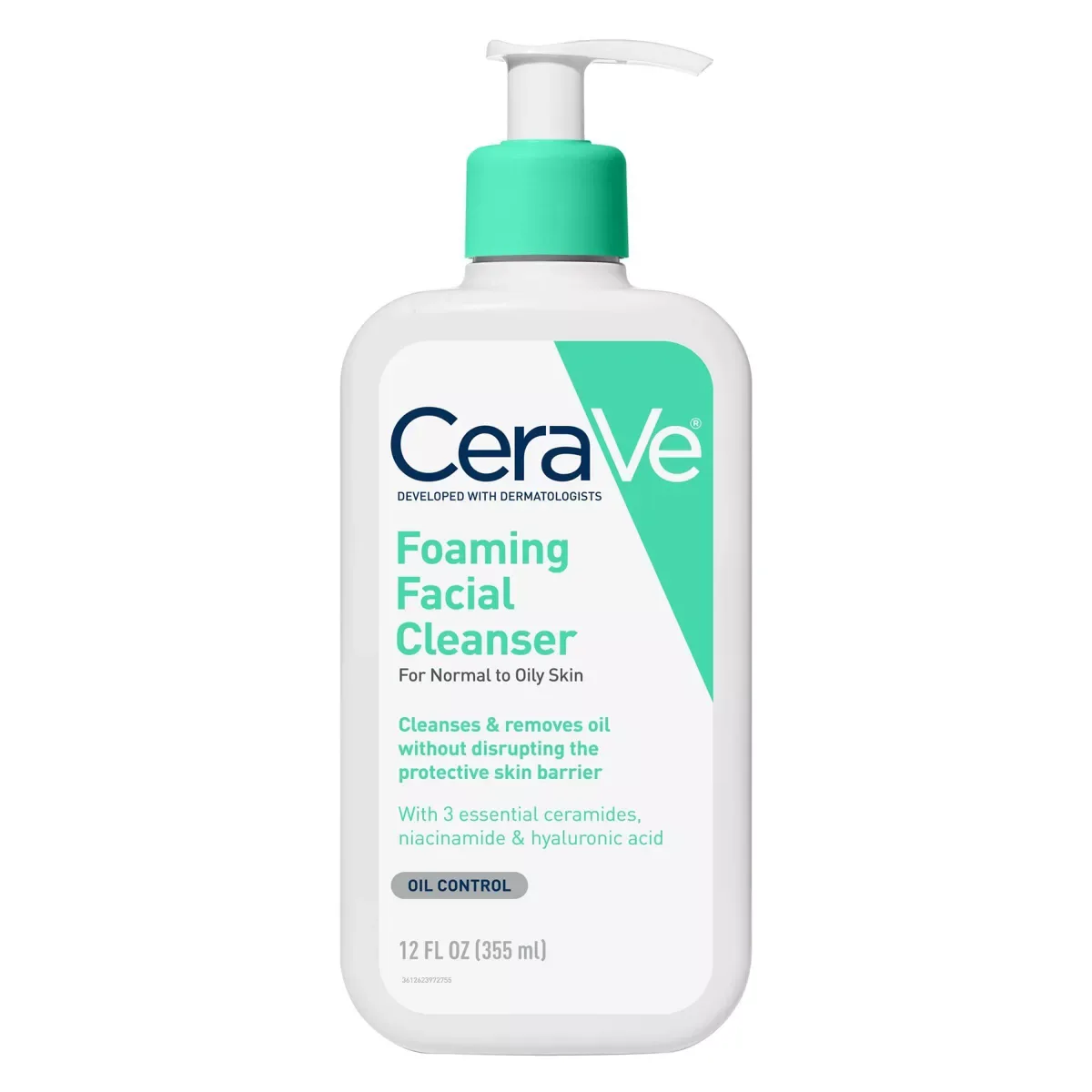
Practically: dry, sensitive or mature skin does well with a non-foaming or low-foam cream cleanser — CeraVe Hydrating Facial Cleanser, Cetaphil Gentle Skin Cleanser or Vanicream Gentle Facial Cleanser. Oily or combination skin can tolerate a gel that foams, and CeraVe Foaming Facial Cleanser is the standard reference point. If you are unsure which category you are in, the skin type quiz sorts it in a few minutes and will do a better job than a mirror at 7am.
The moisturiser, and the one decision that matters
Moisturiser selection has been made to sound complicated by an industry that sells fifty of them. There is really one decision: how heavy.
The function is the same across the category — reduce water loss and supply the lipids and humectants the barrier uses. What changes between a lotion, a gel-cream and a cream is the ratio of water to oil to occlusive, which determines how much it slows evaporation and how it feels.
Oily or acne-prone skin: a gel or gel-cream. Neutrogena Hydro Boost Gel-Cream is the obvious starting point. The instinct to skip moisturiser entirely because your skin is already oily is understandable and wrong — stripping and then not replacing tends to increase oiliness rather than reduce it.
Normal or combination skin: a lotion. CeraVe Daily Moisturizing Lotion or La Roche-Posay Toleriane Double Repair Face Moisturizer.
Dry skin: a cream. CeraVe Moisturizing Cream or, for reactive skin where fewer ingredients is the goal, Vanicream Daily Facial Moisturizer.
The ingredient families with the most support behind them are ceramides, glycerin and hyaluronic acid — a lipid, a humectant and a humectant, which is the whole architecture. You do not need to understand more than that to choose well.
One practical note that matters more than the product: apply it to slightly damp skin, within a minute or two of washing. A humectant with water available to hold works considerably better than one applied to skin that has already dried out.
Why sunscreen is the only anti-ageing product in a starter routine
This is the claim that sounds like marketing and happens to be the best-evidenced statement in consumer skincare.
A randomised trial conducted in Nambour, Australia, followed 903 adults under 55, assigning them to daily sunscreen use or discretionary use. Over four and a half years, the daily-use group showed no detectable increase in skin ageing, and around 24% less ageing than the discretionary group. Randomised, controlled, and years long — a standard of evidence that essentially nothing else marketed for ageing has met.
That is why sunscreen is the third product rather than the seventh. Every serum, every peptide, every device is competing against a randomised trial, and none of them have one.
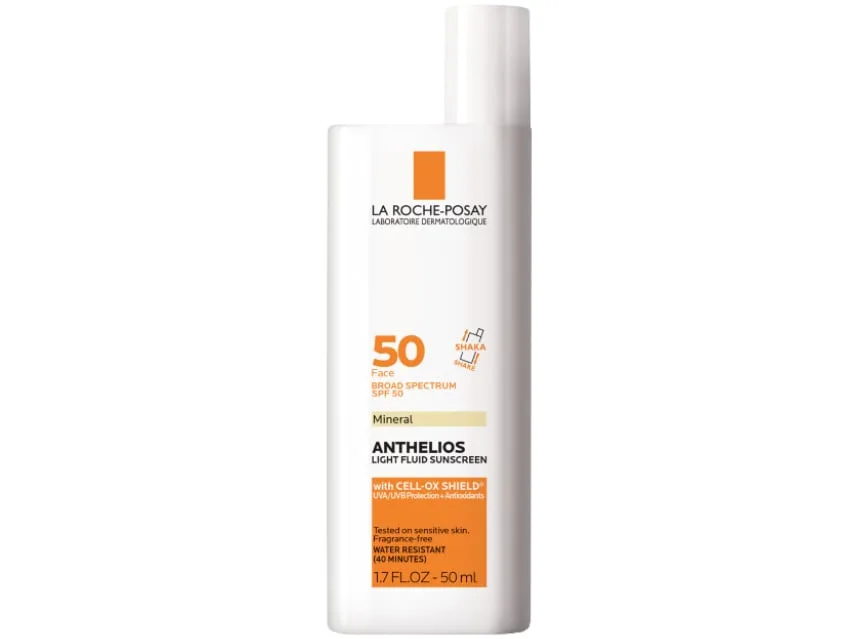
The practical part is unromantic. The best sunscreen is the one you will put on every morning and reapply when you are outside for hours, which means texture and finish are not vanity considerations — they are the variables that decide whether the product gets used. A fluid like La Roche-Posay Anthelios Light Fluid SPF 50, a lightweight daily option such as Neutrogena Invisible Daily Defense SPF 60, or EltaMD UV Clear SPF 46 for skin that objects to most formulas — any of these beats a superior product sitting unopened. Our sunscreen finder filters by finish and filter type rather than by marketing, which is the axis that decides adherence.
Two things to get right and then stop thinking about. Use more than feels natural — most people apply a fraction of the amount products are tested at, and protection falls away faster than the shortfall suggests. And reapply when you are actually out in it; indoors at a desk, the morning application is doing its job.
SPF thirty or above, broad spectrum, applied daily. That is the whole specification.
One change at a time, and how long to wait
The three-product routine is also a measuring instrument, and it only works if you use it like one.
The rule is one variable at a time. Introduce a single new product, change nothing else, and run it long enough to learn something. When five things change simultaneously and the skin reacts, the information content is zero — you know something disagreed with you and nothing about what.
How long is long enough depends on what you are measuring.
Tolerance — stinging, redness, tightness, dryness — declares itself in days to two weeks. If a product is irritating you, you will know quickly.
Visible change takes four to six weeks minimum, because that is the order of magnitude of epidermal turnover. Anything claiming to work in a week is either delivering a hydration effect that reverses when you stop, or it is not delivering.
Acne treatments need a full twelve weeks before you conclude anything, and typically get worse before better. Switching at week four is the most common way people conclude that nothing works for them.
The corollary is that a starter routine should be given a couple of months before anything is added to it. Not because patience is virtuous, but because you cannot evaluate an addition without a stable baseline to compare it against — and most people have never had one. Our answer on how many products you actually need covers the same ground from the other direction, and what happens when you miss weeks of treatment is worth reading before you conclude a product failed.
The named-reason test for a fourth product
Eventually you will want to add something, and there is one question that sorts good additions from expensive ones.
Can you name the problem it solves, in your own words, out loud?
'I have closed comedones across my forehead that have not improved in three months' is a named reason, and it points at a specific class of product. 'My pigmentation from last summer has not faded' is a named reason. 'The skin around my eyes has been flaking since the weather changed' is a named reason.
These are not named reasons, and each one is a common way to spend money badly:
'It was in a routine I saw.' You are buying someone else's diagnosis. Their skin is not your skin, and a routine built for one is frequently harmful applied to another.
'It's supposed to be good for you.' This describes most of the shelf. Good for what, in whom, at what concentration, over what period — those are the questions the phrase is standing in for.
'My skin is fine but I feel like I should be doing more.' This is the most expensive sentence in skincare, and the honest response is that a stable, comfortable, protected face is the goal rather than a starting point. Adding actives to skin that has no complaint mostly generates a complaint.
'It was on sale.' A discounted product you do not need is not a saving.
When you do add something, add it in the order that reflects how much evidence sits behind it: a retinoid for texture and long-term change, a vitamin C or other antioxidant for tone, a targeted exfoliant for congestion. One at a time, six weeks apart, in a routine you have already stabilised.
And hold onto the thing this article is really about. The three-product routine is not a compromise you graduate from — plenty of people with excellent skin never leave it, and every additional step is an elective that should have to justify itself. If you want to see what a fuller build looks like when there is a reason for it, the Korean routine shows the maximal version and the beginner routine for oily skin shows a modest, sensible expansion. Both are options rather than obligations. If a genuine skin condition is what brought you here, what a clinic can do that products cannot is the more useful next step than a fourth bottle.
Products mentioned
Independently reviewed and scored — the real products behind this piece.






- Routine Korean Skincare Routine, Done Sensibly (Not All 10 Steps) What a maximal build looks like, as an option rather than a target
- Routine Simple Starter Routine for Oily Skin A modest, sensible expansion beyond the three
- Ingredient Ceramides The lipid half of what a moisturiser is doing
- Ingredient Glycerin The humectant that does most of the unglamorous work
- Ingredient Hyaluronic Acid The other humectant worth knowing, and its limits
- Question How many products do I actually need for acne? The same question approached from the other direction
- Question I stopped for a few weeks — do I start the clock again? Worth reading before concluding a product failed
- Question What can a clinic do for acne that products can't? The better next step than a fourth bottle when a real condition is involved
References
- Sunscreen and prevention of skin aging: a randomized trial — Annals of Internal Medicine, 2013
- Effects of four soaps on skin trans-epidermal water loss and erythema index — Journal of Cosmetic Dermatology, 2019
- Role of pH in skin cleansing — International Journal of Cosmetic Science, 2021
- The water barrier function of the skin in relation to the water content of stratum corneum, pH and skin lipids. The effect of alkaline soap and syndet on dry skin in elderly, non-atopic patients — Acta Dermato-Venereologica, 1988
Every cited link is verified to resolve to the paper named. Where a source could not be independently confirmed, it is listed without a link rather than pointing you somewhere wrong.
Frequently asked
Do I really only need three products?
To start, yes. A cleanser that does not strip, a moisturiser suited to your skin, and a daily sunscreen cover the whole job: don't damage the barrier, support it, and protect it from the exposure with randomised prevention evidence behind it. Everything beyond that is an elective, and plenty of people with good skin never add one.
Why does my face feel tight after washing?
Because the cleanser is too harsh for you. That squeak is a disrupted lipid film and a dehydrated stratum corneum, not cleanliness. Alkaline soap has been shown to raise transepidermal water loss and erythema in ways that persist, while milder synthetic-detergent cleansers recover within about 72 hours. Switch to a low-foam cream cleanser and see whether the feeling goes.
Is a low-pH cleanser always better?
It is a good default and not a rule. A 2021 review found the relationship between cleanser pH and barrier effect is not linear — one study measured higher water loss from bars at pH 5.5 and 5.3 than from a neutral-pH syndet bar. Surfactant type and overall formulation matter alongside the number, so judge by how your skin feels over two weeks.
Should a beginner use a retinol or vitamin C?
Not in the first routine. Add one only when you can name the problem it solves out loud, and only after two months of a stable three-product baseline — otherwise you have nothing to compare the addition against. When you do, add one product at a time, six weeks apart, and expect four to six weeks minimum before any visible change.
How long before I know if something is working?
Tolerance shows up in days to two weeks. Visible change takes four to six weeks minimum, because that is roughly the timescale of epidermal turnover. Acne treatments need a full twelve weeks and often worsen first — abandoning at week four is the most common reason people conclude nothing works for their skin.