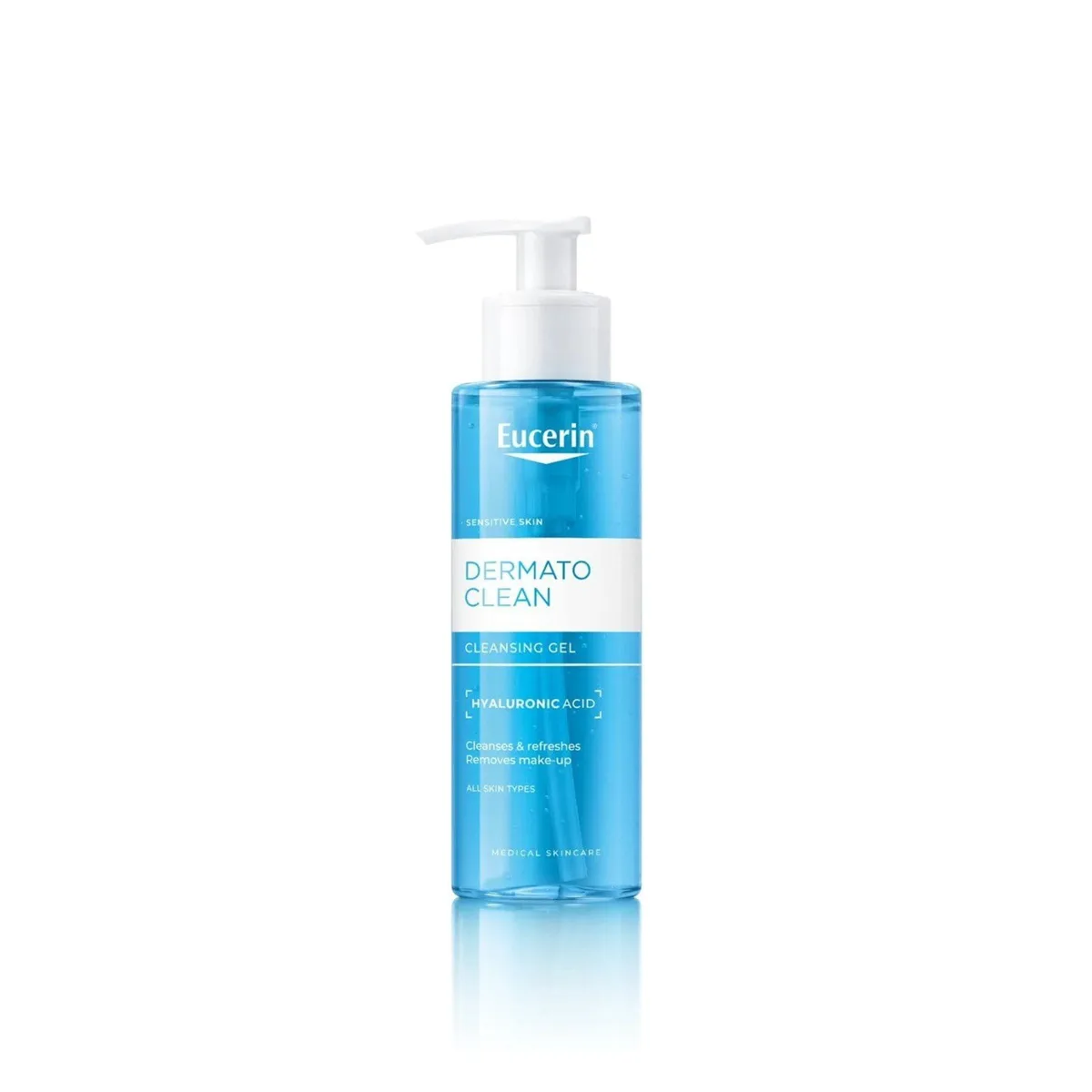
While many cleansers claim to be 'gentle' or 'for sensitive skin,' Vanicream backs this with the most comprehensive exclusion list in the category — no sulfates, no soap, no fragrance, no dyes, no lanolin, no parabens, no formaldehyde releasers, no botanical extracts, no essential oils, no betaine, no amines or amides. The National Eczema Association seal and #1 dermatologist recommendation provide third-party validation most competitors lack.
The cleanser dermatologists reach for when everything else irritates — a masterclass in doing less. It won't thrill you, it won't impress your friends, and it will quietly become the most reliable step in your routine. For sensitive, reactive, and compromised skin, this is the gold standard.
Good choicefor SensitivityIn your profileYou chose · No fragrance, drying alcohol, declarable allergens or sensitising preservatives in this gel — the profile sensitive skin looks for.Not yet assessedGentleNo reviews collected yet
The case for it
Glycerin has no evidence row yet for this concern — it is in the research queue.
The formula carries none of the triggers this concern is sensitive to.
What would change this: A researched evidence row for the lead active would replace this with a verdict.
Same rule for everyone. “Good choice” is the verdict on 1,938 of 45,024 concern verdicts across the catalog; rule F2 decided 1,938 of them.
Unchanged since September 5, 2026, engine 5.1.1.
Supporting rolefor EczemaIn your profileYou chose · Rinse-off gel: Glycerin gets seconds of contact, so this supports a routine for eczema rather than treating it.Moderate evidenceGentleNo reviews collected yet
The case for it
Glycerin has trial-supported standing for this concern.
It is in a rinse-off product, so it gets seconds of contact rather than the leave-on exposure the evidence assumes.
The formula carries none of the triggers this concern is sensitive to.
What would change this: The same active in a leave-on form would be judged on its evidence rather than its contact time.
Same rule for everyone. “Supporting role” is the verdict on 8,197 of 45,024 concern verdicts across the catalog; rule R6 decided 2,017 of them.
Unchanged since September 5, 2026, engine 5.1.1.
R6 — Contact time cannot deliver a leave-on claim; the product is judged on its job (cleansing without aggravating). Explicit exceptions (BPO wash, SA cleanser, medicated shampoos) never reach this rule because their rows set rinse_off_ok. · the full register
Carrying active
Glycerin
Standing
supported — trials support it
Form
contact limited — studied range 15–20%, from the OTC monograph or label; needs leave-on contact; judge it after ~1 weeks
Tolerability
gentle
Row checked
against its sources on July 17, 2026 (evidence table ev-2026.09-r228)
Supporting rolefor RosaceaIn your profileYou chose · Nothing here targets rosacea directly; gentle cleansing is the recognised companion to treating it, and this gel does that without known triggers.Not yet assessedGentleNo reviews collected yet
The case for it
Glycerin has no evidence row yet for this concern — it is in the research queue.
The formula carries none of the triggers this concern is sensitive to.
What would change this: A researched evidence row for the lead active would replace this with a verdict.
Same rule for everyone. “Supporting role” is the verdict on 8,197 of 45,024 concern verdicts across the catalog; rule R8 decided 4,250 of them.
Unchanged since September 5, 2026, engine 5.1.1.
R8 — The category's job (barrier care, humectant hydration, gentle cleansing, photoprotection) is the documented supportive role for this concern. This is the honest verdict for a moisturizer on an acne page. · the full register
Also listed for Compromised Skin Barrier — the actives here (Glycerin, Coco-Glucoside, Cleansing Surfactants) are in our research queue for that concern; there is no verdict until their evidence rows are written. That is a gap in our table, not a mark against the product.
Does the jobDoes what a cleanser is for: surfactant mildness, rinses clean without stripping. Not measured from the label: pH match to skin.
A verdict is DermApproved’s assessment of how well a product’s ingredients fit a concern — never a claim about what the product treats. Evidence dots and collected reviews sit beside it and are never blended in.
Rules 0.5.1 · evidence table ev-2026.09-r228 · how we decide
Assessment
Pros & Cons
Pros
✓ Twelve-ingredient formula — one of the most minimal cleansers available from any major brand
✓ Sugar-based and amino acid surfactants provide effective cleansing without barrier disruption
✓ #1 dermatologist-recommended brand for sensitive skin with NEA Seal of Acceptance
✓ Suitable for eczema, rosacea, post-procedure, and retinoid-sensitized skin
✓ Fragrance-free, sulfate-free, soap-free, and free from all common allergens
✓ Excellent value — 8 oz pump lasts 3-4 months at under $12
✓ Fungal acne safe with no problematic fatty acids or esters
Cons
✗ Provides zero active treatment benefits — purely a cleanser with no extras
✗ Light foam may feel insufficient to users accustomed to heavy-foaming cleansers
✗ Not effective for removing heavy or waterproof makeup without double cleansing
✗ Functional, clinical appearance lacks the aesthetic appeal of premium cleansers
Review
Full Review
Skincare culture has a glamour problem. Every year brings a new generation of cleansers promising to brighten, exfoliate, resurface, detoxify, and transform your skin — products so loaded with actives that the cleansing part feels almost secondary. Meanwhile, in dermatology offices across the country, doctors keep recommending the same plain-looking pump bottle with a clinical label and no Instagram presence. Vanicream's Gentle Facial Cleanser has never trended on social media. It has never gone viral. It has simply been the product dermatologists suggest when a patient's skin has been irritated into submission by everything else.
The ingredient list is twelve items long. Twelve. In an industry where thirty-ingredient cleansers are common and some exceed fifty, twelve feels almost confrontational in its restraint. Water, glycerin, two mild surfactants, a texture agent, a preservative system, and a few structural components. No fragrance. No botanical extracts. No essential oils. No sulfates. No soap. No dyes. No parabens. No lanolin. The list of things this cleanser does not contain is longer than the list of things it does.
The surfactant system deserves specific attention, because it explains why this cleanser feels different from most. Coco-glucoside is a sugar-based, non-ionic surfactant — one of the gentlest cleansing agents in cosmetic chemistry. Its non-ionic charge means it doesn't interact electrostatically with skin proteins, which is precisely what causes the tight, denatured feeling that follows a harsher wash. Sodium cocoyl glycinate is an amino acid-based surfactant whose head group closely mimics the skin's own natural moisturizing factor. Together they provide enough cleansing power to remove daily oil, dirt, and light makeup without the aggressive degreasing of sulfates. The practical effect is a cleanser that leaves skin feeling clean but never tight, never stripped, never in urgent need of rescue by a moisturizer.
Glycerin sits in the second position on the ingredient list, meaning it's present at a higher concentration than most cleansers bother with. It's not an afterthought humectant — it's a core part of the strategy. While the surfactants lift impurities off the surface, the glycerin is simultaneously pulling moisture toward the skin, offsetting the drying effect that all surfactants, even gentle ones, inherently produce. That difference is measurable even over the ninety seconds a face wash actually lasts.
The texture is a pearly, slightly iridescent cream that pumps out in a controlled amount. It does not foam aggressively — expect a light, soft lather rather than a cloud of bubbles. For anyone accustomed to heavy-foaming cleansers, this initially reads as the product not doing enough. It is. Foam is a property of surfactants, not a measure of cleansing power, and a thick lather is usually the signature of exactly the harsh sulfates this formula was designed to avoid. Adjust the expectation and the light lather turns out to be entirely adequate.
Vanicream's credibility here is not manufactured. The brand was literally created by hospital pharmacists at the request of dermatologists who couldn't find products gentle enough for their most reactive patients. That was in 1975. Fifty years on, Vanicream holds the number one dermatologist-recommended position for sensitive skin, verified by independent survey, and the National Eczema Association Seal of Acceptance provides third-party confirmation that the formulation meets specific eczema-safe criteria. The absence of fragrance is the single most clinically consequential thing about it: fragrance remains the most common cause of allergic contact dermatitis from cosmetics, and the prevalence runs considerably higher among people who already have eczema.
The limitations are the inverse of the strengths. This cleanser does nothing beyond cleansing. There are no brightening agents, no exfoliating acids, no antioxidants, no peptides. If you want your cleanser to multitask, this is not your product. It washes your face. That is the full scope of its ambition, and it has no interest in apologizing for it.
For heavy makeup removal, it works best as the second step in a double cleanse. An oil-based cleanser or balm dissolves waterproof formulations far more effectively, and following with Vanicream's gentle surfactants clears the oily residue without harming the barrier. Used alone, it handles light makeup and daily sunscreen competently but will leave traces of heavier products behind — which is a limitation of gentle chemistry generally rather than a failure of this specific bottle.
The method is unremarkable and worth stating anyway: one or two pumps onto damp hands, massaged over damp skin for thirty to sixty seconds, rinsed with lukewarm water — never hot, which undoes half of what you just did — and followed by moisturizer while the skin is still slightly damp.
The 8 fl oz pump offers genuinely good value. At around twelve dollars and lasting three to four months at twice-daily use, the per-wash cost lands under a dime, comfortably below the premium sensitive-skin cleansers that charge more for less volume. The pump itself is practical and hygienic. The small travel size is convenient but proportionally the worse deal.
Perhaps the most telling endorsement is its role in actual practice. When patients turn up with irritated, reactive, or compromised skin — from overuse of actives, retinoid-induced sensitivity, post-procedure healing, or a rosacea or eczema flare — dermatologists frequently prescribe a stripped-back routine built on three things: a gentle cleanser, a simple moisturizer, and sunscreen. This is, more often than not, the cleanser they name. It is prescribed specifically to stop doing harm, which is a stranger and more valuable job than it sounds.
This product will never make you feel like you're having a spa moment. It won't make your bathroom smell lovely or your skin tingle with activity. What it will do, with quiet consistency, is clean your face without hurting it. For the millions of people whose skin has been damaged by products that promised to do more, that isn't boring. That's exactly what they need.
Formula
Key Ingredients
The hero actives that drive this product's performance.
Listed as the second ingredient, glycerin provides humectant hydration during the cleansing process, preventing the tight, stripped feeling that harsher cleansers cause. Its position high on the INCI list means it's present at a meaningful concentration, helping maintain skin moisture even as surfactants do their cleansing work.
A gentle, non-ionic sugar-based surfactant derived from coconut and glucose. In this formula, it provides the primary cleansing action without the irritation potential of sulfate-based surfactants like SLS or SLES. Coco-glucoside is among the mildest surfactants available and is commonly used in products designed for eczema-prone and compromised skin.
An amino acid-based surfactant that provides gentle foaming and cleansing alongside the coco-glucoside. Amino acid surfactants are prized in sensitive-skin formulations because they match the skin's natural pH more closely than traditional soap or sulfate surfactants, reducing barrier disruption during cleansing.
Not yet assessed
Ingredient standings describe the active at treatment-level doses and
vehicles; this product's own condition grades weigh its actual formula.
Use as the primary or second cleanser in your routine. For double cleansing, pair with an oil-based first cleanser (like a balm) for makeup removal, then follow with this gentle cleanser. Apply to damp skin, massage gently, and rinse with lukewarm water. Follow immediately with toner, serum, or moisturizer while skin is still slightly damp.
Results Timeline
Immediate gentle cleansing from the first use with no tightness or dryness. Within 1-2 weeks of replacing a harsher cleanser, users with sensitive or reactive skin typically notice reduced irritation, less redness, and a calmer overall complexion.
Pairs Well With
Oil-based first cleanserHyaluronic acid serumVanicream Daily Facial MoisturizerAny gentle moisturizer
The surfactant system in this cleanser is designed around the principle of barrier-sparing cleansing. Coco-glucoside is a non-ionic alkyl polyglucoside (APG) surfactant synthesized from coconut-derived fatty alcohols and glucose. Published research in the International Journal of Cosmetic Science has demonstrated that APG surfactants cause significantly less disruption to the stratum corneum lipid structure than anionic surfactants like sodium lauryl sulfate. Their non-ionic charge means they do not interact electrostatically with skin proteins, reducing the denaturation that causes post-cleansing tightness.
Sodium cocoyl glycinate is an acyl amino acid surfactant — a class of surfactants that dermatologists have increasingly endorsed for sensitive skin applications. A 2019 study published in Skin Pharmacology and Physiology compared amino acid surfactants with conventional sulfate surfactants and found significantly lower transepidermal water loss (TEWL) and less corneocyte damage with the amino acid variants. The amino acid head group more closely mimics the skin's natural moisturizing factor (NMF), which may explain the improved skin compatibility.
The high glycerin concentration provides a humectant effect during the brief cleansing contact time. A study published in the British Journal of Dermatology has confirmed that glycerin-enriched cleansers preserve skin hydration better than glycerin-free formulations using the same surfactant system, and that this difference is measurable even with the short contact times typical of facial cleansing.
The absence of fragrance is clinically significant. Fragrance is the single most common cause of allergic contact dermatitis from cosmetic products, affecting an estimated 1-4% of the general population. For patients with eczema, the prevalence of fragrance sensitivity is significantly higher. The European Society of Contact Dermatitis recommends fragrance-free products as the first-line recommendation for patients with suspected cosmetic contact allergy.
References
Mild cleansing agents for sensitive skin: comparative study of surfactant effects on skin barrier — International Journal of Cosmetic Science (2018)
Dermatologist Perspective
Dermatologists consider the Vanicream Gentle Facial Cleanser a benchmark for barrier-safe cleansing. Dermatologists in everyday practice routinely recommend it as the foundation of a simplified skincare routine for patients presenting with irritant contact dermatitis, retinoid-induced sensitivity, post-laser or post-peel healing, rosacea flares, and eczema exacerbations. The comprehensive exclusion of known sensitizers — fragrance, sulfates, lanolin, botanical extracts, essential oils, parabens, and formaldehyde releasers — allows dermatologists to recommend it with high confidence that it will not contribute to the skin problem being treated. Its role in dermatological practice is fundamentally different from treatment products; it is the cleanser prescribed specifically to stop doing harm.
Guidance
Usage & Recommendations
How to Use
Dispense one to two pumps onto damp hands. Gently massage over damp face in circular motions for 30-60 seconds, covering the entire face and neck. Rinse thoroughly with lukewarm water — avoid hot water, which can exacerbate sensitivity. Pat dry with a clean, soft towel. Apply toner, serum, or moisturizer while skin is still slightly damp to maximize hydration. Use morning and evening.
Value Assessment
At approximately $12 for 8 fl oz, this represents strong value in the gentle-cleanser category. Premium sensitive-skin cleansers from brands like La Roche-Posay and Avene cost $15-20 for smaller volumes. The pump bottle lasts 3-4 months with twice-daily use, bringing the per-use cost to approximately $0.05-0.07. The 2.5 oz travel size at around $7 is proportionally more expensive but useful for trips. For a cleanser backed by the #1 dermatologist recommendation ranking and NEA Seal of Acceptance, the pricing is remarkably accessible.
Who Should Buy
Anyone with sensitive, reactive, eczema-prone, or rosacea-prone skin who needs a cleanser that will not aggravate their condition. Essential for those on retinoid therapy, recovering from cosmetic procedures, or resetting an overloaded skincare routine. Also ideal for anyone who simply wants a reliable, no-frills daily cleanser.
Who Should Skip
Those seeking a cleanser with built-in treatment benefits like exfoliation, brightening, or acne-fighting actives will find this too basic for their needs. Users who enjoy the sensory experience of luxury cleansers — rich textures, pleasant scents, thick foams — will find this product functional but uninspiring.
A light, pearly cream with a slightly runny consistency that lathers into a gentle, low-foam wash. Not as thick as cream cleansers or as thin as gel cleansers — falls in between with a smooth, non-gritty feel.
Scent
Completely fragrance-free with no masking fragrance. Virtually no scent detectable during or after use.
Packaging
8 fl oz pump dispenser bottle (recyclable) for the standard size. 2.5 oz squeeze tube for travel. The pump dispenses a controlled amount and keeps the product hygienic by preventing direct hand contact with the contents.
Finish
non-greasynatural
What to Expect on First Use
The first pump delivers a pearly, slightly iridescent cream that lathers gently on damp skin. The immediate impression is how unremarkable it feels — no tingling, no tightness, no discernible scent. Skin feels clean and comfortable after rinsing, with none of the squeaky stripped feeling that harsher cleansers produce. This unremarkability is the entire point.
This cleanser embodies the founding mission of Pharmaceutical Specialties, Inc. — two hospital pharmacists creating the products dermatologists kept asking for. While the original Vanicream moisturizing cream launched in 1980, the Gentle Facial Cleanser extended the brand's minimal-irritant philosophy into daily cleansing, becoming one of the most-recommended cleansers in dermatology offices across the country.
About Vanicream Legacy Brand (20+ years)
Vanicream was founded in 1975 by pharmacists at the request of dermatologists needing products for sensitive-skin patients. It is the #1 dermatologist-recommended brand for sensitive skin (IQVIA ProVoice Survey, 2023) and holds National Eczema Association Seal of Acceptance.
Brand founded: 1975
Myth vs. Reality
Common Myths
Myth
A cleanser needs to foam heavily to clean effectively
Reality
Foam is created by surfactants, not cleansing power. This cleanser's gentle sugar-based and amino acid surfactants produce minimal foam but effectively dissolve and lift oils, dirt, and makeup. Heavy foam often indicates harsh sulfate surfactants that strip the skin barrier.
Myth
Sensitive skin cleansers are too gentle to properly clean
Reality
Vanicream's surfactant system (coco-glucoside and sodium cocoyl glycinate) effectively removes daily accumulation of oil, dirt, and light makeup. For heavy or waterproof makeup, double cleansing with an oil-based first cleanser is recommended — the same approach dermatologists suggest regardless of cleanser strength.
FAQ
Frequently Asked Questions
Is Vanicream Gentle Facial Cleanser good for rosacea?
Yes — this is one of the most frequently recommended cleansers by dermatologists for rosacea patients. The fragrance-free, sulfate-free formula avoids the common triggers that can provoke rosacea flares. The gentle sugar-based surfactants cleanse without the barrier disruption that exacerbates rosacea sensitivity.
Can Vanicream Gentle Facial Cleanser remove makeup?
It effectively removes light to moderate makeup and daily sunscreen. For heavy foundation, waterproof mascara, or long-wear formulations, use an oil-based first cleanser before following with Vanicream as the second cleanse. This double-cleansing approach is recommended by dermatologists for thorough yet gentle makeup removal.
Why do dermatologists recommend Vanicream cleanser so often?
Vanicream is the #1 dermatologist-recommended brand for sensitive skin. Its cleanser eliminates every major category of known skin sensitizer — sulfates, fragrance, dyes, lanolin, parabens, botanical extracts, and essential oils. This makes it a reliable baseline cleanser that dermatologists can recommend with confidence, knowing it is unlikely to trigger reactions.
Is Vanicream Gentle Facial Cleanser good for acne?
It is non-comedogenic and sulfate-free, making it a safe cleanser for acne-prone skin. However, it does not contain acne-fighting actives like salicylic acid or benzoyl peroxide. Dermatologists often recommend it as the cleanser step paired with separate acne treatment products, providing a clean, non-irritating base for active treatments.
What is the pH of Vanicream Gentle Facial Cleanser?
Vanicream describes this cleanser as pH-balanced but does not publicly disclose the exact pH value. The amino acid and sugar-based surfactant system is designed to match the skin's natural slightly acidic pH (around 5.5), which helps maintain barrier integrity during cleansing.
Can I use Vanicream cleanser while on tretinoin or retinol?
Yes — this is an ideal cleanser for use alongside retinoids. Tretinoin and retinol can sensitize the skin and compromise the barrier, making gentle cleansing essential. Vanicream's sulfate-free, fragrance-free formula avoids adding further irritation on top of retinoid-induced sensitivity, which is why dermatologists frequently recommend it alongside prescription retinoid regimens.
Reviews
What Reviewers Tend to Say
Recurring themes our editors read across retailer reviews of this product — summaries in our words, not quotations, and not a substitute for your own patch test.
Common Praise
Extremely gentle — does not sting, burn, or cause any irritation
Effectively removes makeup and excess oil without stripping skin
Ideal for eczema, rosacea, and dermatitis — dermatologist recommended
Clean, minimal ingredient list with no fragrance or common allergens
Many long-term users report years of consistent use without issues
Common Complaints
Plain, functional product with no luxury feel or dramatic results
Pearly cream consistency is thinner than some users expect
Does not treat acne or provide active skincare benefits beyond cleansing
May not remove heavy or waterproof makeup on its own
Notable Endorsements
#1 Dermatologist Recommended Brand for Sensitive Skin (IQVIA 2023)National Eczema Association Seal of Acceptance
The fourth most frequent positive patch test in North America is an oxidation product of a molecule that occurs naturally in lavender. Nobody synthesised it into your face cream.
Irritant and allergic contact dermatitis can look identical on the arm and take opposite instructions — and the single most common mistake in skincare is applying the tolerance-building logic of one to the immune memory of the other.
The concern has better evidence than most of the products sold to solve it. The cheapest fix targets the actual mechanism; the expensive one flunked its own trial.
Kitchen skincare is neither the fraud dermatology implies nor the liberation your feed promises. It is three completely different categories wearing the same costume.
Aug 28, 2026· 9 min
Questions people ask about sensitive skin
Verified answers from our questions library — the nuance a product page cannot carry.
Products, answers, therapy guides, tools and articles in one search. Brand names,
slang and abbreviations all work — accutane finds isotretinoin, bacne finds truncal acne.