
The honest swap
This step is done meaningfully better outside the brand:
The INKEY List Glycerin Gentle Purifying Cleanser (Supporting role for dehydration)
Abib Skincare Routine: Barrier First, Every Step Covered
Updated September 2026 · picks refresh with our database
About Abib All Abib reviews →
Launched in South Korea in 2016, Abib is a K-beauty brand built on minimal formulas and well-known soothing botanicals such as heartleaf; its reputation rests on consumer reviews and Korean beauty-award recognition rather than a deep body of independent clinical studies.
Sanghyun Kim founded Abib in 2016 as a rebuke to the miracle-transformation clips flooding Korean social feeds at the time — his label would rather under-promise than perform for the camera, an ethos you can read in packaging plain enough to pass for office supplies. The formulas follow the same logic: minimal ingredient lists organized around proven soothers like heartleaf, with a reputation built on consumer reviews and Korean beauty-award recognition rather than a deep stack of independent clinical studies. For dry, barrier-compromised skin, that restraint is a genuine advantage — fewer variables means fewer things to react to while the barrier rebuilds.
What the catalog does best maps neatly onto dehydration. Moisturizers, serums, and toners are stocked with humectant- and lipid-focused options — multi-weight hyaluronic acid, panthenol, ectoin — and the treatment shelf is enormous, running to some thirty masks, pads, and overnight options if you want a weekly boost on top of the daily core. Cleansers are the thin spot, only a few picks, and several lean toward foam textures better suited to oilier skin, so choose the gentlest of them and keep the water lukewarm. Sunscreen is covered by a small but hydrating-leaning bench.
Build the whole routine here if your skin is dry, dehydrated, or freshly over-exfoliated and you want quiet, low-risk layers that compound. Mix brands instead if you also need strong actives — retinoids, high-dose vitamin C — because deliberate gentleness, not potency, is this catalog's entire personality.
Abib Skincare Routine: Barrier First, Every Step Covered
dermapproved.com/routines/abib/ · September 2026
Morning Routine




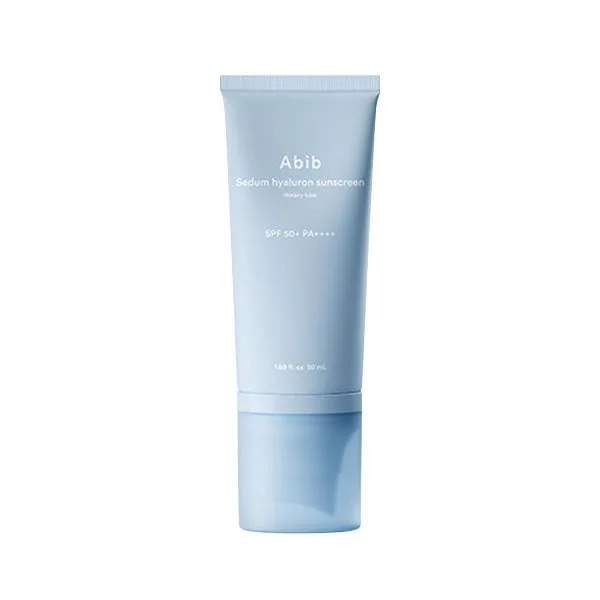
Sunscreen
Abib
Abib Sedum Hyaluron Sunscreen Watery Tube SPF 50+
Final morning step — apply generously and reapply every two hours in direct sun.
The honest swap
This step is done meaningfully better outside the brand:
CeraVe AM Facial Moisturizing Lotion SPF 50 (Good choice for dehydration)


Evening Routine
Cleanser Abib Deep Clean Foam Cleanser Sedum Hyaluron Foam — same as your morning cleanser


Moisturizer Abib Hyaluronic Boom Crème Water Tube — same as your morning moisturizer
Independently scored, no sponsored placements — dermapproved.com
Not quite your skin?
This routine is one profile. Answer six quick questions and our engine rebuilds it around your exact skin type, concerns, budget, and experience with actives.
Frequently Asked Questions
Is Abib a good choice for a damaged skin barrier?
Among K-beauty catalogs it's one of the more logical picks for barrier repair, because the brand's founding philosophy is minimal formulas built on soothers like heartleaf, panthenol, and ectoin. Low ingredient counts mean fewer potential irritants while your skin recovers — the whole catalog is engineered to not get in the way.
Why does Abib's packaging look so plain?
On purpose. Founder Sanghyun Kim started the brand in 2016 in reaction to the overhyped before-and-after culture of Korean social media, and the deliberately unadorned look is a statement that the formula, not theatrics, is the product. It's a useful signal of the brand's whole under-promise ethos.
How do I layer Abib products for dehydrated skin?
Thin to thick, onto slightly damp skin: gentle cleanse, toner while the face is still moist, then serum, then cream to seal the water in. Add a mask or overnight treatment once or twice a week rather than daily — the treatment shelf is deep, but dehydrated skin benefits more from consistency than intensity.
Can I run retinol alongside an Abib routine?
Comfortably — this is one of the better supporting catalogs for a retinoid, since its humectant and soothing layers cushion the dryness retinoids cause. Apply the retinol from another brand at night after cleansing, then follow with the hydrating steps. Abib itself won't supply the strong active; that's by design.
Would I do better mixing Abib with other brands?
Depends entirely on your goals. For pure rehydration and barrier recovery, staying in-catalog works because every formula shares the same low-variable philosophy. Add outside products only when you have a concern Abib deliberately doesn't chase — pigmentation, wrinkles, stubborn acne — and introduce them one at a time.
Products are selected by our matching engine from independently scored reviews — no sponsored placements. Recommendations are not a substitute for professional dermatological advice; if you have a diagnosed skin condition, consult your dermatologist before starting a new routine.