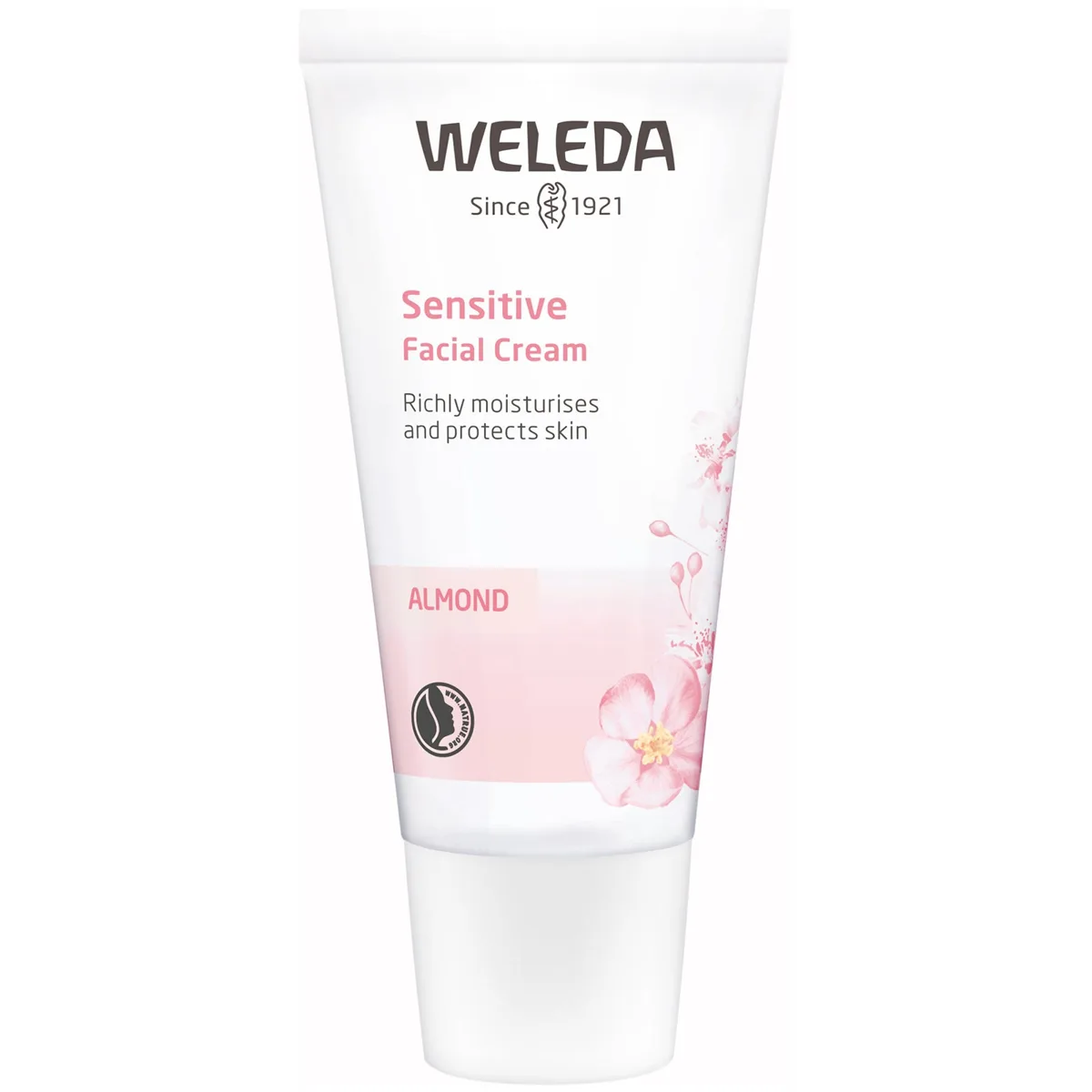
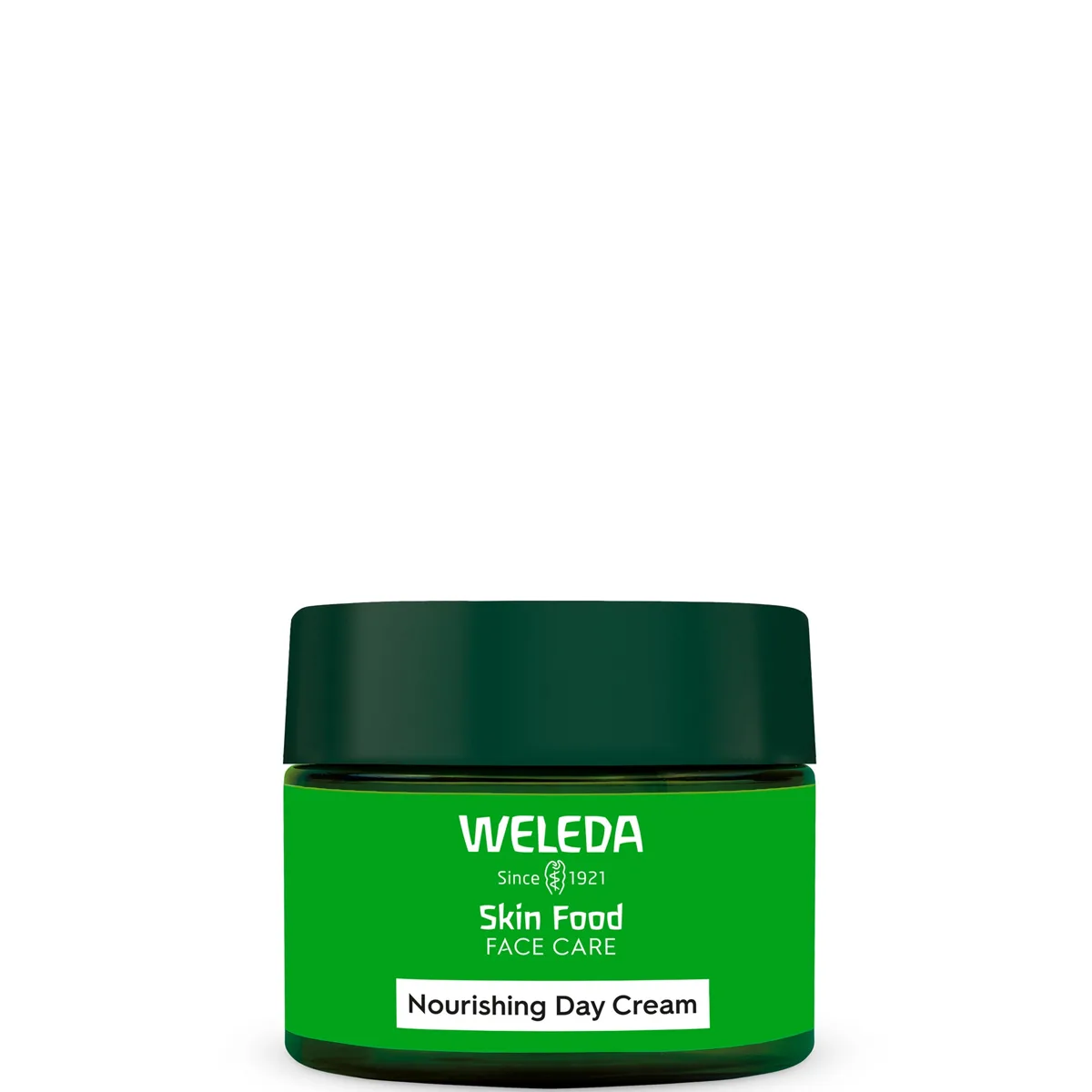
Same formulation as Weleda's Almond Soothing Facial Cream — the brand uses different names ('Sensitive Care Face Cream' vs 'Almond Soothing Facial Cream') across different markets and product positioning materials. The Sensitive Care naming emphasizes the dedicated sensitive-skin use case; the Almond Soothing naming emphasizes the brand identity ingredient. Both reach the same audience with the same product.
The US-market naming variant of Weleda's Almond Soothing Facial Cream — same structurally minimalist fragrance-free sensitive-skin formula built around sweet almond oil, marketed under the 'Sensitive Care' label rather than the 'Almond Soothing' label. The dedicated sensitive-skin positioning, genuinely fragrance-free composition (rare for Weleda), and 9-ingredient minimalism are the strengths. Almond allergy is a real concern; beeswax excludes vegan use; the formula lacks modern barrier-supportive complexity. For Weleda fans wanting the brand's natural-skincare credibility without the typical fragrance load, this earns its position.
Good choicefor SensitivityIn your profileYou chose · No fragrance, drying alcohol, declarable allergens or sensitising preservatives in this cream — the profile sensitive skin looks for.Not yet assessedGentleNo reviews collected yet
The case for it
Hydrolyzed Beeswax has no evidence row yet for this concern — it is in the research queue.
The formula carries none of the triggers this concern is sensitive to.
What would change this: A researched evidence row for the lead active would replace this with a verdict.
Same rule for everyone. “Good choice” is the verdict on 1,938 of 45,024 concern verdicts across the catalog; rule F2 decided 1,938 of them.
Unchanged since September 5, 2026, engine 5.1.1.
Supporting rolefor DrynessIn your profileYou chose · Glycerin is a reference standard by mechanism for dryness, but this cream carries it below the studied range — a supporting role at best.Moderate evidenceGentleNo reviews collected yet
The case for it
Glycerin has trial-supported standing for this concern.
It is present below the studied range.
The formula carries none of the triggers this concern is sensitive to.
What would change this: A concentration inside the studied range would raise this a step.
Same rule for everyone. “Supporting role” is the verdict on 8,197 of 45,024 concern verdicts across the catalog; rule R7 decided 258 of them.
Unchanged since September 5, 2026, engine 5.1.1.
R7 — A supported active under-dosed cannot be recommended for the concern; if the category has a supportive job it may still help alongside treatment. · the full register
Carrying active
Glycerin
Standing
supported — its mechanism is established
Form
sub threshold — studied range 2–20%, from the trials on the row; needs leave-on contact; judge it after ~1 weeks
Tolerability
gentle
Row checked
against its sources on July 17, 2026 (evidence table ev-2026.09-r228)
The studies behind the evidence row
International Cosmetic Ingredient Dictionary and Handbook — declared function — Personal Care Products Council
Harry's Cosmeticology / Baran & Maibach Textbook of Cosmetic Dermatology — humectant, emollient and occlusive classification — standard reference text
Supporting rolefor DehydrationIn your profileYou chose · Glycerin is a reference standard by mechanism for dehydration, but this cream carries it below the studied range — a supporting role at best.Moderate evidenceGentleNo reviews collected yet
The case for it
Glycerin has trial-supported standing for this concern.
It is present below the studied range.
The formula carries none of the triggers this concern is sensitive to.
What would change this: A concentration inside the studied range would raise this a step.
Same rule for everyone. “Supporting role” is the verdict on 8,197 of 45,024 concern verdicts across the catalog; rule R7 decided 258 of them.
Unchanged since September 5, 2026, engine 5.1.1.
R7 — A supported active under-dosed cannot be recommended for the concern; if the category has a supportive job it may still help alongside treatment. · the full register
Carrying active
Glycerin
Standing
supported — its mechanism is established
Form
sub threshold — studied range 20%, from the trials on the row; needs leave-on contact; judge it after ~1 weeks
Tolerability
gentle
Row checked
against its sources on July 17, 2026 (evidence table ev-2026.09-r228)
The studies behind the evidence row
USP glycerin monograph / Fluhr et al., glycerol and the skin (review) — glycerin is the reference humectant, drawing and holding water in the stratum corneum — reference work
Supporting rolefor Compromised Skin BarrierIn your profileYou chose · Nothing here targets compromised skin barrier directly; barrier lipids and occlusion is the recognised companion to treating it, and this cream does that without known triggers.Not yet assessedGentleNo reviews collected yet
The case for it
Hydrolyzed Beeswax has no evidence row yet for this concern — it is in the research queue.
The formula carries none of the triggers this concern is sensitive to.
What would change this: A researched evidence row for the lead active would replace this with a verdict.
Same rule for everyone. “Supporting role” is the verdict on 8,197 of 45,024 concern verdicts across the catalog; rule R8 decided 4,250 of them.
Unchanged since September 5, 2026, engine 5.1.1.
R8 — The category's job (barrier care, humectant hydration, gentle cleansing, photoprotection) is the documented supportive role for this concern. This is the honest verdict for a moisturizer on an acne page. · the full register
Does the jobDoes what a moisturizer is for: draws in water, softens and smooths.
A verdict is DermApproved’s assessment of how well a product’s ingredients fit a concern — never a claim about what the product treats. Evidence dots and collected reviews sit beside it and are never blended in.
Rules 0.5.1 · evidence table ev-2026.09-r228 · how we decide
Assessment
Pros & Cons
Pros
✓ Genuinely fragrance-free — rare for Weleda's catalog
✓ Same formulation as Almond Soothing variant — interchangeable choice
Cons
✗ Sweet almond oil is a tree-nut allergen
✗ Alcohol content adds drying concern for very dry skin
✗ Lacks modern barrier-supportive formulation complexity
Review
Full Review
Brand naming conventions in cosmetics often reflect marketing positioning more than formulation differentiation. Weleda's Sensitive Care Face Cream and Weleda's Almond Soothing Facial Cream are the same product — identical INCI ingredient lists, identical formulation, identical packaging in most markets. The naming variation reflects how Weleda markets the line: 'Sensitive Care' emphasizes the dedicated use case (sensitive skin needing gentle daily moisturizing), while 'Almond Soothing' emphasizes the brand identity ingredient (sweet almond oil as the hero plant). Both names reach the same audience with the same chemistry; the choice between them depends on regional availability and shelf positioning.
This honest assessment matters because users may encounter both names and assume they're different products with different formulations. They're not. If you've researched the Weleda Almond Soothing Facial Cream and decided it's right for you, the Sensitive Care Face Cream is the same product under different naming. If you've researched the Sensitive Care Face Cream and want to know about the Almond Soothing variant, the answer is identical.
The formulation is structurally minimalist Weleda — only 9 ingredients total, the same composition described in the Almond Soothing Facial Cream review. Water leads. Sweet almond oil at slot two as the substantial plant oil base. Alcohol in slot three. Glyceryl stearate SE as the emulsifier. Hydrolyzed beeswax in slot five for film-forming and texture. Plum seed oil at slot six adding less-common plant oil with vitamin E content. Glycerin at slot seven for humectant work. Xanthan gum is the thickener. Lactic acid at trace concentration in slot nine as pH adjuster. That's the entire ingredient list. The restraint is very much in character for the house behind it: Weleda has been formulating plant-led preparations since 1921, making it one of the oldest natural-cosmetics companies still operating, and the NATRUE natural-and-organic certification on this cream is the modern paperwork for a century-old philosophy.
The minimalism reflects a specific sensitive-skin design philosophy — fewer ingredients reduces potential sensitizers at the cost of foregoing more sophisticated barrier-supportive formulation. For users coming from feature-loaded modern sensitive-skin alternatives (ceramide-and-niacinamide-and-panthenol creams), the Weleda approach feels stripped-down. For users wanting natural-brand fragrance-free options without the formulation complexity, the minimalism is the appeal. What the minimalism does not automatically confer is categorical gentleness — natural and pharmacy sensitive-skin creams each have failure modes, and the honest comparison is ingredient-by-ingredient rather than category-by-category.
The formulation choices that limit recommendability are the same as the Almond Soothing variant. Sweet almond oil is a tree-nut-derived ingredient with allergen potential for almond or tree-nut allergic users. The alcohol in slot three adds drying concern for very dry sensitive skin. The hydrolyzed beeswax excludes vegan use. The lipid composition disqualifies fungal-acne management. On the reassuring side, nothing in the nine-ingredient list troubles a pregnancy.
In use the cream behaves identically to the Almond Soothing variant — gentle natural-skincare daily moisturizer for sensitive skin. Soft fluid white cream pours easily from the pump bottle, spreads with good slip, sinks within sixty seconds leaving a soft satin finish. A chickpea-sized dose patted rather than rubbed across face and neck is the working amount, with SPF over the top in the mornings. The genuinely fragrance-free formulation is the most distinctive sensory feature within the Weleda catalog — a brand whose signature products are famously perfumed — and the contrast registers on first use. Cumulative gentle moisturizing benefit builds over 1-2 weeks of consistent twice-daily use; this is maintenance care, not transformation.
The right use case is users wanting Weleda's natural-skincare positioning combined with genuine fragrance-free formulation for sensitive skin daily moisturizing. The Sensitive Care naming may resonate better for US users specifically searching for sensitive-skin products, while the Almond Soothing naming may resonate better for users searching by hero ingredient or for those familiar with the European Weleda line. The several hundred reviews the US-labeled version has gathered — averaging in the mid-fours — repeat the pattern: gratitude for a truly scent-free natural cream and reliable gentleness, with complaints about the tree-nut allergen, the small bottle, and the absence of modern barrier actives.
The value calculation is identical to the Almond Soothing variant. Twenty-two dollars for 30 mL at twice-daily use lasts about 2 months — premium for the structurally minimalist composition. The pharmacy ceramide-lotion staples run $14-30 for two to three times the volume, offering more sophisticated barrier-supportive formulation at similar or lower pricing. The Weleda pricing premium reflects the brand heritage and natural-skincare positioning.
Buy this cream if you specifically want Weleda's natural-skincare credibility combined with fragrance-free formulation for sensitive skin use, and the 'Sensitive Care' name better fits your shopping search or routine identification than the 'Almond Soothing' naming. Particularly suited to fragrance-reactive sensitive skin that wants natural-brand positioning. Skip if you have almond allergy, if you want feature-loaded barrier-supportive sensitive-skin formulation (pharmacy alternatives serve better), if you are vegan (beeswax content), or if you prioritize per-volume value over brand positioning. The product earns its position for the specific audience it targets — but most users will be equally well-served by the matching Almond Soothing variant if that name is more readily available in their region.
Formula
Key Ingredients
The hero actives that drive this product's performance.
Slot two — the formula's hero plant oil and the foundation of the Weleda Sensitive Care line's sensitive-skin positioning. Sweet almond oil provides skin-mimicking oleic-and-linoleic-acid emolliency with documented evidence for gentle conditioning and barrier-supportive activity for sensitive skin.
Slot six — complementary plant oil with high oleic and linoleic acid content plus vitamin E (tocopherols). Less common in mainstream cosmetics, contributing supportive emolliency and antioxidant cover.
Slot five — film-forming and texture properties. The hydrolyzed form is water-compatible for cream formulation. Provides mild occlusive protection. Bee-derived (rules out vegan use).
Slot nine — trace concentration functioning as pH adjuster rather than as exfoliating active. Ensures the formula's pH lands appropriately for sensitive skin without keratolytic effect.
Not yet assessed
Ingredient standings describe the active at treatment-level doses and
vehicles; this product's own condition grades weigh its actual formula.
Apply morning and evening as a gentle moisturizer for sensitive skin. The structurally minimalist fragrance-free formula is broadly tolerable for users avoiding essential oils. Same product as Weleda's Almond Soothing Facial Cream — name varies by market region. Layer under sunscreen and makeup as needed.
Results Timeline
Immediate: a soft, gentle conditioning finish from the almond oil chassis. Over 1-2 weeks of consistent use, the cumulative gentle moisturizing support builds barrier comfort and reduced reactivity. Maintenance-focused rather than transformative.
Pairs Well With
Hydrating tonerGentle treatment serumSunscreen SPF 30+ (am)Weleda Sensitive Care line products
The moisturizing chemistry here is identical to the matching Weleda Almond Soothing Facial Cream — structurally minimalist with sweet almond oil as the primary plant emollient, supplementary plum seed oil for additional lipid delivery, glycerin for humectant work, hydrolyzed beeswax for film-forming texture, with standard emulsifier and pH adjuster components.
Sweet almond oil has been used in cosmetic preparations for centuries with extensive documentation of skin-softening, emollient, and barrier-supportive properties. The oleic acid (60-70%) and linoleic acid (20-25%) content provides skin-mimicking fatty acid delivery. Topical evidence supports almond oil's gentle emolliency for sensitive skin, with the important caveat of tree-nut allergen status.
Plum seed oil contains oleic acid, linoleic acid, and vitamin E with antioxidant cover.
Glycerin has its standard well-established evidence base for stratum corneum hydration support.
Hydrolyzed beeswax provides film-forming and texture properties.
The alcohol component contributes to potential drying effects on sensitive or compromised skin.
Lactic acid at trace concentration functions as pH adjuster rather than as exfoliating active.
The absence of fragrance, essential oils, and modern complex active ingredients reflects the minimalist sensitive-skin design philosophy.
Dermatologist Perspective
Same clinical assessment as Weleda's Almond Soothing Facial Cream — a niche fragrance-free natural-brand sensitive-skin option with structurally minimalist formulation. The naming variation between 'Sensitive Care Face Cream' and 'Almond Soothing Facial Cream' is a marketing distinction rather than a clinical one. Skin-care professionals would view the formula favorably for the genuine fragrance-free composition and the gentle minimalist approach. The clinical caveats are familiar: sweet almond oil is a tree-nut allergen; the alcohol content limits suitability for very dry or compromised barrier skin; the lipid composition rules out fungal-acne management. For non-almond-allergic sensitive skin wanting natural-brand fragrance-free formulation, this is a clinically defensible niche choice. Pharmacy alternatives offer more sophisticated barrier-supportive formulation if users prioritize ingredient complexity over brand positioning.
Guidance
Usage & Recommendations
How to Use
Apply morning and evening as a gentle moisturizer for sensitive skin. Use a chickpea-sized amount, pat across the face and neck rather than rubbing, and allow 60-90 seconds to absorb. In the morning, follow with broad-spectrum SPF 30+. Pair with other Weleda Almond Sensitive Care line products for a complete fragrance-free natural-skincare routine.
Value Assessment
Same value calculation as the Almond Soothing variant — $22 for 30 mL at twice-daily use lasts about 2 months, premium for structurally minimalist natural-brand formulation. Pharmacy alternatives (CeraVe Daily Moisturizing Lotion at $17 for 89 mL, La Roche-Posay Toleriane Sensitive at $30 for 40 mL, Vanicream Daily Facial Moisturizer at $14 for 90 mL) offer better per-volume value with more sophisticated formulation in most cases. The Weleda pricing reflects brand heritage and natural-skincare positioning. Fair for users prioritizing the Weleda brand identity; overpriced relative to pharmacy alternatives if natural-brand positioning isn't the priority.
Who Should Buy
Anyone with normal, dry or non-almond-allergic sensitive skin who specifically wants Weleda's natural-brand positioning combined with genuine fragrance-free formulation, and who prefers the 'Sensitive Care' product naming for their shopping or routine identification. Functionally equivalent to choosing the matching Almond Soothing Facial Cream variant.
Who Should Skip
Anyone with almond or tree-nut allergies should skip entirely. Strict vegans should look elsewhere due to beeswax content. Skip too if you want feature-loaded barrier-supportive formulation (pharmacy alternatives serve better), if you prioritize per-volume value over brand positioning, or if you are managing fungal acne (lipid composition incompatible). Note: if both 'Sensitive Care Face Cream' and 'Almond Soothing Facial Cream' are available, choose whichever pricing or availability suits — they're the same product.
A soft, slightly fluid white cream that pours easily, spreads with good slip, and sinks within sixty seconds leaving a soft satin finish.
Scent
Genuinely fragrance-free with the faint natural scent of sweet almond oil.
Packaging
A 30 mL plastic bottle with pump dispenser in Weleda's signature green-and-white design.
Finish
satinnon-greasylightweight
What to Expect on First Use
First use centers on the quiet fragrance-free formulation — no scent beyond the faint natural almond, no tingle. The cream sinks within sixty seconds leaving a gentle conditioning finish. The contrast with most other Weleda products (heavily fragranced) is immediately apparent.
Part of Weleda's Almond Sensitive Care line, distributed in the US market under the 'Sensitive Care' naming convention. The product has been on US shelves since 2008 as a dedicated sensitive-skin offering that provides fragrance-free natural-skincare alternative to the brand's heritage-fragranced catalog.
About Weleda Legacy Brand (20+ years)
Weleda's Sensitive Care Face Cream is the US-market naming variant of the brand's Almond Soothing Facial Cream — same formulation, different label positioning. Both names appear across the brand's global distribution depending on regional naming conventions. The product targets sensitive skin with a structurally minimalist fragrance-free composition built around sweet almond oil.
Brand founded: 1921 · Product launched: 2008
Myth vs. Reality
Common Myths
Myth
Two products with similar names from the same brand are always different products.
Reality
Brands sometimes use different naming conventions across markets, product positioning materials, and retailer-specific packaging without changing the underlying formulation. Weleda Sensitive Care Face Cream and Weleda Almond Soothing Facial Cream are the same product with different label naming — the INCI ingredient lists are essentially identical. The name variation reflects market positioning rather than formula differentiation.
Myth
Natural-brand sensitive-skin creams are categorically gentler than pharmacy alternatives.
Reality
Natural and pharmacy sensitive-skin formulations both have strengths and weaknesses. Natural brands like Weleda emphasize plant-derived ingredients and avoid synthetic fragrances and preservatives that can trigger reactions. Pharmacy alternatives like CeraVe, La Roche-Posay, and Vanicream typically include more sophisticated barrier-supportive ingredients (ceramides, thermal water, more humectants) at similar or lower pricing. Choice between them depends on individual sensitivity patterns and ingredient preferences rather than category-level superiority.
FAQ
Frequently Asked Questions
How is this different from Weleda Almond Soothing Facial Cream?
Same formulation — different naming convention. Weleda uses 'Sensitive Care Face Cream' as the US-market naming and 'Almond Soothing Facial Cream' as the European-market or alternate naming. The INCI ingredient lists are essentially identical: sweet almond oil, plum seed oil, glycerin, hydrolyzed beeswax, alcohol, and standard formulation components. The choice between them depends on regional availability rather than formula differentiation.
Is this cream actually fragrance-free?
Yes — genuinely fragrance-free with no added perfume or essential oils. This makes the cream unusual within Weleda's catalog, where most products contain substantial essential oil fragrance. The faint natural scent some users notice comes from the sweet almond oil itself rather than from any deliberate fragrance addition.
Should I avoid this cream if I have almond allergy?
Yes. Sweet almond oil is a tree-nut-derived ingredient and can trigger allergic reactions in users with almond or general tree-nut allergies. The risk from topical exposure is generally lower than oral exposure, but almond-allergic users should avoid almond-based cosmetics entirely. For fragrance-free sensitive-skin alternatives without almond, look at CeraVe Daily Moisturizing Lotion, La Roche-Posay Toleriane Sensitive, or Vanicream Daily Facial Moisturizer.
Is this cream vegan?
No. The formula contains hydrolyzed beeswax. For fragrance-free vegan sensitive-skin alternatives, look at CeraVe Daily Moisturizing Lotion (vegan and fragrance-free), Vanicream Daily Facial Moisturizer, or other plant-only natural-brand alternatives.
How does Weleda's sensitive-skin cream compare to pharmacy sensitive-skin alternatives?
The Weleda strength is the natural-brand positioning combined with genuine fragrance-free formulation — appealing to users who specifically want natural-skincare brand credibility. Pharmacy alternatives (La Roche-Posay Toleriane Sensitive, Avène Tolerance Extreme, CeraVe Daily Moisturizing Lotion) typically offer more sophisticated barrier-supportive ingredient stacks (ceramides, thermal water, more humectants) at similar or lower pricing. For users prioritizing brand identity, Weleda wins; for users prioritizing formulation complexity, pharmacy alternatives may serve better.
Reviews
What Reviewers Tend to Say
Recurring themes our editors read across retailer reviews of this product — summaries in our words, not quotations, and not a substitute for your own patch test.
Common Praise
Genuinely fragrance-free unlike most Weleda products
Structurally minimalist 9-ingredient formula
Sweet almond oil provides gentle plant emolliency
Suitable for fragrance-reactive sensitive skin
Common Complaints
Sweet almond oil is a tree-nut allergen
Small 30 mL size at $22 puts per-volume value firmly premium
Beeswax excludes vegan use
Lacks modern feature-loaded sensitive-skin formulation complexity
Notable Endorsements
Weleda's sensitive-skin fragrance-free positioningSame formula as Almond Soothing Facial Cream (different market naming)Distributed across US natural skincare retailers and pharmacies
Every word on a plant oil label describes what was left in — including the proteins that sensitise and the compounds that go rancid — and the variable that decided the one head-to-head trial isn't printed anywhere.
Glycolic gets the hype and the higher numbers. But lactic acid does something glycolic can't — and for a lot of skin, that changes the whole calculation.
The cheapest humectant on the ingredient list is also the best-studied, the most reliable in dry air, and the one your favorite moisturizer is quietly built around.
The burn trials are real and the skeptics who dismiss aloe as folklore are wrong — but the same substance has delayed healing in other wounds, and none of it says anything about what a soothing gel does to intact skin.
Aug 28, 2026· 9 min
Questions people ask about sensitive skin
Verified answers from our questions library — the nuance a product page cannot carry.
Products, answers, therapy guides, tools and articles in one search. Brand names,
slang and abbreviations all work — accutane finds isotretinoin, bacne finds truncal acne.