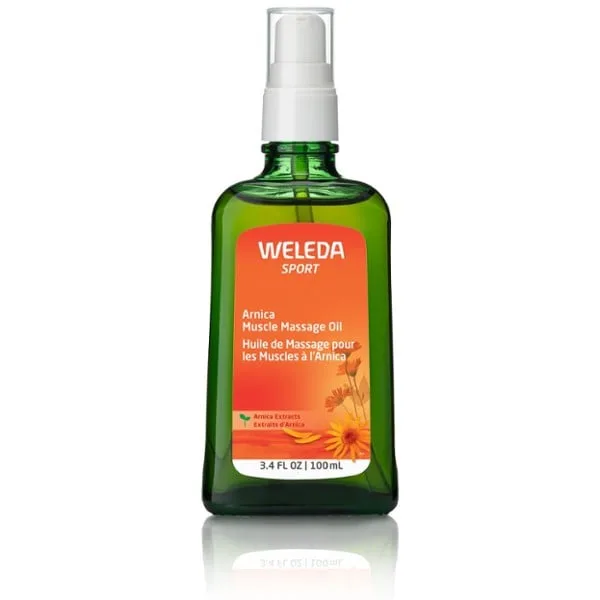
It is the reference natural sports massage oil, a sunflower-olive base with a real arnica extract from a brand that has grown and prepared arnica for a century, and it has the largest and warmest review base in Weleda's body range. What it is not is a treatment: the trials on topical arnica for muscle soreness are mixed, and the oil's power is in the massage it makes pleasant.
The reference natural sports massage oil: sunflower and olive oils with a real arnica extract and a warm rosemary-lavender scent, from the brand that has grown arnica for a century, with twelve thousand reviewers at 4.8 stars who swear by it after a run. The massage is what eases the muscles and the arnica's own contribution is uncertain in trials; it is a comfort product of the highest quality, not a remedy, and the arnica and fragrance are for intact, non-reactive skin only.
Supporting rolefor DrynessIn your profileYou chose · Nothing here targets dryness directly; occlusive emollience is the recognised companion to treating it, and this oil does that without known triggers.Not yet assessedStandard tolerabilityNo reviews collected yet
The case for it
Helianthus Annuus has no evidence row yet for this concern — it is in the research queue.
The formula carries no trigger this concern is sensitive to, with the cautions noted.
Cautions: fragrance.
What would change this: A researched evidence row for the lead active would replace this with a verdict.
Same rule for everyone. “Supporting role” is the verdict on 8,197 of 45,024 concern verdicts across the catalog; rule R8 decided 4,250 of them.
As of September 25, 2026, engine 5.1.1.
R8 — The category's job (barrier care, humectant hydration, gentle cleansing, photoprotection) is the documented supportive role for this concern. This is the honest verdict for a moisturizer on an acne page. · the full register
Also listed for Rough Texture — the actives here (Sunflower Oil, Essential Oils, arnica, Birch Sap) are in our research queue for that concern; there is no verdict until their evidence rows are written. That is a gap in our table, not a mark against the product.
As a oilNot judged: what a oil is for — fatty-acid profile, seals moisture, resists going rancid — cannot yet be measured from the ingredient list (only pore and malassezia risk can).
A verdict is DermApproved’s assessment of how well a product’s ingredients fit a concern — never a claim about what the product treats. Evidence dots and collected reviews sit beside it and are never blended in.
Rules 0.5.1 · evidence table ev-2026.09-r228 · how we decide
Assessment
Pros & Cons
Pros
✓ Sunflower and olive oils give a long, generous slip ideal for deep muscle massage
✓ Genuine arnica extract from the brand that has cultivated arnica for a century
✓ Warm rosemary-lavender scent that reviewers associate with relief
✓ Alcohol-free, vegan and NATRUE-certified
✓ Highest-rated product in Weleda's US body range at 4.8 stars over twelve thousand reviews
✓ Recommended by physiotherapists and used across generations of athletes
✓ Glass pump bottle with travel sizes available
Cons
✗ Controlled trials of topical arnica on muscle soreness are mixed and modest
✗ Arnica is a recognised contact sensitiser and must stay off broken skin
✗ Fragrance sits ahead of the arnica on the label with four declared allergens including coumarin
✗ Medicinal scent divides users
✗ Empties in about six weeks of daily massage and leaves oil on sheets
✗ Priced well above the plain sunflower and olive oils that make up most of it
Review
Full Review
Arnica's reputation is larger than its evidence, and this oil is a good place to see the gap. The mountain daisy has been rubbed on bruises and sore limbs for centuries, Weleda has grown and prepared it since the 1920s, and its sesquiterpene lactones do have anti-inflammatory activity in the laboratory. When researchers put topical arnica to a controlled test, however, the results are modest: a randomised trial in the European Journal of Sport Science applied arnica or placebo to the legs of men after intense eccentric exercise and found less pain at three days in the arnica group, but no difference in muscle damage markers, swelling or performance, and other trials have found nothing at all. That is the honest size of the arnica effect, real perhaps, small certainly, and inconsistent. What the trials cannot measure is the thing this bottle actually delivers, which is one of the best massage oils in natural body care, and one that has been earning its place in gym bags for longer than most of its competitors have existed.
The formula is nearly all base oil, and the base is well chosen. Organic sunflower seed oil, first, gives a long fluid slip; olive oil, second, adds weight and slows absorption, so the hands can work into a calf or a shoulder for five minutes without the oil vanishing or dragging. The essential-oil fragrance comes third, ahead of the arnica, a warm rosemary-and-lavender blend that is the smell of every physiotherapy room in German-speaking Europe and that most reviewers describe as instantly reassuring; then the arnica extract, fourth, and a birch leaf extract, fifth, the anthroposophic pair that appears across Weleda's body range. There is no alcohol, no water, no animal ingredient. The label is nine entries long and four of them are the fragrance's declared allergens, which is a fair picture of how the bottle is weighted.
In use it is a ritual, and the ritual is the product. Warm oil in the palms, a scent that says relief before the hands have moved, long firm strokes into legs that ran too far or shoulders that sat at a desk too long, and muscles that feel warmer, looser and less stiff afterwards. The warmth is friction and the rosemary's mild rubefacient effect; the loosening is the massage; the sense of being cared for is the scent and the ritual together. Twelve thousand Amazon ratings at 4.8 stars, the highest average in Weleda's US body range, are the record of people for whom that combination works, after runs, after gardening, in physio-prescribed routines and on ageing knees, and there is nothing in the record to suggest they are wrong about how they feel, only about why.
The cautions matter more here than for most oils because the active is a sensitiser. Arnica is a daisy-family plant and a recognised cause of allergic contact dermatitis, its lactones are toxic if swallowed, and Weleda's own directions restrict the oil to intact skin: not on cuts, grazes, broken skin or mucous membranes, where both the arnica and the essential oils sting and sensitise. The fragrance declares limonene, linalool, geraniol and coumarin, and with the birch extract it makes the oil a poor fit for eczema-prone, reactive or daisy-allergic skin, who would do as well with a plain oil and the same massage. In pregnancy the brand's stretch-mark oil is the intended product.
The complaints are few and practical. The scent is too medicinal for a minority. The bottle empties in about six weeks of daily leg massage because the pump is generous and a massage uses more than a moisturising rub. It leaves oil on sheets. And some feel, reasonably, that twenty-four dollars is a lot for sunflower and olive oil, which is true and misses that the fragrance, the arnica, the glass pump bottle and the certification are what the money buys.
The price is fair for what it is. Around twenty-four dollars for 100ml, roughly the brand's other body oils, and travel sizes come in sets; Amazon, Walmart and iHerb sit within a dollar or two. Used as a full-body massage oil it is expensive; used on a stiff neck or a pair of calves it lasts months.
The recommendation is warm and clear about its limits. Anyone who exercises, ages, gardens or sits, and who wants a beautifully made natural oil that turns a rub-down into a small daily comfort, will find this the standard against which other sports massage oils are measured, and the twelve thousand reviewers are right to love it. Anyone expecting the arnica to heal a strain, shorten a recovery or fix a bruise should read the trials and lower the expectation, and anyone with reactive skin, a daisy allergy or a scratch on the leg should keep it in the drawer until the skin is whole.
Formula
Key Ingredients
The hero actives that drive this product's performance.
Ingredient
Function
Evidence
Arnica Montana Flower Extract
Fourth on a nine-entry label, behind the two base oils and the fragrance, the mountain daisy extract that gives the oil its name and its purpose; its sesquiterpene lactones, chiefly helenalin, have anti-inflammatory activity in the laboratory and a long tradition for bruises and sore muscles, and here it is delivered in an oil built for a long, warming rub-down.
The first two ingredients and almost the whole bottle, organic sunflower for slip and linoleic acid and olive for weight and oleic richness; the blend spreads for a long time without absorbing too fast, which is exactly what a sports massage needs, and it is the sensory reason the oil works as well as it does.
Fifth, the anthroposophic birch that appears across Weleda's body range, adding a traditional stimulating note and flavonoid antioxidants to the arnica; in this oil it is a supporting extract and a nod to the brand's herbal tradition rather than an ingredient with its own evidence.
The essential-oil fragrance, third on the label and ahead of the arnica, a warm rosemary-lavender blend with four allergens declared including coumarin; it gives the oil its unmistakable herbal, faintly medicinal scent that reviewers associate with relief, and it is the ingredient sensitive skin should weigh.
Warm a few pumps between the palms and massage into tired muscles before or after exercise, or into a stiff neck and shoulders, with long, firm strokes for several minutes; it is a massage oil, not a face oil, and it belongs on intact skin only, never on cuts, grazes or broken skin. A hot shower first loosens the muscles and helps the oil spread.
Results Timeline
Warmth, loosened muscles and eased stiffness during and just after the massage, which is mostly the massage. Any arnica effect on next-day soreness is modest and inconsistent in trials, and the oil should be expected to comfort rather than to treat.
THIS PRODUCT massaged into stiff areas before activity
Sample PM Routine
Warm shower or bath
THIS PRODUCT massaged into worked muscles
Evidence
Science & Expert Perspective
The Science
Arnica montana's active constituents are sesquiterpene lactones, chiefly helenalin and its esters, which inhibit the transcription factor NF-kB and reduce inflammatory cytokine production in cell models, providing a plausible mechanism for the plant's traditional use on bruises and sore muscles. The clinical evidence for topical arnica after exercise is limited and inconsistent. A randomised, placebo-controlled trial published in the European Journal of Sport Science in 2014 had physically active men apply topical arnica or placebo to the legs immediately after intense eccentric exercise and for the following days; the arnica group reported significantly less muscle pain at seventy-two hours, but there were no differences in creatine kinase, a marker of muscle damage, in swelling, or in muscle performance, and the authors concluded the effect on pain was modest and did not reflect reduced muscle injury. Other controlled studies of arnica gel and cream for delayed-onset muscle soreness and for bruising have produced null or small results, and systematic reviews rate the evidence as low quality. Massage itself has a more consistent, if short-lived, effect on perceived soreness and stiffness, which is likely the dominant mechanism in this product. The base oils are conventional and well suited to the task: sunflower oil provides a low-viscosity linoleic-rich slip and olive oil adds oleic-rich body and slower absorption, together giving the extended glide a therapeutic massage requires. Birch leaf extract contributes flavonoids with antioxidant activity and no evidence for muscle effects. The fragrance is a natural essential-oil blend placed third on the label with four European-labelled allergens declared, and rosemary components produce a mild rubefacient warmth that contributes to the perceived effect. Arnica is a well-documented contact allergen within the Asteraceae family, with cross-reactivity to other daisy-family plants, and its lactones are toxic orally; use is restricted to intact skin for both reasons. The science supports this as a well-formulated massage oil whose benefit derives mainly from massage, with a possible small, inconsistent contribution from arnica to short-term soreness.
Dermatologists and sports physicians tend to treat arnica products with friendly scepticism: the mechanism is plausible, the trials are mixed and small, and the benefit patients describe is most often the massage, the warmth and the ritual rather than the plant. On that basis a well-made arnica massage oil is regarded as harmless and pleasant for intact skin, and clinicians rarely object to a patient using one after exercise or for a stiff neck, provided expectations stay at comfort rather than treatment and the oil is not substituted for assessment of a real injury. The dermatological caution is specific: arnica is a recognised Asteraceae contact allergen, seen with some regularity on patch testing in people who use arnica gels and oils repeatedly, and the oil must never go on broken skin, where sensitisation and stinging are far more likely. The essential-oil fragrance with coumarin adds to that concern for eczema-prone or fragrance-allergic patients, who would be pointed to a plain oil for the same massage. Birch-pollen-allergic patients rarely react to the leaf extract but should patch test. In pregnancy the usual advice is to use the brand's dedicated stretch-mark oil rather than a sports rub. For a healthy adult with intact skin, there is no objection.
Guidance
Usage & Recommendations
How to Use
Warm two or three pumps of oil between the palms and massage into the muscles that need it, calves, thighs, back, neck or shoulders, with long, firm strokes for several minutes, working towards the heart; use it before activity to warm up or after a shower to ease worked muscles. A hot bath or shower first loosens the muscles and helps the oil spread. Apply only to intact skin and keep it off cuts, grazes, broken skin, the face and mucous membranes, where the arnica and essential oils sting and can sensitise; wash hands afterwards and keep it out of reach of children, since arnica is toxic if swallowed. Anyone with a daisy-family allergy, eczema or fragrance sensitivity should patch test on the inner forearm first. Lock the pump for travel, store away from heat and light, and use within a year of opening.
Value Assessment
Around twenty-four dollars for 100ml is in line with Weleda's other body oils and roughly what comparable natural sports massage oils cost, and the bottle lasts about six weeks of daily leg massage or several months of spot use on a neck or shoulder. The base is inexpensive sunflower and olive oil, and the premium buys the arnica extract, the signature scent, NATRUE certification, the glass pump bottle and a brand with a century of arnica behind it, which for the people who love this oil is a fair exchange. It is poor value for anyone who expects the arnica to treat a strain, since the evidence gives little reason to, and for anyone who would get the same relief from a plain oil and a rub. Amazon, Walmart and iHerb price it within a couple of dollars, and the travel sets are handy for gym bags.
Who Should Buy
Runners, gym-goers, gardeners, desk-bound shoulders and ageing knees who want a beautifully made natural massage oil with a real arnica extract and a warm herbal scent, enjoy the ritual of a rub-down, and understand that the comfort comes from the massage more than the plant.
Who Should Skip
Anyone with a daisy-family or arnica allergy, eczema-prone or fragrance-reactive skin, or broken skin on the area to be massaged, all of whom should use a plain oil, and anyone hoping arnica will treat an injury, which the evidence does not support. Pregnant users should reach for the brand's stretch-mark oil instead.
A medium-bodied golden oil with a long, generous slip for deep massage that absorbs slowly, leaving a warm, lightly oiled finish on the skin for an hour or more.
Scent
A warm, herbal, faintly medicinal blend of rosemary and lavender over the green note of arnica, distinctive and strong on application and lingering for a while.
Packaging
A 100ml green glass bottle with a lockable white pump and an orange arnica label under the Weleda Sport banner; a smaller travel size is sold in sets, and the pump gives a generous dose.
Finish
glowy
What to Expect on First Use
The first use is a sports-massage ritual: warm oil, a herbal scent that most people find immediately reassuring, a long slip that lets the hands work deep into a calf or shoulder, and muscles that feel warmer and looser afterwards. The relief is real and mostly the massage. Anyone with a scratch discovers the sting of essential oils on broken skin, and the sheets discover the oil.
How Long It Lasts
About six weeks of a daily full-leg or back massage, longer for spot use on a stiff neck or shoulder.
Arnica is the plant Weleda is most identified with, gathered from alpine meadows and cultivated for its anthroposophic remedies since the 1920s, and the Arnica Massage Oil has been the anchor of its sport range for decades, recommended by physiotherapists and midwives in German-speaking Europe before it became a US bestseller. The 2025 range renovation renamed it Muscle Massage Oil - Arnica and kept the formula.
About Weleda Legacy Brand (20+ years)
Weleda has produced NATRUE-certified natural skincare and anthroposophic remedies since 1921, and arnica is the plant it is most identified with, grown and wild-harvested for its medicines for a century. The Arnica Massage Oil has been in the brand's sport range for decades and is one of its most-reviewed products in the United States; the brand publishes no clinical trials of it, and the topical arnica literature it draws on is mixed.
Brand founded: 1921
Myth vs. Reality
Common Myths
Myth
Arnica oil heals sore muscles and bruises.
Reality
Topical arnica has anti-inflammatory compounds and a long tradition, but controlled trials of arnica gel or cream after intense exercise show mixed results, with one randomised study finding less pain at three days and no effect on muscle damage markers or performance. The comfort is real; the healing is mostly time and the massage.
Myth
Because it is natural, arnica is safe on any skin.
Reality
Arnica is a well-known contact sensitiser, a member of the daisy family, and its lactones are toxic if swallowed; the oil is for intact skin only and must stay off cuts, grazes and mucous membranes. Weleda's own directions say so.
Myth
The warmth after massage is the arnica increasing circulation.
Reality
The warmth is friction and the rubefacient effect of the rosemary in the fragrance; the skin flushes because it is being rubbed. Arnica has no evidence for increasing blood flow through intact skin.
FAQ
Frequently Asked Questions
Does Weleda Arnica Muscle Massage Oil really help sore muscles?
It helps in the way a good massage with a warm, pleasant oil helps: muscles loosen, stiffness eases, and the herbal scent signals relief. The arnica's own contribution is uncertain; controlled trials of topical arnica after intense exercise are mixed, with one finding modest pain reduction at three days and no change in muscle damage. Expect comfort, not treatment.
What is in Weleda Arnica Massage Oil?
Organic sunflower seed oil and olive oil as the base, an essential-oil fragrance with limonene, linalool, geraniol and coumarin declared, then arnica flower extract and birch leaf extract. It is alcohol-free, vegan and NATRUE-certified, and the arnica sits fourth on the label behind the fragrance.
Can I use Weleda Arnica Massage Oil on broken skin or bruises?
Not on broken skin: arnica and the essential oils sting and can sensitise cuts, grazes and open wounds, and Weleda's directions say to use it on intact skin only. On an unbroken bruise it can be massaged gently, though the evidence for arnica on bruising is as mixed as for muscle pain.
Is Weleda Arnica Massage Oil safe during pregnancy?
Its oil base is benign and topical arnica on intact skin is not absorbed in meaningful amounts, but the essential-oil fragrance, the arnica's sensitising potential and the vigorous massage the oil invites are all worth discussing with a midwife; Weleda makes a dedicated stretch-mark oil for pregnancy. Never use arnica orally.
How much Weleda Arnica Oil should I use for a massage?
Two or three pumps warmed between the palms is enough for a calf or a shoulder, more for a full back; the sunflower-olive base slips for a long time so a little goes far. A 100ml bottle lasts around six weeks of daily leg massage.
Why does the Weleda arnica oil smell medicinal?
The scent is a rosemary-and-lavender essential-oil blend over the green, slightly bitter note of arnica extract, a combination most people associate with liniments and physiotherapy rooms. Reviewers find it either deeply comforting or too clinical, and it fades over an hour or so.
Reviews
What Reviewers Tend to Say
Recurring themes our editors read across retailer reviews of this product — summaries in our words, not quotations, and not a substitute for your own patch test.
Common Praise
Eases sore legs and stiff shoulders after exercise
The fourth most frequent positive patch test in North America is an oxidation product of a molecule that occurs naturally in lavender. Nobody synthesised it into your face cream.
Essential oils are declared by botanical name rather than as fragrance, which is why the most heavily perfumed products in the natural aisle can carry the reassuring word — and why the bottle gets more sensitising the longer you own it.
Occupational hand dermatitis is one of the most common work-related diseases on earth, it follows a script, and the cheapest fix works only if you start it before the skin splits.
Every post that dismantles a home remedy owes the reader a replacement. The honest replacement list is embarrassingly cheap, and one item on it is cheaper still — it is a bath.
Products, answers, therapy guides, tools and articles in one search. Brand names,
slang and abbreviations all work — accutane finds isotretinoin, bacne finds truncal acne.