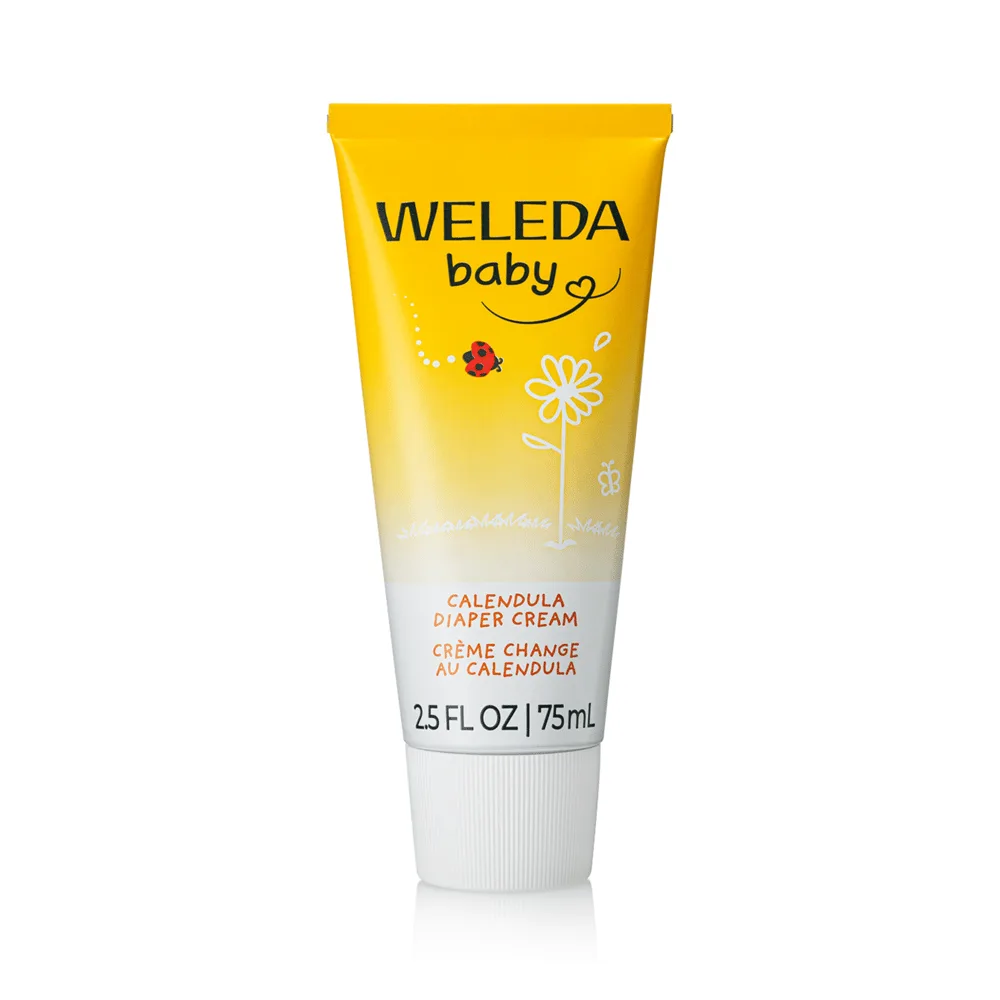
Most US diaper creams are petrolatum or mineral-oil pastes; this one suspends its declared 12 percent zinc oxide in sweet almond oil, beeswax and lanolin, with calendula listed above the water. That makes it a genuinely different feel — a wipe-off emollient rather than a scrape-off paste — at the cost of an essential-oil fragrance that the rest of the category has largely abandoned.
body carecreamclean beautyParaben FreeCruelty Free
A properly declared 12 percent zinc oxide barrier cream in an almond-oil, beeswax and lanolin base that wipes off far more kindly than a paste, from a brand with a century of pharmacy history. The essential-oil fragrance on diaper skin is the one real reservation, and for a baby with eczema it is reason enough to pick something unscented.
Strong choicefor DrynessIn your profileYou chose · Lanolin is an approved or monograph active for dryness; this cream carries it high in the ingredient list.Moderate evidenceStandard tolerabilityNo reviews collected yet
The case for it
Lanolin is a first-line active — approved, monograph-listed or named in current guidelines — for this concern.
It is present at an effective concentration, declared or high in the ingredient list.
The formula carries no trigger this concern is sensitive to, with the cautions noted.
Cautions: fragrance.
Same rule for everyone. “Strong choice” is the verdict on 1,459 of 45,024 concern verdicts across the catalog; rule R2 decided 892 of them.
As of September 25, 2026, engine 5.1.1.
Avoidfor Compromised Skin BarrierIn your profileYou chose · This formula carries fragrance — a known trigger for compromised skin barrier — so it is not a fit however good its actives are.Not yet assessedCarries a triggerNo reviews collected yet
The case for it
Zinc Oxide 12% has no evidence row yet for this concern — it is in the research queue.
The formula carries a known trigger for this concern, which decides the verdict before any efficacy question.
What would change this: Removing the trigger named above would let the actives be judged on their own.
Same rule for everyone. “Avoid” is the verdict on 1,909 of 45,024 concern verdicts across the catalog; rule R1 decided 1,304 of them.
As of September 25, 2026, engine 5.1.1.
R1 — Safety outranks praise (MASTER-PLAN §1.7). A condition-weighted trigger (multiplier ≥ 2 in condition-fit-matrix) decides the verdict before any efficacy question. · the full register
As a body productNot judged: what a body product is for — real substance, not just slip, realistic to use daily — cannot yet be measured from the ingredient list (only fragrance load can).
A verdict is DermApproved’s assessment of how well a product’s ingredients fit a concern — never a claim about what the product treats. Evidence dots and collected reviews sit beside it and are never blended in.
Rules 0.5.1 · evidence table ev-2026.09-r228 · how we decide
Assessment
Pros & Cons
Pros
✓ Zinc oxide declared at 12 percent as a proper OTC drug active
✓ Almond-oil base wipes off gently without the scrubbing pastes need
✓ Calendula listed second, not buried as a token botanical
✓ No petrolatum, mineral oil, parabens or synthetic perfume
✓ Beeswax and lanolin give real overnight water resistance
✓ NATRUE-certified with decades of European pharmacy history
✓ Spreads thin and does not leave heavy white residue
Cons
✗ Essential-oil fragrance carries limonene, linalool, geraniol and citronellol on diaper skin
✗ Too thin for an established, raw rash compared with 40 percent pastes
✗ Small 75 ml tube empties in weeks at every-change use
✗ Lanolin, beeswax, sesame and almond oils widen the allergen list
✗ Oil can separate at the nozzle in warm weather
Review
Full Review
Pull up the DailyMed record for this tube and something happens that the packaging works quite hard not to say: Weleda Calendula Diaper Cream is a drug. Not in the anthroposophic, calendula-tincture sense the brand's heritage suggests, but in the US regulatory sense — an over-the-counter skin protectant with an active ingredient panel, and the active is Zinc Oxide 12%. The calendula, the almond oil, the neroli that scents the whole changing table, all of it is listed under 'inactive'. That framing is worth holding onto, because it tells you what the cream is actually doing for a rash and what it is doing for the parent applying it.
What the zinc is doing is straightforward and well proven. Diaper dermatitis is mostly a physics problem: wet skin under occlusion, its barrier softened, then chewed at by the proteases and lipases in stool and the ammonia that urine breaks down into. A zinc oxide film keeps the irritants off while the skin repairs, and every mainstream diaper cream in the country is built on the same principle. Twelve percent is the lower-middle of the range. It is plenty for prevention and for the mild pink chafing most babies get, and it is deliberately less than the thick 40 percent pastes designed to sit on top of an already-raw rash. The practical consequence is a cream that spreads into a translucent film with a fingertip rather than needing to be troweled, and that lifts off at the next change with a light wipe.
That wipe-off quality is where the base earns its keep, and the base is the genuinely different part. Sweet almond oil is the first inactive, followed by calendula extract, then water, then sesame oil, then beeswax and lanolin. There is no petrolatum, no mineral oil, no dimethicone. Almond oil carries the zinc in a soft emollient rather than a greasy occlusive, the beeswax and lanolin give it enough body and water resistance to survive a soaked overnight diaper, and glyceryl linoleate and hectorite keep the whole thing from separating — mostly. In summer the tube can weep a little oil at the nozzle, which is the price of a wax-and-oil emulsion with no synthetic stabilisers. On skin the finish is matte, faintly waxy, pale yellow from the calendula, and it does not leave the ghostly white streaks that concentrated pastes do.
Calendula itself deserves a fair hearing rather than a debunking. Weleda grows it biodynamically on its own land and has used it in wound care since the company's clinic-pharmacy days in the 1920s, and there is a small body of trials suggesting calendula preparations help minor skin irritation. What there is not is convincing evidence that calendula adds anything to a zinc oxide barrier cream in the diaper area specifically — the studies are small, often uncontrolled, and the effect the parents in them see is hard to separate from the barrier doing its job. Its position high on the list means Weleda is not tokenising it; it just means the cream is a good zinc barrier with a calendula story, not a calendula treatment.
Now the reservation, and it is not a small one. After the actives and the base comes Fragrance (Parfum), followed by the honest disclosure of what is in it: beta-caryophyllene, citronellol, bitter orange flower oil, geraniol, geranyl acetate, limonene, linalool, geranium flower oil, pinene. That is neroli and geranium, and it smells lovely — most of the several thousand parents rating this tube say the scent is a large part of why they buy it over a medicinal paste. It is also four of the most common fragrance allergens in the European labelling list, applied several times a day to occluded, frequently inflamed skin on a person whose barrier is still maturing. Pediatric dermatology has spent two decades pushing the diaper category toward fragrance-free for exactly this reason. Weleda's defence is that essential oils are not synthetic perfume, which is true and beside the point: limonene and linalool sensitise whether they arrive from a lab or a flower, and oxidised limonene is one of the better-documented contact allergens in the fragrance literature. For a robust baby with no eczema, the risk is low and the pleasant scent is a fair trade. For a baby with atopic skin, a family history of fragrance reactions, or a rash that keeps coming back, this is the wrong tube.
The lanolin adds a second, rarer caveat. Wool-alcohol sensitivity is uncommon in infants but real, and lanolin plus beeswax also means this is not a vegan product, which matters to a share of the audience that buys Weleda precisely for its ethics. Sesame and almond oils are both listed food allergens, and while topical sensitisation through intact skin is unlikely, a diaper rash is by definition not intact skin.
On performance the pattern in user reports is consistent and believable. Applied at every change, mild redness typically settles within a day or two. Used only at bedtime it makes a reasonable preventive overnight layer. Where it disappoints is the established, angry rash — parents who reach for it once the skin is already broken tend to report it is 'too thin', which is precisely what a 12 percent cream in an oil base is. Anything with satellite spots or a sharply bordered bright-red patch is likely Candida and needs an antifungal, not more zinc.
Value is where a century of heritage collides with a 75 ml tube. Sixteen dollars for two and a half ounces is roughly three to four times the per-gram price of the unscented zinc pastes sold in tubs, and a family using it at every change will empty it in under a month. What the money buys is a nicer base and a nicer smell; it does not buy more protection. As a prevention cream for a baby with easy skin, in a house that would rather not have petrolatum on the changing table, it is a good and honest product. As the one diaper cream to keep on hand for whatever comes, it is not — an unscented barrier paste does that job for less, with fewer sensitisers, and this Weleda tube is the pleasant supplement rather than the workhorse.
Formula
Key Ingredients
The hero actives that drive this product's performance.
The declared drug active, sitting at the low-middle of the range diaper-rash creams use. It builds the physical barrier that keeps urine and stool enzymes off macerated skin, and at 12 percent it spreads more easily than the pasty 40 percent products, which is why this tube behaves more like a daily preventive layer than a flare-up paste.
Listed second, so it is a meaningful fraction of the almond-oil base rather than a label garnish. Weleda's calendula is grown biodynamically on its own farms and carries the brand's soothing claim, though clinical support for calendula specifically on diaper skin is thin and mostly small trials.
The first-listed inactive and the carrier for everything else here. It gives the cream its slip and keeps the zinc oxide suspended in an emollient film rather than a chalky one, so the product wipes off skin more gently at the next change than petrolatum-based pastes do.
Paired with beeswax to give the almond-oil base body and water resistance, so the zinc layer holds up through a wet diaper. It is the reason the cream is neither vegan nor suitable for the small group of infants with wool-alcohol sensitivity.
Regulator-approvedfor Dryness · established mechanism
Weleda's signature natural scent, built from neroli and geranium oils and carrying the declared allergens limonene, linalool, geraniol and citronellol. On an occluded, frequently inflamed infant site this is the ingredient choice most pediatric dermatologists would rather see left out, however pleasant the tube smells.
Not yet assessed
Ingredient standings describe the active at treatment-level doses and
vehicles; this product's own condition grades weigh its actual formula.
Used alone on clean, fully dried skin at each change — nothing goes under it, and a wipe residue underneath weakens the seal. Any prescribed antifungal or steroid goes on first, with the zinc cream layered over the top only after it has absorbed.
Results Timeline
The barrier effect is immediate — the cream is protective from the first change. Mild chafing redness typically settles within one to three days of consistent use at every change; a rash that is not improving by day three, or that shows satellite spots or oozing, has outgrown what a 12 percent zinc cream can do and needs a pediatric look.
Pairs Well With
fragrance-free cleansing waterplain water and cotton cloth cleansing
Clean the area with water or a fragrance-free wipe
Pat fully dry
Weleda Calendula Diaper Cream
Fresh diaper
Sample PM Routine
Clean the area with water or a fragrance-free wipe
Pat fully dry
Weleda Calendula Diaper Cream
Fresh overnight diaper
Evidence
Science & Expert Perspective
The Science
The mechanism here is barrier physics, and it is well characterised. A 2024 narrative review in Wiener Medizinische Wochenschrift lays out irritant diaper dermatitis as the product of over-hydration under occlusion, friction, a rise in skin pH from urease-generated ammonia, and the activation of faecal proteases and lipases against a softened stratum corneum; zinc oxide and other skin protectants work by keeping those irritants physically off the skin rather than by any pharmacological action on it (https://pubmed.ncbi.nlm.nih.gov/37861874/). The same logic underpins the neonatal-care recommendations reviewed in Pediatric Dermatology in 2019, which emphasise frequent changes, gentle water-based cleansing and a barrier preparation at every change as the evidence-based core of prevention, with zinc oxide and petrolatum the two standard vehicles (https://pubmed.ncbi.nlm.nih.gov/30506880/). Twelve percent zinc oxide sits within the monograph range for skin protectants, and the combination with beeswax and lanolin is a reasonable way to get water resistance without petrolatum.
What this formula adds on top of that — calendula, chamomile and a neroli-geranium essential-oil blend — is where the evidence thins. Calendula has traditional-use standing and a handful of small clinical studies in irritant dermatitis, but no adequately controlled trial isolates its contribution inside a zinc barrier cream, and the emollient base would be expected to perform similarly without it. The essential oils cut the other way: limonene, linalool, geraniol and citronellol are all declared fragrance allergens under EU cosmetic regulation, and limonene and linalool in particular form sensitising hydroperoxides on air exposure, which is a live concern in a tube that is opened many times a day. No published trial has tested this specific fragrance load on diaper skin, and the absence of data is not reassurance. The honest reading is a well-evidenced active in a pleasant but avoidably sensitising vehicle.
Pediatric dermatologists generally regard a zinc oxide barrier at every diaper change as the correct first line for irritant diaper dermatitis, and a 12 percent cream is appropriate for prevention and mild redness, with higher-concentration pastes reserved for skin that is already broken down. The recurring clinical concern with this particular product is its fragrance: standard guidance for the diaper area favours fragrance-free preparations because the site is occluded, moist and repeatedly inflamed, which is the classic setting for contact sensitisation, and the declared allergens here — limonene, linalool, geraniol and citronellol — are among the most frequent culprits in patch-test series. Lanolin is a second, less common sensitiser worth noting in atopic infants. Clinicians typically advise that any rash failing to improve within about three days of consistent barrier use, or showing satellite pustules, be assessed for candidal or bacterial infection rather than treated with more of the same cream.
Guidance
Usage & Recommendations
How to Use
Clean the diaper area with water or a fragrance-free wipe and pat completely dry — moisture trapped under the film is what the cream is meant to prevent, not seal in. Squeeze out a little and spread a thin, even layer over the whole area that the diaper covers, including the creases, at every change or at least at bedtime. There is no need to scrub off the previous layer; wipe away what is soiled and reapply over clean skin. Stop and see a pediatrician if the rash is not improving within three days, is blistered or oozing, or has bright-red edges with scattered outlying spots.
Value Assessment
At about sixteen dollars for 75 ml, this is one of the more expensive diaper creams per gram on the US market, and there is no larger size to soften that. What the premium buys is real — an almond-oil and beeswax base that is kinder to wipe off than petrolatum pastes, biodynamically grown calendula, NATRUE certification and a century-old brand — but none of it buys more barrier than an unscented zinc paste at a third of the price. For families who want to avoid petroleum on principle and have a baby with untroubled skin, the cost is defensible as a preventive-use cream. For everyone else it is the pleasant option, not the value one.
Who Should Buy
Parents of a baby with uncomplicated skin who want a petrolatum-free, naturally scented barrier cream for everyday prevention and mild chafing, and who are happy to pay a premium for the Weleda base and heritage. It suits homes that already use the rest of the calendula range.
Who Should Skip
Any infant with eczema, very reactive skin, or a family history of fragrance allergy — the neroli and geranium oils are a real exposure on occluded diaper skin. It is also the wrong pick for an established raw rash, for vegan households, and for anyone with a known lanolin, sesame or almond sensitivity.
A soft, pale-yellow cream with the faint grain of suspended zinc — thinner than a paste, thicker than a lotion, spreading in a translucent film that leaves a matte, slightly waxy finish.
Scent
Distinctly Weleda: neroli and geranium over the honeyed note of beeswax and calendula, strong enough to notice from across the changing table.
Packaging
Laminate 75 ml squeeze tube with a flip cap; the opening is wide, so a thin layer takes a little control, and the oil-rich base can weep at the nozzle in summer.
Finish
mattenon-greasy
What to Expect on First Use
Nothing to acclimatise to — the cream goes on, sits as a soft white-yellow film, and is simply wiped away at the next change. The first thing most parents notice is the perfume; the second is how much less scrubbing the almond-oil base needs compared with a 40 percent paste.
How Long It Lasts
About three to four weeks at every diaper change; six or more weeks used only overnight or at the first sign of redness.
NATRUE Natural CosmeticsUEBT (Union for Ethical BioTrade) sourcing
Background
The Story Behind This Product
Weleda's calendula baby range grew out of the anthroposophic pharmacy the company ran for Swiss clinics in the 1920s, where calendula tinctures were a staple wound dressing. The diaper cream has carried a US OTC drug listing for zinc oxide since at least 2013 and has been a fixture of European pharmacies far longer, making it one of the few 'natural' diaper products with a genuinely long track record.
About Weleda Legacy Brand (20+ years)
Weleda was founded in 1921 in Switzerland by Rudolf Steiner and Ita Wegman and has manufactured plant-based, NATRUE-certified skincare for over a century. Its baby line has decades of pediatric-market history in Europe, though the brand's anthroposophic origins mean its product claims rest more on tradition and formulation logic than on peer-reviewed trials of the finished products.
Brand founded: 1921
Myth vs. Reality
Common Myths
Myth
Because it is plant-based and NATRUE-certified, it is gentler than a conventional diaper cream.
Reality
Natural sourcing and gentleness are different questions. The declared drug active is the same zinc oxide used in every conventional barrier cream, while the essential-oil fragrance adds limonene, linalool, geraniol and citronellol — four of the most common fragrance sensitisers — that most unscented petrolatum pastes leave out.
Myth
Calendula is what clears the rash.
Reality
The rash improves because the zinc oxide and wax film keep urine and enzymes off the skin while it recovers. Calendula's own evidence in diaper dermatitis is limited to small trials, and it sits here in an oil base that would protect the skin about as well without it.
FAQ
Frequently Asked Questions
How much zinc oxide is in Weleda Calendula Diaper Cream?
It is an OTC drug product with zinc oxide declared at 12 percent, in the lower-middle of the range diaper creams use. That is enough to protect against everyday chafing and mild redness; heavy-duty pastes use up to 40 percent for established rash.
Can Weleda's diaper cream be used on a newborn?
The label is intended for the diaper area from birth, and the zinc oxide base is appropriate. The essential-oil fragrance is the reservation: on a newborn with very reactive skin, many pediatric dermatologists would steer toward an unscented barrier cream and save this for older babies without eczema.
Is Weleda Calendula Diaper Cream vegan?
No. The base relies on beeswax and lanolin for its water resistance, so it is not suitable for families avoiding animal-derived ingredients, and infants with a known lanolin (wool alcohol) sensitivity should use a different barrier cream.
Does it need to be wiped off completely at each change?
No — the almond-oil base is designed to be wiped lightly, not scrubbed away. Clean off soiled cream, pat dry, and reapply a fresh thin layer over whatever film remains on clean skin.
Why does Weleda's diaper cream smell so strong?
The scent comes from bitter orange (neroli) and geranium essential oils, not a synthetic perfume. The trade-off is that those oils carry declared fragrance allergens, which is why the cream is best avoided on infants with eczema or a family history of fragrance sensitivity.
Will Weleda Calendula Diaper Cream clear a yeast diaper rash?
No. It is a barrier cream only; a rash with bright-red edges and satellite spots is usually Candida and needs an antifungal from a pediatrician, with this cream layered on top afterwards if the doctor agrees.
Reviews
What Reviewers Tend to Say
Recurring themes our editors read across retailer reviews of this product — summaries in our words, not quotations, and not a substitute for your own patch test.
Common Praise
Clears mild redness overnight when used at every change
Pleasant natural scent parents prefer over medicinal pastes
Spreads thinly and wipes off without scrubbing
No petroleum, parabens or synthetic fragrance
Common Complaints
Small 75 ml tube goes quickly at every change
Scent is strong for a baby product
Thinner than paste-type creams, less protective on severe rash
Oil separation at the tube opening in warm weather
Notable Endorsements
NATRUE certified natural cosmeticWeleda Baby line sold in European pharmacies for decades
The fourth most frequent positive patch test in North America is an oxidation product of a molecule that occurs naturally in lavender. Nobody synthesised it into your face cream.
Essential oils are declared by botanical name rather than as fragrance, which is why the most heavily perfumed products in the natural aisle can carry the reassuring word — and why the bottle gets more sensitising the longer you own it.
Occupational hand dermatitis is one of the most common work-related diseases on earth, it follows a script, and the cheapest fix works only if you start it before the skin splits.
Every post that dismantles a home remedy owes the reader a replacement. The honest replacement list is embarrassingly cheap, and one item on it is cheaper still — it is a bath.
Products, answers, therapy guides, tools and articles in one search. Brand names,
slang and abbreviations all work — accutane finds isotretinoin, bacne finds truncal acne.