




Beta-Glucan Does Niacinamide's Job Without the Marketing Budget
It hydrates, calms, and quietly supports the barrier with one of the better safety records in skincare. So why has almost nobody heard of it?
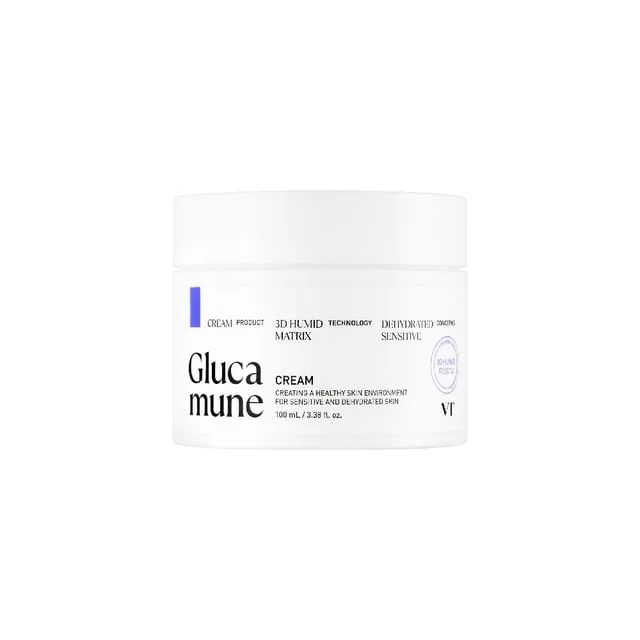
It's built around beta-glucan and snow mushroom (the 'Glucamune' complex, at a stated 57%) rather than the usual ceramide story — a soothing, immune-calming, water-binding approach to barrier care. Paired with squalane, fatty acids, panthenol, and allantoin in a fragrance-free, vegan base, it's a lightweight comfort cream for sensitive, stressed skin.
A genuinely soothing, fragrance-free barrier cream built on beta-glucan and snow mushroom rather than the usual ceramide story — lightweight yet comforting, vegan, and well-priced. It's an easy recommendation for sensitive, dehydrated, or stressed skin that wants calm without heaviness; only the esters (not fungal-acne safe) and a still-building review base hold it back.
Launched around 2024 in VT's range, the Glucamune cream is with a growing rather than extensive review base, so the assessment leans on its sound, fully disclosed beta-glucan-and-lipid barrier formula alongside consistent early feedback describing a lightweight, soothing, comfortable feel. Longer-term reviews should firm up the picture as the Glucamune line matures.
The case for it
What would change this: A declared concentration would move this to a firmer reading of the dose.
Same rule for everyone. “Good choice” is the verdict on 9,564 of 45,024 concern verdicts across the catalog; rule R5 decided 9,072 of them. Unchanged since September 5, 2026, engine 5.1.1.
Brand or formulator? Disclose a concentration or correct a fact →
The studies behind the evidence row
The case for it
What would change this: A concentration inside the studied range would raise this a step.
Same rule for everyone. “Supporting role” is the verdict on 8,197 of 45,024 concern verdicts across the catalog; rule R7 decided 258 of them. Unchanged since September 5, 2026, engine 5.1.1.
Brand or formulator? Disclose a concentration or correct a fact →
The studies behind the evidence row
The case for it
What would change this: A researched evidence row for the lead active would replace this with a verdict.
Same rule for everyone. “Good choice” is the verdict on 1,938 of 45,024 concern verdicts across the catalog; rule F2 decided 1,938 of them. Unchanged since September 5, 2026, engine 5.1.1.
Brand or formulator? Disclose a concentration or correct a fact →
The case for it
What would change this: A researched evidence row for the lead active would replace this with a verdict.
Same rule for everyone. “Supporting role” is the verdict on 8,197 of 45,024 concern verdicts across the catalog; rule R8 decided 4,250 of them. Unchanged since September 5, 2026, engine 5.1.1.
Brand or formulator? Disclose a concentration or correct a fact →
The case for it
What would change this: A researched evidence row for the lead active would replace this with a verdict.
Same rule for everyone. “Supporting role” is the verdict on 8,197 of 45,024 concern verdicts across the catalog; rule R8 decided 4,250 of them. Unchanged since September 5, 2026, engine 5.1.1.
Brand or formulator? Disclose a concentration or correct a fact →
Falls shortJudged as a moisturizer, it comes up short on: seals moisture in, supplies barrier lipids.
A verdict is DermApproved’s assessment of how well a product’s ingredients fit a concern — never a claim about what the product treats. Evidence dots and collected reviews sit beside it and are never blended in. Rules 0.5.1 · evidence table ev-2026.09-r228 · how we decide
Beta-glucan is one of skincare's quiet overachievers. It usually appears partway down an ingredient list, doing soothing, water-binding work without fanfare while flashier actives take the credit. VT's Glucamune Cream flips that around and makes beta-glucan — paired with snow mushroom — the headline, branding the duo 'Glucamune' for its immune-calming, barrier-soothing positioning and putting it at a stated 57% of the formula. It's a smart bet, because beta-glucan genuinely earns the spotlight: it's a film-forming polysaccharide with well-documented soothing, hydrating, and barrier-supportive properties, and it's especially good at calming the kind of sensitive, reactive skin that flashier actives tend to aggravate.
What that translates to in practice is a cream that feels like a relief for stressed skin. The texture is the first pleasant surprise — rich enough to feel nourishing but light enough to absorb cleanly, leaving a soft, cushioned, non-greasy finish rather than a heavy film. Beta-glucan and snow mushroom (Tremella, a plant humectant often likened to hyaluronic acid) handle the soothing-and-hydrating core, while squalane and a spread of fatty acids (arachidic, palmitic, oleic) plus caprylic/capric triglyceride replenish lipids and seal in moisture. Panthenol and allantoin round out the soothing, and sodium hyaluronate adds extra water-binding. It's a coherent, well-thought-out comfort formula — and crucially, it's fragrance-free, which is exactly right for the sensitive skin it targets.
The approach is worth appreciating on its own terms, because it's a different route to barrier care than the now-ubiquitous ceramide cream. Ceramides work by replacing the barrier's own lipids; beta-glucan works by soothing, calming inflammation, and forming a hydrating film. Neither is superior in the abstract — they address barrier health from different angles — but beta-glucan's particular strength is its soothing, anti-irritant character, which makes a beta-glucan-led cream an especially good fit for reactive, easily-aggravated skin that wants calm as much as moisture. If you've found ceramide creams fine but uninspiring, or you specifically need soothing, this is a worthwhile alternative.
The honest notes are few and mostly about fit. It's a lightweight-leaning cream, so very dry skin in harsh winter conditions may want a richer occlusive layered on top — though for normal, combination, and most dry skin it's a comfortably complete everyday moisturizer. The one real caveat is that it's not fungal-acne safe: the caprylic/capric triglyceride and olive-derived emulsifiers (cetearyl and sorbitan olivate) aren't Malassezia-friendly, so anyone managing fungal acne should look elsewhere. Reassuringly, it appears free of animal-derived ingredients — beta-glucan and snow mushroom are plant/fungal, squalane is plant or synthetic — so it's a reasonable vegan pick, and the fragrance-free formula keeps the irritation profile low.
It slots naturally into a routine as the moisturizer step — light enough for daytime under sunscreen, comforting enough as a night cream — and pairs with the matching Glucamune essence if you want a fuller beta-glucan routine, though it stands well on its own. As a newer product, its long-term review base is still building, so the score leans partly on the soundness of the formula itself; but the formula is genuinely sound, and early feedback is consistent about the lightweight, soothing comfort.
It's worth appreciating what the beta-glucan focus signals about who this is for. Brands increasingly default to ceramides for any 'barrier' claim, so a cream that leads with beta-glucan is implicitly aimed at the soothing end of the spectrum — at skin that's reactive, flushed, or stressed more than it is structurally lipid-depleted. If your barrier concern is irritation and sensitivity, beta-glucan's calming, anti-inflammatory character is arguably a better-targeted choice than another ceramide cream. If your concern is deep dryness and lipid loss, a ceramide-cholesterol formula might serve you better, or you can layer one over this. Knowing which problem you're actually solving makes this an easy yes or a considered pass rather than a coin flip.
A final practical point on layering, since the cream is designed to anchor the Glucamune routine. Used over the matching essence, the two reinforce each other — the essence floods the skin with beta-glucan and snow-mushroom hydration, and the cream seals it with squalane and fatty acids — but neither requires the other, and the cream slots happily over any serum or essence you already use. For combination skin, you can even use it only where you need it, reserving the richer comfort for drier zones. That flexibility, plus the fragrance-free gentleness, makes it an easy cream to fold into an existing routine rather than one that demands you rebuild around it.
Value is strong. At around nineteen dollars for a generous 100ml of a fragrance-free, vegan, beta-glucan-and-squalane barrier cream, it's well-priced for what it delivers, with no hype premium — typical of VT's accessible positioning. So the recommendation is easy: if you have sensitive, dehydrated, normal, or barrier-stressed skin and want a genuinely soothing, lightweight, fragrance-free moisturizer that calms as it hydrates, this is a quietly excellent pick, and a nice change of pace from the ceramide-cream default. If you're fungal-acne-prone, look elsewhere; if you want maximum winter occlusion, layer something over it — but for everyday soothing comfort, beta-glucan well deserves the starring role VT gave it here.
The hero actives that drive this product's performance.
| Ingredient | Function | Evidence |
|---|---|---|
| Beta-Glucan | The 'mune' (immune-soothing) half of Glucamune — beta-glucan is a film-forming humectant with strong soothing, hydrating, and barrier-supporting evidence, the active heart of a cream built to calm and comfort stressed, sensitive skin. | Not yet assessed |
| Snow Mushroom (Tremella Fuciformis) | The mushroom source of the 'Glucamune' complex — a plant-derived humectant often likened to hyaluronic acid, with fine particles that hold water and lend the cream a plump, cushioned hydration without heaviness. | Not yet assessed |
| Squalane | A lightweight, skin-mimicking emollient that, with the fatty acids (arachidic, palmitic, oleic) and caprylic/capric triglyceride, gives the cream its soft, sealing barrier feel — replenishing lipids without a greasy finish. | Established mechanism for Dryness · established mechanism |
| Panthenol & Allantoin | VT's 'water-locking' soothing pair — provitamin B5 and allantoin calm and bind moisture, reinforcing the beta-glucan's barrier-and-comfort intent for a cream aimed at sensitive, dehydrated skin. | Established mechanism for Dehydration · established mechanism |
Ingredient standings describe the active at treatment-level doses and vehicles; this product's own condition grades weigh its actual formula.
Water, Butylene Glycol, Propanediol, Betaine, Caprylic/Capric Triglyceride, 1,2-Hexanediol, Cetearyl Alcohol, Stearic Acid, Cetearyl Olivate, Arginine, Carbomer, Hydroxyacetophenone, Sorbitan Olivate, Vinyldimethicone, Xanthan Gum, Sodium Polyacrylate, Panthenol, Ethylhexylglycerin, Tremella Fuciformis Extract, Disodium EDTA, Allantoin, Dipropylene Glycol, Arachidic Acid, Palmitic Acid, Sodium Hyaluronate, Malt Extract, Glycerin, Oleic Acid, Beta-Glucan, Citric Acid, Squalane
moisturizer
AM & PM
Apply as the moisturizer step after serums; lightweight enough for daytime under sunscreen, comforting enough as a night cream. Layer over the matching Glucamune essence for a fuller barrier routine.
Skin feels soothed, hydrated, and comfortable immediately. With consistent use over one to two weeks, sensitive or barrier-stressed skin tends to look calmer and more resilient as the beta-glucan and lipids do their work; the benefit is maintained through ongoing use.
The cream's soothing case rests on beta-glucan, a well-regarded polysaccharide (here mushroom/yeast-derived, paired with Tremella fuciformis) with documented film-forming, humectant, anti-inflammatory, and barrier-supportive activity in topical studies — a legitimate soothing active rather than a marketing term, and an appropriate centerpiece for sensitive-skin care. Snow mushroom (Tremella) contributes additional polysaccharide humectancy comparable to hyaluronic acid, and sodium hyaluronate adds water-binding. The lipid-and-emollient side — squalane plus free fatty acids (arachidic, palmitic, oleic) and caprylic/capric triglyceride — provides barrier replenishment and a non-greasy seal, a different mechanism from ceramide replacement but valid for supporting barrier function. Panthenol and allantoin are well-evidenced soothing, barrier-supportive humectants. The fragrance-free formulation is appropriate for reactive skin and lowers irritation risk. The main formulation caveat is that the esters and olive-derived emulsifiers make it unsuitable for fungal-acne-prone skin. The honest scientific summary is that this is a soundly constructed, evidence-aligned soothing barrier cream whose beta-glucan-led approach is genuinely well-supported for calming and hydrating sensitive, stressed skin.
Beta-glucan is increasingly recognized in clinical skincare as a useful soothing, hydrating, and barrier-supportive ingredient, particularly for sensitive, reactive, or compromised skin, and a fragrance-free cream built around it aligns well with the kind of bland, low-trigger moisturizer dermatologists favor for such skin. The supporting squalane, fatty acids, panthenol, and allantoin are all sensible, well-tolerated barrier-and-soothing ingredients. Clinically, a beta-glucan-led approach is a valid alternative to ceramide-based barrier creams, with beta-glucan's particular strength being its anti-irritant, calming character. The fragrance-free, vegan formulation is a plus for reactive skin. The relevant caution is that its ester and emulsifier content makes it a poor fit for fungal-acne-prone skin, and that very dry skin may benefit from a more occlusive layer on top. For sensitive and barrier-stressed skin generally, it is a reasonable, soothing everyday moisturizer.
Following your serums, smooth a small amount over the face and neck as your moisturizer step, morning and evening. Its lightweight texture absorbs cleanly and sits well under sunscreen in the day. For very dry skin or in winter, layer a richer occlusive on top to seal it in. Pair it with the matching Glucamune essence beneath for a fuller beta-glucan routine, and always follow with sunscreen in the morning.
At around $19 for a generous 100ml, this is strong value — a fragrance-free, vegan, beta-glucan-and-squalane barrier cream at a price that undercuts many soothing creams with comparable formulation, and with no hype premium in line with VT's accessible positioning. The 100ml lasts three to four months of twice-daily use. There's no alternative size to weigh, and it pairs with the matching Glucamune essence for a fuller routine. The value is excellent for sensitive, dry, normal, and barrier-stressed skin; only the fungal-acne-prone, for whom the esters are the issue, should weigh fit over price.
Sensitive, dehydrated, normal, or barrier-stressed skin that wants a genuinely soothing, lightweight, fragrance-free moisturizer — and anyone drawn to beta-glucan's calming, anti-irritant character as an alternative to the usual ceramide cream. It's a strong, well-priced everyday choice for reactive skin and a reasonable vegan option.
Anyone managing fungal acne should skip it, given the esters and olive-derived emulsifiers. Very dry skin wanting a single heavily occlusive winter cream may want something richer (or to layer one on top), and committed ceramide-cream users who specifically want lipid replacement should note this takes a different, beta-glucan-led approach.
Ready to try VT Cosmetics Glucamune Cream?
Buy at Amazon ♥A rich-but-lightweight cream that glides on smoothly and absorbs to a soft, cushioned, non-greasy finish.
Fragrance-free, with only a faint neutral smell from the base.
A 100ml tub or pump with a clean, minimalist look; the generous size suits daily face (and neck) use.
On first use the cream feels rich yet surprisingly lightweight, gliding on and absorbing to a soft, cushioned, non-greasy finish. Sensitive or stressed skin tends to feel immediately soothed and comfortable, with no scent or sting. There's no adjustment period; very dry winter skin may simply want a richer occlusive on top, while most skin finds it a comfortable everyday moisturizer.
3-4 months with twice-a-day use facial use of the 100ml size
All Year
VT Cosmetics built the Glucamune line around beta-glucan — a mushroom- and yeast-derived polysaccharide prized for soothing and barrier support — branding the mushroom-and-beta-glucan pairing 'Glucamune' for its immune-calming positioning. The cream is the richest step of that range, aimed at comforting sensitive, dehydrated skin.
VT Cosmetics, founded in 2015, is a popular K-beauty brand best known for its Cica and Reedle Shot lines. The Glucamune range is a newer, beta-glucan-focused barrier line; the brand is widely sold, with credibility resting on popularity and consistent formulation rather than published clinical trials.
Beta-glucan is just a fancy humectant with no real benefit.
Beta-glucan is genuinely one of the better-evidenced soothing polysaccharides — it's a film-forming humectant with documented anti-inflammatory, hydrating, and barrier-supportive activity, useful for calming sensitive and stressed skin. It's not a gimmick; it's a legitimate soothing active doing real work here.
A barrier cream has to feel heavy and greasy to work.
This cream supports the barrier with beta-glucan, squalane, and fatty acids while staying lightweight and non-greasy — efficacy comes from the ingredients, not the heaviness. Only very dry winter skin will want something more occlusive layered on top; for most, lightweight is plenty.
It's VT's name for the cream's beta-glucan-and-mushroom complex (at a stated 57%) — combining beta-glucan and snow mushroom (Tremella) extract for soothing, immune-calming hydration. Beta-glucan is a well-regarded soothing polysaccharide, so the 'Glucamune' branding sits on a genuinely sound barrier-and-comfort active.
Yes — it's one of its best uses. Beta-glucan, snow mushroom, panthenol, and allantoin are all soothing, the formula is fragrance-free, and the texture is lightweight yet comforting. It's a sensible everyday moisturizer for sensitive, reactive, or barrier-stressed skin.
For normal, combination, and many dry-skin types it works well as an everyday moisturizer, hydrating and replenishing with squalane and fatty acids. Very dry skin in harsh winter conditions may want a richer occlusive layered on top, but the cream itself is comfortably nourishing without being heavy.
They work differently — ceramides replace the barrier's own lipids, while beta-glucan is a soothing, film-forming humectant that calms and hydrates. This cream takes the beta-glucan-plus-squalane-and-fatty-acid route rather than a ceramide one; both are valid, and beta-glucan is especially good at soothing reactive skin.
Yes to both — it's fragrance-free, and its actives (beta-glucan, mushroom, squalane, plant fatty acids) are free of obvious animal-derived ingredients, making it a reasonable vegan pick. The one caveat is that it isn't fungal-acne safe, owing to a few esters.
Recurring themes our editors read across retailer reviews of this product — summaries in our words, not quotations, and not a substitute for your own patch test.
Soothing and genuinely comforting on sensitive skin
Lightweight yet nourishing barrier feel
Fragrance-free and gentle
Strong value for a beta-glucan cream
Not rich enough alone for very dry winter skin to some
Not fungal-acne safe due to esters
Newer product with a still-building review base
Verified answers from our questions library — the nuance a product page cannot carry.