


Homemade Sunscreen Fails for a Reason You Cannot Fix in a Kitchen
Every other DIY mistake announces itself. This one stays silent for eight hours, and the equipment that would prevent it does not fit on a countertop.
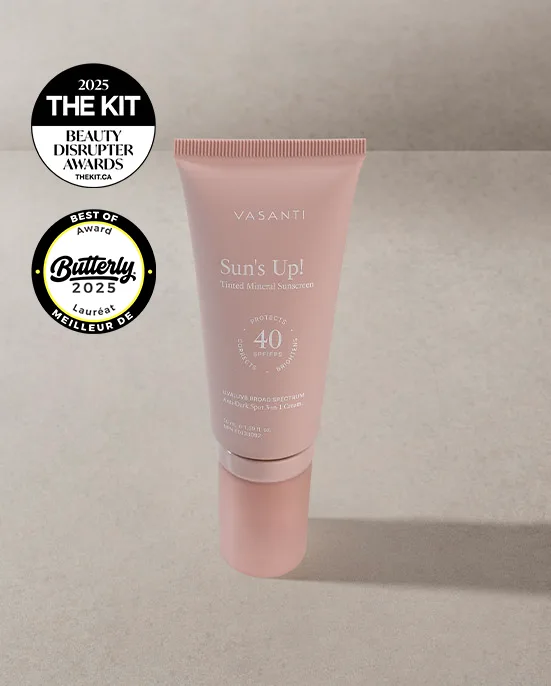
Most tinted mineral sunscreens rely on silicones to disguise the zinc — this one is entirely silicone-free, using plant-derived alkanes and coco-caprylate instead. It also folds Vasanti's signature black currant and peony brightening complex into the formula, making it a sunscreen built specifically to both prevent and gently address hyperpigmentation.
Vasanti built its name on brightening, and this tinted mineral sunscreen is that mission in SPF form: 20% non-nano zinc oxide for genuine broad-spectrum protection, plus a black currant and peony complex aimed at fading dark spots. The single universal tint blurs tone without a white cast on light-to-medium skin, though it has real limits on deeper complexions. Soothing, fragrance-free, and refreshingly silicone-free — a thoughtful daily pick if its one shade suits you.
Because this SPF 40 formulation is fairly recent, the score leans on ingredient analysis and the broader Sun's Up! history more than on a deep pool of version-specific reviews. Expect this assessment to firm up as that pool grows.
The case for it
Same rule for everyone. “Full protection” is the verdict on 2,288 of 45,024 concern verdicts across the catalog; rule P1 decided 2,232 of them. Unchanged since September 5, 2026, engine 5.1.1.
Brand or formulator? Disclose a concentration or correct a fact →
The studies behind the evidence row
The case for it
What would change this: A researched evidence row for the lead active would replace this with a verdict.
Same rule for everyone. “Full protection” is the verdict on 2,288 of 45,024 concern verdicts across the catalog; rule P1 decided 2,232 of them. Unchanged since September 5, 2026, engine 5.1.1.
Brand or formulator? Disclose a concentration or correct a fact →
The case for it
What would change this: A researched evidence row for the lead active would replace this with a verdict.
Same rule for everyone. “Full protection” is the verdict on 2,288 of 45,024 concern verdicts across the catalog; rule P1 decided 2,232 of them. Unchanged since September 5, 2026, engine 5.1.1.
Brand or formulator? Disclose a concentration or correct a fact →
The case for it
What would change this: A researched evidence row for the lead active would replace this with a verdict.
Same rule for everyone. “Full protection” is the verdict on 2,288 of 45,024 concern verdicts across the catalog; rule P1 decided 2,232 of them. Unchanged since September 5, 2026, engine 5.1.1.
Brand or formulator? Disclose a concentration or correct a fact →
The case for it
What would change this: A researched evidence row for the lead active would replace this with a verdict.
Same rule for everyone. “Good choice” is the verdict on 1,938 of 45,024 concern verdicts across the catalog; rule F2 decided 1,938 of them. Unchanged since September 5, 2026, engine 5.1.1.
Brand or formulator? Disclose a concentration or correct a fact →
Does the jobDoes what a sunscreen is for: UVA coverage, kind to the skin wearing it. Not measured from the label: pleasant enough to actually use.
A verdict is DermApproved’s assessment of how well a product’s ingredients fit a concern — never a claim about what the product treats. Evidence dots and collected reviews sit beside it and are never blended in. Rules 0.5.1 · evidence table ev-2026.09-r228 · how we decide
Vasanti spent two decades building a reputation around one idea: brighter, more even skin. The Canadian brand's enzyme-driven exfoliator developed something close to a cult following long before tinted mineral sunscreen was a category anyone fought over, so when Vasanti finally built a daily SPF, it didn't build a plain one. Sun's Up! is a sunscreen with a side quest — it wants to fade the dark spots you already have while shielding you from making new ones.
Protection has to work before anything else matters, so start there. The formula leans on a single UV filter: 20% non-nano zinc oxide. That is a genuinely generous load, and zinc oxide is the one filter on the market that covers the entire broad-spectrum range — UVB plus short and long UVA — from one ingredient. Non-nano means the particles are large enough to stay on the skin's surface rather than absorb, which is a big part of why mineral sunscreens are the standard recommendation during pregnancy and for reactive, easily-irritated skin. At SPF 40 you are getting a high level of UVB defense, and because the formula is all-mineral, there is no chemical-filter absorption question and no reef-toxicity conversation to have.
The catch with any high-zinc sunscreen is the white cast, and this is where the formulation gets clever. Instead of relying on silicones to disguise the minerals — the usual industry trick — Sun's Up! is entirely silicone-free, using C13-15 alkane, coconut alkanes, and coco-caprylate as the slip agents that carry the zinc and help it sheer out. A single red iron oxide pigment then warms the otherwise-white base into a universal tint. The result, by most accounts, blends to a natural, non-ashy finish on light-to-medium skin. That iron oxide is doing real work beyond cosmetics, too: iron oxides help screen visible and blue light, which is meaningfully relevant here because visible light is one of the things that can deepen the exact hyperpigmentation this product is trying to treat.
The treatment ambition comes from a black currant and peony extract complex — Vasanti's brightening signature, transplanted into a sunscreen. The idea is a closed loop: the botanicals work to temper melanin production and soften existing dark spots, while the zinc oxide on top prevents UV from triggering new ones. It is a smart concept, with one caveat worth stating plainly. Botanical brightening complexes carry far less evidence than dedicated actives like a well-formulated vitamin C or a tyrosinase-targeting agent, so the dark-spot fading here is best understood as a slow, gentle bonus rather than the reason you buy this. Bisabolol, a chamomile-derived soothing agent, rounds out the formula and earns its place — a 20% mineral load can feel tight on some skin, and bisabolol keeps things calm enough for sensitive complexions to wear this every day.
In use, it behaves like a light tinted cream from a pump. The texture is non-greasy and the tint gives a soft, slightly blurred evenness that some people find replaces a light foundation entirely. There is no added fragrance — which matters for a product you reapply on your face — though several reviewers note a faintly earthy, natural smell from the botanical oils — black currant seed oil and jojoba both have a scent of their own even without added fragrance. The pump packaging draws the most consistent grumbling; some units dispense unevenly. None of that is a dealbreaker, but it is the kind of small friction worth knowing about before you buy.
The shade range, or rather the lack of one, is the genuine limitation. Sun's Up! comes in a single universal tint. On fair-to-medium skin that is convenient — one shade, no matchmaking, no guessing. On deeper skin tones, a single tint built to neutralize a white zinc base tends to read ashy or patchy, and no amount of clever pigment work fully solves that with one shade. If your skin is deep, this is not the tinted sunscreen for you, and that is a real gap in a product whose entire pitch is even tone.
Value lands in awkward middle territory. Around the high-thirties in US dollars for 50 ml is more than a basic mineral sunscreen costs, and you are paying a premium for the tint and the brightening angle. Vasanti is an established brand with a long track record, but it is a cosmetics company rather than a derm-developed one, so the price reflects formulation effort and brand positioning more than clinical pedigree. If you would otherwise buy a tinted mineral SPF and a separate brightening step, the all-in-one math works in its favor; if you just want sun protection, you can do it cheaper.
Where that leaves Sun's Up! is fairly clear. For light-to-medium skin that wants UV protection and a gentle, ongoing nudge against dark spots folded into one fragrance-free, silicone-free step, it is a genuinely thoughtful buy — a product that knows precisely what it is trying to be. Deeper complexions the single shade cannot serve, anyone who bristles at even a faint botanical scent, and shoppers who simply want plain sun protection without paying for a tint will all do better with something else. Matched to the right face, though, this is a small daily pleasure rather than a chore.
The hero actives that drive this product's performance.
| Ingredient | Function | Evidence |
|---|---|---|
| Non-Nano Zinc Oxide (20%) (20%) | The formula's sole UV filter, carried at a hefty 20% load to deliver genuine broad-spectrum UVA and UVB defense with no chemical filters at all. The non-nano particle size keeps it on the skin's surface rather than absorbing, and the iron oxide tint and plant-derived alkanes around it are what stop this much zinc from leaving the chalky cast it normally would. | Regulator-approved for Sun Damage · limited certainty |
| Iron Oxides (Tint) | The single iron oxide pigment does double duty: it warms the otherwise-white zinc base into a universal skin-toned tint, and iron oxides help screen visible and blue light. That matters here specifically because visible light can deepen the hyperpigmentation this product is built to address. | Not yet assessed |
| Black Currant & Peony Extract Complex | Vasanti's brightening signature, folded into a sunscreen so the formula works on existing pigmentation while the zinc oxide on top prevents UV from triggering new spots. The peony root and black currant extracts are positioned to temper melanin production toward the even tone the SPF protects. | Not yet assessed |
| Bisabolol | A chamomile-derived soothing agent that offsets any tightness from the high 20% mineral-filter load, keeping the formula comfortable enough for sensitive and reactive skin to wear every day. | Not yet assessed |
Ingredient standings describe the active at treatment-level doses and vehicles; this product's own condition grades weigh its actual formula.
Aqua, Zinc Oxide, Caprylic/Capric Triglyceride, C13-15 Alkane, Polyhydroxystearic Acid, Polyglyceryl-3 Polyricinoleate, Isostearic Acid, Lecithin, Coconut Alkanes, Coco-Caprylate/Caprate, Silica, Propanediol, Capryloyl Glycerin/Sebacic Acid Copolymer, Polyglyceryl-2 Oleate, Polyglyceryl-2 Stearate, Quaternium-90 Bentonite, Triethyl Citrate, Sodium Chloride, Tocopherol, Bisabolol, Glyceryl Caprylate, Glyceryl Undecylenate, Ribes Nigrum (Black Currant) Seed Oil, Octyldodecanol, Octyldodecyl Oleate, Octyldodecyl Stearoyl Stearate, Paeonia Suffruticosa Root Extract, Rosmarinus Officinalis (Rosemary) Leaf Extract, Simmondsia Chinensis (Jojoba) Seed Oil, Jojoba Esters, Polyglyceryl-6 Polyricinoleate, Iron Oxide CI 77492.
sunscreen
AM
Apply as the final morning step, after moisturizer. Blend like a light tinted moisturizer and build slightly over areas you want to color-correct. Let it set a minute before foundation if you wear it.
UV and visible-light protection are immediate. Any tone-evening from the botanical brightening complex is gradual and subtle, realistically over 8-12 weeks of consistent use, and works best alongside a dedicated brightening active.
What makes this formula worth examining is not any single ingredient but the way three layers of defense are stacked toward one goal: preventing and reducing hyperpigmentation. The foundation is zinc oxide, the most thoroughly characterized mineral UV filter. It is the only single filter that attenuates the full broad-spectrum range, scattering and absorbing UVB and both short and long UVA wavelengths, and at a 20% concentration this formula carries enough to support its SPF 40 rating with margin. Because UVA is a primary driver of melanin overproduction, robust UVA coverage is the single most important factor in any product claiming to address dark spots — you cannot fade pigmentation faster than fresh UV exposure creates it. The second layer is the iron oxide pigment. Beyond tinting the formula, iron oxides have a growing evidence base for attenuating visible light, particularly the high-energy blue-violet portion of the spectrum. This matters because visible light, unlike UV, passes through conventional mineral and chemical filters largely unimpeded, yet it has been shown to induce pigmentation, especially in melanin-rich skin. Tinted sunscreens containing iron oxides consistently outperform untinted equivalents in studies of melasma and post-inflammatory hyperpigmentation, which is why dermatologists increasingly recommend tinted formulas specifically for pigmentary conditions. The third layer is the botanical complex of black currant and peony extracts, positioned to act on melanin synthesis itself. Peony root contains compounds studied for their influence on tyrosinase, the rate-limiting enzyme in melanin production, while black currant contributes anthocyanin antioxidants. The evidence here is the least developed of the three layers — botanical brightening agents are generally supported by in-vitro and small studies rather than the robust clinical record behind zinc oxide — so this layer is best understood as a gentle, supportive contributor. The genuine strength of the formula is the combination logic: comprehensive UV plus visible-light defense doing the heavy lifting of prevention, with the botanicals offering a modest assist on correction.
Dermatologists frequently single out tinted mineral sunscreens as a preferred option for patients managing hyperpigmentation, melasma, and post-inflammatory dark spots. The reasoning is twofold: the zinc oxide base provides the broad-spectrum UVA coverage essential to preventing pigment formation, and the iron oxide pigments that create the tint add a layer of visible-light protection that untinted sunscreens lack. Clinicians note that visible light is an underappreciated trigger of pigmentation, especially in skin of color, which makes tinted formulas a more complete choice for these conditions. The all-mineral, fragrance-free composition is also commonly recommended for sensitive, reactive, and pregnant patients, since zinc oxide is not absorbed systemically in any meaningful amount. Clinical guidance would generally caution, however, that botanical brightening extracts should be viewed as adjuncts rather than primary treatments — patients seeking measurable fading of established dark spots are typically advised to pair a product like this with an evidence-backed active. The limited shade range is also a practical concern raised for patients with deeper skin tones.
Smooth this on as the last step of your morning routine, after moisturizer and before any makeup. Dispense roughly a quarter to a third of a teaspoon for the face, since under-application is the most common reason sunscreens underperform. Because it is tinted, blend it as you would a light tinted moisturizer, working quickly and evenly before it sets, and build a little extra over areas you want to color-correct. Allow a minute or two for it to settle before layering foundation if you choose to wear it. Reapply every two hours of meaningful sun exposure, and after swimming or heavy sweating. There is no nighttime use for this product.
At roughly the high-thirties in US dollars for 50 ml, Sun's Up! is priced above a no-frills mineral sunscreen, and only the single size is offered, so there is no bulk-value option to consider. The premium buys the universal tint and the brightening botanical complex. Whether that is worth it depends on your routine: if this genuinely replaces both a tinted SPF and a separate tone-evening product, the consolidated cost is reasonable. If you only need sun protection, cheaper mineral options exist. Vasanti is an established brand with a long track record, but as a cosmetics company rather than a clinically-driven one, the price reflects formulation quality and positioning rather than deep research pedigree. Fair, not a steal.
Light-to-medium skin looking for a fragrance-free, silicone-free mineral sunscreen that moonlights as a tone-evening tinted cream is the natural audience here. It suits sensitive and reactive skin, works comfortably during pregnancy, and appeals to anyone drawn to the idea of gently addressing existing dark spots while protecting against new ones.
Deeper complexions are the clear mismatch — the single universal shade tends to turn ashy, and a tinted formula with a real shade range will serve far better. A faint botanical scent rules it out for the most fragrance-averse, and anyone who only wants plain UV defense will find the tint-and-brightening premium hard to justify.
Ready to try Vasanti Sun's Up! Tinted Mineral Sunscreen SPF 40?
Buy at Amazon ♥Lightweight tinted cream with a soft, slightly blurring slip
Fragrance-free, with a faint natural earthiness from the black currant and jojoba seed oils
Opaque pump bottle; some users report uneven dispensing
On first use the tint reads sheer and skin-toned, blending much like a light tinted moisturizer. Work quickly — the mineral base sets within a minute or so. There is no purging or adjustment period, and sun protection is immediate. The single shade flatters light-to-medium skin and can look ashy on deeper tones.
One container should carry you two to three months daily full-face and neck application
All Year
Vasanti spent its first two decades known for brightening and exfoliation rather than sun care. Sun's Up! extends that brightening identity into SPF, pairing the brand's pigment-targeting botanical complex with a high mineral filter load — a sunscreen designed as a continuation of the dark-spot work rather than a separate category.
Vasanti is a Canadian colour-cosmetics and skincare brand founded in 2003, long known for its enzyme-based brightening exfoliator. It is an established consumer brand with a multi-decade track record, though it is a cosmetics company rather than a dermatologist-developed line.
A mineral sunscreen with a tint is just makeup with SPF.
The tint here comes from iron oxides, which add genuine visible-light protection on top of the zinc oxide's UV defense — relevant because visible light can worsen hyperpigmentation. The tint is functional, not purely cosmetic.
On light-to-medium skin, the iron oxide tint warms the 20% zinc oxide base into a natural finish with little to no white cast. On deeper skin tones, the single universal shade can read ashy, since there is no darker option to match.
Its only UV filter is non-nano zinc oxide, a mineral filter that is not absorbed systemically and is widely considered pregnancy-friendly. The formula is also fragrance-free, which many people prefer during pregnancy. Confirm with your OB if you have specific concerns.
It contains a black currant and peony complex aimed at tempering melanin, and the zinc and iron oxides prevent UV and visible light from creating new spots. Botanical brightening evidence is limited, so expect slow, gentle support rather than the fading power of a dedicated active.
No — the formula contains jojoba oil, black currant seed oil, jojoba esters, and fatty acids, several of which can feed the yeast behind fungal acne. Those prone to fungal acne should choose a different sunscreen.
For many users, yes — the sheer tint blurs and evens tone enough to skip a light foundation on low-key days. It offers light, buildable coverage rather than full coverage.
Yes. Rather than using silicones to disguise the mineral filter, it relies on plant-derived alkanes and coco-caprylate, making it a genuine option for anyone avoiding silicones.
With daily full-face and neck use at the recommended amount, a 50 ml bottle lasts roughly two to three months.
Recurring themes our editors read across retailer reviews of this product — summaries in our words, not quotations, and not a substitute for your own patch test.
Blends to a natural finish with no white cast on light-to-medium skin
Lightweight, non-greasy tinted texture
Evens tone enough to replace a light foundation
Only one shade — looks ashy on deeper skin tones
Pump can dispense unevenly
Faint earthy botanical scent
Verified answers from our questions library — the nuance a product page cannot carry.