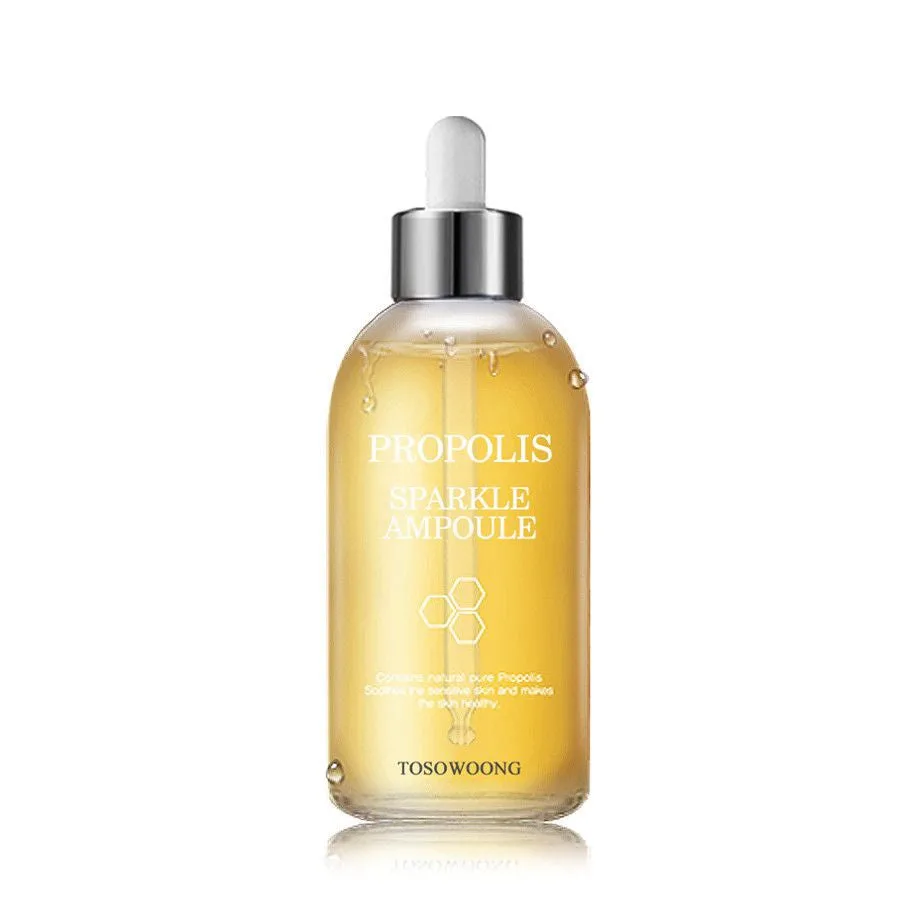
It leads with a propolis extract declared at eighty percent, one of the highest on the market, backed by honey and three traditional Korean botanicals in a hundred-millilitre bottle at a budget price, and it has kept that formula since 2014 while the brand around it reinvented itself. The six essential oils that made it smell like a spa in 2015 are the reason it reads as dated now, and the reason it stings the sensitive skin propolis is supposed to soothe.
A mid-2010s cult ampoule that still does what made it famous: a honeyed, propolis-dense glow for very little money in a generous bottle. It also still carries six essential oils, four of them citrus and one bergamot, on top of propolis, itself an allergen, which makes it a poor bet for the sensitive skin propolis is meant to soothe. Good value for resilient, dry-to-normal skin that wants a dewy layer; a sting waiting to happen for everyone else.
Supporting rolefor DehydrationIn your profileYou chose · Nothing here targets dehydration directly; humectant hydration is the recognised companion to treating it, and this ampoule does that without known triggers.Not yet assessedStandard tolerabilityNo reviews collected yet
The case for it
Propolis Extract 80% has no evidence row yet for this concern — it is in the research queue.
The formula carries no trigger this concern is sensitive to, with the cautions noted.
What would change this: A researched evidence row for the lead active would replace this with a verdict.
Same rule for everyone. “Supporting role” is the verdict on 8,197 of 45,024 concern verdicts across the catalog; rule R8 decided 4,250 of them.
As of September 25, 2026, engine 5.1.1.
R8 — The category's job (barrier care, humectant hydration, gentle cleansing, photoprotection) is the documented supportive role for this concern. This is the honest verdict for a moisturizer on an acne page. · the full register
Supporting rolefor DrynessIn your profileYou chose · Nothing here targets dryness directly; humectant hydration is the recognised companion to treating it, and this ampoule does that without known triggers.Not yet assessedStandard tolerabilityNo reviews collected yet
The case for it
Propolis Extract 80% has no evidence row yet for this concern — it is in the research queue.
The formula carries no trigger this concern is sensitive to, with the cautions noted.
Cautions: fragrance.
What would change this: A researched evidence row for the lead active would replace this with a verdict.
Same rule for everyone. “Supporting role” is the verdict on 8,197 of 45,024 concern verdicts across the catalog; rule R8 decided 4,250 of them.
As of September 25, 2026, engine 5.1.1.
R8 — The category's job (barrier care, humectant hydration, gentle cleansing, photoprotection) is the documented supportive role for this concern. This is the honest verdict for a moisturizer on an acne page. · the full register
Also listed for Dullness — the actives here (Propolis, Honey, Mugwort (Artemisia) are in our research queue for that concern; there is no verdict until their evidence rows are written. That is a gap in our table, not a mark against the product.
A verdict is DermApproved’s assessment of how well a product’s ingredients fit a concern — never a claim about what the product treats. Evidence dots and collected reviews sit beside it and are never blended in.
Rules 0.5.1 · evidence table ev-2026.09-r228 · how we decide
Assessment
Pros & Cons
Pros
✓ Propolis extract first on the list at a declared eighty percent
✓ Honey, glycerin, polyglutamic acid and betaine give a lasting plumped glow
✓ Mugwort, sophora and coptis extracts add traditional soothing support
✓ Alcohol-free and oil-free with a dewy, makeup-friendly finish once set
✓ Hundred-millilitre bottle at a low price that lasts about four months
✓ Decade-long review record from its cult years
✓ Layers well under a retinoid or moisturiser
Cons
✗ Six essential oils, four of them citrus, in a twice-daily leave-on
✗ Bergamot oil adds a photosensitising risk unless furocoumarin-free
✗ Propolis is itself a recognised contact allergen
✗ Sticky, tacky film until it sets
✗ Strong citrus-medicinal scent
✗ Original 2014 formula now sold through a narrowing set of resellers
Review
Full Review
In 2015 this ampoule was everywhere on K-beauty blogs, compared side by side with rival propolis ampoules, photographed pouring like honey, praised for a glow that looked lit from within. The formula has not changed since, and that is the interesting thing about it now: reading its ingredient list a decade on is a small lesson in how the standards for gentle skincare have moved while a product stood still. Propolis extract first and declared at eighty percent, honey extract sixth, a trio of Korean soothing botanicals, and then, in the middle of the list, lemon, bergamot, orange, lime, pine and eucalyptus oils, six of them, in a leave-on serum sold for calming and for use morning and night. It was normal then. It is the first thing a careful reader notices now.
Start with what the ampoule does well, because it does it well. Propolis extract at the top of the list, even allowing that eighty percent describes a resin dissolved in solvent rather than raw propolis, makes this one of the most propolis-heavy serums on the market, and propolis brings a real if modest set of properties: flavonoids and phenolic acids with antioxidant and anti-inflammatory activity, a mild antibacterial note, and the faintly tacky, warm texture that reads as nourishment. Honey extract, glycerin and glycereth add humectancy, polyglutamic acid and betaine hold water in the tail, and a set of acrylate film-formers gives the whole thing a glossy set. Two or three drops pressed over a cleansed face turn sticky, then, within a couple of minutes, settle into a dewy, plumped glow that lasts through the day and takes makeup well. Normal and dry skin, which is most of the ampoule's fan base, gets exactly the honeyed look the name promises for the price of a bottle of drugstore lotion. Under the glow there is a real hydrating engine, too. Glycerin and glycereth-26 sit fourth and fifth, propolis and honey are both natural humectants in their own right, and the polyglutamic acid in the tail is a larger molecule than hyaluronic acid that holds water at the surface for hours rather than minutes, which is why the plumped feel outlasts the initial tack. The dimethicone is a trace, the alcohol is absent, and there is no oil beyond the essential oils, so the ampoule does not clog on combination skin the way a richer propolis cream might.
Then the middle of the list. Four citrus oils, lemon, bergamot, orange and lime, plus pine and eucalyptus, give the ampoule its bright, medicinal scent and a substantial dose of limonene, citral and linalool, the fragrance allergens patch-test clinics see most often. Bergamot oil adds furocoumarins that sensitise skin to sunlight unless the oil has had them removed, which the label does not say. And underneath all of that is propolis itself, one of the better-documented contact allergens in the natural-products world, common enough that it sits on standard patch-test series. Put together in a serum applied twice a day, that is a combination that works beautifully on skin that tolerates it and produces warmth, stinging and redness on skin that does not, and a decade of reviews divides cleanly along that line. It is also worth saying that the reviews from that first wave were written by people who bought it for the glow, not for calming, and most of them had ordinary skin; the calming claim on the label was rarely tested by the people it was aimed at, and when it was, the results were mixed in a way the blog comparisons of the time did not dwell on. The ampoule was marketed, and is still marketed, as calming for sensitive skin; the list says otherwise, and the list is right.
The brand context matters too. TOSOWOONG has spent recent years reinventing itself around percentage-labelled single-active serums with fragrance-free formulas, and it now sells a newer propolis line that reflects that shift. The Sparkle Ampoule has been left in its original recipe and drifted to Amazon and a shrinking set of resellers, no longer stocked by some of the larger marketplaces that once carried it. It is still made and still sold; it is also, quietly, a legacy product, and the essential oils are why.
Price is the argument for it. Around thirty dollars for a hundred millilitres, and often less, is very cheap for a propolis serum of this density, and at two or three drops twice a day the bottle lasts four months; the glass dropper bottle metes it out precisely. For resilient, dry-to-normal skin that wants a dewy hydrating layer and is not bothered by scent, it remains one of the better-value glow serums around, and it works under a retinoid at night as a comfortable base.
So the recommendation has two halves. If your skin is normal or dry, tolerates fragranced skincare without complaint, and you want the honeyed propolis glow this ampoule made famous, it still delivers it for less than almost anything comparable. If your skin is sensitive, rosacea-prone, eczema-prone or reactive to citrus, the ampoule's own list has moved past its marketing, and the brand's newer, plainer propolis serum is where the same ingredient comes without the six oils.
Formula
Key Ingredients
The hero actives that drive this product's performance.
First on the list and declared at eighty percent, which is eighty percent of a propolis extract, a bee resin dissolved in a solvent, rather than eighty percent raw propolis; the real resin content is a fraction of that. Even so, it makes the ampoule one of the most propolis-heavy on the market, supplying the flavonoids and phenolic acids behind propolis's soothing, antioxidant and mildly antibacterial reputation, along with the honeyed, faintly tacky glow the product is named for.
Sixth on the list, the humectant companion to the propolis that draws water into the skin and gives the ampoule its sweet slip and dewy finish. Honey's sugars are effective humectants and its trace hydrogen peroxide and gluconic acid give it a mild antimicrobial note, though at cosmetic levels the effect is mostly hydration and shine.
A trio of traditional Korean soothing botanicals, mugwort, sophora and goldthread, listed seventh to ninth, that give the ampoule its calming claim and its herbal-medicinal undertone. Each has laboratory anti-inflammatory data and traditional use; at these placements they are a supporting chorus to the propolis rather than actives in their own right.
Six essential oils in the middle of the list, four of them citrus, giving the ampoule its bright scent and a heavy load of limonene, citral and linalool, plus bergamot's photosensitising furocoumarins. In a leave-on serum worn morning and night this is the formula's biggest liability and the reason it splits reviewers into the glowing and the stinging.
Humectants in the tail of the list that back up the honey and glycerin, polyglutamic acid forming a flexible water-holding film and betaine drawing moisture, which together account for the plumped feel that lasts beyond the initial tack.
Press two or three drops over the face after toner and before serum or moisturiser, giving the tacky film a minute to set; it works as a glow layer under makeup by day and as a hydrating base under a retinoid at night, and it can be mixed into a moisturiser to dilute the essential oils.
Results Timeline
Skin looks dewy and feels plumped within minutes and stays comfortable through the day. Dullness softens over two to four weeks of twice-daily use from the humectants and propolis; there is no cumulative treatment effect, and the glow resets with each application.
Pairs Well With
Hydrating tonerRetinoid at nightLight moisturiserSunscreen, especially given the bergamot oil
Propolis is a resinous material bees produce from plant exudates, and its extracts contain flavonoids such as chrysin, galangin and pinocembrin, phenolic acids including caffeic acid phenethyl ester, and terpenes, with in-vitro and small clinical evidence for antioxidant, anti-inflammatory, antimicrobial and wound-healing activity; topical propolis has been studied in burn and wound care with favourable results and in cosmetic formulas for soothing and hydration. The declaration of eighty percent refers to propolis extract, a solution of resin in a solvent such as glycol or ethanol, so the actual resin content is considerably lower; even so, first placement makes this one of the higher-propolis cosmetic formulas available. Propolis is also a well-established contact allergen, present on the standard patch-test series in several countries with sensitisation rates of a few percent that are higher among people with existing dermatitis, which is the most important clinical fact about the ampoule.
The hydrating effect is conventional and well supported: honey extract supplies sugar humectants with mild antimicrobial activity, glycerin and glycereth-26 draw water into the stratum corneum, polyglutamic acid forms a flexible water-retaining film and betaine adds osmolyte hydration, while acrylate and PVM/MA copolymers give the glossy set that produces the visible glow. Artemisia vulgaris, Sophora angustifolia and Coptis chinensis root extracts have laboratory anti-inflammatory data and long traditional use in Korean skincare; at their placements they contribute a modest soothing effect.
The essential oil content is the formula's defining risk. Lemon, orange and lime peel oils and bergamot fruit oil supply limonene, citral and linalool, among the most frequently identified fragrance allergens in patch-test series, with oxidised limonene and citral being particularly sensitising; bergamot oil contains bergapten and other furocoumarins that cause phototoxic reactions on UV exposure unless the oil is furocoumarin-free, which the label does not specify; pine leaf oil adds delta-3-carene and eucalyptus oil adds eucalyptol, both mild irritants. Six such oils in the middle of a leave-on applied twice daily represent a meaningful cumulative sensitisation load, and combined with propolis, the formula's irritation profile is inconsistent with its sensitive-skin marketing. The absence of alcohol, oils and silicones beyond a trace of dimethicone is consistent with its low comedogenicity. No clinical study of the product has been published.
Dermatologist Perspective
Dermatologists have a specific relationship with propolis: they know it from the patch-test tray, where it is a regular positive, and from wound-care literature, where it has genuine evidence. A cosmetic serum built on it would get a cautious nod for hydration and mild soothing on resilient skin, followed by two firm caveats. The first is that propolis is a common contact allergen and that anyone with a history of eczema, beeswax sensitivity or reactions to natural products should patch test or avoid it. The second is the essential oils; six of them, including four citrus oils and bergamot, in a twice-daily leave-on is a load most clinicians would not recommend to any patient with sensitive, rosacea-prone or atopic skin, and the bergamot's photosensitising potential makes daily sunscreen more than usually important. For the patient with normal, tolerant skin who likes the glow, there is no reason to object beyond the sun advice; for the patient the product's own marketing targets, the sensitive-skinned, most dermatologists would point to a fragrance-free propolis or hydrating serum instead, of which the brand's own newer line is one.
Guidance
Usage & Recommendations
How to Use
After cleansing and toner, morning and evening, draw two or three drops with the dropper into the palm and press the honeyed liquid over the face and neck rather than rubbing, letting the tacky film set for a minute or two before applying serum or moisturiser over it. By day, follow with a broad-spectrum sunscreen without exception, as the bergamot oil can increase sun sensitivity. At night it can sit under a retinoid as a hydrating base. To dilute the essential oils on more reactive days, mix a drop into your moisturiser instead of applying it neat. Patch test on the jawline for several days before first use, especially if you have reacted to propolis, beeswax or citrus before, and stop at the first sign of warmth or redness. Keep the bottle out of sunlight.
Value Assessment
At around $30 for 100 mL, and often discounted on Amazon and resellers, this is very cheap for a propolis serum with the extract first on the list, and two or three drops twice daily stretches the bottle to about four months; few glow serums cost less per use. The value holds for normal-to-dry, non-reactive skin that wants a dewy hydrating layer and enjoys a scented product. It collapses for sensitive skin, which is likely to react and abandon a large bottle early, and for anyone who wants propolis without essential oils, since the same brand now sells that for a little more. There is one size, and the glass dropper gives good control over the dose for a bottle this size.
Who Should Buy
People with normal or dry skin that tolerates fragranced products, who want a propolis-heavy hydrating ampoule with a honeyed glow at a low price in a generous bottle, and who remember or want to try the cult K-beauty formula of the mid-2010s in its original form.
Who Should Skip
Sensitive, rosacea-prone, eczema-prone or citrus-reactive skin is the wrong home for six essential oils layered over propolis, and a known propolis or beeswax allergy rules the ampoule out entirely. Those who want propolis without fragrance should look at the brand's newer, plainer propolis serum.
A golden, honey-like gel-liquid with a distinct tack that spreads in a thin, slightly sticky layer and sets within a couple of minutes to a dewy, faintly glossy film.
Scent
A bright, medicinal citrus-and-pine blend from the six essential oils over a warm, honeyed propolis base, strong on application and lingering for several minutes.
Packaging
A 100 mL clear glass bottle with a silver collar and white-bulb glass dropper, the amber liquid visible through it, labelled in white with the honeycomb mark; the dropper draws up a full dose of the honeyed liquid at a time.
Finish
dewyglowy
What to Expect on First Use
The first application is sticky and sweet-smelling, with a honeyed film that takes a minute or two to settle into a glow; normal and dry skin tends to love the plumped result at once. Sensitive skin often feels a warmth or sting from the citrus oils within the first few uses, and anyone allergic to propolis will react quickly.
How Long It Lasts
About four months at two or three drops twice daily from the dropper; the bottle is generous.
TOSOWOONG launched the Propolis Sparkle Ampoule around 2014, when propolis was the K-beauty ingredient of the moment, and it became one of the brand's best-known exports through a wave of blog reviews and comparison posts. As the brand pivoted to percentage-labelled serums it added a newer propolis line, and the original ampoule has drifted to Amazon and a shrinking set of resellers, still in its original formula.
About TOSOWOONG Established Brand (5–20 years)
TOSOWOONG, a Seoul brand since 2004, built its early Western following on large-format ampoules like this one before pivoting to the percentage-labelled serums it sells today through Amazon and its US store. It publishes no clinical trials, and this ampoule, one of its oldest surviving formulas, is judged on a decade of user reports and on the evidence for propolis rather than on any brand data.
Brand founded: 2004 · Product launched: 2014
Myth vs. Reality
Common Myths
Myth
Eighty percent propolis means the ampoule is mostly bee resin.
Reality
The figure is eighty percent of a propolis extract, which is resin dissolved in a solvent; raw propolis is a small fraction of that. The ampoule is still unusually propolis-rich for a cosmetic, but the number describes the extract, not the resin.
Myth
Propolis is a natural soother, so the ampoule is safe for sensitive skin.
Reality
Propolis is itself a well-documented contact allergen, and this ampoule adds six essential oils, four of them citrus and one of them bergamot, to it. For reactive skin that is a considerable load in a twice-daily leave-on, and the reviews describing stinging are describing exactly that.
FAQ
Frequently Asked Questions
Is the TOSOWOONG Propolis Sparkle Ampoule really 80 percent propolis?
It is 80 percent propolis extract, a bee resin dissolved in a solvent, so the raw propolis content is much lower. It is still one of the more propolis-heavy ampoules available, with honey extract and three Korean botanicals behind it.
Why does the TOSOWOONG propolis ampoule sting?
The formula carries lemon, bergamot, orange, lime, pine and eucalyptus essential oils in the middle of the list, and propolis itself is a recognised allergen. On sensitive or compromised skin that combination commonly produces warmth, stinging or redness; patch test on the jawline before using it on the whole face.
How do I use the TOSOWOONG Propolis Sparkle Ampoule?
Draw two or three drops with the dropper into the palm after toner, press over the face and neck, and give the honeyed film a minute or two to set before serum or moisturiser. Morning and night, with sunscreen by day, since the bergamot oil can increase sun sensitivity.
Is the TOSOWOONG propolis ampoule good for acne?
Propolis has mild antibacterial and anti-inflammatory activity, and some users with occasional blemishes find it calming. Active or inflamed acne, however, does not do well with six essential oils in a leave-on, and the tacky honeyed film can feel heavy on oily skin.
Is the TOSOWOONG Propolis Sparkle Ampoule still made?
Yes, in its original formula, though its distribution has narrowed: it is sold on Amazon and through a few K-beauty resellers, and some larger marketplaces have stopped carrying it as the brand has focused on newer serums.
Can I use the TOSOWOONG propolis ampoule if I am allergic to bees?
Propolis allergy is separate from bee-sting allergy, but propolis is a common contact allergen in its own right, and anyone who reacts to it or to beeswax should avoid the ampoule. Others should patch test given the essential oils.
Reviews
What Reviewers Tend to Say
Recurring themes our editors read across retailer reviews of this product — summaries in our words, not quotations, and not a substitute for your own patch test.
Common Praise
Users consistently describe a honey-like glow and plumped skin
Calms redness for many with normal or dry skin
Large hundred-millilitre bottle at a low price
Layers well under makeup once set
Common Complaints
Stings or causes redness on sensitive skin, attributed to the citrus oils
Tacky, sticky finish until it sets
Strong citrus-herbal scent
Some users react to the propolis itself
Dropper bulb can weaken over the life of the large bottle
Notable Endorsements
A cult K-beauty ampoule of the mid-2010s, widely reviewed on skincare blogs in its first years
Essential oils are declared by botanical name rather than as fragrance, which is why the most heavily perfumed products in the natural aisle can carry the reassuring word — and why the bottle gets more sensitising the longer you own it.
The glass-skin glow on the label is marketing. The antimicrobial resin and the water-pulling sugars underneath are real — and so is an allergy risk nobody prints on the box.
The fourth most frequent positive patch test in North America is an oxidation product of a molecule that occurs naturally in lavender. Nobody synthesised it into your face cream.
The blanket dismissal of DIY masks is lazy, because these four grade completely differently once you look at what is actually in them and at what dose.
Products, answers, therapy guides, tools and articles in one search. Brand names,
slang and abbreviations all work — accutane finds isotretinoin, bacne finds truncal acne.