

Your 'Skin Barrier' Is a Brick Wall — and Most 'Barrier Repair' Creams Don't Have the Mortar
'Barrier repair' is the most over-used phrase in skincare, usually printed on products that contain none of the lipids a barrier is actually built from.
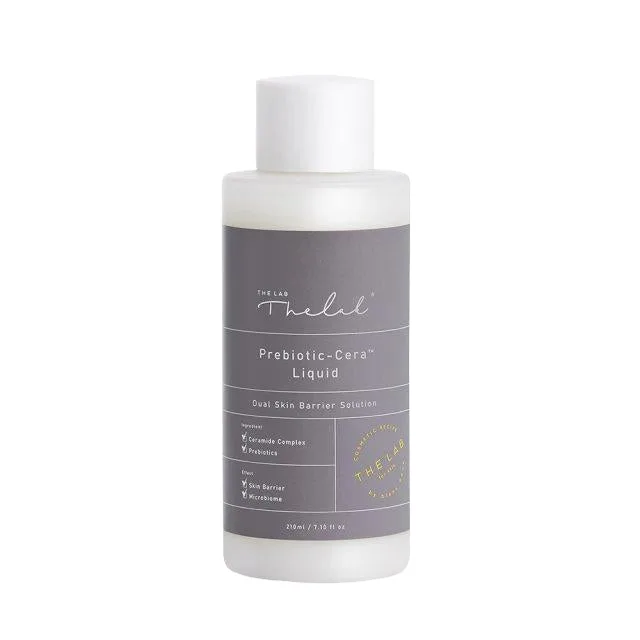
Most milky toners lean on one ceramide for marketing; this one carries the full five-ceramide set alongside cholesterol and phytosphingosine, so it delivers the complete barrier lipid trio in a watery toner format. The Lactobacillus ferment adds a microbiome angle that ceramide toners usually skip.
A milky, almost dessert-light toner that smuggles the entire barrier-lipid trio into a step most people treat as an afterthought. With all five ceramides, cholesterol, phytosphingosine and a postbiotic ferment, it punches well above its sub-$35 price for dry and reactive skin. Oily types may find it a touch much, but as a daily barrier primer it is hard to fault.
Because the line is only a few years old, this assessment leans more on the formula's transparent lipid content and a few hundred retailer reviews than on years of long-term feedback. Expect the picture to sharpen as the brand accrues a longer track record.
The case for it
What would change this: A declared concentration would move this to a firmer reading of the dose.
Same rule for everyone. “Good choice” is the verdict on 9,564 of 45,024 concern verdicts across the catalog; rule R5 decided 9,072 of them. Unchanged since September 5, 2026, engine 5.1.1.
Brand or formulator? Disclose a concentration or correct a fact →
The studies behind the evidence row
The case for it
What would change this: A researched evidence row for the lead active would replace this with a verdict.
Same rule for everyone. “Supporting role” is the verdict on 8,197 of 45,024 concern verdicts across the catalog; rule R8 decided 4,250 of them. Unchanged since September 5, 2026, engine 5.1.1.
Brand or formulator? Disclose a concentration or correct a fact →
The case for it
What would change this: A declared concentration would move this to a firmer reading of the dose.
Same rule for everyone. “Good choice” is the verdict on 9,564 of 45,024 concern verdicts across the catalog; rule R5 decided 9,072 of them. Unchanged since September 5, 2026, engine 5.1.1.
Brand or formulator? Disclose a concentration or correct a fact →
The studies behind the evidence row
The case for it
What would change this: A researched evidence row for the lead active would replace this with a verdict.
Same rule for everyone. “Good choice” is the verdict on 1,938 of 45,024 concern verdicts across the catalog; rule F2 decided 1,938 of them. Unchanged since September 5, 2026, engine 5.1.1.
Brand or formulator? Disclose a concentration or correct a fact →
Does the jobDoes what a toner is for: not alcohol-driven, adds something real. Not measured from the label: restores skin pH, plays well with what follows.
A verdict is DermApproved’s assessment of how well a product’s ingredients fit a concern — never a claim about what the product treats. Evidence dots and collected reviews sit beside it and are never blended in. Rules 0.5.1 · evidence table ev-2026.09-r228 · how we decide
Toner is the most wasted step in most routines. For years the category meant an astringent splash that stripped your face in the name of 'prepping' it, and even the modern hydrating versions tend to be glorified water with a pinch of hyaluronic acid and a fragrance to make it feel like something. Blanc Doux looked at that empty real estate and decided to put something genuinely structural in it. The Prebiotic-Cera Liquid is a toner only in the sense that it is thin and goes on early; functionally it is a barrier-repair emulsion that happens to pour.
The thing you notice first is the texture. It is milky rather than watery, with a faint cushiony slip that breaks down to almost nothing as you press it into the skin. There is no sting, no tightness afterward, none of the squeaky over-clean feeling that older toners trade in. It feels, frankly, like applying a very diluted lotion, which is exactly what the ingredient list promises. Mango seed butter sits high enough to matter, giving the fluid its emollient quality without the heavy occlusive drag of shea or cocoa butter. That lightness is the whole trick: it lets you apply a real lipid treatment in the part of the routine where you would normally apply nothing of consequence.
What actually earns the price is further down. This carries all five physiological ceramides, NP, EOP, NS, AS and AP, rather than the single ceramide NP that most 'ceramide' products lean on for label appeal. That distinction matters more than it sounds. Healthy skin's barrier is a specific blend of ceramide subtypes, and a formula that includes the full set has a better shot at slotting into the gaps in a depleted barrier the way the skin's own lipids would. Crucially, the formula does not stop at ceramides. It includes cholesterol and a run of fatty components, which means it delivers the complete cholesterol-ceramide-fatty-acid trio that barrier research keeps pointing back to. Ceramides alone help; ceramides plus cholesterol plus fatty acids in something approaching the right ratio is what actually lets a barrier hold water instead of leaking it. Phytosphingosine rounds the picture out by giving the skin a precursor to build more of its own ceramides, so you are reinforcing the barrier from both the topical and the metabolic side at once.
Then there is the prebiotic half of the name, which is where I raise an eyebrow slightly. The Lactobacillus Ferment Lysate is a real postbiotic ingredient and the microbiome science behind these ferments is legitimately interesting, but it is also the part of the formula with the thinnest hard evidence. I would not buy this toner for the ferment. I would buy it for the lipids and treat the microbiome support as a pleasant bonus that may or may not be doing much. Blanc Doux deserves some credit for not screaming about it; the marketing leans more on the ceramides than on the prebiotic buzzword, which is the right call and not one every brand in this space makes. The supporting cast, a little dandelion leaf extract and boswellia resin, leans soothing, though both sit low enough that I would treat them as rounding rather than headline actives.
In use, the payoff is calm. Tight, flaky, post-winter or post-over-exfoliation skin settles down within the first week, and the deeper barrier resilience, the kind where your skin stops reacting to everything, shows up over the four-to-eight-week stretch you would expect from any lipid-repair product. It layers cleanly under serums and sunscreen, and for very dry skin it can honestly double as a thin moisturizing step on a lazy night. There is a real practicality to that: the more flexible a barrier product is about where it lives in your routine, the more likely you are to actually keep using it, and consistency is most of the battle with barrier repair. This is the rare toner I would tell someone to apply generously rather than dab on sparingly.
The drawbacks are about skin type, not quality. If you are oily, the milky finish can read as slightly too much, and there is a faint residue that the wrong foundation will pick up on and turn slightly tacky. And it is explicitly not fungal-acne safe; the caprylic/capric triglyceride and fatty acids that make it so comforting for dry skin are exactly what malassezia likes to eat. If you manage fungal acne, this is not your toner, full stop. It also comes in a plain tip bottle with no pump, so dispensing is a tip-and-hope affair. For everyone in the dry-to-normal-to-sensitive range, though, it is a quietly excellent way to make a throwaway step actually pull its weight, and at this price there is very little to argue with. If you have spent years splashing on toners that did nothing, this is a genuinely different proposition worth retraining the habit for.
The hero actives that drive this product's performance.
| Ingredient | Function | Evidence |
|---|---|---|
| 5 Ceramides (NP, EOP, NS, AS, AP) | Five skin-identical ceramides slot into the gaps in a depleted barrier; pairing all five subtypes with the cholesterol and phytosphingosine further down this list mimics the lipid ratio of healthy stratum corneum more closely than a single-ceramide toner can. | Established mechanism for Dryness · established mechanism |
| Lactobacillus Ferment Lysate | A postbiotic lysate that supports a balanced skin microbiome; here it is the 'prebiotic' half of the brand's Prebiotic-Cera concept, working to keep the surface flora calm while the ceramides rebuild the lipid matrix beneath. | Not yet assessed |
| Phytosphingosine | A lipid building block and the precursor your skin uses to make its own ceramides, so it reinforces the five added ceramides from the metabolic side rather than just sitting on top of the barrier. | Not yet assessed |
| Mango Seed Butter | A lightweight fatty butter high up in the list that gives this milky toner its emollient slip and helps the lipid actives spread evenly without the greasy weight of a heavier shea or cocoa butter. | Not yet assessed |
| Cholesterol | The third pillar of the barrier lipid trio; combined with the ceramides and fatty acids in this formula it approximates the cholesterol:ceramide:fatty-acid ratio that lets the repaired barrier hold water rather than leak it. | Not yet assessed |
Ingredient standings describe the active at treatment-level doses and vehicles; this product's own condition grades weigh its actual formula.
Water, Butylene Glycol, Caprylic/Capric Triglyceride, Mangifera Indica (Mango) Seed Butter, Glycerin, Lactobacillus Ferment Lysate, Taraxacum Officinale (Dandelion) Leaf Extract, Ceramide NP, Ceramide EOP, Ceramide NS, Ceramide AS, Ceramide AP, Phytosphingosine, Boswellia Serrata Resin Extract, Cholesterol, Hydrogenated Lecithin, Polyacrylic Acid, Polyglyceryl-2 Stearate, Glycereth-25 PCA Isostearate, Glyceryl Stearate, Arginine, Stearyl Alcohol, Cetearyl Alcohol, Disodium EDTA, 1,2-Hexanediol, Stearic Acid, Carbomer, Ethylhexylglycerin
toner
AM & PM
Pat a few drops onto clean skin before serums; because it is milky and lipid-rich it can double as a light moisturizing step on its own for dry skin on low-effort nights.
Immediate softening and a less tight feeling after the first use; visibly calmer, less flaky skin over 1-2 weeks; meaningful barrier resilience after 4-8 weeks of consistent use.
The interesting science here is not any single ingredient but the lipid ratio. The stratum corneum's barrier is built from ceramides, cholesterol and free fatty acids in a roughly 1:1:1 to 3:1:1 molar arrangement, and a substantial body of barrier-repair work shows that topical mixtures approximating that ratio restore function faster than incomplete ones. A single-ceramide product is, in that light, only delivering one-third of the toolkit. This formula supplies all three lipid classes: five ceramide subtypes, cholesterol, and fatty-acid-bearing components, which is why it behaves more like a repair treatment than a humectant splash. Phytosphingosine adds a second mechanism, acting as a sphingoid base the skin can metabolize toward its own ceramide synthesis, alongside some documented antimicrobial and anti-inflammatory activity. The weakest evidence sits with the Lactobacillus Ferment Lysate. Research into skin microbiome modulation by bacterial ferments is genuinely active and promising, but it remains early; the data supporting a measurable barrier or microbiome benefit from a postbiotic lysate in a rinse-stays toner is thinner than the data behind the lipids. The intellectually honest read is that the ceramide-cholesterol system is doing the documented heavy lifting, while the prebiotic component is a plausible, lightly-supported addition rather than the star.
Barrier-repair formulas that combine ceramides with cholesterol and fatty acids in a physiological ratio are a mainstay of how clinicians approach dry, eczema-prone and over-exfoliated skin, because restoring the full lipid mixture outperforms replacing any single component. A fragrance-free, acid-free toner built on that principle is the kind of low-risk step often suggested for patients rebuilding a compromised barrier after retinoids or procedures. Clinical guidance generally treats microbiome-marketing ingredients like postbiotic ferments as unobjectionable but unproven, so the practical recommendation is to value a product like this for its lipid content rather than its prebiotic claims. It is also widely considered pregnancy-compatible given the absence of actives, though anyone with specific concerns is usually advised to clear new products with their own provider.
After cleansing, dispense a few drops into your palm or onto a cotton pad and press it gently over damp skin rather than wiping. Let it sink in for a few seconds before layering serums, treatments and moisturizer on top. Use it morning and night; in the morning it sits cleanly under sunscreen, and at night it primes the skin for heavier creams. For very dry skin, you can apply a second layer or use it as a standalone light moisturizer on minimal-routine evenings. There is no need to follow with a separate hydrating toner.
At around $31 for a generous 210ml bottle, this lands as strong value for what is genuinely a multi-lipid barrier formula rather than a watered-down hydrating toner. Comparable five-ceramide treatments from Western derma brands routinely cost more for less product, and the per-use cost here is low enough that you can afford to apply it liberally, which is how barrier lipids actually help. The brand is only a few years old and lacks legacy clinical validation, but in this case you are paying for a transparent, well-constructed ingredient list rather than a heritage markup. It is sold as a single size, so there is no bulk option to chase, but the standard bottle is already large enough that value is not a concern.
Anyone with dry, dehydrated, sensitive or barrier-compromised skin who wants their toner step to do real structural work. It is an especially good fit for people rebuilding their barrier after retinoids, acids or a harsh winter, and for those who like the idea of a ceramide treatment in an easy, layerable format.
Oily and combination-oily skin may find the milky finish heavier than they want from a toner. Anyone managing fungal acne should pass, since the fatty components are not malassezia-safe. And if you specifically want a clarifying or pore-refining toner, this lipid-rich formula is aimed at the opposite goal.
Ready to try The Lab by Blanc Doux Prebiotic-Cera Liquid?
Buy at Amazon ♥A thin, milky lotion-like fluid that breaks to water as you pat it in, leaving a faint cushiony slip rather than a watery splash.
No added fragrance; a barely-there neutral lipid smell that fades within seconds.
A tall frosted bottle with a slim cap; functional but unpumped, so you tip the milky fluid onto a palm or cotton pad.
Skin feels immediately softer and less tight; there is no sting or tingle, and most people notice flakiness settling down within the first few applications rather than any purge.
About 3-4 months applied morning and evening as a toner step; longer if reserved for evenings.
All Year
It is the anchor product of Blanc Doux's Prebiotic-Cera line, built around the idea that rebuilding the barrier and balancing the skin's microbiome are two halves of the same problem rather than separate steps.
The Lab by Blanc Doux launched in 2018 as a derma-leaning Korean brand built around barrier repair and microbiome science. It has a growing independent review base across Korean and US retailers, though it lacks the decades of peer-reviewed backing of legacy pharmacy lines.
A toner can't really moisturize, so this is just an optional extra step.
This one is closer to a thin emulsion than a clarifying toner; its mango butter and five ceramides mean it can carry real barrier repair, and dry skin can treat it as a light moisturizer in a pinch.
It is sold as a toner but behaves like a very light milky emulsion. You use it after cleansing in the toner slot, and dry skin can lean on it as a thin moisturizing layer when in a hurry.
The Lactobacillus Ferment Lysate is a postbiotic ingredient meant to support a balanced surface microbiome. It works alongside the five ceramides, which handle the structural barrier repair.
Yes, it is fragrance-free, alcohol-free and built around barrier lipids with no acids or actives, which makes it one of the gentler options for compromised or easily irritated skin.
It is not fungal-acne safe; the caprylic/capric triglyceride and fatty components can feed malassezia. If you manage fungal acne, patch test or skip it.
Yes. It layers fine under sunscreen in the morning and under heavier creams at night, and the lipid-rich formula suits twice-daily use without buildup for most skin types.
Recurring themes our editors read across retailer reviews of this product — summaries in our words, not quotations, and not a substitute for your own patch test.
Calms tight, irritated skin
Absorbs without greasiness
Noticeable barrier improvement
Milky finish feels heavy for oily skin
Subtle but present residue under makeup
Verified answers from our questions library — the nuance a product page cannot carry.