The Truth About Pore Strips, Pore Vacuums, and 'Shrinking' Your Pores
You cannot shrink a pore. But you can change how visible it is — and almost everything sold to 'minimize' pores is pulling the wrong lever.
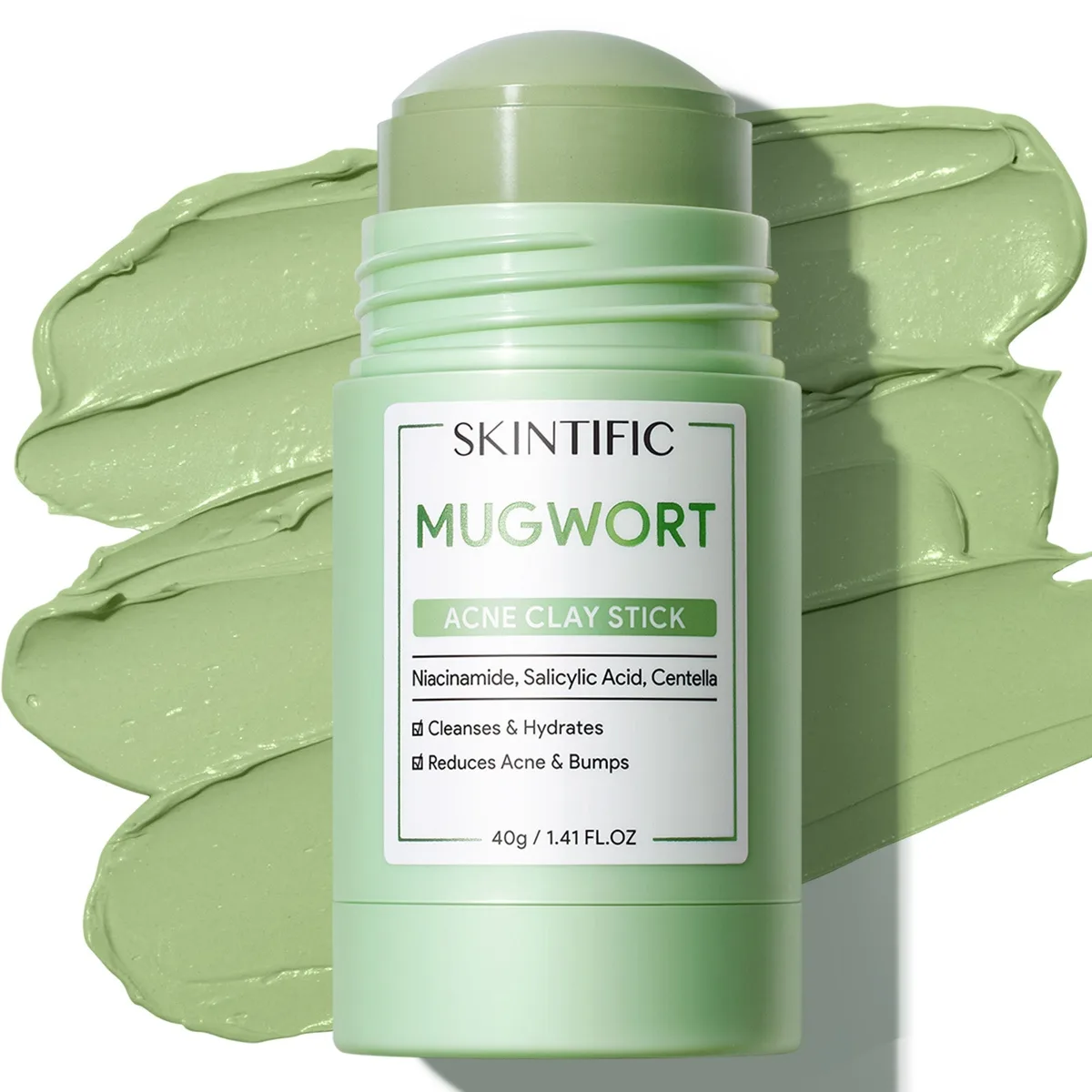
Within Skintific's five-stick range this is the soft one: kaolin rather than volcanic clay, mugwort at the fifth position for calming, and the brand's five ceramides mid-list to take the edge off the dry-down. That makes it the clay stick a breakout-prone but easily dried face can actually tolerate twice a week. The salicylic acid, niacinamide and centella printed on the front sit twenty-sixth to twenty-eighth, which is the part of the product that does not match its label.
The gentler of Skintific's two pore sticks: a soft kaolin-and-mugwort clay with five ceramides that mattes oily skin and flattens the look of bumps for an evening without the pull of a stronger clay. The salicylic acid, niacinamide and centella on the front sit in the last third of the list, and the colourant-free claim is untrue. Fine as a twice-weekly soother; not an acne treatment.
Three US reviews since May 2026 give this stick effectively no user record here, and its substantial Southeast Asian following could not be independently verified. The assessment reads the ingredient list against the label's acne and free-from claims and relies on the well-documented behaviour of kaolin masks; it would change if the brand disclosed the salicylic acid concentration or published testing.
The case for it
What would change this: A concentration inside the studied range would raise this a step.
Same rule for everyone. “Unproven” is the verdict on 1,111 of 45,024 concern verdicts across the catalog; rule R9 decided 1,111 of them. As of September 25, 2026, engine 5.1.1.
Brand or formulator? Disclose a concentration or correct a fact →
The studies behind the evidence row
The case for it
Cautions: known irritants.
What would change this: A declared concentration would move this to a firmer reading of the dose.
Same rule for everyone. “Strong choice” is the verdict on 1,459 of 45,024 concern verdicts across the catalog; rule R3 decided 567 of them. As of September 25, 2026, engine 5.1.1.
Brand or formulator? Disclose a concentration or correct a fact →
The studies behind the evidence row
The case for it
What would change this: A concentration inside the studied range would raise this a step.
Same rule for everyone. “Unproven” is the verdict on 1,111 of 45,024 concern verdicts across the catalog; rule R9 decided 1,111 of them. As of September 25, 2026, engine 5.1.1.
Brand or formulator? Disclose a concentration or correct a fact →
The studies behind the evidence row
As a maskNot judged: what a mask is for — works within its wear time, benefit outlasts the mask, comes off cleanly — cannot yet be measured from the ingredient list (only intensity without injury can).
A verdict is DermApproved’s assessment of how well a product’s ingredients fit a concern — never a claim about what the product treats. Evidence dots and collected reviews sit beside it and are never blended in. Rules 0.5.1 · evidence table ev-2026.09-r228 · how we decide
Under the words Mugwort Acne Clay Stick, the label prints three ingredient names in a neat row: niacinamide, salicylic acid, centella. Turn to the ingredient list and find them at positions twenty-six, twenty-eight and twenty-seven, sitting below turmeric root and mullein extract, in the part of a formula where things are present in the amounts needed to be printed on the front. The three names are real actives with real evidence, and I have recommended all of them in leave-on products many times. In a rinse-off clay stick at those positions, they are the marketing. What the stick actually is, and it is not a bad thing to be, is kaolin, mugwort and glycerin with the brand's five ceramides, dressed in a green that the listing swears comes from no colourant.
Start with what works. Kaolin is the second ingredient, and kaolin is the gentle clay: it absorbs surface oil as it dries without the strong osmotic pull that bentonite-type clays exert, which is why this is the softer of Skintific's two pore sticks and the one I would hand to someone whose skin breaks out and also dries easily. Mugwort extract sits fifth, ahead of the pigments and emulsifiers, which is a genuine inclusion for the calming botanical Korean brands made fashionable, even if ten minutes of contact gives it little time to matter. The five ceramides in the middle of the list are the brand's signature and, in a clay mask, a thoughtful one; they help the dry-down feel less tight than plain kaolin would leave it. In use, the stick glides on cool, sets to a powdery matte in ten to fifteen minutes, rinses with a little effort, and leaves oily zones matte and red bumps looking a shade flatter by the next morning. That effect is a mixture of oil removal, mild drying and the cooling agent, it lasts a day or so, and it is pleasant enough to make a twice-weekly habit.
Now the parts that do not match the box. The listing describes the stick as formulated without colourants. The ingredient list includes CI 77291, CI 77289 and CI 77492, which are ultramarine, chromium hydroxide green and yellow iron oxide, and which are the reason the clay is sage green rather than white. These are mineral pigments, safe and permitted everywhere, and nobody needs to worry about them. But they are colourants, and a free-from line that the same page contradicts is a habit this brand has, and it is the reason I read every Skintific label twice. Then the salicylic acid, with no stated concentration and no pH, at position twenty-eight. Salicylic acid needs a meaningful percentage, an acidic pH and time on the skin to work inside a pore. A trace in a rinse-off has none of those, and the brand's own caution against combining the stick with strong exfoliants reads as respect for the claim rather than the dose. Niacinamide and centella suffer the same fate two lines above it.
The cooling agent deserves its usual paragraph. Menthyl lactate runs through the whole clay-stick range and gives the tingle users associate with a mask doing something. On oily, resilient skin that is a harmless pleasure. On an inflamed breakout, which is where this stick is explicitly meant to go, it is a sensory irritant applied to skin that is already irritated, and some users describe it as sting on open spots. Mugwort itself is a daisy-family plant and a recognised contact allergen for the minority sensitised to that family. Neither belongs in a product whose listing says it is safe for damaged skin barriers.
Compared with its grey sibling in the same range, the difference in use is real and worth knowing. The volcano stick pulls harder and leaves the nose tighter; this one comes off feeling closer to how it went on, and a face that flakes after most clays will get through a session with the green stick unbothered. That is the kaolin and the ceramides doing exactly what the ingredient list says they will, and it is the honest reason to choose this one over the other if breakouts and dryness arrive together, as they often do on skin that is over-treating its acne.
So where does that leave the stick? As a gentle, fragrance-free, mess-free clay for oily and combination skin that wants a matte T-zone and a calmer-looking cluster of bumps a couple of evenings a week, and that will do its actual acne treatment with a leave-on salicylic acid, benzoyl peroxide or a retinoid on the other nights. Used that way it is a reasonable habit at under fourteen dollars, and the format, a twist-up stick that needs no spatula and travels well, remains the best thing about the whole range. Used instead of a treatment, it will keep skin matte on Friday and leave the acne exactly where it was.
Skintific, a 2019 brand that grew up on TikTok Shop in Southeast Asia and arrived in the US in 2026, is at its best when the product is simple and its copy is calm. This stick is a simple, decent product wearing copy that is neither. Buy it for the kaolin and the format. Do not buy it for the three names on the front, and do not buy it because the listing says it has no colourants.
The hero actives that drive this product's performance.
| Ingredient | Function | Evidence |
|---|---|---|
| Kaolin | Second on the list and the whole working part of the stick — a gentle white clay that absorbs surface oil as it dries without the strong pull of bentonite, which is why this is the milder of Skintific's two pore sticks and the one the brand aims at acne-prone skin. | Not yet assessed |
| Artemisia Vulgaris (Mugwort) Extract | Fifth, ahead of the pigments and the emulsifiers, so a real inclusion — the Korean-favourite calming botanical that gives the stick its anti-redness claim, with laboratory support for soothing but only ten minutes of contact to show it. | Not yet assessed |
| 5-Ceramide Complex | Skintific's five ceramides in a rinse-off clay, positioned mid-list where they leave a trace after rinsing and help the kaolin dry-down feel less tight than a plain clay; not barrier repair, but a considerate inclusion for a product aimed at inflamed skin. | Not yet assessed |
| Salicylic Acid | Printed on the front of the stick and listed twenty-eighth, behind turmeric, mullein and centella; at that position in a rinse-off it is a label ingredient rather than a working keratolytic, and the acne claim should be read accordingly. | Regulator-approved for Acne · emerging certainty |
| Niacinamide + Centella Asiatica Extract | The other two names on the label, sitting twenty-sixth and twenty-seventh — trace amounts of two excellent leave-on actives that have no time and no dose to work in a ten-minute clay mask. | Limited for Excess Oiliness |
| Menthyl Lactate | The cooling agent that runs through the whole clay-stick range, giving a chill as the mask sets; on inflamed acne it reads as soothing to some and as sting to others, and on genuinely sensitive skin it is an unnecessary variable. | Not yet assessed |
Ingredient standings describe the active at treatment-level doses and vehicles; this product's own condition grades weigh its actual formula.
Water, Kaolin, Butylene Glycol, Glycerin, Artemisia Vulgaris (Mugwort) Extract, CI 77291, Diglycerin, Mica, PEG-32, Sodium Palmitate, Glyceryl Polymethacrylate, PVM/MA Copolymer, Ceramide EOP, Ceramide AP, Ceramide NS/Ceramide NG, Ceramide AS, Ceramide NP, CI 77289, Phenoxyethanol, PEG-40 Hydrogenated Castor Oil, CI 77492, Menthyl Lactate, Beta-Glucan, Curcuma Longa (Turmeric) Root Extract, Verbascum Thapsus Extract, Niacinamide, Centella Asiatica Extract, Salicylic Acid, Pinus Densiflora Leaf Extract, Lactobacillus Ferment Lysate, Saccharide Isomerate, Hydroxypropyl Cyclodextrin, Dipropylene Glycol, Rhamnose, 1,2-Hexanediol
treatment
PM
Two or three evenings a week on clean, dry skin — over the oily zones or as a spot layer on a cluster of bumps — rinsed before it cracks and followed by a hydrating toner and moisturizer. Keep it off nights when a leave-on acid or retinoid is used.
A matte, calmer-looking T-zone straight after rinsing that lasts a few hours. Red bumps look a little flatter the next morning from the drying and cooling effect, but the trace salicylic acid will not clear comedones; real acne improvement depends on a leave-on treatment used on the other nights.
Kaolin is a hydrated aluminium silicate with a lower cation-exchange capacity than smectite clays such as bentonite, which in practice means it absorbs oil and water from the skin surface more gently and produces less tightening as it dries. That property is why kaolin is the traditional base for masks aimed at sensitive or acne-prone skin, and the ten-minute application here reduces surface sebum for a few hours without changing sebum production. Mugwort (Artemisia vulgaris) extract has in vitro evidence for anti-inflammatory and antioxidant activity and a strong following in Korean skincare, but human clinical data are limited and the contact time in a rinse-off is too short for a demonstrable effect; it is also a member of the Asteraceae family and a documented contact allergen in sensitised individuals.
The named actives face the same dose-and-time problem. Salicylic acid's comedolytic effect depends on concentration — the FDA acne monograph recognises 0.5 to 2 percent — on an acidic formulation pH and on residence in the follicle; a trace at the twenty-eighth position in a glycerin-rich kaolin paste that is rinsed after ten minutes meets none of those conditions. Niacinamide's evidence for sebum reduction and post-acne redness comes from leave-on use at two to five percent over weeks, and centella's wound-healing triterpenes likewise require leave-on exposure. The five ceramides are lipid-compatible with the skin barrier and, even in a rinse-off, can leave a small deposit that partly offsets the water loss a drying clay causes.
Menthyl lactate is a TRPM8 agonist that produces cooling without any anti-inflammatory action, and sensitive-skin guidance generally advises against sensory additives on inflamed or compromised skin. The three pigments — CI 77291, CI 77289 and CI 77492 — are ultramarine, chromium hydroxide green and iron oxide, all listed and permitted cosmetic colourants with negligible sensitisation potential. I did not open and verify individual trial records during this assessment, so no linked references are attached; the descriptions above reflect the general literature on kaolin masks and their supporting ingredients rather than testing of this stick.
The clinical view of clay masks in acne is consistent: they are a cosmetic adjunct for shine, not a treatment, and any benefit to inflamed lesions is short-lived and mostly a matter of appearance. Dermatologists would generally not object to a kaolin mask twice a week for an oily, acne-prone patient, and might prefer this gentler clay over stronger ones for skin that is already on a retinoid or benzoyl peroxide. The concerns would be about expectation and about additives. A salicylic acid claim at trace level is not clinically meaningful, and patients would be told plainly that the stick does not substitute for a leave-on comedolytic. The cooling agent and the mugwort would both be flagged for patients with sensitive or reactive skin, and the free-from colourant claim contradicted by the label would be noted as the kind of discrepancy that makes ingredient lists, not marketing, the thing to read.
Start on freshly washed, towel-dried skin. Twist the stick up a few millimetres and glide it over the T-zone, cheeks or any cluster of bumps in one or two passes for an even layer; the whole face is rarely needed. Leave it for ten to fifteen minutes, until the clay has set to a powdery matte but before it cracks. Rinse with lukewarm water, using fingertips to loosen the clay and a second rinse to lift any green cast from the pores, then follow with a hydrating toner and a moisturizer. Use two or three evenings a week, not on nights with a leave-on acid, retinoid or benzoyl peroxide. Wipe the head, cap the stick and store it somewhere cool.
Thirteen ninety for 40 grams matches the rest of Skintific's clay-stick range and sits at the cheaper end of the format, with the duo set alongside the volcano stick bringing the per-stick price lower still. A T-zone application uses very little, so three months from one stick is realistic and the monthly cost is small. On what the stick is — a gentle kaolin-and-mugwort clay in a convenient tube — the price is fair. On what the label sells — a salicylic-niacinamide-centella acne treatment with no colourants — it is not delivering, and a buyer who wanted those things has paid for a shine-control mask and still needs to buy the treatment. A brand with a longer record would be expected to state the acid's concentration and get its free-from claims right.
Oily and combination skin that breaks out and also dries easily, and wants a gentle, tidy clay mask a couple of times a week to matte the T-zone and calm the look of bumps between real treatments. It is the right pick for anyone who found stronger clays too tightening.
Anyone expecting the stick to treat acne on its own — the actives on the front are trace inclusions. Rosacea, eczema, barrier-damaged and post-procedure skin should avoid clay masks and the cooling agent alike, people sensitised to the daisy family should avoid mugwort, and anyone choosing it for the colourant-free claim should know the claim is wrong.
Ready to try Skintific Mugwort Anti Pores & Acne Clay Mask Stick?
Buy at Amazon ♥A smooth, pale sage-green kaolin paste that glides from the stick in a soft, even layer and sets to a powdery matte in ten to fifteen minutes; gentler and less tightening than a bentonite-type clay as it dries.
No added fragrance — a faint herbal, slightly bitter note from the mugwort while it is wet, gone once dry.
A 40 g pale green twist-up stick with a domed head and snap cap, identical in build to the rest of the range; convenient and hygienic, though the paste softens in heat and can shear if wound out too far.
The stick goes on cool and the menthyl lactate tingle builds over a minute, sharper on any open spot. Ten minutes later the oily zones rinse to a matte, calmer-looking surface with a faint green cast that a second rinse removes. Nothing changes in the underlying acne in the first weeks; the visible result is shine control and slightly flatter bumps.
About three months at two or three targeted applications a week; six weeks if used over the whole face each time.
spring summer
Green mugwort clay sticks were the original viral clay-stick format of 2021, and Skintific's version is the brand's own take on that template, built into a colour-coded family of five sticks that became a signature line across Indonesia and Malaysia. The mugwort stick is the acne-care entry, sold in the US since the May 2026 store launch on its own and in duo sets with the grey volcano stick.
Skintific launched in 2019, grew into one of Southeast Asia's largest TikTok Shop skincare brands, and opened a US store in May 2026 with its clay-stick family among the launch products. Its formulas use recognisable actives, but this stick's copy claims it is free of colourants while its ingredient list carries three, and it discloses no acid concentration.
The stick is formulated without colourants, as the listing says.
The ingredient list includes CI 77291, CI 77289 and CI 77492 — ultramarine, chromium hydroxide green and yellow iron oxide — which are the mineral pigments giving the paste its sage colour. They are safe, widely used and permitted, but they are colourants, and the free-from claim is wrong.
Salicylic acid in the stick clears clogged pores while the mask dries.
Salicylic acid is twenty-eighth on the list, below turmeric, mullein and centella, and there is no stated percentage or pH. At that position in a rinse-off it cannot exfoliate inside a pore. The kaolin absorbs surface oil, which is the real and temporary effect; the plugs need a leave-on salicylic acid or a retinoid.
It helps the look of acne for an evening — kaolin absorbs oil and the cooling, drying effect flattens red bumps a little by morning. It does not treat the cause: the salicylic acid on the label is twenty-eighth on the ingredient list with no stated strength. Use it as a twice-weekly shine-and-soothe step alongside a real leave-on acne treatment.
The green mugwort stick is built on kaolin, a softer clay, with mugwort and five ceramides to keep it gentle, and is aimed at breakout-prone skin. The grey volcano stick uses volcanic soil and charcoal for stronger oil absorption and is the pore-and-blackhead entry. Oily skin that dries easily should pick the green one.
No, despite the listing's claim. It contains CI 77291, CI 77289 and CI 77492 — mineral pigments that give the clay its green colour. They are safe and permitted in cosmetics, but the free-from statement should not be relied on by anyone specifically avoiding colourants.
It is not designed for that and there is little to gain. The kaolin does its absorbing in the first ten to fifteen minutes; leaving dried clay on a spot overnight mostly dehydrates the surrounding skin. Rinse it off after a quarter of an hour and put a proper spot treatment on afterwards.
It is the gentler of the brand's pore sticks and is fragrance-free, but it contains menthyl lactate, a cooling agent that can sting inflamed skin, and mugwort is a known allergen for people sensitive to the daisy family. Rosacea, eczema and barrier-damaged skin should skip clay masks; mildly sensitive oily skin can try it on the T-zone for five minutes first.
Two or three evenings a week, for ten to fifteen minutes, on oily or bumpy zones rather than the whole face, and not on nights when you use a leave-on acid, retinoid or benzoyl peroxide. Used more often than that a clay mask starts drying the skin faster than the oil it removes.
Recurring themes our editors read across retailer reviews of this product — summaries in our words, not quotations, and not a substitute for your own patch test.
Bumps look calmer by morning
Softer on skin than the grey stick
Tidy stick format
Green tint lingers in pores if not rinsed well
Cooling tingle on active spots
No real change in breakouts over weeks