


Your Lip Balm Might Be the Reason You Can't Stop Reapplying It
The tingle you read as 'working' is often mild irritation — and some of the most popular balms quietly keep you chapped so you keep coming back.
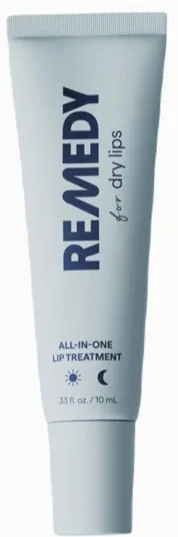
Lip skin has almost no barrier of its own, so chapping is a barrier problem first. This treatment is a textbook fix: petrolatum, the most effective occlusive, to seal water loss, ceramide NP to rebuild the barrier, and shea butter and oils to soften, with a signal peptide added as a treatment-grade upgrade over a basic balm.
Remedy for Dry Lips is a textbook chapped-lip treatment done right: petrolatum to seal moisture in, ceramide NP to rebuild the barrier, shea butter and oils to soften, and a peptide as a small treatment-grade bonus. It is fragrance-free, flavor-free, gentle, genuinely repairing, and at $16 it is the easy, unglamorous, hard-to-fault pick. There is no drama here, and for a lip treatment, that is exactly the point.
Note: This lip treatment launched in 2024 from a brand founded the same year, so the brand's independent track record is short. However, the formula relies on occlusive and barrier ingredients with decades of established evidence, which supports confidence in the assessment. Treat the score as provisional until independent data catches up.
The case for it
Same rule for everyone. “Strong choice” is the verdict on 1,459 of 45,024 concern verdicts across the catalog; rule R2 decided 892 of them. Unchanged since September 5, 2026, engine 5.1.1.
Brand or formulator? Disclose a concentration or correct a fact →
The studies behind the evidence row
The case for it
Same rule for everyone. “Good choice” is the verdict on 9,564 of 45,024 concern verdicts across the catalog; rule R5 decided 9,072 of them. Unchanged since September 5, 2026, engine 5.1.1.
Brand or formulator? Disclose a concentration or correct a fact →
The studies behind the evidence row
Also listed for Winter Skin — the actives here (Petrolatum, Ceramides, Matrixyl Peptides, Shea Butter) are in our research queue for that concern; there is no verdict until their evidence rows are written. That is a gap in our table, not a mark against the product.
As a lip balmNot judged: what a lip balm is for — seals and protects, sun protection where it matters — cannot yet be measured from the ingredient list (only no sting-and-repeat ingredients, low allergen load can).
A verdict is DermApproved’s assessment of how well a product’s ingredients fit a concern — never a claim about what the product treats. Evidence dots and collected reviews sit beside it and are never blended in. Rules 0.5.1 · evidence table ev-2026.09-r228 · how we decide
Lips are, dermatologically speaking, badly equipped for the job they do. The skin on your lips is thin, it has almost no protective stratum corneum to speak of, and it lacks the oil glands that keep the rest of your face from drying out. It is, in effect, skin running without its usual defenses, permanently exposed to wind, cold, sun and the simple act of being licked. That is why lips chap so easily and so much faster than the skin around them. And it is why a good lip treatment is not really about pampering; it is about doing the barrier's job for it. Remedy for Dry Lips understands this assignment completely, and it answers it almost perfectly.
The formula is led, correctly, by petrolatum. Petrolatum is the first ingredient, and that is exactly where it belongs, because it is the single most effective occlusive in all of skincare. An occlusive forms a physical seal that stops water evaporating out of the skin, and on lips, which lose moisture relentlessly, sealing that loss is the entire game. Petrolatum has a strange reputation in some corners of the internet, but the reality is that cosmetic-grade petrolatum is inert, non-comedogenic and one of the most reliably dermatologist-recommended ingredients for chapped lips. Using it as the base of a lip treatment is not a shortcut; it is the right answer.
What lifts this above a basic tub of plain petroleum jelly is what Remedy built around it. There is ceramide NP, a skin-identical barrier lipid, which means the treatment is not merely sealing the lips but helping rebuild the damaged barrier underneath the seal. There is shea butter, plus squalane, sunflower, avocado and jojoba oils — a genuinely rich emollient cushion that fills in the rough, flaky texture of chapped lips and makes them feel comfortable rather than tight. There is a vitamin C ester and vitamin E for antioxidant support. And there is palmitoyl tripeptide-1, a signal peptide included to nudge collagen and give lips a subtly smoother, fuller look — the small treatment-grade flourish that justifies the word treatment rather than balm.
The less obvious ingredients are where the formulation intelligence actually shows. Sucrose acetate isobutyrate and a C18-38 alkyl hydroxystearoyl stearate are structuring agents that give the balm its cushioned, non-slippery body — they are the reason this melts onto the lips rather than sliding around on them. Sunflower seed wax and tribehenin build the solid structure without paraffin. A capryloyl glycerin/sebacic acid copolymer is a slow-release moisturizing polymer, quietly extending how long the comfort lasts after application. Aloe and chamomile add mild soothing. And there is a whisper of lactic acid at the very end — far too little to exfoliate, present as a gentle humectant and pH nudge. This is a short list where nearly every line is doing something.
Crucially, it is fragrance-free and flavor-free. That is the right call and an underrated one: lip flavors and fragrances are among the most common culprits behind balms that quietly make chapping worse, and irritant cheilitis from a beloved minty or vanilla balm is one of the most common self-inflicted lip complaints dermatologists see. A product meant to repair already-damaged lips has no business adding an irritant, and Remedy's decision to leave them out is arguably the most clinically significant thing about the formula.
Day to day, it is exactly as undramatic as it should be. The texture is rich but not greasy, melting into a cushioned, lightly satin layer that feels protective without being heavy or slippery. No tingle, no flavor, no theater. Lips feel immediately sealed and less raw, and over a few days of regular use — especially applied last thing before bed, so it works through the night when you are not licking, eating or talking it off — genuinely chapped and cracked lips visibly smooth and repair. Expect the full turnaround inside one to two weeks. It does what it says, and it does not pretend to do anything else.
One behavioral note that matters more than any ingredient: do not pick. The overwhelming urge to peel a loose flake is what converts a chapped lip into a cracked, bleeding one, and no occlusive on earth can outrun a habit. If you must exfoliate, do it gently and then seal immediately. The balm's job is to make the picking unnecessary by keeping the surface soft enough that flakes resolve on their own.
Its limitations are barely limitations at all, more a matter of knowing what you are buying. This is a plain, unflavored, untinted treatment. If you want something that tastes nice, smells like vanilla or leaves a glossy tint, this is deliberately not that, and a minority of the roughly five hundred reviewers on record find the experience faintly clinical. It is an oil-and-wax product, so it is not fungal-acne-safe — a near-irrelevant concern on lips, but worth stating for anyone who tracks it around the mouth. And the brand is new, founded in 2024, so it lacks an independent track record, though the formula leans on ingredients whose track records are measured in decades. If your lips crack persistently at the corners, or fail to improve at all with good occlusive care, that is worth a conversation with an actual dermatologist rather than another balm.
On value, this is the standout of the Remedy line. At $16 it is the most affordable thing the brand makes, and a little goes a long way, so a single container lasts months. You are getting a properly formulated, dermatologist-created lip treatment — occlusive, barrier lipids, emollients and a peptide — for the price of a fancy drugstore balm. Nothing here reads as a popularity premium.
Where that lands: Remedy for Dry Lips is not exciting, and it is not trying to be. It is a correct, gentle, effective fix for chapped lips, built on the right ingredient in the right place and upgraded just enough to earn its name. If your lips are dry, cracked or perpetually peeling, this will fix them, and it will do it without fragrance, without fuss and without costing much. For a lip treatment, undramatic competence is the highest praise there is.
The hero actives that drive this product's performance.
| Ingredient | Function | Evidence |
|---|---|---|
| Petrolatum | The first ingredient and the backbone of the treatment, petrolatum is the most effective occlusive available, sealing the lips to halt the water loss that is the root cause of chapping, an especially important job on lip skin that has almost no barrier of its own. | Regulator-approved for Dryness · established mechanism |
| Ceramide NP | A skin-identical barrier lipid that helps rebuild the thin, easily damaged barrier of lip skin, so the treatment repairs chapped lips rather than only coating them, working beneath the petrolatum seal. | Established mechanism for Dryness · established mechanism |
| Palmitoyl Tripeptide-1 | A signal peptide included to support collagen and give the lips a subtly fuller, smoother look, the small treatment-grade upgrade that distinguishes this from a basic petrolatum lip balm. | Not yet assessed |
| Shea Butter | Rich emollient shea butter cushions and softens the lip surface, filling in the rough, flaky texture of chapped lips while the squalane and plant oils alongside it add further nourishment beneath the occlusive layer. | Established mechanism for Dryness · established mechanism |
Ingredient standings describe the active at treatment-level doses and vehicles; this product's own condition grades weigh its actual formula.
Petrolatum, Hydroxystearic/Linolenic/Oleic Polyglycerides, Helianthus Annuus (Sunflower) Seed Wax, Sucrose Acetate Isobutyrate, C18-38 Alkyl Hydroxystearoyl Stearate, Dimethicone, Ethylhexyl Palmitate, Butyrospermum Parkii (Shea) Butter, C12-15 Alkyl Benzoate, Capryloyl Glycerin/Sebacic Acid Copolymer, Diheptyl Succinate, Tribehenin, Squalane, Sorbitan Isostearate, Ceramide NP, Helianthus Annuus (Sunflower) Seed Oil, Persea Gratissima (Avocado) Oil, Simmondsia Chinensis (Jojoba) Seed Oil, Tetrahexyldecyl Ascorbate, Tocopheryl Acetate, Palmitoyl Tripeptide-1, Aloe Barbadensis Leaf Extract, Chamomilla Recutita Flower Extract, Lactic Acid
occlusive
AM & PM
Apply whenever lips feel dry, and as the final step at night so it seals overnight. It layers cleanly over a lip product or under lipstick. If lips are very chapped, apply it after a gentle, non-physical exfoliation rather than picking at flakes.
Immediate: lips feel cushioned, sealed and less raw on application. Short-term: visibly smoother, less flaky lips within a few days of regular use. Full benefit: chapped, cracked lips typically look repaired within one to two weeks of consistent use.
The treatment's effectiveness is well grounded, because lip chapping is fundamentally a barrier and water-loss problem and the formula targets exactly that. Lip skin, the vermilion, is thin, has a minimal stratum corneum and lacks sebaceous glands, so it loses water rapidly and has little capacity to retain or replenish it. The most direct intervention is occlusion: forming a physical barrier that slows transepidermal water loss. Petrolatum is the benchmark occlusive, capable of reducing water loss by a very large margin, and it is inert, non-sensitizing and non-comedogenic. Placing it first in the ingredient list is the formulation choice with the strongest evidence behind it.
Occlusion alone, however, only holds moisture in; barrier repair is what restores the lips. Ceramide NP is a skin-identical lipid, one of the ceramide species naturally present in the skin barrier, and supplementing ceramides is well supported for helping a compromised barrier rebuild. Shea butter, squalane and the plant oils provide the additional emollients that smooth and soften the surface. Palmitoyl tripeptide-1 is a signal peptide with a reasonable, if more modest, evidence base for supporting collagen and skin appearance.
The most important formulation decision, scientifically, may be a subtraction: the absence of fragrance and flavoring. Fragrance and flavor compounds are well-documented contact irritants and allergens, and lip products are a frequent cause of irritant and allergic cheilitis. Leaving them out of a product designed for already-damaged lips is the evidence-aligned choice. Overall, this is a formulation where the science is settled and the execution simply follows it.
Chapped lips are one of the most common minor complaints dermatologists address, and the consensus guidance is straightforward: seal water loss with an occlusive and avoid irritants. Petrolatum-based lip products are among the most frequently recommended options in clinical practice precisely because petrolatum is the most effective occlusive and is exceptionally well tolerated. Dermatologists also routinely advise patients to avoid flavored and fragranced lip balms, since those are a common cause of irritant or allergic cheilitis that can perpetuate the very chapping a balm is meant to fix; a fragrance-free, flavor-free treatment like this aligns with that advice. The inclusion of ceramides is consistent with the emphasis on barrier repair, not just sealing. Clinicians also generally note that persistently cracked lips, especially with cracking at the corners or that fail to improve with good occlusive care, can occasionally signal an underlying issue worth evaluating. For routine dry, chapped lips, a petrolatum-and-ceramide treatment of this kind sits squarely within standard dermatological recommendations.
Smooth a small amount onto the lips whenever they feel dry or tight, and always as the final step of your nighttime routine so it can seal and repair overnight. A little goes a long way — there is no need to layer it on thickly. It can be worn alone, layered over another lip product, or used as a smoothing base under lipstick. If your lips are badly chapped, resist picking at flakes, and if you exfoliate them, do so gently before applying. It is gentle enough to use as often as needed, by adults and children alike, with no limit on frequency.
At $16, Remedy for Dry Lips is the strongest value in the brand's lineup and a genuinely good deal in its category. The price buys a properly formulated, dermatologist-created treatment, an occlusive base, barrier-repairing ceramides, rich emollients and a peptide, which is more thoughtful than most lip balms at a similar or higher price. Because a lip treatment requires only a small amount per application, a single container lasts for months, making the real cost of use very low. Nothing about the price reflects a branding premium; it is simply a well-made product sold at a fair, accessible price. For anyone who deals with chapped lips, the value here is essentially unimpeachable.
Dry, chapped, cracked or perpetually peeling lips are the obvious candidate here, particularly for anyone who wants a treatment that genuinely repairs rather than briefly coats. The fragrance-free, flavor-free formula makes it an especially good fit for sensitive lips and for anyone whose lips react to flavored balms.
Skip it only if what you want from a lip product is a pleasant flavor, a scent or a glossy tint, since this is deliberately a plain, clinical treatment. Anyone whose lips are already healthy and comfortable simply may not need a dedicated treatment of this kind.
Ready to try Remedy for Dry Lips?
Buy at Amazon ♥A rich but non-greasy balm that melts onto the lips into a cushioned, comfortable, lightly satin layer.
Fragrance-free and flavor-free, with no scent at all.
A practical, hygienic container suited to a daily lip treatment; straightforward rather than decorative.
Lips feel immediately sealed, cushioned and less raw on the first application, with no tingle, sting or flavor. There is no adjustment period; relief is immediate and repair builds over the following days.
Several months with daily use, given how little product each application needs.
All Year
Remedy for Dry Lips was among the launch products of Remedy, the 2024 brand from dermatologist Dr. Muneeb Shah, and at $16 it is the most accessible item in the line. It reflects the brand's premise of building straightforward, effective treatments around the everyday concerns the founder saw most often.
Remedy was founded in 2024 by Dr. Muneeb Shah, a board-certified dermatologist with a large social-media following, as an accessibly priced, dermatologist-created brand. The founder's clinical credentials are genuine, but as a 2024 launch the brand itself has a very short independent track record.
Chapped lips just need more balm applied more often.
Reapplying a poor balm endlessly does little. Chapped lips need an occlusive that truly seals water loss plus barrier lipids that repair the damage. A balm built on petrolatum and ceramides, like this one, fixes the cause rather than just coating the surface.
Petrolatum is bad for your lips.
Cosmetic-grade petrolatum is inert, non-comedogenic and the most effective occlusive in skincare. It does not clog or harm lips; it seals in moisture so the barrier underneath can heal. It is one of the most dermatologist-recommended ingredients for chapped lips.
It pairs petrolatum, the most effective occlusive, to seal in moisture, with ceramide NP to rebuild lip skin's barrier and shea butter and oils to soften. That combination treats the cause of chapping rather than just temporarily coating the lips.
Yes. Cosmetic-grade petrolatum is inert, non-comedogenic and one of the most dermatologist-recommended ingredients for chapped lips. It does not harm or clog lips; it forms a protective seal so the barrier underneath can heal.
No. It is completely fragrance-free and flavor-free. That is deliberate: lip flavors and fragrances are common irritants, and a treatment for already-damaged lips is better off without them.
It is built like a treatment, not a basic balm. Alongside the occlusive and emollients it includes ceramide NP for barrier repair and a signal peptide for a subtly smoother, fuller look, going beyond simply coating the lips.
Apply whenever lips feel dry, and especially as the last step before bed so it seals overnight. A little goes a long way, and it can be worn under lipstick or on its own.
Recurring themes our editors read across retailer reviews of this product — summaries in our words, not quotations, and not a substitute for your own patch test.
Genuinely repairs chapped, cracked lips
Comfortable, non-greasy cushioned feel
No fragrance or flavor to irritate
Inexpensive and long-lasting
Plain, unflavored experience some find dull
Not a tinted or glossy product
Jar or tube format less convenient for some
Newer brand with a short track record