Niacinamide vs Vitamin C: You're Asking the Wrong Question
They brighten through completely different machinery — which is exactly why the 'pick one' framing is a trap.
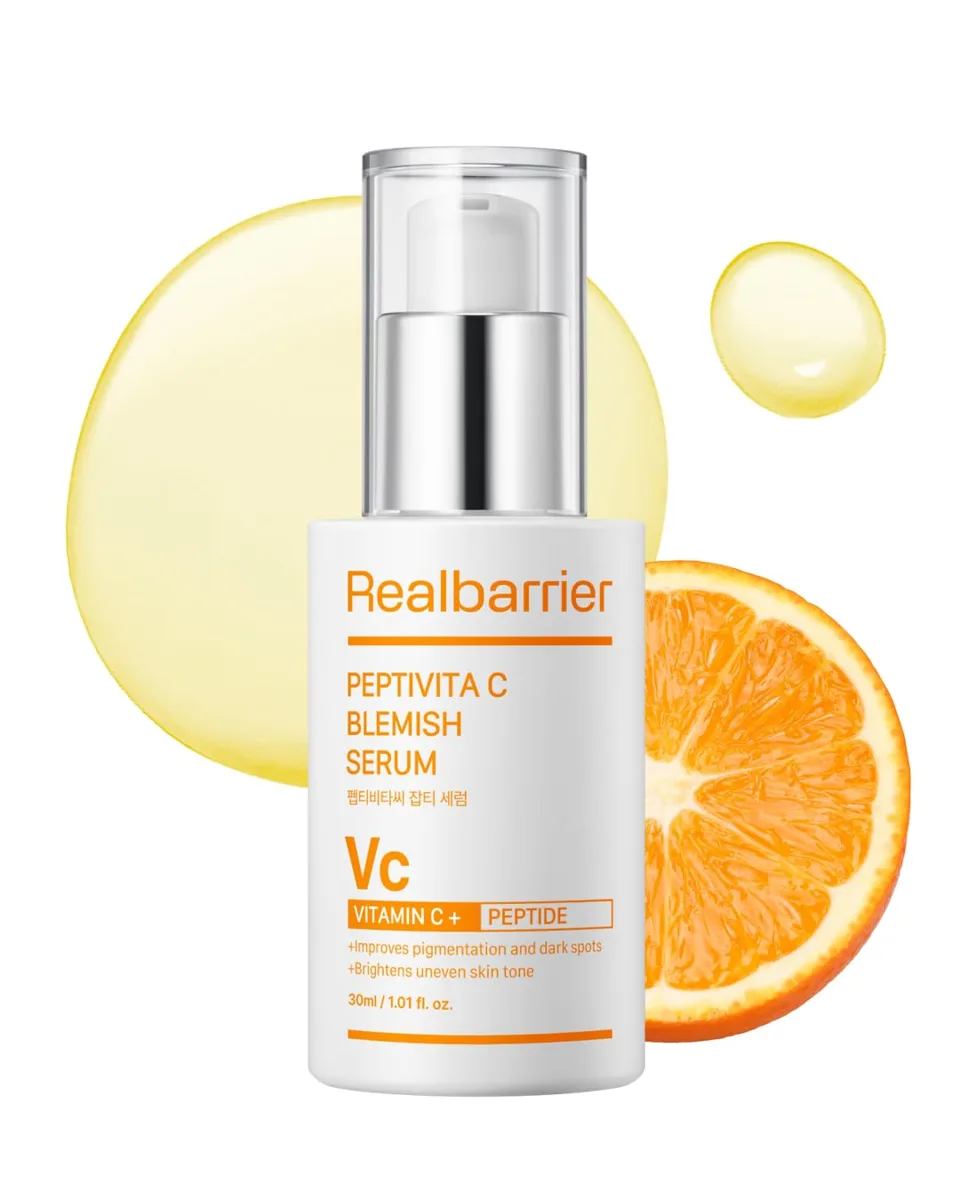
It is a vitamin C serum built by a ceramide company: three Neopharm pseudo-ceramides, seventeen amino acids and beta-glucan surround a 5 percent niacinamide and ethyl ascorbic acid core, so the brightening actives arrive with barrier support rather than at the acidic pH of a classic L-ascorbic serum. Whether the twelve trace peptides add anything is the open question.
A sensibly built, sensibly priced brightening serum where 5 percent niacinamide and a stable vitamin C derivative do the honest work and a ceramide-company's barrier lipids keep it comfortable. The twelve peptides are trace decoration, and the citrus essential oils are an odd choice for a serum sold on being gentle. For combination or oily skin chasing post-acne marks on a budget, it is a good pick; for truly reactive skin, patch test or look elsewhere.
Real Barrier introduced this serum in early 2025, and its US retail presence at Olive Young and Amazon is younger still, so the few hundred reviews behind this assessment reflect months of use rather than years. The score leans on the fully disclosed ingredient list and on the evidence for niacinamide and vitamin C derivatives; the brand's own four-day and liposome claims were not independently verified.
The case for it
Cautions: a photosensitising active — use sun protection.
Same rule for everyone. “Good choice” is the verdict on 9,564 of 45,024 concern verdicts across the catalog; rule R5 decided 9,072 of them. As of September 25, 2026, engine 5.1.1.
Brand or formulator? Disclose a concentration or correct a fact →
The studies behind the evidence row
The case for it
Cautions: a photosensitising active — use sun protection.
What would change this: Guideline or regulatory standing for the active on this concern would move this from a promising bet to a recommendation.
Same rule for everyone. “Promising” is the verdict on 7,858 of 45,024 concern verdicts across the catalog; rule R9p decided 7,858 of them. As of September 25, 2026, engine 5.1.1.
Brand or formulator? Disclose a concentration or correct a fact →
The studies behind the evidence row
The case for it
Cautions: a photosensitising active — use sun protection.
What would change this: A declared concentration would move this to a firmer reading of the dose.
Same rule for everyone. “Unproven” is the verdict on 1,111 of 45,024 concern verdicts across the catalog; rule R9 decided 1,111 of them. As of September 25, 2026, engine 5.1.1.
Brand or formulator? Disclose a concentration or correct a fact →
The studies behind the evidence row
The case for it
Cautions: fragrance; fungal-acne triggers.
What would change this: Guideline or regulatory standing for the active on this concern would move this from a promising bet to a recommendation.
Same rule for everyone. “Promising” is the verdict on 7,858 of 45,024 concern verdicts across the catalog; rule R9p decided 7,858 of them. As of September 25, 2026, engine 5.1.1.
Brand or formulator? Disclose a concentration or correct a fact →
The studies behind the evidence row
Also listed for Dullness — the actives here (Niacinamide, Vitamin C, Ferulic Acid, Amino Acids) are in our research queue for that concern; there is no verdict until their evidence rows are written. That is a gap in our table, not a mark against the product.
A verdict is DermApproved’s assessment of how well a product’s ingredients fit a concern — never a claim about what the product treats. Evidence dots and collected reviews sit beside it and are never blended in. Rules 0.5.1 · evidence table ev-2026.09-r228 · how we decide
Neopharm is a barrier-repair house. The Korean lab behind Real Barrier built its reputation on pseudo-ceramides and on the kind of bland, fragrance-free creams dermatologists hand to eczema patients, and for a decade its serums were about calming, not brightening. So the Peptivita C Blemish Serum, launched in early 2025, is a genuinely interesting object: what happens when a company whose instincts are all about soothing decides to make a vitamin C serum? The answer is a formula with a better-than-average heart and a couple of borrowed bad habits.
The heart first. Niacinamide sits third in the list at a declared 50,000 ppm, which is 5 percent, the concentration with the best clinical support for fading post-inflammatory marks and evening tone. The vitamin C is 3-O-ethyl ascorbic acid, ninth in the list, a stable derivative that dissolves in both water and oil, converts to ascorbic acid inside the skin and, crucially, does not need the low pH that makes pure L-ascorbic serums sting. Ferulic acid and glutathione are there as antioxidant backup, with a little ascorbic acid and an ascorbic acid polypeptide further down. That is a coherent brightening core aimed squarely at the problem on the label: the marks acne leaves behind, not deep-set melasma or sun damage.
Then Neopharm does what Neopharm does. Three of its pseudo-ceramides, the same synthetic lipids that anchor the brand's barrier creams, are folded into the serum along with phytosterols, linoleic acid and hydrogenated lecithin. Seventeen amino acids and beta-glucan form a humectant cushion around the actives. The practical upshot is a 5 percent niacinamide serum that does not feel drying, absorbs in under a minute and leaves skin comfortable rather than tight, which is not something every brightening serum can claim. The airless pump bottle protects the vitamin C from air. So far this is a serum I would happily recommend to combination or oily skin with a few stubborn marks and a modest budget.
Now the borrowed habits. The name promises peptides, and there are twelve: acetyl hexapeptide-8, copper tripeptide-1, palmitoyl pentapeptide-4, palmitoyl tripeptide-1 and eight more. They sit at the very tail of a 76-ingredient list, below tocopherol, below folic acid, below the preservative's helpers. That placement tells you the concentrations are trace, and the honest reading is that the peptides are there to put 'Pepti' on the front of the bottle. It does no harm, but it is the kind of ingredient-list padding the brightening category is addicted to, and it is a little disappointing from a lab that usually keeps its formulas plain.
The second habit is the one that actually matters. A serum marketed for sensitive skin, from a barrier-repair brand, contains bergamot fruit oil, sweet orange peel oil, litsea cubeba oil and mastic thyme flower oil, with limonene and linalool declared as allergens. The citrus scent is pleasant, bright and gone within minutes, and most skin will not notice anything else. But citrus oils are among the most common cosmetic sensitisers, and bergamot in particular has a photosensitising history that makes it a strange guest in a morning serum. Real Barrier's own Atopalm heritage would never have allowed this in a cream. Here it is the difference between a serum I would give to anyone and one I would tell reactive, rosacea-prone or eczema-prone readers to patch test on the jawline for a few days first. It also caps the irritation score well below where the ceramides and amino acids would otherwise have put it.
On performance, expectations should be calibrated to the actives rather than the marketing. The brand's line about visible improvement in four days is a self-reported consumer survey, and the liposome claim about particles many times smaller than a pore is the kind of number that sounds like physics and functions as poetry. What the evidence supports is slower and duller: smoother, slightly brighter skin within a couple of weeks from the niacinamide and hydration, post-blemish marks starting to soften at four to six weeks, and real fading over two to three months with sunscreen every morning. Skip the sunscreen and no serum in this category will get you there.
Price is where the serum quietly wins. At around eighteen to twenty-six dollars for 30 ml depending on the retailer, and often discounted, it costs a third of what prestige vitamin C serums ask while delivering a more thoughtful barrier-support package than most of them. Real Barrier has been on Korean pharmacy shelves since 2015 and Neopharm's lab credentials are real, so the low price reflects the brand's pharmacy positioning rather than corner-cutting. There is one size, an airless pump, and it lasts about two months used twice daily.
My take: this is a good budget vitamin C for post-acne marks on skin that is not especially reactive, and a slightly frustrating one for the sensitive-skin audience it claims to serve. Neopharm got the actives, the barrier support and the texture right by instinct; it got the essential oils and the trace-peptide theatre wrong by imitation. If your skin tolerates citrus oils, buy it and give it twelve weeks. If it does not, the brand's own history suggests it knows better, and a future reformulation without the oils would be an easy product to love.
The hero actives that drive this product's performance.
| Ingredient | Function | Evidence |
|---|---|---|
| Niacinamide 5% (5%) | The declared 50,000 ppm puts niacinamide third in the list and makes it the serum's real workhorse for post-blemish marks, damping melanin transfer while the vitamin C derivative handles the antioxidant side. | Emerging for Hyperpigmentation |
| 3-O-Ethyl Ascorbic Acid | The lead vitamin C form, ninth in the list: a stable, oil-and-water-soluble derivative that converts to ascorbic acid in skin and lets the serum sit at a skin-friendly pH instead of the acidic range pure L-ascorbic acid needs. | Limited for Hyperpigmentation |
| Ferulic Acid & Glutathione | The classic vitamin C stabiliser partnered with glutathione, both present at supporting levels to extend the antioxidant network around the ethyl ascorbic acid rather than to act as brighteners in their own right. | Not yet assessed |
| Peptide complex (Acetyl Hexapeptide-8, Copper Tripeptide-1, Palmitoyl Pentapeptide-4, Palmitoyl Tripeptide-1 and eight others) | Twelve signalling and carrier peptides bunched at the very end of the list; they justify the 'Pepti' in the name and the firming claim, but their placement below tocopherol and folic acid signals trace amounts. | Not yet assessed |
| Ceramide-mimetic lipids (Bis-Capryloyloxypalmitamido Isopropanol, Dihydroxyisopropyl Palmoylpalmamide, Myristoyl/Palmitoyl Oxostearamide/Arachamide MEA) | Three synthetic pseudo-ceramides, the Neopharm house specialty, folded into a brightening serum so the vitamin C and niacinamide land on a supported barrier; they are the reason this is marketed as a vitamin C for sensitive skin. | Not yet assessed |
| Amino acid complex & Beta-Glucan | Seventeen amino acids from arginine to methionine, with beta-glucan, form a humectant-and-soothing layer that keeps a 5 percent niacinamide serum from feeling drying on reactive skin. | Not yet assessed |
Ingredient standings describe the active at treatment-level doses and vehicles; this product's own condition grades weigh its actual formula.
Water, Butylene Glycol, Niacinamide, Glycerin, 1,2-Hexanediol, Pentylene Glycol, Carbomer, Polyglyceryl-10 Laurate, 3-O-Ethyl Ascorbic Acid, Arginine, Allantoin, Betaine, Melia Azadirachta Leaf Extract, Disodium EDTA, Hydroxyacetophenone, Melia Azadirachta Flower Extract, Adenosine, Curcuma Longa (Turmeric) Root Extract, Sodium Hyaluronate, Phytosterols, Hydrogenated Lecithin, Xanthan Gum, Glycine, Citrus Aurantium Bergamia (Bergamot) Fruit Oil, Serine, Glutamic Acid, Ferulic Acid, Thymus Mastichina Flower Oil, Citrus Aurantium Dulcis (Orange) Peel Oil, Ocimum Sanctum Leaf Extract, Aspartic Acid, Leucine, Alanine, Lysine, Sclerotium Gum, Tyrosine, Phenylalanine, Proline, Threonine, Valine, Corallina Officinalis Extract, Isoleucine, Beta-Glucan, Bis-Capryloyloxypalmitamido Isopropanol, Dihydroxyisopropyl Palmoylpalmamide, Glutathione, Linoleic Acid, Myristoyl/Palmitoyl Oxostearamide/Arachamide MEA, Histidine, Cysteine, Methionine, Ascorbic Acid Polypeptide, Litsea Cubeba Fruit Oil, Caprylic/Capric Triglyceride, Fullerenes, PVP, Polyglyceryl-10 Diisostearate, Acetyl Hexapeptide-8, Astaxanthin, Ascorbic Acid, Folic Acid, Panthenol, Tocopherol, Acetyl Octapeptide-3, Acetyl Tetrapeptide-2, Acetyl Tetrapeptide-3, Acetyl Tetrapeptide-5, Acetyl Tetrapeptide-9, Carnosine, Copper Tripeptide-1, Nonapeptide-1, Palmitoyl Pentapeptide-4, Palmitoyl Tripeptide-1, Palmitoyl Tripeptide-5, Limonene, Linalool
serum
AM & PM
Apply two or three drops after toner, concentrating on cheeks and any fading marks, and let it absorb for a minute before moisturizer. It layers under sunscreen without pilling. Pair with a retinoid only on alternate nights until you know how your skin handles the citrus oils.
Smoother, slightly brighter skin within a week from the niacinamide and amino-acid hydration. Post-blemish marks begin to soften around 4-6 weeks; meaningful fading of dark spots takes 8-12 weeks of twice-daily use with diligent sunscreen.
The serum's brightening case rests on the two actives with the strongest evidence for post-inflammatory hyperpigmentation. Niacinamide at 5 percent has been shown in randomised, vehicle-controlled trials to reduce the appearance of hyperpigmented spots and improve skin tone over 8 to 12 weeks, with the proposed mechanism being inhibition of melanosome transfer from melanocytes to keratinocytes rather than any effect on melanin synthesis itself. That mechanism is complementary to vitamin C, which acts upstream by reducing dopaquinone and interacting with copper at the tyrosinase active site. The vitamin C form here is 3-O-ethyl ascorbic acid, an ether derivative that is stable in aqueous formulas, amphiphilic, and converts to free ascorbic acid in skin; in-vitro and small human studies show tyrosinase inhibition and brightening comparable to other derivatives, though the body of evidence is thinner than for L-ascorbic acid and no head-to-head trial has established equivalence. Ferulic acid is included as the well-known stabiliser and antioxidant partner, and glutathione and astaxanthin add further antioxidant capacity, though topical glutathione's penetration is poor and its brightening data come mainly from oral studies. The barrier component is what distinguishes the formula: the three pseudo-ceramides (bis-capryloyloxypalmitamido isopropanol, dihydroxyisopropyl palmoylpalmamide and myristoyl/palmitoyl oxostearamide/arachamide MEA) are Neopharm's proprietary ceramide mimetics with published data on improving barrier recovery and reducing transepidermal water loss in atopic skin, and their inclusion is a reasonable strategy for delivering niacinamide and vitamin C to skin that finds brightening serums drying. The twelve peptides at the end of the list, and the seventeen amino acids above them, are at concentrations too low to expect signalling effects; the amino acids function mainly as humectants. The essential oils are the formula's evidence-backed risk: limonene and linalool are among the most common fragrance allergens in patch-test series, and bergamot oil contains bergapten, a photosensitiser, unless it has been furocoumarin-free processed, which the label does not state. The brand's claims of visible improvement in four days derive from a self-reported consumer survey, and the liposome-size claim has no published supporting data.
A 5 percent niacinamide serum paired with a stable vitamin C derivative is a combination clinicians regularly suggest for post-inflammatory hyperpigmentation after acne, since it addresses melanin transfer and oxidative pathways without the irritation that limits adherence to stronger agents. The inclusion of ceramide-mimetic lipids is a sensible touch that makes the serum easier to tolerate alongside a retinoid or benzoyl peroxide regimen, applied at separate times of day. The reservation most dermatologists would raise is the essential-oil content: bergamot and other citrus oils are frequent sensitisers and, in the case of bergamot, potentially photosensitising, which sits awkwardly with a morning brightening product and with the sensitive-skin label. Standard advice would be to patch test, to apply sunscreen without exception, and to expect gradual improvement over two to three months rather than days. For melasma or deep dermal pigmentation, this is a supporting product rather than a treatment.
After cleansing and toner, dispense two or three pumps into your fingertips and press the serum over the whole face, then go back over any post-blemish marks or uneven areas with a second thin layer. Allow a minute to absorb before moisturizer. In the morning, finish with a broad-spectrum sunscreen, which is non-negotiable both for the brightening to hold and because the bergamot oil may raise sun sensitivity. It can be used morning and night; if you use a retinoid or benzoyl peroxide, apply those in the evening and keep the serum to mornings, or alternate nights. Patch test behind the jaw for three days if you have reacted to citrus oils before. Keep the bottle out of direct sunlight.
At a list price of around $18.50 for 30 ml through StyleKorean, and up to $26 at other exporters before their frequent discounts, the Peptivita C serum is priced at the pharmacy end of the vitamin C market. For that money you get a 5 percent niacinamide dose, a stable vitamin C derivative, Neopharm's pseudo-ceramides and an airless pump, which is more formulation than most serums at twice the price offer. The trace peptides add nothing you are paying for, and the essential oils are a cost you may pay in irritation rather than dollars. Real Barrier is an established Korean pharmacy brand rather than a prestige house, so the low price reflects its market position, not a compromise; one size only, lasting about two months at twice-daily use.
Combination, oily or normal skin dealing with the red and brown marks acne leaves behind, especially anyone who wants a vitamin C serum that does not sting or dry and who is working to a pharmacy budget. It suits people who tolerate citrus scents and are willing to give a brightening routine twelve weeks with sunscreen.
Rosacea-prone, eczema-prone or fragrance-allergic skin should be cautious, because four essential oils and two declared allergens sit in a serum marketed as gentle. It is also the wrong choice for anyone expecting a peptide firming effect, or for stubborn melasma that needs a dermatologist rather than a serum.
Ready to try Real Barrier Peptivita C Blemish Serum?
Buy at Amazon ♥A pale, translucent gel-serum with a light slip from the polyglyceryl esters; it spreads thinly, absorbs in under a minute and leaves a soft, non-tacky finish.
A bright, natural citrus note from bergamot, orange and litsea oils, with a herbal undertone from the mastic thyme; noticeable on application and gone within minutes.
A frosted white 30 ml bottle with an airless pump and a clear cap, printed in orange; the pump protects the vitamin C derivative from air.
Nothing dramatic on the first application beyond a citrus whiff and quick absorption; there is no tingle or warmth as with pure ascorbic acid serums. Skin feels comfortably hydrated rather than tight. Reactive users occasionally notice a mild flush from the essential oils in the first few days, which is the cue to patch test on the jaw before committing.
About 2 months at two or three pumps twice daily; closer to 3 months if used only in the morning.
All Year
Neopharm, the Korean dermatological lab behind Real Barrier and the Atopalm line, made its name on ceramide barrier repair and had never fielded a serious vitamin C product. The Peptivita C serum arrived in early 2025 to fill that gap, pairing the brand's barrier lipids with a stable vitamin C derivative and a peptide blend, and was positioned at the post-acne-mark end of the brightening market rather than at deep pigmentation.
Real Barrier is the barrier-care brand of Neopharm, a Korean company founded in 2000 around dermatologist-developed ceramide technology, and it has sold in Korean pharmacies and drugstores since 2015. The brand's claims rest on its own consumer and instrumental tests; no peer-reviewed trials of this serum exist.
Twelve peptides make this a firming serum as much as a brightening one.
All twelve peptides sit below tocopherol and folic acid at the tail of a 76-ingredient list, which points to trace concentrations. The serum's measurable effect comes from 5 percent niacinamide and the vitamin C derivative; the peptides are branding.
Because it is labelled for sensitive skin, it must be fragrance-free.
It contains bergamot, orange, litsea and mastic thyme essential oils, with limonene and linalool declared as allergens. The pseudo-ceramides and amino acids soften the formula, but the oils mean genuinely reactive skin should patch test first.
The main form is 3-O-ethyl ascorbic acid, a stable derivative that works at a comfortable pH and converts to ascorbic acid in the skin, backed by a small amount of pure ascorbic acid and an ascorbic acid polypeptide further down the list. It does not sting the way pure L-ascorbic acid serums can.
Real Barrier declares 50,000 ppm, which is 5 percent, and niacinamide sits third on the ingredient list. That is the concentration with the strongest clinical support for fading post-acne marks and evening skin tone.
Partly. The pseudo-ceramides, amino acids and beta-glucan make it hydrating and non-stinging, but it also contains bergamot, orange, litsea and thyme essential oils with limonene and linalool declared. Genuinely reactive or rosacea-prone skin should patch test first.
Yes, and morning use makes sense for the antioxidant benefit, but always follow with sunscreen. The bergamot oil in the formula can increase sun sensitivity, and sunscreen is essential for any brightening result to hold.
Expect smoother, slightly brighter skin in one to two weeks, post-blemish marks softening around four to six weeks, and noticeable fading after eight to twelve weeks of consistent use with daily sunscreen. The brand's four-day claim is from its own consumer survey.
Not meaningfully. All twelve peptides appear at the very end of the ingredient list, below tocopherol and folic acid, indicating trace concentrations. The serum's real effects come from niacinamide and the vitamin C derivative.
Recurring themes our editors read across retailer reviews of this product — summaries in our words, not quotations, and not a substitute for your own patch test.
Fast-absorbing, non-sticky
Visible brightening within weeks
Hydrating for a vitamin C serum
Works morning and night
Citrus scent from the essential oils
Pump can stick
Slightly slippery texture
Sensitive users report patch-testing was necessary