


Hyaluronic Acid Can Actually Dehydrate Your Skin (Here's When)
The internet's favorite hydrator has a counterintuitive dark side — in dry air, a humectant with nothing to seal it can pull water out of your skin instead of into it.
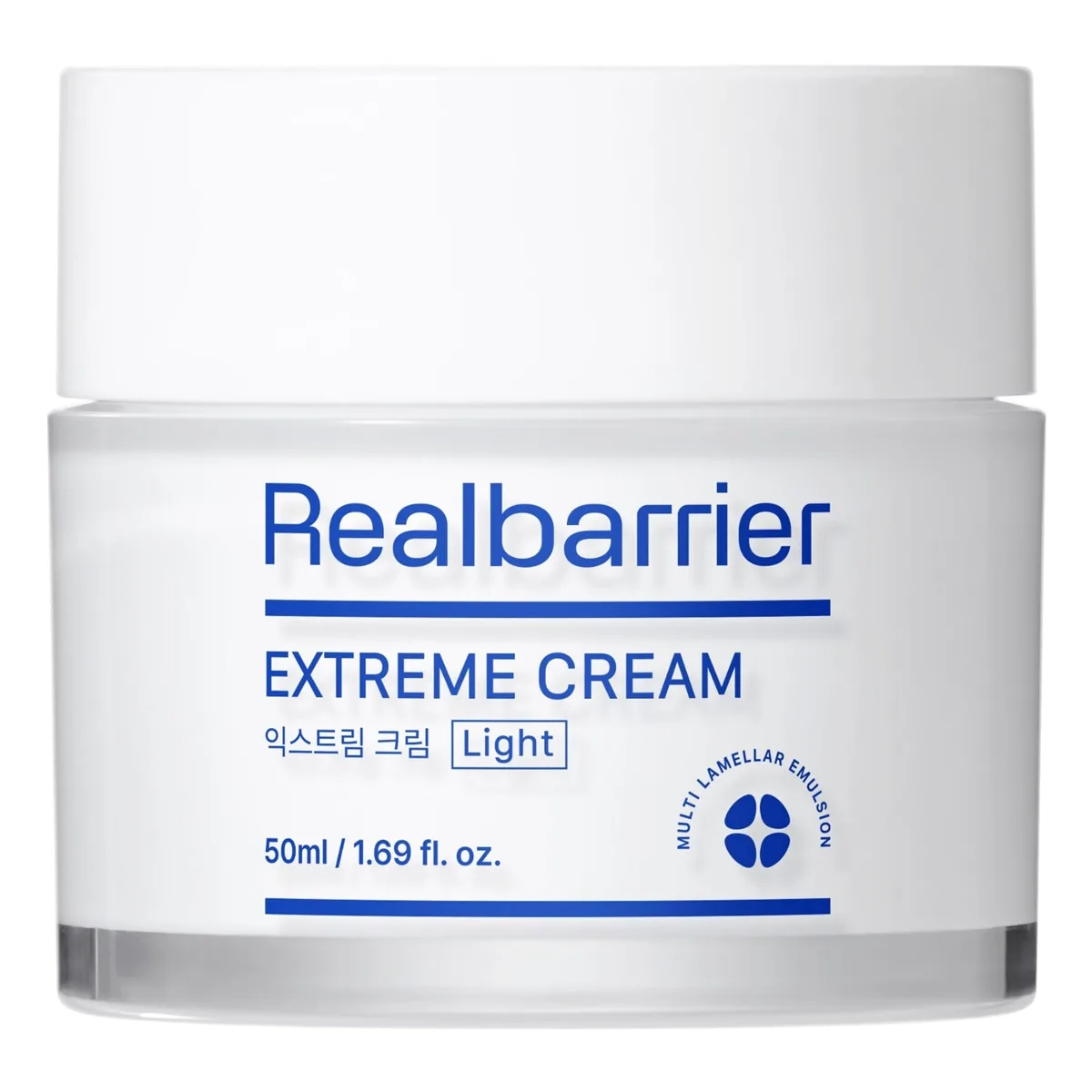
Its MLE (Multi-Lamellar Emulsion) lipid is a patented, ceramide-mimicking material that self-assembles into the skin barrier's own lamellar structure — a genuinely distinctive technology, not a buzzword. Paired with a near-3% panthenol dose and ectoin, it is one of the more seriously engineered barrier creams in its price range.
A genuinely science-led barrier cream in a lighter, combination-skin-friendly texture: patented MLE ceramide-lipid technology, a standout near-3% panthenol dose, ectoin and madecassoside, all at fair value. It strengthens and soothes a stressed barrier without heaviness. The one real misstep is a blend of essential oils that adds avoidable irritation risk to a product built for compromised skin.
As the lighter sibling of Real Barrier's popular Extreme Cream, this version has a few years on the market and a solid if smaller review base than the original. The rating draws on a strongly disclosed, technology-backed formula, tempered by the essential-oil content that complicates its barrier-repair positioning, and may firm up as more long-term feedback on the Light variant accumulates.
The case for it
Cautions: drying alcohol; known irritants.
What would change this: A declared concentration would move this to a firmer reading of the dose.
Same rule for everyone. “Good choice” is the verdict on 9,564 of 45,024 concern verdicts across the catalog; rule R5 decided 9,072 of them. Unchanged since September 5, 2026, engine 5.1.1.
Brand or formulator? Disclose a concentration or correct a fact →
The studies behind the evidence row
The case for it
Cautions: drying alcohol.
Same rule for everyone. “Good choice” is the verdict on 9,564 of 45,024 concern verdicts across the catalog; rule R5 decided 9,072 of them. Unchanged since September 5, 2026, engine 5.1.1.
Brand or formulator? Disclose a concentration or correct a fact →
The studies behind the evidence row
The case for it
Cautions: drying alcohol.
What would change this: A declared concentration would move this to a firmer reading of the dose.
Same rule for everyone. “Good choice” is the verdict on 9,564 of 45,024 concern verdicts across the catalog; rule R5 decided 9,072 of them. Unchanged since September 5, 2026, engine 5.1.1.
Brand or formulator? Disclose a concentration or correct a fact →
The studies behind the evidence row
The case for it
Cautions: drying alcohol; known irritants.
What would change this: A declared concentration would move this to a firmer reading of the dose.
Same rule for everyone. “Supporting role” is the verdict on 8,197 of 45,024 concern verdicts across the catalog; rule F3 decided 183 of them. Unchanged since September 5, 2026, engine 5.1.1.
Brand or formulator? Disclose a concentration or correct a fact →
The studies behind the evidence row
Does the jobDoes what a moisturizer is for: draws in water, softens and smooths.
A verdict is DermApproved’s assessment of how well a product’s ingredients fit a concern — never a claim about what the product treats. Evidence dots and collected reviews sit beside it and are never blended in. Rules 0.5.1 · evidence table ev-2026.09-r228 · how we decide
Most 'barrier repair' creams mean the phrase loosely — they toss in a ceramide or two and call it a day. Real Barrier means it more literally than almost anyone, because the brand's parent company, Neopharm, spent years developing the actual technology its name promises. The fifth ingredient in the Extreme Cream Light, hiding behind the unlovely name Myristoyl/Palmitoyl Oxostearamide/Arachamide MEA, is Neopharm's patented MLE lipid: a ceramide-mimicking material engineered to self-assemble into the same multi-layered, lamellar structure as the skin's own barrier. That is a meaningfully different proposition from sprinkling ceramides into an emulsion, and it is the reason this line earns its credibility.
The rest of the formula backs that headline technology up rather than coasting on it. Panthenol sits sixth at a genuinely high 2.97% — 29,700ppm, a number Real Barrier prints proudly and rightly, because most creams use a fraction of that. At this level, provitamin B5 is doing real soothing and hydrating work, not appearing for the label. Then comes ectoin, an extremophile-derived osmolyte with a growing evidence base for protecting skin cells against dehydration and environmental stress — a sophisticated, slightly nerdy inclusion that signals serious formulation intent. Madecassoside, the isolated centella triterpenoid, adds calming and healing support; phytosqualane, phytosterols and linoleic acid round out the lipid story; and a stack of hyaluronic acids with hydroxyethyl urea layers humectant hydration beneath the lipids. This is, ingredient for ingredient, one of the better-engineered barrier creams in its price range.
The 'Light' in the name is the other half of the point. Where the original Extreme Cream is rich and best for dry skin, this version delivers the same MLE technology in a smoother, medium-light texture that absorbs cleanly and suits combination and even oily skin. That is genuinely useful: barrier repair is not only for dry skin, and oily, dehydrated or over-exfoliated complexions often need lipid replenishment without a heavy occlusive. The tube packaging is the right call too — hygienic, and protective of the formula in a way the jarred luxury creams elsewhere in this batch are not. In use, it feels light and cushioning, absorbs to a comfortable non-greasy finish, and leaves skin hydrated immediately, with a stronger, less reactive barrier building over a couple of weeks.
And then there is the choice that genuinely puzzles me. For a cream built, branded and sold on barrier repair for stressed and sensitive skin, Real Barrier scented this with a blend of essential oils: patchouli, sage, mint, roman chamomile, cardamom and juniper, plus raspberry ketone. There is no synthetic fragrance, which the brand clearly considers a virtue, but essential oils are not automatically gentler — several of these are recognized potential irritants and sensitizers, and chamomile is a known allergen. Putting them in a product specifically marketed to compromised, reactive skin is a real contradiction. Most people will be fine; the formula is soothing enough that the oils rarely cause problems in practice. But the genuinely sensitive or eczema-prone skin that would benefit most from MLE lipids is exactly the skin that should patch test this carefully, and that is a self-inflicted limitation on an otherwise excellent product.
The other caveats are minor by comparison. The plant oils and the lipid-rich base mean it is not a clean fit for fungal-acne-prone skin. And while the lighter texture is the whole point, very dry skin in deep winter may find it under-delivers on its own and want the richer original, or a layer of it on top — the two are designed to work together. None of this undermines the core quality; it just defines the edges of who it suits.
Value is a refreshing change of pace after a run of luxury markups. At around thirty-eight dollars for 50ml — and frequently discounted well below that — you are getting patented barrier technology, a standout panthenol dose, ectoin and a thoughtful supporting cast for a fair mid-range price. This is money going into genuine formulation rather than into a jar's weight or a brand's prestige, and it is exactly the kind of spend that tends to pay off. For combination, normal or oily skin looking to strengthen a stressed, dehydrated barrier without a heavy cream, it is an easy recommendation and one of the smarter buys in the category. Only the essential-oil scent keeps it from being a no-asterisk pick — if you are reactive, patch test; if you are not, this is barrier repair done properly.
It is worth appreciating, too, how the existence of a 'Light' version reflects a genuine understanding of skin that many barrier brands miss. Barrier damage is not the exclusive province of dry skin; oily, acne-prone and combination skin get over-exfoliated, over-treated and dehydrated all the time, often precisely because they reach for stronger actives. Those skin types need lipid replenishment as much as anyone, but they will not — and should not — slather on a heavy occlusive cream to get it. Offering the same MLE technology in a lighter, faster-absorbing texture meets that need directly, and it is the kind of thoughtful product segmentation that signals a brand actually thinking about who uses its products rather than just spinning out line extensions. The essential-oil scent aside, this is barrier repair designed for the people who usually get left out of the conversation.
The hero actives that drive this product's performance.
| Ingredient | Function | Evidence |
|---|---|---|
| MLE Ceramide-Lipid Complex | The Myristoyl/Palmitoyl Oxostearamide/Arachamide MEA sitting fifth is Neopharm's patented MLE lipid — a ceramide-mimicking material that self-assembles into the same lamellar structure as the skin's own barrier, the genuine technology behind this cream's repair claim rather than a marketing flourish. | Established mechanism for Compromised Skin Barrier · established mechanism |
| Panthenol (2.97%) | A standout near-3% dose (29,700ppm) sitting sixth, far higher than most creams use — this provitamin B5 deeply hydrates and soothes, doing real barrier-soothing work rather than appearing as a token amount. | Established mechanism for Dehydration · established mechanism |
| Ectoin | An extremophile-derived osmolyte that protects cells against environmental and dehydration stress, a sophisticated and increasingly evidence-backed barrier-defense active that signals this is a seriously formulated repair cream. | Not yet assessed |
| Madecassoside | The isolated centella triterpenoid adds a soothing, healing layer that complements the lipid repair, helping calm the inflammation that accompanies a compromised barrier. | Not applicable for Sensitivity |
| Hyaluronic Acid Complex | Multiple molecular weights of hyaluronic acid, plus hydroxyethyl urea and glycerin, layer humectant hydration beneath the lipid barrier the MLE complex rebuilds, so the cream both seals and draws in water. | Established mechanism for Dehydration · established mechanism |
Ingredient standings describe the active at treatment-level doses and vehicles; this product's own condition grades weigh its actual formula.
Water/Aqua, Methylpropanediol, Caprylic/Capric Triglyceride, Cyclopentasiloxane, Myristoyl/Palmitoyl Oxostearamide/Arachamide MEA, Panthenol (29,700ppm), Sorbitan Stearate, Cetearyl Alcohol, Hydroxyethyl Urea, Phytosqualane, Glyceryl Stearate Citrate, 1,2-Hexanediol, Canola Oil, Glycerin, Sodium Acrylic Acid/MA Copolymer, Caprylyl Glycol, Arginine, Allantoin, Carbomer, Tocopherol, Butylene Glycol, Dihydroxyisopropyl Palmoylpalmamide, Phytosterols, Xanthan Gum, Helianthus Annuus (Sunflower) Seed Oil, Caproyl Methyl Serinate, Ectoin, Propanediol, Sodium Hyaluronate, Sodium Hyaluronate Crosspolymer, Hydrolyzed Glycosaminoglycans, Bis-Capryloyloxypalmitamido Isopropanol, Madecassoside, Hydrolyzed Hyaluronic Acid, Pogostemon Cablin Oil, Salvia Officinalis (Sage) Oil, Benzyl Glycol, Hydroxypropyltrimonium Hyaluronate, Elettaria Cardamomum Seed Oil, Anthemis Nobilis Flower Oil, Mentha Arvensis Leaf Oil, Beta-Glucan, Linoleic Acid, Juniperus Mexicana Oil, Sodium Acetylated Hyaluronate, Ethylhexylglycerin, Hyaluronic Acid, Raspberry Ketone
moisturizer
AM & PM
Use it as the moisturizing step after serums; the lighter texture suits combination and oily skin year-round, and you can layer the richer regular Extreme Cream over it on very dry winter nights.
Skin feels hydrated and comfortable immediately; a measurably stronger, less reactive barrier builds over two to four weeks of consistent use, with lasting resilience as the lipid replenishment continues.
Real Barrier's distinguishing science is its MLE (Multi-Lamellar Emulsion) technology, developed by Neopharm: pseudo-ceramide lipids structured to replicate the ordered, lamellar lipid layers of the stratum corneum. Research on this approach supports the principle that lipids arranged in physiologic, barrier-like structures restore barrier function more effectively than unstructured lipids, which is the rationale behind the fifth-listed Myristoyl/Palmitoyl Oxostearamide/Arachamide MEA. The supporting actives are well-evidenced: panthenol at nearly 3% has strong data for improving hydration and reducing irritation and transepidermal water loss; ectoin is a bacterial osmolyte with a growing body of research showing it stabilizes cell membranes and protects against dehydration and environmental stress; and madecassoside, a centella triterpenoid, has documented anti-inflammatory and wound-healing activity. The multi-weight hyaluronic acid system and phytosterols/linoleic acid further support hydration and barrier lipids. The product-specific strength is coherence — structured barrier lipids to repair, high-dose panthenol and madecassoside to soothe, ectoin to protect, humectants to hydrate. The countervailing evidence is the essential-oil blend: patchouli, sage, mint, chamomile, cardamom and juniper oils are recognized potential sensitizers, which raises irritation risk in precisely the compromised skin the formula targets.
Barrier-repair creams built on physiologic, lamellar-structured lipids are well regarded in clinical thinking, since the evidence supports that restoring the stratum corneum's lipid organization improves barrier function in dry, compromised and eczema-prone skin — and Neopharm's MLE technology, descended from the more clinical Atopalm line, is one of the better-known executions of that idea. The high panthenol dose and madecassoside are sensible, soothing inclusions, and ectoin is an increasingly respected protective osmolyte. The clear caution a clinician would raise is the essential-oil fragrance: patchouli, sage, mint and chamomile oils are potential contact sensitizers, and recommending a scented product for genuinely sensitive or eczema-prone skin runs against standard advice to keep such skin's routine fragrance-free. The general guidance is to patch test fragranced products on reactive skin, to favor structured-lipid barrier creams for repair, and to support any barrier routine with gentle cleansing and daily sunscreen.
Apply it as the moisturizing step after cleansing, toning and any serums, morning and night. The lighter texture means combination and oily skin can use it as the final step year-round; very dry skin can layer the richer original Extreme Cream over it on cold nights. Because it is scented with essential oils, patch test on the inner arm first if your skin is reactive. In the morning, always follow with a broad-spectrum sunscreen, since a strong barrier and daily UV protection work together to keep skin resilient.
At around $38 for 50ml — and often discounted to $20–25 — this is strong value for what it delivers. You are paying for genuine, patented barrier technology, a standout panthenol dose, ectoin and a coherent supporting cast, with the money going into formulation rather than packaging or prestige, which after a run of luxury creams is a welcome contrast. A 50ml tube lasts about three months. The essential-oil scent is the only real deduction, and it costs nothing extra either way. For combination, normal or oily skin wanting serious barrier repair without a heavy texture or a heavy price, the value is genuinely good, and the frequent discounts make it better still.
This suits combination, normal and oily skin wanting genuine, science-backed barrier repair in a lightweight texture — over-exfoliated, dehydrated or stressed skin that needs lipid replenishment without a heavy cream. It is a smart-value pick for anyone who appreciates real formulation technology over marketing and doesn't mind a natural botanical scent.
Genuinely sensitive, reactive or eczema-prone skin should patch test carefully or skip it, since the essential-oil blend can irritate the very skin barrier repair is meant to help. Very dry skin may find the light texture insufficient alone, and fungal-acne-prone skin should avoid the plant oils.
Ready to try Real Barrier Extreme Cream Light?
Buy at Amazon ♥A smooth, medium-light cream that spreads easily and absorbs into a soft, comfortable, non-greasy finish, lighter than the original Extreme Cream.
A natural herbal-green note from the patchouli, sage, mint and chamomile oils, with no synthetic fragrance but a clearly present botanical scent.
A 50ml tube, which keeps the formula hygienic and protected from air and light — a better format than a jar for a barrier cream.
It feels light and cushioning on contact, absorbing into a comfortable finish; most skin finds it soothing, though the essential-oil scent is noticeable and reactive skin should patch test despite the barrier-repair purpose.
Around three months of morning and night use facial use from the 50ml tube.
All Year
Real Barrier is Neopharm's mainstream barrier line, descended from the more clinical Atopalm and its decades of MLE research; the Extreme Cream Light was created as a lighter-textured option for combination and oily skin that wanted the same barrier technology without the original's richness.
Real Barrier is the barrier-focused line from South Korea's Neopharm, the company behind Atopalm and its patented MLE (Multi-Lamellar Emulsion) technology, which structures lipids to mimic the skin's own barrier. The brand is built on a genuine, science-led barrier-repair concept with a strong following, placing it above most marketing-driven K-beauty in formulation credibility.
A barrier-repair cream is automatically the safest choice for sensitive skin.
Not always — this one is built on excellent barrier technology but is scented with a blend of essential oils (patchouli, sage, mint, chamomile), which are potential irritants. Genuinely reactive skin should patch test rather than assume a 'barrier' label means fragrance-free.
The Light version uses the same MLE barrier technology but in a lighter, faster-absorbing texture suited to combination and oily skin, while the original is richer and better for dry skin. You can even layer the original over the Light on very dry nights.
MLE (Multi-Lamellar Emulsion) is Neopharm's patented lipid technology that arranges ceramide-like lipids into the same layered structure as the skin's natural barrier. It is the genuine science behind the cream's repair claims, not just marketing language.
No — despite its barrier-repair focus, it is scented with a blend of essential oils including patchouli, sage, mint and chamomile. It contains no synthetic fragrance, but the botanical oils are potential irritants, so very sensitive skin should patch test first.
Yes — the lighter texture is specifically designed for combination and oily skin that wants barrier repair without a heavy feel. It absorbs cleanly and is comfortable year-round, while very dry skin may prefer the richer original or a layer on top.
At nearly 3% (29,700ppm), the panthenol is a genuine soothing-and-hydrating dose, well above token levels. It calms irritation and supports the barrier alongside the MLE lipids and ectoin, which is why the cream feels comforting on dehydrated, stressed skin.
Recurring themes our editors read across retailer reviews of this product — summaries in our words, not quotations, and not a substitute for your own patch test.
Strengthens the barrier without heaviness
Lighter feel than the original Extreme Cream
Calms dehydrated, reactive skin
Herbal essential-oil scent
Not for fragrance-avoiders despite barrier focus
Lighter texture may be too little for very dry skin
Verified answers from our questions library — the nuance a product page cannot carry.