Shea Butter Is Doing a Different Job Than You Think
It is sold as deeply nourishing. What it measurably does is seal — and the difference decides whether you should apply it to damp skin or not at all.
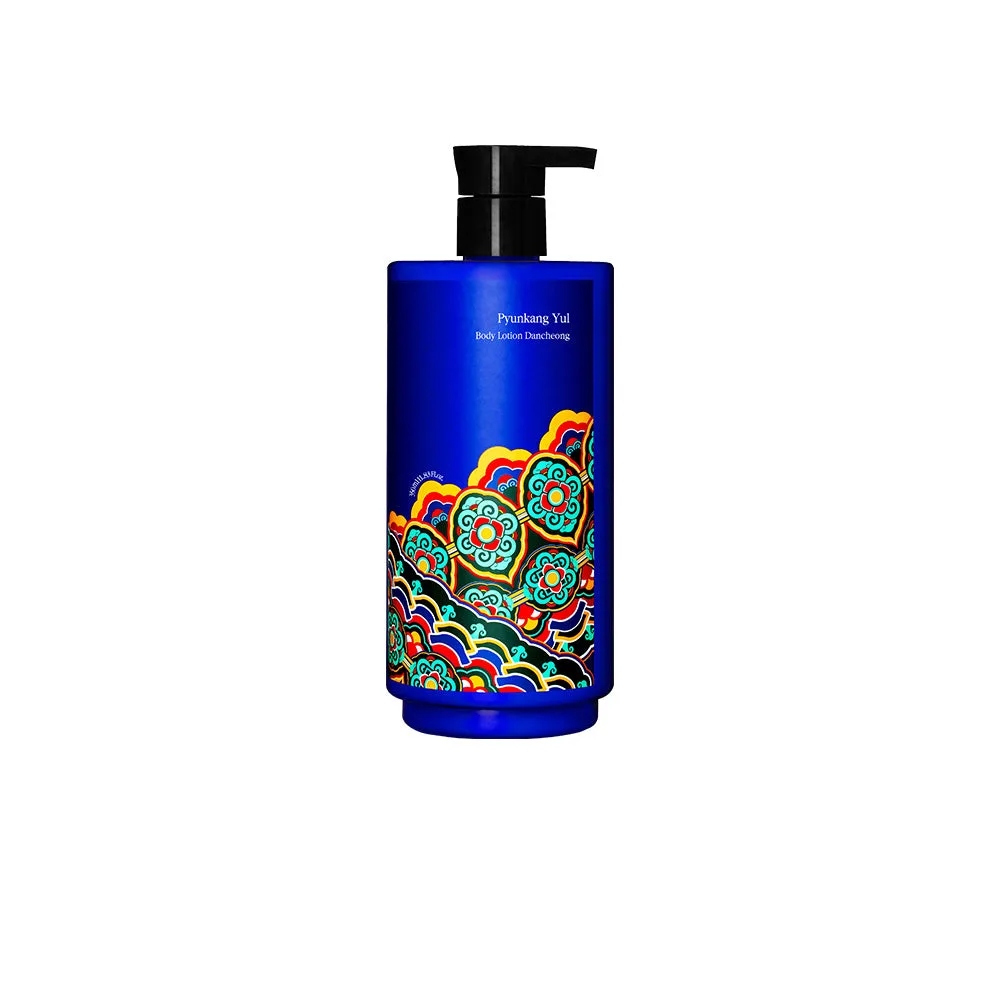
It is Pyunkang Yul stepping out of character: a brand built on fragrance-free, minimal formulas for reactive skin has made a body lotion whose five essential oils sit in the top twenty ingredients, built on a sound glycerin-olive-shea base with a five-weight hyaluronic complex and two resurrection-plant extracts for the story. It is a perfectly good lightweight body lotion; what makes it notable is who made it.
A light, fast-sinking olive-and-shea body lotion with a glycerin-rich base, a five-weight hyaluronic complex and a warm geranium-orange scent, fairly priced for 350 mL. It is a perfectly good everyday lotion and, coming from the house of fragrance-free minimalism, a slightly odd one: five essential oils in the top twenty is the last thing Pyunkang Yul's core customer expects. Normal skin that likes scent will be happy; reactive skin should stay with the unscented lines.
With the Dancheong line only reaching the brand's global store and Amazon in late 2025, English-language reviews of this lotion are still few and there is no independent testing to lean on. The assessment is built from the complete published ingredient list, the brand's own dermatologist-tested claim, and the well-mapped behaviour of glycerin, olive oil, shea butter and essential oils in a body lotion; the praise and complaint themes are early impressions rather than an established pattern.
The case for it
Cautions: fragrance.
What would change this: A declared concentration would move this to a firmer reading of the dose.
Same rule for everyone. “Good choice” is the verdict on 9,564 of 45,024 concern verdicts across the catalog; rule R5 decided 9,072 of them. As of September 25, 2026, engine 5.1.1.
Brand or formulator? Disclose a concentration or correct a fact →
The studies behind the evidence row
The case for it
What would change this: A declared concentration would move this to a firmer reading of the dose.
Same rule for everyone. “Good choice” is the verdict on 9,564 of 45,024 concern verdicts across the catalog; rule R5 decided 9,072 of them. As of September 25, 2026, engine 5.1.1.
Brand or formulator? Disclose a concentration or correct a fact →
The studies behind the evidence row
As a body productNot judged: what a body product is for — real substance, not just slip, realistic to use daily — cannot yet be measured from the ingredient list (only fragrance load can).
A verdict is DermApproved’s assessment of how well a product’s ingredients fit a concern — never a claim about what the product treats. Evidence dots and collected reviews sit beside it and are never blended in. Rules 0.5.1 · evidence table ev-2026.09-r228 · how we decide
Pyunkang Yul built its name on what it left out. The skincare arm of a Korean medicine hospital, it made a reputation among people with reactive skin by selling toners with seven ingredients and creams with no scent, and that reputation is the reason a certain kind of shopper reaches for the blue bottles without reading the back. The Dancheong line asks that shopper to read the back. Sixteenth to twentieth on this lotion's ingredient list, ahead of the jojoba and avocado oils and every one of the botanicals, sit orange peel, bergamot, lavender, geranium and rosemary oils, and the label duly declares limonene, linalool, citronellol, geraniol and citral. This is Pyunkang Yul's first scented range, named for the vivid painted patterns on Korean temple eaves, and the scent is not a whisper; it is the point. The question is whether a fragrance-first product from a fragrance-free house is a contradiction or simply a different customer, and the answer, after a few weeks with the bottle, is the latter.
As a lotion, judged on its own terms, it is well put together. The base is water, glycerin and dipropylene glycol, a generous humectant phase, followed by isopropyl myristate for fast spread and then olive fruit oil and shea butter, fifth and sixth, ahead of the emulsifiers. That ordering matters: it means the moisturising comes from real lipids rather than a token drop, oleic-rich olive for slip and a soft film, shea for the triglycerides and unsaponifiables that cushion dry shins. Jojoba and avocado oils follow further down, a little dimethicone smooths the glide, and hydroxyacetophenone and ethylhexylglycerin preserve it without parabens. It spreads thin from the pump, sinks in inside a minute, and leaves skin soft with no tack or shine, which for a 350 mL everyday bottle is exactly the behaviour one wants.
The marketing rides on two other things, and both deserve a plain reading. Five types of hyaluronic acid, sodium hyaluronate, its crosspolymer, hydrolysed hyaluronic acid, hyaluronic acid itself and hydrolysed sodium hyaluronate, appear as a group near the end of the list. They add a hydrating surface film, the crosspolymer in particular holding water a little longer, and they are a K-beauty convention rather than a mechanism; none of them reaches living skin, and the moisture this lotion delivers is overwhelmingly glycerin, olive and shea. Then the resurrection plants, two of them, Selaginella lepidophylla and Myrothamnus flabellifolia, both genuinely able to revive from apparent death after rain thanks to trehalose and polyphenols that protect their cells through drought. The metaphor is lovely and the extracts are present at trace levels as mild humectant-antioxidant contributors. Centella, skullcap, honeysuckle, green tea and sea buckthorn round out the botanical tail in the brand's familiar calming register.
In use the lotion is a pleasure, with one asterisk. Straight out of the shower on damp skin it does what a good glycerin lotion does, holding water in and sealing it with the oils, so that the tight, itchy post-shower feeling stops within a few days of daily use. Normal and combination skin stay comfortable through a working day; genuinely dry skin, especially in winter, will want a second pass on shins and elbows by evening, because this is a light lotion and not a cream. The scent is the asterisk. Geranium and sweet orange lead, rosemary, lavender and bergamot give it a herbal edge, and it is clearly built as aromatherapy rather than as a perfumer's accord; it lingers for an hour or two and fades to a trace. People who like a natural, slightly medicinal-floral scent will find it one of the nicer body lotions to apply at the end of a day. People who came to this brand precisely to avoid such things will feel mildly betrayed.
And that group deserves a direct word. Dermatologist-tested, which the brand claims, means a supervised tolerance study on ordinary skin; it does not mean a lotion with five essential oils and five declared fragrance allergens is safe for eczema-prone or fragrance-allergic skin, and a house that knows its customers as well as Pyunkang Yul does should probably say so more loudly. Isopropyl myristate, fourth on the list, is another reason to keep it below the neck, since it is a known pore-clogger on the face and back for skin inclined that way. None of this makes the lotion a bad product; it makes it a scented body lotion from a competent maker, to be judged like any other, with the brand's name offering less reassurance than usual.
On price the arithmetic is kind. The brand's global store lists the 350 mL pump at $29.99, K-beauty retailers routinely discount it toward $20, and a bottle lasts about three months of daily full-body use, which puts the monthly cost in drugstore territory for a formula with real oils, a large humectant phase and an essential-oil scent rather than a synthetic one. The Dancheong-patterned bottle is striking enough to earn its place on a shelf, and the pump locks for travel. Reviews are still scarce in English since the line only reached the global store and Amazon in late 2025, but a lotion this simple in construction does not need a long record to be understood.
So: for normal, combination or moderately dry skin that enjoys a warm geranium-orange scent and wants a light, fast, well-made lotion at a fair price, this is an easy recommendation and a nice change of character from a brand that rarely shows one. For very dry winter skin it is a pleasant top layer rather than a solution, and for sensitive, eczema-prone or fragrance-reactive skin, the people who made Pyunkang Yul what it is, the honest advice is to admire the pattern on the bottle and reach for the unscented line beside it.
The hero actives that drive this product's performance.
| Ingredient | Function | Evidence |
|---|---|---|
| Olive Fruit Oil and Shea Butter | Fifth and sixth on the list, ahead of the emulsifiers, which makes them the lotion's real moisturising engine: oleic-rich olive oil for slip and a soft occlusive film, shea for its triglycerides and unsaponifiables that cushion dry shins and elbows. In a lotion this light they are why the finish reads as nourished rather than merely damp. | Established mechanism for Dryness · established mechanism |
| Five Hyaluronates (Sodium Hyaluronate, Crosspolymer, Hydrolyzed HA, Hyaluronic Acid, Hydrolyzed Sodium Hyaluronate) | The five-weight hyaluronic complex the brand headlines sits near the tail of the list, so its job is a surface one: drawing water into the outer layers and, via the crosspolymer, holding a light hydrating film that the olive and shea then seal. It is a supporting act to the oils and the glycerin, not the deep-layer moisture the copy promises. | Established mechanism for Dehydration · established mechanism |
| Selaginella Lepidophylla and Myrothamnus Flabellifolia (Resurrection Plant) Extracts | Two resurrection plants, the Mexican spike-moss and the African myrothamnus, both able to revive from apparent death after rain; their trehalose- and polyphenol-rich extracts are the story of the line and, at these trace levels in a rinse-free lotion, mild humectant and antioxidant contributors rather than the moisture miracle the metaphor suggests. | Not yet assessed |
| Orange Peel, Bergamot, Lavender, Geranium and Rosemary Oils | The scent, listed at positions sixteen to twenty and therefore no afterthought: a warm geranium-orange blend with a herbal edge that lingers after application, and the reason this is the one Pyunkang Yul product a fragrance-sensitive loyalist should approach carefully. Five declared allergens, limonene through citral, ride in with them. | Not yet assessed |
| Centella Asiatica, Scutellaria Baicalensis and Sea Buckthorn Fruit Extracts | The brand's usual calming trio, centella and skullcap for redness and sea buckthorn for a vitamin-rich antioxidant note, here at low levels that give the lotion its Pyunkang Yul signature more than a measurable effect; they are the soothing counterweight to a formula that, unusually for the house, leads with fragrance. | Not yet assessed |
Ingredient standings describe the active at treatment-level doses and vehicles; this product's own condition grades weigh its actual formula.
Water, Glycerin, Dipropylene Glycol, Isopropyl Myristate, Olea Europaea (Olive) Fruit Oil, Butyrospermum Parkii (Shea) Butter, Cetearyl Alcohol, Palmitic Acid, Stearic Acid, Dimethicone, PEG-100 Stearate, Glyceryl Stearate, Hydroxyacetophenone, Carbomer, Arginine, Citrus Aurantium Dulcis (Orange) Peel Oil, Citrus Aurantium Bergamia (Bergamot) Fruit Oil, Lavandula Angustifolia (Lavender) Oil, Pelargonium Graveolens Oil, Rosmarinus Officinalis (Rosemary) Leaf Oil, Ethylhexylglycerin, Disodium EDTA, Myristic Acid, Simmondsia Chinensis (Jojoba) Seed Oil, Persea Gratissima (Avocado) Oil, Citric Acid, Gluconolactone, Lonicera Japonica (Honeysuckle) Flower Extract, Butylene Glycol, 1,2-Hexanediol, Pentylene Glycol, Scutellaria Baicalensis Root Extract, Hippophae Rhamnoides Fruit Extract, Selaginella Involvens Extract, Centella Asiatica Extract, Myrothamnus Flabellifolia Leaf Extract, Selaginella Lepidophylla Extract, Camellia Sinensis Leaf Extract, Sodium Hyaluronate, Sodium Hyaluronate Crosspolymer, Hydrolyzed Hyaluronic Acid, Hyaluronic Acid, Hydrolyzed Sodium Hyaluronate, Limonene, Linalool, Citronellol, Geraniol, Citral
moisturizer
AM & PM
Pump it onto damp skin straight out of the shower, when the glycerin has water to hold and the olive and shea can seal it, and go back over shins, elbows and heels with a second pass. It pairs with the Dancheong body wash if the aim is the layered geranium-orange scent, and with any unscented wash if it is not. Keep it off the face, where isopropyl myristate and five essential oils are more than facial skin needs, and away from eczema patches.
Immediate softness and a light, non-greasy film that keeps normal skin comfortable through a working day; genuinely dry skin will want a second application by evening. Within a week of daily use after showering, tight post-shower skin stops feeling tight, which is glycerin and shea doing their ordinary work. Nothing accumulates beyond that, and the scent fades within an hour or two each time.
The lotion's hydration follows a textbook humectant-plus-emollient design. Glycerin and dipropylene glycol, second and third on the list, bind water in the stratum corneum, and glycerin in particular has the strongest evidence of any topical humectant for raising skin hydration and improving barrier recovery with regular use. Olive fruit oil and shea butter, placed fifth and sixth, supply the occlusive and emollient half: olive oil's oleic acid gives spread and a light film, though oleic acid at high concentrations can loosen stratum corneum lipids, which is why it is better in a balanced emulsion like this than applied neat; shea butter's stearic and oleic triglycerides and its unsaponifiable fraction, including triterpene esters with documented anti-inflammatory activity, reduce transepidermal water loss and soften rough skin. Jojoba oil, a liquid wax ester close to human sebum, and avocado oil add further emollience lower down.
The five hyaluronates are surface humectants of differing molecular weight. High-weight sodium hyaluronate forms a water-binding film; hydrolysed fragments penetrate a little further into the stratum corneum; the crosspolymer is a cross-linked network with prolonged water retention. None crosses into viable epidermis from a leave-on lotion, and their contribution here, at tail-of-list levels, is modest relative to the glycerin. Selaginella lepidophylla and Myrothamnus flabellifolia are true resurrection plants whose desiccation tolerance depends on trehalose accumulation and polyphenols such as the arbutin derivative found in myrothamnus; their extracts show humectant and antioxidant activity in cosmetic studies, mostly manufacturer-run, with no clinical evidence distinguishing them from other botanical humectants.
Centella asiatica, Scutellaria baicalensis and sea buckthorn fruit extracts contribute madecassoside, baicalin and carotenoid-flavonoid antioxidants with anti-inflammatory activity in laboratory and small clinical studies, at concentrations here that are unlikely to be functional. The five essential oils, orange peel, bergamot, lavender, geranium and rosemary, carry limonene, linalool, citronellol, geraniol and citral, all individually listed fragrance allergens under European labelling rules; bergamot fruit oil additionally contains bergapten unless furocoumarin-free, a phototoxin at higher concentrations, which is worth noting for a body lotion worn under summer sun, though the level in a lotion of this kind is almost certainly far below phototoxic thresholds. Isopropyl myristate is a light ester with a documented comedogenic tendency on acne-prone skin.
Clinically this is a well-constructed everyday body lotion with an unnecessary risk attached. The base, a strong glycerin humectant phase with olive oil and shea butter as emollients, is the design dermatology recommends for maintaining a healthy body barrier and would suit most patients with normal to moderately dry skin applied to damp skin after bathing. The five essential oils are the reservation: fragrance is the most common cause of allergic contact dermatitis from cosmetics, essential oils are no exception, and a lotion applied over the whole body daily is a large, repeated exposure, so eczema-prone, atopic and fragrance-allergic patients would be directed to a fragrance-free lotion, which this brand happens to make. The bergamot oil warrants a passing note about sun exposure, and the isopropyl myristate a caution for patients with truncal acne or folliculitis. Dermatologist-tested, in this context, indicates a supervised tolerance study on ordinary skin rather than a sensitive-skin endorsement.
After showering, pat the skin until it is damp rather than dry and pump the lotion over the body, working it in with long strokes and returning for a second pass over shins, elbows, knees and heels, which are the areas a light lotion under-serves. Use it morning or evening, or both in dry weather, and pair it with the Dancheong body wash if the layered geranium-orange scent appeals or with an unscented wash if it does not. Keep it off the face and away from active eczema patches, and, given the bergamot oil, prefer it as an evening lotion on skin that will spend the next day in strong sun. Anyone with a history of fragrance reactions should patch test on the inner forearm for several days before using it over the whole body.
At $29.99 for 350 mL on the brand's global store, and routinely closer to $20 at K-beauty retailers, this lotion costs about what a mid-range drugstore body lotion does per month, since a bottle lasts roughly three months of daily full-body use. For that money the formula is a step up in construction: a large humectant phase, olive oil and shea butter placed high enough to matter, jojoba and avocado behind them, a genuine essential-oil scent rather than a synthetic one, and the brand's calming botanicals for flavour. The five-weight hyaluronic acid and resurrection-plant story adds nothing to the value calculation, and very dry skin will need a richer cream alongside it, which erodes the economy. From an established Korean brand with a sensible track record, the price is honest for what is in the bottle; the only buyer who pays for something they did not want is the fragrance-averse Pyunkang Yul loyalist.
People with normal, combination or moderately dry body skin who want a light, fast-absorbing lotion with a warm natural geranium-and-orange scent, a large pump bottle at a fair price and a K-beauty pedigree, and who enjoy an aromatic end-of-day ritual. It suits fans of Pyunkang Yul curious about the brand's first scented range, and anyone who dislikes the synthetic perfume of most body lotions.
Anyone with sensitive, eczema-prone or fragrance-allergic skin, for whom five essential oils and five declared allergens over the whole body is the wrong daily exposure, and the very people who chose this brand for its unscented formulas; anyone with very dry winter skin needing a rich cream; and anyone prone to body acne, given the isopropyl myristate high on the list.
Ready to try Pyunkang Yul Body Lotion Dancheong?
Buy at Amazon ♥A light, milky lotion that spreads easily from the pump, sinks in within a minute and leaves a soft, faintly silky film with no tack or shine
Warm geranium and sweet orange over a herbal thread of rosemary, lavender and bergamot, distinctly aromatherapeutic on application and faded to a trace within an hour or two
A 350 mL cobalt-blue pump bottle wrapped in the line's multicoloured Dancheong lotus-and-wave pattern; the pump locks for travel and the bottle is too large to be anything but a bathroom fixture
The first pump is a small surprise for anyone who knows the brand: a scent, and a fairly assertive one, geranium and orange with a herbal edge, from a house whose whole identity is unscented. The lotion itself behaves impeccably, spreading thin, sinking in fast and leaving skin soft without a trace of grease, and there is no sting on intact skin. Over the first week it does what a glycerin-olive-shea lotion does, which is keep post-shower tightness at bay; very dry skin notices it is not quite rich enough by evening, and anyone with a fragrance allergy will know within a few uses.
About three months of daily full-body use from the 350 mL bottle
All Year
Pyunkang Yul launched the Dancheong collection, a body wash, hand wash, hand cream, lip balm and this lotion, as an aromatic body-care line inspired by the vivid painted patterns on Korean temple eaves and by the Dano-day tradition of bathing with sweet-flag root. It appeared in Korea in 2024 and on the brand's global store and Amazon in late 2025, and it is the first time the house has built a range around scent, the pure essential-oil blend being the product's headline as much as any active.
Pyunkang Yul is the skincare arm of Seoul's Pyunkang Korean Medicine Hospital, launched in the early 2010s on a philosophy of short, low-irritant ingredient lists for reactive skin. The Dancheong line, named for the painted patterns on Korean temple eaves, is the brand's first scented body-care range and marks a deliberate departure from its fragrance-free reputation; the formula is dermatologist-tested by the brand's account, with no independent studies.
Five types of hyaluronic acid hydrate the skin in five different layers.
Hyaluronic acid of any weight stays in the stratum corneum, the dead outer layer, where it binds water at the surface; smaller fragments sit a little deeper within that layer and a crosspolymer holds a film on top, but none of them reaches living skin from a lotion. Here the five hyaluronates sit near the end of the list, and the moisture the lotion delivers comes overwhelmingly from glycerin, olive oil and shea butter higher up. The five-type claim is a marketing convention across K-beauty, not a mechanism.
Because Pyunkang Yul is a sensitive-skin brand, this lotion is safe for sensitive skin.
The brand's reputation was built on fragrance-free formulas; this one contains orange, bergamot, lavender, geranium and rosemary oils and declares limonene, linalool, citronellol, geraniol and citral as allergens. It is dermatologist-tested by the brand's account, which means a supervised tolerance study, not a guarantee for reactive skin. Fragrance-allergic or eczema-prone readers should treat it as a scented lotion from any house and patch test, or stay with the brand's unscented lines.
A warm, natural blend of geranium and sweet orange with a herbal thread from rosemary, lavender and bergamot, built entirely from essential oils rather than a synthetic perfume. It is noticeable on application and settles to a faint trace within an hour or two; the brand describes it as geranium, herbal and orange notes.
No, and this is the thing to know: the Dancheong line is the brand's deliberate scented range. Five essential oils sit in the top twenty ingredients and the label declares limonene, linalool, citronellol, geraniol and citral. Anyone who chose Pyunkang Yul for its unscented formulas should read this as a different kind of product.
For normal to moderately dry skin, yes: glycerin, olive oil and shea butter sit high on the list and a five-weight hyaluronic complex adds a hydrating film, in a light lotion that sinks in fast. Very dry or winter skin will find it needs a second application by evening or a richer cream on shins and heels.
With care. The base is gentle and the brand says it is dermatologist-tested, but five essential oils with five declared fragrance allergens are exactly what eczema-prone and fragrance-reactive skin is usually told to avoid. Patch test on the inner arm for a few days, keep it off active eczema patches, and consider the brand's unscented lines instead.
Two of them: Selaginella lepidophylla, the Mexican spike-moss that curls into a dry ball and unfurls with water, and Myrothamnus flabellifolia, an African shrub with the same trick. Both extracts are rich in trehalose and polyphenols and appear at low levels here as mild humectant and antioxidant contributors; the moisture the lotion actually delivers comes from glycerin, olive oil and shea.
The brand's global store lists the 350 mL pump at $29.99 and it is on Amazon, with K-beauty retailers often discounting it into the high teens or low twenties. A bottle lasts about three months of daily full-body use, which puts the per-month cost in line with a drugstore lotion.
Better not. It is formulated for the body, with isopropyl myristate, a fast-spreading ester that can clog facial pores, and five essential oils that facial skin tolerates less well than the body does. Pyunkang Yul's facial moisturisers are the right products for the face.
Recurring themes our editors read across retailer reviews of this product — summaries in our words, not quotations, and not a substitute for your own patch test.
Absorbs fast without a greasy film
Warm geranium-and-orange scent that lingers softly
Large 350 mL pump bottle at a fair price
Striking Dancheong-patterned packaging
Scent is surprising from a brand known for fragrance-free
Not rich enough for very dry winter skin
Essential oils are a worry for sensitive-skin loyalists
Hard to find outside the brand's global store and Amazon