




Niacinamide vs Vitamin C: You're Asking the Wrong Question
They brighten through completely different machinery — which is exactly why the 'pick one' framing is a trap.
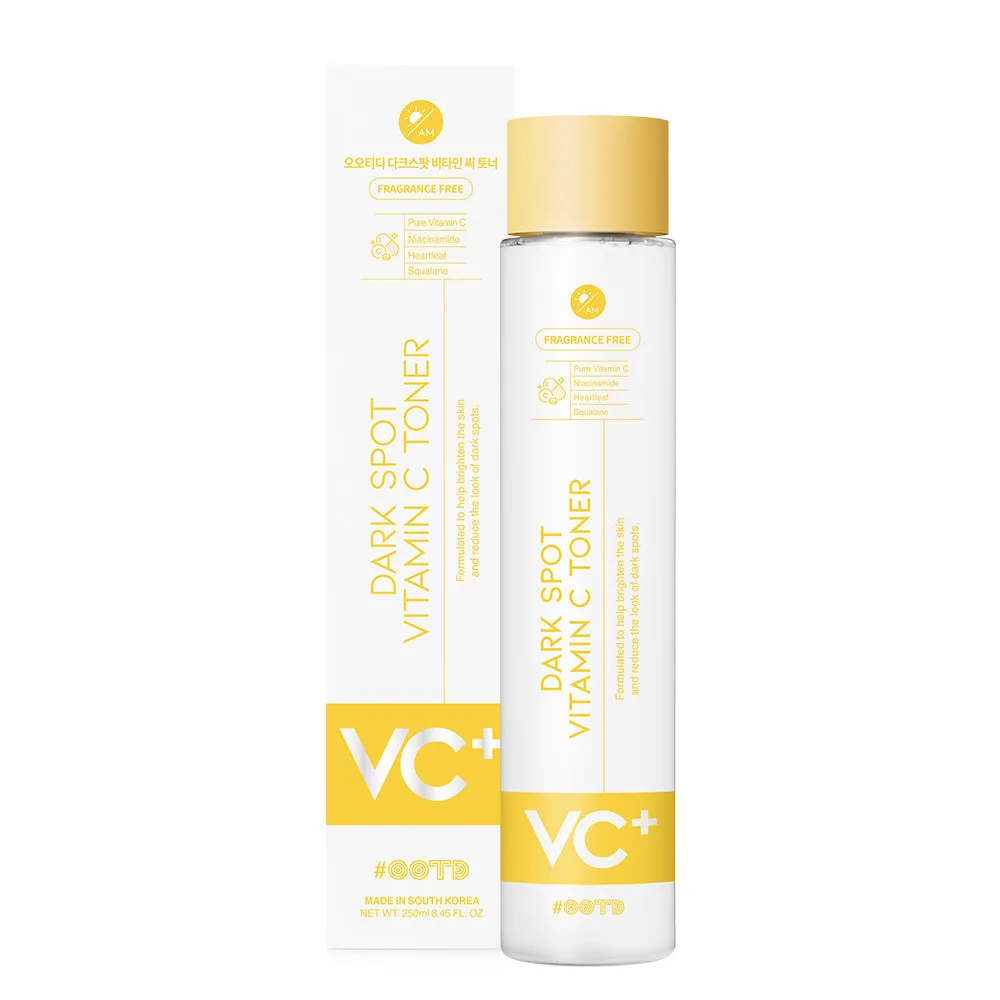
Instead of leaning on a single vitamin C, it stacks niacinamide with two complementary vitamin C forms and adds calming heartleaf, so it tackles dark spots through multiple anti-pigment pathways while soothing acne-prone skin. As a brightening toner rather than a serum, it folds antioxidant care into an everyday prep step.
A brightening toner that does more than wave at the idea of vitamin C: it pairs a lead dose of niacinamide with two complementary vitamin C forms and calming heartleaf, all fragrance-free and vegan. The dark-spot work is real but gradual, and the pure ascorbic acid's strength and stability are question marks in a watery, non-airless format. For an everyday brightening prep step at $19, though, it's a smart, gentle pick.
A newer addition launched around 2024, this toner has a moderate, still-growing review base rather than years of consensus, so the rating blends that early feedback with a transparent, anti-pigment INCI led by niacinamide and two vitamin C forms. Concentrations aren't published and the pure ascorbic acid's stability in non-airless packaging is uncertain, so the score may shift as more long-term usage and any formulation data emerge.
The case for it
What would change this: A declared concentration would move this to a firmer reading of the dose.
Same rule for everyone. “Good choice” is the verdict on 9,564 of 45,024 concern verdicts across the catalog; rule R5 decided 9,072 of them. Unchanged since September 5, 2026, engine 5.1.1.
Brand or formulator? Disclose a concentration or correct a fact →
The studies behind the evidence row
The case for it
What would change this: A declared concentration would move this to a firmer reading of the dose.
Same rule for everyone. “Promising” is the verdict on 7,858 of 45,024 concern verdicts across the catalog; rule R9p decided 7,858 of them. Unchanged since September 5, 2026, engine 5.1.1.
Brand or formulator? Disclose a concentration or correct a fact →
The studies behind the evidence row
The case for it
Cautions: fungal-acne triggers.
What would change this: A declared concentration would move this to a firmer reading of the dose.
Same rule for everyone. “Promising” is the verdict on 7,858 of 45,024 concern verdicts across the catalog; rule R9p decided 7,858 of them. Unchanged since September 5, 2026, engine 5.1.1.
Brand or formulator? Disclose a concentration or correct a fact →
The studies behind the evidence row
The case for it
What would change this: A declared concentration would move this to a firmer reading of the dose.
Same rule for everyone. “Not for this” is the verdict on 488 of 45,024 concern verdicts across the catalog; rule R10 decided 488 of them. Unchanged since September 5, 2026, engine 5.1.1.
Brand or formulator? Disclose a concentration or correct a fact →
Also listed for Dullness — the actives here (Niacinamide, Squalane, Houttuynia Cordata (Heartleaf) are in our research queue for that concern; there is no verdict until their evidence rows are written. That is a gap in our table, not a mark against the product.
Does the jobDoes what a toner is for: not alcohol-driven, adds something real. Not measured from the label: restores skin pH, plays well with what follows.
Where our review and the verdict differ. The review below was written on the formulation and the published trials; the verdicts above apply the stricter standing test in our methodology — an active earns a recommendation only with guideline or regulatory standing for the concern. Where the two disagree, the verdict is DermApproved’s position.
A verdict is DermApproved’s assessment of how well a product’s ingredients fit a concern — never a claim about what the product treats. Evidence dots and collected reviews sit beside it and are never blended in. Rules 0.5.1 · evidence table ev-2026.09-r228 · how we decide
The name puts vitamin C front and center, but read the ingredient order and a more interesting story emerges: the real workhorse of this dark-spot toner is niacinamide, which sits ahead of both vitamin C forms. That's not a knock — it's a sign the formula is built on the most reliable brightening science available, not just on a buzzy label. Niacinamide has some of the strongest evidence of any topical for fading dark spots, and it does it through a clever mechanism: rather than blocking pigment production, it interrupts the transfer of melanin from the cells that make it to the surface skin cells that show it. Put niacinamide first and you've already got a credible anti-pigment toner before the vitamin C even shows up.
Then the vitamin C arrives in two forms, which is the genuinely thoughtful part. Ascorbyl glucoside is a stable, water-friendly derivative that releases vitamin C slowly as enzymes in the skin convert it — it trades a little immediate potency for far better stability, which matters enormously in a watery toner. Alongside it sits a small amount of pure ascorbic acid, the most potent and best-studied form, for an immediate antioxidant and brightening punch. Pairing the two is smart formulation logic: the glucoside form provides steady, stable brightening while the ascorbic acid adds firepower, and together with niacinamide they attack pigment through several complementary pathways. The realistic caveat — and it's an important one — is that pure ascorbic acid is notoriously unstable in water and light, and this comes in a non-airless, non-opaque 250ml bottle. So the ascorbic acid is best understood as a contributing boost that may fade over the bottle's life, while the more stable glucoside and the niacinamide carry the long-term load.
What keeps the formula from being a one-note brightener is heartleaf — houttuynia cordata extract — the calming K-beauty botanical that's become a sensitive-skin darling. Its inclusion is purposeful: dark spots and acne often travel together, and a lot of hyperpigmentation is actually post-inflammatory marking left behind by old breakouts. By folding in a soothing, anti-redness botanical, the toner can address active congestion and the marks it leaves at the same time, and it keeps the active blend gentle enough for daily use. A little squalane rounds things out, stopping the watery, active-heavy formula from feeling stripping.
In use, it behaves like the everyday prep step it's meant to be. It's a thin, watery liquid you can sweep on with a cotton pad or press in with your palms; it absorbs instantly to a fresh, weightless finish with no tack and no sting. The fragrance-free, vegan formula makes it suitable even for reactive, acne-prone skin, and reviewers consistently describe brighter, clearer-looking skin without irritation. What they also report — accurately — is that the dark-spot fading is gradual. That's not a flaw; it's biology. Pigment correction happens over weeks to months, and crucially, none of it sticks without daily sunscreen, because UV exposure drives the very pigment you're trying to fade. A brightening toner without sun protection is a bucket with a hole in it.
The trade-offs are the familiar ones. Concentrations aren't published, so while the ingredient order is encouraging, you can't pin down exactly how much niacinamide or vitamin C you're getting. The ascorbic acid's stability in this packaging is a genuine question mark. And like most of OOTD's range, the polyglyceryl laurate means it isn't fungal-acne safe. None of these are dealbreakers for what this is — an entry-level, layer-it-in brightening step — but they're the reasons to keep expectations measured.
On value, it's an easy recommendation. At $19 for 250ml, frequently shown against a higher compare-at price, you're getting a large bottle of a multi-active brightening toner for roughly the cost of a basic hydrating one. It lasts months at daily use. OOTD remains an emerging brand, so you're trusting the formula over a long clinical record — but niacinamide and vitamin C are about as validated as brightening actives get, and they don't lean on the brand's reputation to work. As the brightening prep step in a routine — cleanse, this toner, then your serum, moisturizer, and (non-negotiable) sunscreen — it's a gentle, sensible, well-priced way to fold dark-spot care into your day. Buy it for the niacinamide-led brightening and the calming heartleaf, treat the pure vitamin C as a bonus that may not last the whole bottle, and pair it religiously with SPF.
It helps to be clear-eyed about where a brightening toner sits in the hierarchy of pigment care, too. This is a maintenance-and-prevention tool, not a spot eraser: it's best at keeping new dullness and post-blemish marks from settling in and at nudging overall tone brighter, rather than at lifting an entrenched patch of melasma or an old sun spot. For those tougher targets, you'd layer a dedicated treatment on top or step up to a procedure. But as the foundational, everyday layer that the rest of your brightening routine builds on — the thing you actually use consistently because it's gentle and pleasant — it does meaningful work over time. Consistency beats intensity with pigment, and a toner you'll happily reach for every morning often outperforms a stronger product you abandon after a week.
The hero actives that drive this product's performance.
| Ingredient | Function | Evidence |
|---|---|---|
| Niacinamide | The lead brightening active, placed ahead of the vitamin C forms — it limits the transfer of pigment to surface skin cells and supports the barrier, doing the bulk of the dark-spot work in this toner and partnering with vitamin C through complementary anti-pigment pathways. | Emerging for Hyperpigmentation |
| Vitamin C (Ascorbyl Glucoside + Ascorbic Acid) | Two forms paired together — stable ascorbyl glucoside for slow-release brightening plus a touch of pure ascorbic acid for immediate antioxidant punch — so the toner targets dark spots and dullness while the glucoside form helps offset ascorbic acid's instability in a watery base. | Limited for Hyperpigmentation |
| Houttuynia Cordata Extract | Heartleaf, a calming K-beauty botanical, balances the brightening actives by soothing redness and acne-prone skin, so the toner addresses post-blemish marks and active congestion at the same time without feeling harsh. | Not yet assessed |
| Squalane | A lightweight, skin-mimicking emollient that keeps the otherwise watery, active-heavy toner from feeling stripping, lending a touch of softness so the niacinamide-and-vitamin-C blend stays comfortable for daily use. | No qualifying study for Post-Procedure |
Ingredient standings describe the active at treatment-level doses and vehicles; this product's own condition grades weigh its actual formula.
Water, Propanediol, 1,2-Hexanediol, Glycerin, Polyglyceryl-10 Laurate, Betaine, Ethylhexylglycerin, Sodium Citrate, Disodium EDTA, Niacinamide, Ascorbyl Glucoside, Ascorbic Acid, Squalane, Butylene Glycol, Houttuynia Cordata Extract
toner
AM & PM
Apply after cleansing as a brightening prep step before serums, either by sweeping it on with a cotton pad or pressing it in with your palms. Use it in the morning under sunscreen for antioxidant support, and avoid layering it the same time as strong exfoliating acids.
Brighter, fresher-looking skin within 2-3 weeks; fading of dark spots and a more even tone over 8-12 weeks of consistent daily use paired with diligent sun protection.
The toner's brightening logic is built on two of the most evidence-backed anti-pigment actives, used together. Niacinamide, placed first among the actives, has strong clinical support for reducing hyperpigmentation by inhibiting the transfer of melanosomes from melanocytes to keratinocytes — a mechanism distinct from tyrosinase inhibition, which makes it a useful partner rather than a duplicate of vitamin C. The vitamin C is delivered in two forms with different evidence profiles: L-ascorbic acid is the gold-standard, best-studied form for antioxidant protection and brightening, but is highly unstable in aqueous, light-exposed formulas; ascorbyl glucoside is a more stable glycoside derivative shown to convert to ascorbic acid in the skin, trading immediate potency for shelf stability. Combining them is a recognized strategy to balance stability and efficacy. Houttuynia cordata extract has emerging data for anti-inflammatory and antioxidant effects, relevant to calming the inflammation that drives post-inflammatory hyperpigmentation. The central scientific caveats are concentration and stability: brightening efficacy for both niacinamide and vitamin C is dose-dependent, OOTD discloses neither, and the non-airless packaging is a real risk to the ascorbic acid component over time. The honest read is a well-reasoned multi-pathway brightening toner whose stable derivatives and niacinamide are likely to carry most of the long-term benefit.
Combining niacinamide with vitamin C is a well-regarded approach in clinical practice for hyperpigmentation, because the two work through different mechanisms and can complement each other for more even tone. Brightening toners are generally viewed as a supportive prep step rather than a primary treatment; clinicians typically reserve stronger interventions — higher-strength vitamin C serums, retinoids, or in-office procedures — for stubborn pigment, while emphasizing that no brightener works without rigorous daily sun protection, since UV exposure continually regenerates the pigment being targeted. The inclusion of heartleaf aligns with guidance to calm inflammation in acne-prone skin, which helps limit post-inflammatory hyperpigmentation at the source. Because concentrations aren't published and pure ascorbic acid is unstable, this would be regarded as a gentle, everyday brightening adjunct rather than a targeted dark-spot corrector.
After cleansing, apply the toner with a saturated cotton pad swept over the face, or press a few drops in with your palms, avoiding the eye area. Use it once or twice daily as a brightening prep step before serums. In the morning, follow with moisturizer and — essential while using any brightener — a broad-spectrum sunscreen. Keep it away from strong exfoliating acids in the same step to avoid irritation. Store the bottle out of direct light and heat and use it within its period-after-opening window to help preserve the pure vitamin C.
At $19 for 250ml, often displayed against a higher compare-at price, this is good value for a multi-active brightening toner — you get a large bottle combining niacinamide, two vitamin C forms, and heartleaf for roughly the price of a plain hydrating toner. Only the single size is offered, so there's no bulk tier, but at daily use a bottle lasts three to four months, keeping per-use cost low. The value caveat is the pure ascorbic acid: in non-airless packaging it may lose potency before the bottle is finished, so part of what you're paying for is a bonus that may not fully last. As with the rest of OOTD's range, you're backing an emerging brand's formula over a long pedigree, but the niacinamide-led core makes the price an easy yes.
Choose this if you want to fold gentle, multi-pathway dark-spot and dullness care into an everyday toner step, especially if you have combination, oily, or acne-prone skin dealing with post-blemish marks. The fragrance-free, vegan formula also suits sensitive skin that finds high-strength vitamin C serums too irritating.
Pass if you need fast, dramatic correction of stubborn pigment — that calls for a concentrated, well-packaged treatment, not a toner. Those who won't commit to daily sunscreen won't see results, anyone strictly avoiding malassezia triggers should note the polyglyceryl laurate, and very reactive skin should patch test the ascorbic acid first.
Ready to try OOTD Dark Spot Vitamin C Toner?
Buy at Amazon ♥A thin, watery liquid with a faint humectant slip that absorbs instantly, leaving a fresh, weightless finish with no residue.
Scentless — no added fragrance, with only the barest natural note from the heartleaf extract.
A 250ml bottle for decanting onto a cotton pad or palms; practical, but not airless or opaque, which is a consideration for the pure ascorbic acid's longevity.
Skin looks instantly fresher and feels hydrated, not tight, from the first use, with no sting from the buffered vitamin C. Visible brightening builds gradually over several weeks rather than appearing overnight.
Around 3-4 months with once- or morning and evening of a few presses per application.
All Year
This is one of the newer additions to OOTD's lineup, built to bring targeted dark-spot care into the toner stage of the routine. Combining niacinamide, dual vitamin C, and heartleaf reflects a K-beauty approach of layering several gentle brighteners rather than betting on one high-strength active.
OOTD (styled #OOTD, 'oxygen of the day') is a certified-vegan Korean brand organized around a fragrance-free A.M./P.M. routine system and ingredient transparency. Founded in the early 2020s, it has a clear formulation ethos but a still-limited independent clinical track record.
A vitamin C toner works as fast as it brightens in the ads.
Pigment fading is a slow biological process; niacinamide and vitamin C visibly even tone over weeks to months, and only with consistent daily sun protection alongside.
Two forms of vitamin C means double the brightening.
The two forms here are complementary — stable ascorbyl glucoside plus a small amount of pure ascorbic acid — so they broaden the action rather than simply doubling the dose.
It targets dark spots and dullness using niacinamide plus two forms of vitamin C, which work through complementary anti-pigment pathways, while heartleaf soothes acne-prone skin. Used daily with sunscreen, it gradually evens tone and adds antioxidant protection.
Expect brighter, fresher skin within a few weeks, with dark spots fading more noticeably over two to three months of consistent use. Pigment correction is slow by nature, and daily sun protection is essential or new spots will offset your progress.
No — OOTD makes both a Dark Spot Vitamin C Toner and a separate Dark Spot Vitamin C Serum. The toner is a lighter, watery brightening prep step, while the serum is a more concentrated treatment; they can be layered, toner first.
Yes, but space it from strong exfoliating acids to avoid irritation. It layers well under a vitamin C or niacinamide serum and is a good morning antioxidant step beneath sunscreen, which you should always wear while using it.
Yes — the disclosed formula contains no added fragrance and the brand certifies it vegan. The heartleaf extract adds only a faint natural note, making it suitable for fragrance-sensitive, acne-prone skin.
Recurring themes our editors read across retailer reviews of this product — summaries in our words, not quotations, and not a substitute for your own patch test.
Skin looks brighter and clearer
Lightweight and non-sticky
Fragrance-free and gentle
Good value 250ml size
Dark spot results are gradual
Concentrations not disclosed
Pure vitamin C stability uncertain
Verified answers from our questions library — the nuance a product page cannot carry.