Cutting the Leaf Yourself Gets You a Latex Problem the Bottle Already Solved
Aloe has the best clinical case of any kitchen remedy — and the fresh-leaf version puts a manual processing step between you and the part that works.
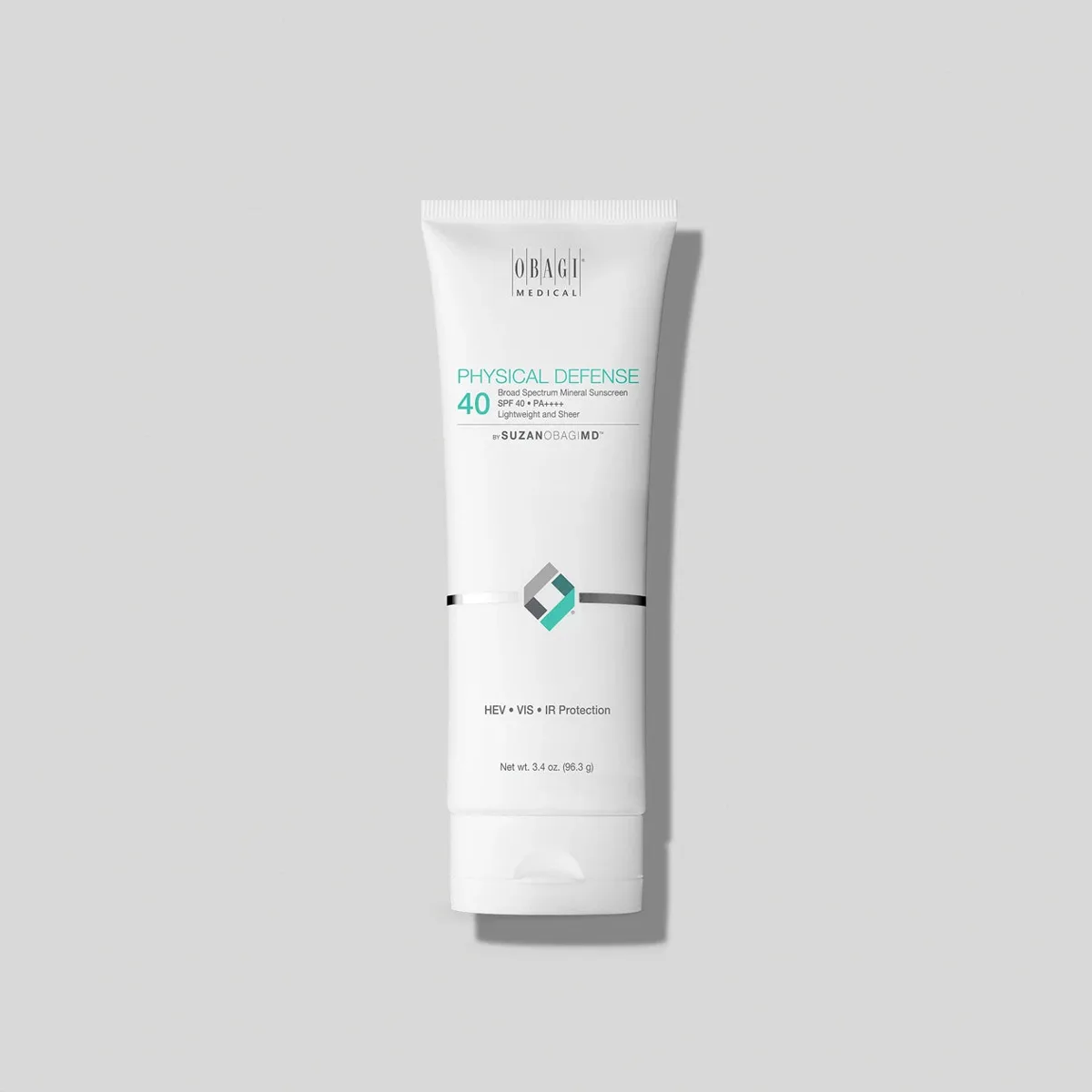
It is the untinted mineral sunscreen of a hypoallergenic dermatology line, built without organic filters, fragrance, dyes, parabens or SPF boosters on a glucoside emulsion with aloe and licorice, so the whole formula is a list of things that were left out for reactive skin. There is no tint, no silicone film and no clever chemistry; its distinction is how little it asks of the skin it protects.
A plain, well-mannered two-mineral SPF 40 from a hypoallergenic dermatology line: zinc and titanium on a glucoside emulsion with aloe and licorice, and nothing else to react to. It is light, fragrance-free and genuinely gentle on rosacea-prone and post-procedure skin, which is the whole job; it casts on deeper tones, its blue-light claim is botanical decoration, and sixty dollars is dispensed-sunscreen pricing for a formula with a thin and lukewarm review record.
For a sunscreen sold since 2018, the public record is thin: four reviews on Obagi's site, a small and mixed pool at clinical retailers and Amazon, patchy stock, and no product-specific study. The assessment rests on the drug-facts label, the well-established behaviour of zinc oxide and titanium dioxide, the mild-emulsifier and soothing-botanical literature, and the SUZANOBAGIMD line's design brief; how the cream wears across skin tones, under makeup and through a full season on many faces is not well documented.
The case for it
Same rule for everyone. “Full protection” is the verdict on 2,288 of 45,024 concern verdicts across the catalog; rule P1 decided 2,232 of them. As of September 25, 2026, engine 5.1.1.
Brand or formulator? Disclose a concentration or correct a fact →
The studies behind the evidence row
The case for it
What would change this: A researched evidence row for the lead active would replace this with a verdict.
Same rule for everyone. “Good choice” is the verdict on 1,938 of 45,024 concern verdicts across the catalog; rule F2 decided 1,938 of them. As of September 25, 2026, engine 5.1.1.
Brand or formulator? Disclose a concentration or correct a fact →
The case for it
What would change this: A declared concentration would move this to a firmer reading of the dose.
Same rule for everyone. “Supporting role” is the verdict on 8,197 of 45,024 concern verdicts across the catalog; rule R8a decided 1,489 of them. As of September 25, 2026, engine 5.1.1.
Brand or formulator? Disclose a concentration or correct a fact →
The studies behind the evidence row
The case for it
What would change this: A declared concentration would move this to a firmer reading of the dose.
Same rule for everyone. “Full protection” is the verdict on 2,288 of 45,024 concern verdicts across the catalog; rule P1 decided 2,232 of them. As of September 25, 2026, engine 5.1.1.
Brand or formulator? Disclose a concentration or correct a fact →
The studies behind the evidence row
The case for it
What would change this: A researched evidence row for the lead active would replace this with a verdict.
Same rule for everyone. “Full protection” is the verdict on 2,288 of 45,024 concern verdicts across the catalog; rule P1 decided 2,232 of them. As of September 25, 2026, engine 5.1.1.
Brand or formulator? Disclose a concentration or correct a fact →
The case for it
What would change this: A declared concentration would move this to a firmer reading of the dose.
Same rule for everyone. “Promising” is the verdict on 7,858 of 45,024 concern verdicts across the catalog; rule R9p decided 7,858 of them. As of September 25, 2026, engine 5.1.1.
Brand or formulator? Disclose a concentration or correct a fact →
The studies behind the evidence row
Does the jobDoes what a sunscreen is for: UVA coverage, kind to the skin wearing it. Not measured from the label: pleasant enough to actually use.
A verdict is DermApproved’s assessment of how well a product’s ingredients fit a concern — never a claim about what the product treats. Evidence dots and collected reviews sit beside it and are never blended in. Rules 0.5.1 · evidence table ev-2026.09-r228 · how we decide
The SUZANOBAGIMD line exists for the patients Obagi's other systems leave red, and its sunscreen was built by the same subtraction. Physical Defense SPF 40 has no organic filters, no salicylate or butyloctyl boosters, no fragrance, no dyes, no parabens, no alcohol, no PEG or sulfate emulsifiers, and no tint; what remains is 12.8 percent zinc oxide and 4.5 percent titanium dioxide in a cream built on sugar-derived glucoside emulsifiers, with glycerin, aloe, a licorice-derived anti-inflammatory and a couple of botanical antioxidants. A dermatologist looking for a sunscreen to hand a rosacea patient, or a face three days out from a peel, would write roughly that list, and Obagi did, then left it alone for eight years, which for a product of this kind is a virtue rather than neglect.
The filters do their job without help. A 2019 review of inorganic filters in Photodermatology, Photoimmunology and Photomedicine laid out the case that has made zinc and titanium the default for reactive skin: zinc absorbs and scatters across UVB and the full UVA range, titanium reinforces UVB, nanoparticle sizing makes both cosmetically wearable, percutaneous absorption is negligible, and the human health risk is extremely low outside inhaled sprays. At these percentages the pair reaches a broad-spectrum SPF 40 honestly, with no ester quietly adding to the number, and the zinc load gives a reasonable UVA floor for daily face use, though less than the brand's higher-mineral Sun Shield SPF 50 offers for melasma or heavy sun.
The supporting cast is small and pointed. Cetearyl and lauryl glucoside emulsify without the sensitiser risk of older systems, and they are the reason the cream feels like a light moisturiser rather than a silicone film; polyhydroxystearic acid disperses the minerals, silica and alumina keep them suspended, glycerin and propanediol hydrate modestly. Aloe sits tenth, high for a sunscreen, licorice glycyrrhizate adds a documented mild anti-inflammatory note, and bioflavonoids and broccoli extract are the antioxidants behind the label's talk of blue light, visible light and infrared. That last claim needs the usual flag: the minerals scatter some visible light, but the specific HEV and infrared language rests on botanicals at low levels with supplier-grade evidence, and anyone with melasma who needs visible-light defence should be looking at an iron-oxide tint, which this formula does not contain and the line's tinted SPF 50 does.
On the skin it is what the list promises. A light white cream glides on, looks chalky for a minute, and settles on fair and medium skin to a natural, faintly luminous finish that sits under makeup without fuss; there is no scent, no sting and no flush, and rosacea-prone reviewers describe it as the first sunscreen that did nothing to them, which is the highest compliment this product can earn. Brown and deeper skin sees a cast that lingers at the hairline and may not clear, and one of the line's own reviewers says so plainly, which is why the tinted SPF 50 sibling exists. Dry skin feels the film pull by afternoon without a cream beneath. It has no water-resistance claim, and the label sends swimmers elsewhere; the PA++++ mark on the tube, a Japanese UVA grading, is the one piece of protection data on the front that means something, and it is a good one for a formula with no boosters.
The record is the odd part. Eight years in a dermatology line ought to have produced a deep review base, and this sunscreen has four reviews on Obagi's site averaging three stars, a handful at clinical retailers split between lightness and cast, and patchy stock; it is a product that is dispensed rather than promoted, and it reads that way. The protection is not in doubt, since zinc and titanium are the best-characterised filters in dermatology, but how the cream wears across many faces is less documented than it should be for its age.
Sixty dollars for 3.4 ounces is where dispensed mineral sunscreens sit, and the tube is generous, lasting about two and a half months at two finger-lengths a day; the yearly cost is moderate. What the money buys is a genuinely hypoallergenic formula with a solid mineral load and Obagi's physician-channel standing, and for a reactive patient whose dermatologist stocks it, that is a reasonable purchase. What it does not buy is a tint, a moisturising base for dry skin, water resistance or a track record, and fragrance-free two-mineral sunscreens with similar labels exist from pharmacy brands at a third of the price.
For rosacea-prone, reactive and post-procedure skin on fair to medium tones, this is a quiet, dependable sunscreen that asks nothing of the face and is the right pick within the SUZANOBAGIMD line. For deeper skin, dry skin, outdoor days or anyone weighing cost, the brand's tinted sibling, its richer Barrier Protect SPF 40, or a pharmacy mineral will serve better.
The hero actives that drive this product's performance.
| Ingredient | Function | Evidence |
|---|---|---|
| Zinc Oxide (12.8%) | The lead filter at a solid 12.8 percent, silane-coated and dispersed with polyhydroxystearic acid in a glucoside-emulsified cream, giving the sunscreen its broad UVA-through-UVB curve and its place in a hypoallergenic line; the dose is high enough to carry the SPF without organic boosters and low enough to blend on fair to medium skin, which is the balance the whole formula is built around. | Regulator-approved for Sun Damage · limited certainty |
| Titanium Dioxide (4.5%) | A small titanium share reinforcing UVB absorption alongside the zinc, the conventional pairing for a two-mineral SPF 40; at 4.5 percent it adds little whiteness of its own and mainly lets the zinc sit lower than a single-filter formula would need. | Regulator-approved for Sun Damage · limited certainty |
| Aloe Barbadensis Leaf Extract | Tenth on the list, above the licorice and the emulsifier tail, aloe is the first of the SUZANOBAGIMD line's signature soothers, lending a light hydrating and calming note to a mineral cream meant for reactive skin; it is a modest contribution, but its placement is higher than most sunscreens give a botanical. | Limited for Post-Procedure |
| Dipotassium Glycyrrhizate | The licorice-derived anti-inflammatory that the line uses across its products, here to take the edge off a day-long mineral film on rosacea-prone and freshly treated skin; with the bioflavonoids and broccoli extract beside it, it forms the small antioxidant-and-soothing layer behind the formula's free-radical claim. | Limited for Rosacea |
| Cetearyl Glucoside | A sugar-derived emulsifier, with lauryl glucoside further down, chosen over PEG and sulfate systems to keep the cream hypoallergenic; the glucoside base is why this sunscreen feels like a light moisturiser rather than a silicone film and why it suits skin that reacts to conventional sunscreen emulsifiers. | Not yet assessed |
Ingredient standings describe the active at treatment-level doses and vehicles; this product's own condition grades weigh its actual formula.
Active Ingredients: Zinc Oxide 12.8%, Titanium Dioxide 4.5%. Inactive Ingredients: Aqua/Water/Eau, Caprylic/Capric Triglyceride, Dicaprylyl Carbonate, Glycerin, Cetearyl Alcohol, Dimethicone, Propanediol, Polyhydroxystearic Acid, Cetearyl Glucoside, Aloe Barbadensis Leaf Extract, Brassica Oleracea Italica (Broccoli) Extract, Bioflavonoids, Dipotassium Glycyrrhizate, Polyglyceryl-2 Dipolyhydroxystearate, Sodium Stearoyl Glutamate, Stearic Acid, Lauryl Glucoside, Triethoxycaprylylsilane, Xanthan Gum, Silica, Alumina, Caprylhydroxamic Acid, Disodium EDTA, Caprylyl Glycol, Phenoxyethanol
sunscreen
AM
Two finger-lengths go on as the final morning step over moisturiser, or on its own for normal skin, and blend firmly at the hairline and jaw; allow a couple of minutes before makeup. It is the sunscreen the SUZANOBAGIMD line means to sit over its toner and serums, and it layers over vitamin C or azelaic acid without pilling. Reactive skin that flushes with organic filters or fragrance is exactly who it was built for.
Protection is immediate and there is nothing to wait for; on rosacea-prone or reactive skin the only visible change over weeks is less flushing from the sunscreen itself than an organic formula would cause, and over years the usual slower photoaging. Deeper skin tones will see a cast from the first day, and dry skin will know within a few days whether it needs a cream beneath.
This is a two-mineral sunscreen with no organic UV chemistry, so its protection is a question of zinc oxide, titanium dioxide and the film they form. Zinc oxide absorbs and scatters ultraviolet across a broad, flat curve from UVB through UVA-1, and titanium dioxide absorbs more strongly in UVB and short UVA while fading above about 370 nanometres; at 12.8 and 4.5 percent respectively, coated with triethoxycaprylylsilane and dispersed by polyhydroxystearic acid with silica and alumina as suspending agents in a glucoside-emulsified cream, they form a continuous particulate film that meets the FDA's SPF 40 and broad-spectrum critical-wavelength requirements. The 2019 review by Schneider and Lim in Photodermatology, Photoimmunology and Photomedicine summarised the standing of these filters: zinc offers the broader UVA-UVB absorption and titanium the better UVB protection, nanoparticle sizing below 100 nanometres improves cosmetic acceptability without meaningful percutaneous absorption, human health risk is extremely low outside inhalation of spray products, and current evidence places environmental risk as low, making the two minerals safe alternatives for those concerned about organic filters. The absence of any SPF-boosting ester in this formula means its UVA depth scales with the zinc alone, which at 12.8 percent is adequate for daily face use and below what a higher-zinc formula provides for heavy exposure or melasma.
The formula's hypoallergenic design is a matter of emulsifier and additive choice. Cetearyl glucoside and lauryl glucoside are nonionic, sugar-derived emulsifiers with very low sensitisation rates, used in place of PEG-based or anionic systems; caprylhydroxamic acid, caprylyl glycol and phenoxyethanol form a mild preservative system without formaldehyde releasers or parabens; and the formula omits fragrance, dyes and alcohol. Aloe leaf extract supplies polysaccharides with mild hydrating and soothing action, and dipotassium glycyrrhizate, the salt of licorice's glycyrrhizic acid, inhibits inflammatory mediators in skin and is a standard anti-redness ingredient. Bioflavonoids and Brassica oleracea extract are antioxidants at low concentration and are the sole basis for the label's high-energy visible, visible and infrared claims; the minerals scatter a fraction of visible light, but the clinical evidence for visible-light protection in pigmentary disorders belongs to iron oxides, which this untinted formula does not contain. The result is a sunscreen whose protection is well founded in filter chemistry and whose gentleness is a product of what was excluded rather than of any active soothing agent at a therapeutic level.
Dermatologists treating rosacea, atopic and contact-allergic patients tend to prescribe sunscreen by exclusion, mineral-only filters, no fragrance, no alcohol, a mild emulsifier system, and this product meets that specification closely enough that practices dispensing the SUZANOBAGIMD line reach for it as the default for reactive faces and for the days after peels and lasers. The 12.8 percent zinc and 4.5 percent titanium load is regarded as adequate for daily protection, with the usual clinical note that melasma and heavy-exposure patients do better with a higher-zinc or tinted iron-oxide formula, which the brand also sells. The cast on deeper skin is a recurring counselling point, and clinicians commonly steer Fitzpatrick IV to VI patients to the tinted SPF 50 in the same line. The blue-light and infrared language is discounted in clinic as botanical marketing, and the lack of a water-resistance claim makes it a daily rather than an outdoor sunscreen. Otherwise the instructions are standard: two finger-lengths, fifteen minutes before exposure, reapplication every two hours, pressing rather than rubbing over treated skin.
After the morning cleanse, toner and any serum or moisturiser have absorbed, squeeze out about two finger-lengths and dot it over the face and neck, then spread and blend firmly until the white cast clears, paying attention to the hairline, brows and jaw where minerals collect. Apply fifteen minutes before sun exposure and allow a couple of minutes to set before makeup, patting foundation over it rather than rubbing. Reapply at least every two hours outdoors and after sweating or towelling, and use a water-resistant sunscreen instead for swimming or sport. On post-procedure skin, press rather than rub and follow the practice's timing. Dry skin should apply a moisturiser beneath it, and deeper skin tones may prefer the line's tinted SPF 50.
Sixty dollars for 3.4 ounces sits in the usual range for dermatologist-dispensed mineral sunscreens and is roughly three times what a comparable fragrance-free two-mineral SPF from a pharmacy brand costs; the generous tube lasts about two and a half months at two finger-lengths daily, so the yearly outlay is around three hundred dollars. The money buys a genuinely hypoallergenic formula with a solid mineral load, glucoside emulsifiers, aloe and licorice, and the coherence of the SUZANOBAGIMD line for patients on it, backed by Obagi's physician-channel standing. It does not buy a tint, a moisturising base, water resistance or a well-documented record, and there is no larger size. Fair value for a reactive patient whose dermatologist recommends it; ordinary value for anyone who could match the label for less.
Rosacea-prone, reactive, atopic and post-procedure skin on fair to medium tones that needs a fragrance-free, mineral-only daily sunscreen with no organic filters, boosters or common sensitisers, and patients on the SUZANOBAGIMD line who want its intended sunscreen. It suits people who have flushed or stung with chemical sunscreens and want a light formula that sits under makeup.
Brown and deeper skin tones will fight a cast and should choose the line's tinted SPF 50, very dry skin will want a richer base or a cream beneath, and swimmers and outdoor athletes need a water-resistant formula. Melasma patients needing visible-light defence should pick an iron-oxide tint, and budget-minded buyers can find a similar fragrance-free two-mineral label from pharmacy brands for far less.
Ready to try Obagi Physical Defense Broad Spectrum SPF 40?
Buy at Amazon ♥A light, white, fluid cream that spreads with an easy glucoside slip, shows white for a minute, and settles to a soft, natural, slightly luminous finish that feels like a moisturiser rather than a sunscreen on fair and medium skin.
None; a faint neutral cream smell with no added fragrance.
A 3.4 oz white squeeze tube with a flip cap and the older teal-accented SUZANOBAGIMD label, marked PA++++; a generous size for a face sunscreen, hygienic and easy to dose, and the tube keeps the mineral cream stable.
The first application is gentler than the mineral percentages suggest: a light cream that glides on, looks white for a minute, and blends to a natural finish on fair and medium skin with nothing to sting, tingle or smell. Brown and deeper skin sees a cast that persists at the hairline and needs working in, and may not clear entirely. Dry skin feels the film pull by afternoon without a cream beneath; reactive and rosacea-prone skin, the intended audience, mostly notices that nothing happens, which is the point.
About two and a half months at two finger-lengths daily on face and neck; three to four months on the face alone.
All Year
When Obagi launched SUZANOBAGIMD in 2018 as a line for patients whose skin could not tolerate its Nu-Derm and CLENZIderm systems, it needed a sunscreen with the same restraint, and Physical Defense SPF 40 was built as the line's untinted mineral, joined later by a tinted SPF 50 sibling for deeper tones. It has stayed unchanged through the line's 2025 packaging refresh and lives a quiet life in dermatology offices, dispensed to rosacea and post-procedure patients rather than promoted, which shows in a review record thin for its age.
Obagi has been a physician-dispensed brand since dermatologist Zein Obagi founded it in 1988, and SUZANOBAGIMD is its hypoallergenic line launched in 2018 for patients too reactive for the flagship systems. Physical Defense SPF 40 has been the line's untinted mineral sunscreen since that launch; it carries no product-specific published study and is assessed on its drug-facts label and the inorganic-filter literature.
A hypoallergenic mineral sunscreen will not leave a white cast.
Hypoallergenic describes what was left out, not how the minerals look; at 12.8 percent zinc and 4.5 percent titanium with no tint, this cream leaves a visible cast on brown and deeper skin, which its own reviewers report, and the line's tinted SPF 50 exists for that reason.
The blue-light and infrared defence on the label is provided by the mineral filters.
Zinc and titanium scatter a little visible light but the label's HEV, visible and infrared claims rest on the bioflavonoids, broccoli extract and licorice, antioxidants at low levels with supplier-grade evidence; the sunscreen's real protection is ultraviolet, and visible-light defence for melasma comes from iron-oxide tints this formula does not contain.
Zinc oxide at 12.8 percent and titanium dioxide at 4.5 percent, with no organic filters and no SPF-boosting esters; the inactives are a glucoside-emulsified cream with glycerin, aloe, licorice-derived glycyrrhizate, bioflavonoids and broccoli extract.
It is one of the better-suited sunscreens for it: mineral-only filters, no fragrance, alcohol, dyes or organic actives, a sugar-derived emulsifier system and a licorice soother, all chosen for reactive skin. Rosacea patients who flush with chemical sunscreens generally tolerate it well, and it is dispensed for that purpose in Obagi offices.
On fair and medium skin it blends to a natural, faintly luminous finish within a minute; on brown and deeper skin tones its reviewers report a cast that lingers, which is the trade-off of an untinted formula at over seventeen percent minerals. The line's Tinted Physical Defense SPF 50 is the answer for deeper tones.
Both are two-mineral, fragrance-free sunscreens without boosters; the Sun Shield Mineral carries more zinc and titanium for a higher SPF and deeper UVA coverage, while Physical Defense uses a lighter mineral load on a glucoside emulsion with aloe and licorice, making it the gentler and more moisturising of the two for reactive skin, at a lower protection ceiling.
No. The label directs users to a water-resistant sunscreen for swimming or sweating and to reapply at least every two hours, so it is a daily face sunscreen for reactive skin rather than an outdoor or sport formula.
Yes, with the practice's timing; it contains no organic filters, fragrance or actives, is emulsified with glucosides rather than harsher systems, and includes aloe and licorice, which makes it one of the mineral sunscreens dispensed for post-procedure use. Press rather than rub over freshly treated skin.
Recurring themes our editors read across retailer reviews of this product — summaries in our words, not quotations, and not a substitute for your own patch test.
Very lightweight for a mineral sunscreen
No stinging or flushing on rosacea-prone skin
Fragrance-free and free of organic filters
Sits well under makeup on fair skin
Feels like a light moisturiser
White cast on brown and deeper skin
Sixty dollars for a plain mineral SPF
Too light to moisturise dry skin
Few reviews for an eight-year-old product
Stock is patchy at retailers