CoQ10's Problem Isn't the Evidence. It's Getting Through the Skin.
A large, orange, fat-soluble molecule with genuine antioxidant credentials and a delivery problem nobody solved by putting more of it in the jar.
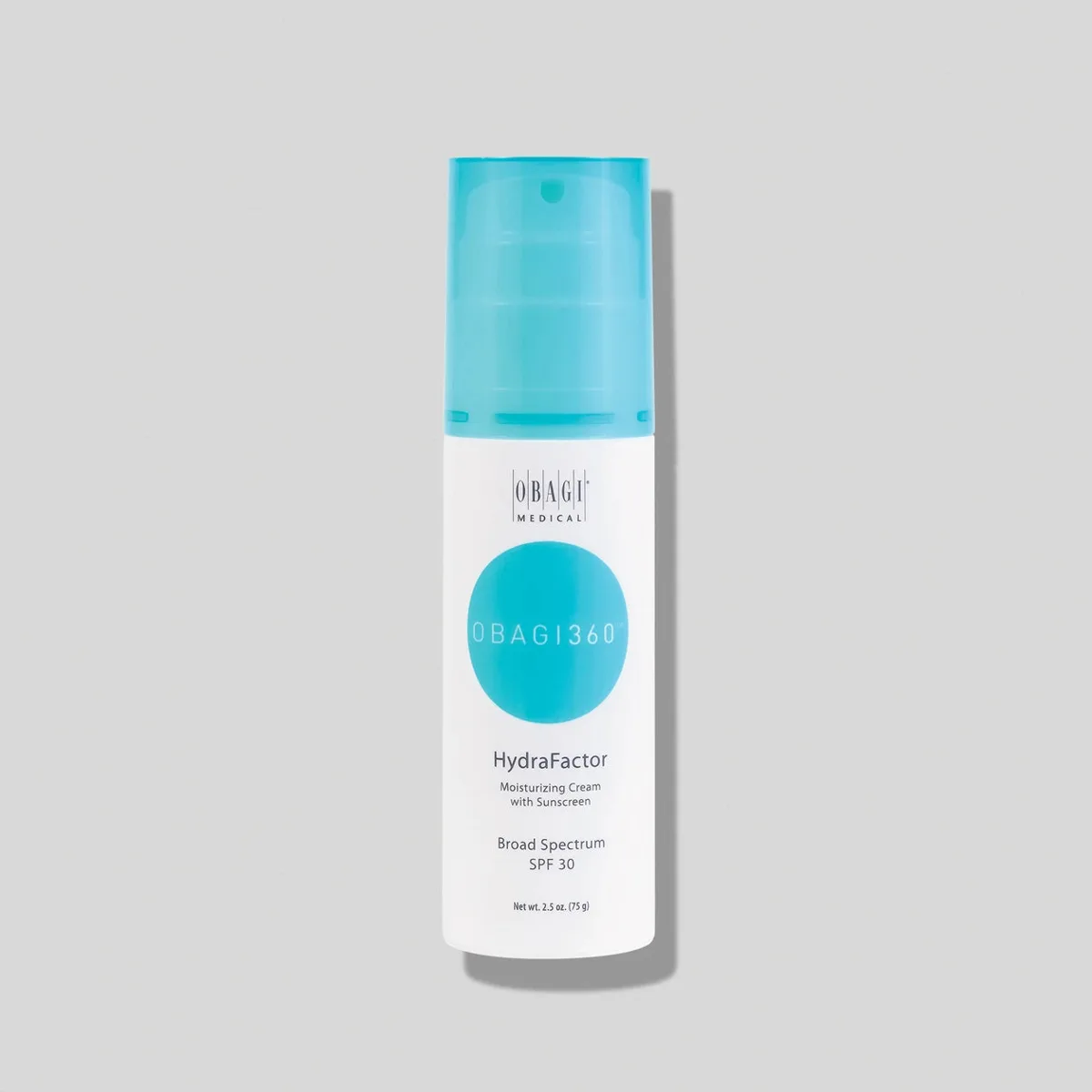
It is the daytime half of a two-product retinol starter system, a moisturiser with sodium hyaluronate, a tara-gum film and a resveratrol-ubiquinone-vitamin E antioxidant trio that happens to carry a four-filter organic SPF 30, and it feels more like a day cream than any sunscreen in Obagi's range. Its distinction is that comfort; its filter set, with five percent oxybenzone and 7.5 percent octinoxate, is the reason it is barred from Hawaii and the reason it belongs to 2014.
A genuinely pleasant moisturising SPF 30, hyaluronate and antioxidants in a gel-cream that vanishes under makeup, which its users have loved for a decade and are now mourning as it disappears. It disappears for a reason: four organic filters including five percent oxybenzone, an ingredient the FDA found in plasma at levels far above its review threshold, that Hawaii has banned and that the industry has abandoned. Lovely to wear, dated to read, and not the sunscreen to buy in 2026.
The case for it
Same rule for everyone. “Full protection” is the verdict on 2,288 of 45,024 concern verdicts across the catalog; rule P1 decided 2,232 of them. As of September 25, 2026, engine 5.1.1.
Brand or formulator? Disclose a concentration or correct a fact →
The studies behind the evidence row
The case for it
What would change this: A declared concentration would move this to a firmer reading of the dose.
Same rule for everyone. “Good choice” is the verdict on 9,564 of 45,024 concern verdicts across the catalog; rule R5 decided 9,072 of them. As of September 25, 2026, engine 5.1.1.
Brand or formulator? Disclose a concentration or correct a fact →
The studies behind the evidence row
The case for it
What would change this: A declared concentration would move this to a firmer reading of the dose.
Same rule for everyone. “Full protection” is the verdict on 2,288 of 45,024 concern verdicts across the catalog; rule P1 decided 2,232 of them. As of September 25, 2026, engine 5.1.1.
Brand or formulator? Disclose a concentration or correct a fact →
The studies behind the evidence row
The case for it
What would change this: A researched evidence row for the lead active would replace this with a verdict.
Same rule for everyone. “Supporting role” is the verdict on 8,197 of 45,024 concern verdicts across the catalog; rule R8 decided 4,250 of them. As of September 25, 2026, engine 5.1.1.
Brand or formulator? Disclose a concentration or correct a fact →
Does the jobDoes what a SPF moisturizer is for: UVA coverage, holds up in sunlight. Not measured from the label: wearable all day.
A verdict is DermApproved’s assessment of how well a product’s ingredients fit a concern — never a claim about what the product treats. Evidence dots and collected reviews sit beside it and are never blended in. Rules 0.5.1 · evidence table ev-2026.09-r228 · how we decide
Scroll the reviews on Obagi's HydraFactor page and the tone is unusual for a sunscreen: thirty-one of them averaging 4.9 stars, and the most recent ones are pleas. Bring it back. Nothing else feels like this. Why was it discontinued. Obagi still lists the teal-capped pump bottle at sixty-five dollars with a note that it cannot ship to Hawaii, and retailer stock is patchy, so the product is in the odd position of being both available and, by its own customers' account, on its way out. The reason is not on the front of the tube, where it says moisturiser and sunscreen in one, but on the drug-facts panel: avobenzone one percent, octinoxate 7.5 percent, octisalate five percent, oxybenzone five percent. That is the organic filter set of 2014, the year Obagi360 launched, and in 2026 it is the filter set almost nobody will formulate with.
The cream around the filters is good, and it is the reason for the affection. Water, an alkyl benzoate ester and butyloctyl salicylate, which boosts SPF quietly, carry the filters; glycerin and sodium hyaluronate sit fifth and sixth for hydration; a hydrolysed tara gum and its parent gum form a light film that keeps water at the surface; two polymers set a gel-cream texture; and a resveratrol ferment, ubiquinone and vitamin E acetate provide an antioxidant layer that makes sense in a product whose filters shed radicals as they degrade. No fragrance, no alcohol, no oils, no silicones, no parabens. It goes on like a day cream, disappears without a cast, and leaves a soft dewy finish that makeup sits on, and for a patient using the Obagi360 retinol at night it is the daytime comfort that keeps the routine going. Every one of those five-star reviews is describing something real, and it is worth saying so before the label is read, because the label is about to make the cream sound worse than it feels.
The filters are where the review has to be blunt. Oxybenzone has been the most scrutinised sunscreen ingredient of the past decade for two separate reasons. The first is absorption: in 2020 the FDA's own scientists published a randomised trial in JAMA in which forty-eight volunteers applied four commercial sunscreens at the labelled dose over most of their bodies for four days, and every one of the six organic filters tested, oxybenzone among them, reached plasma concentrations above the 0.5 nanograms per millilitre threshold that triggers further safety assessment, oxybenzone by a very wide margin and after a single application. The authors and the agency were careful to say that absorption does not mean harm and that nobody should stop using sunscreen, and that remains the position; but the FDA asked manufacturers for more safety data on those filters, and manufacturers largely responded by reformulating without oxybenzone rather than by producing the data. The second reason is environmental: laboratory work implicating oxybenzone and octinoxate in coral bleaching led Hawaii to ban both from sale in 2021, which is the origin of the shipping note. Octinoxate, for its part, is also one of the organic filters most often positive on photoallergy patch testing, a consideration for a product sold to treated skin. None of this makes HydraFactor dangerous. All of it makes the formula a period piece, and explains why a brand would let it go rather than defend it; reformulating a four-filter organic cream without oxybenzone means rebuilding the photostability from scratch, and a ten-year-old starter line is not where a company spends that effort.
The protection it offers is adequate rather than generous. Octinoxate and octisalate deliver the SPF 30, one percent avobenzone gives a modest long-UVA floor stabilised by the oxybenzone, and the cream is applied, as moisturiser-style sunscreens tend to be, a little more thinly than a dedicated SPF; for a healthy face in ordinary daily exposure that is fine, and for a melasma or post-procedure patient it is not the shield a dermatology office would choose, which is why those patients get the brand's mineral Sun Shields instead.
At sixty-five dollars for 2.5 ounces, lasting about two months at the proper dose, the cream is priced as a dispensed product and, at the moment, as a scarce one; what the money buys is a feel that its users have not found elsewhere, from a legacy physician brand, and what it does not buy is a current filter set, deep UVA coverage, or the settled safety standing of a mineral. Obagi's own Mineral UV Barrier Protect SPF 40, with ceramides and squalane on a zinc base, is the brand's answer to the same daily-moisturiser-with-SPF brief without the footnotes.
For someone who has worn HydraFactor for years, likes it and can still find it, there is no emergency; the FDA's advice is to keep using sunscreen. For anyone choosing a moisturising SPF today, pregnant, reef-conscious, photoallergy-prone or simply reading labels, the honest recommendation is to take the idea, a hydrating antioxidant cream with SPF, and buy it with filters from this decade.
The hero actives that drive this product's performance.
| Ingredient | Function | Evidence |
|---|---|---|
| Oxybenzone (5%) | The filter that defines this product's moment in time: five percent oxybenzone extends UVB coverage into short UVA and stabilises the formula, and it is the ingredient the FDA's own trials found in plasma at levels far above its safety-review threshold, that Hawaii banned from sale in 2021, and that most brands have since dropped. It is why this cream cannot ship to Hawaii and why it reads as a 2014 formula. | Regulator-approved for Sun Damage · limited certainty |
| Avobenzone (1%) | The only true long-UVA filter on the label, at a low one percent that leans on the oxybenzone beside it for photostability; it is what makes the four-filter set broad spectrum, and its modest dose is why the UVA depth here is adequate for a daily moisturiser rather than generous. | Regulator-approved for Sun Damage · emerging certainty |
| Octinoxate (7.5%) | The UVB workhorse at the monograph maximum, paired with five percent octisalate, giving the cream its SPF 30 and its invisible, moisturiser-like feel; octinoxate is also on Hawaii's banned list and among the organic filters most often positive on photoallergy patch tests, both relevant to a product sold to treated skin. | Regulator-approved for Sun Damage · emerging certainty |
| Sodium Hyaluronate | Fifth on the inactive list, above the botanicals, hyaluronate is the reason this is a moisturiser rather than a sunscreen with a claim: with glycerin ahead of it and a tara-gum film former behind, it holds water at the surface so that skin on the Obagi360 retinol feels comfortable under its daytime SPF, which is the product's entire brief. | Established mechanism for Dehydration · established mechanism |
| Ubiquinone | Coenzyme Q10, near the end of the list with vitamin E acetate and a resveratrol ferment, forms the cream's antioxidant layer, a sensible addition to a sunscreen whose organic filters generate radicals as they degrade; the doses are modest and the benefit is supportive rather than measurable. | Limited for Aging |
Ingredient standings describe the active at treatment-level doses and vehicles; this product's own condition grades weigh its actual formula.
Active Ingredients: Avobenzone 1%, Octinoxate 7.5%, Octisalate 5%, Oxybenzone 5%. Inactive Ingredients: Water (Aqua), C12-15 Alkyl Benzoate, Butyloctyl Salicylate, Glycerin, Sodium Hyaluronate, Eperua Falcata Bark Extract, Dextrin, Polysorbate 20, Hydrolyzed Caesalpinia Spinosa Gum, Caesalpinia Spinosa Gum, Sodium Hydroxide, Carbomer, Acrylates/C10-30 Alkyl Acrylate Crosspolymer, Caprylyl Glycol, Disodium EDTA, Hexylene Glycol, Pichia/Resveratrol Ferment Extract, Sorbitan Oleate, Tocopheryl Acetate, Ubiquinone, Phenoxyethanol, Ethylhexylglycerin
sunscreen
AM
Apply two finger-lengths as the morning moisturiser after serum, in place of a separate cream, and let it set a minute before makeup; it was built to pair with the Obagi360 retinol at night and the Exfoliating Cleanser in the morning. Reactive, post-procedure and melasma-prone faces do better with the brand's mineral Sun Shields, since four organic filters are more than that skin wants.
Hydration and protection are immediate, and that is the extent of what changes: skin feels comfortable under makeup from the first morning, a retinol routine is easier to tolerate because the day step moisturises, and over years the usual slow photoaging benefit of daily SPF. Nothing in it treats anything.
HydraFactor's protection comes from four organic filters, and the science that matters most for it is the FDA's own work on their absorption. Octinoxate at 7.5 percent and octisalate at five percent absorb in UVB and provide the SPF; avobenzone at one percent absorbs across long UVA but is photolabile and is stabilised here by oxybenzone at five percent, which itself absorbs UVB and short UVA and extends the set toward broad-spectrum coverage. In 2020 Matta and colleagues at the FDA's Center for Drug Evaluation and Research published a randomised clinical trial in JAMA in which forty-eight healthy participants applied one of four commercial sunscreens, a lotion and three sprays, at 2 milligrams per square centimetre to seventy-five percent of body surface area, once on day one and four times daily on days two to four, with thirty-four blood samples drawn over twenty-one days; the geometric mean maximum plasma concentrations of all six active ingredients tested, avobenzone, oxybenzone, octocrylene, homosalate, octisalate and octinoxate, exceeded the FDA's 0.5 nanograms per millilitre threshold for further safety assessment, and that threshold was surpassed on day one after a single application for most of them, with oxybenzone reaching the highest levels by a wide margin. The authors stated that these findings do not indicate that individuals should refrain from sunscreen use and that the clinical significance of the exposures is unknown, and the FDA's subsequent proposed rule asked manufacturers for additional data on these filters while continuing to recognise zinc oxide and titanium dioxide as generally safe and effective.
The environmental literature adds a second dimension. Laboratory and field studies have implicated oxybenzone and octinoxate in coral bleaching through toxicity to symbiotic algae, and although climate change is the primary driver of bleaching, several jurisdictions including Hawaii banned the sale of sunscreens containing the two filters from 2021, which is why this product cannot be shipped there. Octinoxate is additionally among the organic filters most frequently positive on photoallergy patch-test series. The cream's supporting chemistry is sound: butyloctyl salicylate improves filter dispersion and raises measured SPF, glycerin and sodium hyaluronate provide humectancy, hydrolysed and native Caesalpinia spinosa gum form a hydrating film, and a Pichia/resveratrol ferment, ubiquinone and tocopheryl acetate supply antioxidants that quench some of the radicals generated as organic filters degrade under light. The formula is fragrance-free, alcohol-free and paraben-free; its limitation is entirely in the filter set, whose regulatory and environmental standing has changed more than any other part of sunscreen science since 2014.
Dermatologists have spent the years since the FDA's absorption trials repeating one message, that the benefits of sunscreen are proven and the risks of the organic filters are theoretical, and that message applies to HydraFactor as it does to any oxybenzone sunscreen; nobody who likes this cream is being harmed by it on current evidence. At the same time, most practices have quietly moved their recommendations away from oxybenzone, for pregnant patients as a precaution, for children, for reef-conscious patients, for anyone with a photoallergy history, and increasingly for everyone, simply because equally elegant formulas now exist without it. Clinicians who once dispensed Obagi360 to younger patients as a starter system tend now to substitute a mineral or a modern hybrid for the day step, and the reports of the product's discontinuation are read in clinic as the brand catching up with that shift. The protection itself draws the usual note: SPF 30 with one percent avobenzone is adequate daily cover for healthy skin applied generously, and not the choice for melasma, post-procedure skin or patients on hydroquinone, who belong in a high-zinc mineral.
Each morning after cleansing and any serum, dispense about two finger-lengths from the pump and smooth it over the face and neck in place of a separate moisturiser, letting it absorb for a minute before makeup; very dry skin can layer a light cream beneath it. Apply fifteen minutes before sun exposure and reapply at least every two hours outdoors and after sweating or towelling, using a water-resistant sunscreen for swimming or sport, since this one makes no such claim. Keep it away from the eyes, where the organic filters sting. It cannot be shipped to Hawaii, and pregnant users and anyone with a history of sunscreen photoallergy should choose a mineral formula instead.
Sixty-five dollars for 2.5 ounces is a dispensed-product price for an SPF 30 moisturiser and buys about two months at two finger-lengths daily, which is ordinary per week; scarcity, as the product winds down, is pushing the effective price up at some resellers. What the money buys is a texture its users have not matched elsewhere, a sensible hydrating and antioxidant base, and Obagi's physician-channel standing. What it does not buy is a current filter set, meaningful UVA depth, availability in Hawaii or the settled safety standing of a mineral, and hydrating SPF 30 creams with hyaluronate and antioxidants on zinc or oxybenzone-free organic bases are now widely sold at half the price, including within Obagi's own range. Fair for a loyal user finishing the line; poor value for a new buyer.
Long-standing users of the Obagi360 system with normal, combination or mildly dry skin who love the way this cream wears, are untroubled by its filter set, and can still find it; and anyone who wants a single hydrating day step under makeup and has no reef, pregnancy or photoallergy concerns. It suits people who prize comfort and invisibility above a current label.
Pregnant users, anyone avoiding oxybenzone or octinoxate for reef, absorption or photoallergy reasons, and residents of Hawaii, who cannot buy it. Melasma, post-procedure and hydroquinone-treated skin needs a high-zinc mineral rather than one percent avobenzone, reactive and rosacea-prone skin does better without four organic filters, and anyone starting a new routine should choose a moisturising SPF with filters from this decade.
Ready to try Obagi HydraFactor Broad Spectrum SPF 30?
Buy at Amazon ♥A light, white, gel-cream that spreads with a moisturiser's slip, absorbs within a minute to a soft, hydrated, faintly dewy finish with no cast and no film, and feels like a day cream that happens to carry SPF.
None; a faint neutral cream smell with no added fragrance.
A 2.5 oz white airless pump bottle with a translucent teal cap in the Obagi360 livery; the pump doses a measured amount and keeps the cream from air, and supply has become patchy as retailers report the line winding down.
The first application is what its fans describe: a light gel-cream that goes on like a moisturiser, vanishes without a trace, and leaves skin comfortable and softly dewy under makeup, with no sting even on a face that used retinol the night before. There is nothing to adjust to and nothing to see. The only surprises come from reading the label, four organic filters including oxybenzone, and from trying to reorder it, which reviewers increasingly report is difficult.
About two months at two finger-lengths daily; three months on the face alone.
All Year
Obagi launched Obagi360 in 2014 as a simplified, younger-skewing system, an exfoliating cleanser, a retinol and this HydraFactor SPF 30, designed so a patient in their twenties or thirties could start a physician-brand routine without the complexity of Nu-Derm. The moisturising sunscreen was formulated with the organic filter set that was standard that year, oxybenzone included; by 2026, with Hawaii's ban in force, the FDA's absorption data published and the industry's retreat from oxybenzone complete, Obagi restricts its shipping and its own reviewers report it being discontinued, while the users who loved its feel ask for it back.
Obagi has been a physician-dispensed brand since dermatologist Zein Obagi founded it in 1988; Obagi360 was its 2014 line for younger patients built around a retinol and this moisturising sunscreen. HydraFactor SPF 30 carries a four-filter organic drug-facts label, no product-specific study, and reviews suggesting it is being wound down; it is assessed on its label and the FDA's own absorption research on its filters.
Because it is dermatologist-dispensed, this sunscreen uses the safest filters available.
It uses the four organic filters that were standard in 2014, including five percent oxybenzone, which the FDA's own 2020 trial found in plasma at levels hundreds of times above its safety-review threshold and which Hawaii banned from sale; no harm has been demonstrated, but the FDA has asked for more data, and the brand's mineral Sun Shields are the safer-by-standing choice within its own range.
An SPF 30 moisturiser gives the same protection as an SPF 30 sunscreen.
The label is a sunscreen label and the SPF is real, but a moisturiser-style cream tends to be applied more thinly than a dedicated sunscreen, and this formula's one percent avobenzone gives modest long-UVA depth; it is adequate daily protection for a healthy face applied at two finger-lengths, and not the shield a melasma or post-procedure patient needs.
Four organic filters: avobenzone one percent, octinoxate 7.5 percent, octisalate five percent and oxybenzone five percent, with no mineral filters; the octinoxate and octisalate carry the SPF, the avobenzone supplies long-UVA coverage and the oxybenzone extends and stabilises the set.
Obagi still lists it at sixty-five dollars at the time of writing, but recent reviews on the brand's own site report it as discontinued and hard to find, and retailer stock is patchy, which is consistent with a wind-down of a formula built on oxybenzone; the brand's Sun Shield range covers the daily SPF role going forward.
Hawaii's 2021 reef-protection law bans the sale of sunscreens containing oxybenzone or octinoxate, and HydraFactor contains both; Obagi excludes the state from shipping rather than reformulate.
Its filters are FDA-permitted and no harm from routine use has been demonstrated, but the FDA's own 2020 trial found oxybenzone and the other organic filters absorbed into plasma well above the threshold that triggers further safety review, and the agency has asked manufacturers for more data; anyone who prefers the settled safety standing of mineral filters, and pregnant users, should choose a zinc or titanium sunscreen instead.
Yes, that is the design: glycerin, sodium hyaluronate and a tara-gum film former make it hydrating enough for normal, combination and mildly dry skin on its own, which is why users on the Obagi360 retinol like it as their single day step. Very dry skin may still want a cream beneath.
Within the brand, the Sun Shield Mineral UV Barrier Protect SPF 40 offers a moisturising zinc formula with ceramides and squalane for a similar daily role without organic filters; outside it, any modern hydrating SPF 30 with zinc or with avobenzone stabilised by octocrylene rather than oxybenzone will match the feel with a current filter set.
Recurring themes our editors read across retailer reviews of this product — summaries in our words, not quotations, and not a substitute for your own patch test.
Moisturiser and sunscreen in one that feels like neither
Hydrating enough to skip a separate day cream
Invisible, no cast, sits under makeup
Comfortable on skin using the Obagi360 retinol
Fragrance-free and no sting
Oxybenzone and octinoxate in a 2026 sunscreen
Reported discontinued and hard to find
Cannot ship to Hawaii
Sixty-five dollars for SPF 30
Not enough UVA protection for melasma