It is a dermatology brand's over-the-counter prostaglandin lash serum: dehydrolatanoprost, a latanoprost derivative, second on the list, wrapped in biotin, panthenol and hyaluronate and sold under the NouriPlex name with a sixteen-week double-blinded study behind it. What sets it apart from the prescription is that it needs none, and from most cosmetic lash serums that it contains the one class of ingredient with randomised evidence, and from honest labelling that the brand calls that ingredient a lipid.
A prostaglandin lash serum that works the way prostaglandin lash serums work: real length and density by two to four months, real lid darkening and irritation for a minority, and results that leave when the serum does. Dehydrolatanoprost, second on the list, is a latanoprost derivative, and Obagi's decision to call it a proprietary lipid compound inside a vitamin complex is the review's main complaint; the serum itself is effective, the price is the class's going rate, and the label is coy.
Obagi's efficacy claims for this serum, including the 89 percent thickness and density figure and the comparison with a leading competitor, come from a 2021 sixteen-week double-blinded study held by the brand without a published subject count or peer review, and the concentration of dehydrolatanoprost is undisclosed. The assessment draws on nearly three hundred consumer reviews since launch, the disclosed formula, and the randomised-trial literature for the prostaglandin class rather than for this molecule; long-term safety data specific to dehydrolatanoprost, including the incidence of lid pigmentation and any iris effects with lid-margin use, are not published.
Verdicts
How well it fits each concern
Verdict by concern none yet
A verdict is DermApproved’s assessment of how well a product’s ingredients fit a concern — never a claim about what the product treats. Evidence dots and collected reviews sit beside it and are never blended in.
Rules 0.5.1 · evidence table ev-2026.09-r228 · how we decide
Assessment
Pros & Cons
Pros
✓ Dehydrolatanoprost, a prostaglandin analogue with the class's randomised-trial mechanism, at second position
✓ Visible length and density gains from about eight weeks, building to sixteen and beyond
✓ Panthenol and hyaluronate soften lashes and cut breakage within weeks
✓ Fragrance-free, oil-free and dries invisibly in ninety seconds
✓ Precise brush applicator suited to a single lash-base stroke
✓ Brand ran a sixteen-week double-blinded comparison before launch
✓ Effective enough that many users compare it to the prescription
Cons
✗ Marketing calls the prostaglandin a proprietary lipid compound rather than naming the class
✗ Red, itchy, dry or watering eyes and lid darkening for a minority of users
✗ Small documented risk of permanent iris darkening with prostaglandin analogues
✗ Results reverse over a couple of lash cycles after stopping
✗ One hundred and twenty-five dollars for three millilitres, about forty dollars a month
✗ Unsuitable in pregnancy, with glaucoma drops, or on reactive lids
Review
Full Review
There is a way to tell what is in a lash serum without reading the label, and it is the shape of its reviews. Conditioning serums, the biotin-and-peptide kind, cluster around four and a half stars with mild praise and mild disappointment. Prostaglandin serums split: a majority delighted by lashes they did not think they could have, and a minority describing red, itchy, dry eyes and a shadow along the lash line, averaging out somewhere around four. Obagi's Nu-Cil Eyelash Enhancing Serum has two hundred and eighty-four reviews on the brand's site and a 3.9-star average, and its second ingredient is dehydrolatanoprost, a dehydrated derivative of latanoprost, the glaucoma drug whose lash-growing side effect started this whole category. Obagi's marketing calls it a proprietary lipid compound, one of four ingredients in something named NouriPlex, alongside biotin, panthenol and sodium hyaluronate. Three of those condition. One grows lashes, and it is a prostaglandin analogue.
That is not an accusation of dishonesty so much as of coyness, and the distinction matters because the serum is genuinely effective. Prostaglandin analogues applied to the lash base prolong the anagen phase of the follicle and increase the number of lashes in growth at any time, and the evidence for that is as good as cosmetic dermatology gets: the 2012 phase-three trial of the prescription bimatoprost 0.03 percent lash treatment, published in the Journal of the American Academy of Dermatology, randomised 278 adults to drug or vehicle for five months and found that 78 percent of the treated group versus 18 percent of the vehicle group had at least a one-grade improvement in global lash assessment at sixteen weeks, with significantly greater length, thickness and darkness on digital image analysis, and only conjunctival redness occurring more often than with vehicle. Dehydrolatanoprost is not bimatoprost and Obagi's own sixteen-week double-blinded study, which claims it outperforms a leading competitor by eight weeks, is held on file without a published subject count; but the class mechanism is the same, the timeline in the reviews is the same, and the side-effect profile is the same, which is the point.
The formula is twelve ingredients and mostly vehicle. Water, the prostaglandin, biotin, panthenol and hyaluronate, a preservative, an emollient ester, a glycol, a polymer for body, alcohol, a pH adjuster and a trace of phenethyl caffeate, a caffeic acid ester with anti-inflammatory activity that is likely there to soften the lid irritation the active causes. No fragrance, no oil, no prostaglandin disclosed as such. The biotin has no evidence for topical lash growth; the panthenol and hyaluronate condition the lash and hydrate the lid, which is why lashes feel softer and shed less in the first weeks before the follicle effect arrives.
In use it is simple and, for most, rewarding. One thin stroke along the base of the upper lashes on a clean lid at night, ninety seconds to dry, and nothing to see; a faint itch or pinkness at the lid margin in the first week for some, which the class produces and which usually settles with a lighter hand. Lashes soften by week three, lengthen and thicken from around week eight, and keep building to sixteen weeks and beyond, and the reviewers who describe growth describe a lot of it, the prescription's worth for many. The same reviews carry the class's other signature: darkening of the skin along the lash line, dry or watering eyes, a stye or two, and, in the literature though rarely in reviews, the possibility of permanent iris darkening in light-coloured eyes that prostaglandin eye drops are known for. Application to the lower lashes, where the liquid migrates onto the cheek, is where the darkening and stray growth mostly happen, and the label rightly restricts use to the upper lid.
The things a buyer should know before spending are the things the box does not say. The growth is rented, not bought, and returns to baseline over a couple of lash cycles after stopping, which is why the brand recommends continued use. Pregnancy, glaucoma treatment and known prostaglandin sensitivity are reasons to avoid it, as they would be for the prescription. And reactive lids, blepharitis or eczema around the eye make the alcohol-and-prostaglandin liquid a poor idea regardless of how well it grows lashes.
One hundred and twenty-five dollars for three millilitres, lasting about three months, is the going rate for a prostaglandin lash serum and close to the cash price of the prescription; the money buys an effective active, a dermatology brand's name, a precise brush and a brand-run study, and it does not buy a disclosed concentration, a published trial or a plain statement of what the active is. Conditioning serums cost a third as much and do a third as much, which is the honest comparison.
For someone with sparse or short lashes who wants the prescription's results without the prescription, understands that the active is a prostaglandin with a prostaglandin's side effects, has no glaucoma or pregnancy concerns and will keep using it, Nu-Cil is a serum that delivers. For anyone who bought it for the vitamins, or who would not have bought a prostaglandin knowingly, the label should have said more, and this review has tried to.
Formula
Key Ingredients
The hero actives that drive this product's performance.
Ingredient
Function
Evidence
Dehydrolatanoprost
Second on the list and the reason the serum works: a dehydrated derivative of latanoprost, the glaucoma drug, and therefore a prostaglandin analogue of the same family as the bimatoprost in the prescription lash treatment. It lengthens the growth phase of the lash follicle and is what produces the thickness and density Obagi's study reports; the brand calls it a proprietary lipid compound, and it carries the class's side effects of lid darkening, redness and possible iris change.
Third on the list, biotin is one of the NouriPlex quartet the marketing leads with; topical biotin has no evidence for lash growth on its own and its role here is a conditioning and marketing one, giving the serum a vitamin story to stand beside the prostaglandin that does the work.
Provitamin B5 fourth on the list, with sodium hyaluronate behind it, conditions the lash shaft and hydrates the lid margin so the alcohol-and-prostaglandin liquid is more comfortable nightly; it is the ingredient responsible for lashes feeling softer and shedding less in the first weeks, before the follicle effect arrives.
The fourth NouriPlex ingredient, a humectant that keeps the thin liquid from drying the lid and lends the brush stroke a little slip; it contributes comfort and the hydration claim, not growth.
Not yet assessed
Ingredient standings describe the active at treatment-level doses and
vehicles; this product's own condition grades weigh its actual formula.
Draw a single thin line along the base of the upper lashes on a clean, dry lid at night, before eye cream or moisturiser, and let it dry for ninety seconds; do not apply to the lower lashes, where the liquid migrates onto the cheek and can darken the skin, and do not stack it with any other prostaglandin lash product. Contact lenses come out first and go back in after it dries.
Results Timeline
Lashes look softer and shed less within two to three weeks from the conditioners; the prostaglandin's effect on length and density shows from about eight weeks, which is where Obagi's study places its first visible results, and continues to sixteen weeks and beyond with nightly use. Stopping returns the lashes to baseline over a couple of cycles, and lid darkening, if it comes, arrives in the same window as the growth.
The active in this serum is dehydrolatanoprost, and its pharmacology is that of the prostaglandin F2-alpha analogues, the class that includes the glaucoma drugs latanoprost and bimatoprost. Applied to the lid margin, these molecules act on prostaglandin receptors in the lash follicle to prolong anagen, the growth phase, and to shift a larger share of follicles into growth at any one time, which over two to four months produces longer, thicker and darker lashes; the effect persists only while the drug is applied and reverses over subsequent cycles. The reference evidence is for the prescription molecule. Smith and colleagues' 2012 multicentre trial in the Journal of the American Academy of Dermatology randomised 278 adults to once-daily bimatoprost 0.03 percent or vehicle on the upper lid margins for five months; at sixteen weeks 78.1 percent of the bimatoprost group versus 18.4 percent of the vehicle group showed at least a one-grade increase on the investigator global eyelash assessment scale, with statistically significant increases in lash length, thickness and darkness by digital image analysis and in patient-reported outcomes, and conjunctival hyperaemia was the only adverse event significantly more frequent than vehicle. Dehydrolatanoprost is a distinct molecule, marketed as a cosmetic and therefore outside that trial's scope, and Obagi's own sixteen-week double-blinded study reporting 89 percent of participants with improved thickness and density, and superiority to a leading competitor by eight weeks, is held on file without a published subject count or peer review; the class mechanism, the eight-week onset and the reviewed side-effect pattern are nonetheless consistent with the prescription literature.
The class's adverse effects are documented in both the ophthalmic and the lash literature: conjunctival redness, itching, dryness and watering, periorbital skin hyperpigmentation along the application line, occasional hypertrichosis where the liquid migrates, periorbital fat loss with prolonged ophthalmic use, and, for prostaglandin eye drops in light-coloured irises, permanent iris darkening, a risk regarded as small with lid-margin application but not zero. The remaining ingredients are conditioning and vehicle: biotin has no topical evidence for lash growth, panthenol and sodium hyaluronate hydrate and improve lash shaft flexibility, C12-15 alkyl benzoate provides slip, alcohol and a glycol aid drying and preservation, and phenethyl caffeate is a caffeic acid ester with in-vitro anti-inflammatory activity plausibly included to temper lid irritation. The formula's efficacy is therefore attributable to a single drug-class ingredient at an undisclosed concentration, dressed in a nutrient story that contributes comfort rather than growth.
Dermatologists and ophthalmologists sort lash serums into two piles, prostaglandin and not, and the first question in clinic about any over-the-counter serum is which pile it belongs to, because the counselling is entirely different; this product belongs to the prostaglandin pile, and clinicians generally wish brands would say so on the box. With that established, the advice mirrors the prescription's: upper lash base only, one thin stroke nightly, contact lenses out, expect eight to twelve weeks for growth and sixteen for the full effect, expect the effect to fade after stopping, and watch for lid darkening, redness, dry eye and styes, which usually resolve on stopping. Patients on glaucoma drops are told not to add it without their ophthalmologist's knowledge, since topical prostaglandins near the eye can alter intraocular pressure; pregnant patients are told to avoid it as a precaution; and those with light irises are informed of the small documented risk of permanent iris darkening. Practices that dispense Obagi tend to regard Nu-Cil as effective and roughly interchangeable with the prescription in result, with the prescription preferred where a patient wants a disclosed dose and a published safety record.
Guidance
Usage & Recommendations
How to Use
At night, after removing makeup and contact lenses and cleansing, make sure the upper lids are completely dry, then draw one thin stroke of serum along the base of the upper lashes from inner to outer corner, as if applying eyeliner, using the brush and blotting any excess. Do not apply to the lower lashes or the lid skin, where the liquid migrates and can darken the skin or grow stray hairs. Let it dry for about ninety seconds before eye cream or moisturiser. Use nightly; results begin at around eight weeks, build to sixteen and require continued use to maintain. Stop and consult a clinician if eyes become persistently red, dry or irritated, if the lid darkens noticeably, or if any change in iris colour appears, and avoid it entirely in pregnancy or while using glaucoma eye drops.
Value Assessment
One hundred and twenty-five dollars for three millilitres, lasting about three months at the labelled nightly stroke, works out to roughly forty dollars a month, which is the going rate for prostaglandin lash serums and close to the cash price of the prescription bimatoprost treatment; there is one size and no larger option. What the money buys is an active that genuinely grows lashes, a dermatology brand's name, a precise applicator and a brand-run comparative study; what it does not buy is a disclosed concentration, a published trial, or plain labelling of the prostaglandin, and the prescription offers all three at a similar price with a doctor's oversight thrown in. Against conditioning serums at a third of the cost it is far more effective; against the prescription it is a convenience rather than a bargain. Fair value for an informed buyer, and only for one.
Who Should Buy
Adults with short, sparse or thinning lashes who want prescription-level growth without a prescription, understand that the active is a prostaglandin analogue with the class's side effects, have no glaucoma, pregnancy or reactive-lid concerns, and are prepared to keep using it to keep the result. It suits patients of practices that dispense Obagi and anyone who has used the prescription before and wants an over-the-counter equivalent.
Who Should Skip
Anyone pregnant or breastfeeding, anyone on prostaglandin glaucoma drops, anyone with light irises unwilling to accept a small risk of permanent darkening, and anyone with blepharitis, lid eczema or a history of lash-serum irritation. Those who want a lash serum without a drug-class active should choose a conditioning peptide serum and accept smaller results, and those who want a disclosed dose and published safety data should ask for the prescription.
A thin, clear, watery liquid with a faint alcohol lift, applied with a fine brush in a single stroke along the lash base, that dries within about ninety seconds to nothing visible.
Scent
None; a faint alcohol note on application that disappears as it dries.
Packaging
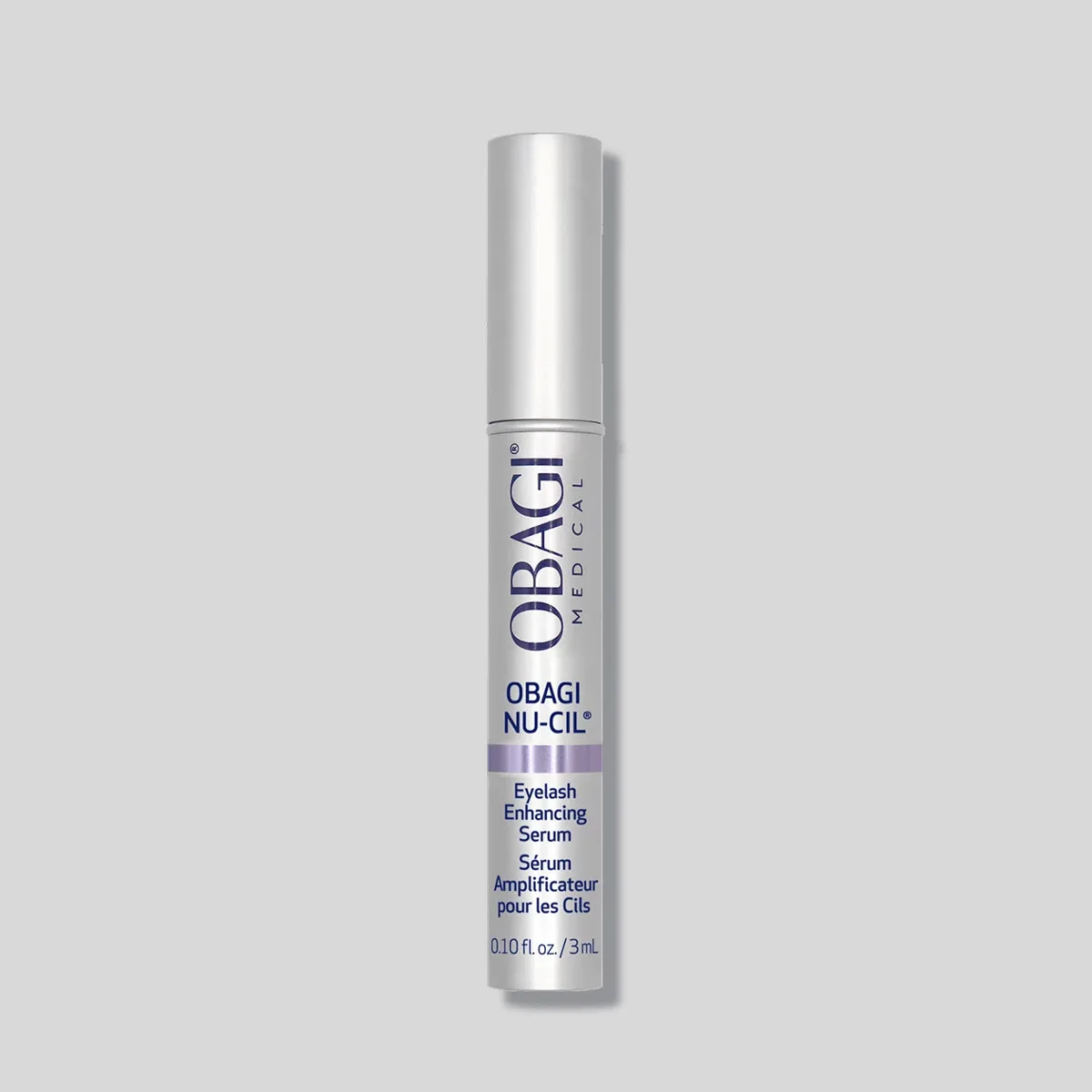
A slim 3 mL silver metallic mascara-style tube with a screw cap and a fine brush applicator in the Nu-Cil livery; the brush is precise and the tube is sized for nightly use over roughly three months, which is also the price's main complaint.
Finish
invisiblefast-absorbing
What to Expect on First Use
The first nights are unremarkable: a cool, slightly alcoholic stroke along the upper lash base, dry in a minute and a half, nothing to see. A minority notice a faint itch or redness at the lid margin in the first week, which is the prostaglandin announcing itself and the cue to apply less; lashes feel softer within two or three weeks. Length and density begin to show around week eight, and it is in the same window that some users first notice the lash-line skin looking a shade darker.
How Long It Lasts
About three months at one stroke per upper lash line nightly; the brand suggests continued use to maintain results.
Prostaglandin analogues made the jump from glaucoma drops to eyelashes when patients on latanoprost and bimatoprost noticed their lashes growing, and a prescription bimatoprost lash treatment followed in 2008; within a few years cosmetic brands were selling over-the-counter serums built on related molecules, isopropyl cloprostenate and then dehydrolatanoprost, that fall outside drug regulation. Obagi entered that market in 2021 with Nu-Cil, ran a sixteen-week double-blinded study against a leading competitor, and has since built the line out to brows and the scalp; the lash serum has gathered nearly three hundred reviews and the class's characteristic split between delighted growth and irritated lids.
About Obagi Legacy Brand (20+ years)
Obagi has been a physician-dispensed brand since dermatologist Zein Obagi founded it in 1988, and Nu-Cil is its lash, brow and scalp line. The Eyelash Enhancing Serum rests on a 2021 sixteen-week double-blinded study that Obagi holds on file without a published subject count, and on the well-documented pharmacology of prostaglandin analogues; it is a cosmetic that works by the same mechanism as a prescription lash drug.
Brand founded: 1988 · Product launched: 2021
Myth vs. Reality
Common Myths
Myth
NouriPlex is a nourishing vitamin complex, so this serum grows lashes without a prostaglandin.
Reality
The NouriPlex quartet is biotin, panthenol, sodium hyaluronate and dehydrolatanoprost, and the last of those is a derivative of the glaucoma drug latanoprost, a prostaglandin analogue of the same class as the prescription lash treatment; the vitamins condition the lash, the prostaglandin grows it, and the side effects that come with the class, lid darkening, redness, dry eye and a small risk of iris change, come with this serum.
Myth
Once lashes have grown, the serum can be stopped and the results kept.
Reality
Prostaglandin analogues extend the growth phase of the lash cycle only while they are applied; when application stops, lashes return to their previous length and density over the following cycles, which is why the brand recommends continued use. The growth is rented, not bought.
FAQ
Frequently Asked Questions
Does the Obagi Nu-Cil Eyelash Enhancing Serum contain a prostaglandin?
Yes. Its second ingredient, dehydrolatanoprost, is a derivative of the glaucoma drug latanoprost and a prostaglandin analogue, the same class as the bimatoprost in the prescription lash treatment; Obagi describes it as a proprietary lipid compound within its NouriPlex technology, but it is the ingredient that makes the serum work and the one that carries the class's side effects.
How does the Obagi Nu-Cil lash serum compare to Latisse?
Both rely on a prostaglandin analogue to lengthen the lash growth phase; the prescription uses bimatoprost 0.03 percent with randomised trial evidence, while Nu-Cil uses dehydrolatanoprost at an undisclosed level with a brand-held sixteen-week study claiming it outperforms a leading competitor by eight weeks. Users report similar growth and similar side effects; the prescription has the better-documented safety record.
What are the side effects of the Obagi Nu-Cil Eyelash Enhancing Serum?
The prostaglandin class's: redness, itching, dryness or watering of the eyes, styes or lid inflammation, darkening of the skin along the lash line, occasional hair growth where the liquid migrates, and a small possibility of permanent iris darkening in light-coloured eyes, which is documented for prostaglandin eye drops; most users experience none or mild versions, and stopping usually reverses the skin changes.
How long does the Obagi Nu-Cil lash serum take to work?
Lashes feel softer within two to three weeks from the conditioners; length and density from the prostaglandin appear at about eight weeks, where the brand's study places its first visible results, and continue building to sixteen weeks and beyond with nightly use. Results reverse over a couple of lash cycles if application stops.
Can I use the Obagi Nu-Cil lash serum while pregnant or with glaucoma drops?
Best not. Prostaglandin analogues are avoided in pregnancy as a precaution, and anyone using latanoprost, bimatoprost or similar drops for glaucoma or eye pressure should not add a topical prostaglandin near the eye without an ophthalmologist's approval, since the serum can affect intraocular pressure and confuse treatment.
How long does a tube of the Obagi Nu-Cil Eyelash Enhancing Serum last?
About three months at the labelled single nightly stroke along each upper lash line, which at one hundred and twenty-five dollars for three millilitres works out to roughly forty dollars a month and is the most common complaint in its reviews after irritation.
Reviews
What Reviewers Tend to Say
Recurring themes our editors read across retailer reviews of this product — summaries in our words, not quotations, and not a substitute for your own patch test.
Common Praise
Noticeably longer, thicker lashes by two months
Works as well as the prescription for many users
Dries fast and sits under mascara
Precise brush for the lash line
Density keeps building past sixteen weeks
Common Complaints
Red, itchy or dry eyes for some
Darkening of the lid skin along the lash line
One hundred and twenty-five dollars for three millilitres
Brand does not say plainly that it is a prostaglandin
Formaldehyde cross-links nail keratin into something genuinely harder — and then brittler, and then shattering — which is why the product that fixed the problem sells best to the people it created.
It's in half your products and headlines none of them. Provitamin B5 has the kind of boring, decades-deep barrier and wound-healing evidence that flashier actives can only envy.
IPL is a filtered flashlamp, a true vascular laser is one wavelength aimed at haemoglobin, and the choice between them turns on a distinction almost no consult makes: whether your redness is vessels or a state.
Products, answers, therapy guides, tools and articles in one search. Brand names,
slang and abbreviations all work — accutane finds isotretinoin, bacne finds truncal acne.