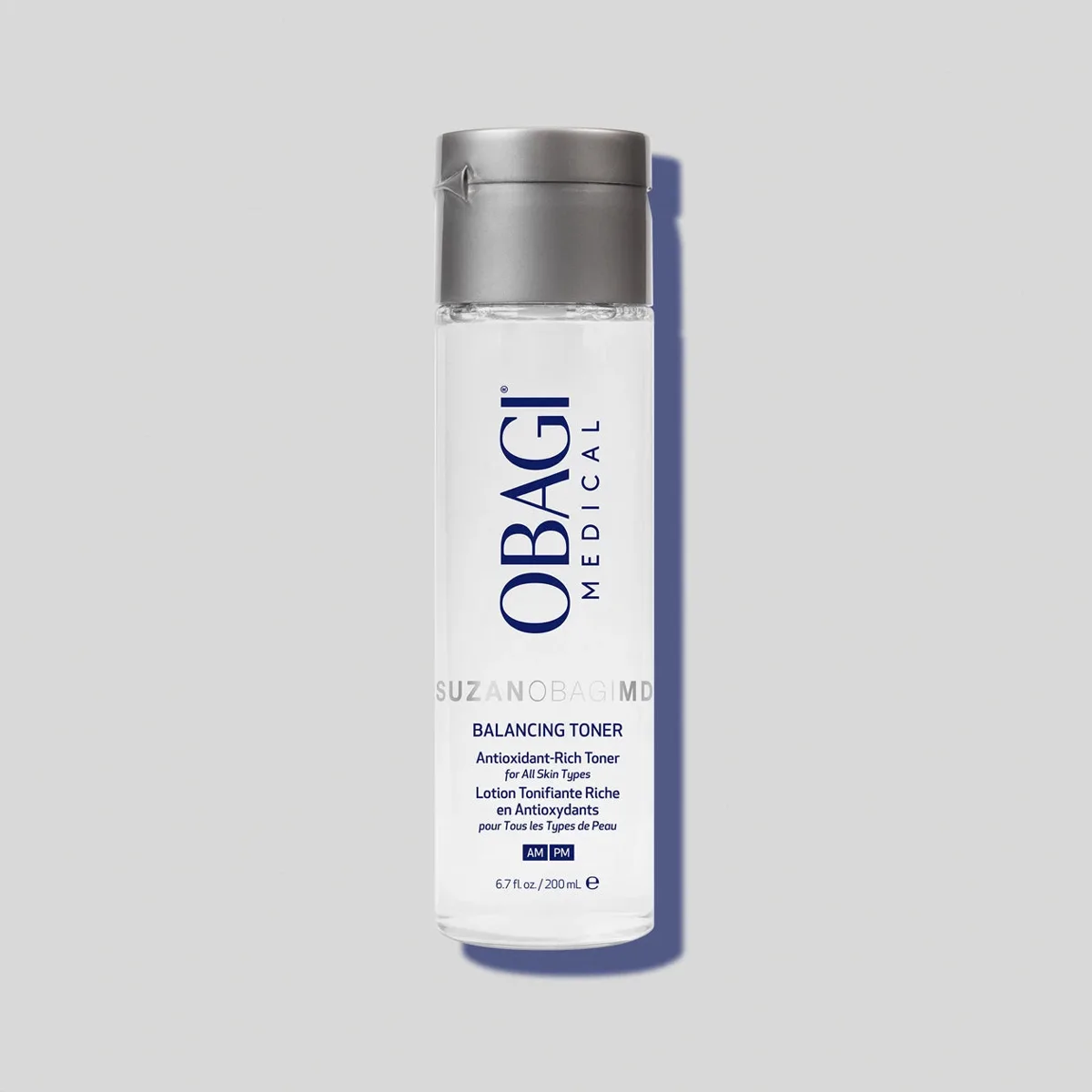
It takes the old drugstore witch hazel toner and rebuilds it for reactive skin: a distillate rather than an alcohol extract, glycerin and sodium PCA to hydrate, licorice and panthenol to calm, and a flip-cap bottle instead of a pharmacy jug, from a dermatology-office brand's sensitive-skin line. The idea is not new; the execution is gentler and the price is higher than the idea usually commands.
A gentle, alcohol-free witch hazel toner done properly, with glycerin, sodium PCA, licorice and panthenol turning an astringent into something combination and reactive skin can use twice a day. It refreshes, lightly hydrates and takes the shine down for a few hours, which is all a toner can honestly do; the grapefruit oil is an odd choice for a hypoallergenic line, and fifty dollars is a physician-shelf price for a drugstore idea done well.
Good choicefor DehydrationIn your profileYou chose · Glycerin is a reference standard by mechanism for dehydration; this liquid carries it high in the ingredient list.Moderate evidenceStandard tolerabilityNo reviews collected yet
The case for it
Glycerin has trial-supported standing for this concern.
It is present at an effective concentration, declared or high in the ingredient list.
The formula carries no trigger this concern is sensitive to, with the cautions noted.
Same rule for everyone. “Good choice” is the verdict on 9,564 of 45,024 concern verdicts across the catalog; rule R5 decided 9,072 of them.
As of September 25, 2026, engine 5.1.1.
R5 — Trial-supported or guideline-supported active, adequately or plausibly dosed. · the full register
Carrying active
Glycerin
Standing
supported — its mechanism is established
Form
adequate — studied range 20%, from the trials on the row; needs leave-on contact; judge it after ~1 weeks
Tolerability
standard
Row checked
against its sources on July 17, 2026 (evidence table ev-2026.09-r228)
The studies behind the evidence row
USP glycerin monograph / Fluhr et al., glycerol and the skin (review) — glycerin is the reference humectant, drawing and holding water in the stratum corneum — reference work
Avoidfor SensitivityIn your profileYou chose · This formula carries fragrance — the kind of thing reactive skin flags first.Not yet assessedCarries a triggerNo reviews collected yet
The case for it
Hamamelis Virginiana has no evidence row yet for this concern — it is in the research queue.
The formula carries a known trigger for this concern, which decides the verdict before any efficacy question.
Cautions: known irritants; a declarable fragrance allergen.
What would change this: Removing the trigger named above would let the actives be judged on their own.
Same rule for everyone. “Avoid” is the verdict on 1,909 of 45,024 concern verdicts across the catalog; rule F1 decided 605 of them.
As of September 25, 2026, engine 5.1.1.
Also listed for Excess Oiliness and Large Pores — the actives here (Witch Hazel, Glycerin, Licorice Root Extract, Panthenol (Vitamin B5) are in our research queue for those concerns; there is no verdict until their evidence rows are written. That is a gap in our table, not a mark against the product.
Does the jobDoes what a toner is for: adds something real, not alcohol-driven. Not measured from the label: restores skin pH, plays well with what follows.
A verdict is DermApproved’s assessment of how well a product’s ingredients fit a concern — never a claim about what the product treats. Evidence dots and collected reviews sit beside it and are never blended in.
Rules 0.5.1 · evidence table ev-2026.09-r228 · how we decide
Assessment
Pros & Cons
Pros
✓ Witch hazel distillate with no ethanol, so astringent without drying
✓ Glycerin, sodium PCA and panthenol keep skin soft rather than tight
✓ Licorice glycyrrhizate and aloe give a genuine mild soothing effect
✓ No acids, so it layers under retinoids and vitamin C without conflict
✓ Flip-cap bottle pours cleanly and the 200 mL size lasts months
✓ Paraben-free and free of synthetic fragrance compounds
✓ Consistently well reviewed by long-term users at clinical retailers
Cons
✗ Grapefruit peel oil and limonene in a toner sold as hypoallergenic
✗ Fifty dollars for a concept available at drugstore prices
✗ No active that changes oil production or pores over time
✗ Cotton-pad use runs through the bottle quickly
✗ Brand's own site reviews are lukewarm at 3.9 stars
✗ Older pump packaging is still pictured on some retailer listings
Review
Full Review
Witch hazel has a reputation problem, and it is mostly the alcohol's fault. The pharmacy bottle that generations of teenagers dabbed on their spots is a distillate preserved in fourteen percent ethanol, and the tightness that follows has been blamed on the plant for a hundred years. The SUZANOBAGIMD Balancing Toner, the second step of Obagi's sensitive-skin line since it launched in 2018, keeps the witch hazel water, drops the alcohol entirely, and surrounds the distillate with humectants and soothers, which turns a famously drying product into a mildly astringent, mildly hydrating one. It is not a new idea; several brands have done it at pharmacy prices. What Obagi brings is a dermatology-office sensibility and a fifty-dollar price, and the review is really about whether the first justifies the second.
The formula is water, pentylene glycol and witch hazel water at the top, then glycerin, propanediol and ethoxydiglycol, a preservative-humectant pair of hexanediol and caprylyl glycol, polysorbate to keep the citrus oil dispersed, sodium PCA, dipotassium glycyrrhizate from licorice, panthenol, aloe in two forms, grapefruit peel oil, phenoxyethanol, a biosaccharide gum, bioflavonoids, broccoli extract, benzoic acid and, declared at the end, limonene. No ethanol, no parabens, no synthetic fragrance in the sense the line advertises, though the grapefruit oil is fragrance by any functional definition, and no oils beyond it. It is a hydrating toner with an astringent backbone and a soothing layer, and the ingredient choices are sensible for the combination-and-reactive skin it is sold to.
The witch hazel is doing more than tradition. The distillate carries a fraction of the plant's tannins and volatile compounds, and the best clinical evidence for the plant, a 1998 controlled study in Dermatology, found that a lotion with ten percent hamamelis distillate suppressed UVB-induced erythema by twenty to twenty-seven percent over forty-eight hours, roughly double the effect of its vehicle, which is a real if modest anti-inflammatory action. Combined with licorice-derived glycyrrhizate and panthenol, that gives the toner a fair basis for its calming claim, and the mild astringency of the tannins explains the tightened-pore, less-shiny feel that lasts a few hours. Glycerin, propanediol and sodium PCA make sure that astringency does not read as dryness. None of it changes the skin over months; there is no acid, no niacinamide, nothing that alters oil production or clears a pore, and the honest description of what a toner like this does is that it removes cleanser residue, refreshes, hydrates lightly and soothes, every time, for a while. The pH-balancing language on the label describes a mildly acidic liquid, not a lasting correction, since skin restores its own acidity within an hour of any modern cleanser.
In use it is a small daily pleasure. A splash onto a cotton pad, a sweep across the face and neck, a cool grapefruit-scented moment, and skin that dries in under a minute feeling clean and soft with no film and no sting. Combination and oily faces notice less shine by midday; dry ones notice it does not tighten them. Reviewers at clinical retailers, fifty-odd of them averaging around 4.7 at one, describe exactly that and tend to have used it for years; the brand's own site is cooler, at 3.9 across a dozen reviews, with the recurring complaint that it is hard to tell the difference from skipping the step, which is a fair thing to say about most toners and this one.
The formulation choice that deserves a raised eyebrow is the grapefruit oil. A line whose selling point is hypoallergenic, dermatologist-tested gentleness has put a citrus peel oil, and therefore limonene, in a toner that touches the whole face twice a day; limonene is the most frequent fragrance allergen on patch-test panels, and its oxidation products are the actual sensitisers, which is a problem for an ingredient sitting in a water-based product opened daily for months. Most users will never react. A reactive minority, exactly the people SUZANOBAGIMD exists for, may, and the line would be more honest without it; a patch test along the jaw for a few days is a sensible precaution for anyone with a fragrance history, and the bottle is best kept closed and out of the light to slow the oil's oxidation.
At fifty dollars for 200 millilitres the toner is not outrageous per millilitre, and the bottle lasts about three months on a pad or longer pressed into the palms; the yearly cost is modest. The trouble is what it is being compared to, because alcohol-free witch hazel toners with glycerin and aloe exist at a fifth of the price and do the same job, and the extra is buying Obagi's channel and a tidier formulation rather than a different result. For a patient whose dermatologist has put them on the SUZANOBAGIMD system, it is a reasonable, pleasant part of the set. For anyone else, it is a well-made version of something they can find cheaply, with a citrus oil they may prefer to avoid.
Formula
Key Ingredients
The hero actives that drive this product's performance.
Third on the list, a witch hazel distillate rather than an alcohol extract, which is the distinction that makes this toner usable on sensitive skin: the distillate keeps the mild astringent and anti-inflammatory tannin fraction and drops the drying ethanol, so it tightens pores and calms redness without the sting that gives witch hazel its bad name.
Fourth, with propanediol, sodium PCA and panthenol behind it, glycerin supplies the humectant counterweight that turns an astringent into a hydrating toner; it is why the skin feels soft rather than tight after the cotton pad, and why the toner can be used twice daily by dry and reactive faces.
Established mechanismfor Dehydration · established mechanism
The licorice-derived anti-inflammatory that carries the toner's redness claim, placed above panthenol and the aloe; it is a well-tolerated soothing agent that pairs with the witch hazel tannins to calm skin after cleansing, and it is the one ingredient here chosen for sensitivity rather than oil control.
Provitamin B5, mid-list, adds a soothing humectant note and a little barrier support that the witch hazel alone would lack; with aloe leaf juice and extract beside it, it is what lets the toner read as comforting on skin that is being treated with acids or retinoids elsewhere in the routine.
Established mechanismfor Dehydration · established mechanism
The scent, and the formula's one questionable choice for a hypoallergenic line: grapefruit peel oil supplies the fresh citrus smell and the limonene declared at the end of the list, which is the most common fragrance allergen on patch-test panels and the ingredient reactive users should weigh before buying a toner sold for sensitive skin.
Not yet assessed
Ingredient standings describe the active at treatment-level doses and
vehicles; this product's own condition grades weigh its actual formula.
Sweep a coin-sized pool over the face and neck on a cotton pad straight after cleansing, morning and evening, and let it dry before serum; it carries no acid, so it fits under retinoids, vitamin C and exfoliants without adding to the load, and it can replace a hydrating mist for combination skin. Skip it on the days a leave-on acid toner is used, since two toners is one too many.
Results Timeline
Skin feels clean, cool and slightly tightened the moment it dries, and the effect is per-use rather than cumulative: oil control and pore appearance improve modestly with twice-daily use over a couple of weeks, redness after cleansing settles faster, and there is no active that changes the skin over months.
A toner's claims are modest by nature, and this one's rest on three familiar ingredients. Witch hazel water is a steam distillate of Hamamelis virginiana bark and leaves, which carries volatile compounds and a small tannin fraction without the alcohol that pharmacy extracts use as a preservative; the tannins are mild astringents that transiently contract the superficial skin and reduce sebum on the surface, and the plant has anti-inflammatory activity that has been tested in at least one controlled setting. A 1998 study in Dermatology by Hughes-Formella and colleagues applied an after-sun lotion containing ten percent hamamelis distillate, its vehicle and a comparator to UVB-irradiated skin in thirty volunteers, measuring erythema by chromametry and visual score at seven, twenty-four and forty-eight hours; the hamamelis lotion suppressed erythema by around twenty to twenty-seven percent against eleven to fifteen percent for the other lotions, a statistically significant difference that the authors took as evidence of a non-steroidal anti-inflammatory effect. That study concerned a leave-on lotion at a defined concentration, and a toner that dries in a minute at an undisclosed level delivers a fraction of that; the relevant translation is a mild calming effect on skin freshly stripped by cleansing, not a treatment for inflammation.
The hydrating and soothing layer is conventional and well grounded. Glycerin, propanediol and sodium PCA are humectants that increase stratum corneum water content and offset the drying effect of any astringent; panthenol adds humectancy and modest barrier support; dipotassium glycyrrhizate, the salt of licorice's glycyrrhizic acid, inhibits inflammatory mediators in skin and is a standard anti-redness ingredient in sensitive-skin formulas; aloe contributes polysaccharides with mild soothing and hydrating effects. Bioflavonoids and broccoli extract are antioxidant gestures at low concentration. The formula's tolerability question is the grapefruit peel oil, which supplies limonene, a monoterpene that autoxidises on exposure to air into hydroperoxides responsible for most limonene contact allergy; in a water-based product dispensed over months, that oxidation is plausible, and its inclusion in a hypoallergenic line is a formulation compromise between scent and the stated audience. There is no exfoliating or sebum-regulating active, and the pH-balancing claim reflects a mildly acidic formula rather than any lasting effect on the skin's own acidity, which recovers within an hour of cleansing on its own.
Toners occupy an ambivalent place in clinical advice: dermatologists rarely prescribe them, since modern cleansers leave the skin's pH close to normal and it corrects itself within an hour regardless, but many are relaxed about a gentle, alcohol-free one for patients who like the step, particularly on oily and combination skin where a mild astringent and a pad help with residue and midday shine. On that basis this toner is the kind clinicians tolerate and sometimes suggest, because the witch hazel is a distillate rather than an alcohol extract and the formula adds humectants and licorice rather than stripping. The reservations are the ones that come up whenever a sensitive-skin product carries a citrus oil: limonene is among the most frequent positives on fragrance patch-test series, and practices treating rosacea, atopic and contact-allergic patients generally recommend fragrance-free toners or none, which this product, despite its hypoallergenic label, is not. For patients dispensed the SUZANOBAGIMD system it is regarded as an unobjectionable step; for those with a fragrance history it is usually swapped out.
Guidance
Usage & Recommendations
How to Use
After cleansing, morning and evening, tip a small amount, about a coin-sized pool, onto a cotton pad and sweep it gently across the face and neck, avoiding the eye area, or pour a little into the palms and pat over the skin to make the bottle last longer. Let it dry for under a minute before applying serum, retinoid or moisturiser; there is nothing in it that conflicts with acids, vitamin C or retinoids, though it is redundant on days a leave-on acid toner is used. Anyone with a citrus or fragrance sensitivity should patch-test along the jawline for a few days before using it across the face, and the bottle should be kept closed and away from sunlight to slow oxidation of the grapefruit oil.
Value Assessment
Fifty dollars for 200 millilitres is a dermatology-office price for a witch hazel toner, and the value depends on how it is used: on a cotton pad twice daily the bottle lasts about three months, pressed into the palms nearer five, so the yearly outlay is not large either way. What the money buys is a well-composed alcohol-free formula with hydration and soothing built in, a generous bottle, and the coherence of the SUZANOBAGIMD system for patients on it, from a legacy physician brand whose credibility rests on its other lines. What it does not buy is a result unavailable elsewhere, since alcohol-free witch hazel toners with glycerin and aloe are a drugstore staple at a fifth of the price, and the grapefruit oil is a minus rather than a premium feature for the audience the line targets. Fair for a system user, poor as a standalone purchase.
Who Should Buy
Combination, normal and mildly oily skin that likes a refreshing toning step after cleansing and wants it alcohol-free, with light hydration and soothing rather than exfoliation; and patients on the SUZANOBAGIMD system who want the matching second step. It suits people who find traditional witch hazel too drying but like its clean, tightened feel, and who are untroubled by a light citrus scent.
Who Should Skip
Anyone with a known fragrance or citrus allergy, rosacea or atopic skin should choose a fragrance-free toner despite the hypoallergenic label, because the grapefruit oil and limonene are exactly what those faces react to. Those wanting a toner that actually changes oil production, pores or texture need an acid or niacinamide product instead, and anyone counting cost can find the same alcohol-free witch hazel idea at a fraction of the price.
A clear, water-thin liquid with the barest slip from the glycols, that sweeps across the skin on a cotton pad, feels cool for a few seconds and dries in under a minute to a clean, soft, faintly tightened finish with no film.
Scent
A light, fresh grapefruit note from the peel oil, noticeable as the pad passes and gone once the toner dries; not unscented.
Packaging
A 200 mL clear plastic bottle with a silver flip-top cap in the refreshed SUZANOBAGIMD livery, replacing the older pump pack; it pours a controlled amount onto a pad, shows how much is left, and the generous size suits twice-daily use.
Finish
mattelightweightfast-absorbing
What to Expect on First Use
The first sweep is exactly what a toner should feel like and rarely does: cool, refreshing, faintly grapefruit-scented, and finished within a minute with skin that feels clean and soft rather than squeaky or tight. There is no sting even on freshly cleansed sensitive skin, no residue, and nothing to adjust to; the only thing to watch is whether the citrus note bothers a reactive face over the first week, since limonene sensitivity announces itself as redness along the cheeks.
How Long It Lasts
About three months at a splash twice daily on a cotton pad; four to five months if pressed into the palms instead.
SUZANOBAGIMD launched in 2018 as Obagi's answer to a recurring problem in its own offices, patients whose skin could not tolerate the brand's flagship Nu-Derm and CLENZIderm systems, and it was built under the name of dermatologist Suzan Obagi around hypoallergenic, paraben-free, synthetic-fragrance-free formulas. The Balancing Toner was the line's second step from the start, positioned between its foaming cleanser and its serums, and has changed only in packaging since, moving to the grey pack when Obagi refreshed the line in 2025.
About Obagi Legacy Brand (20+ years)
Obagi has been a physician-dispensed brand since 1988, and SUZANOBAGIMD is its gentler sub-line, launched in 2018 under the name of Suzan Obagi, a dermatologist and cosmetic surgeon, for patients too reactive for the flagship Nu-Derm system. The line is dermatologist-tested and hypoallergenic by the brand's account but publishes no trials of its products, and this toner is assessed on its label and the literature for its botanicals.
Brand founded: 1988 · Product launched: 2018
Myth vs. Reality
Common Myths
Myth
Witch hazel toners strip and dry the skin.
Reality
The witch hazel that earned that reputation is the pharmacy extract preserved in fourteen percent alcohol; this toner uses a witch hazel water distillate with no ethanol in the formula, so the mild tannin astringency remains while the drying does not, and glycerin, sodium PCA and panthenol pull the balance toward hydration.
Myth
A pH-balancing toner is necessary after every cleanser.
Reality
Modern low-pH cleansers leave the skin close to its own acidity and it recovers on its own within an hour regardless; the honest case for this toner is that it feels refreshing, adds light hydration and soothing, and removes cleanser residue on a pad, not that the skin would be unbalanced without it.
FAQ
Frequently Asked Questions
Does the Obagi SUZANOBAGIMD Balancing Toner contain alcohol?
No ethanol or denatured alcohol; it is built on a witch hazel water distillate rather than the alcohol-preserved pharmacy extract, with glycols and glycerin for hydration, which is why it refreshes without the sting or tightness of a traditional witch hazel toner.
Is the Obagi Balancing Toner safe for sensitive skin?
Mostly. It is alcohol-free, paraben-free and built around licorice, panthenol and aloe for soothing, but it contains grapefruit peel oil and declares limonene, a common fragrance allergen, so anyone with a citrus or fragrance sensitivity should patch-test along the jaw first despite the hypoallergenic label.
What is the difference between Obagi's Balancing Toner and the C-Balancing Toner?
The SUZANOBAGIMD Balancing Toner is the gentle, alcohol-free witch hazel toner for sensitive and combination skin; the Obagi-C C-Balancing Toner belongs to the vitamin C line and is aimed at normal-to-oily skin as a pH-adjusting prep for the C-serums. Choose by which Obagi system the rest of the routine comes from.
How do I use the Obagi Balancing Toner?
After cleansing, pour a small amount onto a cotton pad and sweep it over the face and neck, avoiding the eyes, then let it dry before serum and moisturiser; use morning and evening. Pressing it into the palms instead of using a pad stretches the bottle considerably.
Does the Obagi Balancing Toner help oily skin and large pores?
Modestly. The witch hazel distillate has a mild astringent effect that tightens the look of pores and cuts surface oil for a few hours, and the pad removes cleanser residue; it contains no salicylic acid or niacinamide, so it does not change oil production or clear clogged pores over time.
Can the Obagi Balancing Toner be used with retinol or vitamin C?
Yes, it has no acids or actives that conflict, so it sits under a retinoid at night and under vitamin C in the morning as a hydrating, soothing prep; its licorice and panthenol may even take the edge off retinoid irritation in the first weeks.
Reviews
What Reviewers Tend to Say
Recurring themes our editors read across retailer reviews of this product — summaries in our words, not quotations, and not a substitute for your own patch test.
Common Praise
Refreshing without any sting or tightness
Skin feels balanced and less oily by midday
Generous 200 mL bottle for face and neck
Gentle enough for reactive skin after cleansing
Light citrus scent that fades quickly
Common Complaints
Fifty dollars for a witch hazel toner
Grapefruit oil and limonene in a sensitive-skin product
The supplier specification for standard witch hazel water caps the tannin content — the fraction all the research is about — at a level indistinguishable from none. The tightness you feel is the solvent.
The fourth most frequent positive patch test in North America is an oxidation product of a molecule that occurs naturally in lavender. Nobody synthesised it into your face cream.
Essential oils are declared by botanical name rather than as fragrance, which is why the most heavily perfumed products in the natural aisle can carry the reassuring word — and why the bottle gets more sensitising the longer you own it.
The cheapest humectant on the ingredient list is also the best-studied, the most reliable in dry air, and the one your favorite moisturizer is quietly built around.
Jan 21, 2026· 6 min
Questions people ask about sensitive skin
Verified answers from our questions library — the nuance a product page cannot carry.
Products, answers, therapy guides, tools and articles in one search. Brand names,
slang and abbreviations all work — accutane finds isotretinoin, bacne finds truncal acne.