Silicones Don't Suffocate Your Skin — We Literally Put Them on Healing Wounds
Clean-beauty marketing cast silicones as pore-clogging plastic wrap for your face. The chemistry — and the scar clinic — say almost the exact opposite.
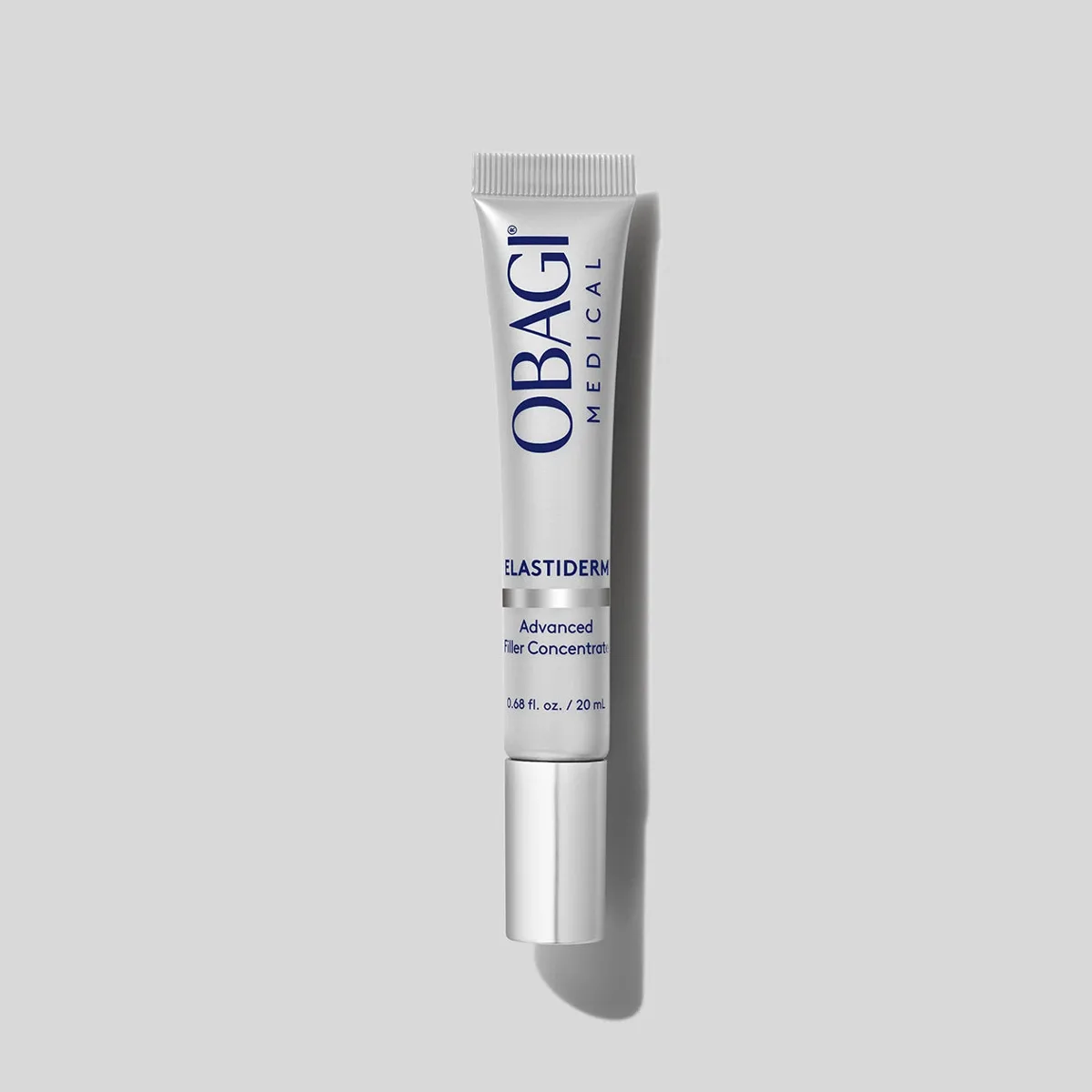
It is an optical filler done with unusual precision: a hard angled tip that lays a cellulose-and-silicone-elastomer film exactly into a line, in a fragrance-free humectant base gentle enough for the lip and eye area, from a physician-dispensed brand rather than a makeup house. The peptide on the label is the least important part; the applicator and the film are the product.
A precise, gentle, fragrance-free line blurrer that does what a very good silicone primer does, exactly where you put it, and nothing more: cellulose and elastomer scatter light out of a crease within a minute, humectants plump it for a few hours, and the cleanse takes it all away. The peptide on the label is a melanocortin mimic with little wrinkle evidence, and one hundred and twenty dollars for twenty millilitres is a physician-brand price for optics.
The product has been on sale for about eighteen months with roughly a hundred reviews on Obagi's site and a handful more at clinical retailers, and every efficacy figure it quotes comes from 2024 usage tests the brand holds on file without published subject counts or methods. The assessment relies on that modest feedback, on the well-characterised behaviour of cellulose and silicone elastomer films, and on the peptide literature, which describes acetyl hexapeptide-1's actions as soothing and pigment-related; how the product performs across ages and skin types over a year, and what if anything the peptide contributes, are not documented.
The case for it
What would change this: A declared concentration would move this to a firmer reading of the dose.
Same rule for everyone. “Promising” is the verdict on 7,858 of 45,024 concern verdicts across the catalog; rule R9p decided 7,858 of them. As of September 25, 2026, engine 5.1.1.
Brand or formulator? Disclose a concentration or correct a fact →
The studies behind the evidence row
The case for it
Same rule for everyone. “Good choice” is the verdict on 9,564 of 45,024 concern verdicts across the catalog; rule R5 decided 9,072 of them. As of September 25, 2026, engine 5.1.1.
Brand or formulator? Disclose a concentration or correct a fact →
The studies behind the evidence row
Where our review and the verdict differ. The review below was written on the formulation and the published trials; the verdicts above apply the stricter standing test in our methodology — an active earns a recommendation only with guideline or regulatory standing for the concern. Where the two disagree, the verdict is DermApproved’s position.
A verdict is DermApproved’s assessment of how well a product’s ingredients fit a concern — never a claim about what the product treats. Evidence dots and collected reviews sit beside it and are never blended in. Rules 0.5.1 · evidence table ev-2026.09-r228 · how we decide
The phrase on the box is 'inspired by popular needle-based procedures', which is a careful sentence, and the ingredient list rewards reading it carefully. Obagi's ELASTIderm Advanced Filler Concentrate, launched in 2024 as the line's first face-wide product, is a twenty-millilitre tube with a hard angled tip that lays a stroke of white cream directly into a wrinkle. Within a minute the line looks softer. That much is true, repeatable and, at least for fine expression lines and the little vertical lines above the lip, quite satisfying. What is doing it is eighth and ninth on the label: microcrystalline cellulose and a dimethicone/vinyl dimethicone crosspolymer, which is to say a light-scattering particle and a silicone elastomer, the two ingredients that have been the basis of every soft-focus primer for twenty years.
The rest of the formula supports that film well. Water, dimethicone and glycerin lead, with coco-caprylate for slip and pentylene glycol and diglycerin extending the humectant load; glyceryl stearate and cetearyl alcohol build the cream, shea butter and olive-derived esters give a small emollient phase so the film does not feel chalky on crepey skin, an acrylate copolymer and carbomer set the texture, chlorphenesin and caprylyl glycol preserve, beta-glucan sits in as a soothing gesture, and the peptide the product is named for, acetyl hexapeptide-1, is the twenty-third and last ingredient. No fragrance, no alcohol, no dyes, and a preservative choice mild enough for the lip and eye area. It is a clean, well-behaved formula for what it is.
The peptide deserves a careful paragraph because the name invites a misunderstanding. Acetyl hexapeptide-8, better known by its trade name and marketed for a decade as a topical alternative to muscle-relaxing injections, has a body of permeability and small efficacy studies behind it, and a 2025 review in the International Journal of Molecular Sciences went through that literature in detail, concluding that the evidence for wrinkle reduction is modest and constrained by how poorly the peptide crosses the stratum corneum. That is the peptide most buyers will think of when they see 'hexapeptide' on a wrinkle filler. This product does not contain it. Acetyl hexapeptide-1 is a different molecule, a mimic of the melanocortin hormone alpha-MSH, documented mainly for calming redness, supporting pigmentation and protecting against UV-related damage; Obagi calls it biomimetic and wrinkle-smoothing, and the supplier literature does not support the second half of that. At the tail of the list, in a product whose visible effect is fully explained by cellulose and silicone, it is a name on the box rather than a mechanism.
What the product actually delivers is worth describing plainly, because it is good at it. The tip is genuinely precise, better than a fingertip for tracing the elevens or the lines that fan from the outer eye, and the cream sets in about a minute to a velvety, matte, powdery film that takes foundation without changing its colour. Lines look blurred, skin over them feels smooth, and the brand's single-application tests reporting a large improvement in surface roughness are consistent with that. Over the following hours the glycerin and diglycerin draw water into the top layer, which is the plausible source of the 'maximum results at eight hours' claim, and by the evening cleanse everything is gone. Eight weeks in, most of Obagi's panel felt lines looked blurred and skin smoother, which is what happens when someone applies a well-made optical filler twice a day for eight weeks and looks in the mirror; it is not evidence that the wrinkle has changed. The hundred-odd reviews on Obagi's site, at 4.2 stars, say much the same in two voices: delighted at how lip lines and crow's feet soften under makeup, and disappointed that nothing lasts past washing and that deeper folds are untouched.
The practical limits are those of any elastomer film. Over-apply and it rolls into little balls under foundation or sunscreen, so the dose is a thin stroke, tapped in, with a full minute to set and a patting hand for whatever goes on top. It does nothing for etched, deep wrinkles or for volume loss, which is what people who actually want filler tend to have. The shea butter and silicone film make it a poor choice over active breakouts. And the tube is small: twenty millilitres, two to three months if four or five areas are treated twice daily.
Which brings the price. One hundred and twenty dollars for twenty millilitres is roughly six dollars a millilitre for a formula whose working parts are found in silicone primers at a fraction of that, and the physician-dispensed pedigree, real as Obagi's is in other lines, does not change what cellulose and elastomer do. The applicator is the one thing here that is hard to buy elsewhere at any price, and for someone who wants precise, fragrance-free line blurring around the mouth and eyes and does not want to fuss with a primer, that precision has value. For anyone hoping the word filler means what it means in a clinic, it does not.
This is a good product for fine expression lines, lip lines and crow's feet on someone who wants them softened under makeup for a day and appreciates exact placement and a gentle formula. It is not a treatment, not a substitute for a retinoid, and not a reason to skip the consultation for anyone whose lines are structural. Bought with clear eyes, it is a very well-made primer in a very small, very expensive tube.
The hero actives that drive this product's performance.
| Ingredient | Function | Evidence |
|---|---|---|
| Microcrystalline Cellulose | Eighth on the list and the real filler: fine cellulose particles that settle into the groove of a line and scatter light, so the crease reads shallower the moment the cream dries. With the silicone elastomer beside it, this is what produces the instant blurring the brand measured after one application, and it washes off with the evening cleanse. | Not yet assessed |
| Dimethicone/Vinyl Dimethicone Crosspolymer | A silicone elastomer powder that spreads into a soft-focus film over the skin's surface, holding the cellulose in place and giving the cream its velvety, primer-like set; it is the optical half of the filling effect and the reason makeup goes on smoothly over it. | Not yet assessed |
| Acetyl Hexapeptide-1 | The peptide the marketing rests on, and the last ingredient on the list; acetyl hexapeptide-1 is a melanocortin-receptor mimic best documented for soothing and pigment-related effects rather than wrinkles, and it is not the hexapeptide-8 whose wrinkle data most buyers will have heard of. Its position and its literature make it a supporting claim, not the mechanism. | Limited for Aging |
| Glycerin | Third on the list with diglycerin and pentylene glycol behind it, the humectant trio plumps the top layer of the skin with water over the hours after application, which is the plausible source of the eight-hour 'maximum results' the brand describes and the closest thing here to a filling effect that is not optical. | Established mechanism for Dehydration · established mechanism |
| Butyrospermum Parkii (Shea) Butter | With olive-derived stearyl esters and medium-chain triglycerides, shea gives the concentrate a small emollient phase that keeps the silicone-and-cellulose film from feeling dry or chalky on crepey skin around the mouth and eyes; it also means the product is less suited to acne-prone areas. | Not yet assessed |
Ingredient standings describe the active at treatment-level doses and vehicles; this product's own condition grades weigh its actual formula.
Aqua/Water/Eau, Dimethicone, Glycerin, Coco-Caprylate/Caprate, Pentylene Glycol, Diglycerin, Glyceryl Stearate SE, Microcrystalline Cellulose, Dimethicone/Vinyl Dimethicone Crosspolymer, Butyrospermum Parkii (Shea) Butter, C10-18 Triglycerides, Hydrogenated Olive Oil Stearyl Esters, Hydroxyethyl Acrylate/Sodium Acryloyldimethyl Taurate Copolymer, Cetearyl Alcohol, Chlorphenesin, Carbomer, Trisodium Ethylenediamine Disuccinate, Beta-Glucan, Caprylyl Glycol, Sodium Hydroxide, Polysorbate 60, Sorbitan Isostearate, Acetyl Hexapeptide-1
treatment
AM & PM
Apply a thin stroke from the precision tip directly into the lines that bother you, forehead, elevens, crow's feet, smile and lip lines, after serum and moisturiser have absorbed and let it set for a minute before sunscreen or makeup; it behaves like a targeted primer, so anything heavy layered over it can roll. At night it goes over a retinoid rather than under it.
The blurring is immediate: lines look softer within a minute as the film sets, and the brand reports peak smoothing about eight hours later as the humectants plump the surface. The effect resets with every wash. Over eight weeks most of the brand's panel felt lines looked blurred and skin smoother, which describes cumulative hydration and consistent optical filling rather than a change in the wrinkle itself.
The mechanism of this product is optical and physical, and it is well understood from the primer and 'blurring' literature that makeup science has built over two decades. Microcrystalline cellulose is a micron-scale particle that settles into surface irregularities and scatters incident light diffusely, so a groove that would cast a shadow reads as flatter; a dimethicone/vinyl dimethicone crosspolymer is a silicone elastomer that spreads into a thin, flexible, matte film holding those particles in place and smoothing the micro-texture of the skin surface. Together they produce an immediate, measurable reduction in apparent roughness, consistent with the single-application figures Obagi reports, and the effect persists until the film is removed by cleansing. The humectant fraction, glycerin, diglycerin and pentylene glycol, hydrates the stratum corneum over several hours, increasing its thickness and turgor slightly, which is the plausible basis for a peak smoothing effect some hours after application and for the cumulative impression of smoother skin with twice-daily use. None of these mechanisms alters dermal collagen or the depth of a wrinkle.
The peptide claim requires disentangling two molecules. Acetyl hexapeptide-8 is the peptide with a wrinkle literature: a 2025 review in the International Journal of Molecular Sciences surveyed its permeability and efficacy data and found that although it is designed to interfere with the SNARE complex involved in muscle contraction, its large, hydrophilic structure crosses the stratum corneum poorly, and the clinical reductions in wrinkle depth reported in small trials are modest and inconsistent. This product contains acetyl hexapeptide-1, a structurally distinct peptide that mimics alpha-melanocyte-stimulating hormone at the melanocortin-1 receptor; its documented cosmetic actions, from supplier and small clinical studies, concern reducing erythema and inflammatory response, supporting melanin production and protecting against UV-induced damage, with a reported trial in vitiligo. There is no published evidence that acetyl hexapeptide-1 fills or relaxes wrinkles, and at the last position on the ingredient list its concentration is presumably very low. Beta-glucan and shea butter contribute mild soothing and emollient effects that support tolerability around the eyes and mouth. The formula's evidence base is therefore solid for what it visibly does and absent for the peptide the marketing leads with.
Clinicians who inject filler tend to regard topical 'filler' products with a mixture of tolerance and precision about language: they are cosmetic blurring agents, useful for softening fine lines under makeup, and they have no relationship to the volume restoration that a hyaluronic acid injectable provides. In that role a product like this is regarded as harmless and sometimes helpful, particularly for the fine vertical lines above the lip and the crow's feet, where a fragrance-free film applied precisely can make a visible difference for a day. The clinical caveats are about expectations rather than safety. Patients are usually told that nothing topical fills an etched wrinkle or a fold from volume loss, that a retinoid remains the only over-the-counter category with evidence for changing wrinkle depth over months, and that a blurring cream is best understood as makeup with a good applicator. The peptide naming is a recurring point of confusion in clinic, since patients conflate this hexapeptide-1 with the hexapeptide-8 they have read about; the honest framing is that neither has strong wrinkle evidence and that this one has essentially none. Sensitive and mature skin tolerate the formula well, and it is generally kept off acne-prone areas.
After cleansing, serum and moisturiser have absorbed, uncap the tube and draw a thin line of cream directly along the wrinkle from the angled tip, forehead lines, the frown lines between the brows, crow's feet, smile lines or the fine lines above the lip. Tap it in gently with a fingertip rather than rubbing, and wait a full minute for the film to set matte before applying sunscreen or foundation with a patting motion. Use morning and evening; at night it goes on after a retinoid and moisturiser rather than beneath them. Less is more, since a heavy stroke rolls into balls under makeup, and it should be kept off active breakouts. Cleanse it off fully at the end of the day.
One hundred and twenty dollars for twenty millilitres, with no larger size, works out to about six dollars a millilitre for a formula whose visible effect comes from microcrystalline cellulose and a silicone elastomer, the same chemistry found in blurring primers at a tenth of the price. A tube lasts two to three months when four or five areas are treated twice daily, so the annual cost sits well over four hundred dollars for an effect that is removed nightly. What the premium buys is the precision applicator, which is genuinely better than a fingertip for individual lines, a fragrance-free formula gentle enough for the lip and eye area, and Obagi's physician-dispensed name, which carries real weight in its vitamin C and Nu-Derm lines and less here, where the brand's usage tests are unpublished and the headline peptide has no wrinkle evidence. For someone who wants exact, gentle line blurring and values the tip, it is an indulgence that works; as a treatment for wrinkles it is poor value by any measure.
People with fine expression lines, lip lines or crow's feet who want them softened under makeup for the day, appreciate a precise applicator, and need a fragrance-free formula gentle enough for the eye and mouth area. It suits Obagi loyalists completing an ELASTIderm routine and anyone who has liked silicone blurring primers and wants one aimed with a tip.
Anyone expecting a topical to fill deep wrinkles, folds or volume loss will be disappointed, as will anyone who wanted the wrinkle-relaxing peptide the name suggests, since it is not in the formula. Breakout-prone skin should keep the shea-and-silicone film away from the T-zone, heavy-foundation wearers may fight pilling, and value-minded buyers will find the same optics in a primer for far less.
Ready to try Obagi Advanced Filler Concentrate?
Buy at Amazon ♥A soft, white, slightly matte cream with a velvety silicone slip that spreads thinly from the pointed tip, sets within a minute to a smooth, powdery-dry film with no shine, and feels like a light primer on the skin.
Unscented; a faint neutral cream smell with no added fragrance.
A slim 20 mL silver metallic tube with a long silver screw cap over a hard, angled precision tip for tracing individual lines, in the ELASTIderm livery; the tip is exact and hygienic, though the small volume makes the price feel steep in the hand.
Trace the tip along a line, tap the cream in with a fingertip, and within a minute the crease reads softer and the skin over it feels smooth and slightly powdery, the same sensation as a good silicone primer. There is no tingle or warmth and nothing for reactive skin to react to; the only learning curve is dose, since too much rolls into little balls under foundation. By evening the line looks about as it did that morning before application, which is the honest signal that the effect is a film rather than a change.
About two to three months using a thin stroke on four or five areas twice daily; four months for a single area.
All Year
Obagi built its ELASTIderm line around a bi-mineral complex in eye and neck products, and in 2024 extended it with a topical filler pitched openly as inspired by injectables for people who want the look without the needle. It has picked up a couple of trade awards since, sells through dermatology practices and clinical-skincare sites, and was joined by the ELASTIderm Lift Up & Sculpt moisturiser in 2025 as the range moved from eyes and neck to the whole face.
Obagi has been a physician-dispensed brand since dermatologist Zein Obagi founded it in 1988, with a genuine record of clinical studies behind its Nu-Derm and vitamin C lines. The ELASTIderm range this filler belongs to relies on brand-run usage tests kept on file rather than peer-reviewed publication, so its claims are evaluated against the general peptide and film-former literature.
A topical filler concentrate fills wrinkles the way an injectable filler does.
An injectable adds volume beneath the skin; this cream lays cellulose particles and a silicone elastomer film into the groove of a line so it scatters light and looks shallower, and plumps the surface with humectants for a few hours. The effect is optical and temporary, gone with the evening cleanse, and it does not alter the wrinkle itself.
The peptide in this product is the same wrinkle-relaxing peptide found in other 'topical Botox' creams.
Those creams use acetyl hexapeptide-8, which has a body of permeability and efficacy studies; this product's acetyl hexapeptide-1 is a different molecule, a melanocortin-receptor mimic best documented for soothing and pigmentation effects, and it sits last on the ingredient list. The smoothing here comes from the film, not the peptide.
Mostly by optics. Microcrystalline cellulose and a silicone elastomer settle into the groove of a line and form a soft-focus film that scatters light so the crease reads shallower within a minute, while glycerin and diglycerin plump the surface with water over the following hours; the effect is real, temporary and removed by cleansing.
No, and the brand says 'inspired by' rather than 'replaces'. Injectables add volume beneath the skin for months; this cream blurs lines on the surface for a day. It suits fine expression lines and lip lines that a primer would soften, not the deeper folds that injectables are used for.
Directly into individual lines with the precision tip, forehead lines, frown lines between the brows, crow's feet, smile lines and the fine lines around the lips, morning and evening after serum and moisturiser, then tap in with a fingertip and let it set for a minute before makeup or sunscreen.
No. It contains acetyl hexapeptide-1, a different peptide that mimics a melanocortin hormone and is documented mainly for soothing and pigment-related effects; the wrinkle-relaxing studies most people associate with 'hexapeptide' concern hexapeptide-8, which is not in this formula.
It can if over-applied or if a heavy cream is layered over it before it sets. Use a thin stroke, tap it in, give it a full minute to dry, and apply sunscreen or foundation with a patting motion rather than rubbing; used sparingly it behaves like a targeted silicone primer.
It is fragrance-free, alcohol-free and mild, with chlorphenesin as the only preservative of note, and it is designed for crow's feet and lip lines; most sensitive skin tolerates it well, though the shea butter and silicone film make it a poor choice over active breakouts.
Recurring themes our editors read across retailer reviews of this product — summaries in our words, not quotations, and not a substitute for your own patch test.
Lines around the lips and eyes look softer within minutes
Precision tip puts product exactly where it is needed
Sits well under makeup like a targeted primer
Fragrance-free and does not sting on thin skin
Noticeable smoothing that lasts through the day
Effect disappears with cleansing and does not accumulate
One hundred and twenty dollars for a tiny tube
Can pill under heavy foundation or sunscreen
Does nothing for deeper, etched wrinkles
Works no better than a good silicone primer for some