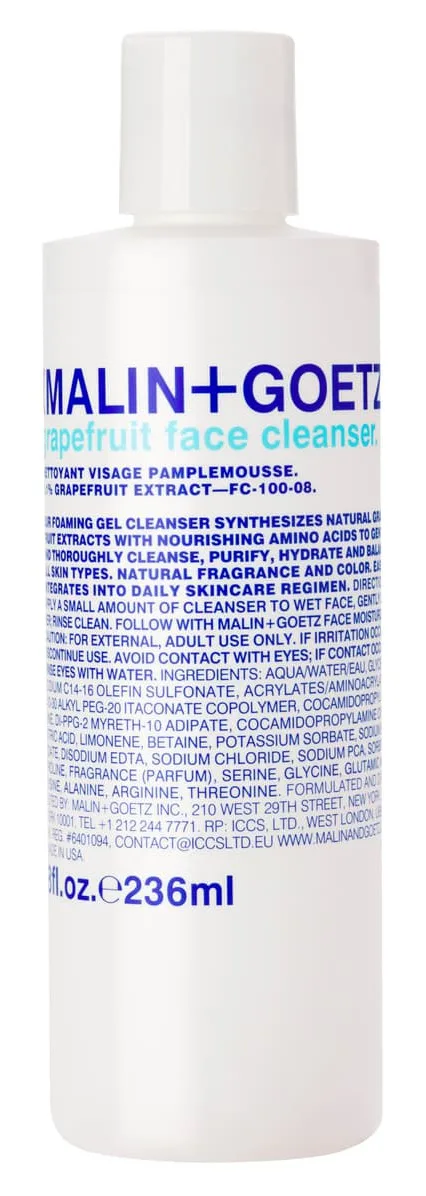
A well-built gel cleanser with a genuinely lovely natural grapefruit scent and a gentle, sulfate-free amino acid surfactant base that won't strip your skin. The formula is solid and the experience is pleasant — but at $32 you're paying a notable premium for a cleansing job that costs far less to do, and the citrus oil rules it out for the most reactive skin.
Supporting rolefor DullnessIn your profileYou chose · Rinse-off gel: Glycerin gets seconds of contact, so this supports a routine for dullness rather than treating it.Moderate evidenceGentleNo reviews collected yet
The case for it
Glycerin + Sodium PCA + Betaine has early or mechanistic evidence for this concern, not trial-backed standing.
It is in a rinse-off product, so it gets seconds of contact rather than the leave-on exposure the evidence assumes.
The formula carries none of the triggers this concern is sensitive to.
What would change this: The same active in a leave-on form would be judged on its evidence rather than its contact time.
Same rule for everyone. “Supporting role” is the verdict on 8,197 of 45,024 concern verdicts across the catalog; rule R6 decided 2,017 of them.
Unchanged since September 5, 2026, engine 5.1.1.
R6 — Contact time cannot deliver a leave-on claim; the product is judged on its job (cleansing without aggravating). Explicit exceptions (BPO wash, SA cleanser, medicated shampoos) never reach this rule because their rows set rinse_off_ok. · the full register
Carrying active
Glycerin + Sodium PCA + Betaine
Standing
plausible — trials support it
Form
contact limited — studied range 2–20%, from the trials on the row; needs leave-on contact; judge it after ~1 weeks
Tolerability
gentle
Row checked
against its sources on July 17, 2026 (evidence table ev-2026.09-r228)
The studies behind the evidence row
Harry's Cosmeticology / Baran & Maibach Textbook of Cosmetic Dermatology — humectant, emollient and occlusive classification — standard reference text
Supporting rolefor Excess OilinessIn your profileYou chose · Nothing here targets excess oiliness directly; sebum removal without stripping is the recognised companion to treating it, and this gel does that without known triggers.Not yet assessedGentleNo reviews collected yet
The case for it
Glycerin + Sodium PCA + Betaine has no evidence row yet for this concern — it is in the research queue.
The formula carries none of the triggers this concern is sensitive to.
What would change this: A researched evidence row for the lead active would replace this with a verdict.
Same rule for everyone. “Supporting role” is the verdict on 8,197 of 45,024 concern verdicts across the catalog; rule R8 decided 4,250 of them.
Unchanged since September 5, 2026, engine 5.1.1.
R8 — The category's job (barrier care, humectant hydration, gentle cleansing, photoprotection) is the documented supportive role for this concern. This is the honest verdict for a moisturizer on an acne page. · the full register
Does the jobDoes what a cleanser is for: surfactant mildness, rinses clean without stripping. Not measured from the label: pH match to skin.
A verdict is DermApproved’s assessment of how well a product’s ingredients fit a concern — never a claim about what the product treats. Evidence dots and collected reviews sit beside it and are never blended in.
Rules 0.5.1 · evidence table ev-2026.09-r228 · how we decide
Assessment
Pros & Cons
Pros
✓ Sulfate-free amino acid surfactant base cleanses gently
✓ Genuinely lovely natural grapefruit peel scent
✓ Humectant trio prevents a tight, stripped post-rinse feel
✓ Vegan, cruelty-free, silicone-free, and fungal-acne safe
✓ Pleasant medium lather and clean comfortable finish
✓ Long fifteen-plus-year track record from an established brand
Cons
✗ Premium $32 price for a basic cleansing function
✗ Grapefruit peel oil and limonene limit sensitive-skin use
✗ Not fragrance-free despite the gentle surfactant base
✗ Pricing reflects brand positioning more than ingredient cost
✗ Light astringency less ideal for very dry skin
Review
Full Review
Malin + Goetz built its identity on a charming habit: naming products after a single, evocative botanical. Peppermint shampoo, vitamin E face moisturizer, and — the one in question here — a grapefruit face cleanser. It's a confident bit of branding that turns an ingredient into a personality, and the Grapefruit Face Cleanser has been a foundational product for the brand since it launched as a Chelsea-NYC apothecary in 2004, with the cleanser itself a fixture for around fifteen years. So the obvious question is whether the grapefruit name is just atmosphere, or whether it tells you something real about the product. The answer is a bit of both, and the honest part is the more interesting. The grapefruit in the name comes from Citrus grandis peel oil, which sits in the middle of the INCI list. It's responsible for the cleanser's defining feature: a fresh, natural grapefruit aroma that reviewers genuinely love and that makes washing your face a small sensory pleasure rather than a chore. That scent is doing real work for the product's appeal. What grapefruit peel oil is not doing is any meaningful treatment — citrus peel oils contribute aroma and a mild astringent feel, but they're not actives in the dermatological sense. So the name promises an experience, and the experience is delivered, but it's an aromatic experience, not a functional one. Where the formula earns genuine respect is the surfactant system. This is a sulfate-free cleanser built on a blend of gentler surfactants — sodium methyl cocoyl taurate, sodium cocoyl isethionate, coco-glucoside, and cocamidopropyl betaine. That's a thoughtfully constructed multi-surfactant base, the kind that cleanses thoroughly while being notably kinder to the skin barrier than the harsh sulfate detergents found in cheaper foaming washes. It produces a medium, satisfying lather and rinses to a clean-but-not-tight finish. Counterbalancing the surfactants is a humectant trio — glycerin, sodium PCA, and betaine — that helps prevent the post-wash parched feeling, plus a notably elaborate cocktail of free amino acids (arginine, glycine, alanine, serine, proline, and more) that supports skin conditioning during the wash. That amino acid complex is a nice formulation flourish; in a rinse-off product its benefit is modest, but it speaks to a brand that put care into the formula. The texture experience is straightforwardly good. A clear gel, lather it between damp palms, massage over the face, rinse — skin feels clean, fresh, and comfortable rather than stripped. It suits normal, combination, and oily skin best, since the gel format and light astringency play well with skin that wants a thorough clean; dry skin can use it but may prefer something more cushioning. It's also vegan, cruelty-free, silicone-free, oil-free, and fungal-acne safe, which broadens its appeal. The fungal-acne-safe status is worth a moment, since it's a meaningful niche benefit: many cleansers that feel pleasant contain fatty acids or esters that can feed Malassezia, the yeast behind fungal acne, so anyone managing that condition has a genuinely short list of safe options. This cleanser, by relying on a surfactant base without problematic oils, qualifies — which makes it a usable choice for that specific group even though it isn't marketed for them. It's a small example of the formula being more thoughtfully built than the citrus-forward branding suggests, and it's the kind of detail that rewards reading the ingredient list rather than the front of the bottle. Now the limitations, and they cluster around two things: sensitivity and price. The grapefruit peel oil and limonene — a fragrance component naturally present in citrus oils — are both flagged as potential irritants and allergens. For most people they're a non-issue at these concentrations, but for genuinely sensitive, reactive, or rosacea-prone skin, a citrus-scented cleanser used twice daily is a real risk, and that group should patch-test or look for a fragrance-free option. This isn't a formulation flaw so much as a design choice: the grapefruit identity is the point of the product, and the scent inherently comes with the allergen profile. The bigger issue for most shoppers is value. At $32 for 236ml, this is a premium price for a cleanser. The formulation quality is real — that surfactant system is genuinely good — but cleansing is also the routine step where excellent results are achievable at a fraction of this cost, because a cleanser is on your skin for thirty seconds before it goes down the drain. You're paying for the brand's apothecary positioning, the elegant packaging, and that signature grapefruit scent as much as for the chemistry. Whether that's worth it is a personal call. If the daily ritual of a beautifully scented, well-made cleanser brings you genuine pleasure and the budget is comfortable, this is a legitimate small luxury from an established, well-regarded brand with a fifteen-plus-year track record and a 4.5-star average across thousands of reviews. If you're optimizing cost-to-function, this is a competent cleanser at a price that asks you to value the experience. The recommendation: buy it for the scent and the gentle, quality formulation if those things matter to you and your skin isn't reactive — and recognize, clearly, that you're paying a premium for atmosphere on top of a job that can be done for much less.
Formula
Key Ingredients
The hero actives that drive this product's performance.
The meaningful science in any cleanser is surfactant selection, and this formula makes good choices. Cleansing depends on surfactants binding and lifting away sebum and debris, but surfactant classes differ sharply in how they treat the skin barrier. Anionic sulfates such as sodium lauryl sulfate clean aggressively but are well documented to disrupt the stratum corneum and elevate transepidermal water loss — SLS is, in fact, a standard positive control in irritation testing. This cleanser instead uses milder amino-acid-derived and amphoteric surfactants: sodium methyl cocoyl isethionate-type and taurate surfactants, coco-glucoside, and cocamidopropyl betaine. These cleanse effectively while causing measurably less barrier disruption, which is why they are the formulators' default for gentle cleansers. Blending several surfactants, as this product does, allows a better balance of foaming, cleansing efficiency, and mildness than any single surfactant achieves alone. The humectant trio — glycerin, sodium PCA, and betaine — addresses transient post-cleanse dryness; glycerin in particular has a deep evidence base for improving skin hydration. The free amino acid complex mirrors the composition of skin's natural moisturizing factor (NMF), components like serine, glycine, and alanine that the stratum corneum uses to retain water; their inclusion is rational, though in a rinse-off product the deposited benefit is modest. The grapefruit peel oil contributes aroma and contains limonene, a terpene that is both a recognized fragrance allergen and prone to oxidation; this is a known consideration in cosmetic-ingredient safety assessments rather than a treatment ingredient. The honest scientific summary: a well-chosen gentle surfactant system, with the citrus element functioning as sensory identity, not an active.
Dermatologist Perspective
Dermatologists generally regard sulfate-free cleansers built on gentle surfactant systems as the appropriate default for most skin types, and a formula like this one fits that recommendation well — the amino-acid and amphoteric surfactant base cleanses without the barrier disruption associated with harsher detergents. Clinicians frequently acknowledge that a non-stripping cleanser is one of the more impactful and least appreciated choices in a routine. The caveat clinicians would raise here is the citrus content: grapefruit peel oil and limonene are recognized fragrance allergens, and limonene in particular can oxidize over time into more sensitizing compounds. For patients with sensitive, reactive, or rosacea-prone skin, dermatologists typically advise patch-testing a fragranced cleanser or opting for a fragrance-free alternative. They would also point out that, while a pleasantly scented cleanser improves routine adherence, cleanser cost rarely correlates with clinical benefit — the function itself is achievable across a wide price range.
Guidance
Usage & Recommendations
How to Use
Use morning and night as your main facial cleanser. Wet your face with lukewarm water, dispense a small amount of the gel, and work it into a lather between damp palms before massaging gently over the face for around twenty to thirty seconds, avoiding direct contact with the eyes. Rinse thoroughly and pat dry. In the evening, if you've worn sunscreen, makeup, or long-wear products, use an oil-based cleanser first and follow with this as the second step of a double cleanse. Follow promptly with serum and moisturizer. If your skin is reactive, patch-test on the inner forearm for several days first, given the citrus oil and limonene.
Value Assessment
At $32 for 236ml, this is a premium price for a cleanser, and the value verdict is honest: the formulation quality is genuine, but cleansing is the routine step where excellent results are reachable at far lower cost. You're paying for Malin + Goetz's established apothecary positioning, elegant packaging, and the signature natural grapefruit scent on top of the chemistry. As an established brand with a fifteen-plus-year track record and strong reviews, the price is at least backed by reputation rather than hype — but it's still an experience premium. Other sizes are available, and a larger bottle improves the per-milliliter cost. If the daily ritual genuinely pleases you, it's a defensible small luxury; if you're optimizing cost-to-function, it's more cleanser than the price needs to be.
Who Should Buy
This suits normal, combination, and oily skin types who want a gentle, well-formulated daily cleanser and genuinely value a beautiful natural scent as part of their routine. It's a fair pick for those who enjoy a small daily luxury from an established apothecary brand and whose skin tolerates citrus-derived fragrance without issue.
Who Should Skip
This isn't the one if you have sensitive, reactive, or rosacea-prone skin, since the grapefruit peel oil and limonene are real sensitization risks in a twice-daily product. Budget-focused shoppers optimizing cost-to-function should also skip it — equally gentle, effective cleansing is available for considerably less money.
Ready to try Malin + Goetz Grapefruit Face Cleanser?
One of Malin + Goetz's foundational products since the brand's 2004 launch.
About Malin + Goetz Established Brand (5–20 years)
Malin + Goetz was founded in 2004 by Matthew Malin and Andrew Goetz as a Chelsea-NYC clean apothecary brand. The brand has built distinctive positioning with botanical-named products (grapefruit, peppermint, vitamin E) and is distributed through Nordstrom, Bluemercury, and the brand's NYC and London apothecaries.
Brand founded: 2004 · Product launched: 2010
Myth vs. Reality
Common Myths
No myths to debunk yet.
FAQ
Frequently Asked Questions
Is it gentle?
Yes — sulfate-free amino acid surfactants. Sensitive users should still patch-test for the grapefruit and limonene content.
Reviews
What Reviewers Tend to Say
Recurring themes our editors read across retailer reviews of this product — summaries in our words, not quotations, and not a substitute for your own patch test.
Common Praise
Pleasant natural grapefruit scent
Gentle non-stripping cleansing
Multi-amino-acid skin conditioning
Common Complaints
Premium pricing vs functional cleansing alternatives
The fourth most frequent positive patch test in North America is an oxidation product of a molecule that occurs naturally in lavender. Nobody synthesised it into your face cream.
Essential oils are declared by botanical name rather than as fragrance, which is why the most heavily perfumed products in the natural aisle can carry the reassuring word — and why the bottle gets more sensitising the longer you own it.
IPL is a filtered flashlamp, a true vascular laser is one wavelength aimed at haemoglobin, and the choice between them turns on a distinction almost no consult makes: whether your redness is vessels or a state.
The supplier specification for standard witch hazel water caps the tannin content — the fraction all the research is about — at a level indistinguishable from none. The tightness you feel is the solvent.
Products, answers, therapy guides, tools and articles in one search. Brand names,
slang and abbreviations all work — accutane finds isotretinoin, bacne finds truncal acne.