



Octocrylene and Homosalate: The Filters America Is Stuck With
The critics are right about the data gap, and they are right that it took two decades to move. What follows from that is not the conclusion most people draw.
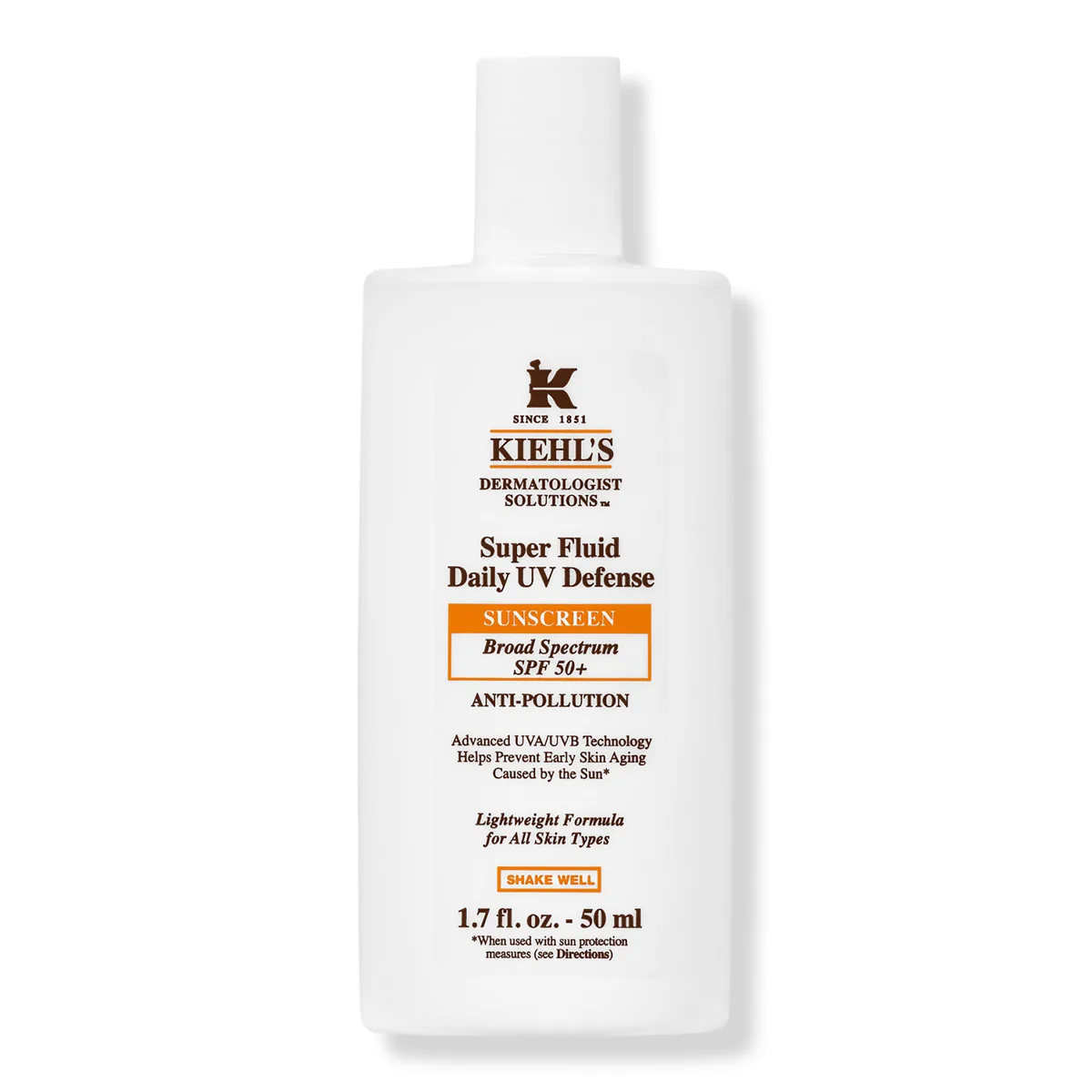
It pairs a high 33% chemical-filter load with a silica-and-polymer matte system, so it reaches SPF 50+ while finishing like a blurring primer rather than a sunscreen. The result is one of the rare high-SPF facial fluids oily skin can wear under makeup without shine or pilling.
One of the most genuinely wearable high-SPF facial fluids for oily and combination skin — it dries to a true matte, primer-like finish with no white cast and sits beautifully under makeup. The trade-offs are an alcohol base that can parch dry skin and a price that's hard to justify for a 1.7 oz tube you're meant to use generously.
The case for it
Same rule for everyone. “Full protection” is the verdict on 2,288 of 45,024 concern verdicts across the catalog; rule P1 decided 2,232 of them. Unchanged since September 5, 2026, engine 5.1.1.
Brand or formulator? Disclose a concentration or correct a fact →
The studies behind the evidence row
The case for it
What would change this: A declared concentration would move this to a firmer reading of the dose.
Same rule for everyone. “Full protection” is the verdict on 2,288 of 45,024 concern verdicts across the catalog; rule P1 decided 2,232 of them. Unchanged since September 5, 2026, engine 5.1.1.
Brand or formulator? Disclose a concentration or correct a fact →
The studies behind the evidence row
Also listed for Excess Oiliness — the actives here (Octocrylene, Silica, Vitamin E, Botanical Extracts) are in our research queue for that concern; there is no verdict until their evidence rows are written. That is a gap in our table, not a mark against the product.
Does the jobDoes what a sunscreen is for: UVA coverage, kind to the skin wearing it. Not measured from the label: pleasant enough to actually use.
A verdict is DermApproved’s assessment of how well a product’s ingredients fit a concern — never a claim about what the product treats. Evidence dots and collected reviews sit beside it and are never blended in. Rules 0.5.1 · evidence table ev-2026.09-r228 · how we decide
There's a particular type of person who has given up on facial sunscreen, and it's almost always the same reason: they have oily or combination skin, and every SPF they've tried leaves them shiny, greasy, or sliding into their makeup by noon. This fluid was built for exactly that person, and it solves the problem with a slightly counterintuitive trick — it loads up on chemical filters and then mattifies the whole thing into submission with silica.
Let's start with what's actually doing the protecting. The active system is a four-filter chemical combination: avobenzone for UVA, octisalate and a hefty 10% octocrylene to both add UVB coverage and photostabilize the avobenzone so it doesn't fall apart in sunlight, and a substantial 15% homosalate carrying most of the UVB load. That high total filter percentage — around a third of the formula — is what pushes this to SPF 50+ rather than the SPF 30 you'll find in lighter daytime products. On their own, those filters in those amounts would feel oily and tacky. So Kiehl's layers in silica microspheres, styrene/acrylates copolymer, and polymethylsilsesquioxane, all of which absorb oil and diffuse light, plus a measure of fast-evaporating alcohol that flashes the formula dry almost instantly. Round it out with tocopherol and baicalin — a skullcap-derived flavonoid antioxidant — for some free-radical and pollution defense the filters alone can't provide.
The payoff is the texture, and it really is the headline here. This goes on like a watery gel and sets within seconds to a dry, powdery, almost primer-like matte. There's no white cast, which makes it friendly across skin tones, and it genuinely disappears — no greasy sheen, no slip. Makeup goes over it cleanly, and for oily skin it can actually improve how foundation wears through the day. If you've spent years convinced that strong sun protection has to feel heavy, the first application is a small revelation. It feels like nothing, and that's the entire point.
That same engineering is also its limitation, and this is where honesty matters. The alcohol and the oil-absorbing powders that make it so good on oily skin make it a poor match for dry or dehydrated complexions. Dry skin can feel tight, parched, or even slightly rough after application, and over a full day the matte finish can tip into uncomfortable. People with very reactive or rosacea-prone skin should approach carefully too — the combination of a high homosalate load and denatured alcohol is more likely to sting sensitive skin than a gentler creamy sunscreen would. None of this makes it a bad product; it makes it a specialized one. It's the right tool for a specific skin type and the wrong tool for its opposite. If you run oily, this is a near-ideal daily face SPF. If you run dry, you'll likely find it punishing.
There's a way to soften that limitation if you're borderline rather than truly dry. Because this is a sunscreen rather than a moisturizer, you're meant to apply something hydrating underneath it anyway, and a good humectant serum or a light moisturizer as a base can take much of the edge off the matte finish. Layered over a hydrated face, the fluid behaves better and feels less aggressively dry by mid-afternoon. That said, no amount of prep fully converts a mattifying, alcohol-forward formula into something dry skin will love — it's working against its own chemistry — so this is a tweak for the in-between cases, not a rescue for parched skin. The other practical detail worth flagging is application discipline: because it disappears so completely and feels like nothing, it's easy to under-apply and convince yourself you're protected. Treat the invisibility as a feature for wearability, not as license to skimp, and measure out a proper sunscreen amount every time.
It's worth being clear-eyed about the antioxidant claims, too. Baicalin and vitamin E do have a reasonable evidence base for mopping up UV-generated free radicals, and including them is a genuine plus over a bare-bones filter formula. But antioxidants in a sunscreen are a supporting act, not the headliner — they don't meaningfully extend your protection time and they're present in modest amounts. Treat them as a small bonus, not a reason to buy.
Then there's the elephant in the tube: the price. At $47 for 1.7 ounces, this is expensive sun protection, and that math gets worse when you remember that sunscreen only works at generous application amounts. If you're applying the recommended quarter-teaspoon to your face daily, a small tube doesn't last all that long, and the cost-per-use climbs. You are paying a steep premium for the texture and the Kiehl's name. The chemistry, while well-executed, isn't unique — the matte-fluid format and these exact filters appear in plenty of other sunscreens, some at a fraction of the cost. What you're really buying is a refined, reliable, makeup-friendly experience from a brand with a long track record. For some people, the wearability is worth every dollar because it's the sunscreen they'll actually use daily. For others, the value simply isn't there.
The verdict lands cleanly. This is an excellent product for the skin type it was designed for — oily and combination skin that wants invisible, matte, makeup-compatible SPF 50+. It's a poor fit for dry or sensitive skin, and it's priced like a luxury good. Buy it for the texture, not the antioxidants, and only if a premium daily SPF fits your budget.
The hero actives that drive this product's performance.
| Ingredient | Function | Evidence |
|---|---|---|
| Avobenzone 3% + Homosalate 15% + Octisalate 5% + Octocrylene 10% (33% combined filters) | A high-load four-filter system tuned for SPF 50+: avobenzone delivers UVA coverage while octocrylene and octisalate photostabilize it, and a generous 15% homosalate drives the UVB protection that earns the higher SPF. The heavy filter percentage is what allows this fluid to hit 50+ rather than the brand's lower-SPF daytime products. | Regulator-approved for Sun Damage · limited certainty |
| Baicalin (Scutellaria Baicalensis Root Extract) | A flavonoid antioxidant from skullcap root that Kiehl's pairs with the UV filters to address the free-radical and pollution damage that sunscreen alone misses. In this matte fluid it adds an environmental-defense layer rather than affecting texture. | Not yet assessed |
| Silica | The mattifying engine of the formula — these powdery microspheres absorb oil and diffuse light, giving the otherwise oily, high-filter base its signature shine-free, almost primer-like finish suited to combination and oily skin. | Not yet assessed |
| Tocopherol (Vitamin E) | Works with baicalin as the formula's antioxidant duo, neutralizing UV-induced free radicals and protecting the chemical filters themselves from oxidation, which supports the photostability of the whole system. | Limited for Sun Damage |
Ingredient standings describe the active at treatment-level doses and vehicles; this product's own condition grades weigh its actual formula.
Avobenzone 3%, Homosalate 15%, Octisalate 5%, Octocrylene 10%, Water, Dimethicone, Alcohol Denat., Silica, Styrene/Acrylates Copolymer, Butyloctyl Salicylate, PEG-30 Dipolyhydroxystearate, Polymethylsilsesquioxane, Tocopherol, Phenoxyethanol, PEG-8 Laurate, Lauryl PEG/PPG-18/18 Methicone, Sodium Chloride, Caprylyl Glycol, Isostearyl Alcohol, Poly C10-30 Alkyl Acrylate, Scutellaria Baicalensis Root Extract (Baicalin), P-Anisic Acid, Pentaerythrityl Tetra-Di-T-Butyl Hydroxyhydrocinnamate, Trisodium Ethylenediamine Disuccinate
sunscreen
AM
Smooth on as the final morning step over moisturizer, then wait a couple of minutes for the matte finish to set before makeup. Because the base contains alcohol and silica, a hydrating layer underneath keeps drier skin comfortable.
The matte, weightless finish is immediate. UV protection is active about 15-20 minutes after application. Antioxidant benefits from baicalin and vitamin E are cumulative and not visibly perceptible day to day.
This fluid's protection hinges on a problem dermatology has studied closely: avobenzone, the primary UVA filter available in the United States, is photo-unstable and loses a significant fraction of its protective capacity within an hour of sunlight when used alone. The established solution, repeatedly validated in photostability literature, is to combine it with octocrylene, which absorbs the excited-state energy and slows avobenzone's degradation — the 10% octocrylene here is doing exactly that job, supported by octisalate. The high 15% homosalate provides the UVB absorption that lifts the formula to its SPF 50+ rating. The broader value of high-SPF broad-spectrum daily use is well grounded: a randomized controlled trial published in the Annals of Internal Medicine in 2013 followed Australian adults for over four years and found daily sunscreen users showed no detectable photoaging progression versus measurable aging in discretionary users. The antioxidant additions rest on more preliminary ground. Baicalin, a flavonoid from Scutellaria baicalensis, has shown free-radical scavenging and anti-inflammatory activity in laboratory and early studies, and topical vitamin E has consistent evidence for reducing UV-induced lipid peroxidation. Both function as adjuncts that address oxidative stress the filters don't, but neither extends measured SPF. The science also underscores the universal caveat: the SPF 50+ rating is achieved only at the standardized 2 mg/cm2 application density, so the protection depends entirely on applying a generous amount.
From a clinical standpoint, this fluid is the type of product often suggested for oily, acne-prone, or combination patients who report that creamy sunscreens feel greasy and worsen breakouts or makeup wear. The mattifying, oil-free format addresses a real adherence barrier, and clinicians generally agree the best sunscreen is the one a patient will reliably use. Standard guidance is to apply a full quarter-teaspoon to the face and to reapply every two hours during sustained sun exposure, since the SPF rating assumes generous application. The alcohol-containing base is typically flagged as a poor match for dry, eczema-prone, or barrier-compromised skin, where a richer mineral or cream formula is usually advised instead. Patch testing is a reasonable precaution for those with reactive or rosacea-prone skin given the high filter concentration.
Each morning, after your moisturizer, dispense a generous amount — about a quarter teaspoon for the full face — and smooth it evenly over the skin, including the often-missed ears, hairline, and neck. It sets to a matte finish within seconds, so apply quickly and avoid over-rubbing. Wait a minute or two before makeup. Because the base contains alcohol and oil-absorbing powders, those with drier skin should apply a hydrating serum or moisturizer underneath first. For prolonged outdoor exposure, reapply every two hours; the compact tube is convenient for carrying. Use it as the final step of skincare and the base layer for makeup.
At $47 for just 1.7 ounces, this is genuinely pricey sun protection, and the value equation suffers because sunscreen demands generous, frequent application — a small tube doesn't go far. A larger size exists and lowers the per-ounce cost, making it the sensible choice for committed daily users. The honest read is that you're paying a luxury premium for a refined matte texture and the Kiehl's name, not for rare or proprietary chemistry; the same filter system and mattifying approach appear in more affordable sunscreens. The value holds up only if the wearability is what finally makes you apply SPF every day. As a pure protection-per-dollar proposition, it's an expensive way to get broad-spectrum coverage.
This is a strong pick for oily and combination skin that wants invisible, matte, high-SPF protection that won't slide under makeup or add shine. It's also a smart choice for anyone whose biggest sunscreen complaint has been greasiness, and who is willing to pay a premium for a texture they'll actually wear every day.
Dry, dehydrated, or sensitive skin will likely find the alcohol and mattifying powders parching and tight, so a creamy or mineral sunscreen is a better match. Anyone on a budget should also pass — the small tube and steep price make this an expensive way to get broad-spectrum protection that's available more cheaply elsewhere.
Ready to try Kiehl's Super Fluid UV Defense Daily Facial Sunscreen SPF 50+?
Buy at Amazon ♥An ultra-light, fast-drying fluid that goes on like a watery gel and flashes to a powdery, dry-touch matte within seconds.
Fragrance-free; carries only a faint solvent note from the alcohol base that dissipates quickly.
Compact squeeze tube with a screw cap, sized for travel and on-the-go reapplication.
No purging or break-in period. The first thing you notice is how quickly it sets to a dry matte — some users feel a brief tight or astringent sensation from the alcohol as it flashes off, which is normal and passes once the film settles.
Roughly 2-3 months with daily face application; faster if used at the full sunscreen amount as recommended.
All Year
Created for Kiehl's Dermatologist Solutions line to answer a specific complaint — that strong daily sun protection felt greasy and heavy. The brand engineered a fluid texture loaded with mattifying silica to make SPF 50+ wearable for oily and combination skin in city environments, adding baicalin as an anti-pollution antioxidant angle.
Kiehl's, founded as a New York apothecary in 1851, sells this under its Dermatologist Solutions line and has long positioned itself on functional, ingredient-led formulas. Owned by L'Oreal since 2000, it draws on substantial corporate R&D for its sunscreen and antioxidant chemistry.
Alcohol in sunscreen is automatically bad for your skin.
The alcohol denat. here is a fast-evaporating solvent that creates the quick-dry matte feel; it's not the same as a moisturizing or leave-on alcohol. It can be drying on already-dry skin, but for oily skin it's part of why the finish works so well.
A matte sunscreen can't protect as well as a creamy one.
Finish has nothing to do with SPF. This fluid carries a 33% filter load and is rated SPF 50+ broad spectrum — the matte feel comes from silica powders layered over the same protective chemistry.
Yes — it's one of its strongest use cases. The silica-based mattifying system and oil-free formula leave a true matte finish that controls shine and wears well under makeup, making it well suited to oily and combination skin.
No. It uses chemical filters rather than mineral ones and dries down clear with no white cast, so it works across a wide range of skin tones, including deeper complexions.
The alcohol denat. is a fast-evaporating solvent that creates the quick-dry matte finish. It helps the high filter load feel weightless, but it can be drying on already-dry skin, which is why this fluid suits oily types best.
Yes, and it's one of the formula's strengths. The matte, primer-like finish gives makeup a smooth base; just let it set for a minute or two after applying before going in with foundation.
It contains no retinoids or other commonly restricted actives, only chemical UV filters and antioxidants, so there's no established concern. Those who prefer to avoid chemical filters while pregnant can opt for a mineral sunscreen instead.
Used at the recommended quarter-teaspoon facial dose daily, expect roughly two to three months per tube. A larger size offers better per-ounce value for regular daily wear.
Recurring themes our editors read across retailer reviews of this product — summaries in our words, not quotations, and not a substitute for your own patch test.
Truly matte, primer-like finish
Weightless and fast-absorbing
No white cast
Great under makeup
Expensive for 1.7 oz
Drying on dry skin
Contains alcohol
Can feel tight
Verified answers from our questions library — the nuance a product page cannot carry.