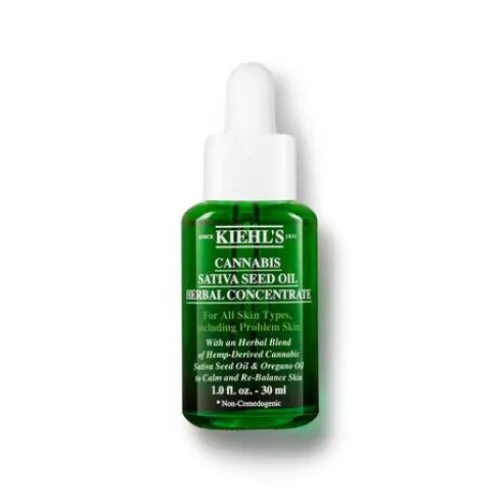
This was one of the first mainstream prestige skincare products to use cannabis sativa seed oil as a primary active at a declared 60% concentration. With only 13 ingredients — mostly the oil itself, a lightweight emollient, and carefully selected essential oils — it takes a deliberately minimalist approach. The inclusion of oregano oil as an antimicrobial gives it a blemish-fighting angle that most calming face oils lack.
A thoughtfully minimal hemp seed oil concentrate that delivers genuine calming benefits for stressed, blemish-prone skin — but the essential oil content contradicts its sensitive-skin positioning, and the price asks a lot for a 13-ingredient formula.
With roughly six years in distribution and about 1,200 reviews, this concentrate sits on a reasonable evidence base for a medium grade. Hemp seed oil has growing clinical support, yet independent testing of this exact 60% blend with oregano oil is thin, so the score weighs the formulation alongside accumulated user feedback rather than verified trials.
Verdicts
How well it fits each concern
Verdict by concern tap a concern for the case
Avoidfor SensitivityIn your profileYou chose · This formula carries fragrance — the kind of thing reactive skin flags first.Not yet assessedCarries a triggerNo reviews collected yet
The case for it
Cannabis Sativa Seed Oil has no evidence row yet for this concern — it is in the research queue.
The formula carries a known trigger for this concern, which decides the verdict before any efficacy question.
Cautions: known irritants; a declarable fragrance allergen.
What would change this: Removing the trigger named above would let the actives be judged on their own.
Same rule for everyone. “Avoid” is the verdict on 1,909 of 45,024 concern verdicts across the catalog; rule F1 decided 605 of them.
Unchanged since September 5, 2026, engine 5.1.1.
Supporting rolefor DrynessIn your profileYou chose · Nothing here targets dryness directly; occlusive emollience is the recognised companion to treating it, and this oil does that without known triggers.Not yet assessedStandard tolerabilityNo reviews collected yet
The case for it
Cannabis Sativa Seed Oil has no evidence row yet for this concern — it is in the research queue.
The formula carries no trigger this concern is sensitive to, with the cautions noted.
Cautions: fragrance.
What would change this: A researched evidence row for the lead active would replace this with a verdict.
Same rule for everyone. “Supporting role” is the verdict on 8,197 of 45,024 concern verdicts across the catalog; rule R8 decided 4,250 of them.
Unchanged since September 5, 2026, engine 5.1.1.
R8 — The category's job (barrier care, humectant hydration, gentle cleansing, photoprotection) is the documented supportive role for this concern. This is the honest verdict for a moisturizer on an acne page. · the full register
Avoidfor Compromised Skin BarrierIn your profileYou chose · This formula carries fragrance — a known trigger for compromised skin barrier — so it is not a fit however good its actives are.Not yet assessedCarries a triggerNo reviews collected yet
The case for it
Cannabis Sativa Seed Oil has no evidence row yet for this concern — it is in the research queue.
The formula carries a known trigger for this concern, which decides the verdict before any efficacy question.
Cautions: known irritants.
What would change this: Removing the trigger named above would let the actives be judged on their own.
Same rule for everyone. “Avoid” is the verdict on 1,909 of 45,024 concern verdicts across the catalog; rule R1 decided 1,304 of them.
Unchanged since September 5, 2026, engine 5.1.1.
R1 — Safety outranks praise (MASTER-PLAN §1.7). A condition-weighted trigger (multiplier ≥ 2 in condition-fit-matrix) decides the verdict before any efficacy question. · the full register
Also listed for Acne and Excess Oiliness — the actives here (Hemp Seed Oil, Vitamin E, Sunflower Oil, green oregano oil) are in our research queue for those concerns; there is no verdict until their evidence rows are written. That is a gap in our table, not a mark against the product.
As a oilNot judged: what a oil is for — fatty-acid profile, seals moisture, resists going rancid — cannot yet be measured from the ingredient list (only pore and malassezia risk can).
A verdict is DermApproved’s assessment of how well a product’s ingredients fit a concern — never a claim about what the product treats. Evidence dots and collected reviews sit beside it and are never blended in.
Rules 0.5.1 · evidence table ev-2026.09-r228 · how we decide
✓ High linoleic acid content particularly beneficial for oily skin types
Cons
✗ Essential oils and fragrance allergens contradict the sensitive-skin marketing positioning
✗ Strong herbal scent from oregano and peppermint is polarizing among users
✗ 5 per ounce is premium pricing for a predominantly hemp seed oil formula
✗ Dropper design has reported leaking issues that feel avoidable at this price
✗ Not suitable for truly reactive skin types despite calming claims
Review
Full Review
When the cannabis skincare wave crested in early 2019, brands faced a choice: chase the CBD buzzword or bet on the unglamorous but better-documented hemp seed oil. Kiehl's — a 170-year-old apothecary not exactly known for chasing trends — chose the latter. The Cannabis Sativa Seed Oil Herbal Concentrate launched with 60% cold-pressed hemp seed oil sourced from German farms, zero CBD claims, and a quiet confidence that fatty acid science would outlast cannabinoid hype.
Six years later, that bet looks reasonably sound. The formula is almost aggressively simple: 13 ingredients total, with hemp seed oil comprising the majority, supported by a lightweight emollient (dicaprylyl ether), vitamin E for stability, sunflower oil for additional linoleic acid, and a carefully curated essential oil blend. There are no peptides, no hyaluronic acid, no retinol — just oil, doing oil things.
The hemp seed oil itself is the genuine article. Cold-pressed from seeds harvested in autumn, it delivers an omega-6 to omega-3 ratio of approximately 3:1, with significant gamma-linolenic acid (GLA) content. GLA is the interesting player here — a 2021 study found that creams containing just 1% hemp oil reduced inflammatory acne by 42.5%, and GLA's anti-inflammatory mechanism through prostaglandin modulation is well-documented. At 60% concentration, this formula provides a meaningful therapeutic dose.
The texture will surprise anyone who expects face oils to feel, well, oily. This has the consistency of a very light dry oil — three drops spread easily across the entire face and absorb within a minute, leaving skin feeling soft and calm without any slickness. It does not pill under moisturizer, does not leave a visible sheen, and does not transfer to your pillowcase. For an oil product, it is remarkably well-behaved.
The scent, however, is less discreet. The oregano, geranium, and peppermint essential oils create a herbal aroma that lands somewhere between a natural apothecary and a Mediterranean kitchen. It fades within minutes, but the initial impression is strong enough to be divisive. You will either find it pleasantly earthy or mildly medicinal.
The oregano oil inclusion deserves attention beyond its scent contribution. Origanum heracleoticum has documented antimicrobial properties, and its presence transforms this from a simple moisturizing oil into something with a mild blemish-fighting angle. For oily and combination skin types dealing with both irritation and breakouts, that dual action is genuinely useful.
Here is where the formula creates its own contradiction, though. This product is marketed for stressed, reactive, blemish-prone skin — yet it contains five EU-regulated fragrance allergens (citral, citronellol, geraniol, linalool, limonene) derived from its essential oil blend. The peppermint oil can cause mild warming or irritation. For truly sensitive skin — rosacea, eczema, contact dermatitis — these essential oils represent a real risk, and it is somewhat disingenuous to position an essential-oil-laden formula as a calming treatment without prominent caveats.
For skin that is stressed or blemish-prone but not pathologically sensitive, this concern is largely theoretical. Most users tolerate the formula well and report visible calming within the first week. The overall record is solid rather than adoring — about 1,200 reviews averaging 4.1, a number that reflects real satisfaction with the calming and the weightless feel, dragged down by the divisive scent, the leaky dropper, and the price-versus-ingredient math this review keeps returning to. The linoleic acid-heavy profile makes it particularly well-suited for oily skin types, whose natural sebum tends to be low in linoleic acid — a deficiency linked to clogged pores and breakouts. The routine slot is evening: two to three drops pressed into slightly damp skin after water-based serums, every other night at first if oils are new territory, or a single drop stirred into your moisturizer for a lower-commitment version. The formula is pregnancy-safe.
The value question is the elephant in the dropper bottle. At 5 for one ounce, you are paying premium prices for a formula that is primarily hemp seed oil — an ingredient available at a fraction of this cost from oil-focused brands. What Kiehl's adds is formulation precision: the specific essential oil blend, the cold-pressed German sourcing, the non-comedogenic testing, and the decades of trust that come with a heritage brand. Whether those additions justify a 5-10x markup over pure hemp seed oil depends on how much you value curation over raw materials.
The dropper packaging works well enough for dosing but has drawn complaints about leaking — a minor quality control issue that feels avoidable at this price point. The amber glass does protect the light-sensitive polyunsaturated fatty acids from degradation, which is important for maintaining efficacy over the product's life. Even so, respect the six-month period-after-opening — unusually short, and honest: polyunsaturated fatty acids oxidize no matter how amber the glass. Store it cool and dark, and only step up to the better-value 1.9-ounce bottle if you're genuinely using it nightly, or the savings will go rancid before you do.
For oily and combination skin types who want a calming, non-comedogenic oil step without the heaviness of traditional face oils, this delivers. It is lightweight, fast-absorbing, and genuinely soothing for stressed skin. But truly sensitive types should approach with caution despite the marketing, and budget-conscious shoppers should know that the core ingredient — hemp seed oil — is not exclusive to this price bracket.
Formula
Key Ingredients
The hero actives that drive this product's performance.
The backbone of this formula at 60% concentration, hemp seed oil delivers a uniquely balanced omega-6 to omega-3 ratio of 3:1 — rich in linoleic acid and gamma-linolenic acid (GLA). In this oil concentrate, it provides anti-inflammatory fatty acids that work to calm stressed, blemish-prone skin without clogging pores, while the GLA content supports barrier repair that the oregano and geranium oils complement.
Not yet assessed
Green Oregano Oil (Origanum Heracleoticum)
A potent antimicrobial botanical that provides natural antibacterial properties in this formula, working alongside the hemp seed oil to address blemish-prone skin from two angles — the hemp calms inflammation while the oregano targets acne-causing bacteria. Its inclusion makes this more than a simple moisturizing oil.
Serves dual duty in this minimal formula as both an antioxidant protector and a stabilizer for the hemp seed oil, preventing oxidation of the delicate polyunsaturated fatty acids that give this concentrate its anti-inflammatory properties.
Adds additional linoleic acid to the formula, reinforcing the hemp seed oil's barrier-repair profile. Sunflower oil is one of the few plant oils with clinical evidence supporting its ability to improve skin barrier function without disrupting the microbiome.
Apply 2-3 drops to clean, slightly damp skin after serums but before or mixed into your moisturizer. Can also be used as the final step over moisturizer to seal everything in. Best used in the PM routine to avoid potential photosensitivity from essential oils.
Results Timeline
Skin feels softer and more comfortable immediately after first use. Within 1-2 weeks, noticeable reduction in redness and irritation. Full calming and blemish-reduction benefits typically visible after 4-6 weeks of consistent nightly use.
Pairs Well With
Niacinamide serumsLightweight gel moisturizersHyaluronic acid
Hemp seed oil's skincare credentials rest primarily on its fatty acid profile. The oil contains approximately 55-60% linoleic acid (omega-6), 15-20% alpha-linolenic acid (omega-3), and 1-4% gamma-linolenic acid (GLA) — a composition that closely mirrors healthy skin lipids. A comprehensive 2024 review published in Pharmaceutics (Martinović et al., 2024) catalogued hemp seed oil's anti-inflammatory, antioxidant, and barrier-repair properties, noting that its GLA content modulates prostaglandin E1 synthesis, which directly suppresses inflammatory pathways relevant to acne and dermatitis.
The linoleic acid component is particularly relevant for acne-prone skin. Research has established that the sebum of acne patients is deficient in linoleic acid, and topical application of linoleic-acid-rich oils can help normalize sebum composition. A 2021 clinical study found that formulations containing just 1% hemp oil achieved a 42.5% reduction in inflammatory acne lesions.
The oregano oil (Origanum heracleoticum) contributes carvacrol and thymol — phenolic compounds with well-documented antimicrobial activity against Cutibacterium acnes (formerly P. acnes), the bacterium central to inflammatory acne. This gives the formula a dual mechanism: hemp seed oil addresses the inflammatory component while oregano targets the microbial trigger.
Vitamin E (tocopherol) serves as both an antioxidant active and a formulation stabilizer, protecting the polyunsaturated fatty acids in the hemp and sunflower oils from oxidative degradation. Sunflower seed oil reinforces the linoleic acid profile and has its own evidence base — a 2013 study in Pediatric Dermatology demonstrated that topical sunflower seed oil improved skin barrier function in preterm infants.
The limitation of this formula from an evidence standpoint is the essential oil content. While oregano's antimicrobial properties are documented, the geranium, peppermint, and lemongrass oils introduce fragrance allergens that represent a real irritation risk for a subset of users — undermining the calming positioning for the most sensitive skin types.
Dermatologists generally view hemp seed oil as a reasonable option for oily and acne-prone skin due to its high linoleic acid content and non-comedogenic profile. A widely shared clinical view is that the omega fatty acid composition closely mirrors healthy skin lipids, making it theoretically well-suited for barrier repair. However, dermatologists consistently caution that the essential oil content in this particular formula — including oregano, peppermint, and geranium — introduces unnecessary irritation risk for patients with rosacea, eczema, or contact dermatitis. For patients seeking a calming oil, dermatologists may suggest pure hemp seed oil or formulations without added essential oils as a safer starting point, reserving this product for those with resilient skin who want the antimicrobial benefits of the essential oil blend.
Guidance
Usage & Recommendations
How to Use
Apply 2-3 drops to clean, slightly damp skin in the evening after water-based serums. Warm between fingertips and press gently into the face, focusing on areas of redness or irritation. Can be used alone as a nighttime treatment for oily skin, or layered under moisturizer for dry skin. For an extra calming boost, mix one drop into your moisturizer. Start with every-other-night use if you're new to face oils, increasing to nightly as tolerated. Best used in the PM routine.
Value Assessment
At $55 for 1 oz, this is positioned firmly in the prestige face oil category. The formula's simplicity — 13 ingredients, predominantly hemp seed oil — makes the price harder to justify on ingredients alone, since high-quality cold-pressed hemp seed oil is available from smaller brands at a fraction of this cost. What Kiehl's adds is sourcing transparency (German-harvested, cold-pressed), non-comedogenic testing, and the specific essential oil blend. A 1.9 oz size is also available, offering better per-ounce value for committed users. For those who value the Kiehl's name and the curated essential oil formula, the price is defensible. For ingredient purists, pure hemp seed oil delivers the core benefits for considerably less.
Who Should Buy
Oily and combination skin types dealing with blemishes and redness who want a lightweight, non-comedogenic oil step. Those who appreciate minimalist, naturally-derived formulas and enjoy herbal scents. Anyone looking for a calming treatment that absorbs quickly without heaviness.
Who Should Skip
Truly sensitive, rosacea-prone, or eczema-affected skin types who react to essential oils and fragrance allergens. Budget-conscious shoppers who can source quality hemp seed oil for less. Anyone who dislikes strong herbal scents — the oregano and peppermint are prominent on application.
Ready to try Kiehl's Cannabis Sativa Seed Oil Herbal Concentrate?
Lightweight, fast-absorbing oil with a thin, fluid consistency. Feels noticeably lighter than most face oils — more like a dry oil that sinks into skin rather than sitting on top. Leaves a slight satin finish without visible oiliness.
Scent
Distinct herbal aroma from the essential oil blend — oregano, geranium, and peppermint create a green, slightly medicinal, herbaceous scent. It dissipates within a few minutes but is quite noticeable on application.
Packaging
Amber glass dropper bottle with a screw-top cap. The dark glass protects the light-sensitive hemp oil from degradation. The dropper allows precise dosing, though some users report minor leaking issues.
Finish
satinlightweightfast-absorbingnon-greasy
What to Expect on First Use
On first application, the herbal scent is the most immediate impression — earthy and green. The oil absorbs within 30-60 seconds, leaving skin feeling soft and calm without any heaviness. There is no tingling or stinging for most users, though those sensitive to essential oils may notice mild warmth from the peppermint oil. No purging or adjustment period expected.
Launched in February 2019 during the peak of the hemp-in-skincare movement, this was Kiehl's answer to the growing demand for cannabis-derived beauty products. Rather than jumping on the CBD bandwagon, Kiehl's went with cold-pressed hemp seed oil — sourced primarily from Germany, harvested September through October — focusing on the well-documented fatty acid profile rather than trendier cannabinoid claims.
About Kiehl's Legacy Brand (20+ years)
Kiehl's was founded in 1851 as a New York City apothecary and has been formulating skincare with pharmaceutical expertise for over 170 years. Acquired by L'Oréal in 2000, the brand maintains its apothecary heritage with dermatologist-recommended formulations backed by clinical testing.
Brand founded: 1851 · Product launched: 2019
Myth vs. Reality
Common Myths
Myth
This product contains CBD or has psychoactive properties.
Reality
Cannabis sativa seed oil is derived from hemp seeds, not the flowers or leaves where CBD and THC are concentrated. Hemp seed oil contains no psychoactive compounds and no CBD — its benefits come entirely from its fatty acid profile, particularly gamma-linolenic acid (GLA).
Myth
Face oils always clog pores and cause breakouts.
Reality
Hemp seed oil is one of the least comedogenic plant oils available, with a comedogenic rating of 0. Its high linoleic acid content actually helps regulate sebum production in oily skin. This formula is tested as non-comedogenic by Kiehl's.
FAQ
Frequently Asked Questions
Does Kiehl's Cannabis Sativa Seed Oil contain CBD?
No. Despite the cannabis plant association, this product contains hemp seed oil, not CBD oil. Hemp seed oil is cold-pressed from seeds of the Cannabis sativa plant and contains no cannabinoids (CBD or THC). Its skin benefits come from its omega fatty acid profile, particularly the gamma-linolenic acid (GLA) that provides anti-inflammatory effects.
Will Kiehl's Cannabis Sativa Seed Oil cause breakouts?
This formula is non-comedogenic and tested by Kiehl's for blemish-prone skin. Hemp seed oil has a comedogenic rating of 0 and is high in linoleic acid, which research suggests may actually help regulate sebum production. The oregano oil provides antibacterial properties that further support acne-prone skin. However, those sensitive to essential oils should patch test first.
Is this face oil suitable for sensitive skin?
Despite being marketed for stressed and irritated skin, this formula contains several essential oils (geranium, oregano, peppermint) and EU-regulated fragrance allergens (citral, linalool, limonene, geraniol). Those with truly sensitive, eczema-prone, or rosacea-affected skin should patch test carefully, as these essential oils can trigger irritation in reactive skin types.
How should I use Kiehl's Cannabis Sativa Seed Oil in my routine?
Apply 2-3 drops to clean skin after water-based serums but before or mixed into your moisturizer. It works best as a PM treatment. You can also add a drop to your moisturizer for an extra calming boost. Start with every other night if your skin is new to face oils.
Is Kiehl's Cannabis Sativa Seed Oil worth the price?
At $55 for 1 oz, this is a premium-priced face oil with a relatively simple 13-ingredient formula. The 60% hemp seed oil concentration is genuine and the cold-pressed German sourcing adds quality, but comparable hemp seed oils are available at lower price points. The value here lies in Kiehl's formulation expertise and the specific essential oil blend targeting blemish-prone skin.
Reviews
What Reviewers Tend to Say
Recurring themes our editors read across retailer reviews of this product — summaries in our words, not quotations, and not a substitute for your own patch test.
Common Praise
Visibly reduces redness within days of use
Lightweight and absorbs quickly without greasy residue
Effective at calming irritated and stressed skin
Pleasant herbal scent from natural essential oils
Non-comedogenic despite being an oil
Common Complaints
Dropper design can be imprecise and leaky
Essential oils may irritate truly sensitive skin despite calming claims
Expensive for a 1 oz bottle of mostly hemp seed oil
Herbal scent is strong and not universally liked
Notable Endorsements
Kiehl's first cannabis-derived skincare productFormulated with 100% naturally derived ingredients
Occupational hand dermatitis is one of the most common work-related diseases on earth, it follows a script, and the cheapest fix works only if you start it before the skin splits.
Cutting a beard hair takes about a twentieth of a newton. You press with two and stretch your skin by a fifth — which is why almost every shaving problem is a technique problem wearing a hardware costume.
Every post that dismantles a home remedy owes the reader a replacement. The honest replacement list is embarrassingly cheap, and one item on it is cheaper still — it is a bath.
The strongest counterexample to blanket botanical scepticism is also one of the more common contact allergens — and holding both facts at once is the only honest way to read it.
Aug 28, 2026· 8 min
Questions people ask about Acne
Verified answers from our questions library — the nuance a product page cannot carry.
Products, answers, therapy guides, tools and articles in one search. Brand names,
slang and abbreviations all work — accutane finds isotretinoin, bacne finds truncal acne.