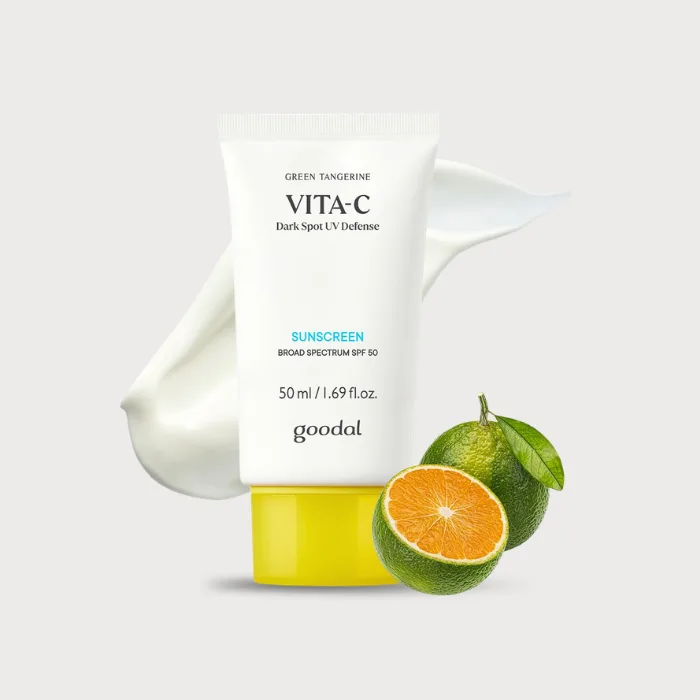
This is the rare Korean brightening sunscreen that was rebuilt from scratch for the U.S. rather than simply exported: a monograph filter system with avobenzone properly stabilised by ethylhexyl methoxycrylene, registered on DailyMed, and stripped of the alcohol and citrus oils that define the Korean-market version. Niacinamide sits eighth and is paired with acetyl glucosamine, a combination with its own trial evidence for facial hyperpigmentation.
The version of Goodal's brightening sunscreen that sensitive skin can actually wear: fragrance-free, alcohol-free, registered with the FDA, and carrying niacinamide and acetyl glucosamine high enough to mean something. It gives up the elegant European filters of the Korean sibling for a stabilised avobenzone system that is perfectly sound, and charges a few dollars more for the privilege. For daily wear in the U.S., that is a fair trade.
This formula has been on U.S. shelves since 2025, so the sixteen months of Amazon feedback behind it show how it wears through one full summer but not how the avobenzone system holds up across years of storage and reformulation. The judgement here rests on the DailyMed-published ingredient list, the published trial data on its niacinamide and acetyl glucosamine pairing, and Goodal's fifteen-year record, rather than on a long real-world history for this exact tube.
Verdicts
How well it fits each concern
Verdict by concern tap a concern for the case
Full protectionfor Sun DamageIn your profileYou chose · Broad-spectrum SPF 50 with avobenzone: the protection sun damage calls for.Moderate evidenceGentleNo reviews collected yet
The case for it
Homosalate 9.5%, Octisalate 4.75% and Octocrylene 9% is a first-line active — approved, monograph-listed or named in current guidelines — for this concern.
It is present at an effective concentration, declared or high in the ingredient list.
The formula carries none of the triggers this concern is sensitive to.
Same rule for everyone. “Full protection” is the verdict on 2,288 of 45,024 concern verdicts across the catalog; rule P1 decided 2,232 of them.
As of September 25, 2026, engine 5.1.1.
P1 — Photoprotection standing is regulatory (M020 / Annex VI filters; 21 CFR 201.327 attaches the early-skin-aging claim to tested broad-spectrum SPF 15+). SPF 30 is the AAD daily-use bar. · the full register
Carrying active
Homosalate 9.5%, Octisalate 4.75% and Octocrylene 9%
Standing
first line — a regulator recognises it for this use; trials support it · per 21 CFR § 352.10 Sunscreen active ingredients (US FDA — 21 CFR Part 352 (Sunscreen Drug Products for Over-the-Counter Human Use), via Cornell Legal Information Institute; part heading marked [STAYED INDEFINITELY], effective date stayed at 66 FR 67485), opened September 1, 2026
Form
adequate (declared 23.25%) — studied range up to 15%, from the OTC monograph or label; needs leave-on contact
Tolerability
gentle
Row checked
against its sources on September 1, 2026 (evidence table ev-2026.09-r228)
21 CFR § 352.10 Sunscreen active ingredients — US FDA — 21 CFR Part 352 (Sunscreen Drug Products for Over-the-Counter Human Use), via Cornell Legal Information Institute; part heading marked [STAYED INDEFINITELY], effective date stayed at 66 FR 67485, opened September 1, 2026
Full protectionfor HyperpigmentationIn your profileYou chose · Broad-spectrum SPF 50 with avobenzone: the protection hyperpigmentation calls for.Moderate evidenceGentleNo reviews collected yet
The case for it
Niacinamide has trial-supported standing for this concern.
It is plausibly present at a working level, though the concentration is not declared.
The formula carries none of the triggers this concern is sensitive to.
What would change this: A declared concentration would move this to a firmer reading of the dose.
Same rule for everyone. “Full protection” is the verdict on 2,288 of 45,024 concern verdicts across the catalog; rule P1 decided 2,232 of them.
As of September 25, 2026, engine 5.1.1.
P1 — Photoprotection standing is regulatory (M020 / Annex VI filters; 21 CFR 201.327 attaches the early-skin-aging claim to tested broad-spectrum SPF 15+). SPF 30 is the AAD daily-use bar. · the full register
Carrying active
Niacinamide
Standing
supported — trials support it
Form
plausible — studied range 2–5%, from the trials on the row; needs leave-on contact; judge it after ~8 weeks
Tolerability
gentle
Row checked
against its sources on July 17, 2026 (evidence table ev-2026.09-r228)
Full protectionfor Dark SpotsIn your profileYou chose · Broad-spectrum SPF 50 with avobenzone: the protection dark spots calls for.Moderate evidenceGentleNo reviews collected yet
The case for it
Niacinamide has early or mechanistic evidence for this concern, not trial-backed standing.
It is plausibly present at a working level, though the concentration is not declared.
The formula carries none of the triggers this concern is sensitive to.
What would change this: A declared concentration would move this to a firmer reading of the dose.
Same rule for everyone. “Full protection” is the verdict on 2,288 of 45,024 concern verdicts across the catalog; rule P1 decided 2,232 of them.
As of September 25, 2026, engine 5.1.1.
P1 — Photoprotection standing is regulatory (M020 / Annex VI filters; 21 CFR 201.327 attaches the early-skin-aging claim to tested broad-spectrum SPF 15+). SPF 30 is the AAD daily-use bar. · the full register
Carrying active
Niacinamide
Standing
plausible — trials support it
Form
plausible
Tolerability
gentle
Row checked
against its sources on July 17, 2026 (evidence table ev-2026.09-r228)
Promisingfor DullnessIn your profileYou chose · Hyaluronic Acid has trial-level evidence for dullness but no guideline or regulatory standing yet — promising, short of a recommendation; the other actives here are not yet assessed for it.Moderate evidenceGentleNo reviews collected yet
The case for it
Sodium Hyaluronate and Panthenol has trial-level evidence for this concern but no guideline or regulatory standing yet.
It is plausibly present at a working level, though the concentration is not declared.
The formula carries none of the triggers this concern is sensitive to.
What would change this: A declared concentration would move this to a firmer reading of the dose.
Same rule for everyone. “Promising” is the verdict on 7,858 of 45,024 concern verdicts across the catalog; rule R9p decided 7,858 of them.
As of September 25, 2026, engine 5.1.1.
R9p — 0.5.0: 'Unproven' beside three filled dots read as one question answered twice with opposite words (7,018 rows). The chip measures standing, the dots measure trial volume; where the row carries at least one RCT or a tier-2 source (moderate dots) and the active is present at a working level, the honest word is Promising. Unproven is reserved for plausible-standing rows with limited or weak evidence, or an under-dosed form. Same rank as Unproven — a bet either way; the dots order them. · the full register
Carrying active
Sodium Hyaluronate and Panthenol
Standing
plausible — trials support it
Form
plausible
Tolerability
gentle
Row checked
against its sources on July 17, 2026 (evidence table ev-2026.09-r228)
Good choicefor DehydrationIn your profileYou chose · Hyaluronic Acid is a reference standard by mechanism for dehydration; this cream carries it.Moderate evidenceGentleNo reviews collected yet
The case for it
Sodium Hyaluronate and Panthenol has trial-supported standing for this concern.
It is plausibly present at a working level, though the concentration is not declared.
The formula carries none of the triggers this concern is sensitive to.
What would change this: A declared concentration would move this to a firmer reading of the dose.
Same rule for everyone. “Good choice” is the verdict on 9,564 of 45,024 concern verdicts across the catalog; rule R5 decided 9,072 of them.
As of September 25, 2026, engine 5.1.1.
R5 — Trial-supported or guideline-supported active, adequately or plausibly dosed. · the full register
Carrying active
Sodium Hyaluronate and Panthenol
Standing
supported — its mechanism is established
Form
plausible — studied range 0.1%, from the trials on the row; needs leave-on contact; judge it after ~1 weeks
Tolerability
gentle
Row checked
against its sources on July 17, 2026 (evidence table ev-2026.09-r228)
The studies behind the evidence row
Draelos ZD, Cosmetic Dermatology: Products and Procedures — hyaluronic acid classified as a humectant water-binding agent holding many times its weight in water — reference work
Does the jobDoes what a sunscreen is for: UVA coverage, kind to the skin wearing it. Not measured from the label: pleasant enough to actually use.
A verdict is DermApproved’s assessment of how well a product’s ingredients fit a concern — never a claim about what the product treats. Evidence dots and collected reviews sit beside it and are never blended in.
Rules 0.5.1 · evidence table ev-2026.09-r228 · how we decide
Assessment
Pros & Cons
Pros
✓ Fragrance-free and alcohol-free, rare in Goodal's citrus-branded range
✓ Avobenzone stabilised twice, by octocrylene and ethylhexyl methoxycrylene
✓ FDA-monograph registered, full formula published on DailyMed
✓ Niacinamide eighth on the list, paired with trialled acetyl glucosamine
✓ No white cast, no eye sting, comfortable under makeup
✓ Filters kept below monograph maximums for a lighter feel
✓ Vegan formula with olive-derived emulsifiers
Cons
✗ Dewy satin finish can turn shiny on very oily skin
✗ U.S. filter set is less elegant on UVA than the Korean sibling's
✗ Costs more than the Korean-market tube for a simpler filter system
✗ No concentrations declared for the three brightening actives
✗ Fifty millilitres lasts about six weeks at the correct dose
✗ Octocrylene is a known contact allergen for a small minority
Review
Full Review
When a Korean sunscreen brand decides to sell properly in the United States, it faces a choice most shoppers never see. The filters that make Korean sunscreens famous for feeling like nothing, the Uvinul and Tinosorb families, have never been approved by the FDA, so a brand can either ship the original formula through grey-market channels and hope, or rebuild the product around the short list of filters the American monograph allows. Goodal took the second route with this one, registered it on DailyMed under Clio Cosmetics as an OTC sunscreen drug, and in the process made a decision that says more about the product than any filter choice: it dropped the fragrance entirely. The Korean-market sun serum in the same Green Tangerine line runs on alcohol and five essential oils. This U.S. formula lists none of them. For a brand whose signature is a bright citrus smell, that is a real concession to how the American sensitive-skin market shops, and it is the reason this sunscreen deserves a different audience from its sibling.
The filter system is the classic U.S. set: homosalate at 9.5 percent, octocrylene at 9, octisalate at 4.75 and avobenzone at 2.85. None of those numbers are at the monograph maximum, which is the first sign of thoughtful work. Avobenzone is the only UVA filter available to a monograph product and it is notoriously unstable in sunlight; the formula addresses that twice, with octocrylene doing its usual stabilising job and, more interestingly, with ethylhexyl methoxycrylene sitting fifth on the inactive list. That is a dedicated photostabiliser whose only purpose is to keep avobenzone intact, and its presence is what separates a well-built avobenzone sunscreen from a lazy one. Butyloctyl salicylate two lines later is an SPF booster, which explains how the filters can sit at moderate levels and still test to SPF 50 under the FDA method. The texture benefits directly: a milky lotion-cream that spreads thin, absorbs in about a minute and settles to a soft satin with a hint of dew, no cast on any skin tone, and no eye sting, which is a small miracle for a chemical sunscreen.
Then there is the brightening cast, and it is better assembled than most sunscreens manage. Niacinamide is eighth on the inactive list, above the preservative and every emulsifier, which is a placement that implies a few percent rather than a trace. Arbutin follows at twelfth. And further down sits acetyl glucosamine, an amino sugar that interferes with the enzyme machinery of pigment production and which has been trialled specifically in combination with niacinamide, where the pair outperformed niacinamide alone on facial hyperpigmentation over eight weeks. That is a formulation choice made by someone who read the literature, not the marketing brief. The honest caveat is dose: acetyl glucosamine here is well below the 2 percent used in that trial, and no concentration is declared for any of the three. What the sunscreen offers is a daily, low-level assist that pulls in the same direction as the filters, plus, and this is the part that matters, a filter system that stops existing spots getting darker. For anyone managing hyperpigmentation, consistent SPF is the treatment that matters most, and a sunscreen that is pleasant enough to wear every single day is worth more than any additive.
The vitamin C, as usual with this line, is the smallest part of the story. Ascorbic acid and ascorbyl glucoside both sit near the end of the list, behind allantoin, in antioxidant-garnish territory. The green tangerine extract is second on the inactive list, which is unusually high and means it is contributing real volume, though what an unripe tangerine extract does at that level beyond flavonoid antioxidant support is not something the brand has shown. It is fine to enjoy the branding as long as nobody buys this instead of a vitamin C serum.
Where the formula can disappoint is in expectations set by the Korean version. Anyone who loved the flash-dry, powder-matte feel of the sun serum will find this one softer and slightly dewier, and on very oily skin that dew can read as shine by mid-afternoon. It also costs more, around twenty-three dollars against twenty for the Korean tube, for a filter system that is, in pure UVA terms, less elegant. The price premium is buying FDA registration, a fragrance-free formula and the DailyMed transparency that lets anyone read exactly what is in it, which for a lot of people is exactly the right thing to pay for, but it is worth being clear-eyed that the extra dollars are not buying better filters.
Sixteen months on the U.S. market and around eleven hundred Amazon ratings at a 4.4 average is a decent early record for a 2025 launch, with the praise clustering exactly where the formula deserves it: no scent, no cast, no sting, comfortable under makeup. The complaints are mostly about the dewy finish and the small tube, which at a proper quarter-teaspoon dose lasts about six weeks. Neither is a flaw so much as a fact of the category.
So who is this for? Anyone in the United States who wants a brightening-adjacent chemical sunscreen without fragrance or alcohol, which includes a lot of sensitive, rosacea-adjacent and retinoid-using skin that the Korean version would have stung. Normal, combination and moderately oily skin will wear it happily year-round; dry skin will like the hydration; very oily skin may want the matte sibling instead. It is a well-built, honestly registered, genuinely comfortable everyday sunscreen with a smarter brightening lineup than it needed to include. That it exists at all, from a brand whose identity is a citrus scent, is the most persuasive thing about it.
Formula
Key Ingredients
The hero actives that drive this product's performance.
The only UVA filter available to a U.S. monograph sunscreen, and the fragile one: avobenzone breaks down in sunlight unless something protects it. Here that job falls to ethylhexyl methoxycrylene, fifth on the inactive list, a dedicated photostabiliser that quenches the excited state before the molecule degrades, which is what lets the formula hold its broad-spectrum claim through a day outdoors.
Regulator-approvedfor Sun Damage · emerging certainty
The UVB workhorses that deliver the SPF 50 rating in the U.S. filter system. Octocrylene doubles as a second avobenzone stabiliser, and the butyloctyl salicylate two places above the niacinamide is an SPF booster that lets the three filters sit at moderate levels rather than the maximum the monograph allows, which keeps the cream lighter than the actives list suggests.
Regulator-approvedfor Sun Damage · limited certainty
Eighth on the inactive list, above the preservative and every emollient, which for a sunscreen is a serious placement. It is the ingredient carrying the dark spot promise, slowing the handover of pigment to surface skin cells while the filters above it stop new pigment being triggered, and it pairs with the acetyl glucosamine further down in a combination that has been trialled together.
Twelfth on the list, arbutin gives the formula a second brightening pathway by moderating tyrosinase, the enzyme that starts pigment production. It is undosed and should be read as support for the niacinamide rather than a treatment-strength active, but its placement above the emulsifiers suggests it is more than a label decoration.
An amino sugar that interferes with the maturation of tyrosinase and, in a published trial, improved on niacinamide's brightening effect when the two were used together. Its inclusion alongside niacinamide is the most thoughtful formulation detail in this sunscreen, even if its mid-list position keeps the dose modest.
Two forms of hyaluronate plus panthenol carry the hydration side of the formula, offsetting the slightly drying feel that high-load organic filter systems can leave. Together with allantoin and madecassoside near the end of the list they are what let a fragrance-free, alcohol-free sunscreen feel comfortable rather than clinical.
Established mechanismfor Dehydration · established mechanism
Ingredient standings describe the active at treatment-level doses and
vehicles; this product's own condition grades weigh its actual formula.
Goes on last in the morning, over moisturizer, and needs no waiting time beyond the fifteen minutes the label asks for before sun. It layers cleanly over a vitamin C or niacinamide serum without pilling, and because there is no alcohol or fragrance it can follow a retinoid or acid routine from the night before without a sting. Give it a couple of minutes to settle before makeup.
Results Timeline
Broad-spectrum protection starts at application and is the whole point in week one. Skin looks a shade more even from the hydrating, satin finish immediately; any real softening of existing spots from the niacinamide, arbutin and acetyl glucosamine trio needs two to three months of daily wear, and the larger win over that period is that spots stop darkening at all.
Goodal Green Tangerine Vita C Dark Spot UV Defense Sunscreen
Sample PM Routine
Cleansing balm
Gentle cleanser
Niacinamide serum
Moisturizer
Evidence
Science & Expert Perspective
The Science
Two pieces of chemistry make this formula more than a generic monograph sunscreen. The first is avobenzone stabilisation. Avobenzone absorbs UVA-I efficiently but tautomerises and degrades under UV, losing a large fraction of its absorbance within an hour of exposure unless a stabiliser is present. Octocrylene is the conventional fix, accepting energy from excited avobenzone, and this formula includes it at 9 percent. It also includes ethylhexyl methoxycrylene, a molecule developed specifically as a singlet and triplet quencher for avobenzone, which is a more targeted approach and one that typically appears in the better American sunscreens rather than the cheapest. The combination is why the broad-spectrum claim survives the FDA's pre-irradiation test, which exposes the product to UV before measuring its UVA protection.
The second is the brightening combination. Niacinamide's role in pigmentation was set out by Hakozaki and colleagues in the British Journal of Dermatology in 2002, where it reduced melanosome transfer to keratinocytes in culture and, at 5 percent for eight weeks, reduced hyperpigmentation clinically against vehicle. The more directly relevant study for this formula is Kimball and colleagues, also in the British Journal of Dermatology, in 2010: a randomized, double-blind, vehicle-controlled trial in which a moisturizer containing 4 percent niacinamide and 2 percent N-acetyl glucosamine, used with an SPF 15 daytime product, reduced the appearance of facial hyperpigmentation over eight weeks significantly more than vehicle, with the combination outperforming either component's expected contribution. Goodal's sunscreen carries both actives, undeclared but with niacinamide placed high, in a product that is itself the SPF layer, which is a neat echo of that trial design even if the concentrations here are certainly lower. Arbutin adds a tyrosinase-inhibiting mechanism, and acetyl glucosamine's proposed action is to block glycosylation of tyrosinase during its maturation, so the three actives attack pigment at different points. None of that turns a sunscreen into a treatment; it does mean the brightening label is grounded in something.
In a dermatology clinic the fragrance-free, alcohol-free profile of this sunscreen is what would get it recommended over most of the K-beauty sun range; for patients on tretinoin, hydroquinone or azelaic acid for pigmentation, a sunscreen that does not sting is the one that gets worn, and adherence is the variable that decides whether a pigmentation plan works. The avobenzone system with a dedicated photostabiliser is exactly the kind of detail clinicians look for when reading a monograph label, since unstabilised avobenzone is the usual reason a chemical sunscreen underperforms its rating in practice. The niacinamide and acetyl glucosamine pairing reflects published trial data, though a clinician would frame it as a helpful adjunct rather than a substitute for prescription-strength treatment. Standard cautions apply: octocrylene is a recognised contact allergen and a known cause of photoallergy in a minority, patients with rosacea or active eczema sometimes tolerate mineral filters better, and during pregnancy zinc oxide remains the usual first suggestion. For the general patient asking for a daily chemical sunscreen that is invisible, unscented and does something for dark spots, this would be an easy one to point to.
Guidance
Usage & Recommendations
How to Use
Apply it as the last step of the morning routine, over moisturizer, at least fifteen minutes before heading outdoors as the drug facts label directs. Use about a quarter teaspoon for the face and neck, or two full finger-lengths, and spread it in a thin, even layer, working it in with the fingertips rather than the palms so the dose is not lost. Allow a couple of minutes for the satin finish to settle before makeup. Reapply at least every two hours in sun, and immediately after swimming, sweating or towelling off. It needs no patch test for fragrance, but anyone with a known octocrylene allergy should test it on the inner arm first. Keep the cap closed and the tube out of a hot car, since avobenzone systems prefer cool storage.
Value Assessment
Twenty-three dollars for 50 mL sits in the mid-range for a U.S.-registered chemical sunscreen and a few dollars above the Korean Goodal sun serum it replaces on American shelves. The money is buying three things: FDA monograph testing and a DailyMed-published formula, a fragrance-free and alcohol-free base, and a brightening lineup with niacinamide dosed high and acetyl glucosamine alongside it. It is not buying the more sophisticated UVA filters of the Korean version, and anyone who tolerates fragrance and wants pure filter elegance will get more chemistry per dollar from the sibling. Goodal's fifteen-year track record and Clio's manufacturing scale mean the price is not a bet on an unknown brand. At the full quarter-teaspoon dose the tube lasts about six weeks, so the true monthly cost lands around fifteen dollars, with no larger size available. For sensitive or reactive skin that has struggled to find a comfortable chemical sunscreen with any brightening support, that is good value; for everyone else it is fair.
Who Should Buy
Anyone in the U.S. who wants a daily chemical sunscreen without fragrance or alcohol, particularly sensitive, retinoid-using or pigmentation-prone skin that found the Korean Goodal sun serum too harsh. Normal, combination and moderately oily skin will wear it comfortably year-round, and it suits people who value a published, FDA-registered formula over exotic filters.
Who Should Skip
Very oily skin that wants a true matte will find the satin-dew finish too soft by afternoon, and anyone allergic to octocrylene should avoid it. Rosacea or eczema sufferers who do better on mineral filters, pregnant users without a provider's sign-off, and shoppers chasing the newest UVA filter technology should look elsewhere.
Ready to try Goodal Green Tangerine Vita C Dark Spot UV Defense Sunscreen?
A light, milky-white lotion-cream that spreads thin, absorbs in about a minute and settles to a soft satin with a hint of dew
Scent
None; the formula carries no fragrance, essential oils or masking scent, and smells faintly of the raw sunscreen filters for a few seconds
Packaging
White 50 mL squeeze tube with a yellow cap and green tangerine branding; the nozzle is narrow enough to dose accurately
Finish
satinnaturallightweight
What to Expect on First Use
Nothing dramatic, which is the point. It glides on cool, absorbs cleanly, and leaves skin feeling hydrated rather than coated. There is no sting, no scent and no tightening; the only thing to adjust to is remembering to use enough, because the thin texture spreads farther than a quarter teaspoon looks like it should.
How Long It Lasts
About six weeks at the full quarter-teaspoon daily face dose, or two to three months at the lighter amounts most people default to
Goodal's Green Tangerine Vita C line made the brand's name abroad, but its Korean sunscreens use filters the FDA has never approved, which kept them off Amazon's main shelves. In 2025 Clio Cosmetics registered this U.S.-specific formula as an OTC sunscreen drug, keeping the tangerine extract and the brightening actives while swapping in monograph filters and, notably, dropping the fragrance entirely to suit the American sensitive-skin market.
About Goodal Established Brand (5–20 years)
Goodal has traded since 2010 as the skincare arm of Seoul's Clio Cosmetics and is distributed through Olive Young, Amazon and most Western K-beauty retailers. This sunscreen is one of the brand's first products registered as a U.S. OTC drug on DailyMed, which means the SPF claim was tested to the FDA monograph rather than Korea's MFDS standard; the brand's dark spot claims still rest on in-house panels rather than independent trials.
Brand founded: 2010 · Product launched: 2025
Myth vs. Reality
Common Myths
Myth
The U.S. version is the same sunscreen as the Korean Green Tangerine sun serum, just relabelled.
Reality
They share a name and a tangerine extract and almost nothing else. The Korean sun serum runs on Uvinul A Plus, Tinosorb S and ethylhexyl triazone in an alcohol base with five essential oils; this one runs on homosalate, octocrylene, octisalate and avobenzone in a fragrance-free, alcohol-free cream. Anyone who reacted to the Korean version may be fine with this one, and vice versa on texture.
Myth
A sunscreen with avobenzone stops working after an hour in the sun.
Reality
Unprotected avobenzone does degrade quickly, which is where that reputation comes from. This formula includes both octocrylene and ethylhexyl methoxycrylene, two photostabilisers whose whole purpose is to keep avobenzone intact, and the FDA monograph testing it passed measures protection after UV exposure. Reapplying every two hours is still required, for the same reasons it is with every sunscreen: rubbing, sweat and under-application.
FAQ
Frequently Asked Questions
Is the Goodal Dark Spot UV Defense Sunscreen fragrance-free?
Yes. Unlike the Korean-market Green Tangerine sun serum, this U.S. formula lists no fragrance, no essential oils and no limonene or linalool. It is also alcohol-free, which is why it tends to suit sensitive and post-retinoid skin better than most of Goodal's sun range.
Which UV filters are in Goodal's UV Defense Sunscreen?
Homosalate 9.5 percent, octocrylene 9 percent, octisalate 4.75 percent and avobenzone 2.85 percent, the standard FDA monograph set. Avobenzone handles UVA and is stabilised by ethylhexyl methoxycrylene and octocrylene; butyloctyl salicylate boosts the SPF so the filters can sit below their maximum allowed levels.
Does the Goodal Green Tangerine sunscreen leave a white cast?
No. There is no zinc oxide or titanium dioxide, and the milky lotion dries clear to a satin finish. Reviewers with deeper skin tones report no cast, though very oily skin may notice a light dew by afternoon.
Can the UV Defense Sunscreen replace my dark spot serum?
Not on its own. The niacinamide, arbutin and acetyl glucosamine are dosed well for a sunscreen and pull in the right direction, but a dedicated leave-on brightening product will deliver far more active per day. Think of this as the sunscreen that stops spots getting worse while the serum works on the ones you have.
Is Goodal Green Tangerine Vita C Dark Spot UV Defense Sunscreen safe to use when pregnant?
It is fragrance-free, which removes one common concern, but it uses organic filters including homosalate and octocrylene, and many clinicians still default to zinc oxide mineral formulas during pregnancy. Anyone expecting should raise it with their provider rather than assume.
How much of the Goodal UV Defense Sunscreen should I apply?
About a quarter teaspoon for the face and neck, applied fifteen minutes before going out and reapplied at least every two hours, as the drug facts label states. The thin texture tempts under-application, and using half the dose delivers far less than SPF 50.
Is the Goodal UV Defense Sunscreen vegan?
Goodal markets it as vegan, and nothing on the DailyMed ingredient list is animal-derived; the emulsifiers are olive-based and the hyaluronate is fermentation-derived. Cruelty-free certification is a separate question the brand does not carry.
Reviews
What Reviewers Tend to Say
Recurring themes our editors read across retailer reviews of this product — summaries in our words, not quotations, and not a substitute for your own patch test.
Common Praise
No scent at all, a relief for people who hate perfumed sunscreens
Sinks in without a white cast on medium and deep skin
Comfortable under makeup with no pilling
Does not sting the eyes the way many chemical sunscreens do
Common Complaints
Slightly dewy finish can read as shine on very oily skin by afternoon
Pricier than the Korean-market sun serum for a smaller filter set
Can leave a faint film if applied over a heavy moisturizer
Fifty millilitres runs out quickly at full dose
Notable Endorsements
One of the first K-beauty sunscreens registered on DailyMed as a U.S. OTC drugAmazon bestseller in Goodal's U.S. sunscreen range
It was invented to stop bleeding during surgery. In 2026 it's in dozens of brightening serums — and the evidence is better than most trend ingredients can claim.
IPL is a filtered flashlamp, a true vascular laser is one wavelength aimed at haemoglobin, and the choice between them turns on a distinction almost no consult makes: whether your redness is vessels or a state.
The one home formulation with a genuinely coherent case, taken apart on its own terms: the pH window, the oxidation clock, and what a browning serum has actually become.
Aug 28, 2026· 9 min
Questions people ask about Hyperpigmentation
Verified answers from our questions library — the nuance a product page cannot carry.
Products, answers, therapy guides, tools and articles in one search. Brand names,
slang and abbreviations all work — accutane finds isotretinoin, bacne finds truncal acne.