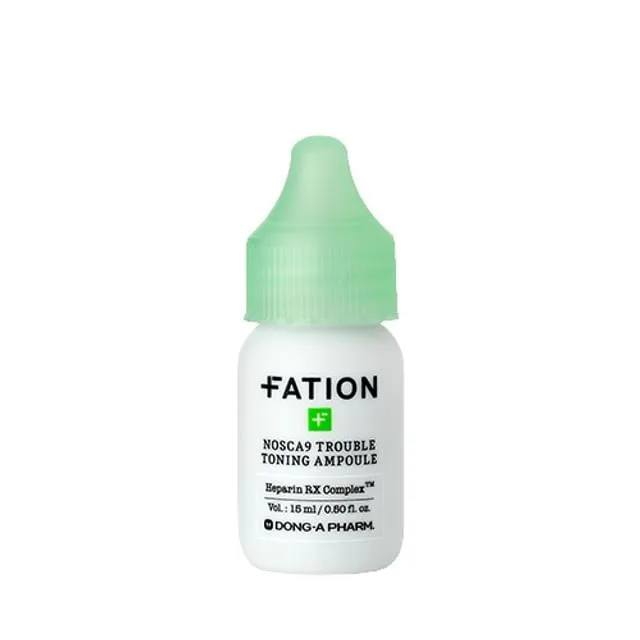
It builds a fragrance-free brightening ampoule on a mugwort-extract base rather than water, combining niacinamide, tranexamic acid and alpha-arbutin with zinc PCA, neem and Dong-A's sodium heparin, and targets the marks acne leaves behind rather than acne itself.
A thoughtfully built, fragrance-free ampoule for the marks that breakouts leave behind, pairing niacinamide, tranexamic acid and alpha-arbutin on a soothing mugwort base that acne-prone skin tolerates well. It works slowly, as all mark-faders do, and the 15 ml bottle makes it pricey per drop, but the formula is one of the better-targeted options for post-acne marks.
Around thirty Olive Young Global reviews and the official ingredient list inform this assessment; percentages of the brightening actives are undisclosed and the brand's efficacy claims come from its own testing.
Verdicts
How well it fits each concern
Verdict by concern tap a concern for the case
Promisingfor Dark SpotsIn your profileYou chose · Niacinamide has trial-level evidence for dark spots but no guideline or regulatory standing yet — promising, short of a recommendation; the other actives here are not yet assessed for it.Moderate evidenceGentleNo reviews collected yet
The case for it
Niacinamide has trial-level evidence for this concern but no guideline or regulatory standing yet.
It is plausibly present at a working level, though the concentration is not declared.
The formula carries none of the triggers this concern is sensitive to.
What would change this: A declared concentration would move this to a firmer reading of the dose.
Same rule for everyone. “Promising” is the verdict on 7,858 of 45,024 concern verdicts across the catalog; rule R9p decided 7,858 of them.
As of September 25, 2026, engine 5.1.1.
R9p — 0.5.0: 'Unproven' beside three filled dots read as one question answered twice with opposite words (7,018 rows). The chip measures standing, the dots measure trial volume; where the row carries at least one RCT or a tier-2 source (moderate dots) and the active is present at a working level, the honest word is Promising. Unproven is reserved for plausible-standing rows with limited or weak evidence, or an under-dosed form. Same rank as Unproven — a bet either way; the dots order them. · the full register
Carrying active
Niacinamide
Standing
plausible — trials support it
Form
plausible
Tolerability
gentle
Row checked
against its sources on July 17, 2026 (evidence table ev-2026.09-r228)
Good choicefor HyperpigmentationIn your profileYou chose · Niacinamide is a trial-supported active for hyperpigmentation; this ampoule carries it, though the concentration is not declared.Moderate evidenceGentleNo reviews collected yet
The case for it
Niacinamide has trial-supported standing for this concern.
It is plausibly present at a working level, though the concentration is not declared.
The formula carries none of the triggers this concern is sensitive to.
What would change this: A declared concentration would move this to a firmer reading of the dose.
Same rule for everyone. “Good choice” is the verdict on 9,564 of 45,024 concern verdicts across the catalog; rule R5 decided 9,072 of them.
As of September 25, 2026, engine 5.1.1.
Not for thisfor Acne ScarringIn your profileYou chose · The actives here have been researched for acne scarring and the evidence does not support the claim.Not yet assessedGentleNo reviews collected yet
The case for it
Niacinamide has been researched for this concern and the evidence does not support it.
It is plausibly present at a working level, though the concentration is not declared.
The formula carries none of the triggers this concern is sensitive to.
What would change this: A declared concentration would move this to a firmer reading of the dose.
Same rule for everyone. “Not for this” is the verdict on 488 of 45,024 concern verdicts across the catalog; rule R10 decided 488 of them.
As of September 25, 2026, engine 5.1.1.
Promisingfor AcneIn your profileYou chose · Niacinamide has trial-level evidence for acne but no guideline or regulatory standing yet — promising, short of a recommendation; the other actives here are not yet assessed for it.Moderate evidenceStandard tolerabilityNo reviews collected yet
The case for it
Niacinamide has trial-level evidence for this concern but no guideline or regulatory standing yet.
It is plausibly present at a working level, though the concentration is not declared.
The formula carries no trigger this concern is sensitive to, with the cautions noted.
Cautions: fungal-acne triggers.
What would change this: A declared concentration would move this to a firmer reading of the dose.
Same rule for everyone. “Promising” is the verdict on 7,858 of 45,024 concern verdicts across the catalog; rule R9p decided 7,858 of them.
As of September 25, 2026, engine 5.1.1.
R9p — 0.5.0: 'Unproven' beside three filled dots read as one question answered twice with opposite words (7,018 rows). The chip measures standing, the dots measure trial volume; where the row carries at least one RCT or a tier-2 source (moderate dots) and the active is present at a working level, the honest word is Promising. Unproven is reserved for plausible-standing rows with limited or weak evidence, or an under-dosed form. Same rank as Unproven — a bet either way; the dots order them. · the full register
Carrying active
Niacinamide
Standing
plausible — trials support it
Form
plausible — studied range 4–5%, from the OTC monograph or label; needs leave-on contact; judge it after ~8 weeks
Tolerability
standard — fungal triggers
Row checked
against its sources on July 17, 2026 (evidence table ev-2026.09-r228)
A verdict is DermApproved’s assessment of how well a product’s ingredients fit a concern — never a claim about what the product treats. Evidence dots and collected reviews sit beside it and are never blended in.
Rules 0.5.1 · evidence table ev-2026.09-r228 · how we decide
Assessment
Pros & Cons
Pros
✓ Niacinamide, tranexamic acid and alpha-arbutin target marks by different routes
✓ Soothing mugwort base instead of water
✓ Fragrance-free and non-exfoliating
✓ Pairs easily with acne treatments
✓ Light, fast-absorbing texture
✓ Registered in Korea as a functional brightening cosmetic
Cons
✗ Expensive per millilitre in the 15 ml size
✗ Results take two to three months
✗ Does not improve textured scars
✗ Contains a cooling agent some find unpleasant
✗ Trace retinyl palmitate may concern strict retinoid avoiders
Review
Full Review
The English name, Nosca9 Trouble Toning Ampoule, is vague. The Korean one is clearer: 트러블 흔적 앰플, roughly trouble-mark ampoule. It is not meant to treat breakouts. It is meant for what comes after them, the red and brown marks that can linger for months once a spot has healed. That focus is the right lens for judging it, and through that lens it is a well-designed product.
The formula starts unusually. The first ingredient is not water but Korean mugwort leaf extract, a traditional soothing botanical and a signature of the Nosca9 line. Niacinamide comes third, a high position that signals a meaningful amount. It is one of the best-supported cosmetic ingredients for post-inflammatory hyperpigmentation, working by reducing the transfer of pigment to skin cells, and it also helps calm redness and supports the barrier. Tranexamic acid appears eleventh, well ahead of the long list of extracts, adding a second route against darkening by interfering with inflammatory signals that stimulate pigment production. Alpha-arbutin, a tyrosinase inhibitor, sits in the second half. Together these three cover different steps of the pigmentation process, which is a sensible strategy for stubborn marks.
The supporting cast is extensive. Zinc PCA helps regulate oil for skin that is still breakout-prone. Neem, holy basil, turmeric, Kakadu plum, amla and grape cell extracts add antioxidant activity. Panthenol, allantoin, dipotassium glycyrrhizate and sodium heparin, the basis of Dong-A Pharmaceutical's Heparin RX Complex, keep it calm. Glutathione, ferulic acid, sodium ascorbyl phosphate and a trace of retinyl palmitate appear near the end, more as decoration than as active doses. There is no added fragrance. A cooling agent, methyl diisopropyl propionamide, gives a brief fresh sensation on application; it is not menthol, but anyone who dislikes cooling products should know it is there. The product is registered in Korea as a functional brightening cosmetic, reflecting its niacinamide content.
In use, a few drops from the nozzle spread easily and absorb within seconds, leaving a light, non-sticky finish that layers well under moisturiser and sunscreen. It can be pressed a little more heavily onto areas with marks, then spread over the whole face, since marks tend to appear in new places as breakouts come and go.
Expectations need to match how pigmentation works. Fresh red marks, which are really lingering inflammation and dilated vessels, often calm within a few weeks. Brown marks, caused by excess melanin, typically take eight to twelve weeks or longer to fade noticeably. No serum will speed that up dramatically, and none will help without daily broad-spectrum sunscreen, because UV exposure darkens and prolongs marks. The ampoule does not exfoliate, so it will not smooth the texture of true scars, which are a different problem requiring professional treatment.
The gentleness is a real advantage for acne-prone skin. Many brightening products rely on acids or high-strength vitamin C that can irritate skin already dealing with breakouts and acne treatments. This ampoule is non-exfoliating and fragrance-free, so it can be used alongside azelaic acid, adapalene or benzoyl peroxide without adding much irritation. Oily skin will appreciate the light texture; dry skin will want a moisturiser on top.
Skin tone matters for how long marks last. On medium to deep skin tones, post-inflammatory hyperpigmentation tends to be darker and more persistent, and irritation from harsh treatments can create new marks. That is exactly where a gentle, fragrance-free, non-exfoliating formula earns its place: it works on pigment without inflaming the skin further. On lighter skin tones, red marks are often the bigger issue, and they tend to respond to time, sun protection and calming ingredients like the niacinamide and licorice derivative here. Either way, protecting healing spots from picking is as important as any serum.
The main drawback is price per millilitre. Olive Young Global lists the 15 millilitre bottle at twenty-four dollars, often discounted to around nineteen, and larger 30 millilitre sets are available. At once or twice daily use, a bottle lasts four to six weeks, and fading marks usually requires at least two or three months, so the real cost is two or three bottles. It is not unreasonable for a well-formulated brightening serum, but it is not cheap either.
A note on pregnancy: the formula contains a trace of retinyl palmitate at the very end of the list. Many clinicians consider such trace amounts insignificant, but people who avoid all retinoids during pregnancy may prefer to check with their doctor. Sodium heparin is animal-derived, so it is not vegan.
Fation, the derma brand of Dong-A Pharmaceutical, launched in 2018. This ampoule arrived in 2023 and has around thirty reviews on Olive Young Global, many describing gradual improvement in marks, which is exactly what the formula suggests.
The verdict is positive. For anyone left with red or brown marks after breakouts, particularly on acne-prone or sensitive skin, this is a targeted, gentle, fragrance-free option. Pair it with daily sunscreen and patience.
Formula
Key Ingredients
The hero actives that drive this product's performance.
Third on the list, right after the mugwort base, and the ampoule's main tool against the red and brown marks breakouts leave behind; the product is registered in Korea as a functional brightening cosmetic.
Listed eleventh, well ahead of the extracts, where it adds a second, complementary route for fading post-inflammatory darkening alongside the niacinamide.
Apply a few drops after toner, press over areas with lingering marks and then the whole face, and always finish with sunscreen in the morning.
Results Timeline
Immediate: a cooling, lightweight hydrating layer. Short-term (2-4 weeks): redness from recent breakouts may look calmer. Visible fading of brown marks typically takes 8 to 12 weeks with consistent sunscreen use.
Pairs Well With
Daily broad-spectrum sunscreenA gentle acne treatment such as azelaic acid or adapalene at nightA barrier moisturiser
Post-inflammatory hyperpigmentation (PIH) and post-inflammatory erythema (PIE) are common after acne. PIH reflects excess melanin deposited after inflammation, while PIE reflects persistent vascular dilation and inflammation. Topical approaches for PIH target different stages of melanogenesis.
Niacinamide reduces the transfer of melanosomes from melanocytes to keratinocytes; clinical studies have shown improvements in hyperpigmentation and skin tone after four to eight weeks of use, typically at 2 to 5 percent. It also has anti-inflammatory activity and supports barrier function, which can help calm PIE. Tranexamic acid interferes with the plasminogen-plasmin pathway and associated inflammatory mediators that stimulate melanocytes; topical formulations have shown benefits in melasma and PIH in several trials, generally at 2 to 5 percent. Alpha-arbutin inhibits tyrosinase, the rate-limiting enzyme of melanin synthesis, and is considered more stable and potent than beta-arbutin; studies support modest brightening effects.
Combining agents with different mechanisms is a common strategy for pigmentation, and fragrance-free, non-exfoliating formulations are particularly suitable for acne-prone skin undergoing treatment. Zinc PCA may help regulate sebum, and dipotassium glycyrrhizate and Artemisia princeps extract offer anti-inflammatory support.
No topical agent can overcome ongoing UV exposure, which stimulates melanogenesis and deepens marks; daily broad-spectrum sunscreen is essential for any PIH regimen. Atrophic acne scars involve dermal collagen loss and do not respond meaningfully to brightening serums.
Dermatologist Perspective
For post-acne marks, dermatologists generally recommend treating active acne first to prevent new marks, combined with daily broad-spectrum sunscreen and topical agents such as niacinamide, azelaic acid, tranexamic acid, retinoids or, in some cases, hydroquinone under supervision. Gentle, non-irritating formulations are favoured for acne-prone skin because irritation can itself trigger more pigmentation, particularly in medium to dark skin tones. Red post-inflammatory erythema often fades with time and may respond to vascular lasers if persistent. Textured scars require procedures such as microneedling, lasers or subcision rather than topical products.
Guidance
Usage & Recommendations
How to Use
After cleansing and toner, squeeze two or three drops onto your fingertips. Press a little extra onto areas with red or brown marks, then spread the rest evenly over the face. Follow with moisturiser and, in the morning, broad-spectrum sunscreen, which is essential for fading marks. Use once or twice daily. It can be layered before or after acne treatments; if using a strong retinoid, apply the ampoule first and let it absorb. Expect gradual results over two to three months.
Value Assessment
At about $24.00 for 15 ml on Olive Young Global, often discounted to around $19, the ampoule is expensive per millilitre, and fading marks usually takes two or three bottles. The formula justifies a mid-range price with a well-targeted trio of niacinamide, tranexamic acid and alpha-arbutin in a gentle, fragrance-free base. The 30 ml sets offer better value for committed users. Dong-A Pharmaceutical's backing supports quality, though efficacy data are the brand's own.
Who Should Buy
People with acne-prone, oily, combination or sensitive skin who are left with red or brown marks after breakouts and want a gentle, fragrance-free brightening step that works alongside acne treatments.
Who Should Skip
Those with textured acne scars need professional procedures rather than a brightening serum. Budget shoppers may find the 15 ml size costly, and anyone strictly avoiding retinoids during pregnancy should check the trace retinyl palmitate with their doctor.
Ready to try Fation Nosca9 Trouble Toning Ampoule?
A light, slightly viscous clear serum that spreads easily and absorbs quickly.
Scent
No added fragrance; a faint herbal note from the mugwort base.
Packaging
A 15 ml white dropper-tip bottle with a green nozzle cap, also sold in 30 ml sets.
Finish
lightweightfast-absorbingnatural
What to Expect on First Use
A brief cooling sensation from a menthol-like cooling agent, then a light, non-sticky finish. No purging is expected. Marks fade gradually over weeks, faster for fresh red marks than older brown ones.
How Long It Lasts
About four to six weeks with once- or twice-daily use of a few drops.
Its Korean name translates roughly as trouble-mark ampoule. Fation launched it in 2023 to extend the Nosca9 acne line to the red and brown marks that linger after breakouts heal.
About Fation Established Brand (5–20 years)
Fation is a derma-focused Korean skincare brand created by Dong-A Pharmaceutical, a 90-year-old health-science company, and launched in 2018. The brand is young, but its formulas lean on the parent company's pharmaceutical research, and the Nosca9 line is positioned clinically for troubled, sensitive skin.
Brand founded: 2018 · Product launched: 2023
Myth vs. Reality
Common Myths
Myth
A mark-fading ampoule works in a few days.
Reality
Post-inflammatory marks fade over weeks to months; consistent use and daily sunscreen matter more than the specific product.
Myth
Brightening serums are too harsh for acne-prone skin.
Reality
This formula is fragrance-free and non-exfoliating; niacinamide, tranexamic acid and arbutin are generally well tolerated by acne-prone skin.
FAQ
Frequently Asked Questions
Does Fation Nosca9 Trouble Toning Ampoule fade acne marks?
It combines niacinamide, tranexamic acid and alpha-arbutin, which can gradually lighten post-acne marks over 8 to 12 weeks when used with daily sunscreen.
Is the Nosca9 Trouble Toning Ampoule fragrance-free?
Yes, no fragrance is listed. It does include a cooling agent that gives a brief fresh sensation.
Can I use Fation's toning ampoule with acne treatments?
Yes. It is non-exfoliating and gentle, so it pairs well with azelaic acid, adapalene or benzoyl peroxide used separately.
Does the Fation Toning Ampoule treat active breakouts?
Not directly. It targets the marks left after breakouts, although its soothing base and zinc PCA are friendly to acne-prone skin.
Is the Nosca9 Toning Ampoule safe in pregnancy?
Most ingredients are commonly considered acceptable, but it contains a trace of retinyl palmitate; check with your doctor if you avoid all retinoids.
How much Fation Toning Ampoule should I use?
Two or three drops over the face, pressing a little extra onto marks, once or twice daily.
Reviews
What Reviewers Tend to Say
Recurring themes our editors read across retailer reviews of this product — summaries in our words, not quotations, and not a substitute for your own patch test.
It was invented to stop bleeding during surgery. In 2026 it's in dozens of brightening serums — and the evidence is better than most trend ingredients can claim.
Japan runs a third regulatory tier between cosmetic and pharmaceutical, and once you can see it, the entire J-beauty aisle stops looking modest and starts looking legally precise.
Most heritage claims are unfalsifiable. This one sits on a public regulatory register — which makes it the rare case where you can check what 150 years of institutional research actually bought.
Aug 28, 2026· 7 min
Questions people ask about Hyperpigmentation
Verified answers from our questions library — the nuance a product page cannot carry.
Products, answers, therapy guides, tools and articles in one search. Brand names,
slang and abbreviations all work — accutane finds isotretinoin, bacne finds truncal acne.