Azelaic Acid: The Most Underrated Active in Skincare
It treats acne, rosacea, and dark spots at once, it's pregnancy-safe, and it rarely irritates. So why is almost nobody reaching for it first?
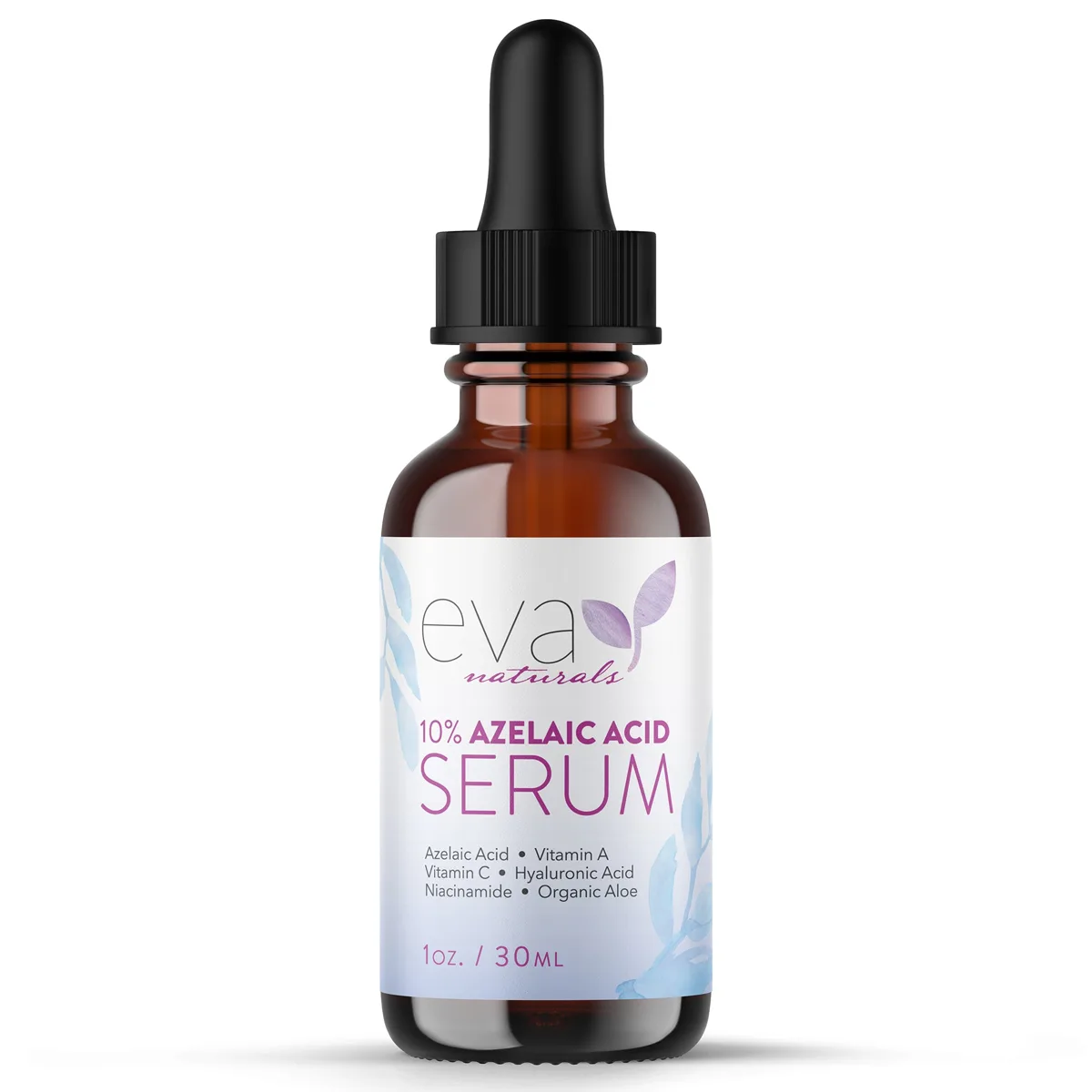
This is one of the cheapest ways to buy a declared 10 percent azelaic acid in the United States, and it does it with real sodium hyaluronate and a working dose of niacinamide rather than the botanical stand-ins found elsewhere in the same brand. The trade-off is the base: an aloe gel with no solubilising system, which keeps the price low and the feel simple at the cost of some grittiness.
The best-value azelaic acid in Eva Naturals' range and one of the cheapest credible ones anywhere: a declared 10 percent with a working dose of niacinamide and real hyaluronate in a fragrance-free aloe gel, 60ml for under fifteen dollars. The aloe base leaves a faint grit and the trace retinyl palmitate muddies the pregnancy question, but for mild redness, blemishes and marks it earns a place.
The case for it
Same rule for everyone. “Strong choice” is the verdict on 1,459 of 45,024 concern verdicts across the catalog; rule R2 decided 892 of them. As of September 25, 2026, engine 5.1.1.
Brand or formulator? Disclose a concentration or correct a fact →
The studies behind the evidence row
The case for it
What would change this: A concentration inside the studied range would raise this a step.
Same rule for everyone. “Good choice” is the verdict on 9,564 of 45,024 concern verdicts across the catalog; rule R4 decided 84 of them. As of September 25, 2026, engine 5.1.1.
Brand or formulator? Disclose a concentration or correct a fact →
The studies behind the evidence row
The case for it
Same rule for everyone. “Good choice” is the verdict on 9,564 of 45,024 concern verdicts across the catalog; rule R5 decided 9,072 of them. As of September 25, 2026, engine 5.1.1.
Brand or formulator? Disclose a concentration or correct a fact →
The studies behind the evidence row
The case for it
What would change this: Guideline or regulatory standing for the active on this concern would move this from a promising bet to a recommendation.
Same rule for everyone. “Promising” is the verdict on 7,858 of 45,024 concern verdicts across the catalog; rule R9p decided 7,858 of them. As of September 25, 2026, engine 5.1.1.
Brand or formulator? Disclose a concentration or correct a fact →
The studies behind the evidence row
The case for it
Same rule for everyone. “Not for this” is the verdict on 488 of 45,024 concern verdicts across the catalog; rule R10 decided 488 of them. As of September 25, 2026, engine 5.1.1.
Brand or formulator? Disclose a concentration or correct a fact →
The studies behind the evidence row
A verdict is DermApproved’s assessment of how well a product’s ingredients fit a concern — never a claim about what the product treats. Evidence dots and collected reviews sit beside it and are never blended in. Rules 0.5.1 · evidence table ev-2026.09-r228 · how we decide
Every azelaic acid product begins with the same awkward fact: the molecule barely dissolves in water. Prescription makers solve it with elaborate gel and cream vehicles built around propylene glycol and polymers; cosmetic brands often reach for silicones to suspend it smoothly; and the cheapest route of all is to stir it into a gel and accept that some of it will remain as fine particles. Eva Naturals took the cheapest route. This serum is 10 percent azelaic acid dispersed in organic aloe juice with glycerin and xanthan gum, no solvent system, no silicone, and the consequences run right through the experience of using it. It is why the bottle needs a shake, why a thin powdery residue can appear as it dries, why the dropper draws it up slowly, and why the price is a fraction of what a smoother suspension costs. Whether that is a fair trade depends on what the buyer wants from azelaic acid.
Most people want three things: less redness, fewer blemishes, and lighter marks where blemishes used to be. Azelaic acid has good evidence for all three at the 15 and 20 percent prescription strengths, and the mechanism does not switch off at 10. It inhibits tyrosinase, which slows pigment production; it normalises the way skin cells shed inside pores, which reduces comedones; it is mildly antibacterial; and it has an anti-inflammatory effect that rosacea patients notice as calmer flushing. At two thirds of the lowest prescription dose the same things happen, more slowly and on milder cases, and the review record for this product agrees: among nearly two thousand Amazon ratings the most repeated praise is for calmer redness within a few weeks and fading post-acne marks over a couple of months, with a steady undertone of people who found it too slow and stepped up to a prescription.
The supporting cast is better chosen than the brand's older serums. Niacinamide sits fourth on the label, after glycerin, which is a genuine working position rather than a name-check; it slows the transfer of pigment that the acid slows the making of, and its barrier-support effect blunts the early tingle. Sodium hyaluronate is the real thing here, not the tara gum labelled as botanical hyaluronic acid elsewhere in the range, and it gives the aloe gel enough slip to keep the acid from feeling drying. Vitamin C appears twice, as stable sodium ascorbyl phosphate inside a liposomal vitamin complex and as a small amount of L-ascorbic acid near the tail. There is no fragrance, no alcohol and no oil, which is exactly the profile a rosacea-prone face needs from a treatment.
Two things in that liposomal complex deserve a closer look. The first is retinyl palmitate, the mildest retinoid ester, at a trace dose. It will not visibly resurface anything, but its presence means a serum whose headline active is one of the few blemish treatments routinely approved in pregnancy now carries a vitamin A derivative, and a cautious obstetric dermatologist might prefer a version without it. The second is the manuka honey a few lines below, which is a pleasant humectant and an animal product, making the vegan-friendly language on the listing untrue. Neither is a safety problem; both are the kind of loose labelling a brand five years into selling this product ought to have tidied.
Using it is straightforward once the shake is remembered. A few drops go onto dry, cleansed skin morning and night, spread thinly, and given a minute before moisturizer. The first few applications bring a mild warmth, more noticeable around the nose and on any active spots, which fades within the week. Sunscreen follows in the morning, not because azelaic acid is photosensitising, which it is not, but because fading marks while making new ones is a pointless loop. On nights when a stronger retinoid is on the menu, alternating is kinder than stacking until the skin has settled. The residue, when it comes, is faint and brushes away; heavier hands get more of it, so the thin layer matters.
The complaints are consistent and mostly about format. The gel is thicker than a dropper wants to handle. The grit bothers a minority. A small number of very sensitive users find the tingling does not fade. And a handful, fairly, note that a 10 percent aloe gel will never match the prescription 15 percent gel they had hoped to replace. None of these are surprising given the formulation choices, and none of them suggest the product is doing anything other than what a 10 percent azelaic acid in a simple base should do.
At $14.99 for 60ml direct from the brand, with a 30ml size for trial and Amazon sometimes asking more, this is around four dollars a month for three to four months of twice-daily use. That is cheaper per millilitre than almost any other azelaic acid on the market and the actives are genuinely there. It is not the most elegant azelaic acid available, and a buyer who wants a smooth silicone glide or a pregnancy-clean label should spend more elsewhere. For mild rosacea flushing, the occasional breakout and the marks left behind, on a budget, it is a sensible, honest, slightly gritty bargain.
The hero actives that drive this product's performance.
| Ingredient | Function | Evidence |
|---|---|---|
| Azelaic Acid (10%) | Second on the label at a declared 10 percent, carried in an aloe-juice gel with no solvent or silicone to dissolve it, which means much of the acid is dispersed as fine particles rather than in solution. It is the anti-redness, anti-blemish and anti-pigment engine of the formula, working through the same tyrosinase and keratinisation pathways as the prescription strengths, at two thirds of the lowest prescription dose. | Regulator-approved for Rosacea · well-established certainty |
| Niacinamide | Fourth on the label, just after glycerin, which places it at a working few percent. It complements the azelaic acid on redness and on post-acne marks, slowing pigment transfer while the acid slows pigment production, and adds a barrier-support effect that helps offset any early tingling from the acid. | Emerging for Hyperpigmentation |
| Sodium Hyaluronate | Genuine sodium hyaluronate, unlike the tara-gum substitute in some of the brand's other serums, sitting mid-label to give the aloe gel water-holding slip and to keep the acid from feeling drying. It is a comfort ingredient in this formula, not a treatment one. | Not yet assessed |
| Retinyl Palmitate | Arrives inside a liposomal multivitamin complex alongside vitamin E acetate and sodium ascorbyl phosphate. It is the gentlest retinoid ester, at a trace dose, and its real significance is that it makes this a product to pause during pregnancy rather than one that will visibly renew skin. | Not yet assessed |
| Leptospermum Scoparium (Manuka) Mel | Manuka honey near the tail of the list, adding a humectant and mild antibacterial note that fits the blemish positioning. Its dose here is decorative, and it is the reason the formula is not vegan despite the marketing. | Not yet assessed |
Ingredient standings describe the active at treatment-level doses and vehicles; this product's own condition grades weigh its actual formula.
Aloe Barbadensis Leaf Juice, Azelaic Acid, Glycerin, Niacinamide, Sorbitol (and) Lecithin (and) Tocopheryl Acetate (and) Glyceryl Linoleate (and) Glyceryl Linolenate (and) Retinyl Palmitate (and) Sodium Ascorbyl Phosphate (and) Xanthan Gum, Xanthan Gum, Sodium Hyaluronate, Pullulan, Leptospermum Scoparium (Manuka) Mel, Centipeda Cunninghamii (Cehami) Extract, L-Ascorbic Acid, Disodium EDTA, Gluconolactone (and) Sodium Benzoate, Phenoxyethanol
treatment
AM & PM
Shake the dropper bottle before each use so the dispersed acid is evenly mixed, then apply a few drops to dry skin after cleansing and toner and let it set for a minute before moisturizer. It sits well under sunscreen. On nights when a stronger retinoid is used, alternate rather than stack until skin has adapted, since both can tingle on the same evening.
A mild tingle on the first few applications settles within a week. Redness and active blemishes usually calm over three to four weeks of twice-daily use, and post-acne marks and uneven tone take eight to twelve weeks, roughly the same timeline the prescription strengths show in trials, spread a little longer at 10 percent.
Azelaic acid is one of the better-evidenced topical actives in dermatology, though nearly all of that evidence comes from prescription concentrations. In a randomised trial of 251 patients with papulopustular rosacea published in Archives of Dermatology in 2003, 15 percent azelaic acid gel outperformed 0.75 percent metronidazole gel on inflammatory lesion count and erythema over 15 weeks, and an earlier double-blind vehicle-controlled study in Acta Dermato-Venereologica (1999) found 20 percent azelaic acid cream cut inflammatory rosacea lesions by about 73 percent against 51 percent for vehicle over three months. The mechanism is unusually broad for a single molecule: it inhibits tyrosinase and is selectively toxic to overactive melanocytes, which is the basis of its use for post-inflammatory marks and melasma; it reduces the abnormal keratinisation that forms comedones; it inhibits Cutibacterium acnes; and it lowers reactive oxygen species and kallikrein-5 activity in rosacea skin. What the literature does not contain is a controlled trial of 10 percent in an aloe gel, so any claim for this serum is an extrapolation downward from the prescription data, reasonable in direction but unquantified in size. The formulation matters more than usual here. Azelaic acid's solubility in water is low, and prescription vehicles use propylene glycol and polyacrylate systems to keep it in solution and drive it into skin. This serum has none of those, so a portion of the declared 10 percent exists as dispersed crystals, which reduces the fraction available for absorption and explains the residue users describe; the effective delivered dose is therefore somewhat below the label figure, even if the label figure is accurate. Niacinamide at a plausible 2 to 4 percent, judging by its fourth-place position, has independent trial support for reducing facial redness and for slowing melanosome transfer, and pairing it with a tyrosinase inhibitor is a rational two-step attack on pigment. The liposomal vitamin complex contributes trace retinyl palmitate, tocopheryl acetate and sodium ascorbyl phosphate, all at levels that add antioxidant garnish rather than measurable effect. Sodium hyaluronate and glycerin provide the surface hydration that keeps a 10 percent acid comfortable. The honest scientific summary is a moderate-dose, moderately delivered azelaic acid with a useful niacinamide partner, likely to help mild redness and marks and unlikely to match the trial results of the prescription vehicles.
Azelaic acid occupies a particular niche in clinical practice: it is the active most often suggested when a patient needs something for redness, comedonal acne or post-inflammatory marks that is gentle enough for sensitive or rosacea-prone skin, and it is one of the few acne treatments considered compatible with pregnancy. Over-the-counter 10 percent versions are commonly recommended as a starting point or as maintenance after a prescription course, with the understanding that they act more slowly than the 15 percent gel used in the trials. On that basis this serum is a reasonable choice for mild presentations, and its fragrance-free, alcohol-free profile is what a dermatologist would look for first. Two caveats would usually be raised in consultation. The aloe-gel vehicle without a solubilising system delivers less of the acid than the label suggests, so expectations should be set accordingly and moderate-to-severe rosacea or acne should still be treated with prescription strengths. And the trace retinyl palmitate in the formula, while almost certainly negligible, means a patient who is pregnant and specifically avoiding all retinoids would usually be pointed towards an azelaic product without it. For everyone else the standard guidance holds: apply thinly, expect a brief tingle, use daily sunscreen, and give it three months before judging.
Shake the bottle first, every time, so the dispersed acid is evenly distributed. On clean, dry skin, after toner if one is used, draw up a small amount with the dropper and spread three or four drops thinly over the whole face or just the affected areas, keeping it clear of the eyes and the corners of the nose where tingling is strongest. Wait a minute for it to set, then follow with moisturizer, and in the morning with sunscreen. Twice a day is the target, but sensitive skin does well starting once nightly for the first week and adding the morning application once any warmth has faded. Apply a thin layer rather than a generous one; extra product only increases the powdery residue without increasing the dose delivered. Allow three months of consistent use before judging results on pigment, and expect redness to respond sooner.
Fifteen dollars for 60ml of a declared 10 percent azelaic acid with a real niacinamide dose is, per millilitre, among the lowest prices for this active in the United States, and the bottle lasts three to four months of twice-daily use, so the monthly cost is roughly four dollars. A 30ml size at about eight dollars exists for anyone wanting to test tolerance first, and the 2 oz is the better buy per millilitre. What the price does not include is formulation finesse: the acid is dispersed rather than dissolved, the dropper is the wrong tool, and a buyer who wants a silky glide will need to pay two or three times as much elsewhere. Eva Naturals' five years of selling this exact formula to nearly two thousand reviewers is reassurance about consistency rather than clinical proof, which the brand does not have. Judged as a budget treatment for mild redness and marks, the value is excellent; judged as a replacement for a prescription, it is a cheaper compromise.
Anyone with mild rosacea flushing, recurring small breakouts or lingering post-acne marks who wants an azelaic acid at a budget price, especially sensitive or rosacea-prone skin that cannot tolerate fragrance or alcohol. Also a good maintenance product for someone finishing a prescription course.
People with moderate-to-severe rosacea or acne, who will get more from the 15 percent prescription gel. Anyone pregnant and avoiding all vitamin A derivatives, because of the trace retinyl palmitate, and strict vegans, since the formula contains manuka honey. Users who dislike any grit or residue in a serum.
Ready to try Eva Naturals Azelaic Acid 10% Facial Serum?
Buy at Amazon ♥A translucent, slightly cloudy aloe gel with a faint slip from the glycerin and hyaluronate; it spreads thinly and can leave a whisper of powdery residue as the dispersed acid dries down.
No added fragrance. A faint, clean, slightly sour note from the aloe and acids that disappears on the skin.
A 60ml amber glass bottle with a black rubber-bulb dropper, which suits a thin serum better than this gel; the acid-and-aloe formula needs a shake and the dropper draws it up slowly.
Most people feel a mild warmth or tingle for the first few evenings, particularly around the nose and on any active blemishes, which fades within a week as skin adjusts. Redness often looks calmer within a fortnight; pigment takes months. A faint residue on drying is normal and is the undissolved acid settling, not the product failing.
Three to four months at a few drops morning and night, since 60ml is a generous size for a treatment serum.
All Year
Eva Naturals launched this serum in mid-2021, as azelaic acid was having its moment on TikTok and rosacea-prone shoppers were hunting for an over-the-counter version of what their dermatologists prescribed. The brand's answer was to put 10 percent into its familiar aloe-juice gel, add the niacinamide and hyaluronate buyers were searching for, and sell it in a 60ml bottle for under fifteen dollars.
Eva Naturals is a family-owned Texas brand that has sold plant-based serums through Amazon since 2013, best known for an inexpensive vitamin C serum. Its formulas lean on organic aloe bases and recognised actives, it publishes no clinical testing of its own, and it backs products with a money-back guarantee rather than data.
Ten percent azelaic acid is too weak to do anything useful.
The prescription strengths are 15 and 20 percent, but over-the-counter 10 percent has a respectable record for mild redness, blemishes and marks. It works more slowly and on milder cases; it is not inert.
The gritty feel on drying means the product has gone off.
Azelaic acid dissolves poorly in water, and this aloe gel has no solvent system, so some acid stays as fine particles that can leave a faint residue. Shaking before use and applying to dry skin minimises it.
Because it is labelled vegan-friendly it contains no animal ingredients.
The ingredient list includes Leptospermum scoparium mel, which is manuka honey. Honey is an animal product, so the serum is not vegan, whatever the listing implies.
It carries the ingredient with the best over-the-counter evidence for papulopustular rosacea, azelaic acid, at 10 percent alongside niacinamide, and calmer flushing within a few weeks is the most common report in its nearly two thousand reviews. Persistent or severe rosacea still warrants the 15 percent prescription gel.
Azelaic acid is poorly soluble in water and this formula is an aloe-juice gel without a solvent or silicone system, so part of the 10 percent remains as fine dispersed particles. Shaking the bottle and applying a thin layer to dry skin keeps the residue to a minimum.
Azelaic acid itself is one of the few acne actives obstetric dermatologists routinely approve, but this serum also contains a trace of retinyl palmitate inside its vitamin complex. Most clinicians would consider that dose negligible; anyone wanting to avoid all vitamin A derivatives while pregnant should choose a retinoid-free azelaic product.
Both are already in the bottle: niacinamide is the fourth ingredient and vitamin C appears twice, as sodium ascorbyl phosphate and as a small amount of L-ascorbic acid. Adding a separate niacinamide serum is redundant; a separate vitamin C can go on in the morning with this at night.
The prescription gels and creams have randomised trial data for rosacea and acne; 10 percent has less formal evidence and works more slowly, but it is well tolerated and suits milder cases. This serum is a sensible first step or a maintenance product after a prescription course.
Around three to four months at a few drops twice a day, which is one of the reasons it scores so well on value. The 1 oz size is also sold for anyone who wants to trial it first.
Yes. Because some of the azelaic acid sits as a fine dispersion rather than in solution, it can settle in the bottle, and a quick shake before drawing up the dropper keeps each dose consistent.
Recurring themes our editors read across retailer reviews of this product — summaries in our words, not quotations, and not a substitute for your own patch test.
Calms redness and rosacea flushing within weeks
Fades post-acne marks over a couple of months
Fragrance-free and non-stinging for most
Big 60ml bottle at a low price
Lightweight gel layers easily under sunscreen
Slight grittiness or residue when it dries
Dropper is fiddly for a gel this thick
Tingling for the first week on sensitive skin
Slower than prescription strength