





Hyaluronic Acid Gets the Ad Budget. Glycerin Does the Work.
The cheapest humectant on the ingredient list is also the best-studied, the most reliable in dry air, and the one your favorite moisturizer is quietly built around.
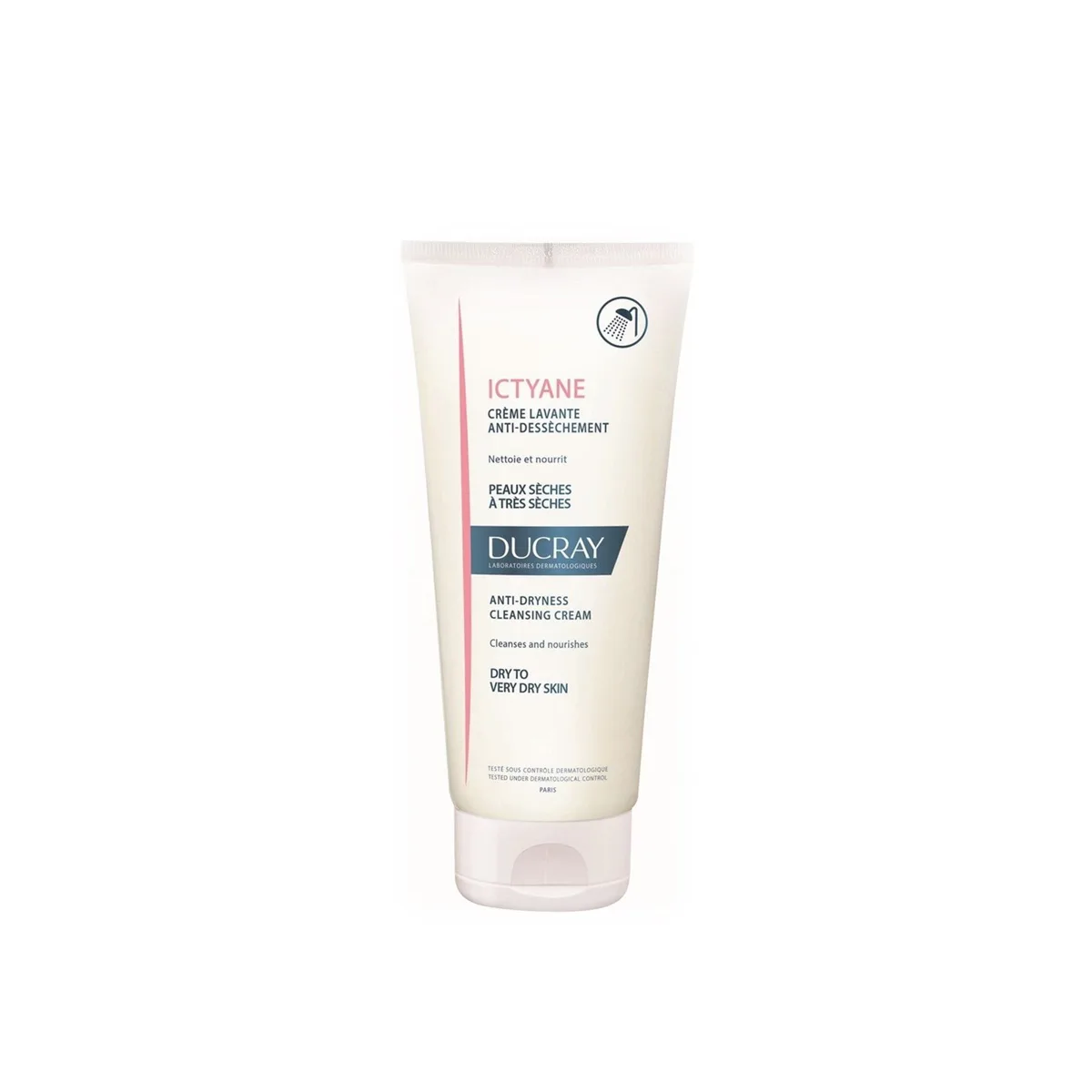
Most body washes lean entirely on surfactants; this one places sweet almond and safflower oils third and fourth on the list, so it cleanses while actively replenishing lipids. It's a cream wash engineered around the comfort of dry to very dry skin rather than around deep cleansing power, which is an unusual priority for a daily face-and-body product.
A lipid-rich cream wash that genuinely cares for dry skin, depositing sweet almond and safflower oils as it cleanses so you step out of the shower soft instead of tight. The emollient logic is sound and the gentle surfactant base is well judged. The catch is a meaningful fragrance-allergen load that makes it a poor pick for reactive or eczema-prone skin.
US review volume for this particular Ictyane cleansing cream sits in the low hundreds across importers, so the rating draws chiefly on its complete published ingredient list — both its emollient strengths and its allergen load — rather than a large body of domestic user feedback. Its non-stripping performance on dry skin is well supported by the formula; how well any individual tolerates the fragrance is the variable the score can't predict.
The case for it
Cautions: fragrance.
What would change this: The same active in a leave-on form would be judged on its evidence rather than its contact time.
Same rule for everyone. “Supporting role” is the verdict on 8,197 of 45,024 concern verdicts across the catalog; rule R6 decided 2,017 of them. Unchanged since September 5, 2026, engine 5.1.1.
Brand or formulator? Disclose a concentration or correct a fact →
The studies behind the evidence row
The case for it
What would change this: The same active in a leave-on form would be judged on its evidence rather than its contact time.
Same rule for everyone. “Supporting role” is the verdict on 8,197 of 45,024 concern verdicts across the catalog; rule R6 decided 2,017 of them. Unchanged since September 5, 2026, engine 5.1.1.
Brand or formulator? Disclose a concentration or correct a fact →
The studies behind the evidence row
Also listed for Winter Skin — the actives here (Cleansing Surfactants, Glycerin, Safflower Oil, Sweet Almond Oil) are in our research queue for that concern; there is no verdict until their evidence rows are written. That is a gap in our table, not a mark against the product.
Does the jobDoes what a cleanser is for: surfactant mildness, rinses clean without stripping. Not measured from the label: pH match to skin.
A verdict is DermApproved’s assessment of how well a product’s ingredients fit a concern — never a claim about what the product treats. Evidence dots and collected reviews sit beside it and are never blended in. Rules 0.5.1 · evidence table ev-2026.09-r228 · how we decide
We tend to think of cleansing as a subtractive act: you wash to remove oil, dirt, and the day. But for genuinely dry skin, that subtraction is exactly the problem. Every wash with a stripping cleanser undoes the careful moisturizing you did an hour earlier, leaving skin tight, flaky, and resentful. Ducray's Ictyane Cleansing Cream is built on the opposite premise — it's a wash designed primarily around what it deposits, not just what it removes, and that reframing is what makes it worth talking about.
The evidence is right there in the ingredient order. After water and the primary surfactant, the third and fourth ingredients are sweet almond oil and safflower seed oil. That is an unusually high placement for emollient oils in a cleanser, and it's deliberate. As the surfactants lift away grime, these oils leave behind a thin lipid film that survives the rinse, so dry skin feels cushioned and soft rather than squeaky and parched. Glycerin sits just behind them as a humectant to bind water to the surface, and the whole thing is built to leave skin in a better state than it found it — a sensible goal for the dry to very dry skin the Ictyane line exists to serve.
The surfactant system is thoughtfully assembled too. The primary detergent is sodium trideceth sulfate, a sulfate-class surfactant, but it's tempered by sodium lauroamphoacetate, a mild amphoteric co-surfactant that softens the overall cleansing action. The result is a creamy wash with a soft, low lather — not the squeaky high-foam experience some people equate with 'clean,' but a gentler clean that doesn't leave dry skin feeling assaulted. In practice it works as both a facial cleanser at the sink and a face-and-body wash in the shower, which makes it efficient for anyone whose dryness extends past the face.
Now the honest part, and it's a significant one. This is not a minimalist formula. The ingredient list carries parfum plus a notable roster of named fragrance allergens — alpha-isomethyl ionone, benzyl salicylate, citronellol, geraniol, hydroxycitronellal, and linalool. For most people with merely dry skin and no fragrance sensitivity, this is a non-issue; the scent is the soft, classic French-pharmacy smell that many actively enjoy. But dry skin and sensitive, reactive, or eczema-prone skin overlap heavily, and this is precisely the population most likely to react to fragrance allergens. That's the central tension of the product: it's a cleanser aimed at compromised dry skin that nonetheless includes ingredients compromised skin is most prone to reacting to. I can't ignore that, and neither should you if your skin runs reactive.
It's also worth flagging the preservative system, which includes ingredients some consumers prefer to avoid, and the sweet almond oil's status as a tree-nut derivative, relevant for the small number of people with severe nut allergies. None of these are dealbreakers for the typical dry-skinned user, but they collectively mean this is a 'right person' product rather than a universal recommendation.
For that right person, though, it delivers. Swap it in for a harsher cleanser and the change is immediate — skin feels softer and free of the tight, drum-skin sensation that drier complexions know all too well, especially in winter. It earns its keep most in the cold months, when central heating and low humidity turn ordinary washing into a daily exercise in self-sabotage. The emollient film it leaves makes the post-shower window far more forgiving, buying you time to apply your moisturizer before dryness sets back in.
Value is reasonable for a pharmacy-brand dry-skin cleanser. At around twenty-one dollars for 200 ml with a larger 400 ml available, it's priced above basic drugstore washes but in line with its dermatological positioning, and the bigger size improves the per-millilitre math for committed users. You're paying for the emollient-forward formulation and Pierre Fabre's pedigree, which is fair, though as with the rest of Ducray's US presence, you'll mostly find it through importers and resellers, with the usual shipping considerations.
A practical note on how it fits a routine. Because dry skin loses water fastest in the minutes right after washing, the smartest way to use this cleanser is to follow it immediately with a moisturizer while the skin is still slightly damp — the emollient film it leaves buys you a little grace, but it's not a substitute for proper moisturizing. Water temperature matters too: lukewarm rather than hot, since hot water strips lipids no matter how gentle the cleanser. Used this way, as the opening step of a deliberate dry-skin routine rather than a standalone fix, it pulls its weight. It's also genuinely convenient as a single product for the whole shower, which counts for something on a cold morning when the last thing you want is a multi-step washing ritual.
The bottom line is a cleanser with a clear, sensible philosophy and one real caveat. As a nourishing wash for dry skin that doesn't strip, it's genuinely good — the high placement of almond and safflower oils isn't marketing fluff but a formulation choice you can feel. The fragrance-allergen load is the asterisk that keeps it from being an easy across-the-board recommendation. If your skin is dry but not reactive, this is a comforting, well-built option, particularly for winter. If your dryness comes bundled with sensitivity or eczema, the very fragrance that makes it pleasant is the reason to choose a stripped-back, fragrance-free alternative instead.
The hero actives that drive this product's performance.
| Ingredient | Function | Evidence |
|---|---|---|
| Sweet Almond Oil (Prunus Amygdalus Dulcis Oil) | Listed remarkably high for a wash — third on the list — this emollient oil is what makes the cleanser feel nourishing rather than stripping, replenishing surface lipids on dry skin as the surfactants lift away dirt. | Not yet assessed |
| Safflower Seed Oil (Carthamus Tinctorius) | A linoleic-acid-rich oil sitting just behind the almond oil, reinforcing the lipid-replenishing strategy so this cleanser leaves dry to very dry skin feeling comforted instead of tight after rinsing. | Not yet assessed |
| Glycerin | The humectant that keeps water bound to the skin surface during and after cleansing, partnering with the almond and safflower oils so the wash leaves a hydrated rather than parched finish. | Established mechanism for Dryness · established mechanism |
| Sodium Lauroamphoacetate | A mild amphoteric co-surfactant that tempers the primary sulfate detergent, helping this cream cleanse dry skin gently and without the harsh, squeaky after-feel of a stronger wash. | Not yet assessed |
Ingredient standings describe the active at treatment-level doses and vehicles; this product's own condition grades weigh its actual formula.
Water (Aqua), Sodium Trideceth Sulfate, Prunus Amygdalus Dulcis (Sweet Almond) Oil, Carthamus Tinctorius (Safflower) Seed Oil, Glycerin, Sodium Lauroamphoacetate, Sodium Chloride, Paraffinum Liquidum, Cocamide MIPA, Alpha-Isomethyl Ionone, Benzyl Salicylate, BHT, Caffeine Carboxylic Acid, Caprylyl Glycol, Citric Acid, Citronellol, Crambe Abyssinica Seed Oil, Parfum, Geraniol, Hydroxycitronellal, Hydroxypropyl Guar Hydroxypropyltrimonium Chloride, Linalool, Sodium Benzoate
cleanser
AM & PM
Use it as a face and body wash in the shower, or as a gentle facial cleanser at the sink. Follow with a moisturizer while skin is still damp to lock in the comfort, since dry skin benefits from sealing hydration quickly.
Skin feels softer and less tight from the very first wash. Sustained relief from dryness and that post-shower tightness builds over the first week of swapping in this cream for a harsher cleanser.
The formulation logic rests on well-established cleansing science: the trade-off between cleaning efficacy and barrier disruption. Standard high-foaming cleansers, particularly those built on strong anionic sulfates alone, are documented to remove not just dirt and sebum but also intercellular lipids and natural moisturizing factors, raising transepidermal water loss and leaving dry skin tighter and more compromised. The countermeasure here is twofold and evidence-supported. First, the primary surfactant is buffered by an amphoteric co-surfactant (sodium lauroamphoacetate), a recognized strategy for reducing the irritation potential of a cleansing system. Second, and more distinctively, emollient oils are positioned high in the formula. Sweet almond oil and safflower oil are both rich in fatty acids — safflower especially in linoleic acid, a fatty acid central to barrier lipid structure — and deposition of such lipids during washing helps offset the delipidizing effect of the surfactants, a principle behind 'lipid-replenishing' or syndet-plus-oil cleansers. Glycerin's role as a humectant that improves stratum corneum hydration is among the most robustly documented in dermatology. The honest scientific caveat concerns the fragrance allergens: ingredients such as linalool, geraniol, citronellol, and hydroxycitronellal are EU-labeled precisely because they are recognized contact sensitizers, and their relevance rises in the dry, sometimes barrier-compromised skin this product targets. The cleansing chemistry is sound; the sensitization risk from the fragrance is the formula's evidence-based weak point.
For dry and very dry skin, clinical guidance consistently favors gentle, non-stripping cleansers — typically syndet or cream formulations that minimize disruption of the skin barrier, often with added lipids or humectants. A cream wash that incorporates emollient oils and a mild co-surfactant fits squarely within that recommendation and represents a sensible upgrade from harsh, high-foaming soaps for dry-skinned patients. At the same time, dermatologists frequently counsel patients with sensitive, eczema-prone, or reactive skin to choose fragrance-free products, since fragrance is among the most common causes of allergic contact dermatitis, and several of the allergens in this formula are routinely implicated. The practical clinical takeaway is that this style of emollient cleanser is well suited to dry skin without fragrance sensitivity, while those with a compromised barrier or known fragrance allergy are generally steered toward a fragrance-free alternative.
Use daily on the face and body. In the shower, massage a small amount over damp skin, work into a soft lather, and rinse with lukewarm water. At the sink, apply to damp skin, massage gently, and rinse, avoiding the eyes. Because it's built for dry skin, follow promptly with a moisturizer while skin is still slightly damp to seal in hydration. Keep water temperature moderate — hot water amplifies dryness regardless of cleanser. If your skin is sensitive or fragrance-reactive, patch test on the inner arm before regular use.
At roughly $21 for 200 ml, with a 400 ml available, this is priced like a dermatological dry-skin cleanser — more than a basic drugstore wash but justified by its emollient-forward formula and Pierre Fabre pedigree. The larger size meaningfully improves per-millilitre value, so it's the better buy for daily face-and-body use. What you're paying for is genuine lipid replenishment during cleansing rather than a stripped-down surfactant base. The value caveat is the fragrance load: for anyone who reacts to it, the product simply isn't usable at any price, and US sourcing through importers can add shipping. For dry, non-reactive skin, it's fair value for a comforting daily wash.
This suits dry to very dry skin that isn't fragrance-sensitive and wants a daily face-and-body wash that comforts rather than strips. It's a strong pick for anyone whose skin tightens after a normal cleanser, and for households wanting one gentle, emollient wash that works in the shower through the dry winter months.
Anyone with sensitive, eczema-prone, or reactive skin should be cautious, since the fragrance-allergen content is exactly what compromised skin tends to react to. Oily skin will find it under-cleansing and unnecessarily rich, and those with tree-nut allergies should note the sweet almond oil and choose a different formula.
A creamy, lotion-like wash that produces a soft, low lather and rinses to leave skin feeling cushioned rather than squeaky.
A soft, classic French-pharmacy fragrance — pleasant but present, carrying several listed fragrance allergens.
Squeeze tube or pump bottle depending on size, in Ducray's pale Ictyane dry-skin livery.
From the first wash, skin feels noticeably softer and free of the tight, parched after-feel that harsher cleansers leave on dry skin. There's no purging or adjustment phase; the main thing to watch for is whether the fragrance suits sensitive skin, so a patch test is wise for reactive users.
Roughly 6-8 weeks as a daily face-and-body wash from the 200 ml size, with the 400 ml lasting proportionally longer.
fall winter
The Ictyane line is Ducray's dedicated dry-skin franchise, and this cleansing cream is its washing step — designed so that people with dry, easily-stripped skin don't have to undo their moisturizing routine every time they shower. The emollient-forward formula reflects the line's whole-body, anti-dryness philosophy.
Ducray, founded in 1931 and part of the Pierre Fabre group, anchors its Ictyane line on managing dry to very dry skin for the face and body. The range is a long-standing European pharmacy staple developed with the company's dermatological research backing.
A cleanser can't really moisturize — it all washes down the drain.
While a wash has short contact time, oils placed this high in the formula deposit a thin emollient film that survives rinsing, which is why dry skin feels softer rather than stripped after using it.
Cream cleansers don't clean as well as foaming ones.
This formula still contains effective surfactants; it simply balances them with emollients and a mild co-surfactant. It cleans normal daily grime perfectly well — it's just engineered not to strip dry skin in the process.
Yes — it's specifically built for dry to very dry skin. Sweet almond and safflower oils sit high in the formula and deposit a thin emollient film during washing, so skin feels soft and cushioned rather than tight afterward.
Yes. It's formulated as a gentle face-and-body wash, working as a facial cleanser at the sink or a creamy shower wash. It's a practical single product for anyone whose dryness extends beyond the face.
Yes, and notably it includes several named fragrance allergens such as linalool, geraniol, and citronellol. Most dry-skinned users won't have an issue, but fragrance-sensitive or eczema-prone skin should be cautious or choose a fragrance-free option.
Only with caution. While the emollient base is gentle, the fragrance-allergen content is exactly what reactive and eczema-prone skin tends to react to. A fragrance-free cleanser is generally the safer choice for those skin types.
It produces a soft, low lather rather than a rich foam. That's by design — the emollient, gentle surfactant system prioritizes not stripping dry skin over generating lots of bubbles, so it cleans effectively without a squeaky finish.
It contains no retinoids, acids, or other actives typically restricted in pregnancy, so it's generally considered a safe cleansing choice. Anyone with concerns or a fragrance sensitivity should confirm with their doctor.
Recurring themes our editors read across retailer reviews of this product — summaries in our words, not quotations, and not a substitute for your own patch test.
Doesn't dry out the skin
Gentle enough for the whole family
Leaves skin soft after showering
Good for winter dryness
Fairly fragranced with several allergens
Contains a sulfate surfactant
Some prefer fragrance-free for sensitive skin
Modest lather