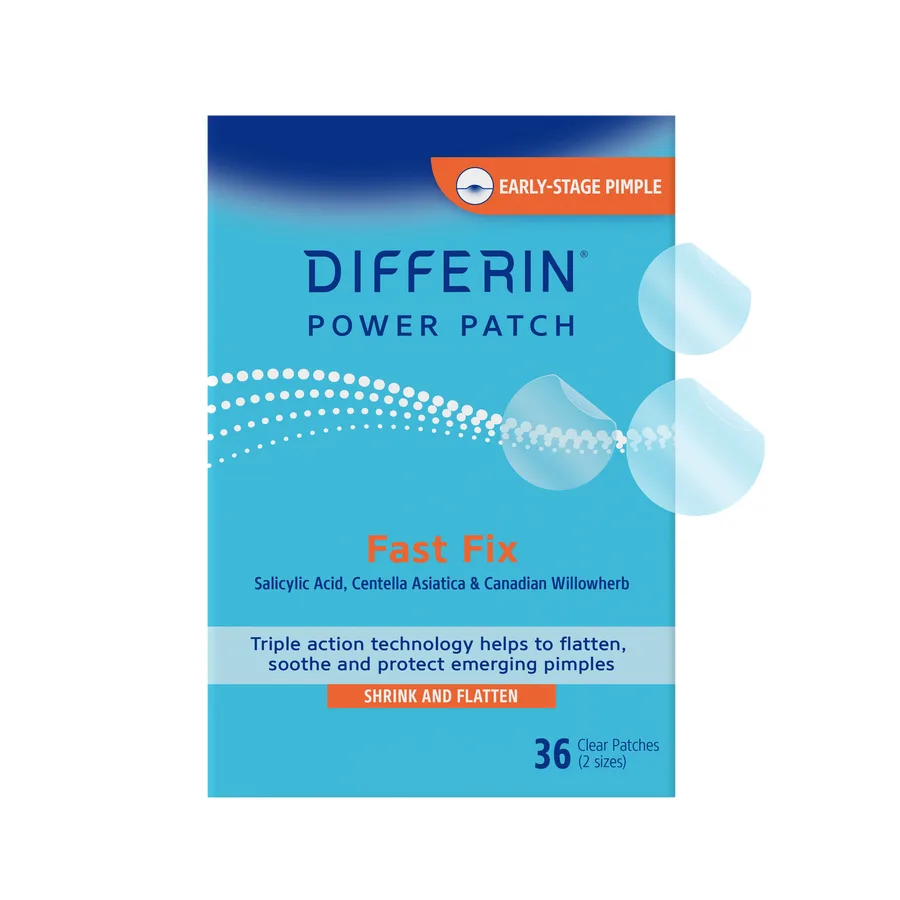
Most clear acne patches are passive hydrocolloid seals; this one is an active delivery device, holding salicylic acid plus a cica-and-tea-tree calming complex in sustained contact with an emerging spot. The two-size sheet and clear, waterproof film make it a treat-it-before-it-erupts tool rather than a draw-the-pus-out one.
An active, clear salicylic-acid patch that genuinely earns its keep on early-stage spots — the kind you feel coming but can't yet see. It's affordable, discreet, and leverages real Differin acne credibility, but it's a tool for emerging blemishes, not a rescue for deep cystic bumps, and the alcohol-forward base can sting sensitive skin.
Strong choicefor AcneIn your profileYou chose · Salicylic Acid is an approved or monograph active for acne; this pad carries it, though the concentration is not declared.Moderate evidenceStandard tolerabilityNo reviews collected yet
The case for it
Salicylic Acid is a first-line active — approved, monograph-listed or named in current guidelines — for this concern.
It is plausibly present at a working level, though the concentration is not declared.
The formula carries no trigger this concern is sensitive to, with the cautions noted.
Cautions: fragrance.
What would change this: A declared concentration would move this to a firmer reading of the dose.
Same rule for everyone. “Strong choice” is the verdict on 1,459 of 45,024 concern verdicts across the catalog; rule R3 decided 567 of them.
Unchanged since September 5, 2026, engine 5.1.1.
R3 — Undeclared but plausibly dosed (top-third INCI position, or a potent sub-1% active) — the verdict stands, and the sentence says what disclosure would add. A declared figure below range would have been sub-threshold. · the full register
Carrying active
Salicylic Acid
Standing
first line — a regulator recognises it for this use; trials support it · per § 333.310 Acne active ingredients. (U.S. Food and Drug Administration — 21 CFR Part 333 Subpart D (Topical Acne Drug Products), Code of Federal Regulations via GovInfo), opened July 27, 2026
Form
plausible — studied range 0.5–2%, from the OTC monograph or label; judge it after ~6 weeks
Tolerability
standard — fragrance load
Row checked
against its sources on July 27, 2026 (evidence table ev-2026.09-r228)
Strong choicefor BlackheadsIn your profileYou chose · Salicylic Acid is an approved or monograph active for blackheads; this pad carries it, though the concentration is not declared.Moderate evidenceStandard tolerabilityNo reviews collected yet
The case for it
Salicylic Acid is a first-line active — approved, monograph-listed or named in current guidelines — for this concern.
It is plausibly present at a working level, though the concentration is not declared.
The formula carries no trigger this concern is sensitive to, with the cautions noted.
What would change this: A declared concentration would move this to a firmer reading of the dose.
Same rule for everyone. “Strong choice” is the verdict on 1,459 of 45,024 concern verdicts across the catalog; rule R3 decided 567 of them.
Unchanged since September 5, 2026, engine 5.1.1.
R3 — Undeclared but plausibly dosed (top-third INCI position, or a potent sub-1% active) — the verdict stands, and the sentence says what disclosure would add. A declared figure below range would have been sub-threshold. · the full register
Carrying active
Salicylic Acid
Standing
first line — a regulator recognises it for this use; trials support it · per 21 CFR § 333.350 - Labeling of acne drug products. (US Code of Federal Regulations (Legal Information Institute, Cornell Law School)), opened July 27, 2026
Form
plausible — studied range 0.5–2%, from the OTC monograph or label; judge it after ~6 weeks
Tolerability
standard
Row checked
against its sources on July 27, 2026 (evidence table ev-2026.09-r228)
The studies behind the evidence row
OTC monograph, Topical Acne Drug Products — salicylic acid 0.5–2% recognized as an acne treatment active — US Food and Drug Administration
A verdict is DermApproved’s assessment of how well a product’s ingredients fit a concern — never a claim about what the product treats. Evidence dots and collected reviews sit beside it and are never blended in.
Rules 0.5.1 · evidence table ev-2026.09-r228 · how we decide
Assessment
Pros & Cons
Pros
✓ Delivers salicylic acid in sustained contact with emerging spots
✓ Genuinely flattens early under-the-surface blemishes overnight
✓ Cica and madecassoside calm the acid's drying irritation
✓ Two patch sizes match the actual spot dimensions
✓ Thin, clear, waterproof film hides well under makeup
✓ Affordable from a brand with real acne pedigree
✓ Fragrance-free and fungal-acne safe formulation
Cons
✗ Largely ineffective on deep cystic or already-erupted spots
✗ Alcohol-forward base can sting dry or sensitive skin
✗ Edges may lift before wear time ends on oily skin
✗ No visible white absorption for the satisfaction-seekers
✗ Tea tree is a possible allergen for some users
Review
Full Review
There is a small cult of people who buy pimple patches less to treat acne than to harvest the satisfying white disc of absorbed fluid the morning after — a tiny, gross trophy that says the patch did its job. If that is your love language, the Differin Power Patch Fast Fix is going to confuse you, because it stays stubbornly clear from the moment you press it on to the moment you peel it off. Nothing turns white. Nothing visibly fills up. And that is exactly the point, because this isn't that kind of patch at all.
Most of the clear and milky patches lining the drugstore shelf are hydrocolloid — a passive, absorbent dressing that creates a moist seal and wicks fluid out of an already-open or erupting whitehead. They are wound care, essentially, repurposed for faces, and they are great at what they do. The Fast Fix is built on a different premise. It is an adhesive film loaded with salicylic acid, a beta hydroxy acid that is oil-soluble enough to slip into the pore, dissolve the plug of sebum and dead cells jamming it, and quiet the inflammation before a spot ever breaks the surface. The patch's job is not to absorb; it is to hold that acid in sustained, occluded contact with the blemish so it actually penetrates rather than evaporating off the way a dab of spot gel does. Occlusion is half the magic here — a salicylic acid you'd otherwise wipe across the skin is instead pressed and sealed against one target for hours.
That mechanism is why the timing of when you reach for this matters more than with a hydrocolloid dot. The product is marketed around visible results in six hours, and on a genuinely emerging spot — the tender, slightly raised bump you can feel under your fingertip before it has a head — that claim holds up reasonably well. Slap one on at the first twinge, wear it overnight, and there's a real chance you wake up to a flatter, calmer area that never fully came to a head. Where it disappoints is the deep, throbbing cystic bump that lives half a centimeter down, or the spot that has already erupted into an angry red mess. Six hours of surface salicylic acid simply cannot reach a cyst, and reviewers who tried it on those and felt let down were, in fairness, asking the wrong tool to do the job.
The formula itself is smarter than the average drugstore patch. Differin paired the salicylic acid with a centella asiatica complex and its purified active madecassoside, plus a whisper of tea tree, and that pairing is deliberate: leave-on acids are drying and faintly irritating, and the cica is there to calm the redness and barrier stress the acid would otherwise leave in its wake. Tea tree adds a mild antibacterial nudge against the C. acnes feeding the breakout. It's a thoughtful little ecosystem rather than just acid on a sticker. The one ingredient worth flagging is the alcohol denat. fairly high in the list — it helps the film dry tacky and grip, but it's also why sensitive and dry skin may register a sting or a tight, papery feeling on the treated spot.
In use, the patches are pleasantly low-drama. They come in two sizes — eighteen large, eighteen small — so you can match the patch to the spot instead of slapping a comically oversized circle on a tiny bump. The film is thin and genuinely close to invisible; under a layer of foundation it more or less vanishes, and it holds up to water and a normal day far better than the puffier hydrocolloid dots, which tend to fuzz up and peel at the edges. The flip side of that thinness is that on very oily skin the edges can start lifting before the wear time is up, and a few people notice a faint adhesive residue at removal. None of this is dealbreaking; it's the ordinary give-and-take of any adhesive product meeting human sebum.
Application discipline is the thing most people get wrong, and it's worth saying plainly: this goes on clean, dry, completely bare skin. Any serum, moisturizer, or oil underneath wrecks the adhesive seal and, more importantly, puts a barrier between the salicylic acid and the spot it's supposed to treat. Cleanse, pat fully dry, press the patch on, and build the rest of your routine around it rather than under it. Get that right and the patch performs as designed; get it wrong and you'll wonder why it slid off by lunchtime.
Value is where it quietly shines. Thirty-six patches for around ten dollars from a brand with actual dermatological lineage is a fair deal, especially given that you're buying an active treatment device rather than a passive dressing. It won't replace a proper acne routine — a real plan still needs a consistent leave-on treatment, and Differin's own adapalene gel is the obvious anchor for that — but as the targeted, wear-it-on-the-spot layer for the blemish you caught early, it does a specific job well. Just walk in knowing what it is: a salicylic acid delivery patch for emerging spots, not a magic disc that vacuums out whatever's already brewing. Judge it on those terms and it's an easy, unglamorous little win.
Formula
Key Ingredients
The hero actives that drive this product's performance.
The active workhorse of these microdart-style patches — once the adhesive matrix presses against the blemish, the salicylic acid is held in sustained contact with the surface to penetrate the follicle, dissolve the sebum-and-keratin plug behind an emerging spot, and tamp down inflammation before it surfaces.
Paired here with the salicylic acid specifically to offset its drying, stripping tendency — the cica complex and its isolated madecassoside calm the redness and barrier irritation that a leave-on acid would otherwise leave around the treated spot.
A low-level antibacterial accent at the tail of the list that supports the salicylic acid against the C. acnes bacteria feeding the breakout, rather than acting as a primary treatment in this formula.
Not yet assessed
Ingredient standings describe the active at treatment-level doses and
vehicles; this product's own condition grades weigh its actual formula.
Press onto clean, dry, product-free skin — serums or moisturizers underneath ruin the adhesive seal and block the salicylic acid. Wear for at least six hours, then resume your routine on the bare skin around it.
Results Timeline
Marketed for visible flattening in as little as six hours on an emerging spot; in practice a deeper or already-erupted blemish usually needs an overnight wear and may take a second patch.
Pairs Well With
Gentle non-foaming cleanserBarrier moisturizer applied around the patch
The case for this patch rests on two well-documented ideas working together: salicylic acid as a comedolytic and the effect of occlusion on topical penetration. Salicylic acid is a lipophilic beta hydroxy acid, which lets it dissolve into the sebum-rich follicle and break down the keratin-and-oil plug that initiates a comedone; it also carries a mild anti-inflammatory action through its relationship to the salicylate family. The American Academy of Dermatology's acne guidance recognizes salicylic acid as an established over-the-counter comedolytic, and decades of formulation work support its use against early, non-inflammatory and mildly inflammatory lesions. What the patch format adds is occlusion. Sealing an active under an impermeable or semi-permeable film hydrates the stratum corneum and substantially increases percutaneous absorption of what sits beneath it — a principle long exploited in dermatology through occluded topical therapy. In this product, that means the salicylic acid is held against one blemish for hours instead of flashing off the surface, concentrating its effect where it's needed. The supporting cast is chosen to manage the predictable downside of a leave-on acid: centella asiatica and its isolated triterpene madecassoside have a growing evidence base for wound healing and for reducing inflammation and supporting barrier recovery, which is precisely the irritation a leave-on salicylic acid tends to provoke. Tea tree oil has clinical data showing antibacterial activity against acne, though typically at higher concentrations than its trace presence here. The honest synthesis: the core mechanism is sound and well-supported, while the cica and tea tree are sensible adjuncts rather than independently dosed actives.
References
Salicylic acid as a peeling agent: a comprehensive review — Clinical, Cosmetic and Investigational Dermatology (2015)
Madecassoside and its role in wound healing and skin barrier — Journal of Cosmetic Dermatology (2020)
Dermatologist Perspective
In clinical practice, salicylic acid patches are generally framed as an adjunct for early, superficial blemishes rather than a standalone acne therapy. Dermatologists often point out that the value of an occlusive patch is twofold: it concentrates the active on the lesion and it physically discourages picking, which is a meaningful driver of post-inflammatory marks and scarring. Standard guidance is to reserve these for emerging or non-cystic spots and to keep them off broken or actively oozing skin, where adhesives and acids can aggravate rather than help. For anyone with more than occasional breakouts, the usual recommendation is to anchor a routine in a consistent leave-on treatment — a retinoid such as adapalene or a benzoyl peroxide — and to treat a patch like this as the targeted, occasional layer on top of that foundation, not a replacement for it.
Guidance
Usage & Recommendations
How to Use
Start with freshly cleansed, completely dry skin — no serum, moisturizer, or oil underneath, since anything there blocks both the adhesive and the salicylic acid. Choose the patch size that fully covers the spot with a small margin, press it down firmly, and smooth the edges. Wear it for at least six hours or overnight for best contact. Peel it off gently, then carry on with your usual routine on the surrounding skin. Use on emerging or early spots rather than deep cysts or open lesions, and don't stack other acids or retinoids directly on the same spot while a patch is on.
Value Assessment
At roughly ten dollars for thirty-six patches in two sizes, this lands as honest value. Unlike a passive hydrocolloid dot, you're paying for an active delivery device — salicylic acid plus a calming cica complex — from a brand with genuine acne credibility, and the per-patch cost is comfortably in drugstore territory. There's only one size pack, so there's no bulk discount to chase, but the count is generous enough that occasional spot-treaters will stretch it across a month or two. The price reflects the formulation rather than brand markup, which is exactly what you want; you're not subsidizing prestige packaging, just buying a competent active patch at a fair rate.
Who Should Buy
Reach for these if you get the occasional emerging spot you can feel before you see it, have oily or combination skin, and want a discreet, affordable way to intervene early. They suit people who'd rather treat a blemish than pop it, and who appreciate a clear patch that disappears under makeup through the workday.
Who Should Skip
Skip if your breakouts are mostly deep, painful cysts or already-erupted whiteheads — surface salicylic acid can't reach those in a single wear. Dry, very sensitive, or barrier-compromised skin may find the alcohol-forward base stings, and anyone with a known tea tree sensitivity should choose a plainer hydrocolloid patch instead.
Ready to try Differin Power Patch Fast Fix Acne Patches?
Thin, flexible film patch with a tacky medical-grade adhesive; nearly invisible once smoothed down, with a barely-there raised dot over the treated area.
Scent
Fragrance-free, with only a faint medicinal note from the tea tree and alcohol base.
Packaging
Flat carton holding peel-off sheets of 18 large and 18 small patches on a backing liner.
Finish
invisiblematte
What to Expect on First Use
Expect a mild tightening or faint sting in the first few minutes as the salicylic acid makes contact — normal, and it settles quickly. Unlike a milky hydrocolloid dot, this patch stays clear, so you won't see the satisfying white 'gunk' halo; the action here is acid penetration, not fluid absorption.
How Long It Lasts
36 patches lasts roughly one to two months for someone spot-treating a few emerging blemishes a week.
Differin earned its name when adapalene 0.1% became the first true retinoid sold over the counter in 2016, upending the drugstore acne aisle. The Power Patch line is the brand's move into the booming pimple-patch category, applying its acne credibility to a format aimed at early-stage blemishes rather than whiteheads ready to pop.
About Differin Established Brand (5–20 years)
Differin built its reputation on adapalene, the first prescription-strength retinoid (0.1%) to receive FDA approval for over-the-counter acne treatment in 2016. Owned by Galderma, the brand carries genuine dermatological pedigree, though this patch line is a newer category extension rather than a clinically studied flagship.
Brand founded: 1996 · Product launched: 2024
Myth vs. Reality
Common Myths
Myth
Clear patches like this just sit there like a sticker — only the milky hydrocolloid ones actually work.
Reality
This patch isn't a passive seal; it's dosing salicylic acid into the spot. It won't show a visible white absorption ring because it isn't pulling fluid out — it's working chemically on the plug and inflammation underneath.
Myth
If one patch doesn't clear it overnight, the product failed.
Reality
These are tuned for emerging, under-the-surface spots. A blemish that has already erupted or gone cystic is beyond what a six-hour acid patch can resolve in one wear and may need a different approach.
FAQ
Frequently Asked Questions
Why don't the Differin Fast Fix patches turn white like other pimple patches?
Because they aren't hydrocolloid. Hydrocolloid patches turn white by absorbing fluid from an open whitehead. The Fast Fix patch instead delivers salicylic acid into an emerging spot, so it works chemically on the plug and inflammation underneath rather than wicking fluid out — there's nothing to turn the patch white.
Do the Differin Fast Fix patches work on cystic acne?
Not really. These are designed for early, surface-level emerging blemishes. A deep cystic bump sits well below where six hours of topical salicylic acid can reach, so the patches are best reserved for spots you catch before they fully form.
Can I put moisturizer on before applying the Fast Fix patch?
No — apply it to clean, dry, bare skin. Any moisturizer or serum underneath ruins the adhesive seal and blocks the salicylic acid from reaching the spot, which is the whole point of the patch.
Are Differin Fast Fix patches safe during pregnancy?
They contain leave-on salicylic acid, which many providers advise limiting during pregnancy. While occluded spot use is low-exposure, it's best to check with your doctor before using salicylic acid products while pregnant or breastfeeding.
How long should I leave a Differin Fast Fix patch on?
Wear it for at least six hours, or overnight for the strongest effect, since the salicylic acid needs sustained contact to penetrate the spot. The patch is waterproof and discreet enough to wear through the day under makeup if you prefer.
What's the difference between Differin's Fast Fix and Skin Restore patches?
Fast Fix is a clear salicylic-acid film aimed at emerging spots you feel before they surface. Skin Restore is a hydrocolloid patch with zinc hyaluronate and niacinamide built to absorb fluid from whiteheads that already have a head — different jobs for different stages of a blemish.
Reviews
What Reviewers Tend to Say
Recurring themes our editors read across retailer reviews of this product — summaries in our words, not quotations, and not a substitute for your own patch test.
The strongest counterexample to blanket botanical scepticism is also one of the more common contact allergens — and holding both facts at once is the only honest way to read it.
Essential oils are declared by botanical name rather than as fragrance, which is why the most heavily perfumed products in the natural aisle can carry the reassuring word — and why the bottle gets more sensitising the longer you own it.
The whole case for salicylic acid rests on one unglamorous fact of chemistry: it dissolves in oil. Understand that, and you know exactly when it beats a glycolic acid — and when it's overkill.
Products, answers, therapy guides, tools and articles in one search. Brand names,
slang and abbreviations all work — accutane finds isotretinoin, bacne finds truncal acne.