


Niacinamide vs Vitamin C: You're Asking the Wrong Question
They brighten through completely different machinery — which is exactly why the 'pick one' framing is a trap.
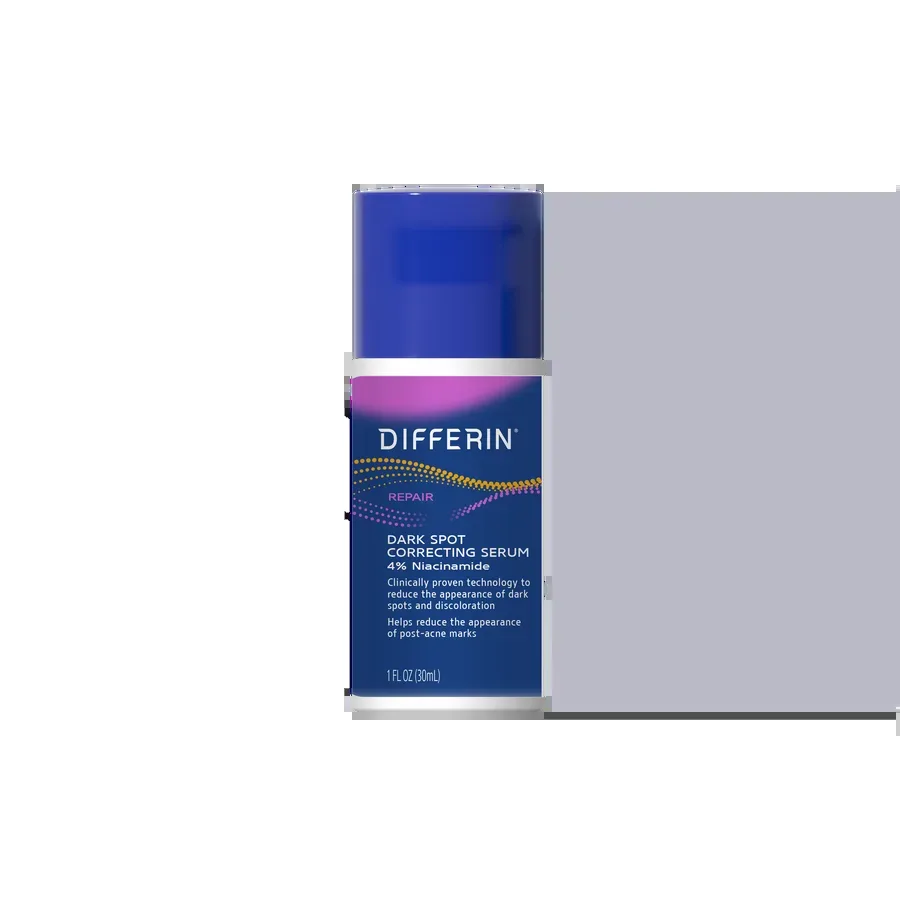
Positioned as the missing piece in Differin's OTC acne system — while the adapalene gel treats active breakouts and the BPO cleanser kills bacteria, this serum addresses the hyperpigmentation that acne leaves behind. The 4% niacinamide concentration mirrors clinical trial dosing, and the addition of a stabilized vitamin C derivative provides a multi-pathway approach to depigmentation that hydroquinone-free serums often lack.
A sensible niacinamide-based dark spot serum purpose-built to complete Differin's OTC acne system. It handles post-acne marks competently with clinically-dosed niacinamide and a stable vitamin C derivative, though the presence of alcohol and fragrance feels like an unnecessary compromise in a product targeting already-irritated skin.
The case for it
Same rule for everyone. “Good choice” is the verdict on 9,564 of 45,024 concern verdicts across the catalog; rule R5 decided 9,072 of them. Unchanged since September 5, 2026, engine 5.1.1.
Brand or formulator? Disclose a concentration or correct a fact →
The studies behind the evidence row
The case for it
What would change this: Guideline or regulatory standing for the active on this concern would move this from a promising bet to a recommendation.
Same rule for everyone. “Promising” is the verdict on 7,858 of 45,024 concern verdicts across the catalog; rule R9p decided 7,858 of them. Unchanged since September 5, 2026, engine 5.1.1.
Brand or formulator? Disclose a concentration or correct a fact →
The studies behind the evidence row
The case for it
Cautions: fragrance; fungal-acne triggers.
What would change this: Guideline or regulatory standing for the active on this concern would move this from a promising bet to a recommendation.
Same rule for everyone. “Promising” is the verdict on 7,858 of 45,024 concern verdicts across the catalog; rule R9p decided 7,858 of them. Unchanged since September 5, 2026, engine 5.1.1.
Brand or formulator? Disclose a concentration or correct a fact →
The studies behind the evidence row
Also listed for Dullness — the actives here (Niacinamide, Vitamin C, Sea Buckthorn, biotin) are in our research queue for that concern; there is no verdict until their evidence rows are written. That is a gap in our table, not a mark against the product.
Where our review and the verdict differ. The review below was written on the formulation and the published trials; the verdicts above apply the stricter standing test in our methodology — an active earns a recommendation only with guideline or regulatory standing for the concern. Where the two disagree, the verdict is DermApproved’s position.
A verdict is DermApproved’s assessment of how well a product’s ingredients fit a concern — never a claim about what the product treats. Evidence dots and collected reviews sit beside it and are never blended in. Rules 0.5.1 · evidence table ev-2026.09-r228 · how we decide
Acne is a two-act problem. Act one is the breakout itself — the inflammation, the bacteria, the clogged pores. Act two is what stays behind: the dark marks, the uneven tone, the stubborn discoloration that can linger for months after the last pimple has healed. Differin built its OTC reputation solving act one with adapalene gel. This serum is their answer to act two.
Launched in 2021, the Dark Spot Correcting Serum arrived as the final piece of what Galderma clearly envisions as a complete drugstore acne system: cleanse with the BPO wash, treat with adapalene, correct with this. It's a logical expansion that addresses the single most common frustration voiced by acne patients — my breakouts cleared, so why does my face still look like a connect-the-dots puzzle?
The formula centers on 4% niacinamide, which is a deliberately chosen concentration rather than a round number picked for the label. Niacinamide works by inhibiting the transfer of melanosomes from melanocytes to surrounding skin cells, intercepting the pigmentation process at a different checkpoint than the actives that shut down melanin production outright. It's not as fast, and it's not as dramatic, but it's safe for indefinite use — an important consideration for the chronic acne patients this serum is targeting, who tend to be managing a years-long condition rather than a one-off flare.
The supporting cast includes sodium ascorbyl phosphate, a phosphorylated vitamin C derivative that offers antioxidant protection and additional melanin-inhibiting activity without the instability issues that plague pure ascorbic acid formulations. Sea buckthorn berry oil adds carotenoid-rich antioxidant support and anti-inflammatory fatty acids, which is a thoughtful inclusion for skin that's been through the inflammatory wringer of active acne. Biotin rounds out the formula with barrier-support duties.
The rest of the list rewards a closer read. Sodium metabisulfite and sodium sulfite sit near the bottom as sacrificial antioxidants — they exist to be oxidized so the vitamin C derivative isn't, which is the unglamorous chemistry that keeps a brightening serum brightening for the length of a bottle. PEG-40 hydrogenated castor oil and the two polysorbates hold the sea buckthorn and sunflower oils in a water-thin base that would otherwise separate; hydroxyethylcellulose supplies the light body. And then there's denatonium benzoate, the most quietly informative ingredient in the whole list: it's the bitterant added to denature the alcohol, a regulatory tell rather than a skincare one, and a reminder of just how much alcohol is in here.
In terms of texture, this is a genuinely pleasant serum. Lightweight and watery, it absorbs within seconds and leaves no sticky residue — a requirement for a product positioned for both morning and evening use. It layers beautifully under sunscreen and makeup, which matters enormously because sunscreen compliance is the single most important factor in treating hyperpigmentation. A serum that makes your sunscreen pill or slide around is a serum that's working against itself. The frosted glass dropper bottle is the correct call for a vitamin C derivative that degrades in light, even if the dropper makes precise dosing a little fussier than a pump would.
Now for the honest part. The ingredient list contains two entries that raise legitimate questions: alcohol (denat.) as the second ingredient, and fragrance. In a serum designed for acne-prone skin that's dealing with post-inflammatory hyperpigmentation — which by definition means the skin has recently been inflamed — the inclusion of two known irritants is a puzzling choice. Alcohol likely serves as a penetration enhancer and texture improver, giving the serum its fast-absorbing, non-greasy feel. But it can compromise the skin barrier with extended use, which is counterproductive when you're trying to heal discoloration. The fragrance is purely aesthetic and adds sensitization risk with zero functional benefit.
These aren't dealbreakers for everyone — plenty of users with oily, resilient skin will tolerate this formula without issue, and the first-application tingle most people notice fades as skin acclimates. But for the sensitive and barrier-compromised skin types that often accompany chronic acne, it's a meaningful limitation Galderma could have avoided, and it's the reason anyone managing eczema or rosacea alongside their breakouts should treat this as a hard no rather than a maybe.
Performance-wise, the serum delivers within expected parameters. Several reviewers who commit to eight to twelve weeks of consistent use report visible fading of post-acne marks and a more even overall skin tone; the sentiment across a few hundred reviews is warm rather than ecstatic, which feels about right. Results are a gradual, steady improvement rather than a transformation, and full correction of deeper discoloration can take three to six months. For fresh, shallow post-inflammatory marks, it works well. For deep, established melasma or long-standing spots, expect the results to be incremental at best.
One persistent myth deserves burial here, because it will otherwise stop people from using this correctly: the claim that niacinamide and vitamin C cancel each other out. That idea traces back to laboratory conditions no skincare product ever encounters, and this formula — niacinamide paired with a stabilized vitamin C derivative — is a working demonstration that the two coexist fine. Use it without hedging.
At roughly twenty-two dollars for one ounce, the value sits in a reasonable if unspectacular zone. You're paying a premium over the cheapest niacinamide on the shelf, and getting a more sophisticated multi-active formula from a brand with genuine dermatological credibility in return. It's also, notably, pregnancy-safe — a rarity in the dark spot aisle, and reason enough for some people to choose it over more aggressive options.
This serum is at its best when used as part of the Differin ecosystem. Paired with the adapalene gel — which itself has mild anti-pigmentation properties through increased cell turnover — the niacinamide provides a complementary mechanism that attacks hyperpigmentation from a different angle. In the evening, this goes on first and gets a minute to absorb before the adapalene follows. If you're already using Differin Gel and wondering what to do about the marks left behind, this is the most natural addition to your routine. Just keep your expectations calibrated: it's a steady worker, not a miracle worker, and sunscreen remains your most powerful ally in the fight against dark spots.
The hero actives that drive this product's performance.
| Ingredient | Function | Evidence |
|---|---|---|
| Niacinamide (4%) | The primary brightening active in this formula — at 4% concentration, niacinamide inhibits melanosome transfer from melanocytes to keratinocytes, gradually fading post-acne marks and hyperpigmentation. This concentration matches the dose used in clinical trials comparing niacinamide to hydroquinone for melasma treatment. | Emerging for Hyperpigmentation |
| Sodium Ascorbyl Phosphate | A stable vitamin C derivative that works synergistically with the niacinamide in this formula to provide antioxidant protection and additional melanin-inhibiting activity. Its phosphorylated structure makes it more stable than pure ascorbic acid, which is important in a formula that also contains niacinamide. | Limited for Hyperpigmentation |
| Hippophae Rhamnoides Oil | Sea buckthorn berry oil serves dual duty in this formulation — providing carotenoid-rich antioxidant protection while its essential fatty acid content helps soothe the skin irritation that often accompanies post-acne hyperpigmentation. Complements the brightening actives with anti-inflammatory support. | Not yet assessed |
| Biotin | Included at a supporting level to help strengthen the skin's barrier function during the depigmentation process. Works alongside the niacinamide to support overall skin health while the brightening actives gradually correct discoloration. | Not yet assessed |
Ingredient standings describe the active at treatment-level doses and vehicles; this product's own condition grades weigh its actual formula.
Water, Alcohol, Niacinamide, PEG-40 Hydrogenated Castor Oil, Polysorbate 20, Hydroxyethylcellulose, Sodium Ascorbyl Phosphate, 1,2-Hexanediol, Caprylyl Glycol, Hippophae Rhamnoides Oil, Helianthus Annuus (Sunflower) Seed Oil, Rosmarinus Officinalis (Rosemary) Leaf Extract, Biotin, Sodium Citrate, Sodium Metabisulfite, Sodium Sulfite, Citric Acid, Disodium EDTA, T-Butyl Alcohol, Disodium Phosphate, Polysorbate 60, Fragrance, Sodium Phosphate, Denatonium Benzoate
serum
AM & PM
Apply after cleansing and toning, before moisturizer. The lightweight serum texture layers easily under makeup in the AM. If using with Differin Gel in the PM, apply this serum first, let it absorb, then apply adapalene. Always use sunscreen during the day — niacinamide and vitamin C work to fade dark spots, but unprotected sun exposure creates new ones.
Subtle improvements in skin brightness may be noticeable within 2-3 weeks. Meaningful fading of post-acne marks and dark spots typically requires 8-12 weeks of consistent use. Full depigmentation effects may take 3-6 months, and continued use is necessary to maintain results.
Niacinamide's efficacy against hyperpigmentation is well-documented through multiple clinical pathways. A landmark study by Hakozaki et al. (2002) in the British Journal of Dermatology demonstrated that niacinamide inhibits melanosome transfer from melanocytes to keratinocytes by 35-68% in coculture models, establishing the mechanistic basis for its depigmentation effects. This is a fundamentally different approach than hydroquinone, which blocks the tyrosinase enzyme involved in melanin synthesis — niacinamide allows melanin to be produced but prevents its distribution to visible skin cells.
A double-blind randomized clinical trial published in Dermatology Research and Practice (2011) compared 4% niacinamide to 4% hydroquinone for melasma treatment and found niacinamide effective in approximately 40% of patients, with significantly fewer adverse effects. While hydroquinone showed greater overall efficacy, the safety profile of niacinamide makes it more suitable for long-term maintenance — an important consideration since hyperpigmentation tends to recur when treatment stops.
The sodium ascorbyl phosphate in this formula adds a second depigmentation pathway. This stable vitamin C derivative is converted to ascorbic acid in the skin, where it interferes with melanin production through tyrosinase inhibition — complementing niacinamide's melanosome transfer inhibition to provide a multi-mechanism approach. A study in the International Journal of Cosmetic Science confirmed that sodium ascorbyl phosphate demonstrates significant skin-lightening effects with good stability.
Notably, research published in the Journal of the American Academy of Dermatology confirmed that niacinamide's effects are reversible — discontinuation leads to gradual return of pigmentation, indicating that continued use is necessary to maintain results.
Dermatologists frequently recommend niacinamide-based serums as first-line treatment for post-inflammatory hyperpigmentation in acne patients, particularly when hydroquinone is contraindicated or patients prefer a gentler long-term option. Dermatology professionals frequently observe that the 4% concentration in this serum aligns with clinical evidence, and the combination with a vitamin C derivative provides complementary depigmentation mechanisms. Dermatologists commonly advise using this type of serum alongside rigorous daily sunscreen use, as UV exposure is the primary driver of persistent hyperpigmentation. For patients already on adapalene, adding a niacinamide serum is considered a logical step — the retinoid increases cell turnover to shed pigmented cells while niacinamide prevents new pigment from being distributed.
After cleansing, apply 3-4 drops to fingertips and gently press into areas of discoloration and surrounding skin. Can be applied to the entire face for overall brightening. Use morning and evening for best results. In the AM, follow with moisturizer and broad-spectrum SPF 30 or higher — sunscreen is essential for any depigmentation treatment. In the PM, apply before Differin Gel if using both products. Allow the serum to absorb for about a minute between layers.
At approximately $22 for 1 ounce, this serum is priced higher than basic niacinamide serums from brands like The Ordinary but lower than dermatologist-exclusive or prestige brightening treatments. The value rests on the Galderma formulation pedigree and the multi-active approach combining niacinamide with a stabilized vitamin C derivative and botanical antioxidants. For users already invested in the Differin ecosystem, it represents a seamless addition. However, price-conscious consumers should note that comparable niacinamide concentrations are available for significantly less from budget brands — the premium here is for the specific formulation design and brand trust.
Acne-prone individuals with post-inflammatory hyperpigmentation who want a hydroquinone-free brightening serum that integrates seamlessly with a Differin Gel routine. Best suited for oily to combination skin types looking for a lightweight, fast-absorbing formula that won't disrupt their existing acne treatment system.
Those with dry, sensitive, or barrier-compromised skin should approach cautiously due to the alcohol and fragrance content. Anyone with deep melasma or severe hyperpigmentation may need a more potent treatment — this serum is better suited for mild to moderate post-acne marks than entrenched pigmentation disorders.
Ready to try Differin Dark Spot Correcting Serum?
Buy at Amazon ♥Lightweight, watery serum that absorbs quickly into the skin. Not sticky or tacky — leaves a barely-there finish that works well under subsequent layers.
Has a noticeable light fragrance that some users find pleasant and others find distracting. The scent dissipates within a few minutes of application.
Glass bottle with a dropper applicator. The frosted glass protects the vitamin C derivative from light degradation. Clean, clinical aesthetic consistent with Differin's pharmacy branding.
The serum applies smoothly and absorbs within seconds. Some users with sensitive skin may notice a mild tingling from the alcohol content on first application. No purging period expected — this is a brightening serum, not an exfoliant. Dark spot fading is gradual and requires patience.
2-3 months with twice-a-day use to face
All Year
After Differin Gel went OTC and the Daily Deep Cleanser followed, the most common complaint from users was that their acne cleared but the dark marks remained. Galderma launched this serum in 2021 to complete the three-step system — cleanse, treat, correct — giving acne-prone consumers a hydroquinone-free option for the hyperpigmentation that often persists long after breakouts resolve.
Differin is a Galderma brand whose flagship adapalene gel was prescription-only for over 20 years before becoming the first new OTC acne active approved by the FDA in three decades in 2016. The brand's formulations are developed by dermatologists and backed by extensive clinical research.
Niacinamide works as quickly as hydroquinone for dark spots.
Niacinamide works through a different mechanism — inhibiting melanosome transfer rather than blocking melanin production — and typically takes 8-12 weeks to show meaningful results, compared to 4-8 weeks for hydroquinone. The tradeoff is better long-term safety and no risk of ochronosis.
You can't use niacinamide and vitamin C together.
This is a persistent skincare myth. Modern formulations like this serum combine niacinamide with a stabilized vitamin C derivative (sodium ascorbyl phosphate) without issue. The supposed incompatibility was based on studies using extreme conditions not found in skincare products.
Yes — this serum was designed to complement Differin Gel. Apply the dark spot serum first, let it absorb for a minute, then apply adapalene gel over it. The niacinamide in this serum may actually help buffer some of the irritation from the retinoid while addressing post-acne hyperpigmentation.
Most users notice subtle brightening within 2-3 weeks, but meaningful fading of established dark spots and post-acne marks typically requires 8-12 weeks of consistent twice-daily use. The 4% niacinamide works gradually by inhibiting melanosome transfer, so patience is essential.
The current formulation does not contain hydroquinone. It uses 4% niacinamide as the primary brightening active, along with a stabilized vitamin C derivative (sodium ascorbyl phosphate). Differin previously offered a hydroquinone-based version but reformulated to this niacinamide-based approach.
The key actives — niacinamide and sodium ascorbyl phosphate — are generally considered safe during pregnancy. However, the formula does contain alcohol and fragrance. Consult your OB-GYN or dermatologist before starting any new skincare product during pregnancy.
While formulated for facial use, the brightening actives in this serum can work on post-inflammatory hyperpigmentation anywhere on the body. However, the 1 oz bottle will be used up quickly on larger body areas. For widespread body hyperpigmentation, a larger-format niacinamide product may be more practical.
Recurring themes our editors read across retailer reviews of this product — summaries in our words, not quotations, and not a substitute for your own patch test.
Lightweight texture absorbs quickly without residue
Noticeable fading of post-acne marks over time
Layers well under makeup and sunscreen
Good complement to Differin Gel acne routine
Affordable compared to prescription brightening treatments
Contains alcohol which can be drying for some skin types
Noticeable fragrance that lingers for a few minutes after application
Results take several weeks to become visible
Not as potent as hydroquinone for stubborn dark spots
Verified answers from our questions library — the nuance a product page cannot carry.