Lemon Juice, Baking Soda, Toothpaste: Three Kitchen Remedies That Reliably Damage Skin
Two of them attack the same property of skin from opposite directions, and the third is a rinse-off oral product being left on a face for eight hours.
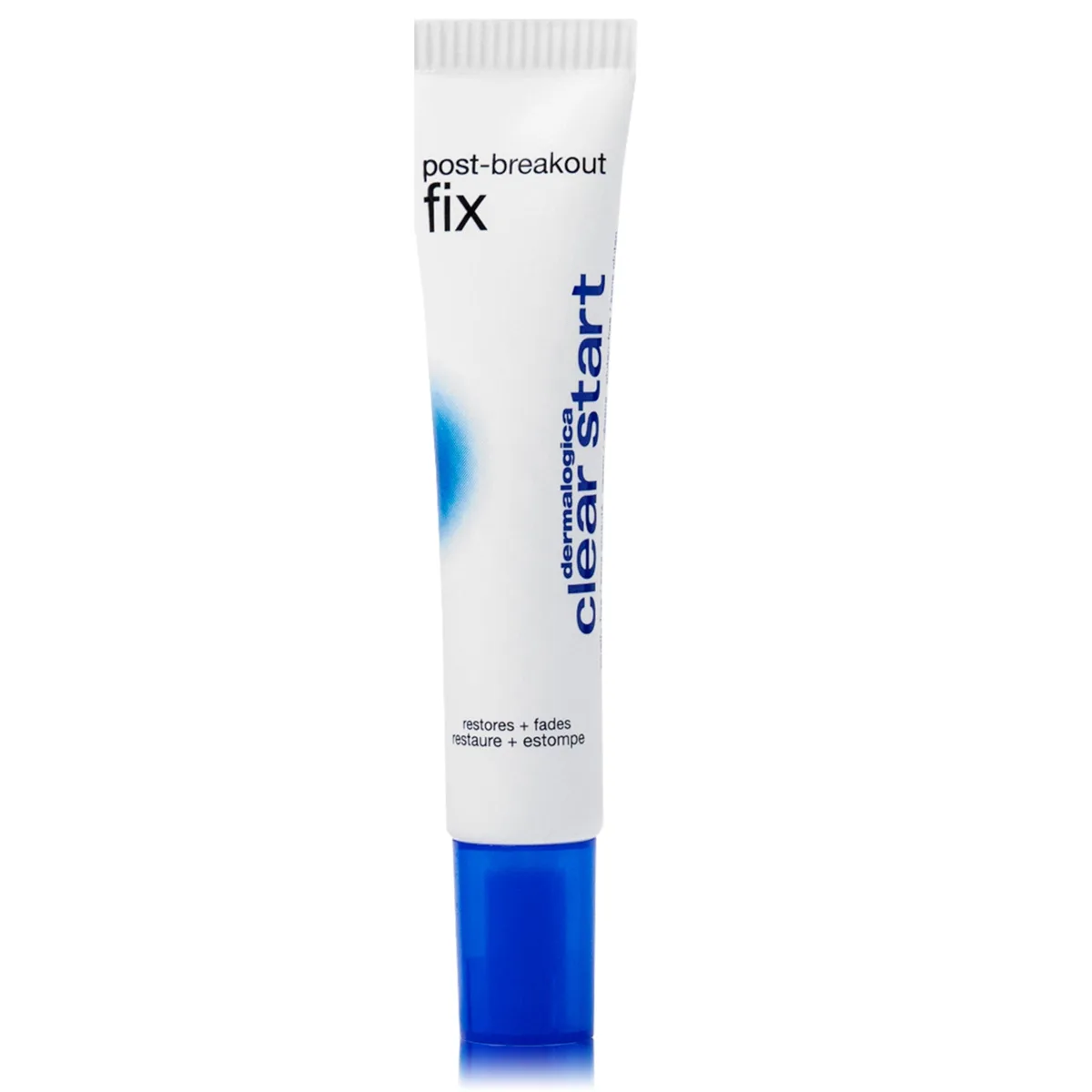
Most spot correctors go straight for pigment with acids or hydroquinone alternatives; this one treats the aftermath of a popped pimple as a small wound first, wrapping hexylresorcinol and a low dose of salicylic acid in squalane, linoleic acid, phospholipids and phytosterols so the mark is repaired while it is being faded. Fragrance-free and non-stinging, it is built to go on skin that has just been picked, which is exactly when most correctors cannot.
A small, sensible tube for the morning after a pimple was popped: hexylresorcinol to fade the brown, a sub-acne dose of salicylic acid to turn the surface over, and a proper barrier-lipid set so it repairs rather than stings. It is fragrance-free, twenty-five dollars, and honest about what it is for. It will not clear a live breakout or fill a scar, and the tube is tiny for anyone with more than a few marks.
The case for it
Cautions: fungal-acne triggers.
What would change this: A declared concentration would move this to a firmer reading of the dose.
Same rule for everyone. “Strong choice” is the verdict on 1,459 of 45,024 concern verdicts across the catalog; rule R3 decided 567 of them. As of September 25, 2026, engine 5.1.1.
Brand or formulator? Disclose a concentration or correct a fact →
The studies behind the evidence row
The case for it
Same rule for everyone. “Good choice” is the verdict on 9,564 of 45,024 concern verdicts across the catalog; rule R5 decided 9,072 of them. As of September 25, 2026, engine 5.1.1.
Brand or formulator? Disclose a concentration or correct a fact →
The studies behind the evidence row
Also listed for Acne Scarring, Dark Spots and Hyperpigmentation — the actives here (Salicylic Acid, Hexylresorcinol, Botanical Extracts, Acetyl Glucosamine) are in our research queue for those concerns; there is no verdict until their evidence rows are written. That is a gap in our table, not a mark against the product.
A verdict is DermApproved’s assessment of how well a product’s ingredients fit a concern — never a claim about what the product treats. Evidence dots and collected reviews sit beside it and are never blended in. Rules 0.5.1 · evidence table ev-2026.09-r228 · how we decide
The copy on this tube begins with a sentence no dermatologist would write and every dermatologist would recognise: this is your reminder not to pop your pimples, but we get it. That candour is the right way into the product, because Post-Breakout Fix is not trying to be a spot treatment. It is first aid for the thing that happens after the spot treatment was skipped and the fingers went in instead: the flat red or brown mark that stays for weeks or months on skin that has otherwise healed. Dermalogica's Clear Start line had cleansers, breakout gels and a sunscreen by 2021 and nothing for that stage, which is the stage its customers were most upset about, and this arrived in December of that year to fill the gap.
The formula is more considered than a twenty-five-dollar teen-line tube has any need to be. Hexylresorcinol sits ninth on the list, and it is a serious brightener: a resorcinol derivative that inhibits tyrosinase, the enzyme that starts pigment production, more potently than hydroquinone in laboratory comparisons, with clinical data for lightening pigmentation in leave-on use. It is the ingredient that makes the brown part of a mark fade faster than it would alone. Just above it is salicylic acid, and the interesting thing about the salicylic acid is what is missing: no drug facts panel, no declared percentage. That means it is below the 0.5 percent floor of the acne monograph, present as a mild leave-on exfoliant to turn over the pigmented surface cells and keep the pore under the mark from re-clogging, not as a breakout treatment. Carob fruit extract, which Dermalogica pairs with the hexylresorcinol in its marketing, brings polyphenols that plausibly calm residual redness, though its pigmentation evidence is supplier-grade. At the very end of the list, disodium acetyl glucosamine phosphate is a trace of an amino sugar with real trial data for facial hyperpigmentation when paired with niacinamide; here it is a considered flourish rather than a dose.
What separates the product from the ordinary run of spot correctors is the middle of the list. Squalane, linoleic acid, phospholipids and phytosterols, thirteenth through seventeenth, are a barrier-lipid set of the kind found in repair creams, and they are here because a popped pimple is a small wound. Most dark-spot products are acids and brighteners in a thin serum that stings on broken skin and has to wait until it has closed; this one treats the repair and the fading as the same job, and the practical result is the thing reviewers mention most: no sting, no tingle, on a spot that was picked the night before, and redness that looks calmer within days. There is no fragrance, no alcohol and no essential oil, which for this brand is worth saying twice, and the gel-cream sets to a soft, faintly tacky finish that disappears under moisturizer and sunscreen. The tackiness is the one texture note reviewers raise, a minute of slight stickiness before foundation goes on, and it fades once the acrylate gel has fully dried; dabbing a thinner layer than instinct suggests solves it.
Expectations need managing on speed, and the brand's own evidence helps with that if it is read carefully. Dermalogica reports that 95 percent of users saw less discoloration after four weeks and 86 percent saw improved roughness after two, from a consumer perception test of 42 people. That is a small, uncontrolled, self-reported study, and it measures what people thought they saw; it is disclosed honestly and it should be weighed accordingly. What the ingredients predict, and what nearly three hundred reviews at a 4.6 average bear out, is that redness and texture settle in one to two weeks, fresh brown marks lighten noticeably over four to eight weeks of twice-daily use, and older, deeper marks are slow. Pitted or raised scars do not respond at all, because no topical fills a pit, and the reviews that complain are mostly from people who hoped one would.
The tube is the other honest caveat. Half an ounce dabbed twice a day on two or three marks lasts about two months; on a cluster across the jaw it is gone in five or six weeks, and at twenty-five dollars that starts to feel like a habit. A person managing recurring post-inflammatory marks over a whole area would do better with a full-face niacinamide or azelaic acid product and daily sunscreen, and keep this for the individual offenders. The sunscreen part is not optional either way, since ultraviolet light is what keeps a mark dark, and a corrector without SPF behind it is working against the sun.
The recommendation, then, is narrow and warm. For the person who pops, or picks, or simply gets a spot that leaves a mark, and wants a gentle, fragrance-free, well-built tube to dab on it the next morning, this does the job it describes and does it without irritation, at a fair price. It suits teenagers and adults equally. It is not a breakout treatment, not a scar treatment, and not a full-face corrector, and it is small. Read the label, which is franker than most, and it will not disappoint.
The hero actives that drive this product's performance.
| Ingredient | Function | Evidence |
|---|---|---|
| Hexylresorcinol | The brightening engine, ninth on the list directly after the salicylic acid: a resorcinol derivative that inhibits tyrosinase more potently than hydroquinone in laboratory comparisons and has clinical data for lightening pigmentation. In a spot-sized gel applied to a fresh mark twice a day, it is the ingredient that determines whether the brown fades faster than it would on its own. | Not yet assessed |
| Salicylic Acid | Listed eighth but not declared as an OTC active, which means Dermalogica is using it below the monograph's acne range as a mild leave-on exfoliant rather than a breakout treatment. On a healed mark its job is to speed the turnover of the pigmented surface cells and to keep the pore beneath from re-clogging while the mark fades. | Established mechanism for Rough Texture · established mechanism |
| Ceratonia Siliqua (Carob) Fruit Extract | The botanical Dermalogica pairs with hexylresorcinol for the mark-fading claim, tenth on the list. Carob extracts carry polyphenols with antioxidant and anti-inflammatory activity that plausibly calm the residual redness in a fresh mark; the specific pigmentation evidence is thin and supplier-driven, so it is the supporting player. | Not yet assessed |
| Squalane, Linoleic Acid, Phospholipids and Phytosterols | A four-part barrier lipid set, listed thirteenth through seventeenth, that is the formula's real point of difference from a typical dark-spot corrector: it treats a popped pimple as a small wound. Squalane and linoleic acid restore surface lipids, phospholipids and phytosterols mimic the intercellular mortar, and together they are why the gel-cream calms rather than stings on skin that has just been picked. | Not yet assessed |
| Disodium Acetyl Glucosamine Phosphate | A phosphorylated form of N-acetyl glucosamine at the very end of the list, an amino sugar with trial evidence for reducing facial hyperpigmentation when combined with niacinamide. Here it is a trace supporting brightener rather than a dose, but it is a more considered choice than most spot correctors bother with. | Not yet assessed |
Ingredient standings describe the active at treatment-level doses and vehicles; this product's own condition grades weigh its actual formula.
Water/Aqua/Eau, Ethylhexyl Olivate, Pentylene Glycol, Hydroxyethyl Acrylate/Sodium Acryloyldimethyl Taurate Copolymer, Caprylic/Capric Triglyceride, Polyacrylate Crosspolymer-6, Glyceryl Stearate Citrate, Salicylic Acid, Hexylresorcinol, Ceratonia Siliqua (Carob) Fruit Extract, Caprylyl Glycol, Propanediol, Squalane, Glycerin, Linoleic Acid, Phospholipids, Phytosterols, Polysorbate 60, Sorbitan Isostearate, Sodium Hydroxide, Ethylhexylglycerin, Caffeyl Glucoside, Disodium Acetyl Glucosamine Phosphate
treatment
AM & PM
A spot product, not an all-over serum: dab a small amount directly onto each mark after cleansing and toning, morning and night, and let it set before moisturizer goes over it. It sits comfortably under sunscreen, which is non-negotiable while marks are fading. On nights a retinoid is used across the face, apply this first and let it dry, or alternate; on freshly popped spots that are still open, wait until the surface has closed.
Redness and roughness on a fresh mark ease within the first one to two weeks, which matches the brand's two-week roughness figure. Visible lightening of a brown mark from the hexylresorcinol takes four to eight weeks of twice-daily use; older, deeper marks respond more slowly and pitted scars not at all. Consistent sunscreen is what stops the marks re-darkening in the meantime.
Post-inflammatory hyperpigmentation forms when inflammation from a breakout stimulates melanocytes to overproduce pigment, which is then deposited in the surrounding epidermis and, in deeper cases, dropped into the dermis; post-inflammatory erythema is the parallel redness from dilated capillaries in the healing site. A corrector for these marks has three sensible levers, slowing new pigment, speeding the shedding of pigmented cells, and calming the inflammation that drives both, and this formula pulls all three. Hexylresorcinol is the pigment lever. It is a substituted resorcinol that inhibits tyrosinase, the rate-limiting enzyme of melanin synthesis, and in comparative in-vitro work it has shown greater potency than hydroquinone and kojic acid; it also has antioxidant activity and a small clinical literature supporting skin lightening at cosmetic concentrations, with good tolerability. The concentration here is undisclosed and its ninth-place listing, in a gel that is mostly water and emollients, suggests a low but plausible level for a spot product.
Salicylic acid is the shedding lever, and its regulatory status tells the story: because the product carries no drug facts label, the salicylic acid is below the 0.5 percent minimum of the FDA acne monograph, and in that range it acts as a mild keratolytic and anti-inflammatory rather than a comedolytic treatment. It speeds the turnover of the pigment-laden corneocytes at the surface of a mark. The calming lever is shared between the carob extract, whose polyphenols have antioxidant and anti-inflammatory data of the general botanical kind, and the lipid set. Squalane, linoleic acid, phospholipids and phytosterols supply, respectively, a sebum-identical hydrocarbon, the essential fatty acid that acne-prone sebum is characteristically low in, membrane lipids, and plant sterols that integrate with the intercellular lipid lamellae; together they are the composition of a barrier-repair vehicle, and their inclusion is the reason the product is tolerable on recently broken skin, where a conventional acid-and-brightener serum would sting. Disodium acetyl glucosamine phosphate is a phosphorylated form of N-acetyl glucosamine; the parent compound reduced facial hyperpigmentation in a randomised vehicle-controlled trial when combined with niacinamide, but at the last position on this list it is a trace. The brand's 42-subject, four-week consumer perception study reports 95 percent perceiving reduced discoloration and 86 percent improved roughness at two weeks; as an uncontrolled self-report it establishes acceptability and direction rather than efficacy, and it should be read alongside the ingredient rationale rather than in place of it.
Post-inflammatory hyperpigmentation is one of the most common complaints in acne clinics, particularly in patients with darker skin, and the standard advice is a combination of daily broad-spectrum sunscreen, a topical tyrosinase inhibitor and gentle exfoliation, with patience measured in months. A spot corrector built on hexylresorcinol, a low dose of salicylic acid and a barrier-repair vehicle fits that guidance well and is the sort of over-the-counter option a clinician might suggest for a patient with a few marks rather than a widespread problem; the absence of fragrance and the non-stinging base make it suitable for adolescents and for skin that has been picked. Dermatologists would set expectations clearly: the product does nothing for active lesions, nothing for atrophic or hypertrophic scars, and works slowly on dermal pigment, and they would note that the brand's evidence is a small perception survey. For patients with post-inflammatory marks across an area, or in skin of colour where the pigment tends to be deeper, prescription options such as tretinoin, azelaic acid or short courses of hydroquinone, along with rigorous photoprotection, would be the more effective route, with a product like this reserved for individual spots. There is no contraindication of note for otherwise healthy skin, and it is a reasonable choice during pregnancy provided the low salicylic acid level is acceptable to the treating clinician.
After cleansing and toning, morning and night, squeeze a small amount onto a fingertip and dab it directly onto each post-breakout mark, spreading it just past the edge of the discoloration. Let it set for about a minute, then apply moisturizer and, in the morning, sunscreen over it; daily SPF is what stops the marks re-darkening. On a spot that has just been popped, wait until the surface has closed, usually a day, before starting. Use it consistently for at least four weeks before judging the brown; redness should ease sooner. If a retinoid is used at night, apply this first and let it dry, or alternate nights. Keep the cap on tightly and expect the tube to last around two months on a few marks.
Twenty-five dollars for 15 millilitres is fifty dollars an ounce, which sounds steep until the use case is considered: a spot product dabbed on two or three marks twice a day lasts about two months, so the monthly cost is modest, and the tube is small because the job is small. The formula punches above its price, with a tyrosinase inhibitor normally found in pricier brightening serums, a barrier-lipid set of the kind used in repair creams, and a fragrance-free, non-stinging base, from a brand with four decades of professional history. Value falls off for anyone with marks across a wide area, where the tube empties in five or six weeks and a full-face niacinamide or azelaic acid product plus sunscreen would be both cheaper and more effective. Against dedicated dark-spot serums the price is fair; against the alternative of waiting for a mark to fade on its own, which it eventually will, it is a reasonable sum for shaving weeks off the process.
Anyone, teenage or adult, who is left with red or brown marks after breakouts, especially those who pop or pick and want something gentle enough to go on the next morning. It suits oily, combination and normal skin, and sensitive skin that has found other spot correctors too stinging, and it is a sensible add-on to any acne routine that already includes daily sunscreen.
People looking for a treatment for active pimples, or for pitted and raised scars, which need different products or a dermatologist. Those with post-inflammatory marks across a whole area will find the tube too small and a full-face corrector more economical, and anyone expecting old, deep discoloration to vanish in a month should adjust expectations.
Ready to try Dermalogica Post-Breakout Fix?
Buy at Amazon ♥A light, translucent white gel-cream that spreads thin over a mark, sets in about a minute to a soft, faintly tacky finish and disappears under moisturizer
None; fragrance-free with only a faint neutral note from the base
Slim white 15 mL tube with a blue cap and a narrow nozzle for dabbing, made with 25 percent recycled plastic
The first thing people notice is what does not happen: no sting, no tingle, on a spot that was picked the night before. Redness usually looks calmer within a few days as the barrier lipids and carob do their work. The brown part of a mark takes patience, and the small tube runs down faster than expected if it is being used on a cluster of marks rather than one or two.
About two months dabbed twice daily on two or three marks; closer to five or six weeks on a wider cluster
All Year
Clear Start launched in 2011 as Dermalogica's answer to teenagers arriving in its treatment rooms with nothing priced for them, and by 2021 the line had cleansers, spot treatments and sunscreen but nothing for the stage its customers were most upset about: the marks left after a breakout, usually after popping it. Post-Breakout Fix arrived that December with a tongue-in-cheek admission on the label that people pop anyway, and a formula designed for the morning after.
Dermalogica has been the professional brand of The International Dermal Institute since 1986 and part of Unilever since 2015. Clear Start, its sub-line for younger breakout-prone skin since 2011, shares the parent brand's manufacturing and formulation standards; this product's efficacy claims come from a 42-subject, four-week consumer perception test run by the brand rather than from a controlled trial.
Dark marks after a pimple are scars and need a scar treatment.
Most post-breakout marks are post-inflammatory hyperpigmentation or erythema, flat discoloration in intact skin that fades on its own over months and faster with tyrosinase inhibitors, gentle exfoliation and sunscreen. True acne scars are pitted or raised changes in the skin's structure, and no topical, including this one, will fill or flatten them; those need a dermatologist.
Post-Breakout Fix is a salicylic acid spot treatment for active pimples.
The salicylic acid here is not declared as an OTC active, which means it sits below the 0.5 to 2 percent acne range and acts as a mild exfoliant for healed marks. Dermalogica sells separate products for active breakouts. Using this on a live, inflamed pimple does no harm but will not clear it.
No, and it is not meant to. Its salicylic acid is below OTC acne strength and its actives are aimed at the red and brown marks left after a breakout heals. Use a benzoyl peroxide or a 2 percent salicylic acid product on the live spot, and switch to this once the surface has closed.
Redness and roughness usually calm within one to two weeks. Brown discoloration from the hexylresorcinol takes four to eight weeks of twice-daily use on a fresh mark, longer on an older one. Dermalogica's own four-week consumer test had 95 percent of 42 users reporting less discoloration, which is a perception result rather than a measured one.
Once the surface has closed, yes; that is what the barrier lipids are for. Squalane, linoleic acid, phospholipids and phytosterols help the small wound repair while the brighteners work, and the formula is fragrance-free and non-stinging. On a spot that is still open or weeping, wait a day.
It is one of the gentler spot correctors: no fragrance, alcohol or essential oils, a sub-acne dose of salicylic acid and a barrier-lipid base. Hexylresorcinol can occasionally irritate very reactive skin, so a first test on one mark for a few days is sensible, but the ingredient list gives little to react to.
No. Pitted or raised scars are structural changes in the skin, and no topical corrector fills or flattens them. This product addresses flat discoloration, the red and brown marks in intact skin, which is what most people mean by acne marks. Textural scars need in-office treatment.
Yes. Clear Start is priced and marketed for younger skin, but the formula, hexylresorcinol with mild salicylic acid and barrier lipids, suits post-inflammatory marks at any age, and adults with occasional hormonal breakouts are a large share of its reviewers.
Recurring themes our editors read across retailer reviews of this product — summaries in our words, not quotations, and not a substitute for your own patch test.
Red marks calm down noticeably within a week or two
Does not sting on freshly picked spots the way acid treatments do
Small enough to keep in a bag and dab on during the day
Brown marks fade faster than when left alone
Half an ounce empties fast with more than a few marks
Slow on older, darker marks and useless on pitted scars
Slightly tacky under makeup until it fully sets
Twenty-five dollars for a tiny tube