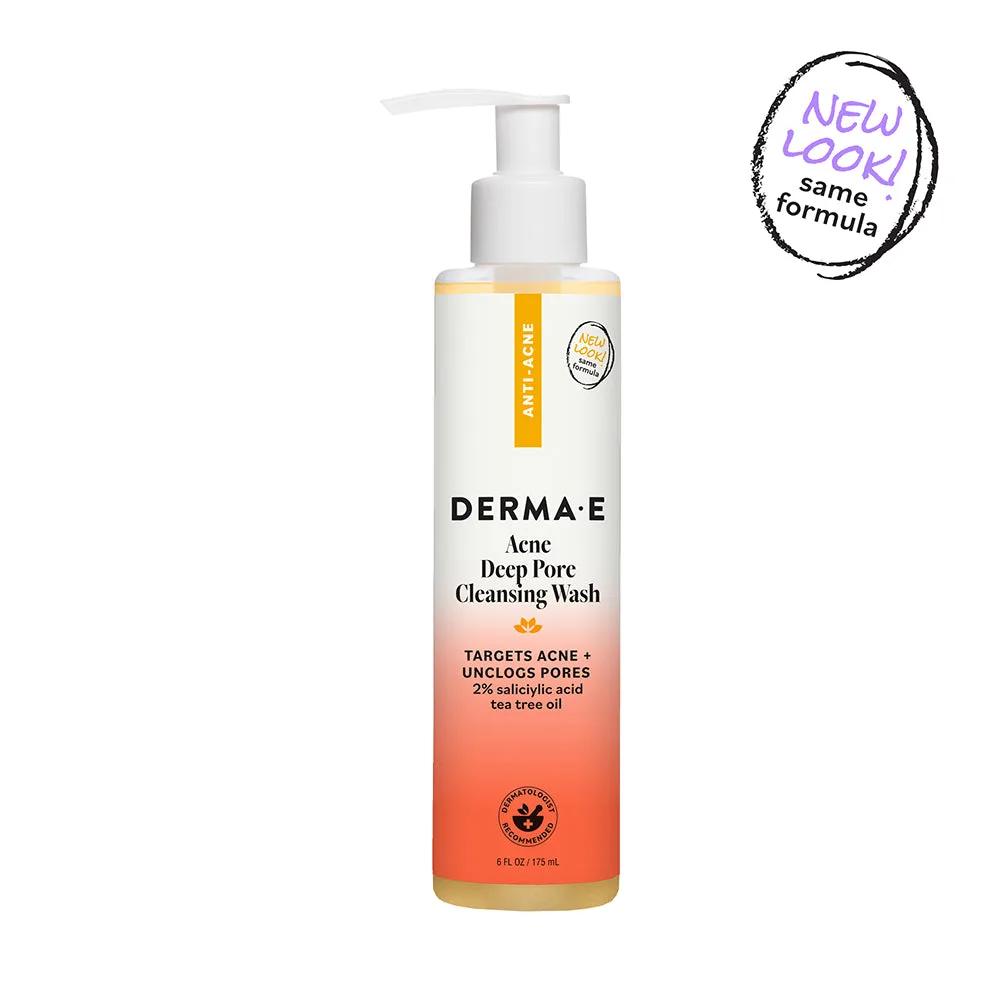
It pairs the full 2% salicylic acid OTC dose with a soothing botanical roster — willow bark, chamomile, tea tree — inside a sulfate-free, glucoside-based surfactant system. That combination aims to give oily, breakout-prone skin maximum-strength exfoliation in a daily wash without the harsh sulfate strip that often comes with budget acne cleansers.
A capable daily acne wash that delivers the full 2% salicylic acid dose in a sulfate-free, botanically soothed base. It controls oil and curbs clogged pores without the harsh strip of cheaper acne cleansers, though the tea-tree-lavender scent and potential for dryness with twice-daily use are real considerations. A dependable, fairly priced workhorse.
Good choicefor AcneIn your profileYou chose · Salicylic Acid is an approved or monograph active for acne; this rinse-off gel carries it at 2% — short contact still counts for this active, but a leave-on does more.Moderate evidenceStandard tolerabilityNo reviews collected yet
The case for it
Salicylic Acid 2% is a first-line active — approved, monograph-listed or named in current guidelines — for this concern.
It is present at an effective concentration, declared or high in the ingredient list.
The formula carries no trigger this concern is sensitive to, with the cautions noted.
Cautions: fragrance; fungal-acne triggers.
Same rule for everyone. “Good choice” is the verdict on 9,564 of 45,024 concern verdicts across the catalog; rule R2r decided 408 of them.
Unchanged since September 5, 2026, engine 5.1.1.
R2r — Rinse-off exceptions (BPO wash, salicylic acid cleanser) deliver a real but smaller effect than the leave-on form; they cap at 'good choice'. Medicated shampoos for scalp concerns are exempt — the shampoo is the treatment form. Editorial decision 2 Sep 2026, pending advisory review. · the full register
Carrying active
Salicylic Acid 2%
Standing
first line — a regulator recognises it for this use; trials support it · per § 333.310 Acne active ingredients. (U.S. Food and Drug Administration — 21 CFR Part 333 Subpart D (Topical Acne Drug Products), Code of Federal Regulations via GovInfo), opened July 27, 2026
Form
adequate (declared 2%) — studied range 0.5–2%, from the OTC monograph or label; judge it after ~6 weeks
Tolerability
standard — fragrance load, fungal triggers
Row checked
against its sources on July 27, 2026 (evidence table ev-2026.09-r228)
Supporting rolefor Excess OilinessIn your profileYou chose · Rinse-off gel: Salicylic Acid gets seconds of contact, so this supports a routine for excess oiliness rather than treating it.Moderate evidenceStandard tolerabilityNo reviews collected yet
The case for it
Salicylic Acid 2% has early or mechanistic evidence for this concern, not trial-backed standing.
It is in a rinse-off product, so it gets seconds of contact rather than the leave-on exposure the evidence assumes.
The formula carries no trigger this concern is sensitive to, with the cautions noted.
Cautions: fungal-acne triggers.
What would change this: The same active in a leave-on form would be judged on its evidence rather than its contact time.
Same rule for everyone. “Supporting role” is the verdict on 8,197 of 45,024 concern verdicts across the catalog; rule R6 decided 2,017 of them.
Unchanged since September 5, 2026, engine 5.1.1.
R6 — Contact time cannot deliver a leave-on claim; the product is judged on its job (cleansing without aggravating). Explicit exceptions (BPO wash, SA cleanser, medicated shampoos) never reach this rule because their rows set rinse_off_ok. · the full register
Carrying active
Salicylic Acid 2%
Standing
plausible — trials support it
Form
contact limited — studied range 30%, from the trials on the row; needs leave-on contact; judge it after ~6 weeks
Tolerability
standard — fungal triggers
Row checked
against its sources on July 17, 2026 (evidence table ev-2026.09-r228)
Good choicefor BlackheadsIn your profileYou chose · Salicylic Acid is an approved or monograph active for blackheads; this rinse-off gel carries it at 2% — short contact still counts for this active, but a leave-on does more.Moderate evidenceStandard tolerabilityNo reviews collected yet
The case for it
Salicylic Acid 2% is a first-line active — approved, monograph-listed or named in current guidelines — for this concern.
It is present at an effective concentration, declared or high in the ingredient list.
The formula carries no trigger this concern is sensitive to, with the cautions noted.
Cautions: fungal-acne triggers.
Same rule for everyone. “Good choice” is the verdict on 9,564 of 45,024 concern verdicts across the catalog; rule R2r decided 408 of them.
Unchanged since September 5, 2026, engine 5.1.1.
R2r — Rinse-off exceptions (BPO wash, salicylic acid cleanser) deliver a real but smaller effect than the leave-on form; they cap at 'good choice'. Medicated shampoos for scalp concerns are exempt — the shampoo is the treatment form. Editorial decision 2 Sep 2026, pending advisory review. · the full register
Carrying active
Salicylic Acid 2%
Standing
first line — a regulator recognises it for this use; trials support it · per 21 CFR § 333.350 - Labeling of acne drug products. (US Code of Federal Regulations (Legal Information Institute, Cornell Law School)), opened July 27, 2026
Form
adequate (declared 2%) — studied range 0.5–2%, from the OTC monograph or label; judge it after ~6 weeks
Tolerability
standard — fungal triggers
Row checked
against its sources on July 27, 2026 (evidence table ev-2026.09-r228)
The studies behind the evidence row
OTC monograph, Topical Acne Drug Products — salicylic acid 0.5–2% recognized as an acne treatment active — US Food and Drug Administration
Supporting rolefor Large PoresIn your profileYou chose · Rinse-off gel: Salicylic Acid gets seconds of contact, so this supports a routine for large pores rather than treating it.Not yet assessedGentleNo reviews collected yet
The case for it
Salicylic Acid 2% has been researched for this concern and the evidence does not support it.
It is in a rinse-off product, so it gets seconds of contact rather than the leave-on exposure the evidence assumes.
The formula carries none of the triggers this concern is sensitive to.
What would change this: The same active in a leave-on form would be judged on its evidence rather than its contact time.
Same rule for everyone. “Supporting role” is the verdict on 8,197 of 45,024 concern verdicts across the catalog; rule R6 decided 2,017 of them.
Unchanged since September 5, 2026, engine 5.1.1.
R6 — Contact time cannot deliver a leave-on claim; the product is judged on its job (cleansing without aggravating). Explicit exceptions (BPO wash, SA cleanser, medicated shampoos) never reach this rule because their rows set rinse_off_ok. · the full register
Carrying active
Salicylic Acid 2%
Standing
none
Form
contact limited — studied range 0.5–2%, from the OTC monograph or label; needs leave-on contact; judge it after ~6 weeks
Does the jobDoes what a cleanser is for: surfactant mildness, rinses clean without stripping. Not measured from the label: pH match to skin.
A verdict is DermApproved’s assessment of how well a product’s ingredients fit a concern — never a claim about what the product treats. Evidence dots and collected reviews sit beside it and are never blended in.
Rules 0.5.1 · evidence table ev-2026.09-r228 · how we decide
Assessment
Pros & Cons
Pros
✓ Full 2% salicylic acid at maximum OTC strength
✓ Sulfate-free glucoside base cleanses without harsh stripping
✓ Tea tree, willow bark and chamomile add targeted support
✓ Controls oil and reduces new clogged pores over time
✓ Lathers into a light foam and rinses clean
✓ Vegan, cruelty-free and reasonably priced 6 oz size
✓ Long-running, well-reviewed formula with a proven track record
Cons
✗ Short rinse-off contact limits its power on existing comedones
✗ Tea-tree and lavender scent is polarizing
✗ Can leave drier skin tight with twice-daily use
✗ Essential oils make it unsuitable for sensitive or reactive skin
✗ Not fungal-acne safe
✗ Pump can sputter as the bottle empties
Review
Full Review
Here is a question worth sitting with before you buy any salicylic acid face wash: how much can an active ingredient really accomplish in the thirty to sixty seconds it spends on your skin before going down the drain? It is the central tension of every acne cleanser, and Derma E's Acne Deep Pore Cleansing Wash is a useful lens for thinking it through, because it carries the full 2% salicylic acid — the maximum strength the FDA allows over the counter — yet it is, fundamentally, a thing you rinse off. The honest answer reframes what this product is for, and once you understand that, it becomes much easier to use it well. Salicylic acid is a beta-hydroxy acid, and its defining trait is that it is oil-soluble. That is what lets it travel down into a sebum-filled pore rather than just working on the surface, dissolving the mix of oil and dead cells that forms the plug behind a blackhead or a clogged-pore breakout. At 2% it is doing this at full OTC potency. But potency and contact time are two different levers, and in a cleanser the contact-time lever is turned almost all the way down. So the right mental model is not that this wash treats your acne the way a leave-on toner or serum would; it is that this wash performs daily anti-clogging maintenance — sweeping away surface oil and giving the pores a brief, repeated nudge toward staying clear. Used with that expectation, it is genuinely good at its job. Where Derma E earns real credit is in the base. Plenty of budget acne cleansers reach their oil-cutting power through harsh sulfate surfactants that leave skin squeaking, tight and, ironically, prone to rebound oiliness. This one skips sulfates in favor of gentler glucoside-derived surfactants, so it still lathers into a satisfying light foam and rinses clean, but without that stripped, parched aftermath when used once daily. Around the salicylic acid sits a thoughtful supporting cast: tea tree oil adds a botanical antibacterial angle against the bacteria that feed breakouts, willow bark contributes a little extra salicin to the gentle-exfoliation theme, and chamomile brings an anti-irritant counterweight so the whole thing does not leave oily skin inflamed. It is a more considered formula than the price tag suggests, and the result is a wash that controls shine and curbs new clogged pores without feeling punishing. The texture experience matches that intent. It is a clear-to-pale gel that whips into an airy, light foam, spreads easily, and leaves skin clean and matte rather than coated. Oily-skinned users often notice reduced midday shine fairly quickly. The packaging is a straightforward 6 oz pump that doses cleanly, though like many pumps it can sputter as the bottle empties. None of this is glamorous, and that is rather the point — it is a competent daily tool, not a sensory event. The caveats are the same ones that follow Derma E's whole acne line, and they trace back to those botanicals. The herbal scent from tea tree, lavender and rosewood oils is noticeable; some people find it pleasantly spa-like, others read it as medicinal, and a small group will simply find it too much. More importantly, those same essential oils are recognized contact sensitizers, and combined with 2% salicylic acid, twice-daily use can leave drier or more sensitive skin feeling tight and looking flaky. This is not a flaw so much as a fit issue: the product is built for oily and combination skin, and on that skin, used with sense, it behaves well. On dry, reactive or rosacea-prone skin, the same combination that makes it effective makes it a poor match. It is also not fungal-acne safe, so if your bumps are actually malassezia-driven rather than true acne, this is the wrong cleanser. The practical upshot is that this wash rewards a light touch. Use it once a day to start, leave it on for a count of thirty before rinsing so the acid actually has a moment to work, and follow with a non-stripping moisturizer. If your skin tolerates that, you can move to twice daily. And if you want to actually clear existing comedones rather than just maintain, pair it with a leave-on BHA elsewhere in your routine — the cleanser handles the daily upkeep, the leave-on does the heavier lifting. On value, it sits in fair-but-not-remarkable territory. Eighteen dollars for 6 oz is more than the cheapest drugstore acne washes and less than the boutique ones, and what you are paying for is the sulfate-free base and the soothing botanicals rather than a higher dose of active — you cannot legally get more than 2%. For oily, breakout-prone skin that finds harsher cleansers too stripping, that premium is reasonable. For anyone happy with a basic salicylic wash, the gap is harder to justify. Scored as what it is — a well-built daily maintenance cleanser for oilier skin — it lands comfortably above average, held back only by its narrow skin-type fit and the essential-oil load that makes it a non-starter for the sensitive crowd. Know what a rinse-off active can and cannot do, match it to the right skin, and it is a quietly reliable part of an acne routine.
Formula
Key Ingredients
The hero actives that drive this product's performance.
The labeled OTC active at the maximum non-prescription strength, working as an oil-soluble exfoliant that descends into the pore to dissolve the sebum and dead-cell plugs behind blackheads and breakouts. In a rinse-off cleanser its contact time is short, so it acts more as steady maintenance against clogging than as a leave-on lesion treatment.
Layered on top of the salicylic acid for a botanical antibacterial assist against the C. acnes that feeds breakouts, while also giving the wash its characteristic herbal scent alongside the lavender and rosewood oils.
A natural source of salicin that reinforces the gentle exfoliating, pore-clearing theme of this cleanser without adding the punch of more free acid — it supports the 2% salicylic acid rather than replacing it.
Brings a soothing, anti-irritant counterweight so the acid-plus-tea-tree combination cleanses oily skin without leaving it tight and inflamed, which matters in a product meant for daily use.
Not yet assessed
Ingredient standings describe the active at treatment-level doses and
vehicles; this product's own condition grades weigh its actual formula.
Massage onto wet skin and leave it on for thirty to sixty seconds before rinsing so the salicylic acid has a moment to engage the pores. Follow with a non-stripping moisturizer, and ease off other strong actives on days your skin feels tight.
Results Timeline
Skin feels cleaner and less oily immediately after the first wash. Fewer new clogged pores and a smoother T-zone usually show over 3-4 weeks of consistent daily use, with the fullest benefit around 6-8 weeks as cell turnover settles into a rhythm.
The case for this cleanser rests almost entirely on its 2% salicylic acid, which is one of the best-supported over-the-counter acne actives in dermatology. As a lipophilic beta-hydroxy acid, salicylic acid penetrates sebum to exfoliate within the follicle, and it is a long-standing first-line option for comedonal and mild inflammatory acne in clinical guidance. The important nuance specific to this product is delivery format: efficacy data for salicylic acid largely comes from leave-on products, where contact time is measured in hours, whereas a cleanser is on the skin for under a minute. That does not make it useless — repeated daily exposure provides meaningful anti-clogging maintenance and surface oil control — but it sets a realistic ceiling on what the wash can achieve alone. The supporting botanicals carry weaker but real evidence. Tea tree oil has been studied for acne, most notably a randomized comparison versus benzoyl peroxide published in the Medical Journal of Australia (1990) showing comparable lesion reduction with fewer side effects, though again that data is for leave-on application. Willow bark provides salicin, a natural salicylate precursor, but the free-acid contribution at cleanser concentrations is modest. Chamomile and its anti-inflammatory constituents have supportive evidence for soothing irritation, which is the role they play here. The formulation's genuine intelligence is in the surfactant choice: by using glucoside-derived, sulfate-free cleansing agents, it limits the barrier disruption and over-drying that aggressive surfactants cause, which matters because a stripped barrier worsens both irritation and compensatory oil production. The science-backed conclusion is that this is a sound daily maintenance cleanser whose ceiling is set by its rinse-off format, best used alongside a leave-on active for active breakouts.
References
A comparative study of tea-tree oil versus benzoylperoxide in the treatment of acne — The Medical Journal of Australia (1990)
Salicylic acid as a peeling agent: a comprehensive review — Clinical, Cosmetic and Investigational Dermatology (2015)
Dermatologist Perspective
Salicylic acid cleansers occupy a well-defined niche in clinical practice: they are frequently suggested as the entry point for oily, comedone-prone skin because the rinse-off format delivers daily exfoliating maintenance with a low risk of over-treatment. Practitioners generally frame a 2% wash like this as a supporting player rather than a primary acne therapy, often recommending it alongside a leave-on retinoid or BHA that does the heavier remodeling work. A common piece of clinical guidance is to limit acne cleansers to once daily when skin shows signs of tightness, since over-cleansing can compromise the barrier and paradoxically increase oiliness. The botanical essential oils are typically noted as a caution for patients with sensitive skin or a history of contact dermatitis, with patch testing advised before regular facial use.
Guidance
Usage & Recommendations
How to Use
Wet your face, dispense a small amount, and massage it over the skin in gentle circles. Let the lather sit for thirty to sixty seconds so the salicylic acid has time to engage the pores, then rinse thoroughly with lukewarm water and pat dry. Begin with once-daily use, ideally in the evening, and build to morning and night only if your skin stays comfortable. Always follow with a moisturizer, and apply broad-spectrum sunscreen each morning, since exfoliating acids increase sun sensitivity. If skin feels tight or starts to flake, scale back to every other day and lean on a richer moisturizer until it settles.
Value Assessment
At roughly eighteen dollars for 6 fl oz, this wash sits above bargain drugstore acne cleansers and below boutique options, and the premium buys two specific things: a sulfate-free surfactant base that is kinder than typical budget formulas, and a soothing botanical roster rather than a bare-bones active list. Since 2% is the legal OTC ceiling for salicylic acid, you are not paying for more potency, only for a better-built delivery. A bottle lasts roughly two to three months at once- or twice-daily use, making the per-month cost modest. There is no larger size to chase for better per-ounce value. For oily skin that finds harsher cleansers stripping, the price is fair; for anyone content with a basic salicylic wash, it is a small but real markup.
Who Should Buy
This suits oily and combination skin that breaks out and wants a daily cleanser to keep pores clear without the harsh, stripped feeling of cheaper acne washes. It's a good pick for anyone who prefers a sulfate-free, vegan formula and doesn't mind, or actively likes, a noticeable herbal tea-tree scent.
Who Should Skip
Skip it if your skin is dry, sensitive or rosacea-prone, since the salicylic acid plus essential oils can leave it tight and irritated. It's also not the right choice for fungal acne, for anyone who reacts to tea tree or lavender oils, or for those who want a completely fragrance-free, ultra-gentle daily cleanser.
Ready to try Derma E Acne Deep Pore Cleansing Wash?
A clear-to-pale gel that lathers into a light, airy foam and rinses without a slick residue, leaving skin squeaky but not parched when used once daily.
Scent
Herbal and slightly spa-like from tea tree, lavender and rosewood oils — pleasant to some, medicinal to others, with no synthetic fragrance added.
Packaging
A 6 fl oz pump bottle that dispenses a controlled dose, practical for a daily-use cleanser though the pump can occasionally sputter near the end.
Finish
non-greasy
What to Expect on First Use
The first few washes leave skin feeling clean and matte. Some oily users notice an immediate reduction in midday shine; those with drier or sensitive skin may feel tightness, which is the cue to drop to once-daily use and follow with a richer moisturizer.
How Long It Lasts
About 2-3 months with once- or twice-daily use, depending on how much you dispense per wash.
This is the rebadged successor to Derma E's Very Clear Acne Cleanser, a long-running product the brand folded into its current acne line. The reformatting kept the core 2% salicylic acid and tea tree identity while updating the packaging and botanical support cast to match the brand's clean, vegan positioning.
About Derma E Legacy Brand (20+ years)
Derma E has operated since 1984 and is among the more established clean-beauty skincare lines, with vegan, cruelty-free formulas carried across drugstores and natural-foods retailers. This cleanser is a relaunch of the brand's older Very Clear Acne Cleanser, so the formula has a long track record behind it.
Brand founded: 1984
Myth vs. Reality
Common Myths
Myth
A salicylic acid cleanser treats acne as well as a leave-on BHA.
Reality
Because this rinses off in under a minute, its 2% salicylic acid mostly works as anti-clogging maintenance. For dissolving existing comedones it can't match a leave-on toner or serum — pairing the wash with a leave-on BHA is more effective than relying on the cleanser alone.
Myth
Sulfate-free means it won't dry you out.
Reality
This uses gentler glucoside surfactants, but combined with 2% salicylic acid and essential oils, twice-daily use can still leave drier skin tight. Frequency, not just the surfactant type, determines how stripping any acne wash feels.
FAQ
Frequently Asked Questions
How much salicylic acid is in the Derma E Acne Deep Pore Cleansing Wash?
It contains 2% salicylic acid, the maximum strength allowed in an over-the-counter acne product. Because it's a rinse-off cleanser, that acid works mainly as daily anti-clogging maintenance rather than as a leave-on lesion treatment.
Is this the same as the old Derma E Very Clear Acne Cleanser?
Yes — this is the rebranded successor to Derma E's Very Clear Acne Cleanser. The core 2% salicylic acid and tea tree identity carried over, with updated packaging and the brand's current clean, vegan positioning.
Can I use the Derma E acne wash twice a day?
You can, but start once daily to see how your skin responds. The 2% salicylic acid plus essential oils can leave drier or sensitive skin tight with twice-daily use, so scale back and follow with moisturizer if you notice flaking.
Will this cleanser dry out my skin?
Its sulfate-free base is gentler than many acne washes, so once-daily use rarely over-dries oily skin. Drier or sensitive skin, or twice-daily use, can feel tight, which is the signal to reduce frequency and add a richer moisturizer.
Is the Derma E Acne Deep Pore Cleansing Wash good for blackheads?
It helps with blackheads over time by clearing surface oil and gently exfoliating pore openings with salicylic acid. For stubborn blackheads, pair it with a leave-on BHA, since the wash's short contact time limits how deeply it can work.
Does this acne wash work for fungal acne?
No — it's not formulated for malassezia-driven fungal acne. If your bumps are uniform and itchy rather than typical blackheads and whiteheads, a dedicated antifungal approach will serve you better than this salicylic acid cleanser.
Is the Derma E acne cleanser safe to use while pregnant?
It contains 2% salicylic acid and essential oils, so it's best to confirm with your doctor. Rinse-off salicylic acid is generally considered low risk in pregnancy, but the concentrated botanical oils are why many people prefer to check first.
Reviews
What Reviewers Tend to Say
Recurring themes our editors read across retailer reviews of this product — summaries in our words, not quotations, and not a substitute for your own patch test.
The whole case for salicylic acid rests on one unglamorous fact of chemistry: it dissolves in oil. Understand that, and you know exactly when it beats a glycolic acid — and when it's overkill.
The strongest counterexample to blanket botanical scepticism is also one of the more common contact allergens — and holding both facts at once is the only honest way to read it.
Essential oils are declared by botanical name rather than as fragrance, which is why the most heavily perfumed products in the natural aisle can carry the reassuring word — and why the bottle gets more sensitising the longer you own it.
Chamomile's active fraction inhibits the same inflammatory pathways a steroid does, at a fraction of the strength — and the version that works best is grubbed out of Brazilian cerrado, while the synthetic substitute is half inactive by construction.
Aug 28, 2026· 9 min
Questions people ask about Acne
Verified answers from our questions library — the nuance a product page cannot carry.
Products, answers, therapy guides, tools and articles in one search. Brand names,
slang and abbreviations all work — accutane finds isotretinoin, bacne finds truncal acne.