


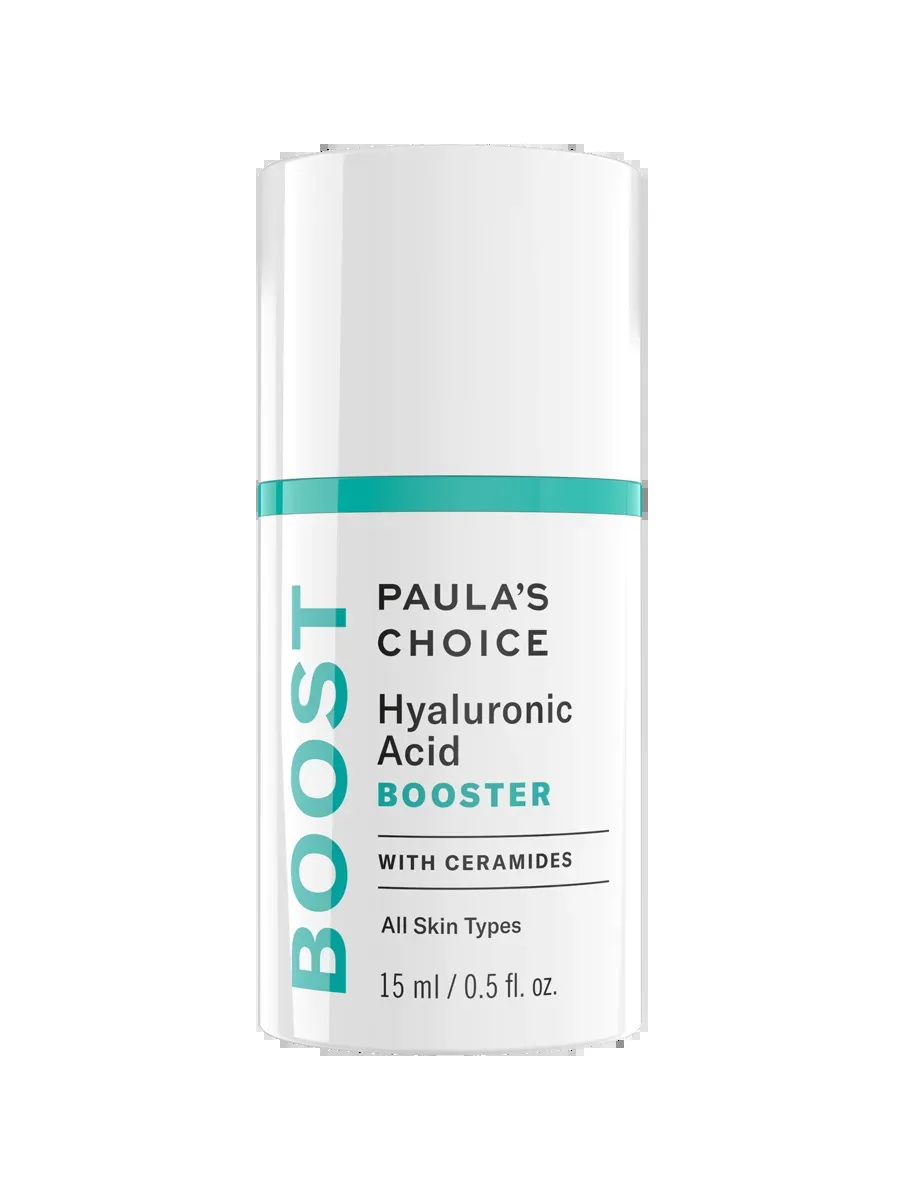
Hyaluronic Acid Can Actually Dehydrate Your Skin (Here's When)
The internet's favorite hydrator has a counterintuitive dark side — in dry air, a humectant with nothing to seal it can pull water out of your skin instead of into it.

This is the current version of the original 1980s Decorté liposome serum — one of the only hydrating serums on the market where the 'liposome' word in the name actually refers to a specific, research-documented multi-layered phospholipid delivery technology that the brand has been refining for four decades. Most 'liposomal' skincare uses the term loosely; here it's the core technology, not a buzzword.
This is one of the few serums on the market where the 'liposome' label is backed by four decades of actual research instead of marketing. The formula pairs phospholipid-encapsulated ceramides with ectoin, ferments, and low-molecular-weight hyaluronic acid to deliver genuine barrier repair and hydration in a genuinely silky texture. Fragrance is the one caveat; price is fair for what you get.
The case for it
What would change this: A declared concentration would move this to a firmer reading of the dose.
Same rule for everyone. “Good choice” is the verdict on 9,564 of 45,024 concern verdicts across the catalog; rule R5 decided 9,072 of them. Unchanged since September 5, 2026, engine 5.1.1.
Brand or formulator? Disclose a concentration or correct a fact →
The studies behind the evidence row
The case for it
What would change this: Removing the trigger named above would let the actives be judged on their own.
Same rule for everyone. “Avoid” is the verdict on 1,909 of 45,024 concern verdicts across the catalog; rule R1 decided 1,304 of them. Unchanged since September 5, 2026, engine 5.1.1.
Brand or formulator? Disclose a concentration or correct a fact →
The studies behind the evidence row
The case for it
Cautions: fragrance.
Same rule for everyone. “Good choice” is the verdict on 9,564 of 45,024 concern verdicts across the catalog; rule R5 decided 9,072 of them. Unchanged since September 5, 2026, engine 5.1.1.
Brand or formulator? Disclose a concentration or correct a fact →
The studies behind the evidence row
Also listed for Aging — the actives here (Phospholipids, acetyl glutamine, Probiotics & Prebiotics, Ceramides) are in our research queue for that concern; there is no verdict until their evidence rows are written. That is a gap in our table, not a mark against the product.
A verdict is DermApproved’s assessment of how well a product’s ingredients fit a concern — never a claim about what the product treats. Evidence dots and collected reviews sit beside it and are never blended in. Rules 0.5.1 · evidence table ev-2026.09-r228 · how we decide
Decorté introduced the first version of this serum in 1984. That predates most of the skincare industry's current vocabulary, including — notably — the casual use of the word 'liposome' that now appears on every third hydrating serum at Sephora. Back when Decorté started working on phospholipid bilayer encapsulation, nobody was using the term as shorthand for 'it has lipids in it.' They were doing the actual materials science: manufacturing multi-layered microcapsules sized between 0.1 and 0.2 micrometers, consistent enough to be documented in Japanese cosmetic chemistry literature, designed to deliver their payload progressively as they integrated with the skin's lipid matrix. Forty years later, that technology is still the brand's research specialty, and the Advanced Repair Serum is the current-generation expression of it.
That history matters because the word 'liposomal' gets thrown around so freely now that it's easy to assume every product making the claim is doing the same thing. They aren't. Plenty of serums labeled liposomal use lecithin or phospholipids in ways that technically qualify but don't deliver the specific encapsulation behavior that makes liposomes useful as a carrier. Decorté's version is different because the manufacturing process has been refined continuously since the mid-80s and the brand has published technical documentation on the particle size, layer count, and stability of the system. Whether or not you trust the efficacy claims, you can at least trust that the technology is real.
Now the formulation. The 2022 Advanced Repair version upgraded the original humectant-focused serum with three important additions: Ceramide NG delivered in the liposome system, which is a legitimately useful case for phospholipid encapsulation because ceramides are notoriously difficult to deliver into the stratum corneum from standard emulsions. Ectoin, an osmolyte that stabilizes cellular membranes under environmental stress and has a growing evidence base for barrier work. And a probiotic ferment complex — bifida ferment lysate, endomyces ferment filtrate, hydrolyzed yeast protein — that brings antioxidant support and a microbiome-adjacent story. Add low-molecular-weight hydrolyzed hyaluronic acid, sodium PCA, acetyl glutamine, and phytosterols, and you have a formulation that takes hydration and barrier repair equally seriously. This isn't just glycerin in a fancy bottle.
On the skin, the texture is where the serum earns its reputation. It pours from the dropper as a slightly milky fluid that turns watery on contact and absorbs within about twenty seconds. The finish is cushioned but not tacky, velvety but not greasy, and it layers cleanly under both moisturizer and makeup. For people with dehydrated skin that looks fine at rest but develops fine lines and rough patches the moment it encounters winter air or a flight, this serum delivers almost immediate relief. Over two weeks of twice-daily use, the improvements compound: dry patches smooth out, the skin feels more resilient, and downstream actives like retinoids become noticeably easier to tolerate because the barrier is in better shape to buffer them.
Where does this serum shine versus its competition? Against Western barrier-repair serums like Skinfix Barrier+ or The Inkey List, the liposome delivery and ferment complex give it a slight technical edge at the expense of a much higher price. Against other J-beauty brands like Tatcha or SK-II, the story is different — Decorté's lineage around liposome delivery specifically is unmatched, and the ceramide encapsulation makes it more of a barrier product than those largely humectant-based serums. Against its own brand siblings in the AQ line, it's a far more defensible choice on ingredient grounds than the $600 AQ Meliority cream — same company, same technology, but the Liposome Repair serum does the heavy lifting of actually fixing barrier issues.
The one real caveat is the fragrance. It's there — subtle, signature Decorté, restrained compared to some Western luxury brands — but if you have confirmed fragrance sensitivity or active rosacea, this is worth patch-testing carefully. For everyone else, the fragrance reads as pleasant and fades within minutes of application. Beyond that, the formula is thoughtfully clean of alcohol, essential oils, and harsh preservatives, which makes it broadly compatible with most skin types and other routine steps.
Let's talk about price and value honestly. At around $143 for 50ml, this is not a drugstore product. It sits in the upper-mid luxury tier, below the extreme prestige shelf but well above the Paula's Choice and Skinceuticals price points. A bottle of the 50ml size lasts most users three to four months of twice-daily face and neck application, which works out to roughly $35 to $45 per month — meaningful money but not unreasonable for a serum doing real work on compromised skin. The refill option brings per-milliliter cost down if you commit long-term. Compared to the $600 AQ Meliority cream from the same brand, this is the substantive, actually-useful expression of the Decorté technology story.
So: who is this for? Anyone dealing with dehydration, mild barrier compromise, winter-skin roughness, or retinoid-induced dryness who wants a serum that does both humectant hydration and lipid-based barrier repair in one step, and who can justify the J-beauty price point. If you're shopping the sub-$50 tier, you can get close enough with cheaper alternatives. If you're already in the luxury skincare world and want a formulation that earns its price on actual technology rather than fragrance-and-packaging, this is one of the more defensible choices you'll find.
The hero actives that drive this product's performance.
| Ingredient | Function | Evidence |
|---|---|---|
| Hydrogenated Lecithin (Liposomes) | The core of Decorté's signature technology — phospholipid bilayers formed into multi-layered microcapsules (0.1-0.2 micrometers) that encapsulate the hydrating and barrier actives in this serum and release them progressively as the liposomes integrate with the skin's lipid matrix. | Not yet assessed |
| Ceramide NG | A barrier-repairing lipid encapsulated in the liposome system here, which improves its penetration into the stratum corneum compared to standard ceramide emulsions — a legitimate use case for liposome delivery in skincare. | Established mechanism for Compromised Skin Barrier · established mechanism |
| Bifida Ferment Lysate | A probiotic-derived ferment with well-documented antioxidant and barrier-supporting activity, used here alongside the endomyces and yeast protein ferments to build a microbiome-friendly repair story. | Not yet assessed |
| Ectoin | An osmolyte that stabilizes cellular membranes under environmental stress and supports hydration retention — an increasingly popular active in Japanese and European skincare for compromised barrier work. | Not yet assessed |
| Hydrolyzed Hyaluronic Acid | Low-molecular-weight HA that penetrates further into the epidermis than standard sodium hyaluronate, working with the ectoin and sodium PCA to deliver multi-level hydration in a lightweight base. | Established mechanism for Dehydration · established mechanism |
| Acetyl Glutamine | An acetylated amino acid that contributes to the serum's moisturizing matrix and supports natural moisturizing factor production in the skin — a subtle but real humectant contribution. | Not yet assessed |
Ingredient standings describe the active at treatment-level doses and vehicles; this product's own condition grades weigh its actual formula.
Water, Butylene Glycol, Glycerin, Hydrogenated Lecithin, Dipropylene Glycol, Acetyl Glutamine, Betula Platyphylla Japonica Juice, Bifida Ferment Lysate, Ceramide NG, Endomyces Ferment Filtrate, Hydrolyzed Hyaluronic Acid, Hydrolyzed Yeast Protein, Hydroxyproline, Rhodomyrtus Tomentosa Fruit Extract, Serine, Sodium PCA, Tocopherol, Acrylates/C10-30 Alkyl Acrylate Crosspolymer, Carbomer, Disodium Succinate, Ectoin, Glycine Soja (Soybean) Sterols, Phytosterols, Sodium Hydroxide, Succinic Acid, Xanthan Gum, Phenoxyethanol, Sodium Benzoate, Fragrance
serum
AM & PM
Apply after toner and before moisturizer. The liposome formula absorbs quickly — wait about 30 seconds before layering the next step. Works well under or over water-based actives.
Immediate plumping and softness after first use. Within 1-2 weeks, dry patches and rough texture typically improve. Full barrier repair benefits develop over 4-8 weeks of consistent twice-daily use.
The science case for this serum rests on three pillars: liposome delivery, ceramide efficacy, and ectoin's cytoprotective activity. Liposome delivery in cosmetics was first commercialized in the mid-1980s and has been studied in cosmetic chemistry journals consistently since. The core mechanism is phospholipid bilayer encapsulation of hydrophilic or lipophilic payloads, with release behavior dependent on particle size and bilayer composition. Decorté's multi-layered 0.1-0.2 micrometer structure is in the range documented in formulation science as effective for penetration into the upper stratum corneum.
Ceramide NG (N-stearoyl phytosphingosine) is one of the skin-identical ceramides studied extensively for barrier repair. One trial published in journals like Experimental Dermatology and Skin Pharmacology and Physiology has consistently shown that topically delivered ceramides in a well-designed vehicle improve transepidermal water loss measurements, increase stratum corneum cohesion, and restore barrier function in atopic and aged skin models. The challenge has historically been delivery — ceramides in standard emulsions don't penetrate well into the lipid matrix they need to reach. Liposome encapsulation is one of the few approaches that meaningfully addresses this delivery problem.
Ectoin is a newer addition to the cosmetic ingredient landscape but has substantive evidence. Research from Bitop and independent dermatology labs has shown ectoin's role as an osmolyte that protects cellular membranes from osmotic and thermal stress, with documented improvements in barrier function and reduction in UV-induced erythema at clinically relevant concentrations. It's increasingly cited in European dermatology literature as a supporting active for compromised skin.
The ferment complex is harder to assess. Bifida ferment lysate has some published antioxidant and barrier-supporting data, and endomyces ferment filtrate has appeared in Japanese cosmetic research as a moisturizing ingredient, but the clinical strength of these individual ferments is smaller than the core actives above. They're likely contributing supporting benefit rather than carrying the formula.
Dermatologists increasingly recognize that barrier-repair serums with encapsulated ceramides have a real place in routines for patients dealing with compromised skin, retinoid-induced dryness, or post-procedure recovery. Most dermatologists acknowledge that liposomal delivery of ceramides is one of the more defensible technology claims in cosmetic skincare because the penetration problem it addresses is real and well-documented. For patients who can afford the price point and don't have fragrance sensitivities, this serum is commonly suggested as a complement to prescription retinoids or post-in-office procedures like microneedling where barrier support is essential. The main cautions raised in dermatology practice are the fragrance content and the cost — both of which are factors where lower-priced alternatives may serve certain patients better.
After cleansing and toning, dispense 2-3 drops into clean fingertips and press evenly onto face and neck. Wait about 30 seconds for the liposome system to absorb before layering the next step. Safe to use morning and night. In the AM, follow with moisturizer and sunscreen. In the PM, this pairs particularly well after a retinoid — apply the retinoid first on dry skin, let it absorb, then layer this serum on top to buffer irritation. Store the bottle upright away from direct sunlight to preserve the liposome stability.
At around $143 for 50ml, this lands firmly in the upper-mid luxury tier. A bottle lasts three to four months with twice-daily face and neck application, putting monthly cost between $35 and $45. Compared to other J-beauty serums in the same technology category — SK-II Facial Treatment Essence, Tatcha The Essence — the pricing is competitive and the ingredient list is arguably more substantive on the barrier-repair side. The refill option brings per-milliliter cost down meaningfully if you commit long-term, which is a rare piece of honesty from a luxury brand. Value is defensible for the formulation but genuinely worse than sub-$50 alternatives if you're optimizing purely on hydration per dollar — the premium is paying for the ceramide encapsulation and ectoin rather than basic humectant content.
People with dehydrated, barrier-compromised, or mature skin who want a hydrating serum that also does real barrier repair via encapsulated ceramides. Ideal for retinoid users dealing with dryness, people in harsh climates, or anyone whose routine needs upgrading from humectant-only serums.
Skip if you have confirmed fragrance sensitivity, active rosacea flaring, or a strict budget — there are good sub-$50 barrier serums that deliver most of the core hydration benefit without the fragrance or the luxury price tag.
Ready to try Decorté Liposome Advanced Repair Serum?
Buy at Amazon ♥Lightweight, slightly milky serum that becomes watery on contact with skin
Soft signature Decorté floral fragrance
Frosted glass bottle with dropper applicator — elegant J-beauty aesthetic
First application is striking — the serum breaks into a watery milk on the skin, absorbs within seconds, and leaves a subtly plumped cushioned feel. The scent is present but restrained. No tingling, no purging. Most users notice skin feels smoother by the third day of use.
Roughly 3-4 months at twice a day to face and neck
All Year
Decorté introduced the original Liposome Moisture Serum in 1984, making it one of the earliest cosmetic applications of liposome delivery technology. The Advanced Repair Serum, launched in 2022, is the current-generation upgrade that added ceramide encapsulation, ectoin, and a probiotic ferment complex to the original hydration-focused formula. It remains the best-selling serum in the Decorté range globally.
Decorté has been developing liposome delivery technology since the 1980s and the original Liposome Moisture Serum is one of the longest-running Japanese serums on the market. The Advanced Repair Serum is the most recent iteration of that 40+ year-old technology line, with genuine formulation history behind the 'liposome' claim — this isn't a buzzword, it's the brand's actual research specialty.
All 'liposomal' skincare uses the same technology
The term is used loosely in the industry. Decorté's liposomes are specifically multi-layered phospholipid bilayers sized 0.1-0.2 micrometers — a specific manufacturing process the brand has documented in cosmetic chemistry literature for decades.
A hydrating serum can't also repair the barrier
This formula includes Ceramide NG, phytosterols, and probiotic ferments alongside the humectants, which is exactly what the stratum corneum's lipid matrix needs. Hydration and barrier repair can absolutely happen in the same product if it's formulated with both in mind.
Decorté has been developing phospholipid bilayer delivery since 1984 and their liposomes are specifically multi-layered microcapsules around 0.1-0.2 micrometers in size, manufactured to a consistent specification. Many products labeled 'liposomal' use the term loosely to describe any lipid-based encapsulation, which doesn't necessarily guarantee the same delivery behavior.
If you're comparing on pure hydration per dollar, cheaper options like Hada Labo Premium or The Inkey List Hyaluronic Acid will get you a large fraction of the benefit. What this serum adds is the encapsulated ceramide delivery, ectoin, and the documented liposome technology — meaningful differences for compromised or barrier-damaged skin that cheaper formulas may not address as completely.
Yes — it's actually one of the better pairings for retinol because the barrier-repair actives (ceramides, phytosterols, ectoin) directly address the dryness and irritation retinol can cause. Apply the retinoid first on dry skin, then layer this serum on top before moisturizer.
Mostly yes, though the fragrance is the one caveat. If you can tolerate light J-beauty fragrance blends you'll likely be fine. If you have confirmed fragrance allergy or rosacea, the presence of 'Fragrance' at the end of the INCI is worth patch-testing carefully.
No — it's formulated as a serum step, not a standalone moisturizer. The texture absorbs quickly and leaves skin cushioned but not sealed. Follow with a cream or emulsion, especially in drier climates or overnight.
Yes — the actives in this serum are pregnancy-safe. No retinoids, no salicylic acid, no essential oils of concern. The fragrance is the only consideration, and it's at cosmetic levels.
Start with the smallest size (15ml or 30ml) to test compatibility. The full 50ml makes sense once you've confirmed you love it — the 2.5 oz refill offers the best per-milliliter value if you're committed long-term.
Recurring themes our editors read across retailer reviews of this product — summaries in our words, not quotations, and not a substitute for your own patch test.
incredibly silky texture
plumps skin immediately
absorbs fast without residue
works well under makeup
contains fragrance
pricey compared to Western hydrating serums
fragrance is polarizing