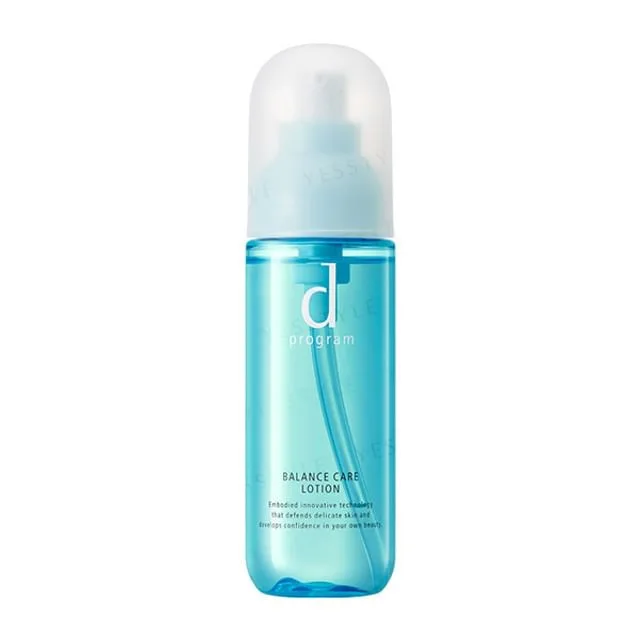
Combination skin is one of the most under-served categories in skincare — most products are designed for either dry or oily skin, leaving combination users to compromise between options that don't quite fit. d program's Balance Care Lotion W is one of the rare products specifically engineered for sensitive combination skin: dual quasi-drug actives that work across both zones, calibrated humectant load that doesn't over-treat either, and the brand's sensitive-skin formulation discipline throughout. For the specific user this serves, no real mid-tier alternative offers comparable depth.
The combination-skin variant in d program's premium sensitive-skin toner range — same dual quasi-drug actives as the other d program variants, with humectant load calibrated specifically for combination skin's mixed dry/oily distribution. Earns its premium for sensitive combination-skin users for whom no real mid-tier alternative offers comparable formulation depth and dual-sensitivity-and-combination-type focus.
Good choicefor SensitivityIn your profileYou chose · No fragrance, drying alcohol, declarable allergens or sensitising preservatives in this liquid — the profile sensitive skin looks for.Not yet assessedGentleNo reviews collected yet
The case for it
Tranexamic Acid + Dipotassium Glycyrrhizate has no evidence row yet for this concern — it is in the research queue.
The formula carries none of the triggers this concern is sensitive to.
What would change this: A researched evidence row for the lead active would replace this with a verdict.
Same rule for everyone. “Good choice” is the verdict on 1,938 of 45,024 concern verdicts across the catalog; rule F2 decided 1,938 of them.
Unchanged since September 5, 2026, engine 5.1.1.
Good choicefor DehydrationIn your profileYou chose · Glycerin is a reference standard by mechanism for dehydration; this liquid carries it high in the ingredient list.Moderate evidenceGentleNo reviews collected yet
The case for it
Erythritol + Glycerin has trial-supported standing for this concern.
It is present at an effective concentration, declared or high in the ingredient list.
The formula carries none of the triggers this concern is sensitive to.
Same rule for everyone. “Good choice” is the verdict on 9,564 of 45,024 concern verdicts across the catalog; rule R5 decided 9,072 of them.
Unchanged since September 5, 2026, engine 5.1.1.
R5 — Trial-supported or guideline-supported active, adequately or plausibly dosed. · the full register
Carrying active
Erythritol + Glycerin
Standing
supported — its mechanism is established
Form
adequate — studied range 20%, from the trials on the row; needs leave-on contact; judge it after ~1 weeks
Tolerability
gentle
Row checked
against its sources on July 17, 2026 (evidence table ev-2026.09-r228)
The studies behind the evidence row
USP glycerin monograph / Fluhr et al., glycerol and the skin (review) — glycerin is the reference humectant, drawing and holding water in the stratum corneum — reference work
Good choicefor DrynessIn your profileYou chose · Glycerin is a reference standard by mechanism for dryness; this liquid carries it high in the ingredient list.Moderate evidenceGentleNo reviews collected yet
The case for it
Erythritol + Glycerin has trial-supported standing for this concern.
It is present at an effective concentration, declared or high in the ingredient list.
The formula carries none of the triggers this concern is sensitive to.
Same rule for everyone. “Good choice” is the verdict on 9,564 of 45,024 concern verdicts across the catalog; rule R5 decided 9,072 of them.
Unchanged since September 5, 2026, engine 5.1.1.
Also listed for Large Pores and Excess Oiliness — the actives here (Tranexamic Acid, Glycerin, Botanical Extracts, Ginkgo Biloba) are in our research queue for those concerns; there is no verdict until their evidence rows are written. That is a gap in our table, not a mark against the product.
Does the jobDoes what a toner is for: not alcohol-driven, adds something real. Not measured from the label: restores skin pH, plays well with what follows.
A verdict is DermApproved’s assessment of how well a product’s ingredients fit a concern — never a claim about what the product treats. Evidence dots and collected reviews sit beside it and are never blended in.
Rules 0.5.1 · evidence table ev-2026.09-r228 · how we decide
Assessment
Pros & Cons
Pros
✓ Calibrated specifically for sensitive combination skin (rare in the category)
✓ Dual quasi-drug actives with iyaku-buhin certification
✓ Humectant load appropriate for both T-zone and cheek zones
✓ Pairs excellently with retinoid and vitamin C routines
✓ Shiseido's '50+ years of sensitive skin research' positioning backs the formulation
Cons
✗ Premium pricing typical of d program variants
✗ May not be ideal for users with combination-leaning-dry skin (consider Moist Care)
✗ May not be ideal for users with combination-leaning-oily skin (consider Acne Care)
✗ Anti-aging benefits gradual rather than transformative
✗ 'W' (whitening/brightening) designation confusing for international buyers
Review
Full Review
Combination skin is one of the most common skin types and one of the most poorly-served by skincare formulations. Most products are designed for either dry or oily skin, with combination users left to compromise between options that don't quite fit — heavy moisturizers that over-condition the T-zone, oil-control products that over-strip the cheeks, hybrid products that don't really do either job well. Sensitive combination skin is even more under-served: most sensitive-skin products lean toward the dry-skin profile, leaving sensitive combination users with limited options that address their dual concerns.
d program's Balance Care Lotion W exists specifically for this under-served population. The formulation is deliberately calibrated for true combination skin — between the Moist Care variant (which is engineered for dry-leaning sensitive skin) and the Acne Care variant (which is engineered to be oil-free for acne-prone skin). The humectant load is appropriate for both T-zone and cheek areas without over-treating either; the dual quasi-drug actives work through anti-inflammatory mechanism that addresses the chronic low-grade inflammation often present in both zones of combination skin.
The dual quasi-drug actives — tranexamic acid and dipotassium glycyrrhizate — are the same as in the other d program variants, carrying the same iyaku-buhin (quasi-drug) regulatory backing for the active claims. In the Balance Care positioning, both mechanisms address aspects of combination skin: tranexamic acid for the visible pore appearance and post-inflammatory pigmentation that can develop in oilier zones, dipotassium glycyrrhizate for the chronic low-grade inflammation that combination skin users often experience as imbalanced flushing or reactive zones.
The humectant calibration is the key formulation choice. The Moist Care variant loads in three sugar alcohols plus petrolatum for the heavy-hydration focus. The Acne Care variant skips most occlusive ingredients and stays deliberately lightweight. The Balance Care variant sits between — erythritol and glycerin for the foundation humectants, no petrolatum or heavy occlusives, lighter overall load than Moist Care. The result is a toner that distributes appropriately across combination skin without dragging on the oilier zones or feeling insufficient on the drier zones.
The botanical layer adds depth without sensitivity risk. Phellodendron amurense (Amur cork tree) bark extract for the antimicrobial and anti-inflammatory mechanisms — particularly useful for combination skin where oilier zones can develop low-grade inflammation. Crataegus oxyacantha (hawthorn) extract for flavonoid antioxidants with documented microcirculation-supportive properties. Ginkgo biloba leaf extract for additional antioxidant and microcirculation support. Together they reinforce the balancing positioning by supporting both the over-active and under-active zones of combination skin.
The sensitive-skin formulation discipline is consistent with the d program brand identity. Fragrance-free. Alcohol-free. No paraben, sulfate, or common allergen. Patch-tested and allergy-tested for sensitive skin. The kind of formulation profile that allows combination skin to receive thoughtful treatment without the irritation that typical combination-skin products often introduce through alcohol-based oil control.
In use, the experience matches the formulation philosophy. The light-medium liquid texture spreads appropriately across both T-zone and cheek areas without requiring zone-specific application. Skin feels balanced after application — not too tight on the cheeks, not too occlusive on the T-zone. Sensitive combination users transitioning from harsher products notice the difference immediately: less flushing on the cheeks, less mid-day shine on the T-zone, less overall reactivity throughout the day. The calibration is genuinely thoughtful for a category that's typically under-served.
Results emerge gradually, as is typical for d program products. After 1-2 weeks of consistent twice-daily use, users report more even T-zone vs cheek behavior — the imbalance that characterizes combination skin is gently corrected toward equilibrium. The tranexamic acid effect on pore appearance and post-inflammatory pigmentation emerges over 6-12 weeks of consistent use. None of these are transformative effects, but together they support sustained sensitive-combination-skin care over months.
The value calculation is the standard d program premium challenge. At forty-five dollars for 125ml, this sits in the brand's typical premium pricing range — meaningfully more expensive than mid-tier combination-skin toners (most of which use less thoughtful approaches), comparable to Western pharmacy options like La Roche-Posay's combination-skin range, and meaningfully cheaper than luxury Western anti-aging combination-skin products. The 125ml bottle lasts 2-3 months at twice-daily use; refill pouches reduce ongoing cost.
The demographic this product specifically serves is sensitive combination-skin users — particularly those who have struggled with finding products that address both their sensitivity and their combination-type concerns simultaneously. For this user, no real mid-tier alternative offers comparable formulation depth, regulatory backing, and skin-type specificity. The premium pricing reflects the niche positioning more than just brand markup; d program's investment in calibrated combination-skin formulation is genuinely rare in the global skincare market.
The limitations are smaller than for many specialty products. For users with combination-leaning-dry skin, the Moist Care variant may serve better. For users with combination-leaning-oily skin, the Acne Care variant may serve better. For users without specific sensitive-skin needs, mid-tier combination-skin toners may deliver adequate results at lower cost. The 'W' designation can be confusing for international buyers who don't recognize the bihaku (brightening) positioning. Anti-aging benefits are gradual rather than transformative, as is typical for the quasi-drug-toner category.
For sensitive combination-skin users, this is one of the few genuinely well-formulated options globally — Shiseido's pharmaceutical R&D applied to a specific user profile that Western and even most Japanese brands address poorly. The Japanese pharmacy tradition of segmenting sensitive-skin offerings by specific skin-type and concern combinations shows up clearly in d program's range, and the Balance Care variant occupies an important niche within that segmentation.
Formula
Key Ingredients
The hero actives that drive this product's performance.
Same dual quasi-drug certification as the Vital Act and Acne Care variants, applied here to the combination-skin balance positioning. In the Balance Care variant, the anti-inflammatory mechanism of both actives addresses the chronic low-grade inflammation that accompanies the dry-and-oily-zone imbalance typical of combination skin.
The same traditional Japanese botanical featured in the Acne Care variant — documented antimicrobial and anti-inflammatory mechanisms appropriate for combination skin where the oilier zones can develop low-grade inflammation alongside the drier zones' barrier compromise.
Calibrated humectant load appropriate for combination skin — lighter than the Moist Care variant (which is engineered for dry-leaning sensitive skin), heavier than the Acne Care variant (which is engineered to be oil-free). Erythritol provides small-molecule humectant function; glycerin provides the foundation humectant action.
Established mechanismfor Dehydration · established mechanism
Crataegus oxyacantha (hawthorn) extract and Ginkgo biloba leaf extract provide flavonoid antioxidant content with documented microcirculation-supportive properties. Together they reinforce the balancing positioning by supporting both the over-active and under-active zones of combination skin.
Not yet assessed
Ingredient standings describe the active at treatment-level doses and
vehicles; this product's own condition grades weigh its actual formula.
Apply after cleansing on damp skin, patting in with palms or via cotton pad. The lightweight formulation distributes evenly across combination skin's mixed zones — no zone-specific application needed. Pairs cleanly with retinoids, vitamin C, or other actives. Pair with the d program Balance Care Emulsion MB or other lightweight moisturizer for the complete brand-aligned routine.
Results Timeline
Immediate post-application: skin feels balanced and slightly hydrated, with the lightweight finish appropriate for combination skin. Within 1-2 weeks of twice-daily use, users report more even T-zone vs cheek behavior — the imbalance that characterizes combination skin is gently corrected toward equilibrium. The tranexamic acid effect on visible pore appearance and post-inflammatory marks emerges over 6-12 weeks of consistent use.
d program Balance Care Emulsion MB or ceramide cream
Evidence
Science & Expert Perspective
The Science
The clinical evidence for the dual quasi-drug actives is consistent with the discussion in the Vital Act and Acne Care variant entries — tranexamic acid has substantial peer-reviewed research backing for both pigmentation and inflammatory pathway effects, and dipotassium glycyrrhizate has well-characterized anti-inflammatory mechanism through cortisol-receptor-related pathway activity. The combination-skin formulation calibration in the Balance Care variant is more about engineering than pharmacology — the humectant load (erythritol + glycerin without sugar alcohol triad or petrolatum) is calibrated for the distribution needs of mixed dry/oily skin. The Phellodendron amurense bark extract has emerging dermatologic research on its alkaloid content (berberine and related compounds) and documented antimicrobial mechanisms relevant to oilier-zone management. The Crataegus oxyacantha and Ginkgo biloba extracts have individual antioxidant and microcirculation research bases. The combination as a coherent combination-skin sensitive formulation reflects d program's investment in calibrated sub-segments of the sensitive-skin category that other brands tend to ignore.
Within Japanese dermatology, the d program Balance Care Lotion W is appreciated as one of the rare products specifically engineered for sensitive combination skin — a patient population that is widely recognized in clinical practice but poorly served by most skincare formulations. Clinical positioning is typically as the toner step in routines designed for combination-skin patients with sensitivity concerns, post-inflammatory pigmentation in the T-zone, or chronic mixed-zone reactivity. The dual quasi-drug regulatory backing provides meaningful efficacy assurance, though as with all toner-format products the recommendation is to pair with appropriate leave-on actives for the comprehensive routine. For combination-leaning patients (more dry or more oily), the corresponding d program variant (Moist Care or Acne Care respectively) may be more directly appropriate.
Guidance
Usage & Recommendations
How to Use
After cleansing, while skin is still slightly damp, dispense 3-5 drops onto clean palms or a cotton pad. Press into skin or swipe gently outward, distributing evenly across face — the calibrated formula distributes appropriately across combination skin's mixed zones without zone-specific application needed. Follow with serum (vitamin C, niacinamide, or retinoid as appropriate), moisturizer (d program Balance Care Emulsion MB pairs naturally), and sunscreen in the morning. Use morning and evening as the toner step. Safe for all skin types and pregnancy use.
Value Assessment
At forty-five dollars for 125ml, this sits in the d program premium pricing tier — meaningfully more expensive than mid-tier combination-skin toners (most of which use alcohol or other compromising approaches), comparable to Western pharmacy combination-skin lines, and meaningfully cheaper than luxury Western options. The 125ml bottle lasts 2-3 months at twice-daily use; refill pouches improve long-term value. For sensitive combination-skin users specifically, no real mid-tier alternative offers comparable formulation depth — the value supports the premium for this niche audience. For users with simpler combination-skin needs, mid-tier alternatives at half the cost may deliver adequate results.
Who Should Buy
Sensitive combination-skin users who have struggled to find products that address both their sensitivity and their combination-type concerns simultaneously. Users with mixed dry/oily skin behavior plus chronic low-grade reactivity. Anyone already invested in the d program brand wanting the combination-skin-specific variant alongside other family products. Also a strong fit for users with pre-aging combination skin showing early signs of texture or pigmentation concerns.
Who Should Skip
Users with strongly dry-leaning skin should choose the Moist Care variant. Users with strongly oily or acne-prone skin should choose the Acne Care variant. Users without sensitive-skin needs may find mid-tier combination-skin toners adequate at lower cost. Anyone expecting transformative results from any toner should manage expectations or invest in leave-on actives. Cost-conscious users with combination skin should consider Hada Labo Premium Whitening or other mid-tier alternatives.
Clear, light-medium liquid — slightly more viscous than the Acne Care variant, slightly less viscous than the Moist Care variant. The texture is deliberately calibrated for combination-skin distribution.
Scent
Fragrance-free with no perceptible scent — deliberate sensitive-skin positioning.
Packaging
125ml clear plastic bottle with flip-cap, d program signature minimalist branding with green/yellow accents to differentiate from the other variants. Refill pouches widely available.
Finish
lightweightfast-absorbingnon-greasy
What to Expect on First Use
First application: feels appropriately calibrated for combination skin — not too heavy for oily zones, not too light for dry zones. Sensitive combination-skin users notice no stinging or zone-specific reactivity. The balanced texture is the proof-of-concept for the variant's positioning between the Moist Care (drier-skin focus) and Acne Care (oilier-skin focus) variants.
How Long It Lasts
Approximately 2-3 months applied morning and evening.
Japanese Quasi-Drug (Iyaku-Buhin) DesignationPatch Tested for Sensitive SkinAllergy Tested
Background
The Story Behind This Product
d program added the Balance Care variant as the brand expanded its sensitive-skin specialty into specific skin-type-based products. The combination-skin positioning was specifically requested by Japanese consumer research showing that mixed-skin users felt under-served by single-type sensitive-skin products. The brand's 'over 50 years of sensitive skin research' tagline references the Shiseido sensitive-skin lineage starting in 1966 with predecessor brands; the d program line itself launched in 2005.
About d program Established Brand (5–20 years)
d program's Balance Care Lotion W is the combination-skin variant within the d program sensitive-skin range, calibrated for users with mixed dry/oily skin and visible pore concerns. Like other d program variants, it carries dual quasi-drug certification for tranexamic acid and dipotassium glycyrrhizate, with the 'W' designation referring to the brightening (bihaku) positioning alongside the balancing focus. Reflects d program's 'over 50 years of sensitive skin research' positioning (the Shiseido sensitive-skin lineage dating back to 1966).
Brand founded: 2005 · Product launched: 2019
Myth vs. Reality
Common Myths
Myth
Combination skin should use different products on different zones.
Reality
Zone-specific application is genuinely useful for some routines (heavier moisturizer on cheeks vs T-zone), but for the toner step a well-calibrated combination-skin product is usually superior to switching between two products. The d program Balance Care formulation distributes appropriately across both zones without zone-specific tailoring needed.
Myth
Sensitive skin and combination skin are mutually exclusive categories.
Reality
Many users have both sensitivities — chronic low-grade inflammation in the drier cheek zones, low-grade redness in the oilier T-zone, and overall reactivity to many standard skincare. The d program Balance Care variant specifically serves this dual-sensitivity-and-combination-type user, which is more common than single-type sensitive-skin products typically acknowledge.
FAQ
Frequently Asked Questions
How is Balance Care Lotion W different from the other d program variants?
Each d program variant is calibrated for a different sensitive-skin profile. Vital Act focuses on brightening with multi-botanical antioxidants. Moist Care focuses on hydration with sugar alcohol humectants and small petrolatum. Acne Care focuses on acne with oil-free lightweight formulation. Balance Care is specifically calibrated for combination skin — between the Moist Care and Acne Care variants in humectant load, distributing appropriately across both dry and oily zones.
Will this work if I have combination-leaning-dry or combination-leaning-oily skin?
Yes for most users — the formulation is deliberately calibrated for true combination skin. For combination-leaning-dry skin, you may want to layer this with a heavier moisturizer (the d program Moist Care Emulsion). For combination-leaning-oily skin, you may pair this with a lighter or oil-free moisturizer. The toner step itself works across the combination range without modification.
Does this address visible pores on combination skin?
Modestly. The tranexamic acid's effect on surface texture and the multi-botanical antioxidant layer contribute to gradual improvement in pore appearance over weeks of consistent use. For more dramatic pore-care results, pair with a leave-on BHA serum (Paula's Choice 2% BHA, COSRX BHA Power Liquid) used 2-3 nights weekly.
How does this compare to non-d-program combination skin toners?
Most mid-tier combination skin toners use either alcohol (for oil control) or heavy humectants (for hydration) — both approaches have trade-offs that combination skin users feel. d program's Balance Care delivers neither alcohol nor heavy humectants but instead uses dual quasi-drug actives and calibrated lighter humectant load for a balanced approach. For sensitive combination skin specifically, this is a meaningfully different formulation philosophy than most alternatives.
Is this safe with retinoids?
Yes — pairs excellently with retinoid routines. The dual quasi-drug actives don't conflict with retinoid mechanism, the anti-inflammatory glycyrrhizate calms reactive flushing during retinoid initiation, and the lightweight formulation doesn't add occlusive load that might interact with retinoid penetration. Apply this first after cleansing, let it absorb, then layer your retinoid.
Reviews
What Reviewers Tend to Say
Recurring themes our editors read across retailer reviews of this product — summaries in our words, not quotations, and not a substitute for your own patch test.
Common Praise
Calibrated for combination skin without over-treating either dry or oily zones
Genuinely gentle for sensitive combination skin
Lightweight enough for oilier zones, hydrating enough for drier zones
Pairs excellently with the d program Balance Care Emulsion
Common Complaints
Premium pricing typical of d program variants
Subtle benefits — improvements are gradual rather than dramatic
May not be quite hydrating enough for users with combination-leaning-dry skin
May not be quite oil-controlling enough for users with combination-leaning-oily skin
Notable Endorsements
Cosme.net popularity ranking for combination-skin sensitive tonersJapanese quasi-drug certificationRecommended by Japanese dermatologists for sensitive combination skin
The burn trials are real and the skeptics who dismiss aloe as folklore are wrong — but the same substance has delayed healing in other wounds, and none of it says anything about what a soothing gel does to intact skin.
Picking one skin state and selling through hospital dermatology departments is a genuinely smart strategy. Whether the house botanical earns its billing is a separate question, and the answer is not the one either side wants.
The cheapest humectant on the ingredient list is also the best-studied, the most reliable in dry air, and the one your favorite moisturizer is quietly built around.
Jan 21, 2026· 6 min
Questions people ask about sensitive skin
Verified answers from our questions library — the nuance a product page cannot carry.
Products, answers, therapy guides, tools and articles in one search. Brand names,
slang and abbreviations all work — accutane finds isotretinoin, bacne finds truncal acne.