





You Can Mix L-Ascorbic Acid at Home. Keeping It Alive Is the Hard Part.
The one home formulation with a genuinely coherent case, taken apart on its own terms: the pH window, the oxidation clock, and what a browning serum has actually become.

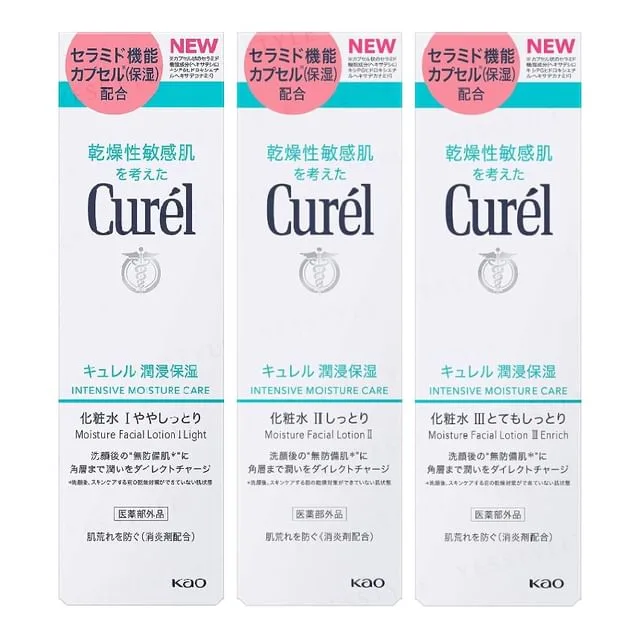
Most sensitive-skin brightening toners use simpler chassis — either fragrance-free single-active brightening or pseudo-ceramide chemistry without brightening actives. Curél's Whitening Moisture Lotion combines both — Japan quasi-drug certified vitamin C derivative brightening plus the brand's signature pseudo-ceramide barrier chemistry — in a three-tier hydration system that lets users match the formula to their specific dryness level. The III variant specifically targets the dry-and-sensitive skin combination that's common for brightening-concerned users in colder climates.
Curél's brightening lotion for dry-and-sensitive skin — Japan quasi-drug certified vitamin C derivative brightening combined with the brand's signature pseudo-ceramide chemistry and high humectant load. The III variant specifically targets the dry-and-sensitive skin combination that prestige brightening alternatives often underserve, at accessible drugstore-tier pricing.
The case for it
Cautions: known irritants.
What would change this: A declared concentration would move this to a firmer reading of the dose.
Same rule for everyone. “Promising” is the verdict on 7,858 of 45,024 concern verdicts across the catalog; rule R9p decided 7,858 of them. Unchanged since September 5, 2026, engine 5.1.1.
Brand or formulator? Disclose a concentration or correct a fact →
The studies behind the evidence row
The case for it
What would change this: A declared concentration would move this to a firmer reading of the dose.
Same rule for everyone. “Promising” is the verdict on 7,858 of 45,024 concern verdicts across the catalog; rule R9p decided 7,858 of them. Unchanged since September 5, 2026, engine 5.1.1.
Brand or formulator? Disclose a concentration or correct a fact →
The studies behind the evidence row
The case for it
What would change this: A declared concentration would move this to a firmer reading of the dose.
Same rule for everyone. “Promising” is the verdict on 7,858 of 45,024 concern verdicts across the catalog; rule R9p decided 7,858 of them. Unchanged since September 5, 2026, engine 5.1.1.
Brand or formulator? Disclose a concentration or correct a fact →
The studies behind the evidence row
The case for it
Same rule for everyone. “Good choice” is the verdict on 9,564 of 45,024 concern verdicts across the catalog; rule R5 decided 9,072 of them. Unchanged since September 5, 2026, engine 5.1.1.
Brand or formulator? Disclose a concentration or correct a fact →
The studies behind the evidence row
The case for it
Cautions: fragrance.
Same rule for everyone. “Good choice” is the verdict on 9,564 of 45,024 concern verdicts across the catalog; rule R5 decided 9,072 of them. Unchanged since September 5, 2026, engine 5.1.1.
Brand or formulator? Disclose a concentration or correct a fact →
The studies behind the evidence row
The case for it
Cautions: known irritants.
What would change this: Removing the trigger named above would let the actives be judged on their own.
Same rule for everyone. “Avoid” is the verdict on 1,909 of 45,024 concern verdicts across the catalog; rule F1 decided 605 of them. Unchanged since September 5, 2026, engine 5.1.1.
Brand or formulator? Disclose a concentration or correct a fact →
Does the jobDoes what a toner is for: adds something real, not alcohol-driven. Not measured from the label: restores skin pH, plays well with what follows.
Where our review and the verdict differ. The review below was written on the formulation and the published trials; the verdicts above apply the stricter standing test in our methodology — an active earns a recommendation only with guideline or regulatory standing for the concern. Where the two disagree, the verdict is DermApproved’s position.
A verdict is DermApproved’s assessment of how well a product’s ingredients fit a concern — never a claim about what the product treats. Evidence dots and collected reviews sit beside it and are never blended in. Rules 0.5.1 · evidence table ev-2026.09-r228 · how we decide
Brightening skincare and sensitive-skin skincare tend to pull in opposite directions inside the same bottle. The actives that fade pigment, vitamin C, tranexamic acid, alpha-arbutin, do their work through pathways that can stress a compromised barrier, especially at the concentrations needed for anything visible, while sensitive-skin formulas usually respond by keeping brightening chemistry minimal or skipping it altogether. The person caught in the overlap, dry and reactive skin that also wants help with dark spots, often ends up choosing between two imperfect routines. Curél's Whitening Lotion III is one of the few products that genuinely tries to serve that underserved combination rather than picking a side, and the way it does so is quietly clever.
The formula carries two engines at once. The brightening side runs on a Japan quasi-drug certified stable vitamin C derivative, typically ascorbic acid 2-glucoside, a water-soluble form documented for melanogenesis-inhibiting effects through tyrosinase dampening plus antioxidant activity, sitting at the regulatory-validated functional concentration that quasi-drug status requires. The barrier side runs on Curél's signature pseudo-ceramide, cetyl-PG hydroxyethyl palmitamide, Kao's proprietary ceramide-mimetic that approximates the stratum corneum's lipid function and underpins the whole sensitive-skin platform. Holding the two together is a soothing chassis: dipotassium glycyrrhizate, the licorice-derived anti-inflammatory that counterbalances any surface stimulation from the brightening chemistry, and eucalyptus globulus leaf extract, the brand's familiar conditioning botanical. The genuinely useful part is the tiering. This is the III variant, the very-moist option, where glycerin sits higher than in the lighter I and II formulas, and that deeper humectant load is what makes it the right pick for dry-and-sensitive skin rather than a one-size compromise.
The sensory experience is exactly what Curél has built its name on, which is to say almost nothing at all, in the best way. It is genuinely fragrance-free, alcohol-free, a slightly viscous clear liquid that reads visibly thicker than its lighter siblings in the line. That extra body means it takes a touch longer to sink in, but it absorbs cleanly without tack, and skin feels noticeably more hydrated and a little cooler straightaway. The hydration and comfort payoff is immediate; the brightening contribution is the slow part, accumulating over weeks rather than announcing itself.
Where this lotion fits in a routine is worth thinking through, because the three-tier system can leave newcomers staring at a shelf unsure which bottle is theirs. The I variant suits oily-to-combination skin that wants lightness, the II is the middle-ground normal-to-combination pick, and the III, this one, is for skin whose defining problem is dryness layered on top of sensitivity and pigment concern, the combination that shows up most in colder climates, in mature skin, or alongside eczema-prone histories. Used as a lotion step after cleansing and before heavier moisturizer, it does double duty, hydrating and toning while quietly running its brightening active in the background. Pat it in with the hands or press it on with a cotton pad, follow with sunscreen in the morning without exception, and let it work as the unhurried, barrier-friendly layer it was built to be rather than expecting toner-speed transformation.
On timeline, honesty matters, and the formula is honest. Hydration lands on day one, but the tone work from a single vitamin C derivative builds across roughly eight to twelve weeks of consistent twice-daily use, and only if you pair it with daily sunscreen, which is non-negotiable if you want the brightening to mean anything. Most users see modest improvement in surface evenness and gradual fading of mild marks and sun spots in that window. The pace is gentler than prestige brightening serums leaning on higher-concentration vitamin C, and that is precisely the trade: less drama, far more tolerability for the dry-and-sensitive baseline this product is built for. If you have reacted badly to aggressive brightening serums before, the restraint here is a feature, not a shortfall.
The limitations are real but small. The preservative system uses methylparaben, which is well-documented as safe and effective at cosmetic levels but will be a sticking point for anyone avoiding parabens on principle. The brightening stack is single-active rather than the multi-active approach some competing lotions take, so if your skin is robust and your priority is the strongest possible fade, you can find more concentrated routes. The three-tier I, II, III naming genuinely confuses newcomers, distribution outside Asian-beauty retailers is patchy, and the results require patience most people underestimate. None of those undermine what the product is.
Value sits firmly in the upper Japanese drugstore tier and earns its place there. At roughly thirty-two dollars for the 140ml bottle, it costs more than the most basic brightening lotions and far less than prestige Japanese alternatives, and the bottle stretches two to three months at twice-daily face use. What the premium buys over cheaper options is the dedicated pseudo-ceramide barrier chassis, and for dry-and-sensitive skin specifically, that is exactly the thing worth paying for. For normal-to-combination skin chasing maximum brightening, a multi-active competitor may give better per-dollar punch. But for the reader who is dry, reactive, and frustrated that brightening routines keep wrecking their barrier, this is one of the genuinely smart, well-tolerated answers on the market, and a rare product that refuses to make you choose.
The hero actives that drive this product's performance.
| Ingredient | Function | Evidence |
|---|---|---|
| Stable Vitamin C Derivative (Ascorbic Acid 2-Glucoside) | The Japan quasi-drug certified brightening active — water-soluble stable vitamin C derivative documented for melanogenesis-inhibiting and antioxidant effects. The same chemistry used across Curél's broader Whitening Care line at a regulatory-validated functional concentration. | Limited for Hyperpigmentation |
| Cetyl-PG Hydroxyethyl Palmitamide (Pseudo-Ceramide) | Curél's signature pseudo-ceramide chemistry — Kao's proprietary ceramide-mimetic that approximates natural stratum corneum lipid function. The brand's broader sensitive-skin positioning is built around this ingredient, applied here in the brightening lotion to support barrier function during the longer-term brightening treatment. | Established mechanism for Dryness · established mechanism |
| Eucalyptus Globulus Leaf Extract | Curél's brand-signature botanical — eucalyptus leaf extract used widely across the brand's products for documented anti-inflammatory and skin-conditioning effects, particularly relevant in sensitive-skin brightening where supporting the inflammatory pathway is part of the broader pigmentation management approach. | Not yet assessed |
| Dipotassium Glycyrrhizate (Licorice-Derived Anti-Inflammatory) | Anti-inflammatory active that counterbalances potential surface irritation from the vitamin C chemistry — important in a sensitive-skin brightening lotion where the active chemistry would otherwise risk over-stimulating compromised barriers. | Limited for Hyperpigmentation |
| Glycerin (High Concentration for III Variant) | Sits high in the INCI as the primary humectant — at higher concentration in the III (very hydrating) variant versus the I and II variants. The deeper humectant load is what differentiates the III from the lighter variants in the line and suits dry-and-sensitive skin combinations. | Established mechanism for Dehydration · established mechanism |
Ingredient standings describe the active at treatment-level doses and vehicles; this product's own condition grades weigh its actual formula.
Water, BG, Glycerin, Stable Vitamin C Derivative (Ascorbic Acid 2-Glucoside or similar), Cetyl-PG Hydroxyethyl Palmitamide (Pseudo-Ceramide), Eucalyptus Globulus Leaf Extract, Glycyrrhiza Glabra (Licorice) Root Extract, Dipotassium Glycyrrhizate, Polyglyceryl-10 Stearate, Carbomer, Potassium Hydroxide, Disodium EDTA, Phenoxyethanol, Methylparaben
toner
AM & PM
Apply after cleansing on damp skin both morning and evening. Use 1-2 pumps pressed gently into face and neck — the III variant's richer texture takes 30-60 seconds to absorb. Follow with Curél's matching Whitening Cream or another barrier-supporting moisturizer. Daily SPF is non-negotiable to capitalize on the brightening work.
Hydration and skin-comfort benefits immediate. Brightening contribution from the vitamin C derivative builds over 8-12 weeks of consistent twice-daily use paired with daily SPF.
The brightening chemistry rests on the Japan quasi-drug certified vitamin C derivative — typically ascorbic acid 2-glucoside (sodium ascorbyl phosphate is the alternative form), with documented melanogenesis-inhibiting effects through tyrosinase pathway dampening and antioxidant activity. The published clinical literature on stable vitamin C derivatives supports their brightening contribution at the concentrations used in quasi-drug formulations, with measurable effects on mild surface pigmentation over 8-12 week treatment windows.
Cetyl-PG hydroxyethyl palmitamide is Kao Corporation's proprietary pseudo-ceramide ingredient — a synthetic analog of natural ceramide chemistry that approximates the stratum corneum lipid matrix function. The published cosmetic literature documents barrier-supporting effects at typical formulation concentrations. In a brightening context, the pseudo-ceramide chemistry supports the skin barrier through the longer-term brightening treatment, helping mitigate the typical barrier disruption that aggressive brightening actives can produce.
Dipotassium glycyrrhizate is the water-soluble licorice-derivative anti-inflammatory active used widely across Japanese quasi-drug skincare. The mechanism involves inhibition of 11-beta-hydroxysteroid dehydrogenase locally in skin. In a sensitive-skin brightening context, the anti-inflammatory action complements the brightening chemistry by addressing the inflammatory component of pigmentation while reducing the risk of irritation-induced post-inflammatory hyperpigmentation.
Eucalyptus globulus leaf extract is one of Curél's brand-signature botanicals, with documented anti-inflammatory chemistry through eucalyptol and related compounds. The published research on topical eucalyptus extracts supports skin-conditioning effects at the concentrations used in cosmetic formulations.
The high glycerin content in the III variant provides the deeper humectant load that differentiates this variant from the I and II options. Glycerin at high concentrations produces substantial water-binding and contributes to the perception of skin plumpness after application.
The methylparaben preservative is well-documented as safe and effective at cosmetic concentrations. The 'paraben-free' marketing shift reflects consumer preference rather than scientific safety concerns.
Dermatologists working with patients who have dry, sensitive skin with brightening concerns frequently face the dual-positioning problem this product addresses. Most prestige brightening serums are calibrated for normal-to-combination skin and can over-stimulate dry-and-sensitive baselines; most sensitive-skin formulations skip brightening chemistry entirely. Curél's Whitening Moisture Lotion III is taken as a credible recommendation for this specific population — combining the brand's well-validated pseudo-ceramide chemistry with Japan quasi-drug certified vitamin C derivative brightening in a fragrance-free, alcohol-free formulation. The three-tier hydration system reflects clinical thinking about matching baseline moisture needs to product texture. The standard caveat is the methylparaben for paraben-preference patients; otherwise this is one of the better Japanese drugstore-tier sensitive-skin brightening recommendations available.
Apply after cleansing on damp skin both morning and evening. Use 1-2 pumps pressed gently into face and neck. The III variant's richer texture takes 30-60 seconds to absorb. Follow with Curél's matching Whitening Cream or another barrier-supporting moisturizer. Apply SPF in the morning — non-negotiable to capitalize on the vitamin C brightening work and prevent UV-induced new pigmentation. Suitable for daily indefinite use; brightening contribution accumulates over months.
At roughly $32 for the 140ml bottle through Asian-beauty retailers, the per-bottle price sits in the upper Japanese drugstore tier — above Hada Labo Shirojyun lotions ($18) and below prestige Japanese brightening alternatives. The 140ml bottle stretches 2-3 months at twice-daily face application, putting the per-month cost at $11-16. The argument for the Curél premium over Hada Labo is the dedicated sensitive-skin pseudo-ceramide chassis; the argument against is the simpler brightening active stack. For dry-and-sensitive skin specifically, this product earns the price; for normal-to-combination skin wanting stronger brightening, Hada Labo Shirojyun offers better per-dollar value through its multi-active approach.
Users with dry-and-sensitive skin who have hyperpigmentation, dark spot, or general dullness concerns and want a Japanese drugstore-tier brightening lotion with dedicated sensitive-skin pseudo-ceramide chemistry. Best for users who have failed or reacted poorly to prestige brightening serums on dry-and-sensitive baselines.
Oily-to-combination skin users (choose the lighter I or II variants instead), users wanting maximum brightening efficacy per dollar (Hada Labo Shirojyun offers better value through its multi-active approach), users who specifically avoid parabens, and users with limited access to Japanese drugstore brands (the Curél Whitening line has narrower Western distribution than Curél's UV products).
Slightly viscous clear liquid — visibly thicker than the I and II variants in the same line.
Genuinely fragrance-free.
White plastic pump bottle with the brand's signature soft-blue Curél accents — clinical-looking, with the III hydration tier indicated on the label.
First-use impression is the absence of fragrance, alcohol, or warming sensation. The richer III texture takes 30-60 seconds to absorb. Skin feels noticeably more hydrated and slightly cooler immediately; the brightening contribution accumulates over weeks of consistent use.
Roughly 2-3 months applied morning and evening face application for the 140ml bottle.
fall winter
Curél added the Whitening Moisture Lotion line to its broader sensitive-skin lineup as the brand's brightening-focused extension. The three-hydration-tier system (I light, II moderate, III very hydrating) reflects Curél's clinical approach to skincare — different patients have different baseline moisture needs even within the same therapeutic positioning. The III variant has been on Japanese shelves for over a decade as the line's option for dry-and-sensitive skin with brightening concerns.
Curél's Whitening Moisture Lotion line — the brand's brightening extension of the broader sensitive-skin Moisture Care platform. Comes in three hydration tiers (I light, II moderate, III very hydrating). The line uses Curél's signature pseudo-ceramide chemistry with brightening-active additions, registered as a Japanese quasi-drug (医薬部外品) for its melanogenesis-inhibiting actives.
Sensitive-skin brightening toners are weaker than prestige brightening serums.
The active chemistry can be identical — the difference is typically in supporting cast, sensorial signature, and concentration of supporting actives rather than in the primary brightening active. Curél's vitamin C derivative is quasi-drug certified at functional concentration, comparable to many prestige brightening products. The 'sensitive-skin' positioning reflects calmer supporting chemistry, not weaker brightening efficacy.
The III variant in Curél's Whitening line is just thicker — same chemistry as I and II.
Same primary actives across all three variants, but the III variant has meaningfully higher humectant concentration (glycerin specifically), which produces the thicker texture and the deeper hydration. For dry-and-sensitive skin, the III is the better-suited variant; for combination skin, the II provides a better texture match.
Same vitamin C derivative brightening active across all three variants, but different humectant concentrations producing different textures. I is the lightest (oily-to-combination skin), II is moderate (normal-to-combination), III is the most hydrating (dry-and-sensitive). Choose based on your baseline moisture needs.
Yes — fragrance-free, alcohol-free, and built around Curél's signature pseudo-ceramide chemistry that supports barrier function during brightening treatment. The Japan quasi-drug certified vitamin C derivative provides genuine brightening effects without the high-concentration vitamin C aggressiveness that prestige alternatives can carry. The methylparaben preservative is the only modest consideration for some users.
Both are Japanese drugstore-tier brightening lotions with vitamin C derivative chemistry. Curél adds pseudo-ceramide barrier support and is the more sensitive-skin-targeted formula. Hada Labo Shirojyun uses a multi-active brightening stack (vitamin C + niacinamide + alpha-arbutin + resveratrol) for stronger brightening but with less barrier-supporting chemistry. Choose Curél for dry-sensitive skin; choose Shirojyun for normal-to-combination skin wanting stronger brightening.
Yes — the vitamin C derivative, pseudo-ceramide chemistry, eucalyptus extract, and licorice-derivative anti-inflammatory active are all considered pregnancy-safe at cosmetic concentrations. The formula contains no retinoids or salicylates. The methylparaben is the only ingredient worth a conversation with your prenatal-care provider if you have preservative-preference considerations.
Hydration benefits show after first use. Visible improvement in surface tone evenness and gradual fading of mild pigmentation typically takes 8-12 weeks of consistent twice-daily use paired with daily SPF. The vitamin C derivative chemistry produces gradual cumulative results rather than dramatic immediate effects, which is typical of well-tolerated sensitive-skin brightening formulations.
Probably yes for most oily-skin users — the III variant's higher humectant load is designed for dry-and-sensitive skin. Oily-to-combination users should choose the I variant; normal-to-combination users typically prefer the II. The III is specifically positioned for users whose skin is both dry and sensitive while also having brightening concerns.
Recurring themes our editors read across retailer reviews of this product — summaries in our words, not quotations, and not a substitute for your own patch test.
Excellent for combination dry-and-sensitive skin with hyperpigmentation concerns
Pseudo-ceramide chemistry supports barrier function during brightening treatment
Fragrance-free and alcohol-free
Skin feels noticeably more hydrated and gradually more even-toned over weeks
Pairs naturally with the broader Curél Whitening Care routine
Methylparaben preservative is a consideration for paraben-avoidant users
Brightening contribution is gradual compared to aggressive prestige alternatives
Three-tier system (I/II/III) is confusing for new users
Limited distribution outside Asian markets
Verified answers from our questions library — the nuance a product page cannot carry.