


The Brightener That Fixes the Redness It's Fading
Licorice root is skincare's rare two-in-one: a pigment inhibitor and an anti-inflammatory in the same molecule — which is exactly why reactive skin should know it.
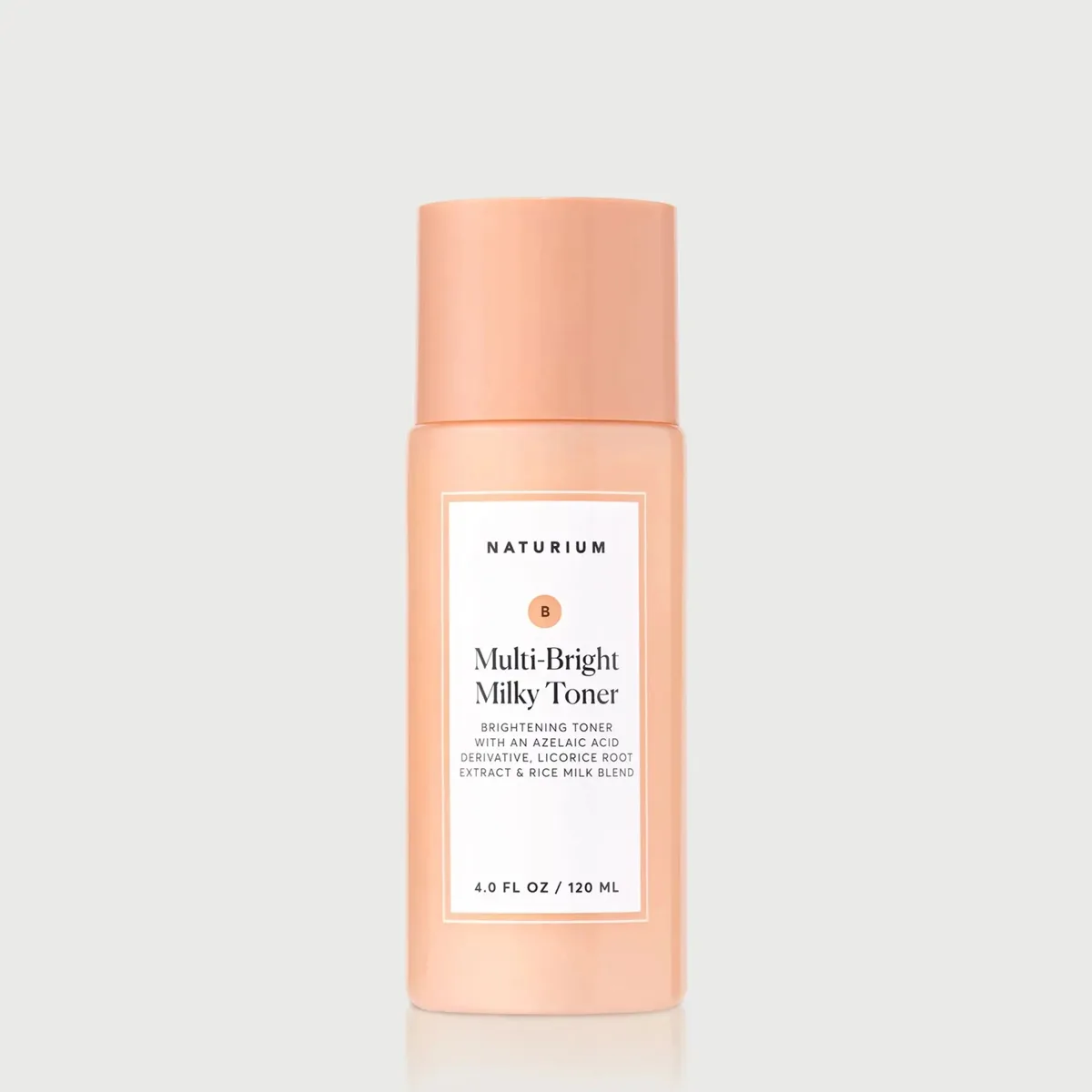
Instead of a harsh, astringent brightening toner, this one delivers its actives in a hydrating milky emulsion — pairing potassium azeloyl diglycinate (a gentle, water-soluble azelaic derivative) with licorice root and a grape ferment so it evens tone from multiple angles while replenishing lipids with squalane and rice bran oil. It's a brightening step that doubles as a moisture step.
A genuinely gentle brightening toner that doubles as a hydration step. Potassium azeloyl diglycinate, licorice root, and a grape ferment even tone from several angles, while squalane and rice bran oil keep skin cushioned rather than stripped. The brightening is subtle and cumulative, not dramatic, but at seventeen dollars it's an easy, low-irritation way to weave tone-evening actives through your routine.
With only about two years on the market and a still-modest review base, this evaluation leans on the published INCI, the disclosed pH, and the established behavior of its azelaic derivative and licorice rather than a large pool of long-term user reports. The pace and degree of real-world brightening should come into clearer focus as more feedback accrues.
The case for it
What would change this: A declared concentration would move this to a firmer reading of the dose.
Same rule for everyone. “Unproven” is the verdict on 1,111 of 45,024 concern verdicts across the catalog; rule R9 decided 1,111 of them. Unchanged since September 5, 2026, engine 5.1.1.
Brand or formulator? Disclose a concentration or correct a fact →
The studies behind the evidence row
The case for it
What would change this: A declared concentration would move this to a firmer reading of the dose.
Same rule for everyone. “Not for this” is the verdict on 488 of 45,024 concern verdicts across the catalog; rule R10 decided 488 of them. Unchanged since September 5, 2026, engine 5.1.1.
Brand or formulator? Disclose a concentration or correct a fact →
The studies behind the evidence row
The case for it
What would change this: A researched evidence row for the lead active would replace this with a verdict.
Same rule for everyone. “Supporting role” is the verdict on 8,197 of 45,024 concern verdicts across the catalog; rule R8 decided 4,250 of them. Unchanged since September 5, 2026, engine 5.1.1.
Brand or formulator? Disclose a concentration or correct a fact →
The case for it
What would change this: A researched evidence row for the lead active would replace this with a verdict.
Same rule for everyone. “Good choice” is the verdict on 1,938 of 45,024 concern verdicts across the catalog; rule F2 decided 1,938 of them. Unchanged since September 5, 2026, engine 5.1.1.
Brand or formulator? Disclose a concentration or correct a fact →
Also listed for Dullness — the actives here (Squalane, Potassium Azeloyl Diglycinate, Licorice Root Extract, Probiotics & Prebiotics) are in our research queue for that concern; there is no verdict until their evidence rows are written. That is a gap in our table, not a mark against the product.
Does the jobDoes what a toner is for: not alcohol-driven, adds something real. Not measured from the label: restores skin pH, plays well with what follows.
A verdict is DermApproved’s assessment of how well a product’s ingredients fit a concern — never a claim about what the product treats. Evidence dots and collected reviews sit beside it and are never blended in. Rules 0.5.1 · evidence table ev-2026.09-r228 · how we decide
For most of skincare history, the toner was the step that punished you. It was the astringent, alcohol-soaked swipe that left your face squeaking and your cheeks faintly burning, sold on the dubious promise that this discomfort was somehow 'balancing' your skin. The milky toner is the genre's redemption arc, and the Multi-Bright Milky Toner is a particularly thoughtful example: it takes the brightening actives you'd expect in a serious treatment and folds them into a hydrating emulsion that asks nothing uncomfortable of your skin. The whole pitch rests on a single quiet idea — that the toner step can do real work without doing any damage.
The formula leads with a hydrating, emollient base rather than an astringent one. After water you get sorbitol, glycerin, and propanediol for humectancy, then squalane and a few light esters and rice bran oil for the milky, lipid-replenishing body that gives the product its name. This matters because it sets the stage for the actives to do their thing on comfortable, well-moisturized skin instead of compromised skin. The pH is buffered to a near-neutral 4.75 to 5.25, which is precisely why there's no sting — and why this won't behave like an exfoliating acid toner, which is the right call for a brightening product meant for daily, even sensitive-skin use.
The brightening roster is where the formula gets clever. The headline active is potassium azeloyl diglycinate, a water-soluble derivative of azelaic acid. Pure azelaic acid is effective but notoriously gritty and hard to formulate elegantly; this glycinated version is smooth, soluble, and far better tolerated, which makes it a natural fit for a leave-on toner. It's joined by licorice root extract, whose glabridin content inhibits tyrosinase — the enzyme that drives melanin production — and brings a soothing, anti-redness quality that pairs beautifully with azelaic's own calming reputation. Rounding things out is a fermented grape complex: Saccharomyces ferment plus Vitis vinifera grape extract, delivering antioxidant polyphenols in a more bioavailable, fermented form. Arginine and gluconolactone add buffering and gentle conditioning. Together these tackle uneven tone from several mechanistic directions — pigment inhibition, antioxidant defense, and soothing — rather than betting everything on one pathway.
Using it is about as low-drama as skincare gets. It's a thin, lightly milky lotion that you can splash or pat on; it absorbs quickly, leaves a soft dewy finish, and plays well under everything that comes after. Because it's hydrating rather than stripping, you can layer it — pat on two or three passes for a moisture boost on a dry day — and it never pills or feels tacky once it sinks in. There's no tingle, no purge, no adjustment period. It simply makes skin feel comfortable immediately and, with patience, a touch more even-toned over the following weeks.
That patience is the honest caveat. The brightening here is real but gentle and cumulative — this is a supporting, maintenance-grade tone-evener, not a pigment-erasing powerhouse. Naturium doesn't disclose the percentage of the azeloyl diglycinate, and in a toner with the active sitting mid-list, it's reasonable to assume a conservative, well-tolerated level rather than a clinical dose. If you have stubborn melasma or deep post-inflammatory marks, you'll want a dedicated high-strength treatment doing the heavy lifting and this toner reinforcing it daily. As a standalone fix for significant pigmentation, it will underwhelm; as a gentle daily contributor that also hydrates, it's well judged. The one ingredient worth flagging for the acne-prone is isopropyl palmitate, an emollient ester with some comedogenic potential — most people tolerate it fine, but very breakout-prone skin should keep an eye on it.
The value equation is favorable in spirit if not on raw volume. Seventeen dollars for a brightening toner with a sensible, multi-angle active stack is fair, and the formula clearly reflects more thought than the price suggests. The slight knock is the 120ml size — if you're a generous layerer, it goes faster than you'd like, and there's no larger option to improve the per-milliliter math. Still, for an emerging brand whose whole identity is transparent formulation at accessible prices, this is exactly the kind of product that earns the trust: a readable INCI, no fear-marketing, actives that make sense for the claim.
It's also worth appreciating the formulation restraint on display, because brightening toners are a category that frequently overreaches. Many crowd in a dozen marketing-friendly extracts at trace levels, or lean on alcohol and aggressive acids to manufacture a sensation of 'working.' This one resists both temptations: the active list is focused, the pH is sensibly buffered, and the texture is built to feel good rather than to perform discomfort. That discipline is precisely why it earns a place as a daily-driver step rather than an occasional treatment — it's mild enough to use every morning and night without your skin ever protesting, which is exactly the kind of consistency that slow-acting brighteners depend on to show results.
The most useful way to think about this toner is as the connective tissue of a brightening routine — the step that keeps gentle tone-evening actives in contact with your skin twice a day while also handling hydration, so your serums and sunscreen aren't carrying the entire load alone. It suits nearly every skin type, sensitive included, and asks very little in return. If you want a dramatic, fast pigment fix, look to a stronger treatment. If you want a comfortable, low-risk daily habit that nudges your tone in the right direction over time, this is an easy yes.
The hero actives that drive this product's performance.
| Ingredient | Function | Evidence |
|---|---|---|
| Potassium Azeloyl Diglycinate | A water-soluble azelaic acid derivative that anchors the brightening claim — gentler and far less gritty than pure azelaic acid, it suits a leave-on milky toner where it can address uneven tone and redness without the texture issues raw azelaic causes. | Not yet assessed |
| Fermented Grape Extract (Saccharomyces Ferment + Vitis Vinifera) | A grape-derived ferment complex that supplies antioxidant polyphenols and, via fermentation, more bioavailable actives; here it backs up the azeloyl diglycinate's tone-evening work while the squalane-rich base keeps it hydrating. | Not yet assessed |
| Licorice Root Extract (Glycyrrhiza Glabra) | Contributes glabridin, a tyrosinase-inhibiting brightener and soother that complements the azelaic derivative — together they tackle pigment from two angles while calming the redness that often accompanies uneven tone. | Limited for Hyperpigmentation |
| Squalane | Gives this 'milky' toner its emulsion body and emollient slip, replenishing lipids so the brightening actives sit on a comfortable, hydrated base rather than a stripping astringent one. | Not yet assessed |
Ingredient standings describe the active at treatment-level doses and vehicles; this product's own condition grades weigh its actual formula.
Aqua/Water/Eau, Isopropyl Palmitate, Sorbitol, Triethylhexanoin, Methyl Glucose Dioleate, Glycerin, Propanediol, Squalane, Hydrogenated Polyisobutene, Potassium Azeloyl Diglycinate, Saccharomyces Ferment, Vitis Vinifera (Grape) Fruit Extract, Glycyrrhiza Glabra (Licorice) Root Extract, Hydrogenated Lecithin, Arginine, Oryza Sativa (Rice) Extract, Oryza Sativa (Rice) Bran Oil, Gluconolactone, Zea Mays (Corn) Starch, Lauryl Glucoside, Calcium Gluconate, Tocopherol, Acacia Senegal Gum, Polyquaternium-39, Polyglyceryl-6 Laurate, Polyglyceryl-4 Caprate, Myristyl Glucoside, Acrylates/C10-30 Alkyl Acrylate Crosspolymer, Polyquaternium-51, Xanthan Gum, Tetrasodium Glutamate Diacetate, Ethylhexylglycerin, Potassium Sorbate, Sodium Benzoate, Sodium Hydroxide, Phenoxyethanol
toner
AM & PM
Apply after cleansing and before serums; because it's a hydrating milky toner rather than an astringent one, you can pat several layers for extra moisture and let the brightening actives sink in before heavier treatments.
Skin feels softer and more comfortable from the first use. Tone-evening and brightening from the azelaic derivative and licorice are gradual — expect subtle improvement over 4-8 weeks of consistent use, faster when paired with daily sunscreen.
This toner's brightening logic rests on a sensible combination rather than a single blockbuster active. Potassium azeloyl diglycinate is a glycine-conjugated, water-soluble derivative of azelaic acid; azelaic acid itself has well-documented evidence for treating pigmentation, rosacea, and acne by inhibiting tyrosinase and exerting anti-inflammatory effects, and while the derivative is gentler and less studied at equivalent strength, it retains tone-evening and soothing activity in a far more formulator-friendly, leave-on-tolerable form. Licorice root contributes glabridin, which has documented tyrosinase-inhibiting and anti-inflammatory properties, attacking pigment formation through a complementary mechanism — so the two actives address melanin synthesis from different points rather than redundantly. The fermented component, Saccharomyces ferment with Vitis vinifera grape extract, draws on the rationale that fermentation can increase the bioavailability of antioxidant polyphenols such as resveratrol-family compounds found in grapes, supporting free-radical defense, though the clinical evidence for cosmetic ferment complexes is still emerging rather than well-established. The supporting cast — squalane, rice bran oil, glycerin, sorbitol — is there to maintain barrier comfort and hydration, which is itself relevant to brightening, since a healthy, non-inflamed barrier is less prone to the post-inflammatory pigmentation that uneven tone often stems from. The realistic, evidence-aligned expectation is gradual, multi-pathway tone support best amplified by consistent daily sunscreen, not rapid pigment clearance.
In clinical settings, azelaic acid and its derivatives are well-regarded for managing hyperpigmentation, rosacea, and post-inflammatory marks, valued for being effective while remaining safe across most skin types and during pregnancy. A gentle leave-on derivative like potassium azeloyl diglycinate is commonly positioned as a tolerable maintenance tool rather than a high-strength corrector. Licorice-derived glabridin frequently appears in professionally recommended brightening regimens for its tyrosinase-inhibiting action. The standard guidance is that tone-evening actives work slowly and depend heavily on diligent daily photoprotection, since UV exposure continually re-triggers pigmentation; clinicians typically advise pairing any brightening product with broad-spectrum sunscreen and patience measured in weeks to months rather than days.
After cleansing, dispense a small amount into your palms or onto a cotton pad and press or sweep it across the face and neck, morning and night. For extra hydration, pat on two or three thin layers, letting each absorb. Follow with your serums, moisturizer, and — in the morning — sunscreen, which is essential to see any brightening benefit. It layers cleanly under vitamin C, niacinamide, and hydrating serums; there are no actives here that require spacing out from the rest of a typical routine.
At seventeen dollars, this toner is fairly priced for a multi-angle brightening formula that also hydrates — you're getting azelaic-derivative, licorice, and a grape ferment in a comfortable base, which is more thought than the price tier usually buys. The main value drawback is the modest 120ml volume, which disappears quickly if you layer generously, and there's no larger size to improve cost-per-use. For an emerging brand without a long clinical record, the price feels honest rather than inflated; you're paying for a readable, sensibly built formula, not a marketing premium. Worthwhile as a daily brightening-and-moisture two-in-one.
This is a smart pick for anyone with uneven tone, dullness, or early dark spots who wants a gentle, hydrating way to keep brightening actives working through the day. Its near-neutral pH and soothing botanicals make it suitable for sensitive and dry skin that can't tolerate harsher tone-correctors.
Skip it if you're after a fast, dramatic fix for significant melasma or deep pigmentation — that calls for a stronger dedicated treatment. Very acne-prone skin wary of comedogenic esters may also want to look elsewhere, given the isopropyl palmitate, and anyone wanting an exfoliating toner won't find that here.
Ready to try Naturium Multi-Bright Milky Toner?
Buy at Amazon ♥Thin, lightly milky lotion-toner that spreads and absorbs quickly, leaving a soft, hydrated finish.
Fragrance-free with only a faint, neutral base note from the rice and grape extracts.
Bottle designed for splashing or patting; opaque to protect the ferment and botanical actives.
Skin feels immediately cushioned and soft, with no sting or tingle thanks to the buffered, near-neutral pH. There's no purging or adjustment period; the brightening payoff is the part that asks for patience over several weeks.
About 2-3 months with twice-daily use, depending on how many layers you apply.
All Year
Naturium's Multi-Bright range targets uneven tone and dullness, and this toner extends that brightening concept into the toner step for people who want their tone-evening actives woven through the whole routine rather than concentrated in a single serum.
Founded in 2019 and acquired by E.l.f. Beauty in 2023, Naturium has grown on transparent labeling and accessible pricing. Its actives are well-studied, though the brand's independent clinical validation remains shorter than that of long-established dermatologist-developed labels.
Brightening toners have to be astringent or tingly to work.
The sting people associate with toners usually comes from alcohol or high acid loads, not from efficacy. This formula is buffered to a near-neutral pH and uses gentle brighteners, proving tone-evening and comfort aren't mutually exclusive.
Azelaic acid derivatives don't do anything compared to pure azelaic acid.
Potassium azeloyl diglycinate is more water-soluble and far better tolerated than gritty pure azelaic acid, making it well-suited to a leave-on toner. It's gentler, but it still contributes meaningful tone-evening and soothing benefit at appropriate levels.
It evens skin tone and brightens dullness using a gentle azelaic acid derivative, licorice root, and a grape ferment, while hydrating with squalane and rice bran oil. It's a brightening step that doubles as a moisture step rather than an astringent toner.
Yes. It's fragrance-free, buffered to a near-neutral pH, and built around soothing brighteners like azeloyl diglycinate and licorice, so it doesn't sting or strip. Most sensitive skin tolerates it well, though patch testing is always wise.
Hydration is immediate, but tone-evening is gradual — expect subtle improvement over four to eight weeks of consistent twice-daily use, and only if you pair it with daily sunscreen, which protects against the UV that re-triggers pigmentation.
Yes. It layers cleanly under vitamin C, niacinamide, and hydrating serums with no conflicts, and the combination can reinforce its brightening effect. Apply the toner first, let it absorb, then continue with your serums.
Generally yes. Its brightening actives are an azelaic derivative and licorice rather than retinoids or high-dose acids, and azelaic acid is widely considered pregnancy-safe. Confirm with your provider if you have any concerns.
For most people, no, but it does contain isopropyl palmitate, an emollient with some comedogenic potential. If your skin is very acne-prone, patch test and monitor, as the rich milky base may not suit everyone.
Recurring themes our editors read across retailer reviews of this product — summaries in our words, not quotations, and not a substitute for your own patch test.
Hydrating without being heavy
Gentle and non-irritating
Brightens tone gradually
Layers well under serums
Brightening is subtle, not dramatic
Contains isopropyl palmitate which not all acne-prone skin tolerates
Small 120ml size for the price
Verified answers from our questions library — the nuance a product page cannot carry.