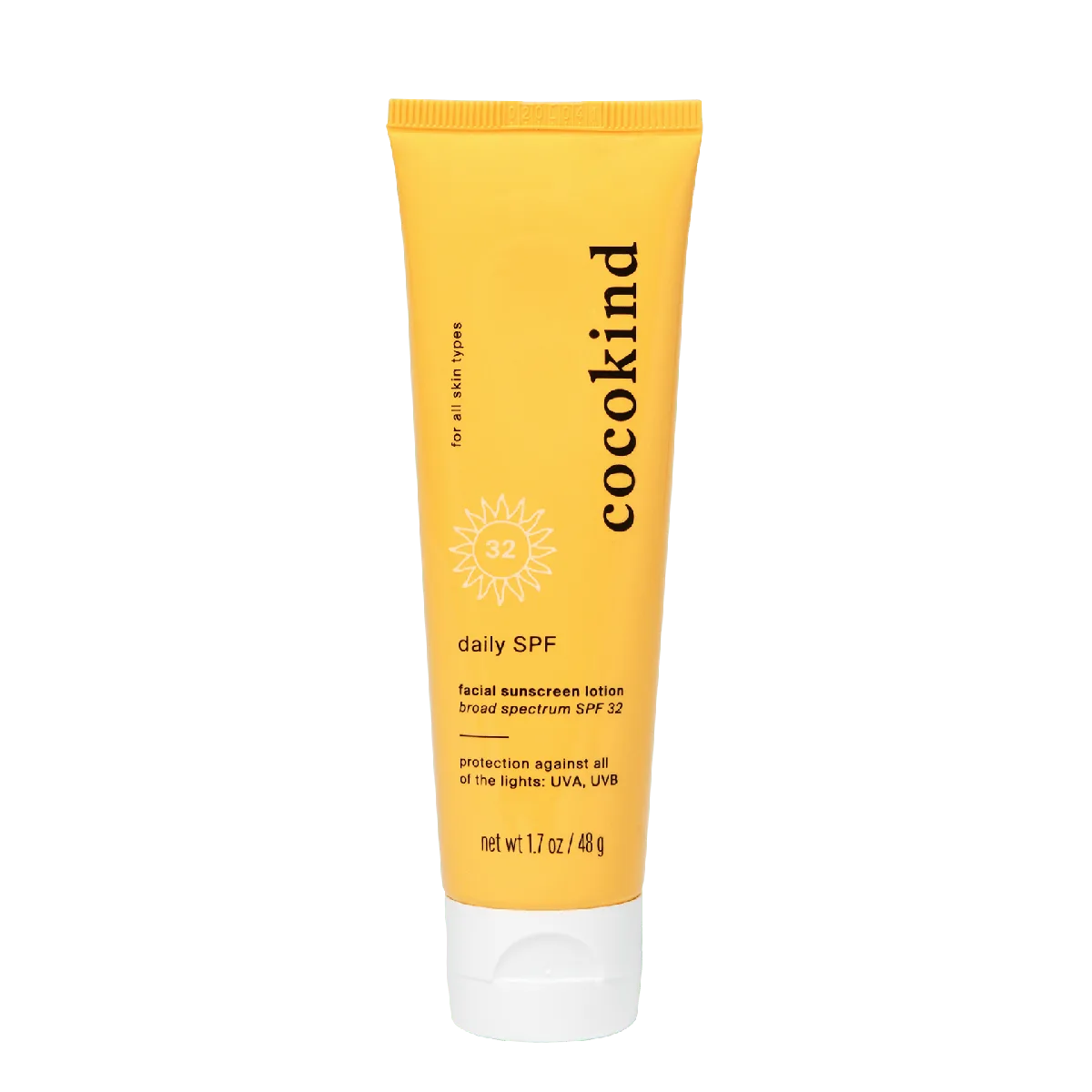
This sunscreen pairs a high 21% non-nano zinc oxide concentration with marine-derived antioxidants — blue phytoplankton and spirulina — creating a formula that addresses UV, blue light, and pollution simultaneously. The silicone-free, reef-safe formula is unusually clean for a mineral sunscreen that still manages to avoid a heavy, chalky texture.
A clean-label mineral sunscreen that genuinely delivers on the 'no white cast' promise for most skin tones, with a thoughtful antioxidant boost from marine algae. The small tube and premium price sting, but the elegant texture and gentle formula make it a standout in the reef-safe mineral category.
Good choicefor SensitivityIn your profileYou chose · No fragrance, drying alcohol, declarable allergens or sensitising preservatives in this lotion — the profile sensitive skin looks for.Not yet assessedGentleNo reviews collected yet
The case for it
Zinc Oxide 21% has no evidence row yet for this concern — it is in the research queue.
The formula carries none of the triggers this concern is sensitive to.
What would change this: A researched evidence row for the lead active would replace this with a verdict.
Same rule for everyone. “Good choice” is the verdict on 1,938 of 45,024 concern verdicts across the catalog; rule F2 decided 1,938 of them.
Unchanged since September 5, 2026, engine 5.1.1.
Full protectionfor Sun DamageIn your profileYou chose · Broad-spectrum SPF 32 with zinc oxide: the protection sun damage calls for.Moderate evidenceGentleNo reviews collected yet
The case for it
Zinc Oxide 21% is a first-line active — approved, monograph-listed or named in current guidelines — for this concern.
It is present at an effective concentration, declared or high in the ingredient list.
The formula carries none of the triggers this concern is sensitive to.
Same rule for everyone. “Full protection” is the verdict on 2,288 of 45,024 concern verdicts across the catalog; rule P1 decided 2,232 of them.
Unchanged since September 5, 2026, engine 5.1.1.
P1 — Photoprotection standing is regulatory (M020 / Annex VI filters; 21 CFR 201.327 attaches the early-skin-aging claim to tested broad-spectrum SPF 15+). SPF 30 is the AAD daily-use bar. · the full register
Also listed for Dryness — the actives here (Zinc Oxide, Argan Oil, Licorice Root Extract, Spirulina) are in our research queue for that concern; there is no verdict until their evidence rows are written. That is a gap in our table, not a mark against the product.
Does the jobDoes what a sunscreen is for: UVA coverage, kind to the skin wearing it. Not measured from the label: pleasant enough to actually use.
A verdict is DermApproved’s assessment of how well a product’s ingredients fit a concern — never a claim about what the product treats. Evidence dots and collected reviews sit beside it and are never blended in.
Rules 0.5.1 · evidence table ev-2026.09-r228 · how we decide
Assessment
Pros & Cons
Pros
✓ Minimal white cast despite 21% zinc oxide concentration — unusual for mineral sunscreens
✓ Lightweight milky texture that spreads and absorbs like a serum, not a paste
✓ Completely fragrance-free with no essential oils or artificial scents
✓ Silicone-free formula that layers well under makeup without pilling
✓ Reef-safe and pregnancy-safe with only mineral UV filter
✓ Dual soothing system with bisabolol and licorice root calms reactive skin
✓ Clean preservative system unlikely to cause sensitivities
Cons
✗ Expensive per ounce at $14.70/oz — tube lasts only 4-6 weeks with daily use
✗ Not water or sweat resistant — limited to everyday indoor and light outdoor use
✗ Slight white cast may still be visible on deeper skin tones despite improved blending
✗ Small 1.7 oz tube feels inadequate for a product meant for daily reapplication
✗ SPF 32 may not satisfy users who prefer the psychological comfort of SPF 50+
Review
Full Review
When Priscilla Tsai launched Cocokind in 2014, the promise was simple: clean skincare that doesn't require a trust fund. The brand delivered on that premise with affordable face oils and moisturizers, building a loyal following at Target and Whole Foods. Then came the Daily SPF 32, and suddenly the conversation shifted. At nearly $25 for just 1.7 ounces, this is Cocokind's most expensive product per ounce — a fact that hasn't gone unnoticed by the brand's value-conscious fanbase. The question isn't whether this is a good sunscreen. It's whether it's good enough to justify the departure from everything the brand built its name on.
Let's start with what matters most: the formula. The sole UV filter is 21% non-nano zinc oxide, which is about as high as mineral sunscreens typically go for daily wear. That concentration provides solid broad-spectrum protection at SPF 32 — and before anyone panics about the number, SPF 32 blocks roughly 97% of UVB rays. The practical gap between SPF 32 and SPF 50 is about one percentage point. What you're gaining here isn't weaker protection; it's a more wearable texture, and a wearable sunscreen applied every day beats a stronger one that lives in a drawer.
And that texture genuinely impresses. Most mineral sunscreens at 21% zinc oxide feel like spackle — thick, white, and vaguely punishing. Cocokind somehow engineered this into a milky, lightweight lotion that spreads like a serum and sets without looking like drywall primer. The trick is in the base, and it is worth reading closely. Caprylic/capric triglyceride and coconut alkanes provide the slip. Polyhydroxystearic acid and polyglyceryl-3 polyricinoleate are dispersants whose entire job is to keep zinc particles from clumping — the single biggest cause of chalkiness in mineral formulas. Rice starch absorbs surface moisture and blurs the finish. Sclerotium and xanthan gum hold the suspension stable so the zinc doesn't settle to the bottom of the tube. The result is a finish that looks like skin, not sunscreen, on fair to medium-olive tones. Users with deeper complexions report more mixed results — the cast minimizes but doesn't fully disappear, and that limitation deserves stating plainly rather than burying.
The ingredient story extends beyond sun protection. Cocokind has loaded the formula with marine-derived antioxidants: blue phytoplankton and spirulina extract. These aren't only buzzwords. Phytoplankton contains fucoxanthin, a carotenoid with documented antioxidant properties; spirulina brings phycocyanin. Together they are positioned to address what zinc oxide alone doesn't handle — the free radicals that form from blue light, ambient pollution, and the general oxidative chaos of living in a city. The topical evidence for these specific extracts is still emerging, and most of the supporting research is in vitro rather than on human faces, so read them as a sensible bonus rather than the reason to buy. But the logic is sound: no filter stops every photon, and mopping up what gets through is a legitimate second line of defense.
The soothing package is equally thoughtful. Bisabolol and dipotassium glycyrrhizate — from chamomile and licorice root respectively — provide a dual anti-inflammatory cushion. For anyone whose skin objects to chemical filters, that combination means the formula calms while it protects. Argan oil, sunflower oil, shea butter and aloe round out the emollient story, ensuring the high zinc load doesn't leave skin tight and parched by midday, and two forms of vitamin E protect the oils from oxidizing.
What you won't find is equally notable. No silicones, no fragrance, no essential oils, no chemical UV filters, no parabens. Preservation runs through caprylhydroxamic acid and glyceryl caprylate — gentle, effective, and unlikely to trigger anything. The formula is genuinely clean without leaning on fear-based marketing, which is a distinction the category rarely bothers to make. The one asterisk: the coconut alkanes and fatty alcohols mean this is not fungal-acne-safe, so anyone managing Malassezia should look elsewhere despite the otherwise gentle profile.
In daily use, the sunscreen performs as advertised. It layers under makeup, doesn't pill, and holds a natural finish through most of a day. The absence of water resistance is the most significant functional limitation — this is strictly a commute-and-office sunscreen, not one you'd trust for a beach day or a sweaty workout, and Cocokind doesn't pretend otherwise. It will also sting if it migrates into your eyes, which is a common complaint with high-zinc formulas and a good argument for keeping application slightly away from the lash line. And because mineral filters and their coatings do not simply rinse away, an oil-based cleanser at night is not optional.
Now, about that price. At $24.99 for 1.7 ounces, you're looking at roughly fifteen dollars an ounce, when comparable mineral sunscreens routinely land at half that. The marine extracts and the dispersant engineering do add cost, and the elegant texture required genuine formulation work. But the arithmetic is hard to ignore: applied at the amount actually needed, this tube lasts four to six weeks. Twenty-five dollars a month for face sunscreen adds up, and it is a strange thing to say about a brand whose entire founding thesis was accessibility.
Where that leaves the product is genuinely split. As a sunscreen formula, this is impressive — elegant texture, thoughtful antioxidant support, an exemplary safety profile, and solid broad-spectrum protection without chemical filters, which the twenty-three hundred reviewers averaging four and a half stars will confirm. As a value proposition from a brand built on affordability, it is a harder sell. If your priorities are a clean-label mineral sunscreen that feels beautiful on skin and you can live with the per-ounce cost, the Daily SPF 32 earns your money. If you want the most protection per dollar, the market will give you more sunscreen for less — it just won't feel like this.
Formula
Key Ingredients
The hero actives that drive this product's performance.
Provides broad-spectrum UVA/UVB protection as the sole active filter in this formula, working at a high concentration to compensate for the absence of chemical filters while maintaining the gentle, reef-safe profile Cocokind targets.
Regulator-approvedfor Sun Damage · limited certainty
A marine microalgae extract rich in fucoxanthin and omega-3 fatty acids that supports the zinc oxide's UV defense by adding antioxidant protection against blue light and pollution-induced free radicals — addressing the environmental stressors that mineral filters alone don't fully cover.
A nutrient-dense cyanobacteria extract that provides additional antioxidant support alongside the phytoplankton, helping neutralize oxidative stress from environmental exposure and complementing the physical UV barrier with biological defense.
Rich in vitamin E and essential fatty acids, argan oil works as an emollient that offsets the drying potential of high-concentration zinc oxide, helping the formula feel nourishing rather than chalky on skin.
A chamomile-derived anti-inflammatory that calms any potential irritation from daily sunscreen application, particularly useful for sensitive skin types who may react to physical sunscreen textures.
A licorice root derivative that provides soothing and anti-inflammatory benefits, working in tandem with bisabolol to keep reactive skin calm under the mineral filter layer.
Not yet assessed
Ingredient standings describe the active at treatment-level doses and
vehicles; this product's own condition grades weigh its actual formula.
Use as the last step in your morning skincare routine, after moisturizer. Allow a minute to set before applying makeup. Reapply every two hours during sun exposure.
Results Timeline
Immediate UV protection upon application. Over 2-4 weeks of consistent use, skin may appear less reactive and more evenly toned due to the antioxidant and soothing ingredients. Long-term daily use prevents cumulative sun damage and premature aging.
Pairs Well With
Lightweight hydrating serumsNiacinamide productsVitamin C serums (applied underneath)
Oil cleanser or micellar water (to remove sunscreen)
Gentle cleanser
Treatment serum
Night moisturizer
Evidence
Science & Expert Perspective
The Science
The core of this formula is 21% non-nano zinc oxide, one of only two FDA-approved mineral UV filters. Zinc oxide provides true broad-spectrum protection by physically reflecting and scattering both UVA and UVB radiation. A 2019 review published in the Journal of the American Academy of Dermatology confirmed that zinc oxide remains the most broadly protective single UV filter available, covering the full UVA-I, UVA-II, and UVB spectrum without the photodegradation issues that plague some chemical filters.
The marine antioxidant approach is where this formula gets interesting. Phaeodactylum Tricornutum, the blue phytoplankton extract, is rich in fucoxanthin — a carotenoid that has shown antioxidant and anti-inflammatory properties in multiple studies. A 2015 study in Marine Drugs demonstrated that fucoxanthin reduces UV-induced cellular damage through reactive oxygen species scavenging, suggesting it could complement physical UV blockers by addressing oxidative stress that gets past the mineral shield. However, most fucoxanthin research has been conducted in vitro or with oral supplementation, and topical bioavailability data is limited.
Spirulina Maxima Extract contains phycocyanin, a pigment-protein complex with documented antioxidant capacity. A clinical trial reported in the Journal of Applied Phycology has shown phycocyanin's ability to neutralize peroxyl and hydroxyl radicals, though again, the bulk of evidence comes from in vitro models rather than controlled topical studies.
The soothing duo of bisabolol and dipotassium glycyrrhizate is well-supported. Alpha-bisabolol has been studied extensively for its anti-inflammatory effects, with a 2014 study in the Journal of Clinical and Aesthetic Dermatology confirming its ability to reduce skin irritation and erythema. Dipotassium glycyrrhizate, a licorice-derived saponin, inhibits the enzyme 11-beta-hydroxysteroid dehydrogenase, reducing cortisol-mediated inflammation at the skin level. Together, these ingredients create a calming foundation that's particularly relevant in a mineral sunscreen — where the physical texture of zinc particles can sometimes provoke mild irritation in sensitive individuals.
Dermatologists frequently recommend mineral sunscreens with zinc oxide as the preferred option for patients with sensitive, reactive, or rosacea-prone skin, as zinc oxide is less likely to cause irritation than chemical UV filters. In clinical practice, the 21% zinc oxide concentration in this formula provides robust broad-spectrum coverage, and the absence of fragrance, essential oils, and chemical filters makes it suitable for post-procedure skin and conditions like eczema where barrier disruption is a concern. The addition of anti-inflammatory ingredients like bisabolol and licorice root derivatives aligns with dermatological principles of minimizing irritation potential. However, dermatologists typically caution that the lack of water resistance means this sunscreen requires more frequent reapplication during outdoor activities, and patients should not rely on it for high-exposure situations like beach days or outdoor sports.
Guidance
Usage & Recommendations
How to Use
Apply generously to face and neck as the final step of your morning skincare routine, after moisturizer and before makeup. Use approximately a nickel-sized amount for the face alone, and add more for the neck and ears. Allow 60 seconds for the formula to set before applying makeup or touching your face. Reapply every two hours during sun exposure, or immediately after sweating or toweling off. Since this sunscreen is not water resistant, switch to a water-resistant formula for swimming, exercise, or prolonged outdoor exposure.
Value Assessment
At $24.99 for 1.7 ounces, this sunscreen sits at the premium end of the clean mineral sunscreen market. The per-ounce cost of approximately $14.70 is notably higher than comparable mineral options from brands like CeraVe or Australian Gold, which offer more product for less. What you're paying for is the elegant texture, the marine antioxidant complex, the meticulously clean ingredient list, and the silicone-free formulation — all of which require genuine formulation investment. For someone who prioritizes reef-safe, fragrance-free, silicone-free mineral protection and values the lightweight texture, the premium is defensible. For budget-conscious shoppers, the small tube size makes the per-month cost feel steep for daily sunscreen use.
Who Should Buy
Anyone seeking a clean-label mineral sunscreen that doesn't feel or look like traditional zinc oxide paste. It's especially well-suited for sensitive skin, anyone avoiding chemical UV filters, and people who want reef-safe protection for daily indoor or light outdoor use.
Who Should Skip
If you need water-resistant protection for sports or beach days, this isn't your sunscreen. Those on a tight budget may find the per-ounce cost hard to justify when larger mineral sunscreens exist at lower price points. People with very deep skin tones should test for white cast before committing.
Lightweight, milky lotion with a fluid consistency that spreads easily without tugging or dragging on the skin.
Scent
Unscented — no fragrance, essential oils, or noticeable scent.
Packaging
Small white squeeze tube with a flip-top cap. Clean, minimalist design consistent with Cocokind's branding.
Finish
naturallightweightnon-greasy
What to Expect on First Use
On first application, the lotion glides on smoothly with a milky white appearance that blends down within a minute or two. No tingling, stinging, or adjustment period. Users with very fair to medium skin tones will notice the white cast fades quickly; those with deeper skin tones may find a slight residual cast.
How Long It Lasts
4-6 weeks with daily facial application using the recommended amount (about a nickel-sized dollop).
Cocokind developed this SPF as an answer to the common complaint that clean mineral sunscreens feel heavy and leave an obvious white cast. By using non-nano zinc oxide in a lightweight base with algae-derived antioxidants, they aimed to prove that a reef-safe, clean-label sunscreen could still feel elegant on skin.
About Cocokind Established Brand (5–20 years)
Cocokind was founded in 2014 by Priscilla Tsai with a mission to create affordable, transparent, and sustainable skincare. The brand has built a strong following through its clean ingredient approach and is widely available at Target, Ulta, and Whole Foods, though it relies more on clean-beauty ethos than clinical research.
Brand founded: 2014 · Product launched: 2021
Myth vs. Reality
Common Myths
Myth
Non-nano zinc oxide can't provide adequate UV protection without looking chalky.
Reality
This formula uses 21% zinc oxide in a carefully engineered base with rice starch and coconut-derived emollients to minimize white cast while maintaining broad-spectrum protection.
Myth
SPF 32 isn't high enough for daily protection.
Reality
SPF 32 blocks approximately 97% of UVB rays, and the difference between SPF 32 and SPF 50 is marginal (about 1%). Consistent application and reapplication matter far more than chasing higher SPF numbers.
FAQ
Frequently Asked Questions
Does Cocokind Daily SPF 32 leave a white cast?
The formula minimizes white cast better than most 21% zinc oxide sunscreens thanks to its rice starch and lightweight emollient base. On fair to medium skin tones, the initial white tint blends away within a minute or two. On deeper skin tones, a slight cast may remain — blending with a damp beauty sponge can help.
Is Cocokind Daily SPF 32 reef safe?
Yes. This sunscreen uses only non-nano zinc oxide as its UV filter and contains no oxybenzone or octinoxate, making it compliant with Hawaii's reef-safe sunscreen regulations. The formula is also free of chemical UV filters that have been linked to coral bleaching.
Can I use Cocokind Daily SPF 32 under makeup?
Yes, the lightweight milky texture layers well under most foundations and tinted moisturizers. Allow about 60 seconds for the sunscreen to set before applying makeup to prevent pilling.
Is Cocokind Daily SPF 32 safe during pregnancy?
Yes. Mineral sunscreens with zinc oxide are generally considered safe during pregnancy because the active ingredient sits on top of the skin rather than being absorbed. This formula also avoids retinoids, chemical UV filters, and other ingredients commonly flagged during pregnancy.
Is Cocokind Daily SPF 32 water resistant?
No. This sunscreen is designed for everyday indoor and light outdoor use and is not water or sweat resistant. If you're swimming, exercising outdoors, or spending extended time in direct sun, you'll need a water-resistant formula and should reapply frequently.
How does blue phytoplankton in this sunscreen help protect skin?
The blue phytoplankton (Phaeodactylum Tricornutum) extract provides antioxidant protection that complements the zinc oxide's UV blocking. It's rich in fucoxanthin, which helps neutralize free radicals generated by blue light from screens and environmental pollution — stressors that traditional SPF ratings don't measure.
Why is the SPF only 32 and not 50?
SPF 32 blocks about 97% of UVB rays, while SPF 50 blocks about 98%. The practical difference is minimal. Higher SPF formulas often require more chemical filters or a heavier mineral load, which can compromise texture and increase white cast. Cocokind opted for SPF 32 to balance effective protection with a more elegant, wearable formula.
Reviews
What Reviewers Tend to Say
Recurring themes our editors read across retailer reviews of this product — summaries in our words, not quotations, and not a substitute for your own patch test.
Common Praise
Minimal white cast for a mineral sunscreen
Lightweight milky texture that absorbs well
No greasy or heavy feeling
Fragrance-free and gentle on sensitive skin
Clean ingredient list with no controversial chemicals
Common Complaints
Small bottle for the price
Not water or sweat resistant
Can sting if it gets into eyes
Some users on deeper skin tones still notice a white cast
Price feels high for the amount of product
Notable Endorsements
Featured in clean beauty roundupsRecommended by skincare bloggers and RNs for sensitive skin
Chamomile's active fraction inhibits the same inflammatory pathways a steroid does, at a fraction of the strength — and the version that works best is grubbed out of Brazilian cerrado, while the synthetic substitute is half inactive by construction.
The dewy-layering marketing reads as a warning if you are congested — and it is hiding the strongest mass-market lineup anywhere for exactly that skin.
The one randomised trial that tested the post-workout shower rule found nothing. The mechanism it missed is mechanical, and it explains why the fix is a sequence rather than a product.
Products, answers, therapy guides, tools and articles in one search. Brand names,
slang and abbreviations all work — accutane finds isotretinoin, bacne finds truncal acne.