



Homemade Sunscreen Fails for a Reason You Cannot Fix in a Kitchen
Every other DIY mistake announces itself. This one stays silent for eight hours, and the equipment that would prevent it does not fit on a countertop.
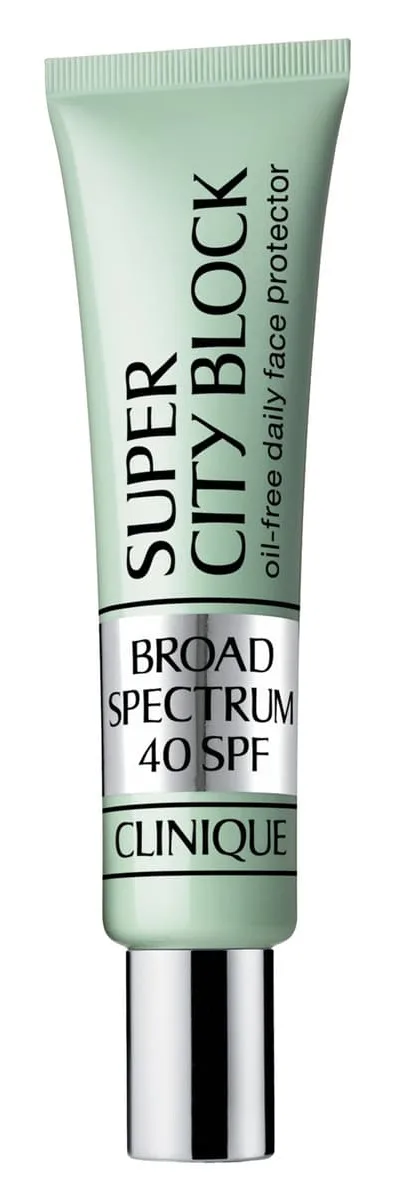
It is the high-protection 'Super' tier of Clinique's City Block line, combining a heavy mineral load (zinc oxide plus titanium dioxide) with two chemical UVB filters for SPF 40 in an oil-free, mattifying base. That hybrid approach delivers high broad-spectrum coverage with less white cast and shine than a pure-mineral sunscreen, aimed at oily and combination skin.
A high, genuinely broad-spectrum SPF 40 that pairs a heavy mineral load with chemical filters in an oil-free, mattifying base built for oily skin and makeup. Protection and finish are strong; the small tube at a premium price and a possible slight cast on deeper tones are the real trade-offs.
The case for it
Same rule for everyone. “Full protection” is the verdict on 2,288 of 45,024 concern verdicts across the catalog; rule P1 decided 2,232 of them. Unchanged since September 5, 2026, engine 5.1.1.
Brand or formulator? Disclose a concentration or correct a fact →
The studies behind the evidence row
The case for it
What would change this: A researched evidence row for the lead active would replace this with a verdict.
Same rule for everyone. “Full protection” is the verdict on 2,288 of 45,024 concern verdicts across the catalog; rule P1 decided 2,232 of them. Unchanged since September 5, 2026, engine 5.1.1.
Brand or formulator? Disclose a concentration or correct a fact →
The case for it
What would change this: A researched evidence row for the lead active would replace this with a verdict.
Same rule for everyone. “Full protection” is the verdict on 2,288 of 45,024 concern verdicts across the catalog; rule P1 decided 2,232 of them. Unchanged since September 5, 2026, engine 5.1.1.
Brand or formulator? Disclose a concentration or correct a fact →
Also listed for Excess Oiliness — the actives here (Zinc Oxide, Octinoxate, Titanium Dioxide, Octisalate) are in our research queue for that concern; there is no verdict until their evidence rows are written. That is a gap in our table, not a mark against the product.
Does the jobDoes what a sunscreen is for: UVA coverage, kind to the skin wearing it. Not measured from the label: pleasant enough to actually use.
A verdict is DermApproved’s assessment of how well a product’s ingredients fit a concern — never a claim about what the product treats. Evidence dots and collected reviews sit beside it and are never blended in. Rules 0.5.1 · evidence table ev-2026.09-r228 · how we decide
Clinique's City Block line has always treated daily sunscreen as a kind of urban armor, but the word doing the quiet heavy lifting on this particular tube is 'Super.' This is the high-protection tier of the franchise, and the question worth answering is what that upgrade actually delivers in the bottle — because a sunscreen lives and dies on whether it protects well and whether you will actually wear it every day. On both counts, this one largely succeeds, with a couple of honest caveats that come with the territory of a high-filter hybrid formula.
Start with the protection, because that is the whole job. This is a hybrid sunscreen, meaning it uses both mineral and chemical UV filters, and the filter list is robust: zinc oxide at 8.8% and titanium dioxide at 6.6% on the mineral side, plus octinoxate at 7.5% and octisalate at 2.0% on the chemical side. That is a serious amount of physical filter — the 'Super' is not just marketing. Zinc oxide is the workhorse for true broad-spectrum coverage across UVA and UVB, titanium dioxide reinforces UVB and shorter UVA, and the two chemical UVB filters efficiently push the formula up to SPF 40 while improving how it feels and looks on skin. As an FDA-regulated over-the-counter drug, those percentages are verified on the label rather than guessed, which is a meaningful reassurance that you are getting the protection claimed.
The formulation choices here are smart for the target user. A pure mineral sunscreen with this much zinc and titanium dioxide would typically leave a thick, chalky white cast and feel heavy. By blending in chemical filters and a slight tint, Clinique cuts that cast substantially and lands on an oil-free lotion that dries down to a smooth, semi-matte finish. For oily and combination skin, that matte, shine-controlling feel is exactly the appeal — it wears comfortably, sits well under makeup, and does not turn into a greasy slick by midday. It is also fragrance free and non-comedogenic, and light enough in its silicone-and-mineral base to count as fungal-acne safe, which broadens its appeal to skin that reacts to richer formulas.
In practice, it applies a touch thick, as high-mineral sunscreens tend to, and you may notice a brief slight cast that mostly settles as it dries. The matte finish is the dominant impression once set. The one real cosmetic caveat is that, despite the cast-reducing tricks, the heavy zinc and titanium dioxide load can still leave a slight grey or white residue on deeper skin tones — not as much as a mineral-only product, but enough that medium-deep and deep complexions should test it before committing. Blending thoroughly and using the right amount help, but it is an honest limitation of any high-mineral formula and worth flagging plainly.
The other point that deserves frankness is octinoxate. It is an effective, well-established UVB filter and a big reason this formula achieves SPF 40 with a wearable texture and reduced cast. But it is also a filter some people choose to avoid, both because of environmental and reef-safety debates and because a subset of users prefer to steer clear of chemical filters generally. None of that reflects a safety problem for use on skin — topical sunscreens including this one are considered low-risk — but if a fully mineral sunscreen is your preference, this hybrid is not it, and that is a legitimate reason to look elsewhere.
There is also a hidden virtue worth mentioning: the formula is studded with antioxidant and soothing extras — magnesium ascorbyl phosphate (a stable vitamin C), licorice, green tea-adjacent botanicals, squalane, and a roster of plant extracts. In a daily sunscreen these are pleasant supporting players rather than the main event, adding a touch of environmental-defense and calming intent on top of the SPF. They will not replace a dedicated antioxidant serum, but they are a nice bonus in a product you apply every morning anyway.
Value is where the enthusiasm gets tempered. The tube is small — 1.4 ounces — and at a premium department-store price, that adds up fast if you apply a proper sunscreen amount daily and reapply, as you should. A tube like this might last only a month or two of genuine daily face use, which makes the cost-per-application notably higher than many drugstore high-SPF options that deliver comparable protection. You are paying for the Clinique name, the fragrance-free tested formula, the cosmetically refined matte finish, and the verified high filter load. The protection is real and the feel is good, but on pure value the small size is a genuine drawback, and budget-conscious shoppers can get equivalent broad-spectrum coverage for less per ounce.
The bottom line: stepping up to the 'Super' tier buys you a high, verified, broad-spectrum SPF 40 in an oil-free, mattifying base that oily and combination skin will genuinely enjoy wearing daily and under makeup. It protects well, feels good, and carries some welcome antioxidant extras. Weigh it against three things before buying: the small-tube-for-the-price value, the possible slight cast on deeper skin tones, and your own stance on octinoxate. If those line up for you, it is a strong, dependable daily shield. If any are dealbreakers, the right alternative is out there — but the protection here is not in doubt.
The hero actives that drive this product's performance.
| Ingredient | Function | Evidence |
|---|---|---|
| Zinc Oxide 8.8% (8.8%) | The lead mineral filter, providing broad-spectrum UVA and UVB coverage and the backbone of this SPF 40's high-protection claim. Paired with titanium dioxide and the chemical filters, it contributes both UV blocking and some of the formula's slight tint and finish. | Regulator-approved for Sun Damage · limited certainty |
| Titanium Dioxide 6.6% (6.6%) | A second mineral filter that reinforces UVB and shorter-UVA protection, working with the zinc oxide to deliver the mineral half of this hybrid sunscreen. Its high load is part of why this is a 'super' high-protection version of the City Block line. | Regulator-approved for Sun Damage · limited certainty |
| Octinoxate 7.5% (7.5%) | A chemical UVB filter that boosts the SPF efficiently and improves the formula's cosmetic feel, helping reduce the heavy white cast pure mineral sunscreens leave. It lets the formula reach SPF 40 without an even higher mineral load. | Regulator-approved for Sun Damage · emerging certainty |
| Octisalate 2.0% (2.0%) | A chemical UVB filter that also acts as a solvent to stabilize and evenly distribute the other filters, smoothing the overall protection and texture. In this hybrid blend it rounds out UVB coverage and improves spreadability. | Regulator-approved for Sun Damage · limited certainty |
Ingredient standings describe the active at treatment-level doses and vehicles; this product's own condition grades weigh its actual formula.
Active: Zinc Oxide 8.8%, Octinoxate 7.5%, Titanium Dioxide 6.6%, Octisalate 2.0%. Inactive: Water, Trioctyldodecyl Citrate, Butylene Glycol, Dimethicone, Octyldodecyl Neopentanoate, Steareth-2, Silica, Aluminum Stearate, Rosa Roxburghii Fruit Extract, Citrus Unshiu Peel Extract, Porphyra Yezoensis (Algae) Extract, Glycyrrhiza Glabra (Licorice) Root Extract, Saccharomyces Lysate Extract, Cucumis Sativus (Cucumber) Fruit Extract, Betula Alba (Birch) Bark Extract, Hordeum Vulgare (Barley) Extract, Rosmarinus Officinalis (Rosemary) Leaf Extract, Helianthus Annuus (Sunflower) Seedcake, Gentiana Lutea (Gentian) Root Extract, Yeast Extract, Sodium RNA, Magnesium Ascorbyl Phosphate, Dipotassium Glycyrrhizate, Tocopheryl Acetate, Pantethine, Squalane, Polyglyceryl-6 Polyricinoleate, Tricaprylin, Propylene Glycol Dicaprate, Chamomilla Recutita (Matricaria), Hexylene Glycol, PEG/PPG-18/18 Dimethicone, Caprylyl Glycol, Barium Sulfate, Polyethylene, Xanthan Gum, Magnesium Aluminum Silicate, Lecithin, Ceteth-2, PEG-40 Stearate, Sodium Stearate, Steareth-20, Sorbitan Tristearate, Isopropyl Titanium Triisostearate, Citric Acid, Disodium EDTA, BHT, Phenoxyethanol, Mica, Iron Oxides, Titanium Dioxide
sunscreen
AM
Apply as the final step of your morning routine, after moisturizer and before makeup, using about a quarter-teaspoon for the face. Let it set for a few minutes before makeup, and reapply through the day for ongoing protection.
Provides sun protection immediately on application once it has set. Its preventive benefits — reduced sun damage, less hyperpigmentation and photoaging — accrue over months and years of consistent daily use rather than being visible day to day.
Sunscreen efficacy comes down to the filter set, and this one is well-constructed and, as a regulated OTC drug, transparently labeled. Zinc oxide is the most valuable filter here: it is the broadest-spectrum agent available in the US, covering UVB through long UVA, and at 8.8% it anchors the protection. Titanium dioxide at 6.6% adds further UVB and short-UVA coverage; the two minerals together provide substantial physical protection. The chemical filters serve specific, evidence-based roles — octinoxate (ethylhexyl methoxycinnamate) is an efficient UVB absorber that raises SPF cost-effectively, and octisalate is a UVB filter that doubles as a solvent helping to stabilize and evenly distribute the other filters and improve film formation. This mineral-plus-chemical hybrid approach is a well-understood strategy for achieving high SPF with a more cosmetically acceptable finish and less white cast than mineral-only formulas. The broad-spectrum SPF 40 rating reflects standardized testing at the regulated application density, and the literature is unambiguous that daily broad-spectrum sunscreen use reduces photoaging and the risk of UV-induced pigmentation and skin cancer. The formula also carries antioxidants such as magnesium ascorbyl phosphate and several botanical extracts; topical antioxidants have supportive evidence for complementing UV defense against free-radical damage, though at these levels their contribution is adjunctive. The honest summary is that the photoprotection is robust and well-evidenced, while the antioxidant additions are a reasonable bonus rather than a primary benefit.
Daily broad-spectrum sunscreen is one of the most consistently emphasized recommendations in dermatology, valued for preventing photoaging, hyperpigmentation, and skin cancer, and high-SPF facial formulas like this are commonly endorsed for everyday use. Hybrid sunscreens that combine mineral filters such as zinc oxide and titanium dioxide with chemical UVB filters are generally regarded as a practical way to achieve high, broad-spectrum protection with a more wearable finish than mineral-only options, which improves the odds that people actually apply and reapply it. Clinical guidance routinely stresses two points this product cannot solve on its own: using an adequate amount and reapplying every couple of hours during sun exposure, since real-world under-application is the most common reason sunscreens underperform. Oil-free, non-comedogenic formulas are frequently suggested for acne-prone and oily skin. Patients who prefer to avoid certain chemical filters are typically pointed toward mineral-only alternatives, while topical sunscreens overall are considered low-risk, including in pregnancy.
Apply it every morning as the final step of your skincare, after moisturizer and before makeup. Use about a quarter-teaspoon for the face alone to reach the labeled SPF 40 protection — under-applying is the most common mistake and significantly lowers real-world protection. Smooth it on evenly and blend thoroughly, paying attention to any slight cast, then let it set for a few minutes before applying makeup over the matte finish. Reapply every two hours during prolonged sun exposure and after sweating. Because it contains UV filters, cleanse thoroughly at night to remove it fully, and pair it with shade and protective clothing for the best defense.
At around thirty-two dollars for just 1.4 ounces, the value here is the weakest part of the story. Proper sunscreen use means applying a generous amount daily and reapplying, which can burn through this small tube in a month or two and pushes the real cost-per-use well above many drugstore high-SPF options that protect comparably. There is no larger size to improve the economics. The premium pays for the Clinique name, the fragrance-free tested formula, the refined oil-free matte finish, and a verified, high mineral-plus-chemical filter load with antioxidant extras. Those are real benefits, but on price-per-ounce this is a splurge; budget-focused shoppers can get equivalent broad-spectrum SPF 40 protection for considerably less.
Buy this if you have oily or combination skin and want high, verified broad-spectrum SPF 40 in an oil-free, mattifying base that wears well under makeup. It suits people who like a matte finish, value a fragrance-free tested formula, and want a heavy mineral-and-chemical filter load for serious daily photoprotection.
Skip it if you prefer a fully mineral sunscreen or specifically avoid octinoxate, since this is a hybrid formula. Deeper skin tones sensitive to white cast should test first, very dry skin may find the matte finish flat, and anyone prioritizing value will balk at the small tube for the price.
Ready to try Clinique Super City Block Oil-Free Daily Face Protector Broad Spectrum SPF 40?
Buy at Amazon ♥A thick but spreadable oil-free lotion with a faint tint that sets to a smooth, dry, semi-matte finish rather than a dewy one.
Fragrance free, with only a faint mineral-sunscreen base note and no added perfume.
Small opaque squeeze tube that protects the filters from light and air; practical, though the size feels modest for daily full-face use.
It goes on a touch thick and may leave a brief, slight cast that mostly settles as it dries down to a matte finish. There is no sting or adjustment period; the main thing to manage is using enough for true SPF 40 protection while blending the slight tint evenly, especially on deeper skin tones.
About 1 to 2 months of daily face use from the 1.4 oz tube if applying a proper sunscreen amount, less with reapplication.
All Year
Clinique's City Block franchise has long positioned daily sun protection as urban skincare, framing UV and environmental exposure as everyday threats. The Super tier raised the SPF and mineral content for people wanting heavier-duty broad-spectrum defense in the same oil-free, makeup-friendly format, reflecting the brand's dermatologist-led emphasis on daily photoprotection.
Clinique, the dermatologist-guided, allergy-tested, fragrance-free brand founded in 1968, formulates this as a regulated OTC sunscreen with verified, labeled UV-filter percentages. That FDA-governed active disclosure, plus the brand's heritage, gives the SPF claim a firmer footing than an unregulated cosmetic.
Mineral sunscreens always leave a thick white cast.
Pure mineral formulas can, but this one pairs zinc oxide and titanium dioxide with chemical filters and a slight tint to reduce that cast. Some grey or white residue can still show on deeper skin tones, but it is far less than a high-load mineral-only product.
A higher SPF lets you skip reapplication.
SPF 40 measures protection at a standard application amount, and all sunscreens degrade and rub off through the day. Reapplying every couple of hours of sun exposure matters far more than the SPF number on the tube.
It is a hybrid sunscreen with zinc oxide 8.8% and titanium dioxide 6.6% as mineral filters plus octinoxate 7.5% and octisalate 2.0% as chemical UVB filters. That combination delivers high broad-spectrum SPF 40 protection with less white cast than a mineral-only formula.
Thanks to the chemical filters and a slight tint, it leaves far less cast than a pure mineral sunscreen, but the heavy zinc and titanium dioxide load can still show a slight grey or white residue on deeper skin tones. Blending well and the right amount help minimize it.
Yes — it is oil-free and dries to a semi-matte, shine-controlling finish, which oily and combination skin tend to like. It sits well under makeup and is non-comedogenic, though very dry skin may want extra hydration underneath.
Yes. Its matte, oil-free finish makes a good base for makeup; let it set for a few minutes after applying, then put on foundation. Remember to use enough product for full SPF 40 protection and reapply during prolonged sun exposure.
Octinoxate is an efficient chemical UVB filter that lets the formula reach SPF 40 and improves its texture and white-cast profile versus a mineral-only sunscreen. Some shoppers prefer to avoid it over reef-safety concerns, which is worth weighing if that matters to you.
Topical sunscreens, including this one, are generally considered low-risk in pregnancy, and daily SPF is widely encouraged. Anyone with specific concerns about chemical filters can choose a mineral-only sunscreen, but a product like this is typically considered fine.
Recurring themes our editors read across retailer reviews of this product — summaries in our words, not quotations, and not a substitute for your own patch test.
High protection in a lightweight feel
Oil-free and good under makeup
Mattifies and controls shine
No fragrance, suits sensitive skin
Small tube for the price
Slight white or grey cast on deeper skin tones
Can feel slightly heavy in humidity
Contains octinoxate, which some avoid
Verified answers from our questions library — the nuance a product page cannot carry.