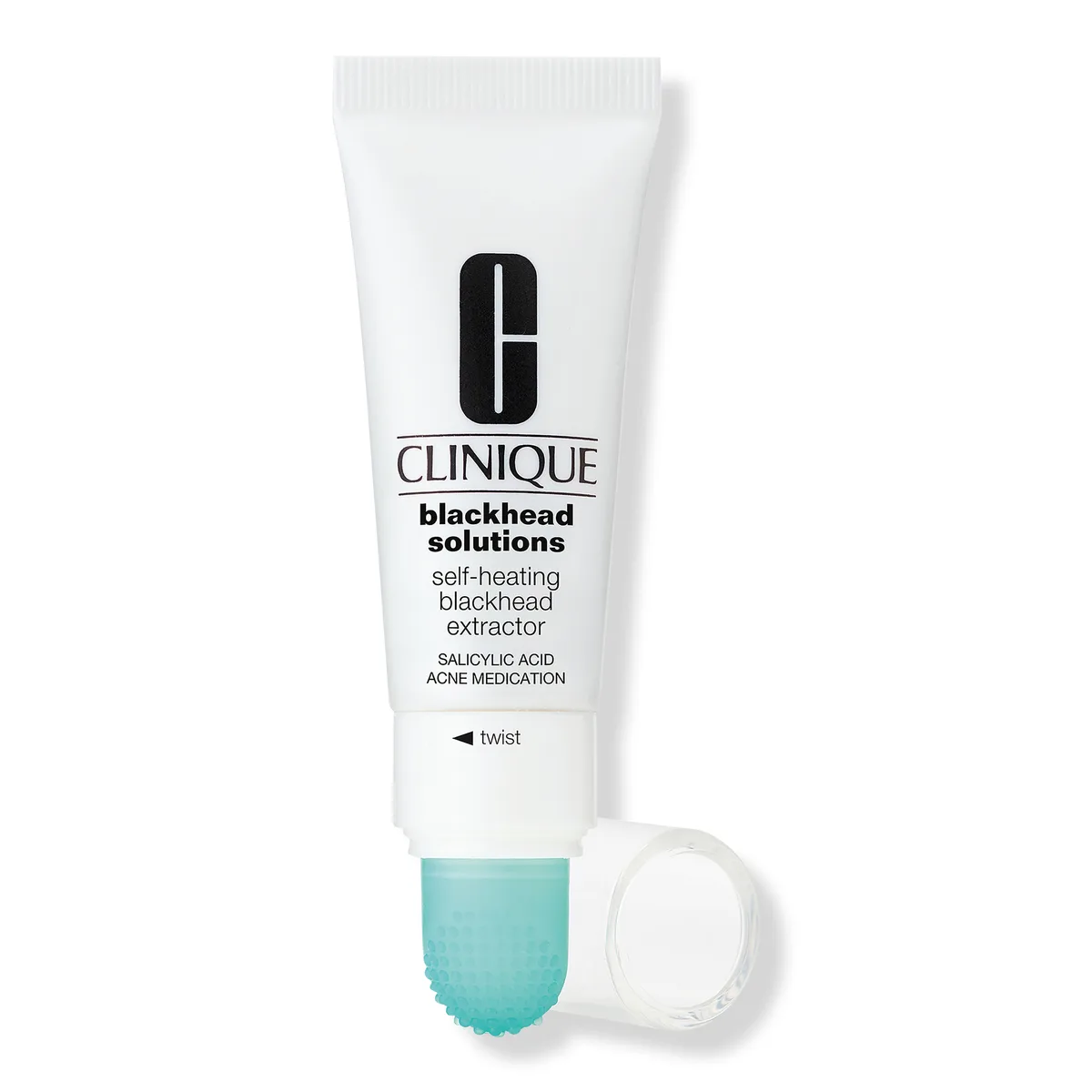
It is one of very few blackhead products sold as a registered OTC drug in an anhydrous, self-heating base: the first ingredient is Epsom salt, which warms on contact with water, and the one percent salicylic acid is carried in silicone and esters rather than water so it sits directly in the sebum plug. The mineral grit does the lifting that a pore strip would, without the adhesive.
A registered one percent salicylic acid treatment in a self-heating, water-free paste with mineral grit and a targeting nozzle. It shears the tops off nose blackheads without strips or squeezing and keeps them tidier with three sessions a week, but the warmth is a ten-second party trick, the tube is tiny for thirty-six dollars, and the grit rules out sensitive skin.
Strong choicefor BlackheadsIn your profileYou chose · Salicylic Acid is an approved or monograph active for blackheads; this cream carries it at 1%.Moderate evidenceStandard tolerabilityNo reviews collected yet
The case for it
Salicylic Acid 1.0% is a first-line active — approved, monograph-listed or named in current guidelines — for this concern.
It is present at an effective concentration, declared or high in the ingredient list.
The formula carries no trigger this concern is sensitive to, with the cautions noted.
Cautions: fungal-acne triggers.
Same rule for everyone. “Strong choice” is the verdict on 1,459 of 45,024 concern verdicts across the catalog; rule R2 decided 892 of them.
As of September 25, 2026, engine 5.1.1.
R2 — A regulator- or guideline-recognised first-line active, declared at an effective strength, in a form the claim supports. · the full register
Carrying active
Salicylic Acid 1.0%
Standing
first line — a regulator recognises it for this use; trials support it · per 21 CFR § 333.350 - Labeling of acne drug products. (US Code of Federal Regulations (Legal Information Institute, Cornell Law School)), opened July 27, 2026
Form
adequate (declared 1%) — studied range 0.5–2%, from the OTC monograph or label; judge it after ~6 weeks
Tolerability
standard — fungal triggers
Row checked
against its sources on July 27, 2026 (evidence table ev-2026.09-r228)
The studies behind the evidence row
OTC monograph, Topical Acne Drug Products — salicylic acid 0.5–2% recognized as an acne treatment active — US Food and Drug Administration
Not for thisfor Large PoresIn your profileYou chose · The actives here have been researched for large pores and the evidence does not support the claim.Not yet assessedGentleNo reviews collected yet
The case for it
Salicylic Acid 1.0% has been researched for this concern and the evidence does not support it.
It is present at an effective concentration, declared or high in the ingredient list.
The formula carries none of the triggers this concern is sensitive to.
Same rule for everyone. “Not for this” is the verdict on 488 of 45,024 concern verdicts across the catalog; rule R10 decided 488 of them.
As of September 25, 2026, engine 5.1.1.
Good choicefor Rough TextureIn your profileYou chose · Salicylic Acid is a reference standard by mechanism for rough texture; this cream carries it at 1%.Moderate evidenceGentleNo reviews collected yet
The case for it
Salicylic Acid 1.0% has trial-supported standing for this concern.
It is present at an effective concentration, declared or high in the ingredient list.
The formula carries none of the triggers this concern is sensitive to.
Same rule for everyone. “Good choice” is the verdict on 9,564 of 45,024 concern verdicts across the catalog; rule R5 decided 9,072 of them.
As of September 25, 2026, engine 5.1.1.
A verdict is DermApproved’s assessment of how well a product’s ingredients fit a concern — never a claim about what the product treats. Evidence dots and collected reviews sit beside it and are never blended in.
Rules 0.5.1 · evidence table ev-2026.09-r228 · how we decide
Assessment
Pros & Cons
Pros
✓ Declared one percent salicylic acid on a Drug Facts panel, not a cosmetic guess
✓ Anhydrous silicone base keeps the acid in the sebum plug during the massage
✓ Mineral grit shears blackhead tops without strips, squeezing or adhesive
✓ Targeting nozzle makes the nose crease and chin easy to work
✓ Fragrance-free, dye-free and alcohol-free unlike the range's cleanser
✓ Warming reaction is real chemistry from Epsom salt, not a battery
✓ Visible lightening of nose blackheads after a single session
Cons
✗ Twenty-millilitre tube for thirty-six dollars is steep per gram
✗ Pumice and diatomaceous earth rub the thin skin beside the nostrils
✗ Heat lasts seconds and does not open pores as the pitch implies
✗ Results are modest and vanish within two weeks of stopping
✗ Cannot be combined with leave-on acids or retinoids on the same night
✗ Brand-run 93 percent claim counts visible blackheads and is unpublished
Review
Full Review
Turn the tube over and you find something most blackhead gadgets never carry: a Drug Facts panel. Active ingredient, salicylic acid 1.0 percent. Purpose, acne treatment. Clinique registered this little grey paste with the FDA as an over-the-counter acne drug in August 2018, and that single fact tells you more about it than the warming demonstration on the counter does. The self-heating is the marketing; the declared acid is the product.
The heating is worth understanding, because it is cleverly done and much less than it sounds. The first ingredient on the inactive list is magnesium sulfate, which is Epsom salt in its dry, anhydrous form, and dry Epsom salt gives off heat when it grabs water. The paste is therefore built with no water in it at all, on a base of dimethicone, isononyl isononanoate, isododecane and a couple of silicone resins, and the cap has to go straight back on because a drop of moisture in the tube would start the reaction early. Squeeze it onto a dry nose, wet your fingers, and within a few seconds a wave of warmth rises, peaks and is gone inside a minute. It feels purposeful. What it does is soften the hardened sebum at the surface of the plug for those few seconds. What it does not do is open the pore, because pores have no muscle and do not open, and the deeper part of the blackhead is untouched by ten seconds of mild heat.
The lifting is done by grit. Diatomaceous earth, pumice and bamboo stem powder are suspended in the silicone base, finer than a body scrub but distinctly gritty on the fingertip, and the rounded nozzle on the tube is designed so you massage with the applicator rather than your hands. Fifteen to thirty seconds of light circles over the nose and chin, then rinse. The one percent salicylic acid, dissolved in the oil phase, is what carries over between sessions, sitting in the sebum and continuing to loosen the plug the way an oil-soluble acid does. Acetyl glucosamine, Estée Lauder's house amino sugar, is on the list eighth as a second desquamation route, and stearyl glycyrrhetinate, a liquorice-derived anti-irritant esterified to stay in the oil phase, is there to take the edge off. There is no fragrance, no alcohol and no dye, which is more than can be said for the cleanser in the same range.
The result after one session is visible and modest. Blackheads on the nose look lighter because the oxidised tops have been sheared off; the pores themselves look the same size. Clinique's six-week trial on 51 women, run in-house and unpublished, reported a 69 percent reduction in blackheads at one week and 93 percent at six weeks with use three times a week, and the honest way to read those numbers is that they count blackheads visible to a grader, not plugs present in the follicle. Real users describe a steady tidying rather than a clearance, and the retailer ratings, hovering in the high threes, reflect a product that does what it says but not as dramatically as a warming paste in a tube with a nozzle seems to promise. Stop for two weeks and the nose returns to baseline, which is the nature of comedones and not a flaw in the paste.
The formulation is smart, and it is fair to say so. Delivering salicylic acid in an anhydrous silicone base is a good idea for blackheads, because the acid stays with the sebum instead of being carried off by water, and pairing it with mineral grit at a declared one percent rather than an undisclosed cosmetic dose is more transparent than most of the category manages. The polyethylene on the list is a wax-type structurant in this kind of water-free base rather than the exfoliating microbeads banned from rinse-off products in 2018; the exfoliants Clinique names are all mineral. The warming is well engineered too, even if its skincare value is closer to sensory than pharmacological.
The problems are physical and financial. Pumice and diatomaceous earth are hard particles, and the skin at the sides of the nostrils is thin; users who press rather than glide report rubbed, flaky patches, and anyone with rosacea, reactive skin or a compromised barrier should not be putting a scrub-and-acid paste on the centre of the face three times a week at all. The Drug Facts warning not to combine it with other topical acne medicines is worth taking literally, because the usual buyer is exactly the person already using a leave-on BHA or a retinoid, and that stack is how a nose ends up peeling. And then there is the tube: 20 millilitres for thirty-six dollars, which at three sessions a week on the nose and chin lasts roughly two months. Per session that is not outrageous. Per gram it is one of the more expensive things in Clinique's skincare line, and the price is being paid for the delivery system and the novelty rather than for any exotic ingredient.
Who, then? Someone with oily or combination skin, a congested nose and no inflamed acne, who wants a strip-free routine for the T-zone and will be disciplined about three light sessions a week and nothing else acidic on those nights, will get a tidier nose and probably enjoy the ritual. It works as intended within those limits, and it is one of the few products in this niche where the label tells you exactly how much of the active you are getting. Dry, sensitive or rosacea-prone skin should not go near it, and anyone happy with a leave-on two percent salicylic acid toner is already getting more comedolysis for less money. It is a well-built gadget with an honest label, a small tube and an ordinary result.
Formula
Key Ingredients
The hero actives that drive this product's performance.
Declared as the OTC acne active on the Drug Facts panel, at half the monograph ceiling. In this anhydrous silicone paste it is dissolved in the oily phase, so it reaches the sebum plug directly during the thirty-second massage and does not need water to carry it; its job is to soften the top of the blackhead so the mineral grit and the warming can lift it.
Established mechanismfor Rough Texture · established mechanism
Magnesium Sulfate
The first ingredient and the whole reason the product is packaged water-free: anhydrous Epsom salt releases heat when it hydrates, which is the exothermic reaction Clinique brands as Thermal Active Technology. The warmth is real and brief, and it softens hardened sebum on the surface of the plug rather than opening the pore in any anatomical sense.
A three-mineral scrub tuned finer than a body scrub: fossilised diatom shells, powdered volcanic pumice and bamboo powder, held in a silicone-and-ester base so they glide rather than scratch. They do the mechanical lifting after the heat and the acid have loosened the plug, and are also why the applicator tip matters more than the fingers.
Clinique pairs this amino sugar with the salicylic acid as its second desquamation route; eighth on the list in a rinse-off, it is present at a dose more likely to support the marketing story than to measurably change turnover in thirty seconds of contact.
A liquorice-derived anti-irritant esterified to stay in the oil phase, included to take the edge off the warming and grit on the nose; it is the only soothing ingredient in a formula that is otherwise entirely about loosening and lifting.
Not yet assessed
Ingredient standings describe the active at treatment-level doses and
vehicles; this product's own condition grades weigh its actual formula.
Use it on a clean, towel-dry nose and chin before anything else in the evening routine, rinse, then moisturise as normal. Its Drug Facts panel tells you not to stack it with other topical acne medication, so on extractor nights leave out the leave-on BHA, benzoyl peroxide and retinoid.
Results Timeline
Blackheads on the nose look visibly less dark after the first session because the tops of the plugs have been sheared off. Clinique's own six-week trial on 51 women using it three times a week reported a 69 percent reduction at one week and 93 percent at six; real-world users describe something more like a steady tidying that needs to be repeated weekly to hold.
Pairs Well With
A gentle non-foaming cleanserA plain ceramide or gel moisturiserDaily sunscreen
Clinique Blackhead Solutions Self-Heating Blackhead Extractor with Salicylic Acid (3x weekly, nose and chin)
Moisturiser
Evidence
Science & Expert Perspective
The Science
Three mechanisms are stacked in this paste, and they carry very different amounts of evidence. The best supported is the salicylic acid, which at one percent sits inside the FDA OTC acne monograph range of 0.5 to 2 percent. As a lipophilic beta-hydroxy acid it partitions into sebum and loosens the corneocyte bonds within the follicular infundibulum, the specific action that makes it useful for open comedones, and the 2015 review in Clinical, Cosmetic and Investigative Dermatology on salicylic acid as a peeling agent describes that comedolytic activity as dependent on both concentration and vehicle. The vehicle here is the unusual part: an anhydrous blend of dimethicone, isododecane and esters, which means the acid is not diluted or rinsed away by water during the thirty-second massage and is more likely to remain in the oily plug afterwards than the same dose in a foaming wash would be.
The second mechanism is physical exfoliation by diatomaceous earth, pumice and bamboo powder. Mechanical removal of the oxidised, keratinised top of a comedone is well described and produces the immediate visible lightening users notice, but the same literature that supports gentle physical exfoliation cautions that hard mineral particles on the perinasal skin, used more than a few times a week, raise irritation and transepidermal water loss. The third mechanism, the warming, rests on straightforward chemistry: anhydrous magnesium sulfate hydrates exothermically, releasing heat for a few seconds. Warmth lowers the viscosity of sebum at the skin surface, which plausibly makes the top of the plug easier to shear, but there is no clinical evidence that a brief surface warming changes follicular emptying, and the widespread idea that heat opens pores has no anatomical basis, since the follicle has no sphincter.
Clinique's efficacy figures come from a six-week, brand-run trial on 51 women using the product three times weekly, with 69 percent fewer blackheads at one week and 93 percent at six weeks. The trial is unpublished, the endpoint is a graded count of visible blackheads rather than follicular plug content, and there is no vehicle control, so the figures describe appearance under the sponsor's protocol. Acetyl glucosamine has published leave-on evidence for regulating desquamation and pigmentation at two to four percent, which does not transfer to thirty seconds of rinse-off contact, and stearyl glycyrrhetinate is a liquorice-derived anti-inflammatory with in vitro and small clinical support as a soothing agent. The credible summary is that this is a one percent salicylic acid scrub with a good vehicle and a pleasant warming effect, and that the acid, not the heat, is doing the sustained work.
Warming and self-heating blackhead products tend to be discussed in clinic as a safer alternative to pore strips and manual squeezing rather than as a treatment in their own right, and this one earns that place because its salicylic acid dose is declared and modest. The typical guidance is to reserve it for the nose and chin of oily, non-inflamed skin, to follow the three-times-weekly label rather than escalate, and to use the nozzle with almost no pressure. The perinasal skin is a frequent site of irritant dermatitis from scrubs, and pumice plus diatomaceous earth is a harder abrasive than most face scrubs use. Where dermatology parts company with the marketing is on the heat: there is no clinical basis for the idea that warming opens pores, and patients are usually told to think of the sensation as a softening of surface sebum, nothing more. For a patient already on a topical retinoid, which is the standard long-term treatment for comedones, the extractor is generally seen as redundant and a source of stacking irritation; the Drug Facts warning against combining acne medications is the manufacturer saying the same thing. Rosacea, seborrhoeic dermatitis and eczema-prone patients are steered away from it entirely.
Guidance
Usage & Recommendations
How to Use
Cleanse and towel-dry the face completely, because the paste is meant to go onto dry skin. Squeeze a thin layer over the nose, the creases beside the nostrils and the chin, then screw the cap straight back on to keep moisture out of the tube. Wet your fingertips or splash the treated area lightly to start the warming, and massage with the rounded applicator tip in gentle circles for fifteen to thirty seconds, letting the grit glide rather than pressing. Rinse thoroughly with lukewarm water, pat dry and follow with a plain moisturiser. Use it three times a week at most, on evenings when you are not applying a leave-on salicylic acid, benzoyl peroxide or retinoid, and keep it off inflamed spots and away from the eyes.
Value Assessment
Thirty-six dollars for 20 millilitres makes this one of the priciest items per gram in Clinique's skincare range, and the ingredients do not explain it: salicylic acid, Epsom salt, pumice and silicones are all inexpensive. What you are paying for is the anhydrous self-heating engineering, the nozzle and the OTC registration. Used as directed, three light sessions a week on the nose and chin, the tube lasts about two months, which works out to roughly a dollar and a half per session, less than a box of pore strips over the same period and without the skin trauma. Cover the whole T-zone and it is gone in five weeks. Clinique's regular discount events bring it under thirty dollars, and there is no larger size to improve the maths. A fair price for the ritual, an expensive one for the chemistry, from a brand whose five-decade safety record is the main thing justifying the premium.
Who Should Buy
Oily and combination skin with a congested, blackhead-prone nose and chin but no active inflamed acne, looking for a strip-free, squeeze-free routine, will find it a tidy and pleasant three-times-a-week habit with a declared active. It also suits people who already use the matching Blackhead Solutions cleanser and want the second step the range was built around.
Who Should Skip
Sensitive, dry, rosacea-prone, eczema-prone or barrier-compromised skin should avoid a pumice-and-acid paste on the centre of the face. Anyone on a retinoid or a leave-on BHA is already treating comedones more effectively and would only add irritation, and inflamed acne should never be scrubbed with mineral grit.
Ready to try Clinique Blackhead Solutions Self-Heating Blackhead Extractor with Salicylic Acid?
A greyish, dense, slightly gritty paste that is dry and waxy on dry skin and turns warm and creamy the moment water touches it, then rinses to a silicone-smooth finish.
Scent
None; a faint mineral, chalky note from the pumice and diatomaceous earth if you sniff the tube.
Packaging
A slim 20 mL squeeze tube with a rounded, slightly firm applicator nozzle intended to massage the paste over the nose; the cap must go straight back on because any moisture in the tube starts the heating reaction.
Finish
mattenon-greasy
What to Expect on First Use
The first session is a novelty: dry paste on a dry nose, a splash of water, then a wave of warmth that peaks in about ten seconds and fades within a minute while you massage. Rinsed off, the nose looks less speckled straight away. The sides of the nostrils may feel rubbed for an hour or two the first couple of times if you use pressure; light circles with the nozzle are enough.
How Long It Lasts
About two months at the labelled three sessions a week on the nose and chin only; closer to five weeks if you cover the whole T-zone.
Allergy testedFragrance-freeFDA OTC monograph acne drug
Background
The Story Behind This Product
Clinique launched the two-piece Blackhead Solutions range in 2018 as a squeezing-free, strip-free answer to the nose-pore obsession that pore vacuums and peel-off masks had made mainstream, registering this extractor with the FDA as a salicylic acid acne treatment. The self-heating format borrows from warming cleansers of the early 2000s, updated with a declared active and a targeting nozzle.
About Clinique Legacy Brand (20+ years)
Clinique has been formulating allergy-tested, fragrance-free skincare with dermatologist input since 1968, and registers its salicylic acid products with the FDA as OTC acne drugs, which means the active dose on this extractor is a matter of public record rather than marketing copy. The brand's clinical claims are run in-house by Estée Lauder and are not independently published.
Brand founded: 1968 · Product launched: 2018
Myth vs. Reality
Common Myths
Myth
The heat opens the pores so the blackheads can be pushed out.
Reality
Pores have no muscle and do not open or close. The magnesium sulfate warmth softens the hardened sebum at the surface of the plug for a few seconds, which makes the top of the blackhead easier to shear off with the grit; the deeper part of the plug stays put and refills, which is why the label says three times a week.
Myth
Because it is an FDA-registered acne drug, it treats acne as well as blackheads.
Reality
The registration means the one percent salicylic acid meets the OTC acne monograph, not that the product has been tested on inflamed breakouts. Massaging pumice and diatomaceous earth over papules and pustules spreads bacteria and worsens them; this is a comedone tool for the nose and chin.
FAQ
Frequently Asked Questions
How does the Clinique Self-Heating Blackhead Extractor get warm?
Its first ingredient is anhydrous magnesium sulfate, the same salt as Epsom salt, which gives off heat when it absorbs water. Because the paste is packaged without water, the reaction only starts when you wet your face; the warmth peaks in about ten seconds and fades as you massage, and it is chemistry rather than a battery or a heating element.
How much salicylic acid is in Clinique's Self-Heating Blackhead Extractor?
One percent, declared as the active ingredient on the Drug Facts panel because the extractor is registered as an OTC acne treatment. That is half the two percent ceiling, which suits a product that also uses pumice and diatomaceous earth for physical exfoliation.
How often can I use the Clinique blackhead extractor on my nose?
The label says three times a week on clean, dry skin, and that is also the schedule Clinique's six-week trial used. Using it daily doubles up salicylic acid and mineral grit on the thin skin beside the nostrils and is the usual cause of the rubbed, flaky patches people complain about.
Can I use the Self-Heating Blackhead Extractor with the Blackhead Solutions cleanse and scrub?
Yes, they were launched as a pair: cleanse with the wash, then use the extractor on the towel-dried nose and chin. On extractor nights skip the wash's five-minute mask mode, and do not add a leave-on salicylic acid, benzoyl peroxide or retinoid afterward, since the Drug Facts warning tells you not to combine acne medications.
Is the Clinique blackhead extractor better than pore strips?
It removes less in a single session than a strip, because it shears the top of the plug rather than pulling the whole column out, but it does not tear at the skin or strip the fine hairs, and the one percent salicylic acid keeps working on the plug between sessions. Over a few weeks it produces a tidier nose with less redness than strips do.
Is the Clinique Self-Heating Blackhead Extractor safe in pregnancy?
It is a rinse-off product with one percent salicylic acid applied to a small area for thirty seconds, which is the kind of exposure most obstetric guidance considers acceptable. Anyone who has been asked to avoid salicylates altogether should skip it, and the warming plus grit is not appropriate on pregnancy-sensitised or melasma-prone skin regardless.
Reviews
What Reviewers Tend to Say
Recurring themes our editors read across retailer reviews of this product — summaries in our words, not quotations, and not a substitute for your own patch test.
Common Praise
Warming sensation is pleasant and feels like it is doing something
Nose blackheads look lighter after one use
Applicator tip makes it easy to target the nose crease
The whole case for salicylic acid rests on one unglamorous fact of chemistry: it dissolves in oil. Understand that, and you know exactly when it beats a glycolic acid — and when it's overkill.
Those tiny dots on your nose are almost certainly not blackheads — they're normal, functional plumbing you will never 'clear,' and the extraction obsession is quietly wrecking the skin around them.
Products, answers, therapy guides, tools and articles in one search. Brand names,
slang and abbreviations all work — accutane finds isotretinoin, bacne finds truncal acne.