


Shea Butter Is Doing a Different Job Than You Think
It is sold as deeply nourishing. What it measurably does is seal — and the difference decides whether you should apply it to damp skin or not at all.
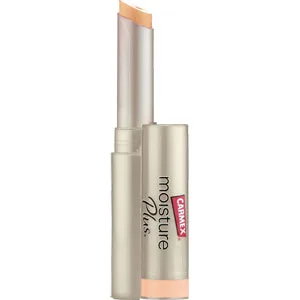
The slant-tip applicator is the most physically distinctive feature — Carmex was relatively early to bring the format to the mass-retail lip balm category, and it remains uncommon at this price point. The plant-butter blend (aloe butter, shea butter, cocoa butter) is more substantial than competing drugstore tinted lip balms that often rely on petroleum-derived emollients. The chemical SPF actives are unfortunately the formula's least modern aspect.
Carmex's modern lip color extension delivers genuine hydration through a plant-butter and oil base with a sheer tinted finish, and the slant-tip applicator is genuinely useful at the drugstore price point. The chemical SPF actives — octinoxate and oxybenzone — are the formula's biggest liability, flagging the product for pregnancy avoidance, reef-protected travel, and increasingly conservative dermatological recommendation. For users without those specific concerns, it remains a competent and affordable tinted lip balm.
The case for it
What would change this: A declared concentration would move this to a firmer reading of the dose.
Same rule for everyone. “Good choice” is the verdict on 9,564 of 45,024 concern verdicts across the catalog; rule R5 decided 9,072 of them. Unchanged since September 5, 2026, engine 5.1.1.
Brand or formulator? Disclose a concentration or correct a fact →
The studies behind the evidence row
The case for it
Same rule for everyone. “Strong choice” is the verdict on 1,459 of 45,024 concern verdicts across the catalog; rule R2 decided 892 of them. Unchanged since September 5, 2026, engine 5.1.1.
Brand or formulator? Disclose a concentration or correct a fact →
The studies behind the evidence row
As a lip balmNot judged: what a lip balm is for — seals and protects, sun protection where it matters — cannot yet be measured from the ingredient list (only no sting-and-repeat ingredients, low allergen load can).
A verdict is DermApproved’s assessment of how well a product’s ingredients fit a concern — never a claim about what the product treats. Evidence dots and collected reviews sit beside it and are never blended in. Rules 0.5.1 · evidence table ev-2026.09-r228 · how we decide
Carmex has been an American pharmacy staple since 1937, when Alfred Woelbing developed his original medicated lip balm in a Wisconsin kitchen to treat his own chronic cold sores. The classic yellow squeeze tube and the small white pot have been continuously sold for over eight decades, occupying a permanent slot in the lip care section of every drugstore and grocery store in the country. The Moisture Plus line is something newer and quite different — a 2010s response to the rise of 'lip color' as a category that combines the conditioning function of a lip balm with the cosmetic enhancement of a tinted product. The slant-tip click-up applicator borrowed from the prestige lip color category, the sheer tinted shades, the SPF 15 claim — all signal that Carmex was trying to extend its drugstore reach into a more cosmetic shopping occasion.
The formula does several things well. The plant-butter emollient base — aloe butter, shea butter, cocoa butter, and a long list of plant oils including coconut, safflower, sunflower, avocado, olive, and grape seed — is more substantial than what you find in many competing drugstore tinted lip balms, which often default to petroleum-derived emollients with token plant oil additions. The aloe butter is particularly nice in lip applications, providing the smooth glide of a butter texture with the soothing aloe content that helps wind-burned and chapped lips. Vitamin E rounds out the formula with antioxidant defense that is meaningfully useful in a product designed for direct sun exposure. The slant-tip applicator is also a genuine win at this price point — the precision is real, allowing application along the lip line in a way that pot or stick formats cannot match.
The sheer tint is well-executed. The iron oxide pigments (CI 77491, 77492, 77499) plus mica provide a natural color enhancement that flatters most skin tones without requiring exact shade matching. The most popular shades — Peach Sheer Tint and Pink Sheer Tint — read as 'your lips but better' rather than as lip color, which is the entire point of a sheer tinted balm. The tint is light enough to layer under lipstick as a hydrating primer or to wear alone for a polished but undone look. For users who want some cosmetic enhancement without committing to lipstick, this is exactly the right level of color.
But the SPF chemistry is where the formula reveals its age. Octinoxate and oxybenzone were standard chemical UV filters when this line was developed, and they remain widely used in lip care products today. They are also two of the most regulatorily-scrutinized sunscreen actives in modern dermatology. A 2020 JAMA study (Matta et al.) demonstrated that both ingredients were absorbed into systemic circulation at levels exceeding FDA thresholds for further safety evaluation after a single day of typical use. Hawaii banned both in 2021 due to documented coral reef toxicity. Key West, Palau, and several Caribbean destinations have followed. For lip products specifically, the absorption concern is amplified — lip balms are ingested through normal lip-licking, applied liberally and frequently, and worn in close contact with mucosal tissue.
None of this means the product is dangerous in any acute sense. It means the product has not been updated to reflect a decade of evolving regulatory and dermatological caution about its sunscreen chemistry. For most users this is not a daily-decision issue. For pregnancy, very young children, dermatology patients managing hyperpigmentation, or travelers visiting reef-protected destinations, it changes the calculus. Newer lip SPF products from brands like Supergoop, EltaMD, Sun Bum, and Coola have moved toward zinc oxide-based formulations that avoid these concerns. Carmex has not updated this formula correspondingly.
The inclusion of camphor in the inactive list is the formula's second formulation-era marker. Camphor is a counter-irritant that creates the cooling sensation through TRPM8 receptor activation — the same mechanism that makes menthol feel cold. Many users find the sensation pleasant and associate it with effective lip care, which is partly a holdover from the original Carmex's heavily camphor-centric medicated positioning. The reality is more complicated. Camphor can be irritating for some users, particularly those with sensitive lip skin, lip dermatitis, or recurring chapping issues. There is also evidence that frequent camphor application can paradoxically worsen lip chapping by creating mild surface inflammation that triggers continued lip-licking. For users with no specific sensitivities this is generally a non-issue, but it is worth understanding that camphor is doing something pharmacological, not just providing a pleasant sensation.
The beeswax content rules out vegan compatibility. The chemical UV filters rule out a clean reef-safe positioning. The camphor inclusion rules out very sensitive lip applications. These are limitations that newer competing brands have deliberately addressed. Carmex Moisture Plus is what it is — a competently formulated traditional drugstore lip balm with cosmetic positioning, not a modern wellness-coded lip product. The honest framing is that the formula reflects 2014-era priorities rather than 2026-era ones.
The value proposition is strong if you accept the formula on its own terms. At approximately $5.49 for the 0.075 oz click-up applicator, the per-ounce pricing is competitive with much more expensive prestige tinted lip balms (which can run $20-30 for similar sizes). The brand's drugstore distribution means it is available essentially anywhere lip care is sold — pharmacy chains, grocery stores, mass retailers, and gas stations. For a category where the most important quality is 'easy to grab when you need it,' this distribution advantage is meaningful.
The small 0.075 oz size depletes faster than the classic Carmex squeeze tube would. Daily users should expect 4-6 weeks per tube before needing replacement. The size is appropriate for a pocketable click-up format, but it does affect the per-month value calculation. Buying in multi-packs through online retailers can improve the cost-per-tube significantly.
For the right user — someone seeking an affordable tinted lip balm with light SPF for occasional sun exposure, who does not have specific concerns about chemical UV filters or pregnancy considerations, and who appreciates the convenience of drugstore availability and slant-tip precision — this is a competent and reasonably priced product. The formulation choices reflect their era rather than the current state of dermatological consensus on chemical UV filters and lip-skin care, but the basic emollient quality and cosmetic experience are solid. For users with any of the flagged concerns (pregnancy, reef-protected travel, sensitive lip skin, hyperpigmentation management), modern mineral-SPF alternatives offer a more appropriate path forward.
The hero actives that drive this product's performance.
| Ingredient | Function | Evidence |
|---|---|---|
| Octinoxate (Ethylhexyl Methoxycinnamate) 6.0% (6.0%) | A chemical UV filter that absorbs UVB radiation and converts it to harmless heat. In this lip balm it is the primary SPF active, paired with oxybenzone for broad-spectrum coverage. Octinoxate is one of the most widely used UVB filters globally, though it has been banned in some jurisdictions (Hawaii, Key West, Palau) due to concerns about coral reef toxicity at high environmental concentrations. | Regulator-approved for Sun Damage · emerging certainty |
| Oxybenzone (Benzophenone-3) 5.0% (5.0%) | A chemical UV filter that provides UVA and UVB coverage, complementing octinoxate's UVB-focused protection. Oxybenzone has been the subject of regulatory scrutiny in recent years — a 2020 JAMA study demonstrated systemic absorption at levels exceeding FDA thresholds for further safety evaluation, and it has been banned in Hawaii and several other jurisdictions for reef-safety reasons. For lip balm specifically, ingestion through normal lip-licking is another consideration. | Regulator-approved for Sun Damage · limited certainty |
| Aloe Butter (Aloe Barbadensis Leaf Extract) | An emollient derivative of aloe vera blended into a butter texture, providing both the soothing properties of aloe extract and the lipid content of a butter base. In a lip balm formulation, aloe butter delivers immediate softening and a smooth glide that supports the 'Moisture Plus' positioning. The aloe extract content contributes mild anti-inflammatory activity beneficial for chapped or wind-irritated lips. | Not yet assessed |
| Shea Butter (Butyrospermum Parkii) | Provides occlusive emollience and contains naturally-occurring fatty acids and vitamins that support lip skin barrier function. In a lip balm context, shea butter is one of the most reliable emollients for delivering long-lasting hydration sealed against the dry environment of mouth movement and air exposure. The combination of shea with the other plant butters (cocoa) creates the cushioned feel that distinguishes this from a thinner, traditional medicated balm. | Established mechanism for Dryness · established mechanism |
| Vitamin E (Tocopheryl Acetate) | Provides antioxidant defense for the lip skin and helps stabilize the chemical SPF filters and plant oils in the formula against oxidation during UV exposure. In a lip balm exposed to direct sun and ingestion through normal lip-licking, vitamin E adds a measurable protective and conditioning function beyond pure emollience. | Limited for Sun Damage |
Ingredient standings describe the active at treatment-level doses and vehicles; this product's own condition grades weigh its actual formula.
Active Ingredients: Ethylhexyl Methoxycinnamate (Octinoxate) 6.0%, Benzophenone-3 (Oxybenzone) 5.0%. Inactive Ingredients: Aloe Barbadensis Leaf Extract (Aloe Butter), Beeswax, Butyrospermum Parkii (Shea) Butter, C10-30 Cholesterol/Lanosterol Esters, Camphor, Caprylic/Capric Triglyceride, Carthamus Tinctorius (Safflower) Seed Oil, Cocos Nucifera (Coconut) Oil, Ethylhexyl Palmitate, Euphorbia Cerifera (Candelilla) Wax, Helianthus Annuus (Sunflower) Seed Oil, Iron Oxides (CI 77491, 77492, 77499), Mica, Octyldodecanol, Olea Europaea (Olive) Fruit Oil, Ozokerite, Persea Gratissima (Avocado) Oil, Phenoxyethanol, Polyethylene, Theobroma Cacao (Cocoa) Seed Butter, Tocopheryl Acetate (Vitamin E), Vitis Vinifera (Grape) Seed Oil
moisturizer
AM & PM
Apply liberally to clean lips, focusing on the lip line and any dry patches. The slant-tip applicator is designed for precise application — twist up just enough for a single application to avoid over-extension. Apply 15 minutes before sun exposure if using for SPF protection. Reapply every 2 hours during direct sun exposure and after eating, drinking, or lip-licking.
Immediate softening and hydration on first application. Visible reduction in lip flaking and chapping within 2-3 days of consistent use. SPF protection is immediate (active upon application after 15-minute setting time). With ongoing daily use, the sheer tint can build a subtle color enhancement that grows familiar to the wearer.
The UV protection in this formula relies on two chemical filters: octinoxate (ethylhexyl methoxycinnamate) at 6.0% and oxybenzone (benzophenone-3) at 5.0%. Octinoxate is a UVB filter that absorbs radiation in the 280-320nm range, while oxybenzone provides broader spectrum coverage extending into UVA II. Together they achieve the SPF 15 rating through standardized FDA testing protocols.
The regulatory landscape around these specific actives has shifted meaningfully over the past decade. A clinical trial reported in JAMA (Matta et al., 2020) demonstrated systemic absorption of avobenzone, oxybenzone, octocrylene, and ecamsule above thresholds requiring further safety evaluation after a single day of typical sunscreen use. Hawaii enacted Act 104 in 2018 (effective 2021) banning the sale of sunscreens containing oxybenzone and octinoxate, citing documented coral reef toxicity. Key West, Palau, Bonaire, and Aruba have implemented similar restrictions. The FDA's 2019 proposed rule on sunscreen monograph requested additional safety data on chemical filters while classifying mineral filters (zinc oxide and titanium dioxide) as Generally Recognized as Safe and Effective (GRASE).
For lip products specifically, the absorption concerns are amplified by application frequency and lip-licking ingestion. A clinical trial reported in Toxicology Letters (Wang et al., 2008) examined dermal and oral absorption pathways for cosmetic UV filters and noted that mucosal tissues (including lip skin) demonstrate higher absorption rates than typical facial skin. This research informs the increasing dermatology preference for mineral-only lip SPF formulations.
The plant-butter emollient base provides legitimate lip barrier support. Shea butter contains stearic, oleic, and linoleic acids — fatty acids that integrate with the lip's natural lipid matrix to reduce trans-epidermal water loss. Cocoa butter and aloe butter contribute additional fatty acid profiles. Vitamin E (tocopheryl acetate) provides antioxidant activity relevant for UV-exposed lip tissue, though it should be noted that vitamin E acetate's bioactivity is lower than the free tocopherol form.
Dermatologists frequently recommend lip products with SPF protection as part of comprehensive sun protection routines, particularly for outdoor activity and prolonged UV exposure. However, modern dermatology guidance has increasingly shifted toward mineral-only SPF formulations for lip products specifically. This is driven by both the systemic absorption concerns documented in recent FDA-cited research and by the ingestion considerations specific to lip products. For patients managing perioral hyperpigmentation, dermatologists often recommend supplementary visible-light protection (such as tinted mineral lip balms with iron oxides) rather than chemical filter-based formulations. Pregnancy-safe lip SPF recommendations consistently favor zinc oxide or titanium dioxide-based formulations over chemical alternatives like the actives in this product.
Apply liberally to clean, dry lips by gently twisting the slant-tip applicator and gliding across the upper and lower lip. Concentrate on dry patches and the lip line. For SPF protection, apply 15 minutes before sun exposure. Reapply every 2 hours during prolonged sun exposure and immediately after eating, drinking, swimming, or licking lips. The slant-tip allows for precise application — twist up only enough product for a single use to prevent breakage.
At approximately $5.49 for 0.075 oz (around $73 per ounce), this is reasonably priced for a tinted lip balm with SPF in the drugstore category. Direct competitors at similar pricing — Burt's Bees, eos, Maybelline — offer different ingredient profiles but comparable cost-per-product. Prestige tinted lip balms with SPF (Supergoop, EltaMD, Sun Bum) run $14-30 for similar sizes, with the price premium reflecting modern mineral SPF chemistry that this Carmex formula lacks. For users without specific concerns about the chemical filters, the drugstore value is favorable. For users wanting modern UV filter chemistry, the cost step up to a mineral lip SPF is meaningful but justifiable.
Anyone seeking an affordable tinted lip balm with light SPF for occasional sun exposure. Users who appreciate slant-tip applicator precision and prefer drugstore distribution. Those who do not have specific concerns about chemical UV filters and are not pregnant or visiting reef-protected destinations. People who want sheer tinted lip enhancement without the commitment of full-coverage lipstick.
Pregnant or breastfeeding individuals — chemical UV filters are commonly recommended for avoidance during pregnancy. Travelers visiting reef-protected destinations (Hawaii, Key West, Palau) where these actives are banned. People with sensitive lip skin, lip dermatitis, or recurring chapping issues — the camphor content may worsen those conditions. Vegan users (formula contains beeswax). Anyone managing perioral hyperpigmentation who needs visible-light protection rather than chemical UV filters.
Ready to try Carmex Moisture Plus Hydrating Lip Balm?
Buy at Amazon ♥Soft, glossy balm with a slight wax-and-butter feel on application. Glides easily without dragging. Sets to a slightly cushioned finish with a hint of shine from the sheer tint.
Mild characteristic scent from the camphor and natural plant butters. Not formally fragranced but has noticeable plant-derived aroma.
Slim slant-tip click-up applicator in a modern lip color format, distinct from the classic Carmex pot or squeeze tube. The opaque packaging protects the formula from light. Travel-friendly and pocketable.
Goes on smoothly with a soft, balm-like glide and the slight cooling sensation from camphor. The sheer tint applies evenly without streaking. Settles into a comfortable, mildly glossy finish within seconds. For those new to camphor in lip products, the cooling sensation can read as mild tingling — expected, not harmful, but worth noting if you have sensitive lip skin.
4-6 weeks with daily use; longer if used only as occasional sun-exposure protection
All Year
Carmex began in 1937 in Wisconsin when Alfred Woelbing developed a medicated lip balm to treat his own chronic cold sores. The original formula's medicinal positioning carried the brand through eight decades as a pharmacy and drugstore staple. The Moisture Plus line was Carmex's 2010s response to the rise of 'lip color' as a category distinct from medicated lip care — the line targets users who want the conditioning experience of a lip balm with the cosmetic enhancement of a sheer tinted product.
Carmex was founded in Wisconsin in 1937 by Alfred Woelbing as a medicated lip balm, and the brand has been a pharmacy and drugstore staple for more than eight decades. The Moisture Plus line launched in the 2010s as the brand's expansion into the more cosmetic 'lip beauty' category, with tinted shades and slant-tip applicators that depart from the classic medicated pot or squeeze tube formats. While the brand's modern lip color extensions are less rooted in its medicinal heritage, the Moisture Plus formulas use established emollients and SPF actives consistent with the broader lip care category.
All lip balm SPF is created equal — if it says SPF 15 it provides the same protection as any other SPF 15 product.
The SPF rating reflects standardized testing, but the specific UV filters matter for safety and broader protection. This product uses octinoxate and oxybenzone — chemical filters that have been flagged for systemic absorption (2020 JAMA study) and reef-safety concerns. Newer lip SPF formulations are increasingly using zinc oxide and titanium dioxide as mineral alternatives that avoid these concerns. For most users this is not a daily-application issue, but for pregnancy, very young children, or reef-protected travel destinations, it matters.
Camphor in lip balm is just a cooling sensation — it does not have any real effect on the lips.
Camphor is a mild counter-irritant that creates the cooling sensation through TRPM8 receptor activation. While the sensation can feel pleasant, camphor is also a known irritant for some users, and can paradoxically worsen chapping with frequent application by creating mild surface inflammation that triggers continued lip-licking. For users prone to lip dermatitis, camphor-free lip balms are generally preferred.
Classic Carmex (the original yellow squeeze tube or pot) is positioned as a medicated lip balm with menthol, camphor, and phenol as primary actives targeting cold sores and severely chapped lips. Moisture Plus is the brand's modern lip color extension — slimmer slant-tip applicator, sheer tinted shades, plant-butter-driven emollient base, and SPF 15. The original is a treatment product; Moisture Plus is a daily-wear lip balm with cosmetic and sun protection benefits.
This product contains oxybenzone and octinoxate as its chemical UV filters, both of which have been subject to regulatory scrutiny and are commonly recommended for avoidance during pregnancy out of caution. For pregnancy-safe lip SPF, look for mineral-only options with zinc oxide or titanium dioxide as the active. Always consult your healthcare provider about specific products during pregnancy.
The Moisture Plus line is available in several sheer tinted shades, with Peach Sheer Tint and Pink Sheer Tint being the most widely available. Shade availability varies by retailer and over time. The tint is sheer enough that exact shade matching is less critical than with full-coverage lip color products.
Camphor creates a mild cooling sensation through TRPM8 receptor activation and can feel pleasant for most users. For people with sensitive lips, lip dermatitis, or those prone to recurring chapping, camphor can be irritating and may worsen surface inflammation. If your lips are reactive or you have a history of lip skin issues, camphor-free balms are generally preferred.
The tint is much more subtle than lipstick — it provides a natural-looking color enhancement rather than coverage. Many users wear it alone for a polished, no-makeup look, or layer it under matte lipstick as a hydrating primer. For full lip color, you will still want a dedicated lipstick or tinted lip oil.
No — the formula contains oxybenzone and octinoxate, both of which are banned in Hawaii, Key West, and several other jurisdictions due to documented coral reef toxicity at environmental concentrations. For reef-safe lip SPF, choose a mineral-only formula with zinc oxide or titanium dioxide as the sun protection active.
Apply 15 minutes before sun exposure for full SPF activation. Reapply every 2 hours during direct or prolonged sun exposure, and immediately after eating, drinking, or swimming. The lip SPF reapplication frequency is higher than face SPF because lip products are continuously eroded through normal mouth movement and ingestion.
Recurring themes our editors read across retailer reviews of this product — summaries in our words, not quotations, and not a substitute for your own patch test.
Slant-tip applicator is more precise than traditional pot or stick formats
Sheer tint adds subtle natural color without commitment
Affordable at the drugstore price point
Long-lasting hydration compared to non-balm lip color products
Vitamin E and plant butters deliver real softening over multiple uses
Contains oxybenzone and octinoxate — flagged in modern regulatory and reef-safety contexts
Camphor in the formula can cause tingling and may irritate sensitive lips
Not pregnancy-recommended due to chemical UV filter content
Small 0.075 oz size depletes quickly with regular use
Some users report tint transfers easily and requires reapplication after eating or drinking