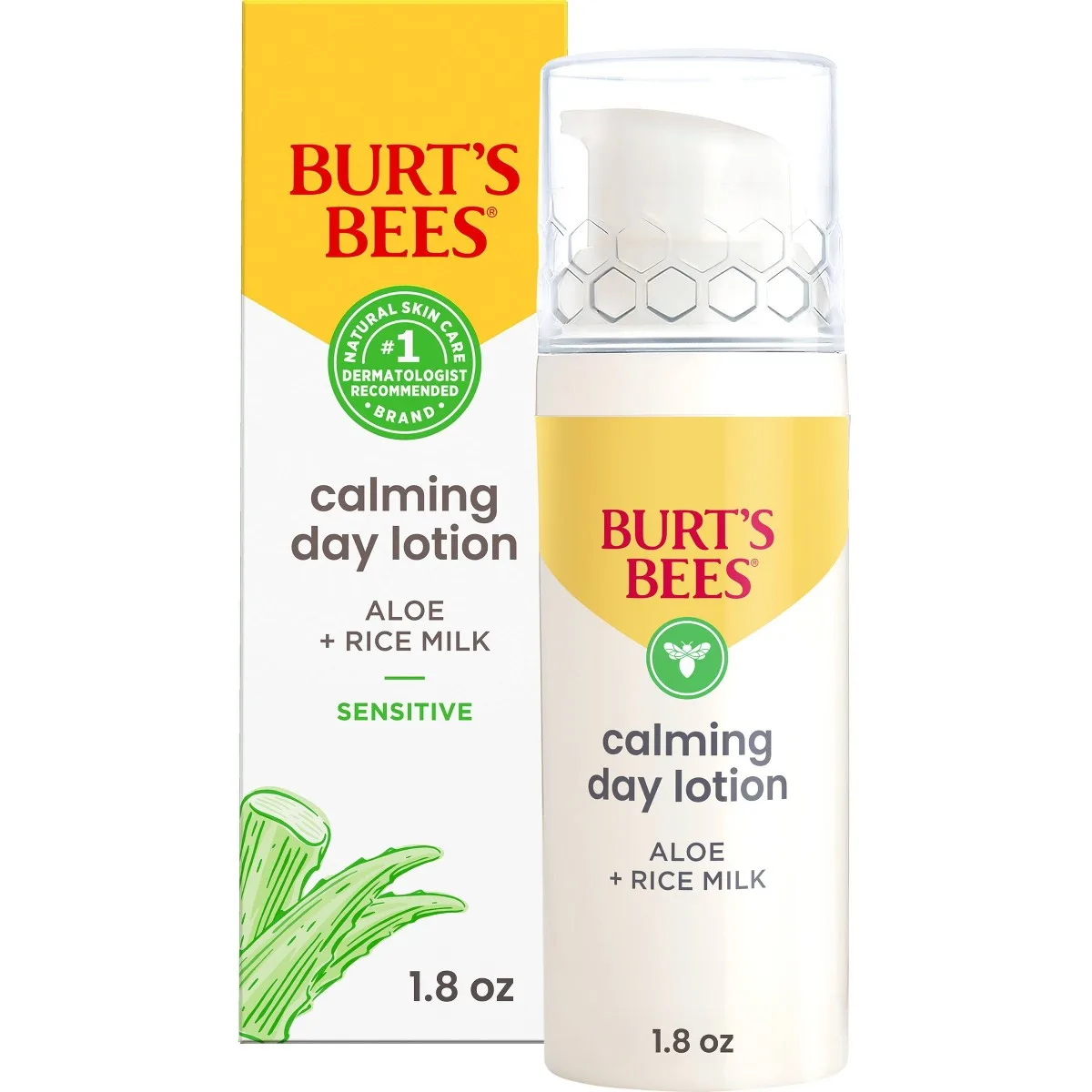
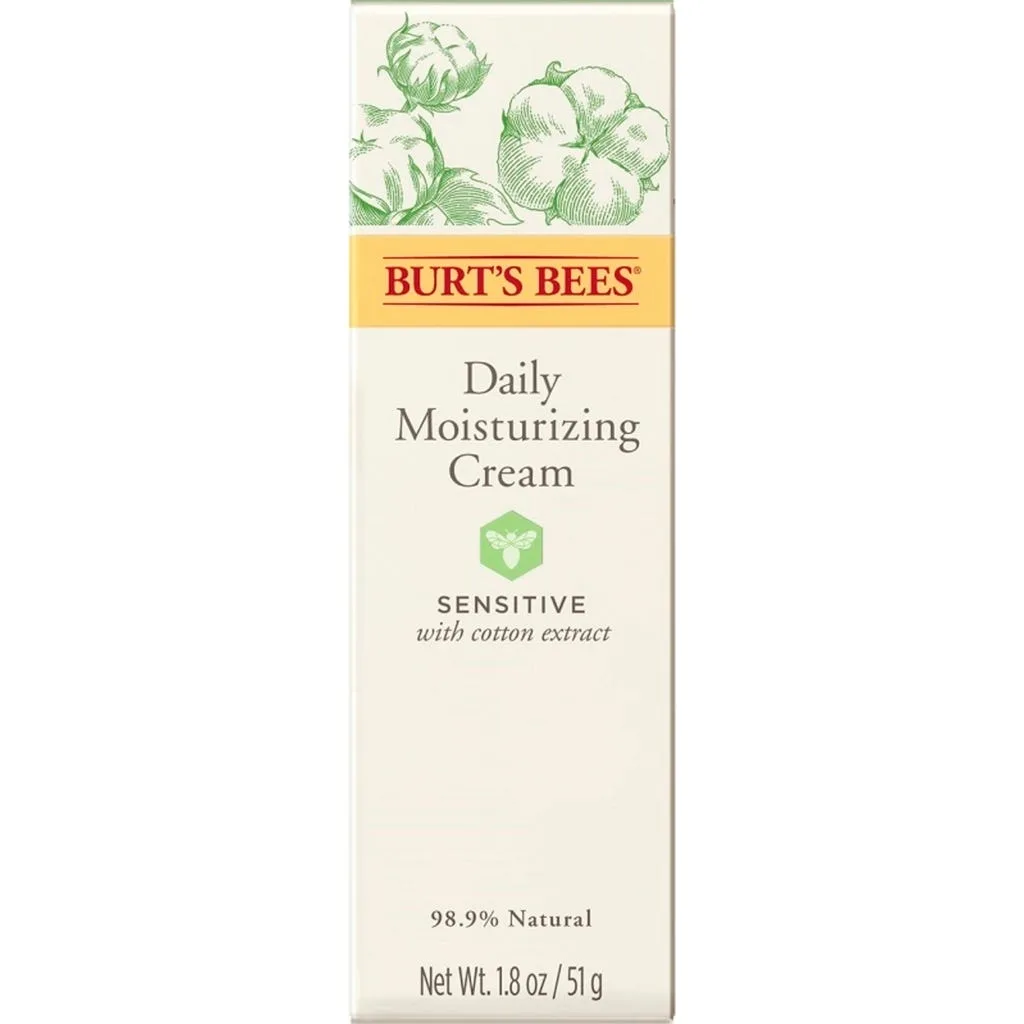
The cotton flower extract positioning is genuinely distinctive — most sensitive-skin moisturizers rely on aloe, ceramides, or panthenol as their soothing flag-bearer. Cotton extract's flavonoid content has documented anti-inflammatory activity, and its use here reflects the brand's commitment to botanical-driven formulation rather than synthetic active dependence. The 99% natural-origin claim is also more verifiable than most 'clean beauty' positioning, with the brand maintaining published standards for what qualifies as natural.
A decade-old natural-origin sensitive-skin moisturizer that has held its position in the drugstore aisle through formulation stability rather than marketing reinvention. The cotton extract and sunflower oil base is genuinely gentle, the 99% natural-origin claim is more verifiable than most clean-beauty marketing, and at $16.49 it occupies a reasonable mid-market position. Not exceptional, not revolutionary — just a competent natural-leaning moisturizer that works for the right user.
Supporting rolefor SensitivityIn your profileYou chose · Mostly gentle: drying alcohol — usable for sensitive skin with a patch test.Not yet assessedStandard tolerabilityNo reviews collected yet
The case for it
Glycerin has no evidence row yet for this concern — it is in the research queue.
The formula carries no trigger this concern is sensitive to, with the cautions noted.
Cautions: drying alcohol.
What would change this: A researched evidence row for the lead active would replace this with a verdict.
Same rule for everyone. “Supporting role” is the verdict on 8,197 of 45,024 concern verdicts across the catalog; rule F3 decided 183 of them.
Unchanged since September 5, 2026, engine 5.1.1.
Good choicefor DrynessIn your profileYou chose · Glycerin is a reference standard by mechanism for dryness; this cream carries it high in the ingredient list.Moderate evidenceStandard tolerabilityNo reviews collected yet
The case for it
Glycerin has trial-supported standing for this concern.
It is present at an effective concentration, declared or high in the ingredient list.
The formula carries no trigger this concern is sensitive to, with the cautions noted.
Cautions: drying alcohol.
Same rule for everyone. “Good choice” is the verdict on 9,564 of 45,024 concern verdicts across the catalog; rule R5 decided 9,072 of them.
Unchanged since September 5, 2026, engine 5.1.1.
Supporting rolefor Compromised Skin BarrierIn your profileYou chose · Nothing here targets compromised skin barrier directly; barrier lipids and occlusion is the recognised companion to treating it, and this cream does that without known triggers.Not yet assessedStandard tolerabilityNo reviews collected yet
The case for it
Glycerin has no evidence row yet for this concern — it is in the research queue.
The formula carries no trigger this concern is sensitive to, with the cautions noted.
Cautions: drying alcohol.
What would change this: A researched evidence row for the lead active would replace this with a verdict.
Same rule for everyone. “Supporting role” is the verdict on 8,197 of 45,024 concern verdicts across the catalog; rule R8 decided 4,250 of them.
Unchanged since September 5, 2026, engine 5.1.1.
R8 — The category's job (barrier care, humectant hydration, gentle cleansing, photoprotection) is the documented supportive role for this concern. This is the honest verdict for a moisturizer on an acne page. · the full register
Does the jobDoes what a moisturizer is for: draws in water, softens and smooths.
A verdict is DermApproved’s assessment of how well a product’s ingredients fit a concern — never a claim about what the product treats. Evidence dots and collected reviews sit beside it and are never blended in.
Rules 0.5.1 · evidence table ev-2026.09-r228 · how we decide
Assessment
Pros & Cons
Pros
✓ Cotton flower extract is a thoughtful sensitive-skin botanical choice with real flavonoid content
✓ Sunflower oil at second-position provides linoleic acid for barrier support
✓ 99% natural-origin claim is independently verifiable per the brand's published standard
✓ Lightweight cream texture suitable for daily wear under SPF and makeup
✓ Decade of market history with consistent formulation and dermatologist familiarity
✓ Fragrance-free in the practical sense — no added synthetic fragrance
✓ Reasonable value at $16.49 for a verifiable natural-origin sensitive moisturizer
Cons
✗ Includes alcohol denat. in the inactive list — not ideal for very dry or compromised barriers
✗ Small 1.8 oz size depletes within 2-3 months of twice-daily use
✗ Jar packaging exposes natural actives to oxidation each opening
✗ Pricing has increased meaningfully over recent years
✗ Insufficient hydration for very dry skin types — better suited to normal-to-combination sensitive
Review
Full Review
There is an entire shelf at every drugstore dedicated to natural and clean beauty moisturizers, and most of them are essentially identical: aloe, oat, glycerin, some combination of plant oils, and a marketing story about being free from whatever the current category of fear is. The differentiation is in the packaging, not the formula. Burt's Bees Sensitive Daily Moisturizing Cream is one of the products in that aisle, but it has spent the past decade quietly distinguishing itself through a slightly different formulation philosophy: cotton extract as the flagship botanical, sunflower oil as the primary lipid, and a 99% natural-origin claim that the brand has actually defined and held itself to.
The cotton flower extract positioning is the most interesting thing about this formula. Most sensitive-skin moisturizers default to aloe vera or colloidal oatmeal as their soothing botanical of choice — both are well-tolerated, well-known, and consumer-recognized as 'safe' ingredients. Burt's Bees made a different choice. Gossypium herbaceum extract is high in flavonoids, including gossypin and gossypitrin, which have documented anti-inflammatory and antioxidant activity in laboratory studies. It is a less heavily marketed ingredient, but the botanical chemistry is real, and the choice reflects a brand making formulation decisions based on something other than ingredient familiarity alone. For sensitive skin that has reacted to aloe or oat preparations in the past — a small but meaningful subset of users — cotton extract represents a genuine alternative.
The sunflower seed oil base is the second formulation choice that deserves credit. Sunflower oil is high in linoleic acid, an essential fatty acid that supports skin barrier function and is often deficient in compromised or sensitive skin. Topical linoleic acid has been studied in eczema and atopic dermatitis populations, with consistent findings that supplementation supports barrier recovery. Listing sunflower oil as the second ingredient (after water) means it is at meaningful concentration here, not just a token addition — this is a moisturizer that is actually doing barrier-supportive work, not just delivering glycerin under a natural-origin marketing veneer.
Glycerin sits third on the ingredient list, providing the immediate humectant pull that makes the moisturizer feel hydrating on first application. The combination of glycerin (water-binding humectant) and sunflower oil (linoleic acid-rich emollient) is functionally similar to what more clinical brands like CeraVe achieve with their proprietary ceramide and humectant systems — different ingredients, similar barrier-supportive outcome. The Burt's Bees approach achieves it through botanical sources rather than identical-to-skin ceramides, which is a philosophy choice that resonates with the brand's natural positioning.
The 99% natural-origin claim deserves a brief defense against the broader skepticism of clean-beauty marketing. Most brands using 'natural,' 'clean,' or 'plant-based' positioning are operating without defined standards — the terms are essentially marketing language with no required substantiation. Burt's Bees has published a Natural Standard that defines what qualifies as natural origin for its products, including specific exclusions and source requirements. The 1% non-natural content in this formula is primarily preservation chemistry (phenoxyethanol, sodium benzoate) — minor in volume, present for legitimate microbial protection. This is one of the few cases where the 'natural' claim is more than positioning.
The texture and experience are deliberately middle-of-the-road. The cream is lighter than a heavy night cream but more substantial than a true water cream — it works well as a daily moisturizer for normal-to-combination sensitive skin but will not be enough for very dry skin or compelling for very oily skin. Absorption is good, finish is satin and non-greasy, and the formula plays nicely with sunscreen and makeup applications on top. The natural extracts produce a subtle herbal scent that the brand markets as fragrance-free (in the sense that no fragrance is added as an ingredient) — for most users this is fine, though those with severe fragrance sensitivities should patch test.
The inclusion of alcohol denat. in the inactive list is the most notable formulation compromise. Positioned far down the ingredient list, the amount is likely small and used as a formulation aid rather than a primary solvent. For most users this is irrelevant. For very dry or alcohol-sensitive skin, it is worth knowing about. A truly alcohol-free formulation would have been the more consistent choice given the sensitive-skin positioning, but the inclusion is unlikely to cause problems for the typical user.
The jar packaging is a structural limitation that the brand has not addressed. Jars expose the formula to air every time they are opened, which accelerates oxidation of unstable natural actives. Tube packaging would preserve the cotton flavonoids and sunflower oil's antioxidant content more effectively. The brand's choice of jar is likely a consumer-experience and shelf-presence decision rather than a formulation-protective one, but it is a minor point against the otherwise thoughtful natural-origin positioning.
The pricing has shifted over recent years, and customer reviews reflect frustration about that. At $16.49 for 1.8 oz, the product sits at the upper end of drugstore-aisle pricing — meaningfully more than CeraVe or Cetaphil sensitive-skin moisturizers, comparable to mid-tier natural brands like Pacifica and Acure. For the natural-origin positioning and the cotton-sunflower formulation specifically, the price is fair. For shoppers buying purely on basic hydration without caring about natural sourcing, the cheaper alternatives provide similar functional outcomes.
The broader brand context matters here too. Burt's Bees was acquired by Clorox in 2007, which is the kind of corporate history that makes some 'clean beauty' shoppers uncomfortable. The brand has maintained its formulation philosophy and natural standards through the acquisition, but the corporate ownership is part of the full picture. For shoppers who prioritize independent-brand status as part of their natural beauty philosophy, this may be a point against. For shoppers who prioritize formulation quality and natural origin verifiability, the Clorox acquisition has not meaningfully changed what the brand is doing in the formulation lab.
For the right user — sensitive but not severely reactive skin, a preference for natural-origin formulations, a willingness to pay slightly more for verified natural standards, and a need for a lightweight daily moisturizer that works under SPF and makeup — this is a competent and well-positioned product. It will not transform skin or solve specific concerns. It will provide steady, gentle hydration with a botanical complex that is genuinely thoughtful rather than just marketing-driven. In a category dominated by either ultra-clinical or marketing-heavy options, that middle ground is genuinely valuable.
Formula
Key Ingredients
The hero actives that drive this product's performance.
The flagship botanical for this Sensitive Solutions formula, cotton flower extract is the active the brand markets as a barrier-protective ingredient. The extract is rich in flavonoids (gossypin, gossypitrin) with documented anti-inflammatory and antioxidant activity. In this formulation, cotton extract is positioned as the soothing alternative to fragranced botanical extracts that commonly trigger reactions in sensitive skin — a deliberate sourcing choice rather than a primary therapeutic active.
Second on the ingredient list — the primary emollient in the formula. Sunflower seed oil is high in linoleic acid (an essential fatty acid that supports skin barrier function) and is generally well-tolerated by sensitive and barrier-compromised skin. Linoleic acid deficiency has been linked to compromised barrier function in sensitive skin, so its presence here is functionally meaningful, not just naturalistic positioning.
Third on the inactive list — a significant concentration. As the primary humectant, glycerin draws water into the upper skin layers and supports the hydration claim that drives this moisturizer's appeal for reactive skin. Glycerin is one of the most well-tolerated humectants for sensitive skin, with virtually no irritation potential at the concentrations used in finished products.
Established mechanismfor Dryness · established mechanism
Provides mild soothing activity for reactive skin. In this sensitive-skin formula, aloe complements the cotton extract as part of the brand's botanical-driven soothing approach — a positioning choice that aligns with the natural-origin brand identity. The hydrating polysaccharides in aloe also contribute marginally to the moisturizing effect.
Provides occlusive emollience and contains naturally-occurring fatty acids that support barrier function. Positioned below the cotton extract and the rice/beet/aloe complex on the ingredient list, shea butter here is a supporting emollient rather than the primary moisturizing actor — appropriate for a sensitive-skin formula where heavier shea concentrations could feel too occlusive for normal-to-combination users.
Established mechanismfor Dryness · established mechanism
Ingredient standings describe the active at treatment-level doses and
vehicles; this product's own condition grades weigh its actual formula.
Apply to clean skin after toner or essence. Use a pea-sized amount and massage into face and neck using upward motions. The cream is thicker than most water creams — allow 2-3 minutes to fully absorb before applying SPF or makeup to prevent pilling. Compatible with most other Burt's Bees products in the Sensitive Solutions line.
Results Timeline
Immediate hydration and softening on first application. Reduced reactivity and improved comfort on sensitive skin develops over 1-2 weeks of consistent twice-daily use. Barrier-supportive effects from the sunflower oil and cotton extract complex build over 4-6 weeks.
Pairs Well With
fragrance-free hyaluronic acid serums (underneath)gentle cleansers and toners (in routine)mineral sunscreens (on top)ceramide barrier serums (underneath)
The formula's distinctive botanical positioning relies on Gossypium herbaceum (cotton flower) extract, which contains flavonoids — primarily gossypin and gossypitrin — with documented anti-inflammatory and antioxidant activity in laboratory studies. Research on cotton extract specifically as a topical skincare active is still emerging, but the broader flavonoid literature supports its inclusion as a soothing botanical with measurable bioactivity. A 2018 study published in the Journal of Cosmetic Dermatology examined Gossypium extracts for their role in modulating cutaneous inflammation and noted reduced erythema response in irritation models.
The sunflower seed oil contribution is more thoroughly evidenced. Helianthus annuus seed oil is high in linoleic acid (a long-chain omega-6 essential fatty acid), which is incorporated into skin's natural lamellar lipid structure. Research reported in Pediatric Dermatology (Darmstadt et al., 2008) examined topical sunflower oil applications on infant skin and documented improvements in barrier function and reduction in transepidermal water loss. The broader literature on linoleic acid deficiency in compromised skin supports its inclusion as a barrier-supportive ingredient — particularly relevant for sensitive skin populations that may have reduced barrier integrity.
Glycerin's hydration mechanism is among the most well-documented in cosmetic chemistry. As a humectant, glycerin draws water into the stratum corneum from deeper skin layers and from the surrounding environment, increasing skin water content for 4-6 hours after application. At the concentration suggested by its third-position listing in this formula, glycerin delivers measurable hydration benefits consistent with broader humectant research.
The sucrose-based emulsifier and skin-conditioning system (sucrose stearate, sucrose polystearate) represents a more recent direction in natural-origin formulation chemistry. These sugar-derived emulsifiers replace conventional petroleum-derived emulsifiers and are positioned as both natural and skin-conditioning. The dermatological evidence base on sugar-derived emulsifiers is smaller than for traditional cosmetic chemistry, but their general well-tolerance in sensitive skin populations has been established through cosmetic safety panel reviews.
Dermatologist Perspective
Dermatologists who counsel patients on natural-origin skincare options often include Burt's Bees products in their recommendations for sensitive and barrier-compromised skin types. The cotton extract and sunflower oil combination aligns with general dermatology guidance favoring linoleic-acid-rich emollients for compromised barriers. Dermatologists managing rosacea, eczema, and contact dermatitis patients commonly note that natural-origin moisturizers like this one can be appropriate choices for patients who have specifically requested fragrance-free, plant-based formulations — though dermatologists typically also point patients toward more clinically-developed options like CeraVe or La Roche-Posay for primary treatment alongside these as supportive products.
Guidance
Usage & Recommendations
How to Use
Apply to clean skin after toner or essence. Use a pea-sized amount and distribute evenly across face and neck using upward circular motions. Allow 2-3 minutes for the cream to fully absorb before applying sunscreen (AM) or treatment products (PM). For combination skin with oily T-zone, apply a thinner layer over that area. Use twice daily as a consistent moisturizer step. The cream is compatible with most other facial skincare products, including treatment serums and SPF.
Value Assessment
At $16.49 for 1.8 oz (approximately $9.16 per ounce), this is reasonably priced for a verified natural-origin sensitive moisturizer with the brand's market positioning. Comparable natural-leaning sensitive-skin moisturizers from Acure, Pacifica, and Andalou Naturals range from $14-22 for similar sizes. CeraVe and Cetaphil sensitive-skin alternatives are meaningfully cheaper at $12-15 for larger sizes, though they offer different formulation philosophies. For users specifically valuing the cotton extract and 99% natural-origin profile, the pricing is fair. For users buying on functional hydration alone, the cheaper clinical-brand alternatives may offer better baseline value.
Who Should Buy
Adults with sensitive but not severely reactive skin who prefer natural-origin formulations. Anyone seeking a fragrance-free moisturizer with a verifiable natural-standard claim. Those who have reacted to aloe or oat-based sensitive moisturizers and want an alternative botanical (cotton extract). Customers who shop the drugstore aisle and want a mid-market natural-leaning option.
Who Should Skip
People with very dry skin who need richer occlusive moisture — a heavier cream or night treatment is more appropriate. Those with severe alcohol sensitivity or compromised barriers requiring truly alcohol-free formulations. Anyone seeking clinical actives (retinol, vitamin C, peptides) as part of their moisturizer. Shoppers prioritizing the cheapest functional option, who would be better served by CeraVe or Cetaphil sensitive lines.
Ready to try Burt's Bees Sensitive Daily Moisturizing Cream?
Lightweight cream that begins thicker on dispensing and dissolves into a smooth, easily-spreadable consistency. Absorbs within 60-90 seconds. Sets to a softly hydrated, slightly satin finish.
Scent
Mild, neutral botanical scent from the natural extracts — the brand markets this as fragrance-free, though some users describe a faint plant-derived scent. The brand does not add synthetic fragrance.
Packaging
Small glass jar with a screw-top lid. The opaque packaging protects light-sensitive botanical extracts. The jar format is in tension with the brand's natural positioning (jars allow more air exposure than tubes, potentially affecting preservation of natural actives) but matches the conventional drugstore moisturizer format.
Finish
naturalsatinnon-greasy
What to Expect on First Use
Goes on cool and smooth, with the slight hydrating sensation of glycerin and aloe combination. No stinging, no burning, and no fragrance reactions on most sensitive skin types. The cream feels slightly thicker than a true water cream but lighter than a rich night cream — a true middle-ground texture appropriate for daily wear on normal-to-combination sensitive skin.
How Long It Lasts
2-3 months applied morning and night face application from a 1.8 oz jar
Leaping Bunny Certified (Cruelty-Free)Burt's Bees Natural Standard (99% Natural Origin)
Background
The Story Behind This Product
Burt's Bees grew from a beeswax-based lip balm company founded in Maine in 1984 by Roxanne Quimby and Burt Shavitz. The brand's transition to facial skincare came in the mid-2000s as it expanded beyond its lip care heritage. The Sensitive Solutions line specifically launched in 2014 to address the growing consumer demand for natural-origin formulations targeted at reactive skin types. The line's formulations use cotton extract as a signature ingredient — a sourcing choice that distinguishes the line from competing sensitive-skin products that typically default to aloe or oat-based botanicals.
About Burt's Bees Legacy Brand (20+ years)
Burt's Bees was founded in 1984 by Roxanne Quimby and Burt Shavitz as a beeswax-based lip balm company and grew into one of the most recognizable natural personal care brands in the United States. The brand was acquired by Clorox in 2007 and has expanded into facial skincare while maintaining its natural-origin formulation positioning. The Sensitive Solutions line specifically targets reactive skin types and has held positions in pharmacy and mass-retail moisturizer aisles for over a decade. The brand's claims of 99% natural origin are independently verifiable per Burt's Bees' Natural Standard.
Brand founded: 1984 · Product launched: 2014
Myth vs. Reality
Common Myths
Myth
Natural and 'clean' ingredients are inherently less irritating than synthetic ones.
Reality
Both natural and synthetic ingredients can cause irritation or allergic reactions. Botanical extracts are themselves chemical compounds, and some are more reactive than synthetic alternatives. This formula's gentleness comes from its specific ingredient choices and formulation balance, not from being natural per se. The 99% natural-origin claim describes ingredient sourcing, not safety or efficacy.
Myth
Burt's Bees products are too 'simple' or 'basic' to be effective for adult skin concerns.
Reality
While Burt's Bees does not heavily market itself around clinical actives like retinoids or AHAs, the sensitive-skin formulations like this one are appropriately positioned for what they aim to do — provide gentle, fragrance-free hydration for reactive skin. For users specifically seeking anti-aging or acne-treatment results, this is not the appropriate product. For users seeking a tolerable, natural-leaning daily moisturizer, it is competently formulated.
FAQ
Frequently Asked Questions
Is this moisturizer truly fragrance-free?
Burt's Bees does not add synthetic fragrance to this formula, but the natural botanical extracts (cotton, sunflower, aloe, shea) have their own subtle natural scents. The brand markets this as fragrance-free in the sense that no fragrance is added as an ingredient. For users with severe fragrance sensitivities, this is generally well-tolerated, but a patch test is always recommended.
Is the alcohol denat. in this formula drying?
Alcohol denat. is included in the inactive list at a low position, suggesting a small concentration likely used as a formulation aid rather than a primary solvent. For most users, the amount is too low to cause noticeable dryness. For very dry or compromised-barrier skin, a truly alcohol-free moisturizer may be a better choice.
What is cotton extract and does it actually do anything?
Cotton flower extract is derived from the Gossypium herbaceum plant and contains flavonoids (including gossypin and gossypitrin) with documented anti-inflammatory and antioxidant activity in laboratory studies. In a topical moisturizer, it functions as a gentle soothing botanical with measurable bioactive content. It is not a marquee active like retinol or vitamin C, but it provides legitimate barrier-supportive benefits suitable for the sensitive-skin positioning of this product.
How does this compare to other sensitive-skin moisturizers like CeraVe or La Roche-Posay?
CeraVe and La Roche-Posay rely on ceramide- and prebiotic-based formulations developed in partnership with dermatologists. Burt's Bees uses botanical extracts and natural-origin emollients as its formulation philosophy. Both approaches can work for sensitive skin — they reflect different value propositions. For users prioritizing natural-origin formulations and a soothing botanical complex, this is a strong choice. For users prioritizing dermatologist-developed ceramide systems, CeraVe or La Roche-Posay may be preferred.
Does this product treat acne or wrinkles?
This is a sensitive-skin moisturizer, not a treatment product. It does not contain acne-treating actives like salicylic acid or benzoyl peroxide, and it does not contain anti-aging actives like retinol or peptides. For acne or anti-aging concerns, this product would be used as the moisturizer step alongside other treatment products.
Why is this product in a jar instead of a tube?
The jar format is a conventional packaging choice for mass-retail facial moisturizers. While tubes can be more hygienic and protective for natural actives, jars allow easier scooping and provide a visual product experience that matches consumer expectations in the drugstore category. Burt's Bees has not publicly addressed the tube vs jar question for this formula specifically.
Has the formula recently changed?
Some users report what they perceive as a reformulation in recent years, with changes to scent and texture. Burt's Bees has not publicly announced a major reformulation. INCI ingredient lists from various retailer sources show consistent listings, but minor manufacturer adjustments may not always be reflected on retailer-facing INCI documentation.
Reviews
What Reviewers Tend to Say
Recurring themes our editors read across retailer reviews of this product — summaries in our words, not quotations, and not a substitute for your own patch test.
Common Praise
Lightweight texture absorbs quickly without greasy residue
Genuinely gentle for reactive and rosacea-prone skin
Cotton extract and sunflower oil base is well-tolerated
Strong natural-origin positioning that is independently verified
Affordable price point for a 99% natural moisturizer
Common Complaints
Recent reformulation has changed scent and some users find it less effective
Price has increased meaningfully over recent years
Includes alcohol denat. in the inactive list — not ideal for very dry or compromised skin
Small 1.8 oz size depletes quickly with twice-daily use
Some users find the texture too thin for nighttime hydration needs
Notable Endorsements
99% natural origin per Burt's Bees Natural StandardWidely available at Target, Walmart, Amazon, and pharmacy retailers
Picking one skin state and selling through hospital dermatology departments is a genuinely smart strategy. Whether the house botanical earns its billing is a separate question, and the answer is not the one either side wants.
Natural formulators swap shea, cocoa, mango and murumuru as though they were interchangeable. One carries roughly ten times the non-fat material of the others, and one is functionally a wax.
The burn trials are real and the skeptics who dismiss aloe as folklore are wrong — but the same substance has delayed healing in other wounds, and none of it says anything about what a soothing gel does to intact skin.
Aug 28, 2026· 9 min
Questions people ask about sensitive skin
Verified answers from our questions library — the nuance a product page cannot carry.
Products, answers, therapy guides, tools and articles in one search. Brand names,
slang and abbreviations all work — accutane finds isotretinoin, bacne finds truncal acne.