


Shea Butter Is Doing a Different Job Than You Think
It is sold as deeply nourishing. What it measurably does is seal — and the difference decides whether you should apply it to damp skin or not at all.
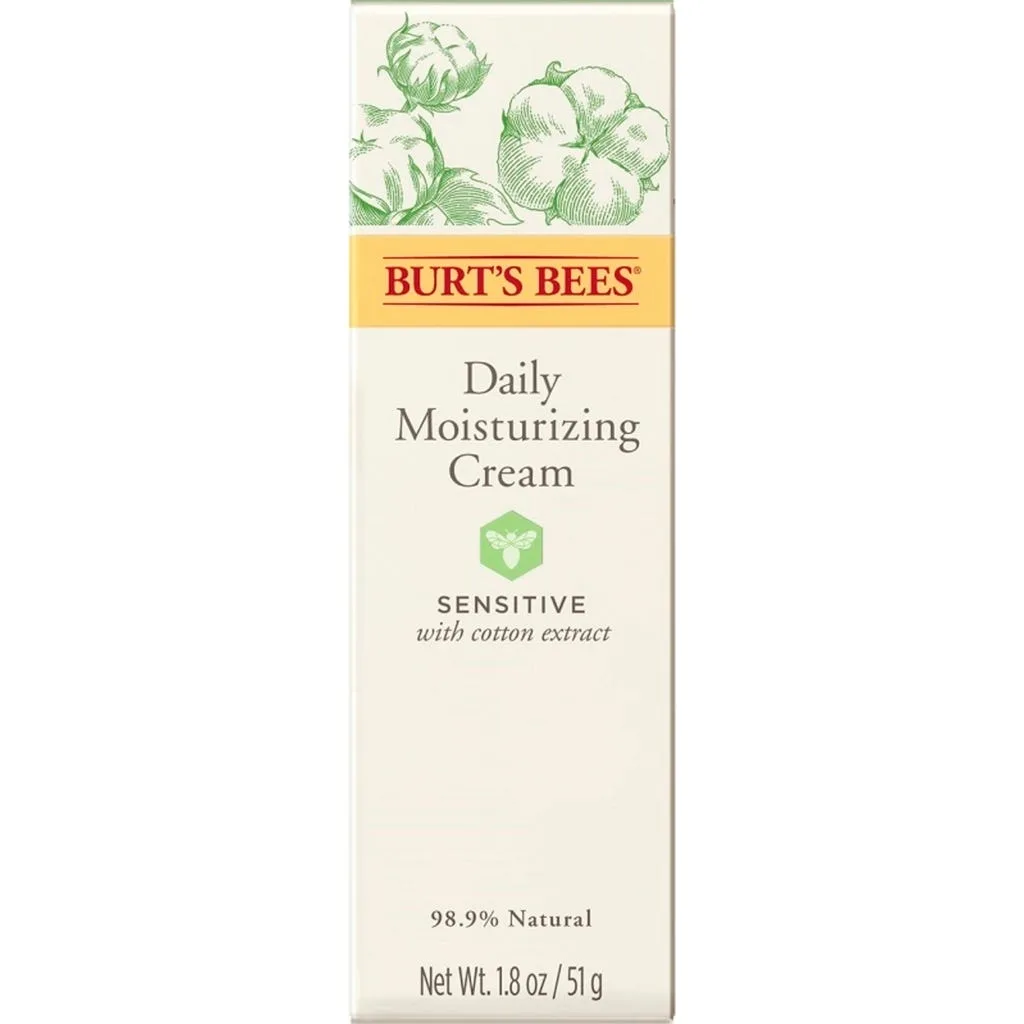
The combination of zinc oxide for calming with a sophisticated multi-humectant system (glycerin, sodium PCA, trehalose, and natural sugars) makes this more than a basic moisturizer with a 'sensitive' label. The National Eczema Association seal requires clinical testing proving the product doesn't exacerbate eczema symptoms — a meaningful third-party validation that most 'sensitive skin' products lack.
A genuinely thoughtful sensitive skin moisturizer that earns its National Eczema Association seal through meaningful formulation choices — zinc oxide, multi-pathway humectants, and botanical calming agents — rather than just removing irritants. The small jar and slightly chalky texture hold it back, but for reactive skin that needs a natural-origin daily cream, this delivers.
The case for it
Cautions: drying alcohol.
What would change this: A researched evidence row for the lead active would replace this with a verdict.
Same rule for everyone. “Supporting role” is the verdict on 8,197 of 45,024 concern verdicts across the catalog; rule F3 decided 183 of them. Unchanged since September 5, 2026, engine 5.1.1.
Brand or formulator? Disclose a concentration or correct a fact →
The case for it
Cautions: drying alcohol.
Same rule for everyone. “Good choice” is the verdict on 9,564 of 45,024 concern verdicts across the catalog; rule R5 decided 9,072 of them. Unchanged since September 5, 2026, engine 5.1.1.
Brand or formulator? Disclose a concentration or correct a fact →
The studies behind the evidence row
The case for it
Cautions: drying alcohol.
What would change this: A declared concentration would move this to a firmer reading of the dose.
Same rule for everyone. “Good choice” is the verdict on 9,564 of 45,024 concern verdicts across the catalog; rule R5 decided 9,072 of them. Unchanged since September 5, 2026, engine 5.1.1.
Brand or formulator? Disclose a concentration or correct a fact →
The studies behind the evidence row
The case for it
Cautions: drying alcohol.
What would change this: A researched evidence row for the lead active would replace this with a verdict.
Same rule for everyone. “Supporting role” is the verdict on 8,197 of 45,024 concern verdicts across the catalog; rule R8 decided 4,250 of them. Unchanged since September 5, 2026, engine 5.1.1.
Brand or formulator? Disclose a concentration or correct a fact →
The case for it
Cautions: drying alcohol.
What would change this: A researched evidence row for the lead active would replace this with a verdict.
Same rule for everyone. “Supporting role” is the verdict on 8,197 of 45,024 concern verdicts across the catalog; rule R8 decided 4,250 of them. Unchanged since September 5, 2026, engine 5.1.1.
Brand or formulator? Disclose a concentration or correct a fact →
Does the jobDoes what a moisturizer is for: draws in water, softens and smooths.
A verdict is DermApproved’s assessment of how well a product’s ingredients fit a concern — never a claim about what the product treats. Evidence dots and collected reviews sit beside it and are never blended in. Rules 0.5.1 · evidence table ev-2026.09-r228 · how we decide
Most brands approach sensitive skin by subtraction. Remove the fragrance, remove the harsh preservatives, remove anything that sounds scary, and market what's left as 'gentle.' Burt's Bees took a different path with their Daily Moisturizing Cream. They subtracted the irritants, yes — but then they added zinc oxide, a multi-sugar humectant system, and a constellation of botanical extracts specifically chosen for their calming properties. The result is a moisturizer that doesn't just avoid causing problems. It actively works to solve them.
The decision to pursue the National Eczema Association Seal of Acceptance shaped this formula in ways that casual consumers might not recognize. The NEA seal isn't a marketing badge you can buy — it requires clinical evaluation demonstrating that a product is suitable for eczema-prone skin, one of the most reactive and demanding skin conditions. Meeting that standard meant every ingredient had to justify its presence, every potential sensitizer had to be scrutinized, and the final formula had to prove itself on skin that rejects most of what the beauty industry considers gentle.
Zinc oxide is the ingredient that distinguishes this from generic sensitive moisturizers. Listed fifth — a meaningful concentration — it serves not as a sunscreen here but as a mineral anti-inflammatory agent. Zinc oxide has been used in dermatology for centuries to calm irritation, reduce redness, and create a protective barrier over compromised skin. In this formula, it works alongside the sunflower seed oil base and shea butter to create a layered defense system: the oils repair and soften, the zinc calms and protects, and the humectant system ensures moisture actually reaches the skin rather than sitting on top.
That humectant system deserves specific attention because it's more sophisticated than what you typically find in a fifteen-dollar natural moisturizer. Glycerin provides the workhorse hydration. Sodium PCA — a component of the skin's own natural moisturizing factor — adds a level of physiological compatibility that synthetic humectants can't match. Trehalose, a naturally occurring sugar, protects skin cells from desiccation stress. And a trio of simple sugars (sucrose, fructose, glucose) provides additional osmotic hydration. It's a five-path approach to moisture that acknowledges a simple truth: sensitive skin often has a compromised barrier that can't hold onto water through a single mechanism.
The botanical extracts — cotton flower, rice, eyebright, and artemisia — are listed at concentrations that suggest meaningful inclusion rather than label decoration. Cotton extract in particular has been studied for its ability to reinforce the skin's protective barrier, which is why Burt's Bees highlights it as a key active. Rice extract provides gentle brightening and soothing properties, while eyebright (Euphrasia officinalis) has a traditional use history in calming eye and skin irritation that modern research is beginning to validate.
Texture is where this cream reveals its one significant compromise. Zinc oxide and kaolin give it a slightly chalky, matte quality that feels different from the silky, gliding textures of silicone-based moisturizers. It absorbs well enough, but there's a powdery finish that some users love — it means zero shine — and others find inelegant. On deeper skin tones, the zinc oxide may leave a faint white cast that requires thorough blending. This is the tradeoff for mineral-based soothing: function over sensory pleasure.
The fragrance-free formulation is uncompromised. No parfum, no essential oils, no naturally derived fragrance components. For anyone with fragrance-triggered eczema, rosacea, or contact dermatitis, this absence is the product's most important feature. What you smell, if anything, is the faint earthy-sweet scent of the natural oils and plant extracts — subtle, inoffensive, and gone within seconds.
One ingredient deserves transparent mention: alcohol denat. appears near the end of the list. This might seem contradictory in a sensitive skin product, but at its position (after sodium stearoyl lactylate), it's present at well under one percent — likely functioning as a solubilizer for the botanical extracts rather than as a drying agent. The concentration is too low to cause the irritation or dehydration associated with high-alcohol formulations. Still, its presence may concern purists who prefer to see no alcohol in any form.
Value is where the math gets less favorable. At fifteen dollars for 1.8 ounces, this is a smaller jar than what many competitors offer at the same price point. With twice-daily face application, expect roughly four to six weeks per jar, putting the monthly cost at around fifteen dollars. It's not unreasonable for a clinically validated sensitive skin product, but it's not the generous sizing that Burt's Bees fans might expect from a brand known for value.
The packaging — a jar rather than a pump or tube — is another small miss. Dermatologists routinely recommend against jar packaging for sensitive skin products because dipping fingers into the product introduces bacteria with each use. A tube or pump would better preserve the formula's integrity over its lifespan. It's a practical concern, not a dealbreaker, but for a product designed specifically for compromised skin, it feels like an oversight.
What ultimately makes this cream worth its price and its minor imperfections is the integrity behind the formulation. This isn't a natural moisturizer that happens to be labeled for sensitive skin. It's a product that was designed from the ground up to meet a clinical standard for reactive skin, using ingredients chosen for their documented calming properties, and formulated by a brand with four decades of experience in natural personal care. The NEA seal on the label means someone tested this on the most demanding skin conditions and it passed. For the millions of Americans with eczema, rosacea, or chronic skin sensitivity, that seal is worth more than any marketing claim.
The hero actives that drive this product's performance.
| Ingredient | Function | Evidence |
|---|---|---|
| Helianthus Annuus (Sunflower) Seed Oil | Listed second as the formula's primary emollient, sunflower seed oil provides linoleic acid-rich barrier support that complements the zinc oxide's protective properties. In this sensitive skin formula, its non-irritating, lightweight emolliency makes it the ideal base oil for reactive skin types. | Not yet assessed |
| Glycerin | The formula's core humectant, working in concert with the sodium PCA, trehalose, and natural sugars (sucrose, fructose, glucose) to create a multi-pathway hydration system that draws and holds moisture without relying on any single mechanism. | Established mechanism for Dryness · established mechanism |
| Zinc Oxide | Not used here as a sunscreen active, but as a skin-calming mineral that helps reduce redness and irritation in sensitive skin. Zinc oxide's anti-inflammatory properties make it a common choice in eczema-friendly formulations, which is why this product carries the National Eczema Association seal. | Not yet assessed |
| Aloe Barbadensis Leaf Juice | Provides soothing anti-inflammatory benefits that support the zinc oxide's calming action, while contributing additional humectant properties from its polysaccharide content. In this sensitive formula, aloe's role is specifically about reducing reactivity rather than primary hydration. | Not yet assessed |
| Butyrospermum Parkii (Shea) Butter | Adds rich, long-lasting emolliency and occlusive properties that help seal in the hydration provided by glycerin and the sugar-based humectants. Shea butter's triterpene content also contributes mild anti-inflammatory activity that supports the formula's sensitive skin mission. | Established mechanism for Dryness · established mechanism |
| Sodium PCA | A component of the skin's natural moisturizing factor (NMF), sodium PCA is a highly effective humectant that binds water more efficiently per molecule than glycerin. Its inclusion deepens the formula's hydration capacity for skin that struggles to retain moisture on its own. | Not yet assessed |
Ingredient standings describe the active at treatment-level doses and vehicles; this product's own condition grades weigh its actual formula.
Water, Helianthus Annuus (Sunflower) Seed Oil, Glycerin, Cetyl Alcohol, CI 77947 (Zinc Oxide), Zea Mays (Corn) Starch, Gossypium Herbaceum (Cotton) Flower Extract, Oryza Sativa (Rice) Extract, Beta Vulgaris (Beet) Root Extract, Artemisia Umbelliformis Extract, Euphrasia Officinalis Extract, Butyrospermum Parkii (Shea) Butter, Saccharum Officinarum (Sugar Cane) Extract, Aloe Barbadensis Leaf Juice, Jojoba Esters, Hydrolyzed Jojoba Esters, Kaolin, Lecithin, Sucrose, Fructose, Glucose, Inositol, Citric Acid, Benzoic Acid, Trehalose, Xanthan Gum, Glyceryl Laurate, Potassium Sorbate, Sucrose Stearate, Sucrose Polystearate, Sodium Benzoate, Sodium Stearoyl Lactylate, Sodium PCA, Alcohol Denat., Phenoxyethanol
moisturizer
AM & PM
Apply after cleansing and any serums. The zinc oxide content may leave a very slight white cast on deeper skin tones — pat in thoroughly. Layers well under mineral sunscreen. Rich enough for standalone nighttime use for most skin types.
Immediate hydration and calming effect upon first application. Within 1-2 weeks, chronically irritated or reactive skin should show reduced baseline redness. The multi-humectant system provides sustained moisture improvement over 4-6 weeks of consistent use.
The formulation's scientific foundation rests on zinc oxide's well-documented anti-inflammatory properties for compromised skin. Zinc oxide has been a dermatological staple for over a century — a 2014 review in the Journal of Dermatological Treatment confirmed its efficacy in reducing skin inflammation, promoting wound healing, and providing a physical barrier against environmental irritants. In this formula, its role is specifically anti-inflammatory rather than photoprotective, though incidental UV filtration is a secondary benefit.
The multi-humectant approach reflects current understanding of how compromised skin loses moisture. Sensitive and eczema-prone skin often has deficient natural moisturizing factor (NMF), the complex of amino acids and sugars that maintains stratum corneum hydration. Sodium PCA is a key NMF component, and a study in the International Journal of Cosmetic Science (2003) demonstrated that topical application of NMF constituents significantly improved skin hydration in subjects with compromised barriers. By combining sodium PCA with glycerin and trehalose, the formula addresses hydration through multiple mechanisms rather than relying on a single humectant pathway.
Trehalose deserves specific mention for its cytoprotective properties. A clinical trial reported in Cell Stress & Chaperones (2007) showed that trehalose protects cell membranes from desiccation damage by replacing water molecules in the lipid bilayer structure. For sensitive skin that experiences frequent barrier disruption, this protective mechanism adds a layer of cellular defense beyond simple surface hydration.
Cotton flower extract (Gossypium herbaceum) has shown barrier-reinforcing properties in preliminary studies, supporting the skin's natural protective function by promoting the synthesis of structural proteins. While the evidence base is smaller than for more widely studied ingredients, its inclusion aligns with the formula's overall strategy of strengthening the compromised barrier rather than simply adding moisture to it.
Dermatologists would recognize this as one of the more thoughtfully formulated natural-origin sensitive skin moisturizers available over the counter. The National Eczema Association seal carries weight in clinical settings — dermatologists frequently recommend NEA-accepted products to patients with eczema and contact dermatitis. Dermatology practitioners would appreciate the zinc oxide inclusion for its anti-inflammatory properties and the multi-humectant approach for barrier-compromised skin. They would note the alcohol denat. as a minor concern at low concentration and suggest the jar packaging is suboptimal for immunocompromised or severely eczematous skin. Overall, dermatologists would likely recommend this as a reasonable daily moisturizer for patients with mild to moderate sensitive skin who prefer natural-origin products.
Apply a nickel-sized amount to clean, dry skin morning and evening. Pat gently into the skin rather than rubbing vigorously — this helps the zinc oxide settle evenly and minimizes white cast. In the morning, allow 2-3 minutes before applying sunscreen. At night, use as the final moisturizing step. For best hygiene with the jar packaging, use a clean spatula rather than fingertips to scoop product. Can be layered over lightweight serums without pilling.
At $15 for 1.8 oz, the price per ounce ($8.33) is moderate for the sensitive skin category. The NEA seal, zinc oxide content, and multi-humectant system justify the pricing from a formulation perspective — comparable clinically validated sensitive skin creams from dermatologist brands cost $12-20 for similar sizes. However, the small jar means frequent repurchasing at roughly $15 per month, which adds up. Burt's Bees does not offer this in a larger economy size, which is a missed opportunity for a daily-use product.
Anyone with sensitive, eczema-prone, or easily reactive skin looking for a natural-origin daily moisturizer with genuine calming ingredients and clinical validation. Particularly suited for those who want more than just a basic fragrance-free cream — the zinc oxide and multi-humectant system actively support compromised skin.
Those looking for maximum value per ounce or who need a richer cream for very dry skin. Oily skin types may find the shea butter and sunflower oil base too heavy. Anyone who prefers hygienic pump packaging. Vegans should note the formula contains non-vegan ingredients.
Ready to try Burt's Bees Daily Moisturizing Cream?
Buy at Amazon ♥Medium-weight cream with a slightly chalky quality from the zinc oxide and kaolin. Absorbs reasonably well but leaves a matte, powdery finish rather than a dewy one. Not as elegantly textured as silicone-containing moisturizers.
Fragrance-free. No detectable scent beyond faint natural ingredient notes.
White plastic jar with the Burt's Bees branding. The 1.8 oz jar is compact but small relative to the price. Hygienic concerns with jar packaging — a pump or tube would be preferable for a sensitive skin product.
Immediate calming sensation without tingling or stinging. The zinc oxide provides a subtle protective feeling. Some users notice a slight chalky or powdery texture that takes a moment to absorb. Skin feels noticeably calmer and less reactive within the first few applications.
morning and night makes one last about 4-6 weeks to the face
All Year
Burt's Bees developed this cream specifically to earn the National Eczema Association Seal of Acceptance, which requires clinical evidence that the product is suitable for eczema-prone skin. This pushed the formulation team to strip out common irritants while building in genuine skin-calming actives — zinc oxide, botanical extracts, and a multi-sugar humectant complex — rather than simply removing problematic ingredients and calling it a day.
Burt's Bees was founded in 1984 in Maine by Burt Shavitz and Roxanne Quimby, pioneering the natural beauty movement in America. Acquired by Clorox in 2007 for $925 million, the brand maintains its commitment to natural-origin formulations. This product carries the National Eczema Association Seal of Acceptance.
The National Eczema Association seal means this product will treat eczema.
The NEA Seal of Acceptance indicates the product has been evaluated and deemed suitable for use by eczema patients — meaning it won't worsen the condition. It does not mean the product treats eczema. For active eczema management, prescription treatments are still necessary.
98.9% natural means 98.9% of the ingredients are plants.
Natural-origin means the ingredients are derived from natural sources, but many have been processed or synthesized. Zinc oxide is a mineral, cetyl alcohol is derived from plant oils through industrial processing, and glycerin is typically produced from vegetable oils via hydrolysis. 'Natural origin' describes the starting material, not the final product.
This cream carries the National Eczema Association Seal of Acceptance, meaning it has been clinically evaluated and deemed safe for eczema-prone skin. The zinc oxide and fragrance-free formula help minimize irritation triggers. However, it moisturizes and calms — it doesn't treat eczema. Use it alongside any prescribed eczema treatments.
Alcohol denat. appears near the end of the ingredient list, suggesting a very low concentration. At this level, it likely functions as a solubilizer for plant extracts rather than as a drying agent. The concentration is too low to cause the drying effects associated with high-alcohol formulations, though purists may prefer products that avoid it entirely.
While zinc oxide is a UV filter, this product is not formulated or tested as a sunscreen. The concentration is designed for skin-calming rather than UV protection. Always use a separate broad-spectrum SPF 30+ sunscreen for sun protection.
Yes — the calming, zinc oxide-containing formula can serve as a buffer for retinol irritation. Apply retinol first, wait a few minutes for absorption, then layer this cream on top. The multi-humectant system helps counteract retinol-induced dryness.
No. The formula contains beeswax-derived ingredients and lecithin, which may be animal-derived. Burt's Bees as a brand uses beeswax across many products. If you need a vegan sensitive skin moisturizer, look for alternatives with explicit vegan certification.
Recurring themes our editors read across retailer reviews of this product — summaries in our words, not quotations, and not a substitute for your own patch test.
Genuinely calming on irritated and eczema-prone skin
Fragrance-free with no detectable scent
Natural ingredient list that feels trustworthy
Good hydration that lasts through the day
Zinc oxide provides visible redness reduction
Not moisturizing enough for very dry skin or harsh winter conditions
Small 1.8 oz jar doesn't last long for the price
Slight white cast from zinc oxide on darker skin tones
Contains alcohol denat. which seems contradictory for sensitive skin
Texture can feel slightly chalky compared to silicone-based creams
Verified answers from our questions library — the nuance a product page cannot carry.